Slow Dancing

By Mark E. Smith

I heard a woman who uses a wheelchair note that among the saddest parts of her having paraplegia is that it’s kept her from slow dancing, that she longs for a cure so that she can slow dance with a man.

It was a heartfelt longing that I’m sure would resonate with those who are able-bodied, as well as some with disabilities, truly personifying the tragedy of disability at the most poignant level: One’s loss of the ability to simply slow dance, life unjustly constricted by a wheelchair.

However, there was another poignant component to the woman’s experience: It was totally specious nonsense – that is, while it sounded true, it was completely false, a made-up construct in her mind about her disability that simply wasn’t based in reality.

See, those of us who use wheelchairs slow dance all of the time. In fact, we ballroom dance, line dance, and generally boogie down like everyone else. And, when a song comes on for a slow dance, the DJ doesn’t kick us off of the dance floor and the party doesn’t stop; rather, when a song comes on for a slow dance, we naturally cuddle up with our partners and sway to the motions of the music. It’s not climbing Mount Everest, nor does it require one to be a rocket scientist. It’s just two people slow dancing, where one – or both – happens to use a wheelchair.

So, why then would the woman see slow dancing as out of the realm of possibilities for her as one who uses a wheelchair, making slow dancing entirely contingent upon her being able to walk?

The answer is, she’s not basing life on its realities, but basing it on her own outlook, one that’s skewed, where she is the only factor limiting her life, tragically defeating her own happiness. We know that, logistically, slow dancing while using a wheelchair is effortless, and we know that the intimate experience of slow dancing with someone you’re passionate about is no less gratifying when seated than on two legs. Therefore, not only is the woman technically wrong about being unable to slow dance while using a wheelchair, but she’s likely going to go through her whole life depriving herself of a wonderfully intimate experience with another person.

Here’s the real question, though: How often do each of us get in our own way – how often do we tell ourselves we can’t slow dance, so to speak? – creating roadblocks in our lives that aren’t based in reality, but in our own minds? I’m not looking for a better job because I know they won’t see me as qualified. I’m staying in this unsatisfying relationship because I know I can’t find better or won’t be happy alone. I’m too physically unfit to get in shape. I could never save up enough money for the down payment on a home. I don’t have time to go back to college at night. …The list goes on and on.

While such life hurdles can seem totally out of our control as we run them through our heads, the opposite is true. In virtually every challenge we face, it’s not life’s circumstances or someone else holding us back, it’s simply ourselves – we’re getting in our own way. In the long term – and goals of great personal reward do take time! – no one but ourselves keeps us from seeking a better job, getting out of an unsatisfying relationship, getting in shape, saving money, or going back to school – we have ultimate power over these and most other aspects of life if we put forth courage, effort, and time. I tell you from my own experience that the only one who’s ever stopped me from pursuing my potentials has been me, and once I’ve pushed that fool out of my way, a world of possibilities has always opened up.

When I look chronologically at among the three biggest seeming challenges that I’ve ever faced – going to college, moving cross country, and becoming a full-time single father – prior to my committing to each them, I could have written a book on why they were completely unrealistic and unfeasible, why I couldn’t slow dance, you might say. Yet, when I got out of my own way, and based my reactions not on skewed emotions, but on reality, and said, “Not only can I do this and survive, but actually thrive,” I succeeded.

Indeed, life is a lot like slow dancing at a wedding reception: The only deciding factor between failure and success is whether we choose to simply move from our table to the dance floor. …And, I say, never pass on an opportunity to slow dance.
This Dad’s Life

By Mark E. Smith

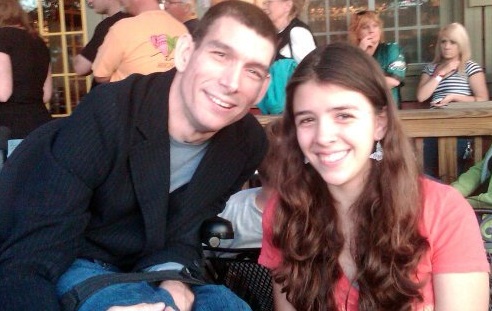
So, I continue on among the most remarkable paths of my life, a single, full-time father – or, as I like to put it, “I’m a 40-year-old single, full-time father with cerebral palsy, raising my 14-year-old daughter….” I love phrasing my life that way because it’s so absurdly over-dramatic, and what’s even better is that it pretty much sums me up as the last guy on Earth any woman would ever date. I mean, if you pull any part of that description out, it plays as a run-the-other-way alarm to any rational woman: A 40-year-old guy – strike one! A single, full-time father – strike two! A 14-year-old daughter (though, she is the best kid ever) – strike three! And, then add cerebral palsy – I’m out! Really, I’m the personal ad from Hell.

However, as over-dramatic as adjectives can make my life sound, the truth is, it’s anything but dramatic these days. See, much like my cerebral palsy isn’t the toughest of roads, neither is being a single, full-time dad. In fact, like my disability, being a single, full-time dad has directed my life in wonderfully grounded, content ways, where there’s a peace and joy in my life that I’m not sure I ever knew – and others may not expect.

The process of divorce, becoming a single, full-time dad, and all of the emotions surrounding it started out as little more than controlled chaos, where there was an initial physical shock to my life. While my marriage was disintegrating for years, my ex-wife still did everyday tasks like laundry and grocery shopping. So, upon her leaving, I was literally left with a pile of dirty clothes and an empty refrigerator, looking at my daughter, thinking to myself, OK, where do we go from here, kid? It’s just you, me, and one heck of a mess!

But, like any time when we’re on the ropes in life – scared, stressed, chaotic – the old standby to Just do something! came in handy. And, that’s what I did. I determined that the priority was to get our house in shape – clean clothes, and food in the refrigerator! – and go from there.

In the process, I learned that we can’t control everything (actually, I learned that a long time ago, per life!), so start small by controlling something. And, in such situations when we’re scared and life feels chaotic, simply finding control over one small aspect in our lives truly gets us moving in healthy directions.

For me, I started by spending a weekend cleaning my master suite while my daughter was at a friend’s slumber party. From there, I got a new bed, redecorated a bit, and got at least my “area” to my liking. I then had momentum to keep going through not just the house, getting all in order, but also addressing all of the emotions and realities that go with being a single dad.

And, it was insanely challenging, more so than most around me knew at the time (few knew the extent of the personal challenges that I was facing because, one, I keep my career and public life on track no matter what, and, two, because I just really felt the need to get my home life on track on my own, with utmost personal accountability). My mindset was, I don’t care what’s happened – it’s my sole responsibility to get things on track for my daughter and me, where I’m willing to tackle whatever it requires. (And, there had to be accountability on my part for the downslide of the marriage, as well — no, I don’t think I was the cause, but even in the best intentions, my codependancy and denial played ultimately destructive roles.) What occurred to me was that I wasn’t at an end, but a beginning – the opportunity to make things right, to get healthy in every way. I realized that when we’re in a bad relationship, we really don’t have much to lose – we’re already living in dysfunction, running on empty. However, once single – especially as a parent – we have everything to lose if we don’t get it right, as it’s truly our chance to live up to be all that we’re capable of being. (This realization especially hit home when I found myself at one point in my process of getting my personal life back on track, where I caught myself developing a relationship with a woman that clearly wasn’t in the best interests of my daughter and me [vulnerability, falling back into dysfunctional patterns, and ego can get the best of us at times!] – and I quickly recognized my poor judgement, hit the brakes, and put an end to it in real time.) Therefore, I wasn’t about to let any aspect of my life slip or any opportunity for improvement pass. I had to be accountable for the past, present, and future.

Every day, I got up long before dawn to get all of the morning chores done, dropping my daughter off at school, being at work by 7:30am. Then, I raced home after work to clean, do chores, grocery shop, run my daughter to her activities, and keep up on my writing, email, and after-hours work, getting to bed by midnight. And, for several months, I just kept going – 20-hour days – feeling like getting the house and our lives on track was a stress-filled, never-ending process. It was like the movie, Groundhog Day, where I went to bed every night hoping for some relief, only to wake up in the seeming blink of an eye the next morning, having to do it all over again.

Yet, I also knew from life experiences that when times are tough, short-term pain is a small price for long-term gain, that when you’re exhausted, you can’t slow down, but must actually speed up, even when you feel like giving up – and there was too much to lose to let even the smallest detail slip. Fortunately, as I had hoped, eventually each day got easier and easier, with the house – and our life together – dramatically in order. And, I could breathe. Finally.

What was poignant during the whole process was that my daughter and I weren’t just rebuilding our life; rather, we were rebuilding our life together. And, through nightly talks – which we call “check-ins” – we set-out to further define our life together, complete with our own mission statement: To share the joys of life, mutually respecting and inspiring each other as we go.

And, it’s worked – it’s all fallen into place. The scariness, stress, and chaos has been replaced with happiness, calmness, and tranquility. Weeknight evenings are no longer about surviving, but thriving, revolving around my daughter’s activities – singing lessons, drama rehearsals, and high-school football. And, I’ve mastered being Mr. Mom, balancing house chores with everything else that I need to do, keeping all on a schedule that allows comforting predictability and normality in our home life.

Every night, my daughter and I make dinner together – getting better at our cooking skills all of the time! – and we do the whole homework thing, keeping my daughter excelling in honors classes. Then, we always have some fun activity to share, from playing board games, to baking cookies, to listening to music, to editing each other’s writing. On the weekends, we’re off somewhere, doing something, enjoying life, the two of us, where the possibilities and adventures seem limitless.

As I’ve shared with my daughter, life isn’t fair, and there is a tragedy in the fact that her mother isn’t in her life. However, we always can make the best out of a bad situation, where at points in our lives we must choose to not crumble, but rise as the Phoenix from the ashes. And, we, together, have proven the title of the Hemingway novel on my bookshelf: The sun also rises.

Indeed, as a “40-year-old single, full-time father with cerebral palsy, raising my 14-year-old daughter,” I may seem every woman’s nightmare of a guy. However, when my daughter and I are curled up on the couch with our two dogs on Saturday nights, drinking homemade smoothies and watching the cheesy ’80s teen movies that we both love, I wouldn’t change a thing. It’s been a bit of an emotional trek getting here, but the journey has been well worth any trials, as for me, just being Dad continues proving the truest blessing of my life.

Call Me Shallow, But….

By Mark E. Smith

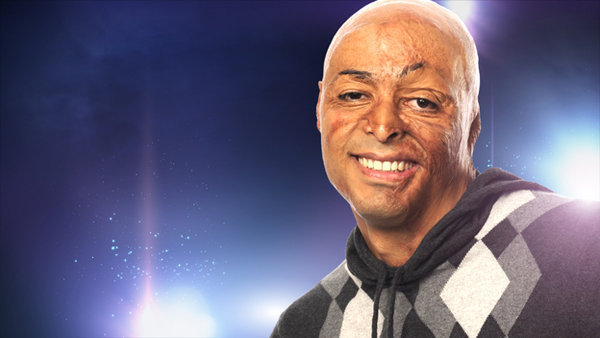
When J.R. Martinez, known from his roles on “All My Children” and “Dancing With the Stars,” was in the hospital recovering from burns over 40 percent of his body, including life-changing facial disfigurement, his mother had a very straight talk with him, one that would guide him to the true depths of his character.

See, J.R. was an American soldier in Iraq, having enlisted at just 19, when his Humvee ran over a landmine, catapulting him to a path of 33 surgeries in 34 months, resulting in the loss of an ear, and permanent facial disfigurement. J.R. describes lying in the hospital, glancing in the mirror, seeing a monster looking back where he once saw a handsome young man – all sending him into a deep, dark depression.

But, J.R.’s mother, older and wiser, saw something else in the situation: The truest essence of her son. “People aren’t going to love you for how you look,” she told J.R. “They’re going to love you for who you are. And, that is a true blessing.”

J.R.’s mom was so right – and J.R.’s success proves that. I mean, the grace and humility with which he presents himself doesn’t make his disfigurement go away; rather, it makes his character shine brighter, where his facial attributes are part of him, but not the sum of him. J.R. is living proof that our exterior facades are just that – facades – and it’s our true character that matters beyond all else.

Yet, not everyone understands this concept. Surely, there are many superficial people in our culture who dwell on appearance alone – their appearance, everyone else’s appearance – and there’s a personal tragedy to it. Literally, when one dwells on appearance, not only can they never be seemingly good enough – after all, there’s always someone better looking by such shallow standards – but they never see others beyond an exterior facade, resulting in never developing deeply sincere relationships.

An acquaintance told me the story of her being a smoking-hot 26-year-old, living life in the fast lane in a Southern California beach community, where her friends and boyfriends were all from wealthy families. She drove nothing but Mercedes since the age of 16; she went shopping virtually every day to keep up with the latest trends; she had breast augmentation, a nose job, and routine Botox treatments; her girlfriends were the hottest of the hot, and they could cut the line at any club; and, she refused to date a guy who didn’t have a buffed body and a Porsche, no exceptions. And, all was moving along perfectly in her world of self-described perfection – that is, until she reached down to grab a CD off of the floor of her newest Mercedes, crossed the lane on a twisting road, and slammed head-on into a guard rail, the impact leaving her a quadriplegic.

But, the accident and paralysis were just the beginning of what she saw as the biggest tragedy of the time. Upon the accident, friends initially rushed to her bedside, and then slowly they stopped coming or calling. While she was in rehab, her friends hit the clubs as usual, and her buffed boyfriend who she thought was Mr. Right (after all, he had a Porsche!), promptly began sleeping with her soon-former best friend. Indeed, she learned that her relationships were as much a facade as her glued-on fingernails and sprayed-on tan. “When we place so much emphasis on our exteriors that we overlook the importance of who people really are on the inside, we take a huge risk,” she shared with me. “Trust me, when your identity and view of others is simply a house of cards, it crumbles fast.”

Going back to J.R.’s mother, she was absolutely right in the scope of her advice: Disability does allow us to have often times deeper relationships, a sort of interpersonal mechanism that protects us from the shallow people among us. Disability is a sort of barometer that gauges the character of of others, only letting the best of the best get close to us – and that’s a great opportunity.

Yet, like all opportunities, we must welcome others accepting us, as-is. J.R. could have used his unique appearance and initial self-consciousness to hide from the world, a way of judging himself and becoming bitter toward others, a presumed lack of acceptance. But, instead, J.R. chose to see the depths of his own character, not just the scars on his face, and he put himself in the world, trusting that he would witness the best in others, as well. Of course, as we now know, his self-acceptance has created universal acceptance by millions of adoring fans, all based on his demonstrating the depths of his character, not an external facade.

As for me, I strive to dress nice and present myself well, but the reality is, I’m a visibly flawed guy with cerebral palsy when viewed on the surface – and I’m OK with that, as the depth of my character hopefully shines through to some. However, when some don’t have the capacity to see beyond my lack of physical perfection, I’m fine with that, too, where I’m glad not to have those “emotionally blind” people in my life. Call me shallow, but if someone is more concerned about the imperfection of my physical appearance than the quality of my character, I don’t want that person around me – and I’m glad that my disability serves as a smoke screen to keep such people away.

What’s really wonderful, though, is that when we recognize the interpersonal value of being embraced for our true character, not our superficial facades, we instinctively return the gesture, being much more open toward others. And, we end up with an amazing exchange – where we’re both seeing each other on the most genuine levels – and that’s how the sincerest relationships are formed. If I accept you for you, and you accept me for me, now we’re truly connecting – and that’s where we all should be in our interactions with those around us.

Someone recently asked me what true acceptance of others really means? And my answer was coy but fitting: True acceptance is the sincerest gift that we can share with another person.

Being Broken

By Mark E. Smith

A friend of mine introduced me to the music of British musician, Marcus Foster, whose song, “I Was Broken,” is hauntingly beautiful. It’s about recovering from being “broken,” whatever that may mean to any one individual.

In the disability realm, the medical model defines us as physically “broken.” However, I’ve never seen that truly to be the case on an individual level. We know of people with extraordinarily physically severe disabilities living vastly successful lives – some far more successful than able-bodied counterparts. So, then, where does broken enter the lives of those with disabilities?

Interestingly, broken enters the lives of those with disabilities in the same way as it effects everyone else: Emotionally. See, broken isn’t an exterior condition; it’s an inner one.

If you think about our physical states as individuals, they’re so diverse and so easily compensated for – I simply use a wheelchair because I can’t walk – that it becomes all but impossible to define a physical condition as broken. Yet, where broken enters our lives – for everyone – is when we don’t feel worthy enough, when we don’t like who we are, when we feel like our lives aren’t heading where we’ve dreamt, when we feel haunted by the past, when we feel like we can’t meet others’ expectations, when we don’t feel deserving of others’ love, when we feel incomplete. These feelings – these excruciating emotional struggles – are when we’re truly broken.

I’m very fortunate to often find myself genuinely connecting with those around me, even in casual settings, and as one of my best friends warned an acquaintance as we were socializing, “Mark’s not exactly known for light conversations – they tend to go deep.” And, he’s right – because I know that there’s a common humanity among us, where no matter who we are, or where we’re from, we all share common experience – including having been broken. What’s poignant to me is that when I share with others our common struggles with identity, self-worth, longing, and so on – all of the emotions that cause us to be broken at points in our lives – it’s universally human.

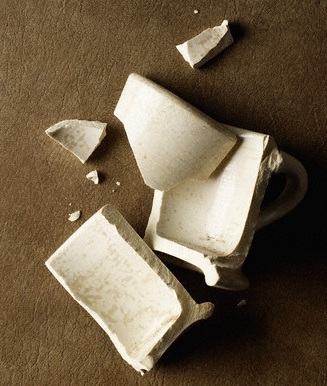
Surely, when we’re broken, it’s telling us that something is wrong, that our lives aren’t heading in the directions we wish. Sometimes being broken is based initially on uncontrollable circumstances; other times, it’s based on our own actions and poor decisions; and, yet other times it’s based on a compounding of all of the above. But, regardless of the causes, here’s what’s striking about being broken: It’s the gateway toward moving our lives in the right directions, it’s the opportunity to realign the paths of our lives to what we wish and deserve. Objects can be shattered to the point of beyond repair; but, not so the human spirit – there’s always the ability to restore and rebuild it, often to greater capacities than previously known.

I know, moving through that gateway from being broken toward wholeness is the toughest challenge we’ll ever face in life. I’ve been broken, and collecting the shattered pieces, trying to figure out how to make myself whole again at points in my life has never been quick or easy – sometimes it’s been like trying to put together a 1,000 piece puzzle with not even a picture of it to help chart the task. And, while there’s no universal answer to rebuilding ourselves from being broken – for some, time heals all; for others, personal space helps regain perspective; and, for yet others, formal processes like counseling help – we know that honesty is the first step toward repairing what’s broken, where despite our fears, shame, and hurt, we must maintain gut-wrenching honesty with ourselves and everyone around us about what we’re going through. If we avoid the candor of being broken, we can’t address it. It’s like ignoring anything that’s broken – it can’t fix itself. However, in merely our admission of being broken, we begin healing. See, when we allow others in, to truly know us – broken, as we may be – we begin to liberate ourselves in that process.

And, what I’ve learned most about being broken is that it ultimately plays an empowering role in our lives: Being broken allows us to clearly see the individual pieces of our truest essence, ones that we can eventually put back together however needed in order to achieve our hopes and dreams – finding ourselves whole, fulfilled, and content in the end.

Staring at the Drapes

By Mark E. Smith

I lay in this hotel room bed – alone – thinking of Vic, who committed suicide almost 22 months ago to the day.

This evening, I spoke to a group of around 170 people, half-way across the country from my home – and I knocked ’em dead, as they say in show business. It was my kind of event – dinner and cocktails – where I have the liberty of really working a festive crowd. And, I hit it home with a theme of following the ramps in our lives – bridges of opportunity that take us to places we never dreamed – by interweaving stories from the humorous to the poignant. And, the gracious crowd was with me all along – an exchange of amazing energy – and then I rolled off stage to their flattering standing ovation.

At the time of Vic Chesnutt’s suicide, many chalked it up as the quadriplegic musician who was tired of living with the daily trails of disability, that the physicality of it all caused him to take a fist full of muscle relaxers, mix a dangerous cocktail, and check out for good – his fourth and final suicide attempt. But, as I wrote at the the time, there was more to the story than that:

…From what I knew of Vic, from what I’ve since learned of Vic, and from what I’ve witnessed and experienced in my own life, I believe that the unique pressures of living ultra-successfully with disability caught up with him, where he wasn’t able to cope with the extreme fluctuations in his life. See, when you have an exceptional level of success like Vic did while living with a disability, it can become a tale of two cities. On the one hand, publicly, everyone’s telling you that you’re a huge success and inspiration, putting you atop the world. Yet, on the other hand, you’re a real person, with real-life issues toward health, relationships, and finances. And, when all isn’t kept in balance, you can go from extreme highs to extreme lows in literally a matter of moments – in the time it takes to go from on-stage in front of a cheering crowd to a lonely hotel room where you’re left to face the realities of your everyday life. Truly, when you have such extremes in life – and you’re emotionally unable to center yourself – it’s just as easy to get consumed by the lowest of the lows as the highest of the highs, where the healthy middle-ground needed to survive doesn’t exist. And, that’s where the tragedy in Vic Chesnutt’s life occurred – not in his literal disability, but in his inability to find that middle ground of understanding and comfort in life as a whole, where, by all accounts, he lived a tormenting oscillation between the highest heights of elation in his work, and the deepest plunges of despair in his personal life, with no middle ground to just be at peace.

My colleague and I leave the banquet after the program’s finished. I thank our host for the engagement, and I convince my colleague to go across the street with me to an eatery for a late night snack. Again, going from a stage to an empty hotel room can be torturous – there has to be a bridge in-between to help one transition from the energy of a packed house to being totally alone. And, by getting something to eat, I’m stalling – buying my time, avoiding the empty hotel room in which I will inevitably find myself. But, I can get through it – alone, the hardest part of it all that Vic knew too well.

Eventually, I make it to my room like countless other nights on the road. I lay in this hotel room bed – alone – thinking of Vic, who committed suicide almost 22 months to the day. And, I realize that everyone’s assumptions of Vic’s suicide truly were wrong. See, as I stare at the shadow of the drapes in the dark, I know that the challenge for guys like Vic and me isn’t being alone in our disabilities; rather, the challenge is being alone in ourselves.

When the Drinking was Done

By Mark E. Smith

“Alcohol and I had many, many marvelous times together. We laughed, we talked, we danced at the party together; then one day I woke up and the band had gone home….” –Harry Crews

I wrote one of my all-time favorite pieces, a short-short story on my quitting sporadic drinking, about a year ago, and never published it. Why? The answer was because I didn’t think that I could live up to it – quitting drinking for good, that is:

When the Drinking was Done (Original)
I asked the hotel concierge – a woman in her 60s, no less – where I could drink in complete anonymity, and she told me to go up to Peachtree Street, hang a right, and look for the shamrock sign over the sidewalk. No, it wasn’t my normal mode of operation by any stretch, but we just have to be honest about these things – especially with ourselves. I didn’t want a party or dressed-up chicks like usual; I just wanted a night of quiet, having been on the road for days, speaking at a conference on one side of the country, then working a trade show on the other. The noise builds up in me – the retention of events and all of the introspection, where I just want quietness, the type I only get from writing in solitude. But, that night, there was to be no writing – just a drink alone, then bed. So, I headed up to Peachtree, hung a right, found the shamrock sign, and a homeless guy opened the door for me. The place was empty – just two guys and a “barman,” as the “bartender” is called in these types of pubs. With my power wheelchair’s seat elevated, I rolled up to the bar, picked up a stool, and set it aside. The barman and two guys just watched. My knees tucked perfectly under the bar – an ideal. “I’ll have a double shot of Southern Comfort, warm, please,” I said to the barman. He set a tumbler glass in front of me, grabbed the bottle, poured the drink to maybe three or four shots, and without thinking twice, grabbed a straw, placing it in my glass. He stepped back as if to see what I was going to do, and I could see via my peripheral vision the two guys just staring at me. I placed my lips on the straw, and downed the glass full, in a single, drawn sip. The barman grabbed the bottle of Southern Comfort, refilled my glass, and said in a strong Irish accent, “This one’s on me.” It was a fine night – they all are on such terms – and when I awoke the following morning, glancing out my hotel window, the quiet was gone, and I knew so had to be gone the drinking – for good this time.

I wrote that literal, biographical short-short story with the intention that my drinking days were done. However, in my public position, if you’re going to tell the world that you’ve stopped drinking – you’d better darn well give up drinking entirely, forever – or everyone will see you as the ultimate hypocrite. If you’re a closet drinker – even an alcoholic – and you vow to yourself that you’re giving up drinking, there’s no real consequence if you don’t live up to it (other than the consequences on your own life). However, if you’re a social drinker like me, and write an essay to thousands of readers that you’ve given up drinking altogether, you’d better do it – as people are watching when you’re out on the town or on the road. Based on this reality, where my written words are in blood, so to speak, I could never get away with publishing an essay on quitting drinking unless I really did.

For the reason of integrity, I never published a piece on quitting drinking because… well… I never quit drinking! That is, despite my truly wanting to give up drinking entirely a year ago, and writing the original piece, I knew that I wasn’t ready — good times on the road, and the occasional flirtatious woman at a party or bar were so linked to a drink or two that I wasn’t prepared to give up those fleeting good feelings that came with booze. But, I also knew that at some point I’d be ready, that I’d have to give up the booze entirely. I felt so much personal guilt about even rarely drinking, that it lingered with me for days, weeks, and months after even one drink – and that wasn’t healthy. I had to just give up drinking entirely at some point.

While my own history with alcohol is one of moderation – I’ve never drank at home, my daughter never saw me drunk, and so on – the history of substance abuse around me has always been present: My great-grandparents were alcoholics, my grandparents were alcoholics and addicts, my parents were alcoholics, my ex-wife was an addict, many of my friends have been alcoholics – and I’ve seen all of their lives harmed or destroyed. And, the question I’ve wrestled with is, How can I see so many lives destroyed by alcohol and addiction, and still touch a drop myself? It’s like playing with fire when you know it burns.

With that said, I’ve had a lot of mixed feelings about my best times drinking, where I look at them with both guilt and fondness. It’s a juxtaposition that I suppose most drinkers face when they stop. I grew up with parents who were Skid Row drunks, so I’ve always known the realities of alcoholism, right down to my family’s demise and my parents’ deaths. In fact, I didn’t drink until I was 33 – that’s how freaked out I was by alcohol. However, once I started drinking, my association with alcohol literally went from the horrific to the glamorous. In my mid 30s, drinking was no longer about Mom neglecting me as a child because she was drunk, or Dad drinking himself to death; rather, drinking was now about high society, where I was at lavish social events, with beautiful people – and drinking just made it all the better. A few shots of Southern Comfort added a glossy sheen to my vision, where I felt relaxed, suave – everything more engaging, like going from watching a movie to actually being in the scene.

But, then, there was always the next morning, then week, then month where I didn’t drink, but the guilt and hypocrisy of such nights stuck with me – too much so. There was always a haunting issue in my mind, where I always knew that I have to be either assuming entire sobriety, or be unrepentant about drinking – and to try to justify living in-between was hypocritical. Sure, I realize that lots of people drink socially, and it’s not an issue. But, for me, I could never roll that line: I was either stone sober or drinking – and I couldn’t be both. Again, if I wanted to keep drinking, then I’d have to learn to be unrepentant in it, not feel guilt, not relive pains of my past, not look in the mirror and see my father staring at me, not see the hurt of a child in my own eyes looking back. But, I’ve witnessed too many around me destroyed by alcoholism and addiction, and for me to glamourize drinking in my own life, knowing all of the hurt washed down with it, seemed not just hypocritical, but morbid.

Cartoonist, John Callahan’s, later years and death have also had a profound effect on my journey toward sobriety. John was a hardcore alcoholic – it’s what led to the car crash that caused his paralysis – and he sobered up some years later, not touching a drop for decades. Despite his in-your-face antics and work, he noted that sobriety added a peace and strength to his life, not the guilt and angst he felt when he drank. If John maintained sobriety – turning off the guilt and angst – so could I.

The catalyst for me to publish this piece – that is, to sign on the page in blood that I’m done drinking for good – is really just where I’m at in life. I’m a 40-year-old, full-time single dad, focused on my career and simply trying to do right by everyone, including myself – and I have to get it all right. I’ve seen too many lives around me destroyed by alcohol, felt too much guilt and pain in myself for too long in even having an occasional drink – and I’ve deemed, Enough is enough with the booze at any level – don’t want it, don’t need it, the drinking is done. Is it a bold declaration? Maybe. Will it remove all of my unsettling feeling surrounding alcohol in my past, dating as far back as I can remember as a child? Certainly not. But, is it a move in the right direction for me to make? Absolutely. It’s one of those situations where if something isn’t working – if it’s inducing guilt, pain, shame, and hurt – stop doing it! Sometimes we just have to man-up and take accountability in ways others may not fully understand, where we say, F- it, I’m going above and beyond simply because it’s the right move to make, and I don’t care what the world thinks. And, I’ve finally said in my own life, F- it, the drinking is done, and I’ve done it for me. …All alone – after all.

At this writing, I have a speaking engagement this week in Fargo, North Dakota. I asked someone from Fargo what’s there to do in town?

“Drink,” he jokingly said. “We have more bars than anything else.”

“Perfect,” I replied. “I’ll have time to read in my hotel room, then.”

When Life Isn’t Fair

By Mark E. Smith

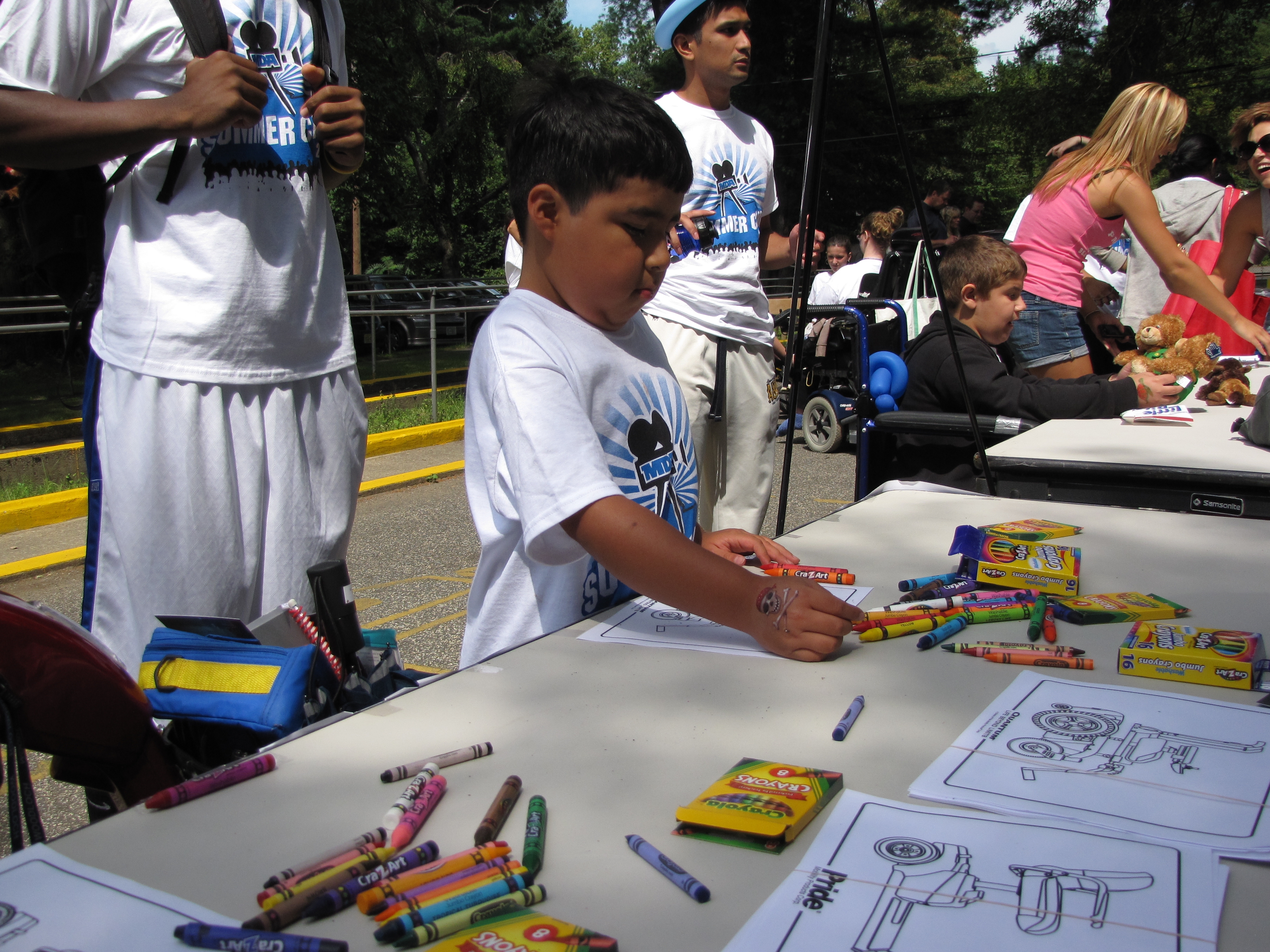
I had the absolute privilege of visiting a summer camp for children and teens with various forms of muscular dystrophy. It was among the most fun I’ve had, as the campers were so awesome, such spirited personalities, as children are. However, as much fun as MDA camp is for everyone involved, there’s still a looming reality: Most of the campers will pass away by their mid twenties.

There’s truly an injustice to it all, one that, for me, is impossible to explain – that is, the universal “unfairness” that within 10 years or so, many of the campers whom I met will no longer be with us, that not only will their lives have been lost, but with them, we all will have been robbed of their amazing life-long potentials. I mean, their time on this Earth is impacting – I know, they profoundly impacted me – but to think of what these amazing individuals could accomplish over sixty or seventy years – not just twenty – is limitless. Yet, we’ll never have the chance to know because of the inexplicable injustice of a life-robbing disease.

I remember leaving the camp thinking, Cash my chips in now, God, and give my lifespan to anyone of those kids – I’ve had my shot at life, and I’d gladly pass my years left on to any one of those children….

Although visiting the MDA camp was a reminder to me of the seeming inexplicable injustice in the world, the question of universal unfairness is one that I encounter almost every day – that is, why do such terrible circumstances happen to such good people? In the wheelchair world, consumers often share with me that they’ll never understand why they received their injury, illness, or disease, that they wrestle with the injustice of it all. And, I never have a direct answer. But, I do have at least one perspective that touches upon the subject of life’s “unfairness” – and the MDA campers hit home the point for me.

Of course, we know that there are direct attempts to answer why bad occurrences happen to good people. Religion has its answers that run the gamut, from it’s God’s master plan, to it’s bad karma from a previous life. And, science, too, has its direct answers, from cancer being gene mutations, to paralysis being an injury to the spinal cord. These answers, however, still leave intellectual loopholes, where we can look at examples like Dr. Wayman R. Spence, an original anti-smoking crusader, who himself ultimately died of cancer after 50 years of treating others, and it’s truly impossible to see any justice in such an uncanny circumstance – it’s haunting, really.

Still while maybe we will never be able to intellectually answer life’s injustices beyond, Life isn’t fair, we can use coping mechanisms to address them. See, we universally approach life from three perspectives: What is; what can be; and, what should be. And, by understanding the roles that each of the three perspectives play in our own lives, we can better cope with seeming injustices.

What is, is truly the givens, the realities of any situation as known in the present. It’s the, my father has cancer, my husband is an adulterer, my daughter is an alcoholic, I have multiple sclerosis.

What can be, is what we logically can do to address a situation moving forward. It’s the, my father has cancer, but treatment will extend his life; my husband is an adulterer, but I need to get a divorce and find a loyal guy; my daughter is an alcoholic, but getting her into a rehabilitation program is a wise step; I have multiple sclerosis, but medication and therapy may slow its progression.

What should be, is truly wishful thinking, not based in reality, but dwelling in questions of fairness. It’s the, my father shouldn’t have cancer; my husband shouldn’t be a cheater, my daughter shouldn’t be an alcoholic; I shouldn’t have multiple sclerosis.

What’s fascinating is that when we look at the three perspectives – what is, what can be, and what should be – only two are relevant, having any impact or meaning in our lives. The third simply leaves us empty, without the ability to do anything, trapped in despair. Can you guess which two are empowering, and which one is debilitating?

Of course, what is and what can be are very empowering – that is, we can act upon them. However, dwelling on what should be is truly debilitating because there’s nothing we can do but wish upon a seeming impossible, asking ourselves, Why?, silently screaming, It’s not fair! Nothing good comes out of stewing over what should be.

And, that’s what I ultimately took away from my visit to the MDA summer camp. As adults, we’re so caught up in the what should be’s of life – how life is unfair – that we overlook the intrinsic value of what is and what can be. For example, rather than celebrating the current life of our loved ones who have cancer, we dwell upon the unfairness of their pending passing. Rather than moving forward from bad relationships, we stew over how we were wronged. Rather than appreciating our jobs, we focus on any negatives. And, rather than accepting those around us for who they are, we want to change them. That is, we go through life lamenting – often to the point of depression – about how things should be, not recognizing what is or realistically what can be.

Yet, the kid’s attitude at the MDA summer camp was just the opposite – it was totally about what is and what can be, and it was contagious. I only saw life, love, and laughter. It was the most positive place on Earth, making Disney World seem glib. It was a true celebration of living in the moment, where no one questioned what should be, but reveled in what is and what could be. Even we adults ended up with our faces painted, coloring with the kids, and eating watermelon!

Yes, bad things happen to the best people, the weight of the worst can land on our shoulders – and none of it’s fair, justified, or explainable. Yet, we don’t live in a world of equitable should be’s; rather, we live in a world of what is and what can be. And, let us make the most of those, where our days aren’t filled with longing or self-pity, but are celebrated with appreciation and joy for what’s within our immediate presence: The beauty of what life is and can be.

The Glory of Vulnerability

By Mark E. Smith

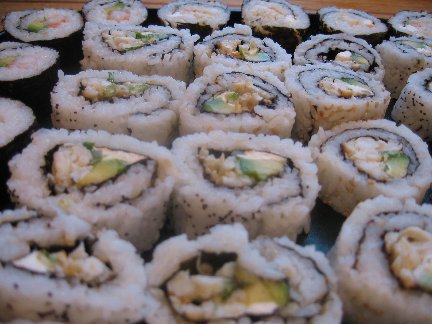
I wasn’t the least bit uncomfortable about it, nor was she. See, there I was, all dressed up to give a talk in front of a corporate group, but I was presented with a pre-talk lunch served by our gracious host, consisting of sushi rolls. I knew from the very sight of the rice-covered sushi rolls that, due to my poor coordination, there was no way that I could get them from the table to my mouth without rice and who knows what else ending up on my neatly-pressed pants….

So, I had two choices: One, I could simply not eat; or, two, I could have the courage to ask for help.

With little hesitation, I asked for help because it’s just as important to me to acknowledge my vulnerabilities as it is my strengths – that is, I want those around me to know my entirety, not just selected parts. I wouldn’t be true to myself or those around me if I only showed my strengths, and didn’t admit any limitations of my disability, my vulnerabilities.

Fortunately, my asking for help was easy in that instance based on the fact that a dear colleague of mine was with me, who’s traveled with me quite a bit, so asking her for a helping hand was natural. What’s interesting, though, is that getting to that comfort level – where I could turn to my colleague and say, “Would you mind feeding me my sushi, so I don’t get it on my clothes?” – took time and candor to evolve. On her part, my colleague’s sincere, genuine nature has been touching, and she’s proved truly intuitive in getting to know me as a person, disability and beyond – all of which speaks to the exceptional qualities of her character. However, I’ve likewise have had the openness not to hide any of my vulnerabilities – the realities of my disability – from her. She knows that I drink through a straw, I squirm in airplane seats to shift weight off of my rear, and can be a bit messy when I eat, and on and on. I am who I am, and I trust that my comfort in living with my vulnerabilities – where I don’t display only the so-called best of me, but the true me, flaws, spasms, and all! – has likewise made her more comfortable. None of us are perfect; we all need help at some point in our lives. And, allowing others to see our vulnerabilities is a positive trait, one that unifies, where asking for help and helping others is an inspiring exchange. We don’t get through life alone, and sharing our vulnerabilities is a key that we all need in living a life that allows us to truly connect with others in the most genuine ways.

Interestingly, researchers scoured the globe for the one aspect that most connects us with others – that is, what forms the deepest, most meaningful relationships on all levels? – and allowing ourselves to express our vulnerabilities topped the list. Vulnerabilities, it proves, are only weaknesses when we won’t admit them. However, when we admit our vulnerabilities, they become strengths because we’re showing ourselves to others in the most genuine ways – and that forms the most open connections with others, the sincerest relationships.

Of course, it’s easy to know why many people hide their vulnerabilities: They’re scared that others won’t accept them in their entirety, that others will judge them. But, this rarely proves the case. The basis of sharing vulnerabilities is formed within honesty and results in our fully opening ourselves up to others – and those are the foundations of healthy relationships. When we live freely with our vulnerabilities, we allow others to accept us wholly, and we accept others wholly, as well (if I expect you to accept my vulnerabilities, I likewise must accept yours, and we’re two perfectly imperfect people connecting on the sincerest level). But, here’s what’s really important: When we express vulnerabilities with others, we’re acknowledging our vulnerabilities within ourselves, and it’s the self-acknowledgment of our vulnerabilities – not denial! – that allows us to live healthier lives.

Addiction and recovery proves an enlightening study in how vulnerability can kill us or liberate us – sometimes literally – all based on whether we admit vulnerabilities. For example, an addict in the clinches of use, will never admit vulnerabilities. An addict won’t admit to causation, won’t express genuine feelings, will try to justify even the worst decisions, and will lie about everything under the sun, including lying to his or herself. That is, addicts run and hide from vulnerabilities via substance abuse – and, at best, it disconnects them from meaningful relationships, and, at worst, it literally kills them.

However, recovering addicts do just the opposite – they admit and address vulnerabilities. Think about the first words spoken by everyone at an Alcoholics Anonymous meeting: I’m Joe, and I’m an alcoholic. Admitting the vulnerability of addiction – that is, being honest and candid – liberates and connects. There’s remarkable empowerment in it. And, when getting into deep models of recovery, acknowledging the vulnerabilities that lead to the addiction – past traumas and such – is yet another way of profound recovery. That is, the only way addicts stop using is by acknowledging and addressing the underlying vulnerabilities that cause the addictive behavior in the first place.

In our personal lives, hiding behind our vulnerabilities – or, denying them through self-justification – is extremely dangerous, defeating so many potentials in our life: I’ve been hurt in a past relationship, so I’m not going to trust anyone again…. I don’t want to be seen as weak, so I’m not going to apologize…. I’m not going to show all of me because others will judge me…. Really, what such a closed emotional state says is, Overall, I’m going to self-sabotage meaningful relationships because I’m so scared to reveal my vulnerabilities – my complete self – to others.

It is astounding how painful and self-defeating it can be in not allowing ourselves to be vulnerable. At the very least, most of us can relate with the inner-conflict that occurs when we want to reach out to someone, but don’t out of the fear of feeling vulnerable – maybe it’s asking someone on a date, maybe it’s calling an estranged family member or loved-one to try to patch things up, or maybe it’s sharing one’s true feelings with a good friend. I’ve struggled with all of these – and continue to at times! – but what I’ve learned is that while there’s always the risk of the other person not being receptive, there’s also the more likely possibility that the other person will be receptive. And, the real reward in this process of overcoming our fears of vulnerability is that we’ve at least had the integrity to act on our true feelings, with sincere intent, living openly in every way – and that’s liberating, regardless of the final outcome.

The fact is, there’s a universal bond in the truth that none of us are perfect, that we all have vulnerabilities – and some are scary to admit to ourselves and others. Yet, when we live freely with our vulnerabilities, acknowledged by ourselves and shared with those close to us, we not only allow others to know us completely, but we’re far more open and accepting of others – and that builds connections of lasting trust and meaning. I have vulnerabilities, you have vulnerabilities, and it’s all OK. Let us live fully as perfectly imperfect people – with our glorious vulnerabilities exposed! – and our self-acceptance and relationships will flourish.

Just the Two of Us

Mark E. Smith

In an uncanny foreshadow, over 20 years ago, Jim Martinson – amputee, paralympic wheelchair racer, and owner of wheelchair manufacturer, Magic In Motion (purchased by Sunrise Medical) – noted about his being a single father at the time, “I want my kids to just be kids. Let me worry about the rest.”

Jim’s statement oddly stayed with me all of these years, my never fathoming that his words of wisdom would become so poignant in my own life, that I’d be in his situation decades later.

So, what is it like to be a full-time, single father, who happens to have a disability? As the full-time, single father of a 14-year-old, I can tell you it’s the ultimate joy most of the time, and scary as hell some of the time – with a lot of complexity in-between. But, all is worth it by far, with my daughter the center of my life, where I wouldn’t change any of the difficulties I’ve endured in getting to this point. Indeed, even the most challenging of times can bring miracles into our lives, and my daughter has proved one of them.

Our journey together began at 7:39pm on March 3, 1997, just a day after my own birthday. In the delivery room, I was the first to hold my daughter, and in the most profound moment of my life, she made immediate eye contact with me – and I knew in that instance that we would be forever inseparable. Yet, I wouldn’t know to what phenomenal extent for years to come.

The first three years of my daughter’s life were remarkable. I worked hard to build a life for our family, my marriage was great, and my daughter was the best toddler ever – it was all of my dreams coming true. On my daughter’s part, she seemed to intuitively understand my disability, where as a baby, she lay perfectly still for me to change her diapers, and even at the age of two, she would stick with me – either on my lap, or waddling beside my wheelchair – in even the most distracting of circumstances without a fuss. She just always seemed to understand and respect me, including my limitations, in a way that was dramatically different than I’ve seen in other parent-child relationships.

As a result, from her birth through her toddler years, my daughter and I developed a dynamic-duo effect, where we became quite the team. From that foundation, and with my marriage disintegrating over the course of many years, I assumed more and more parental responsibilities as my daughter grew, to where although all of us where still living under one roof, I was increasingly the primary parent, a role that my friends and family picked up on before I did. Even when in an unhealthy relationship, one is still in a relationship, and I suppose that because there was still a “mom” in the physical home, I didn’t realize that I was taking on more and more of a single-parenting role. I look back now and think, Wow, there were years of evolution in that process that I was oblivious to! But, even in a bad relationship, we’re not really “alone,” and I think my trying to balance my career with raising my daughter and dealing with an unhealthy relationship didn’t allow me to see the larger dynamic that was occurring: I was on track to being a truly single parent.

And, that day eventually came, in its own time as life changes go. I’d like to tell you such change has been the best thing ever, but no ended marriage is good, nor is being a single parent what’s wished. It all may be for the best given the alternatives, but it’s never an ideal. Yet, my daughter’s and my approach has been just that – let us together take a less-than-ideal situation and make it for the best. After all, that’s the only way one can succeed in trying times and move forward in healthy directions.

Toward the emotional, those of us close to my daughter haven’t seen her more content and at peace. With just her and me living together, there’s no stress in the home, just positivity, love, and support, where she has an emotionally safe place to breathe. And, it’s proved wonderful. She has amazing friends, and her relationships with strong, healthy women like my sister have been evolving into fantastic role models. Of course, the ideal would be for my daughter to have a strong, healthy mother, but that can’t be at this juncture – life isn’t fair or just – so let me, as her father, at least be aware of the importance of having only healthy female role models in her life.

My daughter and I have had to set clear boundaries on whom does what around the house. Going back to Jim Martinson’s point, kids do need to be kids – and that’s been difficult for my daughter to practice at times. The fact is, she does see me working like a maniac, in every way, and she wants to jump in and help – a testimonial to her character. But, she needs to concentrate on school, drama, band, and friends – that is, on being a teenager. Indeed, she has her chores, but I really need to be Dad, doing as much around the house as possible, even if some tasks are easier for her than for me.

Of course, my daughter isn’t perfect – and I even find great joy in that, where she’s definitely a teenager. I loved all summer when I was busting my butt from 5:00am till 11:00pm, and I’d race home at lunch to check on my daughter, only to wake her up, finding her not yet out of bed! Or, I can’t count how many times per night I have to remind her to take the dogs out, where she’s distracted by texting, Facebook, and chatting with friends. Or, when she’s oblivious to scenes like our English bulldog prancing around with a full roll of toilet paper in her mouth, and I note, “It looks like it snowed in the living room – how did you walk by that dog ten times, and not see her shredding toilet paper?” And, it’s inexplicable to me how her room is such a mess! (They tell me it’s a teenage girl thing.)

And, I’m not perfect, by any stretch. My role as father is the one that’s the most joyous and rewarding to me, where I would go to the ends of the Earth for my daughter. And, while I think I’m doing a pretty good job, it’s still scary as hell at times. As forgiving as kids are, there truly aren’t any do-overs in raising them – parenting isn’t a trial run – so getting everything right is a weighty task, especially as a single parent. For me, there’s constant listening to my daughter – and I mean truly listening – and trying to determine how I can best meet her emotional and mental needs at vital moments. Sometimes I have answers, and sometimes I don’t – and a lot of times I just follow her lead, supporting her in her processes. What I’ve learned is that, as parents, delivering the right answer isn’t always required, but simply supporting our children so that they can find the right answers for themselves in the healthiest ways is often our role. Let me guide, but not stifle.

In my personal life, there’s an overall level of “sobriety,” where my sense of accountability and responsibility is greater than it’s ever been. We know that single parents are statistically more likely to have depression, absenteeism at work, and indulge in substance abuse – but I’ll have none of that. To the contrary, I wish to do right by everyone, especially my daughter and my career, so my tact has been to step-up my game, not let it slide. Sure, I feel overwhelmed and alone at times – there’s an insane amount to accomplish in each day, and I don’t have an intimate partner to turn to for support – but those aren’t excuses to have a drink or crawl into bed and hide; rather, they’re reasons to push myself even harder, staying up as late as it takes to try to get it all done, moving through it all with healthy emotional acknowledgment and tenacity. Twenty years from now, I want my daughter to look back upon these times and say, Not only did my dad work through it all, he actually picked up the ball and ran with it!

In all, we are a dynamic duo, moving through life very well, just the two of us. It’s not always easy or perfect, but we’re striving to make the most of it – and there’s a lot of joy and laughter in our hearts and home these days. Naturally, my daughter has asked me if I foresee “us” ever having a long-term relationship with a woman, possibly step siblings in the mix?

“I don’t see why not,” I told her. “It would have to be a remarkable woman to take on us; but, as we’ve proven, we have a lot of unconditional love to give in return. For now, though, it’s just you and me, kiddo – and that’s pretty special.”

Alioto’s By The Bay

By Mark E. Smith

I just made my way back from the City by the Bay, San Francisco, where my whole family was born, where I went to college, where my daughter was born. And, my daughter was with me, 14 years old now, and I wanted her to see where it all began, especially following my mother’s recent passing. One might conclude that it was like going home; but, it wasn’t. Everything’s different now – Pennsylvania’s home, I’m a single father, my only roots left in the city are the train tracks upon which I used to ride to college.

But, one night at Alioto’s, a well-known restaurant on the water front, I ran into a couple, the only one’s at the bar – and they were clearly in love, sneaking kisses, rubbing noses. My friend and I were bold enough to ask their story, what brought them together? We learned she was 50, and he, 60. She was slender, blonde, professional – a business woman, I presumed. He, well, reminded us of Shrek – big belly and ears, exaggerated features. And, man, they were in love.

The couple told us of how they met at a conference, and she blew him off; but, then they met again, by chance, at a bar, and they’ve been together ever since. In love.

I asked what advice he had for the rest of us – their being so lucky in love – and he laid it out. “Look, life isn’t a trial run,” he said. “When you find something amazing like this, don’t hesitate, don’t let a person pass without loving to the fullest. There’s no time for fear or regrets.”

Life isn’t a trial run. It’s so simple but yet so many of us miss that part. In life, love, disability, whatever – grab on to what’s in front of you like there’s no tomorrow because there may not be a second chance. And, they – the couple at the bar – were holding on to each other, no trial run for them.