
No More Second Chances

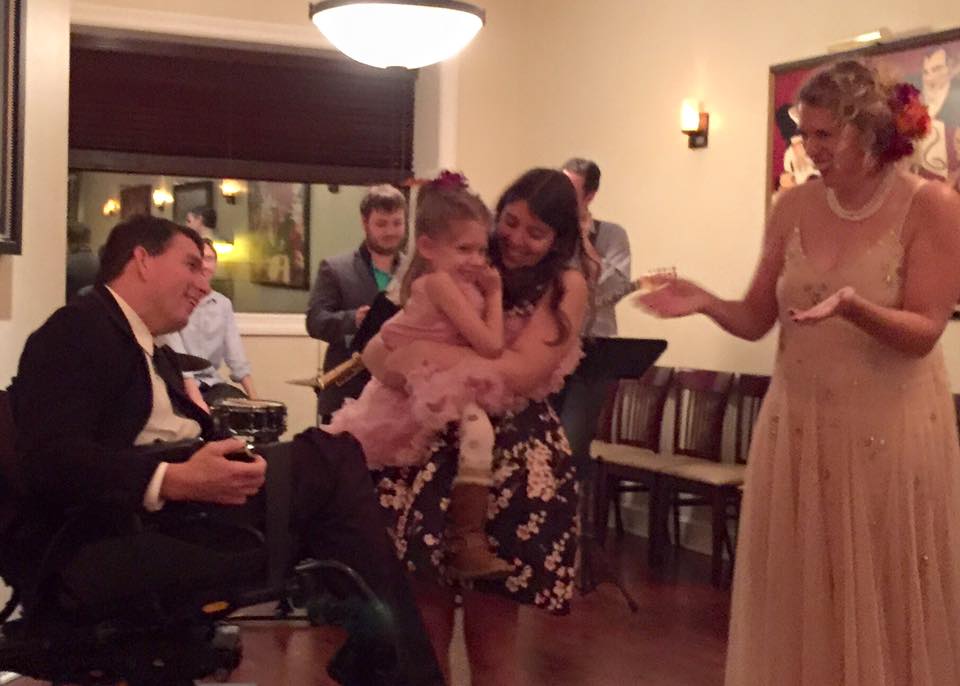
Smith Wedding Reception, October 10, 2015

By Mark E. Smith

On the surface, my life is one of second chances. In fact, from the moment of my birth, not breathing, resuscitated, then given only hours to live, my life started with a second chance.

As my life went on, second chance after second chance all but saved me from countless perils that could have stopped my life in its tracks. I went from lying on therapy mats in a special school to being mainstreamed in public school; I went from virtually no mobility to having a power chair; I went from moving into a garage to moving into my stepfather’s home; and, I ultimately went from not having a father to being among the most dedicated fathers myself. Indeed, if it wasn’t for second chances, my life would have derailed at so many points.

However, now at mid-life, my experiences and insights have allowed me to realize that second chances don’t truly exist beyond cultural mythology. Life doesn’t offer second chances. We can’t erase where we’ve been, we can’t change what’s happened, and we certainly don’t get do-overs. No, life is a journey, a linier equation, where all that we’ve experienced shapes who we are, where we are – the painful times, the prosperous times, the losses and gains, the tragedies and triumphs all serve a masterful purpose.

The notion of second chances suggests that the firsts were an error, not meant to be. Yet, without whatever came first – the tragedies, the mistakes, the failures, as commonly labeled – we could never have what came next, we could never continue on the journey that makes our lives… well… our lives. And, when we remove the notion of second chances from our beliefs, and value all aspects of our life as a linier journey, it gives meaning to all, turning even the most painful parts of our lives into purposeful, into having reason, into healing and success.

See, if we don’t look at life as second chances, but rather as what’s meant to take time to unfold and come to fruition, it’s impossible to be bitter, resentful or regretful of the past. Instead, we become intrinsically thankful not just of where we are, but likewise where we’ve been. Sometimes life’s journey is not to be questioned, but lived.

Our Truest Voice

speaking

By Mark E. Smith

I recently watched a Ted Talk by a public speaking coach who gave the secrets to being a great speaker. She spoke of relaxed posture. She spoke of soft breathing. She spoke of using your diaphragm. She spoke of controlled speech patterns. And, she spoke of overall body composure. Really, based on all she covered, I should never roll on a stage or speak in front of a group ever again because my cerebral palsy prevents every technique she noted. According to her, I’m the antithesis of a speaker, her worst nightmare.

Yet, over the past 25 years, I’ve spoken to more groups than I can count; I’ve made a remarkable number of TV appearances; and, I speak formally within my company in many capacities every day – all with tremendous efficacy. So, how do I – as one with severe cerebral palsy – defy the rules of the experts and achieve success in my career with so much speaking?

The answer is, I am just me and I always speak from the heart. I don’t need to be a polished robot, nor do I need to try to be someone I can never be. When you hear me speak – sometimes labored, sometimes slurred, sometimes spastic – you’re getting the real me. What greater gift can we give others than the real us, perfectly imperfect, speaking from the heart?

Among the reason why I address groups within our company is because I’m so passionate about what we do and I’m so inspired by the profound difference each employee makes in the lives of our customers. And, so one of my greatest privileges is speaking to groups of our employees, both weekly with new hires, and monthly at our birthday lunch, where we celebrate employees’ birthdays.

It’s my pleasure to share with you one of my talks with our employees. What I want you to note is that I’m clearly not what that speech coach envisioned. Rather, I’m real and imperfect – the two traits that we should all embrace to make a true impact in the lives of others. There’s no one more captivating than who we truly are.

Crank up the volume and enjoy this 12-minute talk:

Intersection of Purpose and Hope

hope-1

By Mark E. Smith

I was recently in Boston, working a consumer trade show for disability-related products, including my company’s power chairs. If you’ve never been to Boston, it’s a stunning city – from the architecture to the cobblestone streets to the harbor – and I found myself in Boston at an amazing spot: the intersection of Purpose and Hope.

No, the intersection of Purpose and Hope isn’t a literal street corner in Boston, but it can be found in any city, and in any of our lives. For me, in Boston, it was found in my meeting a seven-year-old boy with cerebral palsy.

He reminded me a lot of… well… me at that age. He was a little guy, squirming all over the place in a manual wheelchair due to spasms and tone, symptoms of cerebral palsy. And, the reason why his family was at the show was because he needs a power chair to keep up with his siblings and peers – read that, to just be a kid.

We had our top-of-the-line power chair there in a pediatric seat size, and as I soon realized, uncannily as if made to fit him exactly. To address his involuntary body movements, I had our reps unbolt lap belts from other units, and we got him seated, strapped in and stable. And, like he’d been in a power chair his whole life – or, more aptly, a NASCAR driver – off he went!

I looked at his parents’ faces, their eyes, knowing how bittersweet these moments can be. On the one hand, a parent wants his or her child to have all of the independence in the world. Yet, no parent wants his or her child to have a lifelong disability. A child going into an advanced mobility device can be a parent’s emotional tug-of-war.

However, his parents understood the liberation he was gaining, and their expressed emotion was joy as he roared around an empty part of the convention hall.

“He’s going to be a little terror,” his mother said with a huge grin. “…From the playground to chasing his brothers on their dirt bikes.”

For me, I was blessed in that moment in living my purpose as one who’s found so much emotional reward in my career of serving others who are on the path I, too, have traveled. And, the family expressed so much hope toward the quality of life a power chair will bring to their son. All of this is the breathtaking beauty of the intersection of Purpose and Hope.

Where’s that intersection in your life right now? Sometimes we bring our purpose to the corner, and sometimes we come needing hope. I’ve been on both sides of the corner. Regardless, when we simply have the initiative and courage to place ourselves at the intersection of Purpose and Hope, all lives involved are elevated.

First Drafts

hemingway

By Mark E. Smith

When my daughter told me that her first reading assignment in her college freshman English class was Ann Lamott’s “Shitty First Drafts,” I was thrilled. Now there’s a professor who knows how to teach!

“Shitty First Drafts” was never a stand-alone essay, but an excerpt from Bird by Bird, Lamott’s 1994 book on writing, aimed at writers living the writing life, and goes back to Hemingway who coined the subject of shitty first drafts. Yet, Lamott, who you might recognize as a very pop-culture and, interestingly, irreverent Christian writer, infused Bird by Bird with life lessons, where I, for one, have always viewed “shitty first drafts” as another one of Lamott’s ultimate metaphors for life.

Lamott’s assertion is that, as writers, the only way we ultimately get to clarity and success is by having the courage to embark on shitty first drafts:

…All good writers write them. This is how they end up with good second drafts and terrific third drafts…. Very few writers really know what they are doing until they’ve done it. Nor do they go about their business feeling dewy and thrilled. They do not type a few stiff warm-up sentences and then find themselves bounding along like huskies across the snow. One writer I know tells me that he sits down every morning and says to himself nicely, “It’s not like you don’t have a choice, because you do – you can either type, or kill yourself.” We all often feel like we are pulling teeth, even those writers whose prose ends up being the most natural and fluid. The right words and sentences just do not come pouring out like ticker tape most of the time.

Chances are, you’re not a writer. But, if your life is like mine, it’s certainly checkered with shitty first drafts. As Lamott puts it, we typically have no idea what we’re doing until we do it. And, I don’t know about you, but I can’t think of hardly any success in my life that didn’t begin as a shitty first draft – from living with my disability to school to career to finances to relationships to working out, and yes, writing. In fact, I have shitty first drafts every day, where based on my disability, two or three tries at any daily living task is the norm. However, I’m always thinking, learning, getting wiser as I do a task, so rather than getting frustrated, I hone in on getting better, improving with each “draft.”

When it comes to our lives, it’s vital to give ourselves permission – and have the courage! – to have shitty first drafts, namely because, as Lamott puts it, they lead to good second drafts and terrific third drafts. Do you know how I learned about finances and relationships, two cornerstones of life? Shitty first drafts! In my 20s, I got into debt up to my ears, by my 30s I paid everything off, and today I haven’t used credit in over a decade, living totally debt free. Relationships have had a similar path, having to learn about love through a lot of painful trial and error, but I think I’m a better partner today than I was 20 years ago. There are so many aspects of life that generally start with shitty first drafts; but, if we’re cognizant, self-aware and dedicated to growth, those shitty first drafts aren’t shitty at all – they’re assured paths to ultimate success.

So, as my 18-year-old daughter moves through her first semester of college, she’s not just reading about shitty first drafts, she’s undoubtedly living them at times, as we all have and do. Yes, it’s hard as a father not to jump in and correct my daughter’s “shitty first drafts,” but I know that by allowing her to learn and grow from them, her second and third drafts – read that, her accomplishments – will be amazing.

Who Really has the Power

typewriter

By Mark E. Smith

I thrive on possessing power. But, not in the way you might think. In my business and family, I, in fact, practice the opposite, seeing my roles as humbly serving others. And, yet, when it comes to me, power is synonymous with personal accountability. I learned at an early age that in order to have power, you must be personally accountable; and, if you’re not personally accountable, you have no power. You can control life or life can control you. It’s initially circumstance, but ultimately choice.

It all started with my failing biology. I was in high school and flunking badly, namely because I wasn’t doing my homework. I wanted to do my homework, but my home life was a mess. My mother and stepfather made our home Hell. I came home from each day to my mother in the most horrendous conditions – always drunk, but sometimes high, overdosed, manic, or suicidal – and then my stepfather came home drunk, where they fought and smashed up the house. My mother loved to break things and my stepfather loved to scream, and it made for long nights. On top of that, I was struggling to develop my independent living skills due to my cerebral palsy. How was I to somehow do homework with so much volatility in my life?

I lay in bed looking at my report card one night feeling ashamed because it was dotted with Fs and Ds. I’d worked really hard to be mainstreamed in an era when it wasn’t common practice, and I was watching it all slip away. I tossed the report card on the floor and decided my parents and cerebral palsy weren’t going to dictate my grades. I had the power, not them.

I went from a failing student to the honor roll the next report card period by literally locking my bedroom door in the evenings and letting my parents trash the house and there lives as I focused on my homework. I remember typing my homework while trembling and crying as my mom pounded on my door, screaming. Still, I wasn’t giving her power over my life. My grades were my responsibility – and I had the power to succeed over all.

Those years of finishing high school with A’s didn’t make me smarter, but they did make me wiser. I learned that our lives, in the long term, aren’t dictated by anyone or anything, but us. Circumstances may set us up as victims, but we can choose to be victors.

Ultimate Rebellion

20150808_161704-1

By Mark E. Smith

In preparation of my daughter leaving for college, we cleaned out closets. To my daughter’s delight, we found a stash of 20-year-old newspaper stories on me. One was titled, “Limbaugh of cripple guys.” No, it wasn’t because I was a right-wing conservative – far from it – but because I had a pretty popular voice in mainstream columns and articles in the San Francisco Chronicle and alike that intertwined disability culture with all sorts of topics. When Ghirardelli Square was being pressured by those around the newly-enacted ADA to spend $2 million dollars to build a ramp right around the corner from an existing up-to-code ramp, I was the only one with a disability to write that such money should go toward more rational causes like addressing the city’s homeless problem. Those with disabilities were outraged at me; the general readership applauded me. I, however, didn’t care what anyone thought. I was simply a writer who had my own sense of social justice, and wasn’t afraid to voice it – with a little youthful rebellion mixed in.

I recently took my daughter to see “Straight Outta Compton,,” the bio-pic about N.W.A, the pioneering rap group that was truly misunderstood – and took both a page from the Civil Rights movement decades before and foreshadowed 21st-century race relations. I remember hearing N.W.A.’s “Straight Outta Compton” album in 1988 – and have listened to it ever since – thinking, This is a brilliant, brave, rebellious protest album above all else.

F@ckin with me ’cause I’m a teenager
With a little bit of gold and a pager
Searchin my car, lookin for the product
Thinkin every nigga is sellin narcotics

Those lyrics placed in context of what we’re seeing today – the incredibly painful, strained relations between the police and, namely but not exclusively, the black community – prove historically accurate and eerily prophetic.

The next eve, I was with my fiancée at a jazz festival, where so many were of my generation and older, some having lived during the passage of the Civil Rights Act, and everyone sat neatly in rows of folding chairs, the bands cordially playing. And, I thought, Where’s the rebellion, where’s the social commentary from the diverse stage that black lives matter, especially given the events of recent, not to mention history? Even my daughter’s pep band at George Mason University has taken to playing a very political Rage Against the Machine song. Come on, Spyro Gyra, pound out an instrumental of N.W.A.

Then, as I sat there pondering all this, it happened. I saw a breathtaking example of the truest form of rebellion, about not being constrained by the social conformity of sitting in perfectly-formed chairs, listening to politically-correct musicians, following the other sheep, but about being true to what you stand for, who you are, what compels your soul.

In the row in front of us, a young lady with a progeriod syndrome – bald, aged facial features, frail stature – walked out to the aisle with who I presume was her father, and they began getting down, dancing. I bet many at the event would love the self-freedom, the rebellion to just follow their soul and dance in front of hundreds of composed strangers in perfectly-aligned folding chairs. But, she was the only one who did.

I understood at that moment that the spirit of true rebellion comes from one simple truth: no matter if you’re N.W.A or that dancing young lady, true rebellion is when you have the courage and the confidence to just be yourself.

Jumping Out of Airplanes

skydive

By Mark E. Smith

Have you noticed that when it comes to making big life decisions, there’s rarely a “right time,” and that those who wait for the right time, rarely end up making such life changes? Why is that?

Typically because there’s never a right time when it comes to making big life changes. Yet, so many of us create right-time rules that seem responsible, but really prevent us from ever making big moves – because the fabricated right time never comes. People set the most unrealistic prerequisites that they ultimately sabotage what’s truly important, never making big life moves. I’ve had kids – there’s never a right time, but it always remarkably works.

My fiancée and I, as responsible 40-somethings with kids – one off to college, the other, second grade – have had the “right time” all figured out. Being bicoastal, we went between the two coasts for almost two years, ultimately planning every “right time” detail for her move to the East Coast. Details surrounding houses and dogs and kids and finances went on and on, and every time we tried to figure out the “right time,” something logistical wasn’t the right time. We began in May working on the move with August being the “right time.” However, based on our right-time ideals, certain logistical aspects simply hadn’t worked out. What we’re we to do? Put off the move, put off the wedding, ration our love until the intangible “right time” somehow appeared, maybe next spring?

No, we decided the only right time was now. I mean, really, with houses, dogs, kids, finances and on and on, there’s no right time! We just had to do it. We didn’t have it all figured out, but got creative and focused on what was most important, what was at our core desire: to bring our family together. So, on a Sunday night, we booked one way plane tickets, and declared three weeks from then was the “right time” to move. Of course, it wasn’t logistically the right time – but it never would be! – but it was emotionally the right time.

And, that’s what the right time comes down to – that is, are you emotionally ready to make a life changing decision? I don’t care how responsible you think you are, if you play the waiting-for-the-right-time game, you will almost never accomplish your goals. Accomplishment comes from doing, not waiting. You have to have the courage and the confidence to go for it.

See, there’s only one way to skydive – you jump out of an airplane. If you wait, you just end up back on the ground, sitting in an airplane seat. However, if you want to experience the awesome thrill of skydiving, you just have to jump.

Life is like skydiving, if you wait too long, opportunity passes you by. However, if you know what you want, and you take a healthy leap of faith, you’ll be astounded at the rewards that you experience.

The True Origin of Civil Rights

civil rights

By Mark E. Smith

At this writing, it’s the 25th anniversary of the Americans with Disabilities Act (ADA) – and if you’re among my readers who thinks it doesn’t pertain to you because you don’t have a disability, then you should especially keep reading.

See, the ADA isn’t merely about ramps and access to public transportation, but it’s literally civil right legislation. Its intent is to protect those with disabilities from all forms of discrimination. In so many ways, it’s an add-on to the Civil Rights Act of 1964.

The most sweeping civil rights legislation since Reconstruction, the Civil Rights Act prohibits discrimination of all kinds based on race, color, religion, or national origin – but it doesn’t include disability. Hence, in part, the ADA.

In this spirit, on the 25th anniversary of the ADA, I don’t see it merely as a milestone toward social inclusion of those with disabilities, but an opportunity for larger questions: Can we legislate acceptance, and what’s the ultimate solution to civil rights for all?

I’ve spent about half of my life both pre- and post ADA. Yes, I’ve seen vast societal shifts in inclusion and infrastructure toward the positive over the past quarter century via the ADA, just as I’ve seen greater acceptance of all so-called minority classes. The United States is a far better place post the Civil Rights Act and ADA.

However, I personally still encounter those who stereotype me and, yes, the occasional instances of discrimination based on my disability. And, I’m not alone. From in our personal lives to watching the nightly news, who among us doesn’t still witness racism, sexism, antisemitism and every other labeled form of discrimination we’ve ever had?

What I’ve learned in the second half of my life, as a member of a “protected class,” is that while you can legislate socially-inclusive processes and infrastructure, you can’t legislate tolerance or acceptance, you can’t legislate what’s in someone’s mind and heart. Prejudice can’t be legislated out of someone.

I hear rumblings from the local diner to Capitol Hill that the remaining solution to prejudice and discrimination is additional legislation. However, there’s really only one ultimate solution.

As much as we see civil rights as a societal issue, it’s not. Rather, civil rights is a personal issue, and it’s ultimate solution is found within each and every one of us. Yes, we can legislate public policy, and rightfully so. However, we, more importantly, must engage our minds and open our hearts, to where civil rights isn’t just an ethical societal concern, but more so a personal moral standing, where we simply see all others as equal as ourselves.

We’ve Got Issues

issues

By Mark E. Smith

We’ve all been there. We’re cruising down the road in our car, and we suddenly hear an odd, consistent noise or feel a vibration or see the temperature gauge rise. Whatever the abnormality, what’s the first thought that crosses our minds? …Maybe it will go away!

But, it never does, right? It predictably gets worse, where we end up with a mechanic’s bill when the problem is so bad that it must be addressed. After all, how often have you seen a real problem fix itself or not get worse with a car? No, the longer we ignore an issue, the worse it gets.

Life is no different. From our relationships to our health to our finances to our careers, when issues arise, they almost never resolve themselves, but actually get worse – that is, until we address them or suffer ultimate consequences.

Yet, again, how often do we simply hope they’ll go away on their own? …We had a brutal argument where hurtful things were said, but it’s a new day, so everything is fine. …I’m having this health issue, but why go to the doctor when I’m sure it will get better. …If I don’t open that stack of bills, I won’t get stressed out about money. …My job is terrible, but a job is a job.

We’ve all dealt with one or more of these scenarios in these totally dysfunctional ways, and it feels reassuring in the moment. I know, I’m guilty as charged! However, what I’ve learned is that denial and complacency are the equivalent of a noose around our neck – the longer we wait, the worse issues get.

It’s taken me a lot of years, but I’ve gotten much better at not denying issues, but addressing them. What I’ve realized is that a lot of why we don’t address issues is fear. Yet, not addressing them actually sustains fear, whereas addressing issues alleviates it. How often do we have serious issues in our relationships and don’t address them out of not wanting to rock the boat or, worse yet, out of fear of abandonment? And, so we pretend as if all is great – till the issue comes up again and we think, “Why do I have to keep going through this?”

Well, we don’t need to. No matter the issue, the only way to resolve it is to address it – and that takes bravery because we don’t know the outcome. Addressing serious issues in a relationship can improve the dynamic or bring the relationship to an end. Going to the doctor for a health issue can deliver good news or bad. Opening a stack of bills can prove that you have more money or less. And, changing jobs can increase your satisfaction or decrease it. Yes, there are unknowns in addressing issues, but it’s guaranteed to bring resolution, as opposed to sustaining fear and anxiety.

For me, addressing issues isn’t about an ideal outcome, but about peace of mind and accountability. I don’t want issues in my life, and when they arise, I want them addressed, good news or bad, put to rest. My daughter’s car was recently acting up, and with a college tuition bill siting on the kitchen table, the last thing I needed was an auto repair bill. If only the car could fix itself! So, with great apprehension, we had it towed to the dealer, and I was presented a monster repair estimate for a blown engine. That car is now in the junkyard, and she has a shiny red sports coupe! The issue could have ruined our summer and finances, but we addressed the issues step-by-step and just took care of it. It wasn’t my ideal outcome – but maybe my daughter’s because she got a new car for college! – but all is resolved. And, it’s the resolution of issues that’s the ultimate goal.

Often, we’re so apprehensive toward addressing serious issues in our lives that we don’t just consciously avoid taking action to resolve them, but we’ll actually subconsciously block them out of our realm of possibilities. We’ve all been in situations where everyone sees the writing on the wall except for the one in the mess. What I’ve learned is that our friends and family are excellent gauges when it comes to recognizing issues that we may not see. When multiple people bring an issue to our attention, let’s not dismiss them as naysayers, but truly listen.

We all have issues in our lives, but how – or if! – we address them is the difference between health and dysfunction, success and failure, contentment and fear. Let us not turn away from issues, allowing them to worsen, but address them head-on, where the only problems in our lives are the ones we’re solving.

Keeping Roots Planted

roots2

By Mark E. Smith

For 18 years, I’ve run an Internet message forum where consumers can exchange information, as well as ask me questions, regarding mobility technology. I started the forum, in fact, before my careers in the mobility industry and writing took off. Today, both the mobility industry and writing – often overlapping – are more than full-time jobs. Yet, I still run the message forum, routinely addressing needs 20 hours per week or so, often on Sunday mornings or at 10 o’clock on weeknights.

With my career so established and the fact that the message forum has intentionally never generated income, some have asked why I keep doing it? After all, it adds stress and absorbs much of my so-called free time, and 18 years is a noble run.

My answer is simple: I never forget where I come from. See, that message forum originated from my just wanting to use my two passions – power wheelchairs and writing – to support my peers in their mobility plights. Fortunately, my career flourished, but my sense of loyalty to the message forum members has never wavered – it’s a privilege that they’ve allowed me to remain part of their lives through almost two decades.

We often see people, companies lose their roots, and it isn’t pleasant, is it? People become too good for where they came from, companies no longer care about customers. It’s easy to be humble when you have nothing; it takes true character to be humble when you have everything. I believe the ultimate measure of success is staying true to your roots, true to what got you to where you are.

The key to this is reminding ourselves of why we started doing what we do in the first place. I was talking with my CEO the other day, and he said that when he got into the durable medical equipment industry in 1986, he knew nothing about medical goods, but he knew how to treat consumers. It struck me as fascinating because he and I have spent the last 15 years talking about how to forever better serve consumers – it’s why we’re in our business. In fact, in recent years, a key focus is to constantly remind all of our employees – and ourselves – why we do what we do within our company, where we simply strive to improve the quality of life of our consumers every day.

Beyond the boardroom, I see couples struggling and I often wonder, what brought them together in the first place? Do people and life really change that much? Surely some do, but for many couples they simply forgot along the way what made each other special to begin with. It’s a losing of roots, getting too big for each other, you might say. It’s like any success that goes to your head – you take important aspects for granted. If it’s not too late, sometimes a simple remembrance of why you fell in love can be the spark that reignites the flame.

The fact is, humility and success must go hand-in-hand or you’re ultimately a failure. From our careers to our love lives, let us never leave our roots behind; instead, let us humbly plant them deeper as we go.