Ultimate Rebellion

20150808_161704-1

By Mark E. Smith

In preparation of my daughter leaving for college, we cleaned out closets. To my daughter’s delight, we found a stash of 20-year-old newspaper stories on me. One was titled, “Limbaugh of cripple guys.” No, it wasn’t because I was a right-wing conservative – far from it – but because I had a pretty popular voice in mainstream columns and articles in the San Francisco Chronicle and alike that intertwined disability culture with all sorts of topics. When Ghirardelli Square was being pressured by those around the newly-enacted ADA to spend $2 million dollars to build a ramp right around the corner from an existing up-to-code ramp, I was the only one with a disability to write that such money should go toward more rational causes like addressing the city’s homeless problem. Those with disabilities were outraged at me; the general readership applauded me. I, however, didn’t care what anyone thought. I was simply a writer who had my own sense of social justice, and wasn’t afraid to voice it – with a little youthful rebellion mixed in.

I recently took my daughter to see “Straight Outta Compton,,” the bio-pic about N.W.A, the pioneering rap group that was truly misunderstood – and took both a page from the Civil Rights movement decades before and foreshadowed 21st-century race relations. I remember hearing N.W.A.’s “Straight Outta Compton” album in 1988 – and have listened to it ever since – thinking, This is a brilliant, brave, rebellious protest album above all else.

F@ckin with me ’cause I’m a teenager
With a little bit of gold and a pager
Searchin my car, lookin for the product
Thinkin every nigga is sellin narcotics

Those lyrics placed in context of what we’re seeing today – the incredibly painful, strained relations between the police and, namely but not exclusively, the black community – prove historically accurate and eerily prophetic.

The next eve, I was with my fiancée at a jazz festival, where so many were of my generation and older, some having lived during the passage of the Civil Rights Act, and everyone sat neatly in rows of folding chairs, the bands cordially playing. And, I thought, Where’s the rebellion, where’s the social commentary from the diverse stage that black lives matter, especially given the events of recent, not to mention history? Even my daughter’s pep band at George Mason University has taken to playing a very political Rage Against the Machine song. Come on, Spyro Gyra, pound out an instrumental of N.W.A.

Then, as I sat there pondering all this, it happened. I saw a breathtaking example of the truest form of rebellion, about not being constrained by the social conformity of sitting in perfectly-formed chairs, listening to politically-correct musicians, following the other sheep, but about being true to what you stand for, who you are, what compels your soul.

In the row in front of us, a young lady with a progeriod syndrome – bald, aged facial features, frail stature – walked out to the aisle with who I presume was her father, and they began getting down, dancing. I bet many at the event would love the self-freedom, the rebellion to just follow their soul and dance in front of hundreds of composed strangers in perfectly-aligned folding chairs. But, she was the only one who did.

I understood at that moment that the spirit of true rebellion comes from one simple truth: no matter if you’re N.W.A or that dancing young lady, true rebellion is when you have the courage and the confidence to just be yourself.

Now That’s Sexy

The-Wedding-Singer

By Mark E. Smith

Let’s talk about sexy! This conversation started for me about a year ago when I asked my lifelong best friend – both of us wheelchair users – about whether he was observing what I was: there seemed a sudden shift where many of our peers with disabilities were now in amazing relationships. “When did disability become the new sexy?” I asked.

There have always been cultural stigmas around disability and sexuality – the most historic and inaccurate being that those with disabilities are asexual, that sexuality doesn’t exist within the disability realm. Further adding to this is the totally inaccurate message in society at large that physical perfection directly correlates with sex appeal – that is, the better looking you are, the more sexually desirable you are.  Now, we know in our progressive culture that neither of these are true. However, here’s the question: if we know that imperfect physicality doesn’t deter sex appeal, what then actually drives sex appeal?

The science is in, and the results are encouraging for the 99% of us who aren’t supermodels. While most might say a big bosom or bulging biceps are what people find sexy, the true factors are far more complex and equalizing according to researchers.

Firstly, people find integrity sexually appealing – which makes sense because healthy people aren’t attracted to those who aren’t forthright. The deeper the trust, the purer the attraction.

Secondly, people find a smile and eye contact totally sexually appealing. Admit it, when you’re checking out at the grocery store and the checker glances up at you with eye contact and a smile as he or she runs your V8 juice across the scanner, you’re like, “Was that a flirt?” and it feels awesome. So, imagine when someone at a cocktail party smiles and makes eye contact from across the room – that’s hot! And, if you’re the one doing it, you’re hot! And, if two of you are doing it with each other, it might be time to find a closet – the coat closet, that is, where you can exit the party and go have great conversation over coffee (what did you think I was implying?)

Thirdly, wit and humor are huge turn-ons. Wit and humor make us fun, engaging, grounded, disarming, comfortable and charming. Seriousness is like rain: it’s great as needed, but you don’t want to live with it every day. Wit and humor is the warmth and sunshine that draws others to us.

Fourthly, intelligence is seen as very sexually appealing. Intelligent people both make us feel more secure and stimulate us mentally and emotionally – and that’s sexy. People who demonstrate poor judgement aren’t those who attract others. Act with intelligence; be sexy!

Fifthly, compassion is exceptionally sexually appealing – it ties into deep biological reproductive drivers, where we’re compelled toward people who nurture. It’s a huge turn-on when your partner recognizes and addresses your needs, and you, his or hers.

Last, but not least, people find confidence ultra sexy – bring in the alpha! Now, arrogance shouldn’t be confused with confidence. There’s nothing sexy about a narcissist. However, confident people are cool, calm, collected, in control, comfortable in their skin – and who isn’t attracted to someone with such composure? Just be you; that’s confident and that’s sexy.

Now, the fact is, I haven’t shared anything that you don’t know – and researchers on this subject aren’t rocket scientists. Yet, it proves a powerful point for all of us: sex appeal ultimately doesn’t stem from the body, but the brain. And, if your brain demonstrates integrity, knows how to flash a smile, can make someone laugh, demonstrates intelligence and compassion, and is absolutely comfortable in who you are, well then you are exuding sex appeal wherever you go, a love magnet!

Did I just catch you smiling at me?

Graduations

EMILY_GRADUATION

By Mark E. Smith

At this writing, my daughter graduates high school this eve. She’s the second to do so in our family’s history. I was the first. Great grandparents, grandparents, my parents, aunts, uncles, no one on any limb of my family tree graduated high school.

However, it’s not like everyone doesn’t try. You start out with all of the hope in the world as a child , but in a realm where we know that cycles of dysfunction are so complex – right down to aspects like addiction having a genetic component – it just gets a grip on you, tough to escape as you hit your teens, your adulthood. I know – I’ve been there.

My daughter’s mother came from a family history of addiction, as well, and not with bitterness or anger or resentment, but with sadness, I watched her fall into the grips of addiction. They say that if you come from a family of dysfunction, you’ll either become it or marry it. Ironically, as 27-year-olds, with our daughter born, my ex-wife and I thought that we’d broken the cycle – we didn’t drink, both went to college, and life was on track.

However, as my daughter hit her toddler years, life went off of the tracks, and my ex feel into a life of mental illness and addiction compelled by her troubled upbringing – while I don’t believe in excuses, I do have empathy for reasons. Again, you can’t fault trying.

As the vortex swirled in our family, I consciously chose to swoop my daughter out. We all were in the generational cycle of dysfunction – my ex-wife became it, I was married to it, and, most disturbing of all, my daughter was growing up in it.

Soon enough, my daughter and I were on our own, my sister a major source of support. And, as my daughter grew, thriving year after year, I was both inspired and scared to death. After all, I was the only person I knew in my family tree to stay on the track during high school, and my worst fear was that my past, her mother’s past would become my daughter’s. Yet, as she grew into a young lady, like watching a thoroughbred round the bend, she never skipped a beat. I can’t count how many of her plays, band concerts, honors clubs, and so many other functions I went to. By 2013, she was named among the top 250 youth scholars in the country, and simultaneously was awarded a scholarship to a summer performing arts program for the top youth musicians in the world – literally. And, all the while, I watched not just with a father’s pride, but awe-inspired by what a person can accomplish with dedication, ambition and passion.

Tonight, my daughter will be among the most honored graduates in her class, her gown decorated with more honors – a stole, multiple awarded cords, so many award pins that my sister had to strategically align them – than I ever knew existed. And, as she walks across the stage, she won’t be the second to change our family tree, after all. No, she will be the first.

See, what I’ve witnessed through my own plight, and now my daughter’s, is that it’s irrelevant where we come from. From a lineage of addiction, poverty, incarceration, illiteracy, and mental illness, none of that crosses the stage with my daughter tonight. My daughter, it proves, will cross that stage as each of us can, where the only legacy her life carries is that of her own – and it’s amazing.

Three Words

Here_I_Am

By Mark E. Smith

The ultimate liberation of the spirit comes when you look into the mirror, realizing that you can’t change who you are – based on any number of factors totally beyond your control – and you just say to the world with pride and contentment: Here I am….

Bus Stop at Purpose Ave.

Jayne__Kenya_1

By Mark E. Smith

Think about the most genuinely happy, joyful person you know. I have no way of knowing that person, but I certainly can tell you all about him or her. His or her smile lights up a room. He or she is totally comfortable in his or her own skin. He or she doesn’t worry about trivial aspects in life. He or she is one of great comfort to others in an especially unique way. And, he or she is slowly but surely changing the world for the better. Who is this individual?

The answer is, it’s a person living to his or her purpose. See, when we live with purpose, it’s impossible not to be happy and successful. After all, in living with purpose, you know the value of your life, the positive ways you impact others – directly or indirectly – and how you change their lives for the better. Most importantly, you recognize the value of others, and strive to meet their needs with your unique abilities.

For some, their purpose seems obvious. A police officer protects citizens. A comedian makes people laugh. An emergency room nurse saves lives. However, for the rest of us, finding or recognizing our purpose can be less obvious.

I recently had this talk with my 18-year-old daughter: how do we know our purpose? An even more challenging question is – and it’s one of the toughest in humanity, an age-old inner-struggle – do I even have a purpose?

As one who feels tremendous purpose in my life, I thought a lot about what core questions does my daughter – or any of us! – need to find and understand our purpose?

And, so I gave my daughter some questions to ask of herself:

Who am I?
What am I passionate about?
How do I effect other people?
What do others need from me?
How can my everyday actions better other’s lives?

For me, the answer is easy. I have cerebral palsy and in understanding the liberation of mobility and independence, my purpose is in helping others achieve those vital aspects in their own lives. As a result, at the end of each day, I feel the privilege of having a tangible sense of purpose in my life.

Based in New York, Rick Guidotti is among the top fashion photographers in the world. In the 1990s, he photographed those who were deemed the most beautiful women on Earth. Then, in 1998, at a bus stop, he encountered a teenage girl with albinism. In a world that can see such conditions as strange, Rick saw beauty, and as he embarked from there to taking photos of those who weren’t known as conventionally beautiful like the models he shot for Vogue and such, he found a turning point in his life: his purpose. See, through Rick’s photos, he not only raises the esteem of his photographed subjects – many seeing their own beauty for the first time, the camera serving as the ultimate mirror of truth – but his photos have also captured the attention of the top magazines and galleries, dramatically improving society’s perception of not just those with disabilities, but also the truth that we’re all beautiful.

Rick knows who he is, what he’s passionate about, what others need from him, and how his actions change their lives. He’s a man living with purpose.

I don’t know where you are in your life, but I l know that you, too, have great purpose. Maybe you know your purpose and know the joy that comes with it. Or, maybe you’re trying to discover your purpose. Think about who you are, what you’re passionate about, what others need from you, and how your actions can change their lives. And, live it with everything you have.

Redefining Tragedy

tragedy

By Mark E. Smith

My daughter had a scholarship interview on “the challenges she’s faced.” When she asked for my advice, I suggested describing the challenges, but mainly emphasizing how she’s overcome them, what we all can learn from them. After all, a tragic story is just… well… tragic. However, when we turn tragedy into triumph, that becomes an inspiring lesson for all.

It’s really the way life, too, works, isn’t it? For example, we know that dysfunction is generational, and when we see someone – hopefully not ourselves – repeating the cycle of generational dysfunction, it’s just tragic. Imagine a Ted Talk where the thesis was, “My parents were abusive alcoholics and now so am I….” The jaw-dropped audience would leave saddened and stunned. However, if the thesis was, “My parents were abusive alcoholics and here’s how I broke the cycle,” then there’s a riveting story all can learn and grow from.

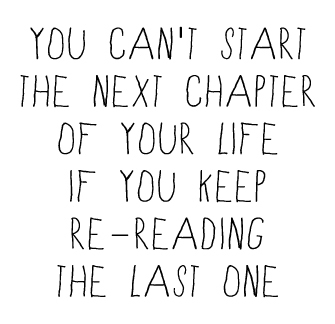
I believe all of us have the ability to not rewrite our stories, but to finish them in ways that redirect them from the tragic to the triumphant, creating a phenomenally successful narrative – read that, life. The first chapters may be already written, but we can direct new ones, dramatically changing the story at any time.

See, tragedy is rarely a finite end, but almost always a remarkable opportunity for new beginnings, redirection. Yet, it’s rarely obvious. It takes a lot of awareness, introspection, and hard work to redirect our lives from tragedy to triumph. But, when we do, it’s the most important move we ever make, where tragedy stops, and healing and success begin.

Reflection, as I shared with my daughter, is key in this process – it’s where the learning curve is. If we’re unable to reflect on the tragedies in our lives, not only can’t we gain from them, but we’re at extreme risk of continuing living them. Any time that tragedy affects us, we ultimately need to find a space of reflection and introspection to stop the suffering and start the healing, the redirecting from the negative to the positive, the end of chapters and the starting of new ones.

It can be tough to do, I know. And, it’s heartbreaking when we see anyone – from loved ones to strangers – stuck in the wake of tragedy, sometimes a whole lifetime marred by its lingering effects. There are so many situations where it’s impossible to obtain clarity of thought in the situation, where reflection or introspection can’t occur because the scars are seemingly too deep or one’s capacities seem too limited. …Or, can it?

We often hear of people “hitting rock bottom.” I did this years ago in a marriage. The common misconception is that we hit rock bottom when we’ve lost everything, our lives in shambles. However, that’s rarely the case. I define “hitting rock bottom” as a point of uncanny clarity in the wake of tragedy, the point where we can reflect so honestly upon our past and present situations that we say, “Enough! I’m learning and growing out of this situation to live a healthier and more fulfilling life.” What’s wonderful is that we don’t have to be in shambles to do this – at any point, in any aspect of our lives, we can reflect upon that which isn’t working, that which has harmed us, learn from it, and move to new levels of success.

In these ways, tragedy doesn’t have to define us, it doesn’t have to be a life-long scar or pattern, but can be a catalyst for growth and change toward living the life of our dreams. As I shared with my daughter, the ultimate triumph over tragedy isn’t the inspiring messages we convey with others, but the liberation it brings to our own lives.

Barbershop

BARBERSHOP

By Mark E. Smith

No, I wasn’t surprised, but it hasn’t happened to me in so long. Over my 44 years, I’ve seen so much progress toward social acceptance of all, that I simply don’t encounter such situations often anymore.

However, while society at large has changed – where diversity on all levels continues becoming the norm to the point that even using the word is becoming less relevant – some individuals don’t change. And, where I see this lack of change the most is as a generation gap.

So, when the 70-ish woman at the salon refused to cut my hair this past week due to my wheelchair and cerebral palsy, I wasn’t surprised. After all, she was raised in a time when those with disabilities were “cripples,” African-Americans were “negros,” and being openly gay didn’t exist. Yes, we hope that most evolve with the times, but we also know that limited life experiences can keep us from growing, it can keep prejudices ingrained in us. And, for this woman, I understood that disability – not me as an individual – was too much for her to process. In fact, I felt for her because she was beyond flustered while I was fine with the situation. I just wanted a haircut, not to judge her beliefs.

Of course, the salon manager, Andy, jumped in, cutting my hair – because that’s how we accept each other in society today, open, embracing, with grace and dignity, no matter who you are.

I left the salon with a haircut and a reminder that the beauty of practicing acceptance sometimes means likewise embracing those who don’t accept us at all.

From Cerebral Palsy to Quaaludes

Matt Fraser
Matt Fraser

By Mark E. Smith

Matt Fraser isn’t afraid to be nude. He also isn’t afraid to appear on stage at venues ranging from off-Broadway plays to movies to television shows, including this season’s smash hit, American Horror Story: Freak Show. And, his fearlessness doesn’t end there. Matt is a Black Belt, a forever-charming ladies man and even a BBC radio show host.

However, here’s the single most important aspect to the success in Matt’s life: Matt Fraser isn’t afraid to be Matt Fraser. He presents himself with authenticity and doesn’t give us any other choice. We either accept Matt for who he is – disability and all – or move on.

How many of us struggle or have struggled with being who we are? Maybe as children we behaved a certain way to please our parents that wasn’t authentic to our identity. Maybe in high school, we caved to peer pressure, not feeling safe to truly express ourselves. Maybe in our careers, we squelch our personalities to fit a corporate norm. And, how many of us have curbed our behaviors, feelings and wishes to please a partner? Indeed, we’ve all been there. Yet, here’s my question for you: Have any of these scenarios worked for you in the long term?

Of course not. It’s never worked for you or me because whenever we’re not 100% authentic, parts of us feel inadequate, denied, undesired, squelched – and that’s painful. However, if you want to avoid such a terrible fate, just be yourself! It will feel risky and scary at first, but soon it will feel liberating, the freest you’ve ever felt. Now, some in your life won’t be able to handle the real you because they’re used to a watered-down, squelched version. But, your world as a whole will feel anew, fresh air filling your lungs as never before.

I remember being in my 20s and very self-aware. I watched carefully what I said to whom, and although I often had zany, witty thoughts pop into my head, I rarely uttered them, fearing I’d sound uncouth. My brother, on the other hand, who shared my wit, said anything to anyone, and I observed how charmed others were by his authenticity. With my brother as an inspiration, I slowly let my authentic voice come out – I’d say exactly what I wished on stage and in witting – and that’s when my career took off in every direction. It was time for me to be… well… me.

Some two decades later, being Mark E. Smith is a blast. I mean, if you’re an adult and ask me, “What happened to you,” I’m not going to give you a politically-correct answer about cerebral palsy as I would have in my 20s. Rather, if you’re an adult ignorant enough to ask me that question at an airport or such, I’m going to be me and you’re getting a one word answer: Quaaludes!

Each of us were born to be who we are, and assuming we’re healthy individuals, we owe it to ourselves and those around us to simply be who we are. Society, partners, and you name it may try to squelch who you are. But, your obligation is to be a Matt Fraser and live your life beautifully, exactly who you are, never compromising your authenticity – and the world will embrace you.

Gala of the Messy and Miserable

20141118_175743-2

By Mark E. Smith

Facebook and disability – they’re both masters of illusion, where publicly you never see the whole picture of a person, just the best parts possible. But, what happens when you remove that curtain, where life isn’t glamorous postings or a guy in a power wheelchair, wearing a suit and tie, whizzing by you at work?

We really do live in a kaleidoscope culture, where people only want to see and present the pretty parts of life. The real and gritty parts are scary and painful – and yet all so real. None of our lives are pretty and perfect all of the time. In fact, they can often be messy and miserable. And, what I’ve learned is that the pretty and perfect parts don’t unite us; it’s the messy and the miserable that do – because they’re heartwrenchingly real. We can only relate to the pretty and the perfect to a limited degree. However, the messy and the miserable is often where life lands us – and we all can relate to that. In this way, there’s a reason in all of our lives to shatter the illusion and get real, where we have the courage to expose the messy and the miserable, and that’s when we truly connect with others.

My own Facebook and disability form an illusion. No, not intentionally, but by the nature of it all. My colleagues see me poised and polished in my career – perfect hair, whizzing by in a power wheelchair – and my Facebook shows an amazing life. So, if that’s the pretty and the perfect, where’s the messy and the miserable come in?

All over the place! I attended a gala recently and, if I say so myself, I looked GQ-hot rolling in. But, what no one saw was what it took me to get to that point. I’m no GQ model. Rather, I’m a guy with severe cerebral palsy whose life can be messy and miserable. Like many with complex disabilities, I had to build in my “bathroom regimen” in the process of getting ready, which takes time and is physically taxing. Then, the reason why I was polished and on time at the event was because my daughter and fiancee helped me get dressed. I can do it on my own, but it takes hours, so the more practical of the two options was accepting the gracious help of my daughter and fiancee to get me ready.

But, we never have these conversations, right? It’s not like someone says to me at a gala, “Mark, you look so handsome tonight.”

And, I reply, “Thanks. I struggled through a bathroom regimen this afternoon, then my fiancee buttoned my pants, tied my shoes and styled my hair….”

Yet, that’s the reality, and when I think about that gala, I know that many people there had messy, miserable aspects to their lives, too. After all, life isn’t easy for any of us. Maybe there were couples who argued like mad on the way, but walked in with smiles. Maybe they were couples who drove there in a car with the gas light on because they’re broke, but walked in like a million bucks. Maybe someone recently lost a family member and it took all of his or her strength to get dressed up and attend such a chipper gala. And, how many individuals there had disabilities or conditions unseen, from depression to epilepsy? I know that the beautiful lady on my arm – my fiancee, the one who helped me face my challenges to get to the gala – had her own challenges that eve, ones that no one knew, as she continues recovering from a recent cancer-related surgery.

The fact is, everyone’s life can look pretty and perfect on the outside. But, how many of our lives truly are? Life is often messy and miserable – and, as a result, absolutely beautiful. See, when we let down our facades, and with grace and dignity discuss the messy and the miserable in our lives, it makes those around us let down their guards, and that’s when we truly connect with others. And, when we connect, we’re not alone in the messy and miserable, and it makes all in our life – the messy and the miserable – dramatically easier to cope with.

And, so at that gala, I made my own silent toast to the messy and the miserable hidden beneath the facade of the pretty and the perfect – because we’re all in the trials of life together.

Gravitational Pulls of the Soul

past

By Mark E. Smith

Bishop T.D. Jakes says, “When you hold on to your history, you do so at the expense of your destiny.”

Have you ever lived those words or known someone who has? Many of us have seen the impact of such an emotional and mental paralysis that comes from holding on to a painful past – and some of us have lived it.

My history, which I’ve talked and written about extensively with the hopes that sharing my story will help others, is a bleak one. And, I literally had to let go of my history to get to my destiny, which has included sharing my story. However, it wasn’t easy, and when I spend time with those who are struggling to let go of their histories – those with acquired disabilities still longing for the ability to walk, those who were abused as children still harboring shame and self-doubt, those who’ve had their hearts broken, pining for that lost love – I know how hard it is to let go of that history to move on to one’s destiny. To make it even tougher, our histories sometimes have a way of holding on to us, where we continue encountering reminders of that which has caused us so much pain. So, how do we let go of our histories and move on to our destinies?

For me, it was a long process that allowed me to break free. It’s not like I don’t have memories or emotional scars. Those never go away. But, the pain of my past ceased effecting my daily life and allowed me to truly live my destiny when I found myself finally free of my painful history, where I had solitude within and could simply enjoy the life I’d striven to build. I’d liken it to the gravitational pull of the Earth from space – the force will always be there, but the farther we get from it, the less effect it has on us.

I remember being in the throws of my dysfunctional family in high school, knowing that simply graduating would move me a single step forward from my family history of a lack of education. Then, I knew that graduating college would move me a next step, the one from my family history of poverty. Then, I didn’t have a drink of alcohol until I was 33, knowing that I was healthy enough in my behavior to move beyond my family’s history of addiction. Yet, history can sneak up on us, and when I realized I was married to an addict and I didn’t want my daughter to have that history burden her – though it certainly did, has and will – I had the courage to end that marriage to again pull myself and my daughter farther from my history. At one point, I physically moved across the country, both for my career and to get farther away from my history – so I could live my destiny.

See, moving from our histories to our destinies is a lot of work – it’s being entrenched and digging our way out. It takes awareness, desire and patience. It takes knowing that where we were, isn’t where we belong. But, more than any other factor, it takes knowing that we have the power to move our lives wherever we wish, including far, far away from the gravitational pull of painful histories holding us back. We may not have controlled where we were, but we can control where we’re going. No, it’s not an immediate change, but through many individual, conscious decisions day-by-day, over months, years and even decades, we can let go of our painful histories and shift the tide, where our destinies become the gravitational force in our life.

As you read this, I don’t know what you’ve been through. Yet, I know that you are more than your history. We all are. You may long for the ability to walk again, but you have the power to set that pain aside and literally roll a wheelchair toward the life of your dreams. You may have had a horrific childhood, but you have the power to claim a life of solace surrounded by safety and love. You may have had your heart broken, but you have the power to entrust it with that special someone who proves as your true soul mate. You have the power to release your history – step by step, let it go! – and live to your destiny. None of it’s easy. However, destiny calls each of us to let go of our painful pasts and embrace our dreams. Once you allow yourself to be pulled by the gravitational force of your destiny… well… you’ll experience joys in life you never imagined.