Breakdown or Breakthrough?

By Mark E. Smith

Is your life a train or a boat? It’s an important question because the answer makes a huge difference. A train takes you exactly where you wish to go – it’s on rails, it’s smooth, it’s steady, it’s totally predictable. A boat, on the other hand, heads out on a meandering course, where its voyage is uncertain – it can get off of its bearing, it can encounter rough water, it can be unpredictable. I’ll ask again, is your life a train or a boat?

Of course, it’s a trick question, as no one’s life is an ever-steady course on rails. At points in our lives – it happens to all of us! – we can feel genuinely dissatisfied with the direction of our lives, where all hasn’t headed where we wish. Maybe our dream job didn’t prove as rewarding as we thought, or hasn’t materialized at all. Maybe the all-fulfilling relationship that we wanted never panned out. Or, maybe our financial goals were never achieved. The list goes on and on, but it all leads to a universal truth: When our lives haven’t met our expectations, we find ourselves discontent and dissatisfied at best, and depressed and feeling hopeless at worst.

Yet, when we find ourselves at such discouraging crossroads in life, all is not lost. Rather, we have three distinct ways to address discouraging periods, and the tact that we chose makes the difference between merely surviving and truly thriving, between feeling adrift and being on course. Therefore, when we feel like our life’s not going in the directions we wish, what approaches can we take, and what are their typical results?

I’ve been fascinated with this subject since I was 17. It’s a time I’ve spoken a lot about, where my family was a mess; a girl whom I adored went as my date to the prom, then refused to dance with me based on my disability (how could I ever find a woman to love me if one wouldn’t even dance with me?); my grades in school were mediocre at best; and, I was still in the throes of learning to physically care for myself, where every day was physically draining. With everything around me seeming so bleak – that is, life not living up to my expectations – I fell into a deep depression that summer, just thinking, If this is life, is it really worth living?

It was a heavy question for a 17-year-old, just as it is for adults who struggle with questioning the direction of their life at any age. However, as I pondered the question for days, weeks, then months, I had a realization that ultimately changed my life, a simple question that popped into my head: What could I do about any of it?

Although I couldn’t have verbally articulated it so well at 17, I realized that I had three distinct solutions to my dissatisfaction with my life:

Firstly, I could do nothing. It was that simple – do nothing, stay unsatisfied, depressed, distraught, whatever, and nothing would change. How’s that for an easy out? Do nothing, and just keep feeling as bad as you’re feeling! The problem with this approach – or, lack thereof – is that we’re merely allowing ourselves to drift in the sea of life, where without our fight or struggle, the next wave has every ability to push us under. Complacency is emotionally the most risky way to live, usually escalating dissatisfaction with our lives in the long run to destructive levels.

The second choice I had was to lower my expectations. If we feel life isn’t meeting our expectations, we can always lower them, and rationalize ourselves into a more comfortable place (clinically tying into the dreaded D-word, “denial”). I could just accept that I was a loser destined to lose, and be OK with all of the dysfunction in my life, lucky to just be alive, as my mother often told me. We see people take this approach all of the time – that is, if life’s not meeting their expectations, they simply lower their expectations. I’m not finding reward in my career, but at least I have a job. My relationship isn’t totally fulfilling, but at least I found companionship on some level. And, this approach of addressing life’s dissatisfaction by lowering expectations – as in finding ways to justify accepting less than you truly wish! – actually works. After all, if we lower our expectations, even bad aspects of our lives seem justifiably acceptable at some point. He’s a good man when he’s not drinking (how many times have we heard that one, where we just want to scream, No, you’re married to an abusive alcoholic – cut the denial!). However, here’s the problem: When we lower our expectations, we not only accept less than we deserve, but we compromise our core values within ourselves, we give away parts of who we really are and who we’re capable of being. And, of course, this lesser sense of self is hard to live with, usually catching up with us, crushing our spirit.

But, then, I realized that I had a third option to address life not meeting my expectations: I could change my life by taking responsibility for it. If no one cared about me, I at least had to care about myself. It didn’t matter what my parents did or didn’t do. It didn’t matter whether a girl would ever accept me. It didn’t matter that I had cerebral palsy. The only aspect that mattered was that I took full control over whatever I could control, and if that only made my life 50% better in the immediate, that would be a huge improvement in my life.

A few months later, I was called into the Principal’s office the first quarter of my senior year. He explained that in going through the honor roll, he saw that I was on it for the first time in my high school years, that he was wondering how I went from Cs to As over one summer? I wasn’t sure how to articulate what to say, and was intimidated by the situation, preferring to keep my challenges to myself, and simply replied, “It’s a long story….”

I had the good fortune of figuring out the life lesson at 17 that if we don’t like the direction of our life, change it. But, it’s not rocket science, and successful people practice it every day, where if you’re dissatisfied with your life, don’t just keep going down that road, or lower your expectations and accept it – but actually pursue paths to improve it. Is it easy? No. Is it scary at times? Yes. Does it take time and dedication? Sure. But, does it work every time? Absolutely.

See, life is a convoluted synergy of factors that drive our lives, but we’re ultimately the ones behind the steering wheel. There’s a lot that we can’t change, especially our pasts. But, there’s a lot that we can change, and most of it is based on decisions that we make today. Don’t settle or lower your expectations based on dissatisfaction; rather, raise the bar in pursuit of a satisfying, purpose-filled life.

The Elegance of Ties

By Mark E. Smith

The sight of a hospital bed in a living room is as emotionally troubling to me today as when I first saw such a scene many years ago – it jolts me to the core. I mean, I’m as animated and as enthusiastic as ever when I enter one’s home, but it’s impossible to see the hospital bed in the living room and not be emotionally impacted by how unjustly out of place it is. The normality that surrounds the hospital bed often makes it even tougher to bear – couches, a flat-screen TV, children playing, maybe a tail-wagging dog – a home in every sense. But, then, in the middle of the living room is a hospital bed, an unavoidable symbol of all of the emotional, mental, and physical pain that’s been endured, is being endured, and will be endured. And, it’s all touchable – heart-wrenching touchable – right there in the middle of the living room, a hospital bed.

I awoke that Sunday morning with one thing on my mind: I needed to add a black skinny tie to my wardrobe. While I have to dress business casual at work, and wear suits for public occasions, I’ve taken to a refined, retro look in my personal life. Certain ensembles simply never go out of style. And, trousers, a crisp white button-up shirt, and a black skinny tie take masculinity to an all-time classic note. As long as you’ve got a thin build and a tailored fit to your garments, you just can’t go wrong with the look – it’s timeless elegance on the town. But, I didn’t own a black skinny tie, and wanted one for the coming week’s dinner out. So, I didn’t know if I should I go to the mall or shop online – where could I find a 2” -wide black skinny tie on a Sunday morning?

But, then my colleague sent me a text message, saying that he was running a little behind schedule. We had to deliver and fit a new wheelchair around noon that Sunday, and I suspected that it might be an emotionally tough situation. Maybe that was my fixation on the black skinny tie that morning, to keep my mind off of our appointment later that day.

The back story that I knew for our appointment was of a car wreck where the best friend died, and the twenty-something young man was paralyzed. No matter how professional you are, you’re still a person, and to deliver a wheelchair under such circumstances can be harrowing, no matter how many times you’ve done it. Yes, you’re helping someone with the gift of mobility, but you’re also seeing our humanity in its most vulnerable state – and it’s impossible not to feel helpless, as well, wishing you could do more than merely provide a wheelchair.

When we arrived at the young man’s house, it wasn’t fully-accessible yet, so my colleague and the young man’s father had to help get my own power wheelchair up a step. And, then, as I entered the house, there was the hospital bed – in the front room.

As I rolled past the hospital bed, I encountered the young man using the wheelchair given to him right out of in-patient rehab. I introduced myself, shook his hand, and was struck by his eyes, the clarity in them. I met the mother and father, and all seemed pleased to see my colleague and me. In such situations, a new wheelchair can be seen as both a blessing and a curse by families. On the one hand, a new, custom wheelchair makes life easier and more comfortable because it’s usually a big leap in technology from what’s given to those right out of rehab. Yet, on the other hand, a permanent wheelchair can reflect just that – permanency – so it’s typically an occasion of rightfully mixed emotions.

Nevertheless, the family was glad to see us, and enthusiastic about the new wheelchair, and after it was properly fitted and all of the workings were explained, we just kind of sat in an informal circle in their small family room and talked.

As I learned, prior to the accident, the young man had left college and was working at a restaurant. But, just a few months after the accident, right out of rehab, he was already involved with Vocational Rehabilitation, working on getting enrolled back in college. And, as we talked, it was as if he had a check list titled, “Exactly the Right Moves to Make,” and was nailing every item.

Yet, while every individual, family, and situation is different, I have witnessed that it’s common for family members to initially have far more of an emotional realization than the injured individual, namely because the injured individual is in all-out survival mode, whereas the family is absorbing it in an emotional and mental way. And, with this particular family, I perceived that while the son was learning to live with the physicality of his paralysis, the parents hinted at struggling with the emotions of it all – you could just see it in the tiredness of their eyes.

As we sat talking, the mother in a wing-back chair beside me, I shared with them that they were on a journey, one that was shared, yet would be experienced by each individual in different ways, at different times. And, in this process, over months and years, they’ll have good days and bad, that no mountain ascent is a steady pace, that like a magician pulling countless scarves from a hat, just when they think they’re out of inner-strength, they’ll find more – we all do.

And, then everyone just cried. But, in the air wasn’t despair; rather, for a moment, it was as if someone opened all of the windows, allowing a cleansing breeze to flow in, and there was relief – just tears of relief.

Indeed, so early in recovery, the family is taking it day-by-day, and while the long-term prognosis looks good, they do have a long way to go in the process of healing – physically, emotionally, and mentally. However, with the young man having such clear eyes and a supportive family, there’s no doubt that one day he’ll awake in his own bedroom on a Sunday morning, where the only thought in his mind will be as trivial as, “Where can I buy a black skinny tie?”

No Farther Than Ourselves

By Mark E. Smith

There were many reasons why Kurt Cobain of the band, Nirvana, killed himself on April 5, 1994. Suicide, you see, is often a very complex process, rarely attributed to a sole cause, but most often a culmination of unbearable emotions. However, as fellow musician, Henry Rollins, put it, much of Cobain’s issues leading to his suicide could be traced to “the brutality of the public” – that is, the challenges of being in the public eye, where strangers can be astoundingly cruel, where Cobain, himself, discussed being too sensitive to endure criticism by the public, robbing him of his sense of identity.

When I started WheelchairJunkie.com 15 years ago, two aspects surprised me. Firstly, I was surprised by its success. After all, I created the site simply as a small place for my fellow wheelchair users and me to connect. However, its readership didn’t just grow rapidly in the beginning, but has continued growing ever since, where I’ve been forever amazed that such a personal project could reach so many – and I’ve been blessed that others have allowed me the privilege of being part of such a terrific community for much of my adult life.

Secondly, following the launch of the site, I was surprised by, as Rollins put it, “the brutality of the public,” which grew proportionately as the site’s popularity grew. I don’t recall exactly when my readership grew large enough to tip into the realm of my being somehow recognizable enough to become a target of “the brutality of the public,” but at some point relatively early on, a complete stranger emailed me in hatred of who he thought I was or represented. Now, in my 15th year of running the site, based on the vast readership, not a day passes where I don’t awake to an email or message board post where a total stranger – sometimes several – wants to argue with me, condemn me, or literally wish me dead.

However, rather than being distraught over strangers wishing me ill over my public persona – although my public persona isn’t a persona at all – I’ve been intrigued by the phenomenon as it’s occurred for well over a decade in my life. What’s intriguing is the question of why anyone in the public would hate me to the point of wishing my death, or at the very least stating, “I disagree with Mark on almost everything….” If we look objectively at my “public profile,” it’s about as mundane and noncontroversial as it gets. Read my weekly web and print articles and essays, read my message board posts, follow my Twitter and Facebook, and you’ll see that there’s no controversy (most of it is so feel-good or sincerely striving to be helpful that it borders on boring). Still, you’ll see comments directed at me that are antagonistic at best, shockingly graphic in wishing me dead at worst. But, why?

In a parallel, strangers hating me reminds me of what I know about Jennifer Aniston. Year after year, Jennifer Aniston receives among the most death threats of any celebrity. What has Jennifer Aniston ever publicly done that could possibly upset anyone? So, I suppose that if someone as noncontroversial as Jennifer Aniston is among the most hated celebrities, I, as a guy simply striving to help others in a similar situation to mine as one with a disability, shouldn’t be exempt from unexplainable hate from strangers, as well – after all, there’s no rationale to the brutality of the public, strangers merely inappropriately projecting their angst upon us. If you have a large enough audience, regardless of who you are or what you do, the brutality of the public emerges.

Nevertheless, when it comes to enduring the brutality of the public, I have a tool on my side – and you may, too – that most others in the public eye don’t have: Disability experience. See, if you’ve lived with disability for many years or a lifetime like I have, you likely know how brutal the public can be. From time to time, strangers will make assumptions about us based solely on our disabilities, projecting stereotypes and stigmas upon us that are completely irrational. It can be offensive and distressing. Yet, when it occurs, if we’re rational and self-accepting, we’re not offended by someone treating us arbitrarily different based on disability, but we instead recognize that a stranger’s ignorance toward disability is of no ultimate consequence as long as we know who we are. Therefore, there’s a fascinating overlap between disability experience and public experience, where void of rational explanation, strangers make completely inappropriate projections upon us – and it’s our job to not be offended by it, but to just recognize that it goes with the territory of public exposure.

Yet, there’s an even larger picture to all of this, life truths that apply to everyone. If we’re going to find ultimate fulfillment in life, we must be so resolute in our core values – in following our hearts of hearts, our passions of passions – that we’re simply not swayed by outside forces. Praise shouldn’t matter. Criticism shouldn’t matter. Peer acceptance, the support of our families, money, fame, a risk of failure – none of it should matter. If we are to be ourselves to the most true, sincere levels, we can’t be swayed by others – all we can be is who we are, where the brutality of the public is voided by our own unwavering integrity.

Unfortunately, as Kurt Cobain ultimately failed to realize, true singers sing solely for the sake of one’s own soul, not for the praise or criticism of an audience. For, when it comes to seeking acceptance, we should look no farther than ourselves.

Step Back From That Ledge, My Friend

By Mark E. Smith

In 1995, I opened a book preface with the line, “There’s no challenge more or less significant than another; merely different.” And, in the many years since, that line has remained with me, with my understanding that empathy and compassion are two of the most sincere traits that we can possess. See, what I’ve learned through my own challenges and struggles is that while no two people or struggles are the same, challenges and struggles effect most individuals at some point in life – often at several points in life – and although the origins of challenges and struggles vary greatly, their impact is universal, requiring all of us in moments of desperation to find an inner-strength to step back from the ledges we find ourselves on. And, when we’ve stood on the ledges of life – on the verge of slipping off, falling off, jumping off – we know how tough it is for others in those situations, where we naturally reach out to them in their moments of harrowing need. Through our own vying, we recognize first-hand that no one should have to climb the mountains of life alone, but that everyone deserves a patient guide to support them along the way, to reassuringly say, Step back from that ledge, my friend – you’ll get through this.

When you live successfully with disability – and, dare I say, honestly, where you don’t portray life as perfect, but as simply survivable, regardless of challenge or struggle – it is inevitably clear to others that you’ve been to the ledge and back, gaining wisdom along to way. After all, if one is struggling, one can relate with someone who’s obviously struggled, too – and there’s a sort of reassurance in seeing that another has somehow made it through the tougher times in life, mountains climbed, scars earned, wisdom gained, and ledges safely passed.

When you put these perspectives together – those who are facing life’s challenges and struggles, with those who have struggled and survived – an amazing bond can occur, where it’s two people communicating and sharing on the most genuine levels, climbing the mountains of life together. And, such shared emotional ascents are among life’s most magical interpersonal experiences, the best of friendships.

The fact is, many are too often alone in facing their challenges and struggles – and it is scary, isolating, and debilitating. What’s even worse is when one discusses one’s challenges and struggles with someone who hasn’t “been there,” and ends up being judged, lectured, and ridiculed – harmful feedback that can only make one feel more defeated, pushing one farther out on the ledge. But, when there’s a true mutual understanding between two people – I’ve been through the ringer of life, and know what it’s like, so let me be here for you now in your time of need – real support and solutions occur. We share, we listen, and we build trust – that is, we create the foundations of truly the most meaningful, supportive, healing relationships in our lifetimes.

And, when we’re in need, with such an empathetic, compassionate friend in our midst, the outcomes are life-changing: We can exhale our true feelings, we can open ourselves up in a safe place, we can explore our emotions, we can express true wishes, and we can just be – yes, at last, just be. When it all comes together, it’s not just a friendship that’s life-sustaining, but can actually be life-saving – conversations that allow us to restart living.

Providing such genuine support to another should be a given by any of us who have faced challenges and struggles, knowing how others could – or did – make a difference when we were standing on the ledge, about to slip off, to fall off, to jump off. However, both friends must realize that these times are intensely interpersonal. And, when such friendships are in true effect, there’s a mutual exchange of gratitude, where both individuals truly embrace each other, hands stretched out to each other, clinging. Of course, one of the individuals may obviously be in far more emotional need in the moment than the other – standing on the ledge looking down – but this doesn’t preclude a demonstrated deep appreciation and mutual respect for the supporting member, as well. If someone’s truly there for us – when one extends one’s hand at those moments in life and says, Step back from that ledge, my friend – that’s such an amazing gesture, and let us be faithful enough to directly acknowledge the remarkable value in that type of genuine friendship.

As those who have faced life’s challenges and struggles, we know how tough they can be to overcome, especially alone. Yet, when we overcome them, we have an evolved empathy and compassion for others of such kindred spirits. Let us be there for others – without judgment, as unconditionally as possible. And, if we’re fortunate enough to have someone who’s there for us unconditionally – offering an open hand, drawing us back when we’re standing on a ledge – let us cherish that friendship and reciprocate. See, the goal in the best friendships is to not just top the mountains of life, but to top the mountains of life together, hand-in-hand.

This Dad’s Life

By Mark E. Smith

So, I continue on among the most remarkable paths of my life, a single, full-time father – or, as I like to put it, “I’m a 40-year-old single, full-time father with cerebral palsy, raising my 14-year-old daughter….” I love phrasing my life that way because it’s so absurdly over-dramatic, and what’s even better is that it pretty much sums me up as the last guy on Earth any woman would ever date. I mean, if you pull any part of that description out, it plays as a run-the-other-way alarm to any rational woman: A 40-year-old guy – strike one! A single, full-time father – strike two! A 14-year-old daughter (though, she is the best kid ever) – strike three! And, then add cerebral palsy – I’m out! Really, I’m the personal ad from Hell.

However, as over-dramatic as adjectives can make my life sound, the truth is, it’s anything but dramatic these days. See, much like my cerebral palsy isn’t the toughest of roads, neither is being a single, full-time dad. In fact, like my disability, being a single, full-time dad has directed my life in wonderfully grounded, content ways, where there’s a peace and joy in my life that I’m not sure I ever knew – and others may not expect.

The process of divorce, becoming a single, full-time dad, and all of the emotions surrounding it started out as little more than controlled chaos, where there was an initial physical shock to my life. While my marriage was disintegrating for years, my ex-wife still did everyday tasks like laundry and grocery shopping. So, upon her leaving, I was literally left with a pile of dirty clothes and an empty refrigerator, looking at my daughter, thinking to myself, OK, where do we go from here, kid? It’s just you, me, and one heck of a mess!

But, like any time when we’re on the ropes in life – scared, stressed, chaotic – the old standby to Just do something! came in handy. And, that’s what I did. I determined that the priority was to get our house in shape – clean clothes, and food in the refrigerator! – and go from there.

In the process, I learned that we can’t control everything (actually, I learned that a long time ago, per life!), so start small by controlling something. And, in such situations when we’re scared and life feels chaotic, simply finding control over one small aspect in our lives truly gets us moving in healthy directions.

For me, I started by spending a weekend cleaning my master suite while my daughter was at a friend’s slumber party. From there, I got a new bed, redecorated a bit, and got at least my “area” to my liking. I then had momentum to keep going through not just the house, getting all in order, but also addressing all of the emotions and realities that go with being a single dad.

And, it was insanely challenging, more so than most around me knew at the time (few knew the extent of the personal challenges that I was facing because, one, I keep my career and public life on track no matter what, and, two, because I just really felt the need to get my home life on track on my own, with utmost personal accountability). My mindset was, I don’t care what’s happened – it’s my sole responsibility to get things on track for my daughter and me, where I’m willing to tackle whatever it requires. (And, there had to be accountability on my part for the downslide of the marriage, as well — no, I don’t think I was the cause, but even in the best intentions, my codependancy and denial played ultimately destructive roles.) What occurred to me was that I wasn’t at an end, but a beginning – the opportunity to make things right, to get healthy in every way. I realized that when we’re in a bad relationship, we really don’t have much to lose – we’re already living in dysfunction, running on empty. However, once single – especially as a parent – we have everything to lose if we don’t get it right, as it’s truly our chance to live up to be all that we’re capable of being. (This realization especially hit home when I found myself at one point in my process of getting my personal life back on track, where I caught myself developing a relationship with a woman that clearly wasn’t in the best interests of my daughter and me [vulnerability, falling back into dysfunctional patterns, and ego can get the best of us at times!] – and I quickly recognized my poor judgement, hit the brakes, and put an end to it in real time.) Therefore, I wasn’t about to let any aspect of my life slip or any opportunity for improvement pass. I had to be accountable for the past, present, and future.

Every day, I got up long before dawn to get all of the morning chores done, dropping my daughter off at school, being at work by 7:30am. Then, I raced home after work to clean, do chores, grocery shop, run my daughter to her activities, and keep up on my writing, email, and after-hours work, getting to bed by midnight. And, for several months, I just kept going – 20-hour days – feeling like getting the house and our lives on track was a stress-filled, never-ending process. It was like the movie, Groundhog Day, where I went to bed every night hoping for some relief, only to wake up in the seeming blink of an eye the next morning, having to do it all over again.

Yet, I also knew from life experiences that when times are tough, short-term pain is a small price for long-term gain, that when you’re exhausted, you can’t slow down, but must actually speed up, even when you feel like giving up – and there was too much to lose to let even the smallest detail slip. Fortunately, as I had hoped, eventually each day got easier and easier, with the house – and our life together – dramatically in order. And, I could breathe. Finally.

What was poignant during the whole process was that my daughter and I weren’t just rebuilding our life; rather, we were rebuilding our life together. And, through nightly talks – which we call “check-ins” – we set-out to further define our life together, complete with our own mission statement: To share the joys of life, mutually respecting and inspiring each other as we go.

And, it’s worked – it’s all fallen into place. The scariness, stress, and chaos has been replaced with happiness, calmness, and tranquility. Weeknight evenings are no longer about surviving, but thriving, revolving around my daughter’s activities – singing lessons, drama rehearsals, and high-school football. And, I’ve mastered being Mr. Mom, balancing house chores with everything else that I need to do, keeping all on a schedule that allows comforting predictability and normality in our home life.

Every night, my daughter and I make dinner together – getting better at our cooking skills all of the time! – and we do the whole homework thing, keeping my daughter excelling in honors classes. Then, we always have some fun activity to share, from playing board games, to baking cookies, to listening to music, to editing each other’s writing. On the weekends, we’re off somewhere, doing something, enjoying life, the two of us, where the possibilities and adventures seem limitless.

As I’ve shared with my daughter, life isn’t fair, and there is a tragedy in the fact that her mother isn’t in her life. However, we always can make the best out of a bad situation, where at points in our lives we must choose to not crumble, but rise as the Phoenix from the ashes. And, we, together, have proven the title of the Hemingway novel on my bookshelf: The sun also rises.

Indeed, as a “40-year-old single, full-time father with cerebral palsy, raising my 14-year-old daughter,” I may seem every woman’s nightmare of a guy. However, when my daughter and I are curled up on the couch with our two dogs on Saturday nights, drinking homemade smoothies and watching the cheesy ’80s teen movies that we both love, I wouldn’t change a thing. It’s been a bit of an emotional trek getting here, but the journey has been well worth any trials, as for me, just being Dad continues proving the truest blessing of my life.

Call Me Shallow, But….

By Mark E. Smith

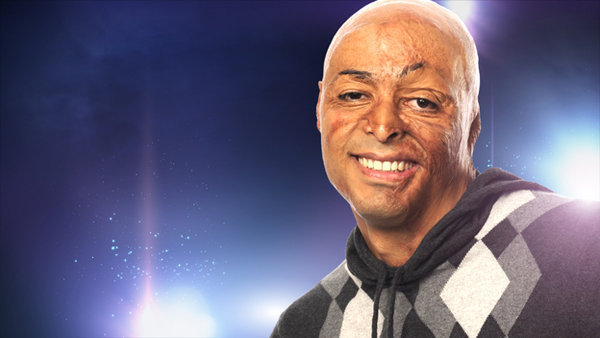
When J.R. Martinez, known from his roles on “All My Children” and “Dancing With the Stars,” was in the hospital recovering from burns over 40 percent of his body, including life-changing facial disfigurement, his mother had a very straight talk with him, one that would guide him to the true depths of his character.

See, J.R. was an American soldier in Iraq, having enlisted at just 19, when his Humvee ran over a landmine, catapulting him to a path of 33 surgeries in 34 months, resulting in the loss of an ear, and permanent facial disfigurement. J.R. describes lying in the hospital, glancing in the mirror, seeing a monster looking back where he once saw a handsome young man – all sending him into a deep, dark depression.

But, J.R.’s mother, older and wiser, saw something else in the situation: The truest essence of her son. “People aren’t going to love you for how you look,” she told J.R. “They’re going to love you for who you are. And, that is a true blessing.”

J.R.’s mom was so right – and J.R.’s success proves that. I mean, the grace and humility with which he presents himself doesn’t make his disfigurement go away; rather, it makes his character shine brighter, where his facial attributes are part of him, but not the sum of him. J.R. is living proof that our exterior facades are just that – facades – and it’s our true character that matters beyond all else.

Yet, not everyone understands this concept. Surely, there are many superficial people in our culture who dwell on appearance alone – their appearance, everyone else’s appearance – and there’s a personal tragedy to it. Literally, when one dwells on appearance, not only can they never be seemingly good enough – after all, there’s always someone better looking by such shallow standards – but they never see others beyond an exterior facade, resulting in never developing deeply sincere relationships.

An acquaintance told me the story of her being a smoking-hot 26-year-old, living life in the fast lane in a Southern California beach community, where her friends and boyfriends were all from wealthy families. She drove nothing but Mercedes since the age of 16; she went shopping virtually every day to keep up with the latest trends; she had breast augmentation, a nose job, and routine Botox treatments; her girlfriends were the hottest of the hot, and they could cut the line at any club; and, she refused to date a guy who didn’t have a buffed body and a Porsche, no exceptions. And, all was moving along perfectly in her world of self-described perfection – that is, until she reached down to grab a CD off of the floor of her newest Mercedes, crossed the lane on a twisting road, and slammed head-on into a guard rail, the impact leaving her a quadriplegic.

But, the accident and paralysis were just the beginning of what she saw as the biggest tragedy of the time. Upon the accident, friends initially rushed to her bedside, and then slowly they stopped coming or calling. While she was in rehab, her friends hit the clubs as usual, and her buffed boyfriend who she thought was Mr. Right (after all, he had a Porsche!), promptly began sleeping with her soon-former best friend. Indeed, she learned that her relationships were as much a facade as her glued-on fingernails and sprayed-on tan. “When we place so much emphasis on our exteriors that we overlook the importance of who people really are on the inside, we take a huge risk,” she shared with me. “Trust me, when your identity and view of others is simply a house of cards, it crumbles fast.”

Going back to J.R.’s mother, she was absolutely right in the scope of her advice: Disability does allow us to have often times deeper relationships, a sort of interpersonal mechanism that protects us from the shallow people among us. Disability is a sort of barometer that gauges the character of of others, only letting the best of the best get close to us – and that’s a great opportunity.

Yet, like all opportunities, we must welcome others accepting us, as-is. J.R. could have used his unique appearance and initial self-consciousness to hide from the world, a way of judging himself and becoming bitter toward others, a presumed lack of acceptance. But, instead, J.R. chose to see the depths of his own character, not just the scars on his face, and he put himself in the world, trusting that he would witness the best in others, as well. Of course, as we now know, his self-acceptance has created universal acceptance by millions of adoring fans, all based on his demonstrating the depths of his character, not an external facade.

As for me, I strive to dress nice and present myself well, but the reality is, I’m a visibly flawed guy with cerebral palsy when viewed on the surface – and I’m OK with that, as the depth of my character hopefully shines through to some. However, when some don’t have the capacity to see beyond my lack of physical perfection, I’m fine with that, too, where I’m glad not to have those “emotionally blind” people in my life. Call me shallow, but if someone is more concerned about the imperfection of my physical appearance than the quality of my character, I don’t want that person around me – and I’m glad that my disability serves as a smoke screen to keep such people away.

What’s really wonderful, though, is that when we recognize the interpersonal value of being embraced for our true character, not our superficial facades, we instinctively return the gesture, being much more open toward others. And, we end up with an amazing exchange – where we’re both seeing each other on the most genuine levels – and that’s how the sincerest relationships are formed. If I accept you for you, and you accept me for me, now we’re truly connecting – and that’s where we all should be in our interactions with those around us.

Someone recently asked me what true acceptance of others really means? And my answer was coy but fitting: True acceptance is the sincerest gift that we can share with another person.

Being Broken

By Mark E. Smith

A friend of mine introduced me to the music of British musician, Marcus Foster, whose song, “I Was Broken,” is hauntingly beautiful. It’s about recovering from being “broken,” whatever that may mean to any one individual.

In the disability realm, the medical model defines us as physically “broken.” However, I’ve never seen that truly to be the case on an individual level. We know of people with extraordinarily physically severe disabilities living vastly successful lives – some far more successful than able-bodied counterparts. So, then, where does broken enter the lives of those with disabilities?

Interestingly, broken enters the lives of those with disabilities in the same way as it effects everyone else: Emotionally. See, broken isn’t an exterior condition; it’s an inner one.

If you think about our physical states as individuals, they’re so diverse and so easily compensated for – I simply use a wheelchair because I can’t walk – that it becomes all but impossible to define a physical condition as broken. Yet, where broken enters our lives – for everyone – is when we don’t feel worthy enough, when we don’t like who we are, when we feel like our lives aren’t heading where we’ve dreamt, when we feel haunted by the past, when we feel like we can’t meet others’ expectations, when we don’t feel deserving of others’ love, when we feel incomplete. These feelings – these excruciating emotional struggles – are when we’re truly broken.

I’m very fortunate to often find myself genuinely connecting with those around me, even in casual settings, and as one of my best friends warned an acquaintance as we were socializing, “Mark’s not exactly known for light conversations – they tend to go deep.” And, he’s right – because I know that there’s a common humanity among us, where no matter who we are, or where we’re from, we all share common experience – including having been broken. What’s poignant to me is that when I share with others our common struggles with identity, self-worth, longing, and so on – all of the emotions that cause us to be broken at points in our lives – it’s universally human.

Surely, when we’re broken, it’s telling us that something is wrong, that our lives aren’t heading in the directions we wish. Sometimes being broken is based initially on uncontrollable circumstances; other times, it’s based on our own actions and poor decisions; and, yet other times it’s based on a compounding of all of the above. But, regardless of the causes, here’s what’s striking about being broken: It’s the gateway toward moving our lives in the right directions, it’s the opportunity to realign the paths of our lives to what we wish and deserve. Objects can be shattered to the point of beyond repair; but, not so the human spirit – there’s always the ability to restore and rebuild it, often to greater capacities than previously known.

I know, moving through that gateway from being broken toward wholeness is the toughest challenge we’ll ever face in life. I’ve been broken, and collecting the shattered pieces, trying to figure out how to make myself whole again at points in my life has never been quick or easy – sometimes it’s been like trying to put together a 1,000 piece puzzle with not even a picture of it to help chart the task. And, while there’s no universal answer to rebuilding ourselves from being broken – for some, time heals all; for others, personal space helps regain perspective; and, for yet others, formal processes like counseling help – we know that honesty is the first step toward repairing what’s broken, where despite our fears, shame, and hurt, we must maintain gut-wrenching honesty with ourselves and everyone around us about what we’re going through. If we avoid the candor of being broken, we can’t address it. It’s like ignoring anything that’s broken – it can’t fix itself. However, in merely our admission of being broken, we begin healing. See, when we allow others in, to truly know us – broken, as we may be – we begin to liberate ourselves in that process.

And, what I’ve learned most about being broken is that it ultimately plays an empowering role in our lives: Being broken allows us to clearly see the individual pieces of our truest essence, ones that we can eventually put back together however needed in order to achieve our hopes and dreams – finding ourselves whole, fulfilled, and content in the end.

Staring at the Drapes

By Mark E. Smith

I lay in this hotel room bed – alone – thinking of Vic, who committed suicide almost 22 months ago to the day.

This evening, I spoke to a group of around 170 people, half-way across the country from my home – and I knocked ’em dead, as they say in show business. It was my kind of event – dinner and cocktails – where I have the liberty of really working a festive crowd. And, I hit it home with a theme of following the ramps in our lives – bridges of opportunity that take us to places we never dreamed – by interweaving stories from the humorous to the poignant. And, the gracious crowd was with me all along – an exchange of amazing energy – and then I rolled off stage to their flattering standing ovation.

At the time of Vic Chesnutt’s suicide, many chalked it up as the quadriplegic musician who was tired of living with the daily trails of disability, that the physicality of it all caused him to take a fist full of muscle relaxers, mix a dangerous cocktail, and check out for good – his fourth and final suicide attempt. But, as I wrote at the the time, there was more to the story than that:

…From what I knew of Vic, from what I’ve since learned of Vic, and from what I’ve witnessed and experienced in my own life, I believe that the unique pressures of living ultra-successfully with disability caught up with him, where he wasn’t able to cope with the extreme fluctuations in his life. See, when you have an exceptional level of success like Vic did while living with a disability, it can become a tale of two cities. On the one hand, publicly, everyone’s telling you that you’re a huge success and inspiration, putting you atop the world. Yet, on the other hand, you’re a real person, with real-life issues toward health, relationships, and finances. And, when all isn’t kept in balance, you can go from extreme highs to extreme lows in literally a matter of moments – in the time it takes to go from on-stage in front of a cheering crowd to a lonely hotel room where you’re left to face the realities of your everyday life. Truly, when you have such extremes in life – and you’re emotionally unable to center yourself – it’s just as easy to get consumed by the lowest of the lows as the highest of the highs, where the healthy middle-ground needed to survive doesn’t exist. And, that’s where the tragedy in Vic Chesnutt’s life occurred – not in his literal disability, but in his inability to find that middle ground of understanding and comfort in life as a whole, where, by all accounts, he lived a tormenting oscillation between the highest heights of elation in his work, and the deepest plunges of despair in his personal life, with no middle ground to just be at peace.

My colleague and I leave the banquet after the program’s finished. I thank our host for the engagement, and I convince my colleague to go across the street with me to an eatery for a late night snack. Again, going from a stage to an empty hotel room can be torturous – there has to be a bridge in-between to help one transition from the energy of a packed house to being totally alone. And, by getting something to eat, I’m stalling – buying my time, avoiding the empty hotel room in which I will inevitably find myself. But, I can get through it – alone, the hardest part of it all that Vic knew too well.

Eventually, I make it to my room like countless other nights on the road. I lay in this hotel room bed – alone – thinking of Vic, who committed suicide almost 22 months to the day. And, I realize that everyone’s assumptions of Vic’s suicide truly were wrong. See, as I stare at the shadow of the drapes in the dark, I know that the challenge for guys like Vic and me isn’t being alone in our disabilities; rather, the challenge is being alone in ourselves.

When the Drinking was Done

By Mark E. Smith

“Alcohol and I had many, many marvelous times together. We laughed, we talked, we danced at the party together; then one day I woke up and the band had gone home….” –Harry Crews

I wrote one of my all-time favorite pieces, a short-short story on my quitting sporadic drinking, about a year ago, and never published it. Why? The answer was because I didn’t think that I could live up to it – quitting drinking for good, that is:

When the Drinking was Done (Original)
I asked the hotel concierge – a woman in her 60s, no less – where I could drink in complete anonymity, and she told me to go up to Peachtree Street, hang a right, and look for the shamrock sign over the sidewalk. No, it wasn’t my normal mode of operation by any stretch, but we just have to be honest about these things – especially with ourselves. I didn’t want a party or dressed-up chicks like usual; I just wanted a night of quiet, having been on the road for days, speaking at a conference on one side of the country, then working a trade show on the other. The noise builds up in me – the retention of events and all of the introspection, where I just want quietness, the type I only get from writing in solitude. But, that night, there was to be no writing – just a drink alone, then bed. So, I headed up to Peachtree, hung a right, found the shamrock sign, and a homeless guy opened the door for me. The place was empty – just two guys and a “barman,” as the “bartender” is called in these types of pubs. With my power wheelchair’s seat elevated, I rolled up to the bar, picked up a stool, and set it aside. The barman and two guys just watched. My knees tucked perfectly under the bar – an ideal. “I’ll have a double shot of Southern Comfort, warm, please,” I said to the barman. He set a tumbler glass in front of me, grabbed the bottle, poured the drink to maybe three or four shots, and without thinking twice, grabbed a straw, placing it in my glass. He stepped back as if to see what I was going to do, and I could see via my peripheral vision the two guys just staring at me. I placed my lips on the straw, and downed the glass full, in a single, drawn sip. The barman grabbed the bottle of Southern Comfort, refilled my glass, and said in a strong Irish accent, “This one’s on me.” It was a fine night – they all are on such terms – and when I awoke the following morning, glancing out my hotel window, the quiet was gone, and I knew so had to be gone the drinking – for good this time.

I wrote that literal, biographical short-short story with the intention that my drinking days were done. However, in my public position, if you’re going to tell the world that you’ve stopped drinking – you’d better darn well give up drinking entirely, forever – or everyone will see you as the ultimate hypocrite. If you’re a closet drinker – even an alcoholic – and you vow to yourself that you’re giving up drinking, there’s no real consequence if you don’t live up to it (other than the consequences on your own life). However, if you’re a social drinker like me, and write an essay to thousands of readers that you’ve given up drinking altogether, you’d better do it – as people are watching when you’re out on the town or on the road. Based on this reality, where my written words are in blood, so to speak, I could never get away with publishing an essay on quitting drinking unless I really did.

For the reason of integrity, I never published a piece on quitting drinking because… well… I never quit drinking! That is, despite my truly wanting to give up drinking entirely a year ago, and writing the original piece, I knew that I wasn’t ready — good times on the road, and the occasional flirtatious woman at a party or bar were so linked to a drink or two that I wasn’t prepared to give up those fleeting good feelings that came with booze. But, I also knew that at some point I’d be ready, that I’d have to give up the booze entirely. I felt so much personal guilt about even rarely drinking, that it lingered with me for days, weeks, and months after even one drink – and that wasn’t healthy. I had to just give up drinking entirely at some point.

While my own history with alcohol is one of moderation – I’ve never drank at home, my daughter never saw me drunk, and so on – the history of substance abuse around me has always been present: My great-grandparents were alcoholics, my grandparents were alcoholics and addicts, my parents were alcoholics, my ex-wife was an addict, many of my friends have been alcoholics – and I’ve seen all of their lives harmed or destroyed. And, the question I’ve wrestled with is, How can I see so many lives destroyed by alcohol and addiction, and still touch a drop myself? It’s like playing with fire when you know it burns.

With that said, I’ve had a lot of mixed feelings about my best times drinking, where I look at them with both guilt and fondness. It’s a juxtaposition that I suppose most drinkers face when they stop. I grew up with parents who were Skid Row drunks, so I’ve always known the realities of alcoholism, right down to my family’s demise and my parents’ deaths. In fact, I didn’t drink until I was 33 – that’s how freaked out I was by alcohol. However, once I started drinking, my association with alcohol literally went from the horrific to the glamorous. In my mid 30s, drinking was no longer about Mom neglecting me as a child because she was drunk, or Dad drinking himself to death; rather, drinking was now about high society, where I was at lavish social events, with beautiful people – and drinking just made it all the better. A few shots of Southern Comfort added a glossy sheen to my vision, where I felt relaxed, suave – everything more engaging, like going from watching a movie to actually being in the scene.

But, then, there was always the next morning, then week, then month where I didn’t drink, but the guilt and hypocrisy of such nights stuck with me – too much so. There was always a haunting issue in my mind, where I always knew that I have to be either assuming entire sobriety, or be unrepentant about drinking – and to try to justify living in-between was hypocritical. Sure, I realize that lots of people drink socially, and it’s not an issue. But, for me, I could never roll that line: I was either stone sober or drinking – and I couldn’t be both. Again, if I wanted to keep drinking, then I’d have to learn to be unrepentant in it, not feel guilt, not relive pains of my past, not look in the mirror and see my father staring at me, not see the hurt of a child in my own eyes looking back. But, I’ve witnessed too many around me destroyed by alcoholism and addiction, and for me to glamourize drinking in my own life, knowing all of the hurt washed down with it, seemed not just hypocritical, but morbid.

Cartoonist, John Callahan’s, later years and death have also had a profound effect on my journey toward sobriety. John was a hardcore alcoholic – it’s what led to the car crash that caused his paralysis – and he sobered up some years later, not touching a drop for decades. Despite his in-your-face antics and work, he noted that sobriety added a peace and strength to his life, not the guilt and angst he felt when he drank. If John maintained sobriety – turning off the guilt and angst – so could I.

The catalyst for me to publish this piece – that is, to sign on the page in blood that I’m done drinking for good – is really just where I’m at in life. I’m a 40-year-old, full-time single dad, focused on my career and simply trying to do right by everyone, including myself – and I have to get it all right. I’ve seen too many lives around me destroyed by alcohol, felt too much guilt and pain in myself for too long in even having an occasional drink – and I’ve deemed, Enough is enough with the booze at any level – don’t want it, don’t need it, the drinking is done. Is it a bold declaration? Maybe. Will it remove all of my unsettling feeling surrounding alcohol in my past, dating as far back as I can remember as a child? Certainly not. But, is it a move in the right direction for me to make? Absolutely. It’s one of those situations where if something isn’t working – if it’s inducing guilt, pain, shame, and hurt – stop doing it! Sometimes we just have to man-up and take accountability in ways others may not fully understand, where we say, F- it, I’m going above and beyond simply because it’s the right move to make, and I don’t care what the world thinks. And, I’ve finally said in my own life, F- it, the drinking is done, and I’ve done it for me. …All alone – after all.

At this writing, I have a speaking engagement this week in Fargo, North Dakota. I asked someone from Fargo what’s there to do in town?

“Drink,” he jokingly said. “We have more bars than anything else.”

“Perfect,” I replied. “I’ll have time to read in my hotel room, then.”

When Life Isn’t Fair

By Mark E. Smith

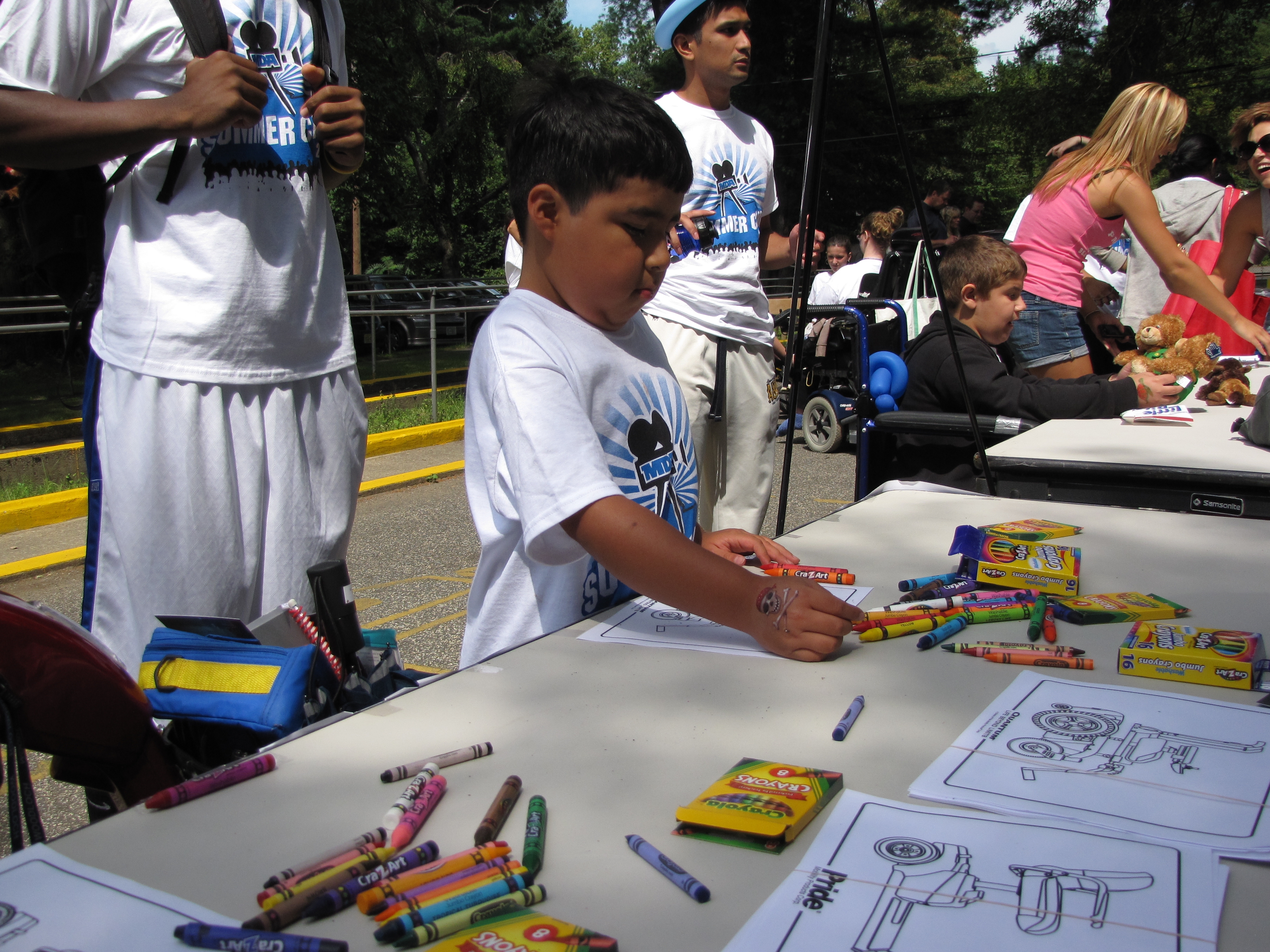
I had the absolute privilege of visiting a summer camp for children and teens with various forms of muscular dystrophy. It was among the most fun I’ve had, as the campers were so awesome, such spirited personalities, as children are. However, as much fun as MDA camp is for everyone involved, there’s still a looming reality: Most of the campers will pass away by their mid twenties.

There’s truly an injustice to it all, one that, for me, is impossible to explain – that is, the universal “unfairness” that within 10 years or so, many of the campers whom I met will no longer be with us, that not only will their lives have been lost, but with them, we all will have been robbed of their amazing life-long potentials. I mean, their time on this Earth is impacting – I know, they profoundly impacted me – but to think of what these amazing individuals could accomplish over sixty or seventy years – not just twenty – is limitless. Yet, we’ll never have the chance to know because of the inexplicable injustice of a life-robbing disease.

I remember leaving the camp thinking, Cash my chips in now, God, and give my lifespan to anyone of those kids – I’ve had my shot at life, and I’d gladly pass my years left on to any one of those children….

Although visiting the MDA camp was a reminder to me of the seeming inexplicable injustice in the world, the question of universal unfairness is one that I encounter almost every day – that is, why do such terrible circumstances happen to such good people? In the wheelchair world, consumers often share with me that they’ll never understand why they received their injury, illness, or disease, that they wrestle with the injustice of it all. And, I never have a direct answer. But, I do have at least one perspective that touches upon the subject of life’s “unfairness” – and the MDA campers hit home the point for me.

Of course, we know that there are direct attempts to answer why bad occurrences happen to good people. Religion has its answers that run the gamut, from it’s God’s master plan, to it’s bad karma from a previous life. And, science, too, has its direct answers, from cancer being gene mutations, to paralysis being an injury to the spinal cord. These answers, however, still leave intellectual loopholes, where we can look at examples like Dr. Wayman R. Spence, an original anti-smoking crusader, who himself ultimately died of cancer after 50 years of treating others, and it’s truly impossible to see any justice in such an uncanny circumstance – it’s haunting, really.

Still while maybe we will never be able to intellectually answer life’s injustices beyond, Life isn’t fair, we can use coping mechanisms to address them. See, we universally approach life from three perspectives: What is; what can be; and, what should be. And, by understanding the roles that each of the three perspectives play in our own lives, we can better cope with seeming injustices.

What is, is truly the givens, the realities of any situation as known in the present. It’s the, my father has cancer, my husband is an adulterer, my daughter is an alcoholic, I have multiple sclerosis.

What can be, is what we logically can do to address a situation moving forward. It’s the, my father has cancer, but treatment will extend his life; my husband is an adulterer, but I need to get a divorce and find a loyal guy; my daughter is an alcoholic, but getting her into a rehabilitation program is a wise step; I have multiple sclerosis, but medication and therapy may slow its progression.

What should be, is truly wishful thinking, not based in reality, but dwelling in questions of fairness. It’s the, my father shouldn’t have cancer; my husband shouldn’t be a cheater, my daughter shouldn’t be an alcoholic; I shouldn’t have multiple sclerosis.

What’s fascinating is that when we look at the three perspectives – what is, what can be, and what should be – only two are relevant, having any impact or meaning in our lives. The third simply leaves us empty, without the ability to do anything, trapped in despair. Can you guess which two are empowering, and which one is debilitating?

Of course, what is and what can be are very empowering – that is, we can act upon them. However, dwelling on what should be is truly debilitating because there’s nothing we can do but wish upon a seeming impossible, asking ourselves, Why?, silently screaming, It’s not fair! Nothing good comes out of stewing over what should be.

And, that’s what I ultimately took away from my visit to the MDA summer camp. As adults, we’re so caught up in the what should be’s of life – how life is unfair – that we overlook the intrinsic value of what is and what can be. For example, rather than celebrating the current life of our loved ones who have cancer, we dwell upon the unfairness of their pending passing. Rather than moving forward from bad relationships, we stew over how we were wronged. Rather than appreciating our jobs, we focus on any negatives. And, rather than accepting those around us for who they are, we want to change them. That is, we go through life lamenting – often to the point of depression – about how things should be, not recognizing what is or realistically what can be.

Yet, the kid’s attitude at the MDA summer camp was just the opposite – it was totally about what is and what can be, and it was contagious. I only saw life, love, and laughter. It was the most positive place on Earth, making Disney World seem glib. It was a true celebration of living in the moment, where no one questioned what should be, but reveled in what is and what could be. Even we adults ended up with our faces painted, coloring with the kids, and eating watermelon!

Yes, bad things happen to the best people, the weight of the worst can land on our shoulders – and none of it’s fair, justified, or explainable. Yet, we don’t live in a world of equitable should be’s; rather, we live in a world of what is and what can be. And, let us make the most of those, where our days aren’t filled with longing or self-pity, but are celebrated with appreciation and joy for what’s within our immediate presence: The beauty of what life is and can be.