The Ladybug Effect

By Mark E. Smith

For quite some time now, I’ve been trying to convince a dear friend of mine to get a Ladybug tattoo. It all started when, over cheesecake and coffee one night, I asked her what she’s always wanted to do but has never done, and she brought up her wish to get a Ladybug tattoo. See, as a little girl, her father nicknamed her “Ladybug,” and even though their relationship has been rocky over the years, her safe place remains reminding herself of who she will always be: Ladybug, cuddled up as a content little girl next to her father.

Of course, I was full-throttle toward the idea – Let’s go right now and get that tattoo! And, in the moment, I think she would have done it. However, we were in Small Town, U.S.A., and there were no tattoo shops open that late. Still, getting a small Ladybug tattoo on her foot or ankle has remained a topic of conversation between us. Her husband and mother are against it, and I understand respecting their opinions. But, I believe whole heartedly in the positivity of daily reminders of how special we are, and I know that, in even the toughest of times, she could glance at that little Ladybug tattoo, and it would immediately reminded her not just of how special and loved she is, but that she, too, has wings with which she can soar on her own. If there’s a tattoo to get, hers is among the most poignant.

Fortunately, we all have Ladybugs in our own lives, daily reminders that can lift our spirits when we think of them. Yet, if they aren’t right in front of us, we can often forget that they’re there. It’s so easy to get caught up in all of the negativity that surrounds us and forget who we really are, how much potential we have in our lives, how special we are. Bad days and tough times can be like wearing blinders: we see all of the negativity in front of us, and don’t realize all of the good that still surrounds us, that’s still within us.

I recently had one of my worst days in a long time. I’d been going nonstop for three weeks with work, various projects, my daughter’s extracurricular activities, and on and on – so by that Friday morning, I was exhausted. And, by 10:00am, I’d gotten word that two friends were having very serious crises in their lives, and by 11:00am, I had to address a difficult situation at work – and it was just going on and on, bad news after bad news, where I was thinking, Please make this tidal wave of a bad day stop! You know, those days when you think, There’s no way things can get any worse, but then they do!

Yet, I reminded myself that temporary negativity is just that – temporary – that while I had to address the bad stuff in front of me, I could still see the good that surrounded me. If nothing else, I would eventually go home to my own Ladybug – my daughter – and our two silly dogs, where their presence alone would remind me that all was fine, that there’s so much to be thankful for.

There’s a simple truth, that what we look for in life is ultimately what we see. And, sometimes the positives in our lives aren’t as easy to see as the negatives, especially in the heat of a moment. But, the positives are always there if we just look for them – and when we stop to truly look, they’re as clear as a Ladybug tattoo that reminds us every day of how fortunate and loved we really are.

Breakdown or Breakthrough?

By Mark E. Smith

Is your life a train or a boat? It’s an important question because the answer makes a huge difference. A train takes you exactly where you wish to go – it’s on rails, it’s smooth, it’s steady, it’s totally predictable. A boat, on the other hand, heads out on a meandering course, where its voyage is uncertain – it can get off of its bearing, it can encounter rough water, it can be unpredictable. I’ll ask again, is your life a train or a boat?

Of course, it’s a trick question, as no one’s life is an ever-steady course on rails. At points in our lives – it happens to all of us! – we can feel genuinely dissatisfied with the direction of our lives, where all hasn’t headed where we wish. Maybe our dream job didn’t prove as rewarding as we thought, or hasn’t materialized at all. Maybe the all-fulfilling relationship that we wanted never panned out. Or, maybe our financial goals were never achieved. The list goes on and on, but it all leads to a universal truth: When our lives haven’t met our expectations, we find ourselves discontent and dissatisfied at best, and depressed and feeling hopeless at worst.

Yet, when we find ourselves at such discouraging crossroads in life, all is not lost. Rather, we have three distinct ways to address discouraging periods, and the tact that we chose makes the difference between merely surviving and truly thriving, between feeling adrift and being on course. Therefore, when we feel like our life’s not going in the directions we wish, what approaches can we take, and what are their typical results?

I’ve been fascinated with this subject since I was 17. It’s a time I’ve spoken a lot about, where my family was a mess; a girl whom I adored went as my date to the prom, then refused to dance with me based on my disability (how could I ever find a woman to love me if one wouldn’t even dance with me?); my grades in school were mediocre at best; and, I was still in the throes of learning to physically care for myself, where every day was physically draining. With everything around me seeming so bleak – that is, life not living up to my expectations – I fell into a deep depression that summer, just thinking, If this is life, is it really worth living?

It was a heavy question for a 17-year-old, just as it is for adults who struggle with questioning the direction of their life at any age. However, as I pondered the question for days, weeks, then months, I had a realization that ultimately changed my life, a simple question that popped into my head: What could I do about any of it?

Although I couldn’t have verbally articulated it so well at 17, I realized that I had three distinct solutions to my dissatisfaction with my life:

Firstly, I could do nothing. It was that simple – do nothing, stay unsatisfied, depressed, distraught, whatever, and nothing would change. How’s that for an easy out? Do nothing, and just keep feeling as bad as you’re feeling! The problem with this approach – or, lack thereof – is that we’re merely allowing ourselves to drift in the sea of life, where without our fight or struggle, the next wave has every ability to push us under. Complacency is emotionally the most risky way to live, usually escalating dissatisfaction with our lives in the long run to destructive levels.

The second choice I had was to lower my expectations. If we feel life isn’t meeting our expectations, we can always lower them, and rationalize ourselves into a more comfortable place (clinically tying into the dreaded D-word, “denial”). I could just accept that I was a loser destined to lose, and be OK with all of the dysfunction in my life, lucky to just be alive, as my mother often told me. We see people take this approach all of the time – that is, if life’s not meeting their expectations, they simply lower their expectations. I’m not finding reward in my career, but at least I have a job. My relationship isn’t totally fulfilling, but at least I found companionship on some level. And, this approach of addressing life’s dissatisfaction by lowering expectations – as in finding ways to justify accepting less than you truly wish! – actually works. After all, if we lower our expectations, even bad aspects of our lives seem justifiably acceptable at some point. He’s a good man when he’s not drinking (how many times have we heard that one, where we just want to scream, No, you’re married to an abusive alcoholic – cut the denial!). However, here’s the problem: When we lower our expectations, we not only accept less than we deserve, but we compromise our core values within ourselves, we give away parts of who we really are and who we’re capable of being. And, of course, this lesser sense of self is hard to live with, usually catching up with us, crushing our spirit.

But, then, I realized that I had a third option to address life not meeting my expectations: I could change my life by taking responsibility for it. If no one cared about me, I at least had to care about myself. It didn’t matter what my parents did or didn’t do. It didn’t matter whether a girl would ever accept me. It didn’t matter that I had cerebral palsy. The only aspect that mattered was that I took full control over whatever I could control, and if that only made my life 50% better in the immediate, that would be a huge improvement in my life.

A few months later, I was called into the Principal’s office the first quarter of my senior year. He explained that in going through the honor roll, he saw that I was on it for the first time in my high school years, that he was wondering how I went from Cs to As over one summer? I wasn’t sure how to articulate what to say, and was intimidated by the situation, preferring to keep my challenges to myself, and simply replied, “It’s a long story….”

I had the good fortune of figuring out the life lesson at 17 that if we don’t like the direction of our life, change it. But, it’s not rocket science, and successful people practice it every day, where if you’re dissatisfied with your life, don’t just keep going down that road, or lower your expectations and accept it – but actually pursue paths to improve it. Is it easy? No. Is it scary at times? Yes. Does it take time and dedication? Sure. But, does it work every time? Absolutely.

See, life is a convoluted synergy of factors that drive our lives, but we’re ultimately the ones behind the steering wheel. There’s a lot that we can’t change, especially our pasts. But, there’s a lot that we can change, and most of it is based on decisions that we make today. Don’t settle or lower your expectations based on dissatisfaction; rather, raise the bar in pursuit of a satisfying, purpose-filled life.

Playing With Itzhak

By Mark E. Smith

My entire life, I’ve been in awe of violinist, Itzhak Pearlman, never having known music without him. My late mother was a childhood prodigy violinist, including having been among the youngest members of the San Francisco Symphony. What made her story even more remarkable was that her father was in prison, and her mother was a heroin addict and prostitute. My mother told me how when she came home from school on days when her mom was shooting up, she’d go in her room and practice the violin for hours, making any pain from her home life float away with each note.

However, as these stories too often unfold, by the time my mother was 19, she was pregnant and living in Germany with my father who was stationed in the army there, right before he headed to fight in Viet Nam. And, through my mother’s subsequent personal demons like alcoholism, she never picked up a violin again.

Still, her entire life, my mother loved the violin, and even in her darkest days decades later, she could shut her eyes, dazed on the couch from a pint of vodka, and astoundingly recall every note of an all-Beethoven program, humming it as though, in her mind, she was 15 again, in a beautiful gown, sitting upright on stage, playing every note on her beloved violin. As I grew up, it was undeniable to me even at a young age that my mother’s destiny as a concert violinist was tragically derailed – partly by uncontrollable circumstance, partly from her own horrendous decisions.

Still, among the greatest gifts that my mother shared with me was violinist, Itzhak Pearlman. For my mother and me, Itzhak represented our two worlds combined – that is, the violin and disability. See, as most know, Itzhak isn’t just among the greatest violinists of our time, but a polio survivor, relying on leg braces, crutches, and a mobility scooter.

I remember being in my manual wheelchair – maybe I was six years old? – meeting Itzhak back stage after a concert, a meeting somehow arranged by my mother. He awkwardly walked up to me in his cage-like leg braces, stopping directly in front of me. He seemed not just larger-than-life in spirit, but in physicality – a giant of a man, as if his head touched the sky-high ceiling of the auditorium.

Itzhak looked down at me, smiling, grasping my chin with his hand. “Handsome boy,” he said with an accent.

Then, Itzhak placed his hand on my forehead, closed his eyes, and said something in a language that I didn’t recognize. Was it a prayer?

I’ll never know what Itzhak said to me that day in a langauge that I didn’t understand, and what’s even more puzzeling to me today was how my mother arranged the meeting – I never thought to ask about that extraordinary event prior to her death. Nonetheless, what I recall most about meeting Itzhak was that his presence was easily defined through my eyes as a child: Greatness. Maybe it was the connection to my mother, or maybe I was at an impressionable age, but no other person has struck me with the true sense of greatness that I recognized in Itzhak – he has charisma beyond what can be explained. And, when witnessed in-person, his spirit is all-consuming.

With Itzhak being an astounding violinist and presence, his celebrity has made him iconic, worthy of his own urban legend. And, while the urban legend is, of course, completely untrue, it’s a worthy tale retold, no less – one that hits home a great life tenet:

On November 8, 1995, an entire audience got to witness Itzhak’s divine spirit first-hand. Like any other concert, Itzhak came onto stage with his crutches, took his seat, put his violin to his chin, and began playing. But, after the first few bars – strokes of his bow – a string broke on his 1714 Soil Stradivarius violin, the pop ricocheting through Lincoln Center’s Fisher Hall. In such a circumstance, a violinist must grab another violin or re-string the instrument, as such complex compositions can’t be played on three strings – or so anyone thought.

However, rather than stopping, Itzhak continued playing – the whole symphony – never missing a note. He re-modulated and recomposed each piece in real-time, in his head, redefining the arcs of his bow to eliminate the need of the fourth string. The mesmerized crowd leaped to ovation at the end.

But, Itzhak, in his humbleness, calmed the audience, and simply noted, “You know, sometimes it’s an artist’s task to find out how much music you can still make with what you have left.”

Did Itzhak really play an entire symphony concert on three strings? No – again, it’s an urban legend. Yet, there’s absolute truth in the fact that it should be all of our tasks to find out how much we can accomplish with what we have left at any point in life. Maybe we face disability, an ended relationship, a job loss, or a tough business climate – the list goes on and on. During such circumstances, our only question should be, how much can we accomplish with what we have left? The answer, as we can each demonstrate in our daily lives, is: we can accomplish more than most can imagine.

Tennis, Anyone?

By Mark E. Smith

Indeed, the winter holidays are among the most romantic times of the year, lovers snuggled by the fireplace, exchanging precious, heartfelt gifts, a season that will carry their love for decades to come.

Unless, of course, you’re single, curled up in a fetal position on the couch, sobbing to Titanic, wearing a stained T-shirt and sweat pants, longing for that special someone who you know is never going to come along – your dreams slowly sinking like a ship into the abyss that is your life.

While such perspectives surrounding romance around the holidays are exaggerated – for the better and the worst – it can be tough for singles, where parties and celebrations abound with couples, where it can feel isolating to not have someone to kiss when the ball drops on New Year’s Eve. However, the holidays really don’t exemplify single-hood, but merely call attention to it in distinctly seasonal ways.

My single friends have been asking me how I’m handling the holidays as a single guy, a question that I think they ask in hopes that I’ll answer, terribly, as misery loves company. But, instead, I’ve been surprising them with my answer: “I’m still perfecting my individual tennis game,” I say. “I’ve got great coaches, I’m in better shape all of the time, and my serve is getting blistering fast.”

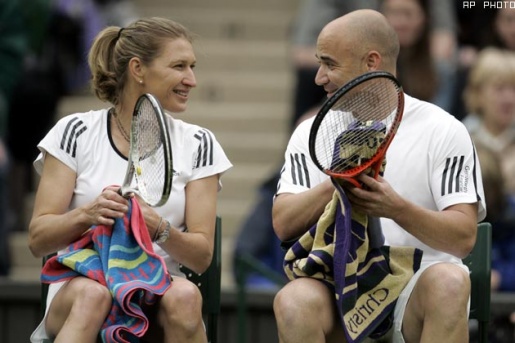
My friends look at me like I’m insane. But, what they are slow to catch onto is that a romantic partnership at its highest level – soul mates – has a lot in common with tennis. See, a successful doubles tennis team isn’t made up of two inexperienced, below-average tennis players who pair together. Rather, a successful double tennis team is comprised of two remarkable individual players, and when two such distinct individuals are paired, they surely form a winning team. Put simply, a team doesn’t create winning players; rather, winning players create a winning team – and it’s my obligation to evolve in the present toward creating the healthiest personal foundations possible for me to be in a life-inspiring relationship in the future.

But, too many people skip the “singles” step. You might say, rather than becoming an excellent individual tennis player, then partnering with someone of the same high skills, they think that simply partnering with anyone will make a winning team. And, it never works – not in tennis, and certainly not in love. As individuals, we must have established our own healthy identities in order for a partnership to work in the long term. I know, we like to think that “love conquers all” and “opposites attract,” but this rarely proves true over time. Instead, mutual respect and common understanding – where core values align, and we inspire each other, not overshadow each other – is where genuine compatibility occurs.

In real world practice, working on ourselves when single – or even when in a relationship! – is the surest way to lasting love, to truly connecting with a soul mate. If I strive to be the best individual that I can be – focused on evolving my emotional health, my skills as a parent, my career, my roles as friend, my place in the community, my spirituality – it sets me up to not just be a better person, but to be a great partner, a soul mate. Again, professional tennis players aren’t looking to partner with amateurs, so if we want to find true success in partnerships, we must first develop ourselves.

Interestingly, few people take this approach to finding love – that is, evolving as an individual before entering a serious relationship. I see it all the time with friends who aren’t focused on their own characters, but who just want “love” – a desperation as haphazard as grabbing a stranger’s hand and running onto the court at Wimbledon, and thinking that the fact that they’re “partnered” means success. Yet, it never does. Sure, they’ll fumble around for a while trying to make it work, but eventually they fail – and just like watching two people who can’t play tennis struggle and fail, it’s equally as obvious when watching two people “in love” struggle and fail. Sure, you can meet someone in a bar or other superficial means and try to make it work, but the odds of finding your true soul mate under such shallow pretense – such a lack of life-inspiring connection – is about as likely as finding a literal professional doubles tennis partner at your local honky-tonk joint.

So, here’s the real question: How do we grow in ways when single that will not only improve our lives and strengthen our characters, but attract those truly suitable to date, ideally finding not just love, but a soul mate?

The answer is, we live the life we wish, ideally to the highest standard. If we live the life we wish, we’re more than half-way on the road to finding a true soul mate. If we’re living to the standards we wish, that’s who we’re going to attract – and, even if we never meet that someone special, we’re more importantly living a truly fulfilling life. I love attending my daughter’s drama events; I love boating; I love traveling; I love Broadway shows; I love reading and writing; and I love charity events. Rather than sit home pining about how I wish I had someone with whom to share all of these interests, I’m out pursuing these interests by myself – and thereby increasing my odds of meeting someone with my same interests because we’re at the same places enjoying the same activities. If you want to meet someone who plays tennis, go to a tennis court! But, again, even if I never meet my soul mate – though, trusting that I might is an important part of the process – I’m still living a content, rewarding life. Living life to the fullest as an individual is the goal, and if love is found with another in the process, then it’s a double blessing.

In these ways, the single life fosters remarkable potential for us in both the present and future. It’s the chance to better ourselves through personal growth, allowing every opportunity to pursue the life we’ve dreamed, where we’re not hinging our ultimate self-fulfillment on a “relationship,” but on living life to the fullest of our individual capacities. And, what’s fascinating is that focusing on ourselves as individuals actually makes us better future partners, placing us in the amazing position to not fall into a relationship that we’ve “settled for,” but to actually discover the one that we’re “meant for.” See, when we’re emotionally healthy and embracing all that life has to offer, love doesn’t stop when we’re single – it begins.

Step Back From That Ledge, My Friend

By Mark E. Smith

In 1995, I opened a book preface with the line, “There’s no challenge more or less significant than another; merely different.” And, in the many years since, that line has remained with me, with my understanding that empathy and compassion are two of the most sincere traits that we can possess. See, what I’ve learned through my own challenges and struggles is that while no two people or struggles are the same, challenges and struggles effect most individuals at some point in life – often at several points in life – and although the origins of challenges and struggles vary greatly, their impact is universal, requiring all of us in moments of desperation to find an inner-strength to step back from the ledges we find ourselves on. And, when we’ve stood on the ledges of life – on the verge of slipping off, falling off, jumping off – we know how tough it is for others in those situations, where we naturally reach out to them in their moments of harrowing need. Through our own vying, we recognize first-hand that no one should have to climb the mountains of life alone, but that everyone deserves a patient guide to support them along the way, to reassuringly say, Step back from that ledge, my friend – you’ll get through this.

When you live successfully with disability – and, dare I say, honestly, where you don’t portray life as perfect, but as simply survivable, regardless of challenge or struggle – it is inevitably clear to others that you’ve been to the ledge and back, gaining wisdom along to way. After all, if one is struggling, one can relate with someone who’s obviously struggled, too – and there’s a sort of reassurance in seeing that another has somehow made it through the tougher times in life, mountains climbed, scars earned, wisdom gained, and ledges safely passed.

When you put these perspectives together – those who are facing life’s challenges and struggles, with those who have struggled and survived – an amazing bond can occur, where it’s two people communicating and sharing on the most genuine levels, climbing the mountains of life together. And, such shared emotional ascents are among life’s most magical interpersonal experiences, the best of friendships.

The fact is, many are too often alone in facing their challenges and struggles – and it is scary, isolating, and debilitating. What’s even worse is when one discusses one’s challenges and struggles with someone who hasn’t “been there,” and ends up being judged, lectured, and ridiculed – harmful feedback that can only make one feel more defeated, pushing one farther out on the ledge. But, when there’s a true mutual understanding between two people – I’ve been through the ringer of life, and know what it’s like, so let me be here for you now in your time of need – real support and solutions occur. We share, we listen, and we build trust – that is, we create the foundations of truly the most meaningful, supportive, healing relationships in our lifetimes.

And, when we’re in need, with such an empathetic, compassionate friend in our midst, the outcomes are life-changing: We can exhale our true feelings, we can open ourselves up in a safe place, we can explore our emotions, we can express true wishes, and we can just be – yes, at last, just be. When it all comes together, it’s not just a friendship that’s life-sustaining, but can actually be life-saving – conversations that allow us to restart living.

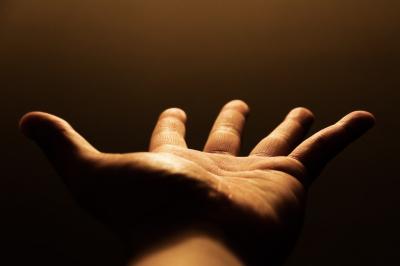
Providing such genuine support to another should be a given by any of us who have faced challenges and struggles, knowing how others could – or did – make a difference when we were standing on the ledge, about to slip off, to fall off, to jump off. However, both friends must realize that these times are intensely interpersonal. And, when such friendships are in true effect, there’s a mutual exchange of gratitude, where both individuals truly embrace each other, hands stretched out to each other, clinging. Of course, one of the individuals may obviously be in far more emotional need in the moment than the other – standing on the ledge looking down – but this doesn’t preclude a demonstrated deep appreciation and mutual respect for the supporting member, as well. If someone’s truly there for us – when one extends one’s hand at those moments in life and says, Step back from that ledge, my friend – that’s such an amazing gesture, and let us be faithful enough to directly acknowledge the remarkable value in that type of genuine friendship.

As those who have faced life’s challenges and struggles, we know how tough they can be to overcome, especially alone. Yet, when we overcome them, we have an evolved empathy and compassion for others of such kindred spirits. Let us be there for others – without judgment, as unconditionally as possible. And, if we’re fortunate enough to have someone who’s there for us unconditionally – offering an open hand, drawing us back when we’re standing on a ledge – let us cherish that friendship and reciprocate. See, the goal in the best friendships is to not just top the mountains of life, but to top the mountains of life together, hand-in-hand.

Slow Dancing

By Mark E. Smith

I heard a woman who uses a wheelchair note that among the saddest parts of her having paraplegia is that it’s kept her from slow dancing, that she longs for a cure so that she can slow dance with a man.

It was a heartfelt longing that I’m sure would resonate with those who are able-bodied, as well as some with disabilities, truly personifying the tragedy of disability at the most poignant level: One’s loss of the ability to simply slow dance, life unjustly constricted by a wheelchair.

However, there was another poignant component to the woman’s experience: It was totally specious nonsense – that is, while it sounded true, it was completely false, a made-up construct in her mind about her disability that simply wasn’t based in reality.

See, those of us who use wheelchairs slow dance all of the time. In fact, we ballroom dance, line dance, and generally boogie down like everyone else. And, when a song comes on for a slow dance, the DJ doesn’t kick us off of the dance floor and the party doesn’t stop; rather, when a song comes on for a slow dance, we naturally cuddle up with our partners and sway to the motions of the music. It’s not climbing Mount Everest, nor does it require one to be a rocket scientist. It’s just two people slow dancing, where one – or both – happens to use a wheelchair.

So, why then would the woman see slow dancing as out of the realm of possibilities for her as one who uses a wheelchair, making slow dancing entirely contingent upon her being able to walk?

The answer is, she’s not basing life on its realities, but basing it on her own outlook, one that’s skewed, where she is the only factor limiting her life, tragically defeating her own happiness. We know that, logistically, slow dancing while using a wheelchair is effortless, and we know that the intimate experience of slow dancing with someone you’re passionate about is no less gratifying when seated than on two legs. Therefore, not only is the woman technically wrong about being unable to slow dance while using a wheelchair, but she’s likely going to go through her whole life depriving herself of a wonderfully intimate experience with another person.

Here’s the real question, though: How often do each of us get in our own way – how often do we tell ourselves we can’t slow dance, so to speak? – creating roadblocks in our lives that aren’t based in reality, but in our own minds? I’m not looking for a better job because I know they won’t see me as qualified. I’m staying in this unsatisfying relationship because I know I can’t find better or won’t be happy alone. I’m too physically unfit to get in shape. I could never save up enough money for the down payment on a home. I don’t have time to go back to college at night. …The list goes on and on.

While such life hurdles can seem totally out of our control as we run them through our heads, the opposite is true. In virtually every challenge we face, it’s not life’s circumstances or someone else holding us back, it’s simply ourselves – we’re getting in our own way. In the long term – and goals of great personal reward do take time! – no one but ourselves keeps us from seeking a better job, getting out of an unsatisfying relationship, getting in shape, saving money, or going back to school – we have ultimate power over these and most other aspects of life if we put forth courage, effort, and time. I tell you from my own experience that the only one who’s ever stopped me from pursuing my potentials has been me, and once I’ve pushed that fool out of my way, a world of possibilities has always opened up.

When I look chronologically at among the three biggest seeming challenges that I’ve ever faced – going to college, moving cross country, and becoming a full-time single father – prior to my committing to each them, I could have written a book on why they were completely unrealistic and unfeasible, why I couldn’t slow dance, you might say. Yet, when I got out of my own way, and based my reactions not on skewed emotions, but on reality, and said, “Not only can I do this and survive, but actually thrive,” I succeeded.

Indeed, life is a lot like slow dancing at a wedding reception: The only deciding factor between failure and success is whether we choose to simply move from our table to the dance floor. …And, I say, never pass on an opportunity to slow dance.

This Dad’s Life

By Mark E. Smith

So, I continue on among the most remarkable paths of my life, a single, full-time father – or, as I like to put it, “I’m a 40-year-old single, full-time father with cerebral palsy, raising my 14-year-old daughter….” I love phrasing my life that way because it’s so absurdly over-dramatic, and what’s even better is that it pretty much sums me up as the last guy on Earth any woman would ever date. I mean, if you pull any part of that description out, it plays as a run-the-other-way alarm to any rational woman: A 40-year-old guy – strike one! A single, full-time father – strike two! A 14-year-old daughter (though, she is the best kid ever) – strike three! And, then add cerebral palsy – I’m out! Really, I’m the personal ad from Hell.

However, as over-dramatic as adjectives can make my life sound, the truth is, it’s anything but dramatic these days. See, much like my cerebral palsy isn’t the toughest of roads, neither is being a single, full-time dad. In fact, like my disability, being a single, full-time dad has directed my life in wonderfully grounded, content ways, where there’s a peace and joy in my life that I’m not sure I ever knew – and others may not expect.

The process of divorce, becoming a single, full-time dad, and all of the emotions surrounding it started out as little more than controlled chaos, where there was an initial physical shock to my life. While my marriage was disintegrating for years, my ex-wife still did everyday tasks like laundry and grocery shopping. So, upon her leaving, I was literally left with a pile of dirty clothes and an empty refrigerator, looking at my daughter, thinking to myself, OK, where do we go from here, kid? It’s just you, me, and one heck of a mess!

But, like any time when we’re on the ropes in life – scared, stressed, chaotic – the old standby to Just do something! came in handy. And, that’s what I did. I determined that the priority was to get our house in shape – clean clothes, and food in the refrigerator! – and go from there.

In the process, I learned that we can’t control everything (actually, I learned that a long time ago, per life!), so start small by controlling something. And, in such situations when we’re scared and life feels chaotic, simply finding control over one small aspect in our lives truly gets us moving in healthy directions.

For me, I started by spending a weekend cleaning my master suite while my daughter was at a friend’s slumber party. From there, I got a new bed, redecorated a bit, and got at least my “area” to my liking. I then had momentum to keep going through not just the house, getting all in order, but also addressing all of the emotions and realities that go with being a single dad.

And, it was insanely challenging, more so than most around me knew at the time (few knew the extent of the personal challenges that I was facing because, one, I keep my career and public life on track no matter what, and, two, because I just really felt the need to get my home life on track on my own, with utmost personal accountability). My mindset was, I don’t care what’s happened – it’s my sole responsibility to get things on track for my daughter and me, where I’m willing to tackle whatever it requires. (And, there had to be accountability on my part for the downslide of the marriage, as well — no, I don’t think I was the cause, but even in the best intentions, my codependancy and denial played ultimately destructive roles.) What occurred to me was that I wasn’t at an end, but a beginning – the opportunity to make things right, to get healthy in every way. I realized that when we’re in a bad relationship, we really don’t have much to lose – we’re already living in dysfunction, running on empty. However, once single – especially as a parent – we have everything to lose if we don’t get it right, as it’s truly our chance to live up to be all that we’re capable of being. (This realization especially hit home when I found myself at one point in my process of getting my personal life back on track, where I caught myself developing a relationship with a woman that clearly wasn’t in the best interests of my daughter and me [vulnerability, falling back into dysfunctional patterns, and ego can get the best of us at times!] – and I quickly recognized my poor judgement, hit the brakes, and put an end to it in real time.) Therefore, I wasn’t about to let any aspect of my life slip or any opportunity for improvement pass. I had to be accountable for the past, present, and future.

Every day, I got up long before dawn to get all of the morning chores done, dropping my daughter off at school, being at work by 7:30am. Then, I raced home after work to clean, do chores, grocery shop, run my daughter to her activities, and keep up on my writing, email, and after-hours work, getting to bed by midnight. And, for several months, I just kept going – 20-hour days – feeling like getting the house and our lives on track was a stress-filled, never-ending process. It was like the movie, Groundhog Day, where I went to bed every night hoping for some relief, only to wake up in the seeming blink of an eye the next morning, having to do it all over again.

Yet, I also knew from life experiences that when times are tough, short-term pain is a small price for long-term gain, that when you’re exhausted, you can’t slow down, but must actually speed up, even when you feel like giving up – and there was too much to lose to let even the smallest detail slip. Fortunately, as I had hoped, eventually each day got easier and easier, with the house – and our life together – dramatically in order. And, I could breathe. Finally.

What was poignant during the whole process was that my daughter and I weren’t just rebuilding our life; rather, we were rebuilding our life together. And, through nightly talks – which we call “check-ins” – we set-out to further define our life together, complete with our own mission statement: To share the joys of life, mutually respecting and inspiring each other as we go.

And, it’s worked – it’s all fallen into place. The scariness, stress, and chaos has been replaced with happiness, calmness, and tranquility. Weeknight evenings are no longer about surviving, but thriving, revolving around my daughter’s activities – singing lessons, drama rehearsals, and high-school football. And, I’ve mastered being Mr. Mom, balancing house chores with everything else that I need to do, keeping all on a schedule that allows comforting predictability and normality in our home life.

Every night, my daughter and I make dinner together – getting better at our cooking skills all of the time! – and we do the whole homework thing, keeping my daughter excelling in honors classes. Then, we always have some fun activity to share, from playing board games, to baking cookies, to listening to music, to editing each other’s writing. On the weekends, we’re off somewhere, doing something, enjoying life, the two of us, where the possibilities and adventures seem limitless.

As I’ve shared with my daughter, life isn’t fair, and there is a tragedy in the fact that her mother isn’t in her life. However, we always can make the best out of a bad situation, where at points in our lives we must choose to not crumble, but rise as the Phoenix from the ashes. And, we, together, have proven the title of the Hemingway novel on my bookshelf: The sun also rises.

Indeed, as a “40-year-old single, full-time father with cerebral palsy, raising my 14-year-old daughter,” I may seem every woman’s nightmare of a guy. However, when my daughter and I are curled up on the couch with our two dogs on Saturday nights, drinking homemade smoothies and watching the cheesy ’80s teen movies that we both love, I wouldn’t change a thing. It’s been a bit of an emotional trek getting here, but the journey has been well worth any trials, as for me, just being Dad continues proving the truest blessing of my life.

Call Me Shallow, But….

By Mark E. Smith

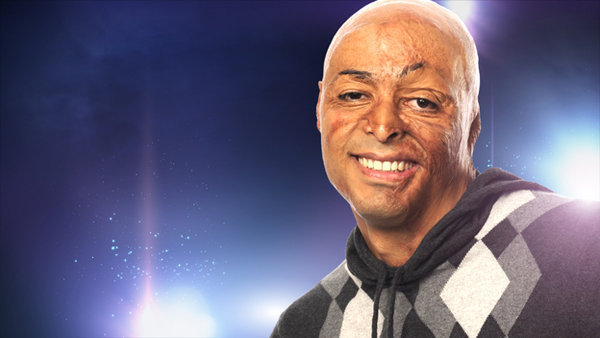
When J.R. Martinez, known from his roles on “All My Children” and “Dancing With the Stars,” was in the hospital recovering from burns over 40 percent of his body, including life-changing facial disfigurement, his mother had a very straight talk with him, one that would guide him to the true depths of his character.

See, J.R. was an American soldier in Iraq, having enlisted at just 19, when his Humvee ran over a landmine, catapulting him to a path of 33 surgeries in 34 months, resulting in the loss of an ear, and permanent facial disfigurement. J.R. describes lying in the hospital, glancing in the mirror, seeing a monster looking back where he once saw a handsome young man – all sending him into a deep, dark depression.

But, J.R.’s mother, older and wiser, saw something else in the situation: The truest essence of her son. “People aren’t going to love you for how you look,” she told J.R. “They’re going to love you for who you are. And, that is a true blessing.”

J.R.’s mom was so right – and J.R.’s success proves that. I mean, the grace and humility with which he presents himself doesn’t make his disfigurement go away; rather, it makes his character shine brighter, where his facial attributes are part of him, but not the sum of him. J.R. is living proof that our exterior facades are just that – facades – and it’s our true character that matters beyond all else.

Yet, not everyone understands this concept. Surely, there are many superficial people in our culture who dwell on appearance alone – their appearance, everyone else’s appearance – and there’s a personal tragedy to it. Literally, when one dwells on appearance, not only can they never be seemingly good enough – after all, there’s always someone better looking by such shallow standards – but they never see others beyond an exterior facade, resulting in never developing deeply sincere relationships.

An acquaintance told me the story of her being a smoking-hot 26-year-old, living life in the fast lane in a Southern California beach community, where her friends and boyfriends were all from wealthy families. She drove nothing but Mercedes since the age of 16; she went shopping virtually every day to keep up with the latest trends; she had breast augmentation, a nose job, and routine Botox treatments; her girlfriends were the hottest of the hot, and they could cut the line at any club; and, she refused to date a guy who didn’t have a buffed body and a Porsche, no exceptions. And, all was moving along perfectly in her world of self-described perfection – that is, until she reached down to grab a CD off of the floor of her newest Mercedes, crossed the lane on a twisting road, and slammed head-on into a guard rail, the impact leaving her a quadriplegic.

But, the accident and paralysis were just the beginning of what she saw as the biggest tragedy of the time. Upon the accident, friends initially rushed to her bedside, and then slowly they stopped coming or calling. While she was in rehab, her friends hit the clubs as usual, and her buffed boyfriend who she thought was Mr. Right (after all, he had a Porsche!), promptly began sleeping with her soon-former best friend. Indeed, she learned that her relationships were as much a facade as her glued-on fingernails and sprayed-on tan. “When we place so much emphasis on our exteriors that we overlook the importance of who people really are on the inside, we take a huge risk,” she shared with me. “Trust me, when your identity and view of others is simply a house of cards, it crumbles fast.”

Going back to J.R.’s mother, she was absolutely right in the scope of her advice: Disability does allow us to have often times deeper relationships, a sort of interpersonal mechanism that protects us from the shallow people among us. Disability is a sort of barometer that gauges the character of of others, only letting the best of the best get close to us – and that’s a great opportunity.

Yet, like all opportunities, we must welcome others accepting us, as-is. J.R. could have used his unique appearance and initial self-consciousness to hide from the world, a way of judging himself and becoming bitter toward others, a presumed lack of acceptance. But, instead, J.R. chose to see the depths of his own character, not just the scars on his face, and he put himself in the world, trusting that he would witness the best in others, as well. Of course, as we now know, his self-acceptance has created universal acceptance by millions of adoring fans, all based on his demonstrating the depths of his character, not an external facade.

As for me, I strive to dress nice and present myself well, but the reality is, I’m a visibly flawed guy with cerebral palsy when viewed on the surface – and I’m OK with that, as the depth of my character hopefully shines through to some. However, when some don’t have the capacity to see beyond my lack of physical perfection, I’m fine with that, too, where I’m glad not to have those “emotionally blind” people in my life. Call me shallow, but if someone is more concerned about the imperfection of my physical appearance than the quality of my character, I don’t want that person around me – and I’m glad that my disability serves as a smoke screen to keep such people away.

What’s really wonderful, though, is that when we recognize the interpersonal value of being embraced for our true character, not our superficial facades, we instinctively return the gesture, being much more open toward others. And, we end up with an amazing exchange – where we’re both seeing each other on the most genuine levels – and that’s how the sincerest relationships are formed. If I accept you for you, and you accept me for me, now we’re truly connecting – and that’s where we all should be in our interactions with those around us.

Someone recently asked me what true acceptance of others really means? And my answer was coy but fitting: True acceptance is the sincerest gift that we can share with another person.

Being Broken

By Mark E. Smith

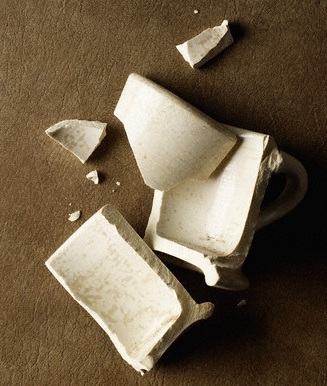
A friend of mine introduced me to the music of British musician, Marcus Foster, whose song, “I Was Broken,” is hauntingly beautiful. It’s about recovering from being “broken,” whatever that may mean to any one individual.

In the disability realm, the medical model defines us as physically “broken.” However, I’ve never seen that truly to be the case on an individual level. We know of people with extraordinarily physically severe disabilities living vastly successful lives – some far more successful than able-bodied counterparts. So, then, where does broken enter the lives of those with disabilities?

Interestingly, broken enters the lives of those with disabilities in the same way as it effects everyone else: Emotionally. See, broken isn’t an exterior condition; it’s an inner one.

If you think about our physical states as individuals, they’re so diverse and so easily compensated for – I simply use a wheelchair because I can’t walk – that it becomes all but impossible to define a physical condition as broken. Yet, where broken enters our lives – for everyone – is when we don’t feel worthy enough, when we don’t like who we are, when we feel like our lives aren’t heading where we’ve dreamt, when we feel haunted by the past, when we feel like we can’t meet others’ expectations, when we don’t feel deserving of others’ love, when we feel incomplete. These feelings – these excruciating emotional struggles – are when we’re truly broken.

I’m very fortunate to often find myself genuinely connecting with those around me, even in casual settings, and as one of my best friends warned an acquaintance as we were socializing, “Mark’s not exactly known for light conversations – they tend to go deep.” And, he’s right – because I know that there’s a common humanity among us, where no matter who we are, or where we’re from, we all share common experience – including having been broken. What’s poignant to me is that when I share with others our common struggles with identity, self-worth, longing, and so on – all of the emotions that cause us to be broken at points in our lives – it’s universally human.

Surely, when we’re broken, it’s telling us that something is wrong, that our lives aren’t heading in the directions we wish. Sometimes being broken is based initially on uncontrollable circumstances; other times, it’s based on our own actions and poor decisions; and, yet other times it’s based on a compounding of all of the above. But, regardless of the causes, here’s what’s striking about being broken: It’s the gateway toward moving our lives in the right directions, it’s the opportunity to realign the paths of our lives to what we wish and deserve. Objects can be shattered to the point of beyond repair; but, not so the human spirit – there’s always the ability to restore and rebuild it, often to greater capacities than previously known.

I know, moving through that gateway from being broken toward wholeness is the toughest challenge we’ll ever face in life. I’ve been broken, and collecting the shattered pieces, trying to figure out how to make myself whole again at points in my life has never been quick or easy – sometimes it’s been like trying to put together a 1,000 piece puzzle with not even a picture of it to help chart the task. And, while there’s no universal answer to rebuilding ourselves from being broken – for some, time heals all; for others, personal space helps regain perspective; and, for yet others, formal processes like counseling help – we know that honesty is the first step toward repairing what’s broken, where despite our fears, shame, and hurt, we must maintain gut-wrenching honesty with ourselves and everyone around us about what we’re going through. If we avoid the candor of being broken, we can’t address it. It’s like ignoring anything that’s broken – it can’t fix itself. However, in merely our admission of being broken, we begin healing. See, when we allow others in, to truly know us – broken, as we may be – we begin to liberate ourselves in that process.

And, what I’ve learned most about being broken is that it ultimately plays an empowering role in our lives: Being broken allows us to clearly see the individual pieces of our truest essence, ones that we can eventually put back together however needed in order to achieve our hopes and dreams – finding ourselves whole, fulfilled, and content in the end.

Staring at the Drapes

By Mark E. Smith

I lay in this hotel room bed – alone – thinking of Vic, who committed suicide almost 22 months ago to the day.

This evening, I spoke to a group of around 170 people, half-way across the country from my home – and I knocked ’em dead, as they say in show business. It was my kind of event – dinner and cocktails – where I have the liberty of really working a festive crowd. And, I hit it home with a theme of following the ramps in our lives – bridges of opportunity that take us to places we never dreamed – by interweaving stories from the humorous to the poignant. And, the gracious crowd was with me all along – an exchange of amazing energy – and then I rolled off stage to their flattering standing ovation.

At the time of Vic Chesnutt’s suicide, many chalked it up as the quadriplegic musician who was tired of living with the daily trails of disability, that the physicality of it all caused him to take a fist full of muscle relaxers, mix a dangerous cocktail, and check out for good – his fourth and final suicide attempt. But, as I wrote at the the time, there was more to the story than that:

…From what I knew of Vic, from what I’ve since learned of Vic, and from what I’ve witnessed and experienced in my own life, I believe that the unique pressures of living ultra-successfully with disability caught up with him, where he wasn’t able to cope with the extreme fluctuations in his life. See, when you have an exceptional level of success like Vic did while living with a disability, it can become a tale of two cities. On the one hand, publicly, everyone’s telling you that you’re a huge success and inspiration, putting you atop the world. Yet, on the other hand, you’re a real person, with real-life issues toward health, relationships, and finances. And, when all isn’t kept in balance, you can go from extreme highs to extreme lows in literally a matter of moments – in the time it takes to go from on-stage in front of a cheering crowd to a lonely hotel room where you’re left to face the realities of your everyday life. Truly, when you have such extremes in life – and you’re emotionally unable to center yourself – it’s just as easy to get consumed by the lowest of the lows as the highest of the highs, where the healthy middle-ground needed to survive doesn’t exist. And, that’s where the tragedy in Vic Chesnutt’s life occurred – not in his literal disability, but in his inability to find that middle ground of understanding and comfort in life as a whole, where, by all accounts, he lived a tormenting oscillation between the highest heights of elation in his work, and the deepest plunges of despair in his personal life, with no middle ground to just be at peace.

My colleague and I leave the banquet after the program’s finished. I thank our host for the engagement, and I convince my colleague to go across the street with me to an eatery for a late night snack. Again, going from a stage to an empty hotel room can be torturous – there has to be a bridge in-between to help one transition from the energy of a packed house to being totally alone. And, by getting something to eat, I’m stalling – buying my time, avoiding the empty hotel room in which I will inevitably find myself. But, I can get through it – alone, the hardest part of it all that Vic knew too well.

Eventually, I make it to my room like countless other nights on the road. I lay in this hotel room bed – alone – thinking of Vic, who committed suicide almost 22 months to the day. And, I realize that everyone’s assumptions of Vic’s suicide truly were wrong. See, as I stare at the shadow of the drapes in the dark, I know that the challenge for guys like Vic and me isn’t being alone in our disabilities; rather, the challenge is being alone in ourselves.