Where Divorce Leads

Divorce

By Mark E. Smith

I’m at that age, in my 40s, where many I know are either divorced or in the midst of divorce. And, it’s hard for me to watch because I understand the tragedy of divorce, but not for the reasons you might presume. And, I know the ultimate goal of divorce, but, again, it’s likely not what you presume. Divorce is different for each couple – and, even more unfortunate for each “family” – yet there’s a common thread of humanity that too many overlook. It’s by understanding that common thread that takes divorce from the court room and places it back into the heart, which is really where it resides.

Interestingly, while I am a generational divorce statistic – my parents divorced, and I subsequently divorced as an adult – I’ve never been through a “typical” divorce in the legal sense. My father simply left when I was very young, then my mother and stepfather had a very simple divorce. Then, in my divorce, it likewise was a very simple legal process, no custody issues, gracefully splitting of assets amongst ourselves, never even a foot in court. My marriage was deeply dysfunctional, but we still treated each other with dignity and respect in the divorce process – there was no excuse not to. None of these divorces in my life were by any fathom ideals – divorce never is – and emotions ran deep; but, they weren’t legal battles and drawn-out War of the Roses, either.

However, I’ve helped friends emotionally get through some tough divorces. And, it’s struck me that so many divorces are a seemingly surreal process. Think about how divorce transpires. Two people have gone from loving each other, vowing to spend a lifetime together, and even having children, to needing a court to decide who gets the kids on Sundays, utterly despising each other, paying attorneys thousands of dollars to literally fight over items like who gets the $50 DVD player. And, the process takes on a life of its own, where individuals abandon all rationale and systematically their lives are devastated by one or both of their actions – home lost, bank account drained, kids made a pawn, and everything so lovingly built is destroyed, including those once-priceless wedding photos. When two people’s lives – and worse, their kids – are sanctioned entirely by court order, life has jumped the tracks in among the most tragic of ways.

Yet, as horrible as the legalities of divorce can be, it’s the impact on our humanity that’s the real toll – and this is what few realize or wish to admit. Alcoholics and addicts aside (a leading cause for divorce, where such individuals by nature of altered brain chemistry cannot process rational thoughts or feelings), it’s the emotional impact of divorce that’s more life-shaking than any other aspect. The monetary can be rebuilt, and the court appearances eventually come to an end. However, the realization that the person and union that you so believed in turned out to be completely unfulfilled in the end, rattles you to your core. What you thought was, wasn’t. What you trusted in as a forever, came to a soul-numbing hault. The person who you married isn’t recognizable anymore. And, whether you do it consciously or subconsciously, you’re bound to feel the scariest, most helpless emotion of your life: After witnessing the implosion of my beliefs, hopes and dreams, how do I believe in anything ever again? See, that’s what divorce truly is for most. While couples duke it out in court over meaningless materialism, fueled by spite and bitterness, thinking that’s the nature of divorce, they’re overlooking the real consequence and battle: How do I restore my faith in humanity, to trust again? It’s not just a dissolution of a marriage, but the dissolution of all that one believed – and that’s soul-shattering for many.

In this way, the ultimate goal of surviving divorce can’t be preservation of capital or righteousness or bitterness. Rather, the ultimate goal in surviving divorce is a preservation of faith, the ability to trust and love again. While you may lose a lot in divorce, as long as you don’t lose faith in humanity, you not only have the opportunity to recover, but to go on and live the life of your dreams.

And, to me, that’s the ultimate goal of divorce. It’s not about distribution of property, who’s right or wrong, or being bitter with your ex. Rather, the ultimate goal of divorce is among the most consequential processes of your life: Preserving your faith in trusting and loving again toward ultimate happiness wherever it awaits you – and sincerely wishing your ex the same.

The Genius of Juggling

juggling-balls

By Mark E. Smith

The New Year is here, and while I trust it will grace your life with much of what you’ve striven toward, it’s sure to also bring some sort of adversity. After all, none of are immune from the curve balls that life throws us, from the frustrating but mundane like your vehicle breaking down, to the much more harrowing like an ended relationship, job loss, or illness. We don’t like to think about it, but, again, none of us are immune from life’s curve balls, adversity coming our way.

I’ve spent my entire life facing adversity – from my disability at birth to my troubled family growing up to challenges in my adult life – and among my most valuable assets have been the friendships I’ve evolved over decades with others who’ve successfully faced adversity. And, between the two, I’ve developed a learned skill set that’s consistently helped me move from surviving to thriving at many points in my life. Yes, adversity will surely come my way again, too – it’s inevitable – but I’m ready.

For me, addressing adversity has become intuitive, springing into positive action when it occurs. I understand several core principles that have served me and others so well in times of adversity, where I believe they can serve all of us, no matter the circumstance.

When Opportunity Knocks, Open the Door!
When we face adversity, it’s easy and natural to focus on what’s happened to us. …I lost my job. …My marriage is over. …I’ve been diagnosed with an illness. However, in most cases, it’s futile and moot to focus on what’s happened to us. Sure it’s healthy to process emotions, but in the larger scope, we need to look forward toward opportunity – and, there’s always opportunity in adversity. As W. Mitchell – burned over 90 percent of his body, then later paralyzed – has told me for 20 years, It’s not what happens to you, it’s what you do about it. Therefore, when I face adversity, I’m always immediately seeking the opportunity in it. I don’t always make a smooth transfer into my wheelchair, sometimes landing on the floor. Yet, I’m never frustrated by the fall – it’s over, done, who cares. What I’m solely focused on is getting up, as that’s where the opportunity resides. My sister was also an amazing example in this. At 23, she had cancer and was in a bad marriage. She didn’t drift into self-pity, but focused on beating cancer and used it as a life-affirming catalyst to leave an unhealthy marriage, going on to a life closer to her dreams. Cancer for her wasn’t a tragedy; rather, it was a catalyst. If you lose your job, it’s an opportunity to find a better one; if your relationship ends, it’s an opportunity to find the partner of your dreams; if you have illness, it’s an opportunity to gain new life perspectives. We all get knocked down in life, but the wise among us only care about getting up stronger.

Never Stop Juggling!
Have you ever noticed that we have a way of allowing adversity to have a domino effect in our lives? Think about how many struggle at work, then go home to take it out on their families. The examples go on and on, where when one aspect goes astray, we let it ripple through our entire lives, being far more devastating than it should. A college buddy of mine is a juggler, and he taught me that as a juggler, if you drop a ball, you keep juggling the rest because whether you juggle four balls or three, the audience is still entertained – just don’t stop juggling! Life is like that, as when one part of your life goes wrong, don’t let it pull down the rest. Never let the bad sabotage the good. I’m the only one in my family to have ever graduated high school, and the way I did it was by refusing to let my nightmare home life effect my schooling. No matter how bad a night was at home, I still got up the next morning and went to school engaged. It doesn’t make sense to allow one area of dysfunction to void all other areas of prosperity. In fact, when one part of your life is astray, that’s the precise time to especially focus on the positive areas – and you’ll be amazed at how the negative soon turns around.

Victor, Not Victim!
When facing adversity, we have a peculiar way of embracing the blame game. I feel like this because of him. My life is like this because of what happened to me. However, we have far more control in the long run over our lives than any other person or circumstance can dictate. We can’t always control what happens, but we can totally control how it impacts our lives. We can choose at any point to be a victor or a victim. I may have been hurt in that relationship, but I grew from it and I’m more open to love than ever. Nick Vujicic could appear to many as a victim, having been born with no arms or legs. But, as Nick travels the globe speaking to hundreds of thousands each year – as an evangelist, author, husband and father – he lives by the unwavering philosophy, No arms, no legs, no worries, mate! We all possess the power to dictate what controls us. I don’t care what happens to me, I’m going to strive not to relinquish my fulfillment to an outside force – I will be victorious over adversity, not a victim.

If we summarize these core strategies, a remarkable truth is seen: not only do we each intrinsically possess means to address adversity in healthy ways, but we can often minimize its impact and literally use it in our favor. And, so the theme for adversity in the New Year is simple: we are equipped, so bring it on!

Living Like Hemingway

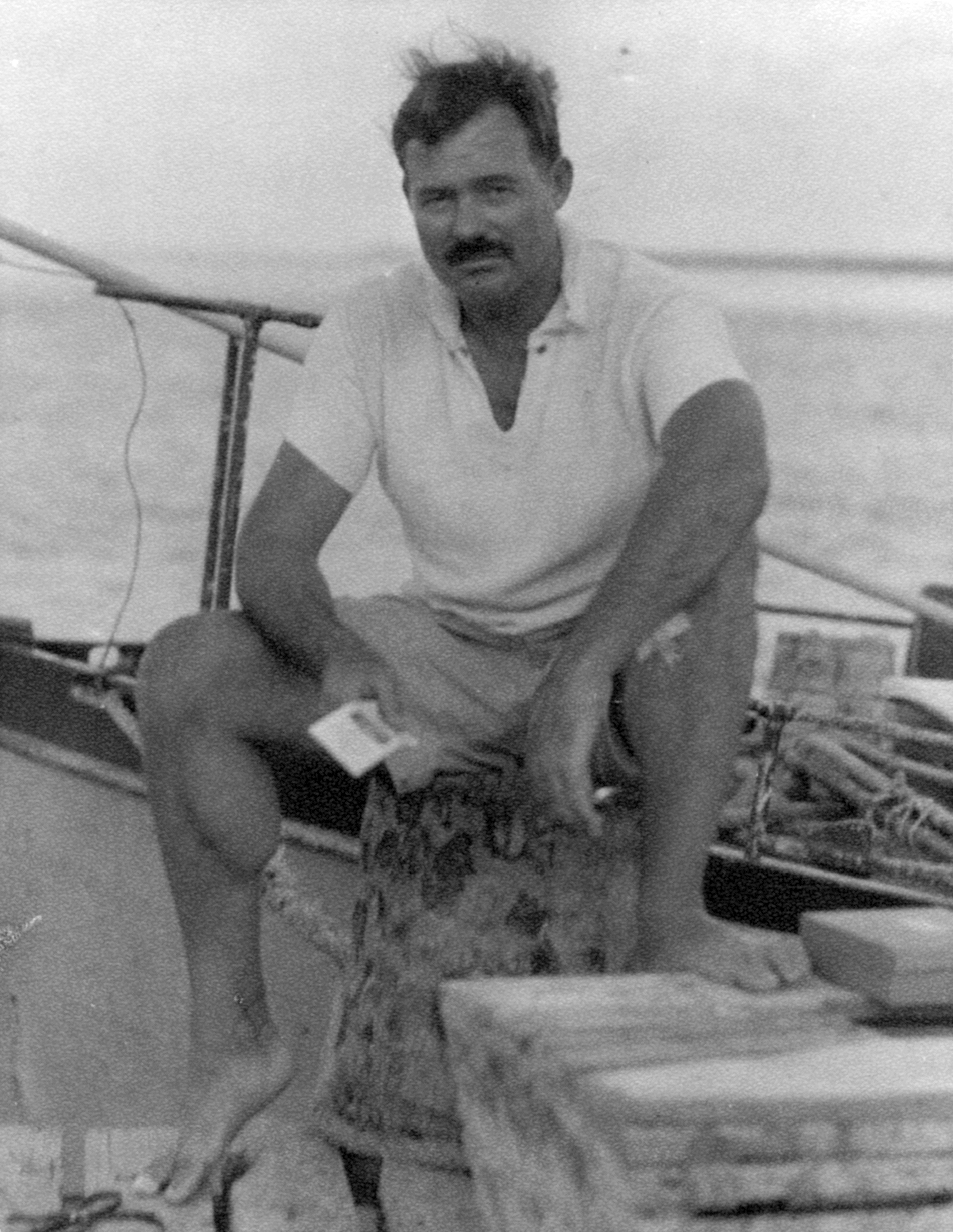
Hemingway (circa 1930)

By Mark E. Smith

Sure, they were both great posthumously. However, during their lives, Hemingway far outlived Fitzgerald – not just in age, but in truly living.

I mean, history shows their enormous accomplishments, both helping define 20th century literature, The Great Gatsby and The Sun Also Rises leading the way, respectively. But, Ernest Hemingway, he was relentless in living life on his own terms, while F. Scott Fitzgerald was about simply doing what he had to, concerned to a fault with what others defined as success. But, I’m telling you, by following the path that others defined as success, Fitzgerald was the far less successful of the two, not just in literary accomplishment, but, again, in life.

And, Hemingway told him so, constantly. Hemingway saw that Zelda, Fitzgerald’s southern socialite wife – who broke off their engagement once because Fitzgerald wasn’t earning enough money – was destroying Fitzgerald’s spirit, killing his writing with her own agenda and issues. Yes, Hemingway was married to Hadley Richardson at the time, but she was his equal and inspiration. For Hemingway, as much as he forever loved Hadley (although the divorced in 1927, and he had three subsequent wives) he’d never let anyone or anything interfere with his greatness as a writer. This isn’t to say that I’d live to that extreme. Of course I wouldn’t – my daughter, my significant other, my family as a whole, has to come before all. But, I wouldn’t tolerate a Zelda, either. Hemingway was right: if a spouse can’t let me be me, and support my passions as I support hers, there’s no room in a writer’s life, or anyone’s life, for that. That’s the equality that Hemingway had with Hadley, a striking contrast to the never-ending requirements for money and commercial success that Zelda demanded of Fitzgerald – and he ultimately required of himself.

So, here’s how it went down. Hemingway and Fitzgerald met in 1924, when Fitzgerald already had two novels published and countless literary magazine pieces, highly in demand as a writer. They were only three years apart in age, and while Fitzgerald focused his early 20s on trying to achieve critical acclaim, fame and money, Hemingway joined the World War I effort as an ambulance driver in Italy, where he was severely wounded, going on to serve as a war correspondent for the Toronto Star. Hemingway and Hadley ended up living in Paris because it was cheap and there was a bustling literary scene.

Now, I’m skipping a bunch here, but in 1924, Hemingway, pretty much unknown, meets Fitzgerald, a forever financially broke but known writer. And, Hemingway keys in on Fitzgerald as talented but disingenuous, but Fitzgerald takes to Hemingway, serving as a mentor into the literary scene.

In 1925, Fitzgerald publishes The Great Gatsby, hell-bent on fame and fortune. To the contrary, the book fails, earning Fitzgerald a mere $2,000 in entirety (it wasn’t till 20 years or so after his death that the book finally found its fame). Yet, Hemingway liked the novel – but despised Fitzgerald’s void of integrity as an author. Hemingway referred to Fitzgerald as a literary whore, where his quest for wealth and social status corrupted his writing. Fitzgerald all but noted this, explaining that all his pieces were written with authenticity, then altered toward commercial success. Yet, beyond writing for magazines, Fitzgerald ultimately had no fame or fortune as the 1930s came.

Yet, Hemingway, originally the literary lesser of the two, was solely about authenticity in writing. He only wanted to write what he wanted to write. Having seen merit in The Great Gatsby, but also a lack of integrity in its writing, Hemingway wanted to write a novel – his way. In 1926, Hemingway’s The Sun Also Rises was published – with input by of all people, Fitzgerald – but dramatically different than Fitzgerald’s work. The Sun Also Rises was a metaphor for hope during the post-war era, and was written in a Roman-a-clef style, based on real events and people. The book sold out of its first printing, then a second, garnering much attention, skyrocketing Hemingway’s career.

Between 1929 and 1940 (the year of Fitzgerald’s death), Hemingway’s career soared, publishing A Farewell to Arms, To Have And To Have Not, and To Whom the Bell Tolls. He traveled, observed, lived and just wrote it all. There was nothing humble about “Papa,” as Hemingway became known; however, there was great humility in his writing – it’s just humanity stripped. I mean, have you read Hills Like White Elephants? You’re there, at the train station in the Ebro River Valley of Spain, over hearing the kind of interpersonal conversation people have. No superfluous dialogue, no pretense – just real.

And, Hemingway stuck with this his entire life. He truly wouldn’t compromise, and once when he felt like a publisher wasn’t respecting his work, he sent them a purposely terrible manuscript, knowing that their rejection would terminate a lucrative contract. He needed the writing (and Hadley swore it was truly what kept Hemingway from committing suicide for over 40 years), not the money or fame Fitzgerald sought. Hemingway biographer, Pauline McLain wrote, “Perhaps his [Hemingway’s] true love could only ever be his work, which mattered more than living.”

And, that was Fitzgerald’s downfall. He was so caught up in image, success and money that he failed at all of it. Near his death in 1940, Fitzgerald was a then-forgotten author, living in Hollywood, writing terrible movie scripts (ironically, though, making $29,000 one year, the most he ever made). He’d lost the respect of his Paris peers of the ’20s, known as a washed-up hack Hollywood writer, where he even told his daughter that his life was a failure. Dead at age 44, the young writer with so much talent but drawn to not his own greatness, but the lure of material success, lost everything in the end – most painfully, his dignity, as Hemingway predicted as he tried to convince Fitzgerald in the late ’20s to quit whoring his work, drop Zelda and make it all about the writing.

Of course, we know that Hemingway carried on, with The Old Man and the Sea in 1952 winning the Pulitzer, and contributing to his winning the Nobel Prize for Literature.

So, why do I tell you all of this? Well, Hemingway and Fitzgerald prove a terrific cautionary tale for all of our lives. If we don’t wish to merely live, but to truly thrive, we can’t chase after the external forms of success – we will never catch it, but it will catch up with us. However, if we follow our passions with unyielding authenticity, the world will follow us, true success will come our way. Live true to yourself and your inherent greatness, and the world will prove true to you, where the only authentic voice is your own.

The Three P’s of Happiness

happiness

By Mark E. Smith

With nothing in my hands or up my sleeves, I’m going to share with you the magic of happiness, the guiding value in my life. I live it, I share it, and when I’m exceptionally privileged, I gift it to others in countless ways.

However, the reason why I can share the magic of happiness with nothing in my hands or up my sleeves is because the real magic of it is that there’s no magic to it at all – that is, it’s a definable process that consistently creates the lives of our dreams when we consciously choose it. That’s right, happiness isn’t happenstance, but a conscious decision we make – or don’t make! – and the choice of happiness dictates… well… our happiness.

Happiness, as I’ve learned, though, isn’t a single choice. We don’t go to the State-of-Mind aisle at the grocery store and pick the can of Happiness nestled among Discontentment, Misery and Despair. Rather, happiness resides in three distinct choices that we have ultimate control over: our perspective, the people we surround ourselves with, and the life paths we follow. If you simply get those “three P’s” right, you will live not just with unyielding happiness, but a fulfilled life where all your dreams aren’t just plausible, they’re realized.

Perspective plays such a huge role in happiness. Now, we’re not talking clinically-based depression or such, as those are medical issues that perspective can’t control. What we’re talking about is the fact that, for most of us, there’s two ways of looking at many situations, one that chooses negatives and one that leads to happiness. And, we control that perspective.

I’m a hopeless romantic, one who believes in the epics. I read epic tales, I watch happily-ever-after movies, and I strive to carry my heart and live my life with a certain idealism that anything is possible. I went through a period where my heart was in a funk. I wanted a taste of truly epic unconditional love, and questioned whether I’d die without ever having known it – to me, among the saddest tragedies any of us can have. I didn’t receive it from my troubled parents and I went on to an ended marriage and hit-and-miss relationships, and I longed to have unconditional love in my life. The despair that hung over me prevented my happiness for that period. And, then I shifted my perspective. In fact, I did have unconditional love in my life, and even experienced it on an epic scale: my daughter. From the day I shifted my perspective from what I seemingly didn’t have, to what I truly have had all along, my entire life changed. I no longer long for unconditional love, but light up at the mere thought of it, knowing what I share with my daughter.

In this way, happiness is typically a matter of choosing our perspectives. For every negative we see or feel, there’s usually a blessing that cancels it out. Look for the blessings in your life – the mere recognition of them plants seeds of happiness.

Beyond our own perspectives, the people we surround ourselves with dramatically dictate our happiness. We’re not insulated or islands – other people’s behavior effects us. If you want to be unhappy, it’s not hard to do, just surround yourself with dysfunctional, unhealthy, miserable people. We’ve all witnessed it or lived it. We can have the highest spirits, trying to do all that’s right, and the toxic people in our life pull us down, robbing our happiness. And, we let them. Stop it! When you have the choice between those who pull you down versus those who uplift – and make you happy! – run toward the uplifters! Don’t do the whole dysfunctional comfort thing by emotionally investing and being drained by hurtful people in your life. Rather, when you have amazing people around you, run toward that light at the end of the tunnel. I assure you, the light isn’t a train; it’s the radiance of your deserved happiness. Don’t mess this one up by choosing a never-ending nightmare of relationships over your deserved happiness. Only embrace those who embrace you, and literally run toward those who truly love and support you in only the healthiest ways – it will fill your heart and soul with happiness.

Lastly, make decisions toward life paths that intrinsically create happiness in your life. And, don’t be scared by logistics or time to accomplish goals – your happiness is worth addressing a few challenges to get to it. As I like to ask, do you know why some people live in paradise? They moved there! Your dream job, relationship, or residence may be across the country or around the globe – go to where you will be intrinsically happy. My college buddy, Brian, who happens to have cerebral palsy, seemed a forever bachelor with an established life in the San Francisco Bay Area. He met a woman online, fell in love and moved to be with her – in Amsterdam! They’re long married now, and if anyone’s ever decided to intrinsically seek happiness, it’s Brian – and, of course, it worked. Making such life moves isn’t always easy; but, you have to do them as a surefire path to the happiness and life you’ve yearned for and deserve.

The reality is, there’s no magic to happiness. It’s not that it appears in the lives of some but not others. We ultimately solely create it for ourselves through the choices we make. Let us choose positive perspectives over the negatives. Let us run toward the right people in our lives. And, let us make the decisions for our life paths that lead to our dreams. Indeed, all of this can take thought, time, effort, and courage. However, in applying these three principles – perspective, people and paths – you’ll achieve the happiness in your life that you’ve dreamed and deserve.

Opening Our Closets

1424552_3497001679378_1609463705_n

Soul is about authenticity. Soul is about finding the things in your life that are real and pure. -John Legend

By Mark E. Smith

With the holidays approaching, and special friends visiting my home for an extended stay, my daughter and I started making a list of what we needed to do in order to make our house as perfect as possible.

See, for my daughter and me, our home is about love, laughter, understanding, and tranquility, so we haven’t cared that we have a sheet hung across the family room window because Rosie the English bulldog attacked the custom blinds, nor have we cared that the dishwasher has been broken for years (it’s just the two of us, so we don’t need a dishwasher!). We’re blessed with a very nice home, that’s neat and clean, and we don’t sweat the small stuff. We’re happy as-is.

However, with company coming, the list got longer and longer of ways to spruce up our 12-year-old home, all to impress our house guests. And, then I realized how unauthentic I was being, how I was putting priority on a shell of a house instead of the depth of my character and heart. My daughter and I want to spend time with those close to us, and replacing blinds and a dishwasher has nothing to do with it. The quality of one’s character is far more important than the quality of one’s house.

How many of us live such a facade in many aspects of our lives, where we present an image instead of just being ourselves – namely, because we don’t think others will embrace us if they see who we truly are?

The answer is, most of us. However, here’s the issue: if we hide or disguise ourselves, others don’t truly know us, and it creates a barrier for letting other people in. We live with secrets, isolation and in the worst cases, shame. Any aspect that we falsely polish or hide from others is like placing a wall between us and others. If we want the truest connections, we must be open and authentic to an extraordinary degree. Here’s the real me – take it or leave it, but at least I’m authentic. Life isn’t Facebook, where everyone’s life is a happy two-dimensional facade on a screen. To be authentic is to be real in every sense.

And, I think all of us have been unauthentic at times, both with ourselves and others. The solution, though, to both resolving it and avoiding it is to be totally authentic. Yes, some will reject us in the process, but most will embrace us.

In my own life, I strive to only be authentic. However, it’s not always easy, and I haven’t always succeeded. I’ve struggled this year with a very weighty subject in my life: my daughter will be heading off to college in the blink of an eye. Those around me have asked whether I’m prepared for that emotionally, especially since it’s just been the two of us for years, our lives so intertwined?

I give a very enthusiastic answer, that my daughter’s worked extremely hard toward college, that I can’t wait for her to flourish on her own. After all, it will be another amazing stage to witness as a parent. Yet, if I’m to be authentic, it’s truly only telling others half of my feelings – I’m not being honest.

The fact is, my daughter has been my foremost focus since the day she was born. Then, in being a full-time single father, she’s the better half of our dynamic duo, always a life force in our home. Girlfriends have come and gone, but it’s always been Shorty and me. No, I don’t know how I’m going to handle having my little girl, housemate and, really, best friend no longer around on a daily basis. I can picture Rosie the English bulldog and me just staring at each other on a Wednesday night, saying, What do we do now? Even if I’m living with a woman, I don’t see the transition being any less heartfelt. Yes, the thought of my daughter going off to college is unquestionably what I want and will be among my proudest moments. But, it’s also painful, scary and sad.

However, as I’ve opened up with friends about my complete feelings about my daughter eventually heading off to college, they’ve been extremely supportive and full of wisdom. Again, if we are going to live with authenticity, we must share our whole self, as-is, honestly, and people do reciprocate on such a genuine basis. In this way, opening myself up to others is like having guests in my home: I’d rather choose the imperfection of openness and joy over the tidiness of isolation and despair.

Of course, authenticity is ultimately about accountability, and that can be a struggle in itself. A great tool in that area is to surround yourself with people who will out of love call you on your behavior when you’re not being authentic. Both my sister and my best friend have called me on my behavior over the years – and rightfully so, as I’ve done some freakin’ stupid stuff. I remember being on the West Coast, feeling a lot of sadness over the ending of a serious relationship, and rather than being authentic and telling my friends that I was in a lot of pain, I went the rock star route, numbing myself with everything I could find as the life of the party. And, to his credit, without his being judgmental, my best friend soon pulled me aside and said, “I suspect there’s a lot going on in your life and it’s getting to you in unhealthy ways. It’s not the Mark I know.”

And, he was right. I wasn’t being authentic. Rather, I was being an emotional coward and dishonest. Fortunately, I was able to get myself back on track – arguably with greater clarity – all thanks to a true friend who believed in me and wasn’t afraid to call me on my falling off of the authenticity wagon.

None of us are perfect or immune to real emotions that tempt us toward going astray. I’ve been there and I still go there. However, recognizing the power of living to a higher standard – authenticity – and working at it in even the most challenging situations makes living as who you are a lot more rewarding.

My house isn’t perfect and neither am I. I need new blinds and a dishwasher, and Lord knows I’ve got my emotional issues. But, my home and heart are open, as-is, so come on in.

Giving Without Having

emdadart

By Mark E. Smith

I always say that I never meet more content, fulfilled people than those giving to others, albeit a parent nurturing a child or one stranger helping another through acts of kindness and charity. And what’s intriguing is that those giving aren’t typically those who you’d think would be in a position or mindset to give. A friend of mine, for example, volunteers tirelessly with the Muscular Dystrophy Association. Yet, I’ve watched his own progression of muscular dystrophy take him from walking to needing extensive care, using a very high-end power chair, having lost the use of most of his muscles. How is it that someone losing his own health can retain the spirit to support the health of others?

The Bishop, T.D. Jakes, says that if you want to find ultimate healing and fulfillment, “give what you haven’t received.” Think about that. If you want to fill a void in your life, give to others what you haven’t received.

Now, if you’re a literal person, you’re probably thinking, How can I give what I don’t have?

Quite easily and with profound effects, actually. Anyone who knows me knows that my daughter is the center of my life, with fatherhood my single most important role. There’s nothing that I won’t do for my daughter, and literally every morning for the past 16 years, I ask myself, What does my daughter need from me today, and how can I be a better father?

However, here’s the twist: My father wasn’t in my life. Beyond a stepfather, who tried but didn’t have the functional capacities to parent, I grew up not knowing what a father was. And, I remember being in my late teens and early 20s yearning for a father, but not knowing the role of a father.

And, then my daughter was born. With her birth, in an instant, much of the void was healed within me. For the first time, I knew what a father was: me.

Through giving my daughter that which I had not received – a true father – it ended a negative cycle, and the effect was profound. Through being a father, I resolved not having a father, and knowing that I could give my daughter what I didn’t have was the purest form of healing I’ve ever known.

I see the healing power of giving to others what we have not received in so many aspects of life. In disability experience, like my friend with muscular dystrophy, if our condition can’t be controlled, let us serve others in similar situations to better their lives. Maybe you didn’t have a mentor in your career, so mentor someone yourself. Maybe no one pulled you aside when you were struggling in some way in life, so be there now to pull someone aside and help. The list goes on and on, but here’s the point: you don’t need to have in order to give.

Sure, common sense says that in order to give, one must first receive. Yet, in reality, one must not receive in order to give; but, rather, one should give what one hasn’t received. And, by doing so, the circle remarkably completes itself – because we, too, receive in the process.

Something About Mary

maryboegel

By Mark E. Smith

When Mary and I talked in the Biltmore hotel’s bar in Los Angeles three years ago, there was an unusual familiarity. We both have always been around wheelchairs — and the close-knit community that innovated them since the 1970s — but somehow never knew each other, personally. We both knew of each other, and certainly knew everyone else, but oddly just never crossed each other’s path. Yet, both knowing everyone else in the bar, as well as traveling in the same circles for 30-something years, we had an instant known-you-forever connection.

However, as I’ve learned in the subsequent three years, Mary’s graciousness had nothing to do with our common experience and friends. Rather, the instant comfort and connection I found with icon, Mary Wilson Boegel, one of the original Quadra wheelchair crew members, was simply who she is — open, embracing, encouraging, love-filled — regardless of who you are. I’ve since seen her light up every room we’ve entered when we’ve been on the road at various expos and events. And, whenever anyone needs anything, Mary and her husband, Bruce, are always there to help. She even is so gracious toward my daughter, always acknowledging her accomplishments via Facebook. There’s just something about Mary, a true soul mother to many.

And, so it was no surprise to me that on the recent 40th anniversary of the injury that caused her spinal cord injury, she shared with us who know, adore, and love her one of the most amazing pieces of writing I’ve seen on the subject, a piece that doesn’t just address her disability experience, but so beautifully captures many of our experiences who’ve used wheelchairs for decades now. And, the lesson that she ultimately shares is… well… breathtaking.

It’s with great privilege that I share with you this amazing piece of writing by such an amazing woman, where may you be blessed by having a bit of Mary’s spirit in you.

There’s Something About 40
By Mary Wilson Boegel

Today is the 40th anniversary of the day I broke my back and began living with a spinal cord injury. I have certainly acknowledged this day in my heart each year, but there’s something about 40 that steps up one’s self-awareness – reflection, which then turns to gratitude. And, of course, love… the greatest gift of all.

So much has happened in these 40 years. Huge challenges, which continue to help me nurture strength, creativity, perseverance, compassion, vulnerability, humility and, then, solutions wrapped in gratitude. And, all the amazing people I am blessed to know and have in my life… love is the best anyone can hope for… giving and receiving… I am truly blessed.

In the spirit of “you’ve come a long way, baby,” here’re just a few:

The doctors gave me a lifespan of 15 years maximum in 1973. There was no ADA. Nobody wanted to hire me. Nobody wanted to rent me an apartment because they were afraid it would offend the other tenants. Nobody wanted their kids to hang out with me, God forbid, date me. Many would cross the street when they saw me coming, so they wouldn’t get too close to me. Many store clerks would not speak to me, but rather address a companion I was with. No curb cuts, so I pushed in the street or found a driveway if lucky. Limited restaurant and “social activity” access… sat in the slanted aisle of the movie theater if fortunate enough to go (cite the little things we take for granted). No public restroom access or water fountains or payphones (yes, kids, before cell phones!). No ramps, no easy-swing doors, no public access in general. Most private homes had stairs to just get to the front door. And flying… hahaha… Crawling 101 was the rule unless someone was willing to carry you – that is, assuming the airline let you fly to begin with. Discrimination was alive and unwell. Myths and misconceptions running rampant. Cripple was a common reference. And no lightweight – never mind, ultralight – wheelchairs.

But, love made it all ok. Starting with the love of life, waking up each morning and being grateful for that day. Loving (ok, sometimes fueled by anger) the challenge of trying to improve perceptions, access, mobility. Loving the opportunity to try to make a difference. And, by far, most importantly, loving and being loved by the incredible people in my life. Breaking my back was a slap upside the head to be a better, caring, loving person, and apparently its true: when you put something out to the universe, the universe in turn brings it back to you. I am surrounded by so much love… my dear husband, family and friends… your love! So grateful am I for my wonderful life!

The “Heart” of Complex Rehab Technology – Video

By Mark E. Smith

When most consumers think of complex rehab technology, they think of… well… technology. However, some today don’t realize that the true nature of complex rehab technology – stemming from the original and current innovators – isn’t just about mobility products, but it’s about the heart, ordinary individuals performing the extraordinary simply to better the lives of others. It’s with great privilege that I share one story from my lifetime journey and passion in complex rehab, where heroes in my life taught me so much about the “heart” in complex rehab. Enjoy the video.

Brawling with Books

wheelsofchange

Mark E. Smith

The prevalence of alcoholism and drug abuse of many great writers, both past and present, is unmistakable, as is their urge to travel, expatriation in some cases. From Hemingway to Boroughs to Bourdain, our best writers have all sought escape in their lives. Why is that?

As a writer, I can tell you that the answer is, fear – and escapism from it. Spaulding Gray’s monologue – turned into a 1992 film – Monster in a Box, chronicled his emotional struggles to finish his first novel. In fact, on March 7, 2004, Gray committed suicide, a bout of depression that those close to him say was triggered by his struggles in writing his latest book.

See, many don’t realize the fear that most true writers have toward writing. If you’ve been in a bad relationship, knowing that leaving would lead to success, but you couldn’t find the courage to do it, that’s what sitting down to write is like. If you’ve been dissatisfied with your job, knowing that you could do better elsewhere, but were scared to make that leap, that’s what sitting down to write is like. Or, if you’ve ever wanted to diet and exercise, but were intimidated to start because of the commitment required, that’s what sitting down to write is like. It’s simply the fear of failure that stops many in their tracks, causing them to seek diversions or escapes instead of assuming accountability and just accomplishing the task at hand.

But, not me. At the age of 23, I met with a book publisher, and he verbally tore my manuscript to shreds, calling it “amateurish,” and I thought, I’ve spent two years writing this with nothing more than a belief that I could do it, so call me what you will – but, in my mind, I’ve had the courage to do it, and that’s all the validation I need….

“But, there’s more to this story,” he continued. “You might just be among the most fearless writers I’ve ever met, so let’s see if you’ve got the balls to take this manuscript from good to great – and, if you do, I’ll publish it.”

From that day forward, fearless was my only way of writing. I may fail miserably in the attempt – and I have at times – but fear will never stop me ultimately succeeding.

And, so this past spring, when I embarked on my most ambitious book project to date, a part of me thought, How am I going to pull this off? Yet, a bigger part of me was like, Man, I’ve published over 1,000 formal pieces, with five books under my belt – I can do this….

The concept was to capture the birth, evolution, current state, and future of complex rehab – and, most importantly, tell the stories behind the story in an astoundingly compelling way. In my mind, it was like setting out writing The Social Network (the story behind Facebook) – that is, could I make what would seem a pretty mundane subject, and find the extraordinary in it? I remember one of my colleagues saying, “You’re the only one who can take this subject and make it fascinating.” Easier said than done, I thought. But, I was up to it.

With a dose of fearlessness, I went to work, tracing the roots, interviewing the individuals, and capturing the iconic moment of complex rehab, and it’s taken me on both an extraordinary professional and personal journey. At first it was intimidating and laborious, just a push to get through the first chapter. I remember saying to the woman working as my editor, I’m nine pages into this, and it isn’t getting easier. However, then I remembered that the best writing comes from fearlessness, and so I did what many in the complex rehab industry would view as a pretty bold move: I went to Ohio, rolled through the doors of Invacare, and sat one-on-one with Mal Mixon, in his office, for three hours, interviewing him about the evolution of complex rehab technology, Invacare having innovated several key technologies in the early 1980s. And, from there (with his sharing some pretty astounding never-told-before stories), I was like, Wow, these are the types of awe-inspiring first-person stories I need to write the book that I know that I can write – and, more importantly, the type of book that people won’t be able to stop reading.

From there, the writing and interviews snowballed, where I wasn’t writing from fear or pressure, but inspiration and passion. In no time this past spring, I had a book coming together that captivated me – one heck of a story unfolding. No, the manuscript won’t be done for about six more weeks at this writing, but I wake up seven days per week itching to squeeze in that day’s writing where I can.

In so many areas of life, fear dictates what we accomplish – or, don’t accomplish, as it is. However, when we put fear aside, and say, Yeah, I can do this regardless of the challenge, we will ultimately accomplish it. Replace fear and escapism with inspiration and passion, and you’ll be amazed where your goals will lead.

Upward Mobility

964849_10201126408272601_756192260_o

By Mark E. Smith

Anyone who tells you that “all men are created equal” is simply stating rhetorical idealism. The fact is, we know we’re not all born equal – some are born into lives of privilege, while others are born into far more grave circumstances.

If you weren’t born into a life of privilege – albeit, wealth, a stable home, good health, and so on – you’ve probably seen your hopes and dreams thwarted at some point. When an upper-class kid, with good-looks, athleticism, and not a stress in the world goes to college on his or parent’s dime, a lot is a given, success is almost a birth right. However, if you’re like some of us who weren’t so fortunate, you don’t stare at silver platters, but you encounter a lot of roadblocks and mountains to climb. And, that’s OK – be happy for the privileged ones, but also see the extraordinary potential in yourself and others like you, those who have to work harder, those who face greater adversity, those for whom it takes more time, but get there, no less.

See, you can’t worry about what those of privilege have, or that you got the proverbial short end of the straw. So what if she has Daddy’s money, or he got a promotion by being at the right place at the right time. Life isn’t just about luck of the draw; it’s a marathon about tenacity. You have what you have, no matter how little, and it’s your job to make the most of it, building upon it over the long term – with laser-like focus, unwavering drive, and, yes, do-or-die tenacity. You have no safety net, and that in itself will make you a better tight rope walker in the end – you won’t fall because you can’t risk falling.

And, none of it is easy – climbing mountains never is. But, it’s totally possible. At times, you may have to make extreme sacrifices – maybe you live in a hole-in-the-wall place, with no television, subsisting on Top Ramen because the little money you have covers the books for your community college courses. Or, maybe you go to work despite health issues because you wish to excel in your career regardless of any adversities. The fact is, as long as you have unyielding tenacity and focus – where you have the guts to make sacrifices that others run from – you will succeed, period. Life isn’t for the privileged; life is for the strong.

Interestingly, political beliefs aside, our most recent three presidents are a great study in privilege versus tenacity – and where the playing field is leveled. President George W. Bush certainly worked hard in his life, but was born into privilege and a family legacy that led him to President, his grandfather a U.S. Senator, and his father, of course, a President. By contrast, President Clinton’s father died three months before his birth, and his later stepfather was a gambler and alcoholic who abused his mother, with President Clinton earning his way through college on scholarships. Similarly, President Obama came from a broken home, mostly raised by his grandparents, putting himself through school. So, we have three presidents of practically speaking the same era, and one was born into privilege, while two came from very humble beginnings. The point is, tenacity can catch up with privilege in the end – but it takes work and vision and guts.

If we truly look at the backgrounds of our 42nd and 44th presidents, there’s tremendous inspiration in that. You don’t need to be of the birth right of the 43rd president – lineage of privilege and power – to be among the most successful people on Earth. Rather, you can come from the so-called bottom, never feel lower than anyone else, and chart a course of personal empowerment. No, you statistically won’t ever be the president, like Clinton or Obama, but think of what you can accomplish in the way of education, career, community, and family – there’s nothing holding you back.

And, you mustn’t let success stop with you. You must have a moral and ethical compass to help others. You don’t want to be smug and selfish, but kind and giving – a leader in action. You see ignorance on the Internet, in line at the grocery store, on cable news shows. You don’t want to be that guy. You want to have the backbone to lead others from despair, not create it. See, the ultimate form of success isn’t in just bettering your life, but bettering others, bettering the world around you as you rise.

Life is simple geography: regardless of where you start, you can go anywhere – just plot an extraordinary course and follow it unrelentingly.