More Than Enough

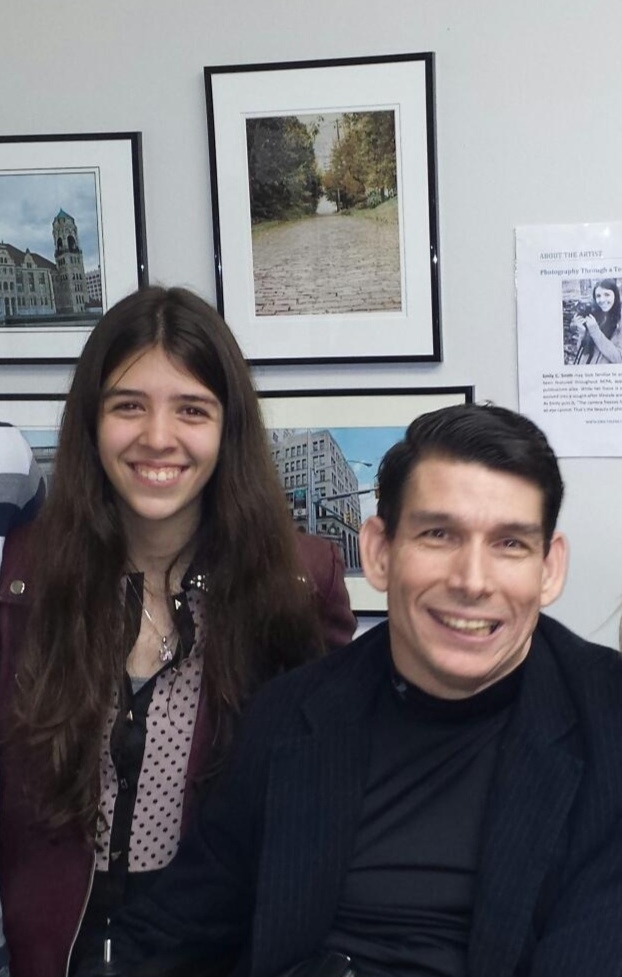
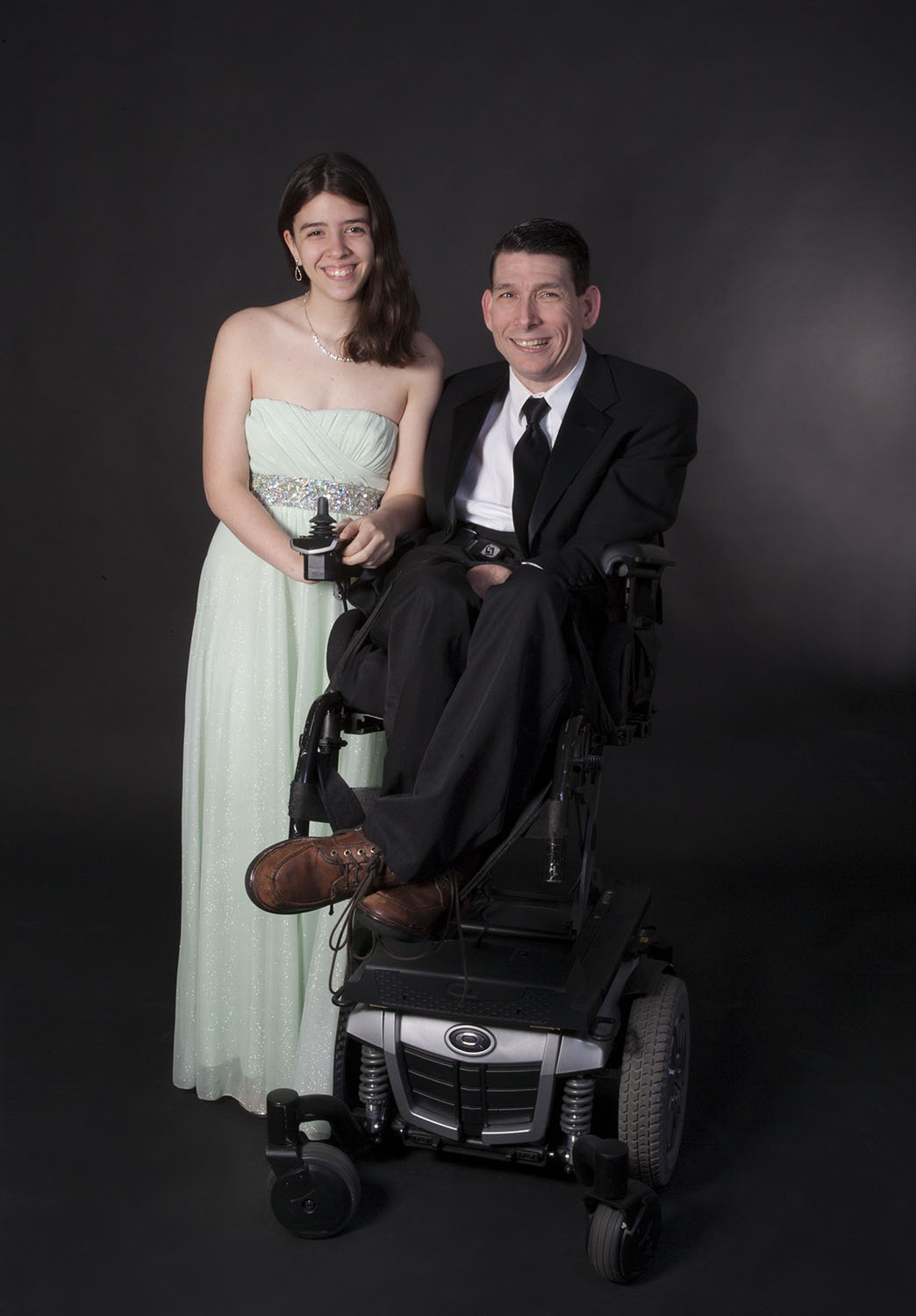
Mark and Emily001

By Mark E. Smith

I’ve spent my whole life not being enough. Truly, from my birth, onward, I’ve never been enough. The doctors declared me a vegetable who should be institutionalized. My father was so ashamed of my disability that he refused to push me in my wheelchair in public. Mrs. Robinson, my third-grade public school teacher, fought to keep me of her classroom because I wasn’t physically on par with the other students. My prom date wouldn’t dance with me because I used a wheelchair. Waitresses have refused to serve me, and even in 2014, I still occasionally face discrimination because in the eyes of some strangers, I am not enough.

And, it remains the case, that in so many situations and perceptions, I am not enough. However, I want to share with you a very fitting story about what it’s like to face such a struggle, what it means to be labeled, to go through life as never being enough. See, when I was around 13, I desperately pursued my physical independence, knowing that in a world that didn’t view me as enough, I was in a race for survival, avoiding the potential of ending up in a long-term care facility because I couldn’t care for myself. And, so as part of enhancing my physical strength toward independent living skills, I began going out every day after school and pushed my manual wheelchair along the street in front of my house. I was severely spastic, with terrible coordination, and used a power chair, so pushing a manual wheelchair was a tremendous struggle. I fought to get both hands on the push rims, and gave a single thrust of the wheelchair, throwing my body into spasms – then, as the wheelchair coasted to a stop, I started the process all over again. It took me over an hour to go down the block and back.

However, it wasn’t physically pushing the manual wheelchair that was the biggest challenge. Rather, it was the literal voices along the block. A few neighborhood boys of my age taunted me every day, calling me retard, mocking me with spastic gestures, telling me I was not enough, that I couldn’t even push a wheelchair correctly.

Nevertheless, every day for that school year, I put myself in the line of ridicule and humiliation and pushed that wheelchair up and down the block, literally being told I wasn’t enough with each challenging push of the wheels. It was a set schedule: at 3:30 every day, I pushed my manual wheelchair, and the other kids followed along humiliating me. It was painful and scary and enraging and embarrassing, but I had to endure it for my greater good.

That one year taught me a lot about not being enough. In pushing that manual wheelchair, all the while being mocked, I didn’t merely improve my physical abilities, I developed perseverance, determination and autonomy. I wasn’t pushing to be enough to the other kids or the rest of those who discounted me. Rather, I was pushing my own race to become more than enough.

The fact is, I’ll never be enough. Heck, my own father went to his grave unquestionably ashamed of me, I had a ex-girlfriend give me a written list of why I wasn’t worthy of her love, and I still face public discrimination and humiliation from time to time. I will never meet certain standards or be enough as a person in the eyes of some.

So, then, how are many aspects of my life explained? If I was not enough to my parents, how did I go on to successful careers in the mobility industry, writing and speaking? If I was not enough to my third-grade teacher, how was I able to go on to college and grad school? If I have not been enough of a man in the view of some strangers, how have I succeeded in raising a beautiful daughter as a full-time single father? The list goes on and on, but the point is, despite my never being enough in the eyes of so many, how have I, to the contrary, had so many successes?

The answer is universal. We should never strive to be enough in the eyes of others – it’s a low bar to measure ourselves. Instead, we should ignore the false ceilings that others place upon us and instead push to our own best abilities. And, in that process an amazing transformation occurs: we eclipse never being enough by actually becoming more than enough.
Real Men Use Electric Razors

photo (9)

By Mark E. Smith

I know a lot about strength. No, it’s not because I’ve long worked out with weights, toned and trim for a man my age. Rather, I know a lot about strength because I know that’s what it takes to expose my every vulnerability to those around me.

It’s natural that all of us feel a need to “present” ourselves in the best light, not wanting others to see our vulnerabilities, possibly perceived as weaknesses, at least in our own minds. After all, our biggest fear as social creatures is rejection. And, while there are certain environments where putting only our best face forward is appropriate, such as a job interview, there are other circumstances where if we’re going to demonstrate our ultimate strength, it means exposing our ultimate vulnerabilities.

I was recently at an event where I was fortunate to be a known figure, fitting the cultural norm of “strength.” I was a bit of a celebrity or politician, you might say. I was well-dressed, poised, blessed with the graciousness of many recognizing me. And, I had the privilege of having my partner with me, where she witnessed me move through the event as a “man of strength.” And, isn’t that how we want our romantic partners to see us: successful, poised and recognized as someone of merit?

Yet, for me, there was ultimately nothing proud or strong about any of that. Sure, I was authentic in truly caring about the people around us, and humbled by the recognition. But, breezing through a crowd with my hair combed just right and people recognizing me didn’t make me strong. What made me strong was what happened hours earlier, that only one other person knew about – my partner.

See, having cerebral palsy often makes me the opposite of poised, far outside the cultural framework of masculinity, the archetypical male model we see shaving shirtless in the mirror of Gillette commercials. Rather, I have vulnerabilities. But, that in itself gets to my definition of the epitome of masculine strength – that is, having the courage to share with others your deepest vulnerabilities, where you don’t hide any part of you, allowing others to see all of you. That takes the truest form of strength.

And, although I’d strolled through the event poised, of strength, hours earlier my partner and I shared a much different reality: my vulnerabilities. I wasn’t a recognized figure in a tie and jacket, but a man with severe cerebral palsy struggling to go through my morning routine in a hotel room not set-up for my needs. And, my partner both witnessed and assisted with my struggles. And, with the truest of strength, I shared with her my utmost vulnerabilities. Yes, it was emotionally scary. And, yes, it was embarrassing at moments. However, most of all, it was ultimately liberating. Just being you, in your most vulnerable ways, and letting another see and accept you as-is, supporting you as-is, is a life-changing experience.

What I’ve learned is that the minute that we have the strength to drop all pretenses, and share our utmost vulnerabilities with someone we trust, it removes all between us, and our relationships become deeper and totally authentic. Masks create barriers to intimacy, whereas having the courage, the strength to remove them allows us to be us, and others to love us for us.

In this way, if you want to live with ultimate strength, there’s only one way to do it: have the courage to share your ultimate vulnerabilities. And, I don’t worry about being the guy in the Gillette commercial – I have an electric razor.

Learning to Hold Hands

holding-hands

By Mark E. Smith

We’ve all known the phrase, It’s better to give than to receive. And, I can tell you that there’s a lot of merit to it. I know that for me, realizing that I’ve made a difference in someone’s life is exceptionally rewarding. I do right because it’s right, and I certainly don’t expect anything in return. But, it feels really good to know that I’ve supported someone’s efforts in a situation that I can relate to, assisting out of respect and appreciation for him or her.

Yet, there’s tremendous merit to receiving, too – and, as a culture and individuals, we do a horrible job at it. Nod your head if you’ve ever felt awkward, undeserving or guilty upon receiving. I’m nodding my head with you! Maybe it’s been something as simple as allowing a friend to treat us to lunch, or as profound as receiving love from our partner. No matter, we can struggle far more with receiving than giving – and we need to resolve that in each of our lives before it takes its toll. The fact is, a sure way to self-sabotage ourselves in ways ranging from subtle guilt to destroying important relationships is to not feel comfortable or worthy of receiving from those who care about us.

As a child of alcoholics, I wasn’t raised to receive. If you’ve ever been around any sort of addict, you know that the nature of addiction is that it’s fed, including by family members, where you’re on the hook, so to speak, to give, give and give, to a disturbingly unhealthy degree. And, in that process, you either never learn to receive or you lose your ability to feel comfortable receiving – and that happened to me. I never truly learned to receive graciousness, care and concern from others. And, it led me to feel unsettled later in life when others, with absolutely pure intentions, strove to give to me, where my emotions ranged from uncomfortable to guilt and shame. One area of contention in my life that I take ownership of is that in the past, I struggled to allow others in my life to physically assist me in my daily needs due to my disability. And, it frustrated and hurt some around me. At times, those close to me wanted to assist me with certain aspects of my everyday routines out of love and appreciation, and I didn’t know how to receive that. I knew how to give, give and give, but I didn’t know how to let others support me, I didn’t know how to receive. And, so rather than receive, I chose to struggle physically and emotionally, sometimes self-defeatingly pushing people away.

However, it was my daughter and my ultimately being a father that taught me to receive. I mean, when your 4-year-old makes you an “I Love You, Daddy” card, how can you not soak that in to the depths of your heart and receive such an unconditional act of love? As a result, I’ve had the blessing over the last 17 years – and, it’s been a learning process! – of knowing the joy of receiving in so many amazing ways, including unconditional love.

Of course, in the process of raising my daughter, I’ve done a tremendous amount of giving. After all, that’s what we do as parents – that is, we give to our children in the purest ways possible, putting them before ourselves, period. Yet, that form of giving has also been a life-changing experience for me because it’s stemmed from the healthiest of places – the heart – a complete contrast to where I gave to addicts as an adolescent out of a skewed sense of obligation, guilt and inappropriate placements of responsibility upon me.

All of this has led me to among the most profound life lessons that any of us can carry. Relating with those close to us isn’t about giving or receiving, after all. Rather, relating with others around us is truly about reciprocation. See, if we’re going to have the healthiest relationships, we must give and receive. What’s wonderful is that this doesn’t mean we give and receive in the same ways, but that when we do for others, we’re comfortable with them doing for us in different but no less meaningful ways. See, reciprocation is about the sincerity of the emotion itself, not its product. I’m 43 and my daughter is 17, so obviously we have very different needs and different abilities to offer. Yet, while I make every attempt to meet her needs, she equally strives to support mine. I may surprise her with a gift that she’s really wanted, as I have the ability to buy it; whereas, she may surprise me with a home-cooked meal. We have a constant volley, where we both intuitively support each other, reciprocating in different but sincere ways. This principle applies not just to parent-child relationships, but all relationships. If, with our romantic partners, we let down our guard and truly know that we’re worthy of not just giving, but receiving, as well, our relationships – and our hearts! – will flourish because nothing is holding us back from loving and being loving.

Giving to others in the most unconditional spirit truly is rewarding. However, it’s heartwarming and soothing to the soul to likewise receive from others. Let us give, and let us receive. Most of all, let us reciprocate, where, together with those we care about, hands hold hands.

Where Divorce Leads

Divorce

By Mark E. Smith

I’m at that age, in my 40s, where many I know are either divorced or in the midst of divorce. And, it’s hard for me to watch because I understand the tragedy of divorce, but not for the reasons you might presume. And, I know the ultimate goal of divorce, but, again, it’s likely not what you presume. Divorce is different for each couple – and, even more unfortunate for each “family” – yet there’s a common thread of humanity that too many overlook. It’s by understanding that common thread that takes divorce from the court room and places it back into the heart, which is really where it resides.

Interestingly, while I am a generational divorce statistic – my parents divorced, and I subsequently divorced as an adult – I’ve never been through a “typical” divorce in the legal sense. My father simply left when I was very young, then my mother and stepfather had a very simple divorce. Then, in my divorce, it likewise was a very simple legal process, no custody issues, gracefully splitting of assets amongst ourselves, never even a foot in court. My marriage was deeply dysfunctional, but we still treated each other with dignity and respect in the divorce process – there was no excuse not to. None of these divorces in my life were by any fathom ideals – divorce never is – and emotions ran deep; but, they weren’t legal battles and drawn-out War of the Roses, either.

However, I’ve helped friends emotionally get through some tough divorces. And, it’s struck me that so many divorces are a seemingly surreal process. Think about how divorce transpires. Two people have gone from loving each other, vowing to spend a lifetime together, and even having children, to needing a court to decide who gets the kids on Sundays, utterly despising each other, paying attorneys thousands of dollars to literally fight over items like who gets the $50 DVD player. And, the process takes on a life of its own, where individuals abandon all rationale and systematically their lives are devastated by one or both of their actions – home lost, bank account drained, kids made a pawn, and everything so lovingly built is destroyed, including those once-priceless wedding photos. When two people’s lives – and worse, their kids – are sanctioned entirely by court order, life has jumped the tracks in among the most tragic of ways.

Yet, as horrible as the legalities of divorce can be, it’s the impact on our humanity that’s the real toll – and this is what few realize or wish to admit. Alcoholics and addicts aside (a leading cause for divorce, where such individuals by nature of altered brain chemistry cannot process rational thoughts or feelings), it’s the emotional impact of divorce that’s more life-shaking than any other aspect. The monetary can be rebuilt, and the court appearances eventually come to an end. However, the realization that the person and union that you so believed in turned out to be completely unfulfilled in the end, rattles you to your core. What you thought was, wasn’t. What you trusted in as a forever, came to a soul-numbing hault. The person who you married isn’t recognizable anymore. And, whether you do it consciously or subconsciously, you’re bound to feel the scariest, most helpless emotion of your life: After witnessing the implosion of my beliefs, hopes and dreams, how do I believe in anything ever again? See, that’s what divorce truly is for most. While couples duke it out in court over meaningless materialism, fueled by spite and bitterness, thinking that’s the nature of divorce, they’re overlooking the real consequence and battle: How do I restore my faith in humanity, to trust again? It’s not just a dissolution of a marriage, but the dissolution of all that one believed – and that’s soul-shattering for many.

In this way, the ultimate goal of surviving divorce can’t be preservation of capital or righteousness or bitterness. Rather, the ultimate goal in surviving divorce is a preservation of faith, the ability to trust and love again. While you may lose a lot in divorce, as long as you don’t lose faith in humanity, you not only have the opportunity to recover, but to go on and live the life of your dreams.

And, to me, that’s the ultimate goal of divorce. It’s not about distribution of property, who’s right or wrong, or being bitter with your ex. Rather, the ultimate goal of divorce is among the most consequential processes of your life: Preserving your faith in trusting and loving again toward ultimate happiness wherever it awaits you – and sincerely wishing your ex the same.

The Genius of Juggling

juggling-balls

By Mark E. Smith

The New Year is here, and while I trust it will grace your life with much of what you’ve striven toward, it’s sure to also bring some sort of adversity. After all, none of are immune from the curve balls that life throws us, from the frustrating but mundane like your vehicle breaking down, to the much more harrowing like an ended relationship, job loss, or illness. We don’t like to think about it, but, again, none of us are immune from life’s curve balls, adversity coming our way.

I’ve spent my entire life facing adversity – from my disability at birth to my troubled family growing up to challenges in my adult life – and among my most valuable assets have been the friendships I’ve evolved over decades with others who’ve successfully faced adversity. And, between the two, I’ve developed a learned skill set that’s consistently helped me move from surviving to thriving at many points in my life. Yes, adversity will surely come my way again, too – it’s inevitable – but I’m ready.

For me, addressing adversity has become intuitive, springing into positive action when it occurs. I understand several core principles that have served me and others so well in times of adversity, where I believe they can serve all of us, no matter the circumstance.

When Opportunity Knocks, Open the Door!
When we face adversity, it’s easy and natural to focus on what’s happened to us. …I lost my job. …My marriage is over. …I’ve been diagnosed with an illness. However, in most cases, it’s futile and moot to focus on what’s happened to us. Sure it’s healthy to process emotions, but in the larger scope, we need to look forward toward opportunity – and, there’s always opportunity in adversity. As W. Mitchell – burned over 90 percent of his body, then later paralyzed – has told me for 20 years, It’s not what happens to you, it’s what you do about it. Therefore, when I face adversity, I’m always immediately seeking the opportunity in it. I don’t always make a smooth transfer into my wheelchair, sometimes landing on the floor. Yet, I’m never frustrated by the fall – it’s over, done, who cares. What I’m solely focused on is getting up, as that’s where the opportunity resides. My sister was also an amazing example in this. At 23, she had cancer and was in a bad marriage. She didn’t drift into self-pity, but focused on beating cancer and used it as a life-affirming catalyst to leave an unhealthy marriage, going on to a life closer to her dreams. Cancer for her wasn’t a tragedy; rather, it was a catalyst. If you lose your job, it’s an opportunity to find a better one; if your relationship ends, it’s an opportunity to find the partner of your dreams; if you have illness, it’s an opportunity to gain new life perspectives. We all get knocked down in life, but the wise among us only care about getting up stronger.

Never Stop Juggling!
Have you ever noticed that we have a way of allowing adversity to have a domino effect in our lives? Think about how many struggle at work, then go home to take it out on their families. The examples go on and on, where when one aspect goes astray, we let it ripple through our entire lives, being far more devastating than it should. A college buddy of mine is a juggler, and he taught me that as a juggler, if you drop a ball, you keep juggling the rest because whether you juggle four balls or three, the audience is still entertained – just don’t stop juggling! Life is like that, as when one part of your life goes wrong, don’t let it pull down the rest. Never let the bad sabotage the good. I’m the only one in my family to have ever graduated high school, and the way I did it was by refusing to let my nightmare home life effect my schooling. No matter how bad a night was at home, I still got up the next morning and went to school engaged. It doesn’t make sense to allow one area of dysfunction to void all other areas of prosperity. In fact, when one part of your life is astray, that’s the precise time to especially focus on the positive areas – and you’ll be amazed at how the negative soon turns around.

Victor, Not Victim!
When facing adversity, we have a peculiar way of embracing the blame game. I feel like this because of him. My life is like this because of what happened to me. However, we have far more control in the long run over our lives than any other person or circumstance can dictate. We can’t always control what happens, but we can totally control how it impacts our lives. We can choose at any point to be a victor or a victim. I may have been hurt in that relationship, but I grew from it and I’m more open to love than ever. Nick Vujicic could appear to many as a victim, having been born with no arms or legs. But, as Nick travels the globe speaking to hundreds of thousands each year – as an evangelist, author, husband and father – he lives by the unwavering philosophy, No arms, no legs, no worries, mate! We all possess the power to dictate what controls us. I don’t care what happens to me, I’m going to strive not to relinquish my fulfillment to an outside force – I will be victorious over adversity, not a victim.

If we summarize these core strategies, a remarkable truth is seen: not only do we each intrinsically possess means to address adversity in healthy ways, but we can often minimize its impact and literally use it in our favor. And, so the theme for adversity in the New Year is simple: we are equipped, so bring it on!

Evenings in the Kitchen

kitchen-dance

By Mark E. Smith

In fairy tales and films, they end happily ever after, but in our lives, they always don’t. However, just because they haven’t till now, doesn’t mean that they won’t.

Life proves more potential than even fiction, where heart break and sorrow can lead to Etta James, John Coltrane, slow dancing and kissing to jazz as together you cook dinner, dim lights and sips of wine in the kitchen.

Jazz, rhythm and blues, life isn’t what happens to you, it’s truly about what you choose. And, as you be you and me be me, life doesn’t imitate art, but it is the only reality. Bukowski and Basquiat were not philosophers or saints, but they knew our futures are written with our own hands, a great painting is what a painter paints.

And, so we write our own lives, paint who we are, where we can reach our potentials, hearts dangling from a star. No scripts needed, just an understanding of who we are – poets and painters and jazz players in a sentimental mood. It’s all what we choose.

Life isn’t about accepting just what we’re given. It’s a novel written, a painting painted, a jazz song played, a slow kiss in the dim lights of the kitchen.

And, a life isn’t truly lived when we hesitate – great novels and paintings and jazz compositions, see, they never deliberate. They follow the flow of the heart and soul, and if you want to live great, live to your dreams and potentials – liberate. Life is an art, not a role.

The Equation of Self

photo (20)

By Mark E. Smith

Here are five facts about me: I have severe cerebral palsy. I’m a middle-aged, full-time single father. I come from a deeply troubled background. I’m among the least successful people I know. And, many see me as a despicable character.

Every aspect above is literally true. If you were a woman, would you date me? Not a chance, as I’m a rolling wreck.

However, here’s the flaw in my rolling wreck of a self-description: it doesn’t reflect anywhere near the entirety of who I am. Rather, it leaves out the amazing parts of who I am, and fabricates a negative self-image from an inappropriately critical perspective. It’s like taking a beautiful diamond, and placing it under a microscope, finding the flaws, then discarding the entirety of its stunning brilliance. How many of us do that to ourselves every day? While the rest of the world sees our beauty and brilliance – like a two carat diamond – we find flaws that no one else sees. How is it that when we’re each so amazingly unique – one in four-hundred trillion, genetically, according to science – some of us can place a microscope on ourselves and only see flaws?

I recently heard a top collegiate soccer coach explain what he looks for when recruiting players. He doesn’t seek great runners or kickers – they’re easy to find, he said. In fact, he overlooks soccer skills altogether since everyone has them who applies to his program. What he looks for is the most empowering trait that an individual can have: self-confidence.

See, self-confidence isn’t about ego or narcissism, but about recognizing our own value, viewing ourselves as the rest of the world views us. And, when we have it, we don’t just perform better, we feel better. So, why don’t more of us have self-confidence, why don’t we see the beauty in who we are that others see, so unique that we’re one in 400 trillion?

The answer, as I’ve concluded, is that we’re really really bad at math. Allow me to explain….

When others view us, they add up the sum of our parts to create the whole value of who we are. We can look at someone and say, “Wow, what an amazing person, from the inside out,” and we’re able to do that because all of his or her traits add up to extraordinary. Yet, we’re often not skilled at doing math on ourselves – that is, except negative numbers. While the rest of the world looks at us as 2 + 4 + 4 = 10, we look at ourselves and add a negative to every positive -2 + -4 + -4 = -10.

Therefore, we need to do a much better job at understanding all of the variables that comprise us, and add the positives back in. Getting back to my five examples of why no woman should ever date me, let’s see what happens – mathematically – when I complete the missing variables to my equation:

I have severe cerebral palsy, and it’s fueled a life of independence, where I’ve seen first-hand that most limitations that we project are false, that the power of the human spirit runs deeper than any ocean, where few obstacles are insurmountable.

I’m a middle-aged, full-time single father who is in fantastic shape, and my daughter is a young woman of tremendous grace, wisdom, and empathy, whose hard work applied to education and the arts has her on an Ivy-League track.

I come from a deeply troubled background, and I’m the only one in generations of my family to be formally educated, to not live in poverty, to not be an addict.

I’m among the least successful people I know because I learned that if we wish to rise, surround ourselves with those who foster our growth, so I strive to associate with those of tremendous moral compasses, exceptional work ethics, and accomplished personal and professional lives.

And, many see me as a despicable character because I’m among the most read, public figures with a disability, where my success brings out some who resent it.

The result, then, is that I’m not a loser, but a remarkably successful individual with a lot to offer in my uniqueness.

And, the same goes for each one of us. None of us are perfect, but even our so-called flaws add up to remarkable when placed in the full context of who we are. The next time you look in the mirror, see yourself as everyone else sees you – and you’ll see an amazing person looking back.

From Suitcases to Slates

slate

Holding on is believing that there’s only a past; letting go is knowing there’s a future. -Daphne Rose Kingma

By Mark E. Smith

We all know that we can’t physically be in two places at once, so what makes us think that we can do it emotionally? Or, more specifically, what makes us think that we can thrive in the present while dwelling on the past?

We can’t. Just as we can’t physically be in two places at once, emotionally we can’t dwell on our pasts and thrive in our presents. Yet, how many of us try or have tried or know those who have tried. But, in the end, we must pick one: are we going to dwell on the past or live in the present – we can’t have both, and if we try to juggle both, it will destroy us and often hurt those around us.

In my line of work and life, I see it every day. I’ve even lived it. In the disability realm, I encounter those so longing for their pre-disability pasts that they can’t see the value of all around them in the present. In relationships, I encounter those so bitter about an ex that they’re blind to the life-changing love in front of them. In the work force, I encounter those so resentful of a career lost that they won’t pursue a new career. And, I see adults so enveloped by the pain of what they experienced as children that they’re incapable of parenting their own children. Every day, I see people pretend to live in the present, but truly living in the past. And, when we live in the past, we’re not living at all. We’re simply reliving a story that will never change.

And, that’s the difference between living in our pasts versus living in our presents. When we live or dwell in our pasts – even if they were great – there’s no potential or hope. The past is frozen, never changing, and it freezes us, preventing any chance of moving our lives forward. You cannot move forward when focused on the past.

However, living in the present is the opposite – that is, it offers potential and hope, where virtually anything is possible.

Want to sabotage the rest of your life? Bring a packed suitcase of the pain from the past wherever you go. Want to live the life of your dreams? Live with an unguarded slate that’s available for all to leave loving inscriptions.

Nevertheless, living in the past can prove successful in one profound way: avoiding accountability. If you focus on how great your life was before acquiring a disability, you can find every excuse not to make the most of yourself now. If you focus on how your heart was broken in your last relationship, it gives the perfect excuse not to let love into your life now. If you focus on your long lost job, it gives the perfect excuse not to look for a new job now. And, if you focus on how dysfunctional your childhood was, it gives the perfect excuse not to be a great parent now. Living in the past is great because it makes you a forever victim, and victims aren’t held responsible. Of course, this mindset is completely self-defeating – and usually hurts those around you, too – but if you truly want to ruin your life, and accept no accountability, dwelling on your past is a dysfunctional person’s dream come true. You mean, I can ruin my life, hurt those who truly love me, and do it all with no sense of accountability – awesome!

With so many among us unsuccessfully trying to live in the past and present at once – which we know doesn’t work! – how do we go through the process, then, of moving beyond our past to relishing our present? Well, that’s just it, it’s a process, a literal movement. Just as we must physically move to go from one place to another, we must do the same with our emotions in a healthy process. And, “process” is the operative word. We must address and heal from the past, and that will bring us into the present. Let’s address what was, and move into what is. By accepting the past, and recognizing that potential and hope only are possible in the present, we go from surviving to truly thriving, achieving the levels of success, contentment, and love that we all deserve.

As my friend, W. Mitchell puts it, “Have you ever noticed that windshields are much larger than rear-view mirrors?” …There’s good reason for that in cars – and even more so in life.

Enough As-Is

Eckersberg (1841)
Eckersberg (1841)

The hardest challenge is to be yourself in a world where everyone is trying to be somebody else.
~E. E. Cummings

By Mark E. Smith

I joke with my friends that when I look in the mirror, others look back, complimenting me on my hair, but also warning me that squirrels are out to get me. As a result, I like my hair, but I’m paranoid of squirrels!

When you look in the mirror, do you like what you see? When you’re in public, are you comfortable in your own skin? Do you not get nervous speaking in front of groups? Or, even bolder, when you’re around your significant other, are you comfortable being nude, feeling beautiful or handsome or sexy?

I hope for you, the answers are all, yes. However, so many struggle with self-image. In pop-culture, the buzz word is body image, where we know how so many feel physically inadequate compared to airbrushed models in magazines or ripped movie stars. Yet, the issue is far more profound, as we know that the body, itself, is totally superficial, easily manipulated with clothes, cosmetics, plastic surgery or photo editing. Of course, the real issue comes from what others cant see: one’s self-image from deep within.

Poor self-image is the root of all self-doubt, from the physical to the mental to the emotional. And, it’s usually an inaccurate self degradation of who we truly are. In fact, it’s often the polar opposite of how the world sees us. I remember being in graduate school feeling like the least intelligent student on campus, an imposter. I worked hard, knew the material, spoke up in classes, got all A’s, won awards, and coeds flirted with me. Yet, I still felt like everyone was smarter and more talented than me – lord knows better looking than me as one with a disability. My self-image didn’t reflect what the world around me proved: I had every skill and talent to have earned my place at the top of my class, but I wasn’t convinced. My self-image didn’t match reality.

I subsequently spent many following years getting to know myself. I couldn’t change who I was from a physical perspective – there’s no cosmetics, plastic surgery or photo editing for cerebral palsy – so why not accept and ultimately embrace myself? It’s not about ego or narcissism; rather, it’s about realizing that among my flaws and foibles are talents and gifts. I am enough as-is.

And, realizing that I am enough as-is empowered my life and relationships. Confidence can be powerful but short sighted, giving you the courage to present yourself in a certain way to others in a given situation. However, knowing you are enough as-is takes every aspect of your life to a new level because any self-consciousness is removed and you live with ultimate comfort and freedom in simply who you are – from appearance to personality to intellect, you are enough as-is. You don’t need to compete or conform; rather, you can just be you.

What’s more, when you realize that you’re enough as-is, it opens you up to embracing others on the deepest levels because you know they’re enough as-is, too. And, when you realize that reciprocation – we’re all enough as-is – the world becomes an inspired, warm place. If we purely live with authenticity and vulnerability – both the truest of strengths – nothing intimidates or scares us. Life simply inspires us. When you say to the world, Here I am, take me as I am because I’m enough as-is, it frees you of all self-doubt and insecurities. There’s no room for anything but a positive, authentic self-image.

Now, the fact is, there are a lot of self-doubting, insecure people out there, and they’re not going to accept you, me or anyone as enough as-is because they refuse to accept themselves. But, that’s their tragedy, not ours. As I like to say, If you embrace me as-is, we’re going to have a great time. If you don’t embrace me as-is, as I extend equally to you, then get off of the Mark Bus because it goes to some pretty awesome places you’re not healthy enough to handle!

What’s most rewarding is that when living as enough as-is, and you meet people who on the surface seem totally superficial, you’ll be amazed at how quickly some can almost instantly drop the facade and become enough as-is, where you connect on the most genuine level. And, it’s touching to see them take a sigh of relief and let down their guard, realizing that they, too, can be enough as-is.

None of us, however, should use this as an excuse not to consistently pursue personal growth. To the contrary, recognizing ourselves enough as-is fuels personal growth. In a society where most exercise for superficial vanity reasons, I, too, workout. But, I do it to simply be the best I can be, regardless of anyone else’s ideal. Lots of guys are more muscular and stronger than me – and kudos to them. I just work out for my own enjoyment, and my body is what it is, enough as-is.

Most importantly, when you truly recognize yourself as enough as-is, it gets you out of validation mode. Think about all of the terrible situations we get ourselves in by pursuing the validation of others, from teens smoking due to peer pressure to employees compromising integrity to please a boss to those engaging in promiscuity to feel desired, and on and on. The minute that we truly recognize ourselves enough as-is, it removes the need for validation from others, creating much healthier decisions and life paths.

May the mirrors in your life reflect the amazing spirit in you, enough as-is, a person of tremendous contribution to the world around you. …As for the squirrels, you need not worry when looking in the mirror – they’re only out to get me.