From the Maternal to the Eternal

By Mark E. Smith

It’s a simple truth: When it comes to empathy, compassion, devotion, and unconditional love, we men have a lot to learn from the women in our lives.

I love my male counterparts, but the women in my life have taught me more as a man than… well… any man has ever taught me. In fact, women like my wife, daughters, and sister have made me the man who I am. And, I know that holds true for many of my gender.

We can talk about the most remarkable aspects of humanity – empathy, compassion, devotion, and unconditional love – but to truly know them, we must witness them, experience them. Of course men can possess these heartfelt traits. However, I’ve never seen them more exemplified than through a mother to her children, a daughter toward her parents. It’s so natural, so intrinsic, effortless, selfless. I watch my wife comfort our youngest daughter in the toughest childhood moments. I watch her listen without judgment to our oldest daughter as she explores young adulthood. And, I watch as my wife gives me her all in too many ways to ever list. She embodies an emotional intelligence that’s awe-inspiring.

Why do men seem to be less expressive – dare I say, less intuitive? – in this area? Is it cultural or social norms? Is it the way the genders are hardwired?

I hate to break it to my fellow men, but neuroscience has the answers. Empathy, for example, functions very differently between women and men. Empathy occurs in a part of the brain called the insula. When we sense another’s emotions, the insula mimics those emotions and allows us to relate to them as if our own. That’s empathy.

What’s fascinating is that neuroscience proves that while women stay in a state of empathy, men typically quickly leave it and the brain shifts to problem solving. Problem solving is a great trait, but not very nurturing or present in the moment. This is where we see the remarkable capacities that women possess.

Despite the science, we, as men, do have the ability to learn and grow, and the women in my life continue teaching me that such vital emotional intelligence doesn’t have to be gender-specific, but that they can be human-specific.

On Mother’s Day, when I take to heart the women in my life, I realize that their love isn’t just maternal, but eternal.


Trusting the Pathway

path

By Mark E. Smith

In college, I took a course, The Bible as Literature. While I understand that such a course’s secular treatment of a sacred text may not sit well with all, it did make the Bible accessible to many students unfamiliar with the writings. For me, as one who was raised Catholic, the class converted what I’d only known as a child as a daunting, abstract text and allowed me to see relevance in its words to my own life.

Recently, Romans 5 came up in conversation, and when I looked it up, eying it from both spiritual and secular perspectives, I was touched by a verse that I recognized of a profound truth:

…We also glory in our sufferings, because we know that suffering produces perseverance;  perseverance, character; and character, hope. (Romans 5:2-4)

Think about that. Suffering leads to perseverance, which builds character, which leads to hope. In facing life’s trials and tribulations, I’ve realized this is the exact path that many of us have followed during extreme adversity. Suffering brings out our perseverance, which builds our character and results in hope.

What is most powerful about recognizing this intrinsic process is that it adds tremendous comfort in the face of adversity. I don’t know why this is happening, but I know where it’s leading me.

I spoke with my father-in-law, who’s a minister, and he made a relatable comment that boils down to, we may not like the process at times, but the reason behind it and the outcome are worth it.

At points in our lives, we’re going to question adversity and suffering. Having an answer as to its purpose can serve as a tremendous coping mechanism. Or, maybe when we reach that insight, it’s simply perseverance, character, and hope kicking in – right on queue.

Where the Intertwined Branches Meet

By Mark E. Smith

I was asked how my wife and I maintain a healthy marriage in times of adversity? After all, that’s when most couples struggle, albeit based on health issues, financial crisis, pressures of parenting, or countless other life circumstances. In fact, it’s a topic I’ve pondered and my wife and I have discussed, especially based on recent health issues in our family. So, what have we learned about trotting through the tough stuff in life as a couple?

We’ve identified four key components to successfully facing life’s adversity as a couple that serve us well. I realize there’s no science to this, as each couple and their personalities differ. However, there’s merit to what we’ve learned, sound factors based on our experience.

Firstly, an advantage to any relationship is in knowing whether the individuals can, in fact, address adversity in healthy ways. The fact is, some people can’t. I live and work in disability culture, and I’ve heard many stories of accident and illness, where when adversity struck, the healthy partner left. We don’t like to believe that happens, but it does. It’s not always predictable, but if we know that our partner can handle adversity, it’s a tremendous reassurance. My wife and I both knew adversity as individuals before we met, so there was a confidence that our vows of “for better or for worse, for richer or for poorer, and in sickness and in health.” If you’re in a long-term relationship, you’re going to experience all of these, and each partner must be committed to moving through them, not caving when times get tough.

Secondly, it’s imperative to tackle the issue, not each other. Too many couples lash out at each other during adversity rather than focusing on the issue. If you can address the problem as a team – pointing at it, not each other – you’ll simultaneously solve the issue and strengthen your relationship. I call it the “high-five effect.” Celebrating victory as a couple is tremendously empowering to a relationship.

Thirdly, respect each other’s individual experience amidst adversity, as they may not be the same. This is an invaluable principle that my wife and I learned the hard way. I was recovering from a health issue and she was placed in the role of caregiver. One morning both of our emotions around the situation came to a head. I expressed mine, she expressed hers, and soon we were in a war of words for whose perspective was right? The fact was, we were both right in our feelings, as our experiences within the circumstance were different based on our roles. We learned to respect what each other was going through based on our individual experiences, not assume that they were the same or that there was only one perspective.

Lastly, it’s vital to not neglect the core normality of the relationship regardless of the adversity. For us, this means that humor, affection, romance, and shared joys remain during even the toughest of times. Ideally this is an intuitive and natural part of the relationship, regardless of circumstance; but, sometimes we should stop and think, “What does my partner need at this moment?”

My wife and I are just a married couple trying to make it through the trials and tribulations of life like everyone else. We’ve faced a bit more adversity than some, and a bit less than others. Yet, despite our lessons learned, there’s still a simple truth to all lasting relationships: Love conquers all.

Welcome to the Here and Now

By Mark E. Smith

As part of the disability community, I’ve long known those with progressive and terminal conditions. While not everyone handles such life paths the same, I’ve been struck by those who express and experience absolute joy while living with their conditions. I’ve thought a lot – and talked with some – about how any of us can experience true joy in the face of exceptional adversity? What I’ve learned, and subsequently practice, is an approach to life that I’ve seen bring the greatest fulfillment, one that we all can live by.

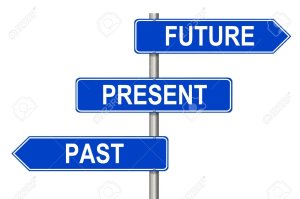
Progressive and terminal conditions can be tough for many because one can get caught up in dwelling on the past while fearing the future. There’s not much room in there for joy in the present when the past and future weigh on us so heavily. What’s more, this very human emotional dynamic isn’t exclusive to a progressive or terminal condition. Many of us can find ourselves dwelling on the past while worrying about the future based on countless life circumstances. So, how do we find joy amidst such daunting circumstances?

The key is found in living emotionally present during any given moment. It sounds like psychological or philosophical babble. But, truly, the past and future aren’t real in the present. What’s happened is past, and what may happen is the future. Yet, neither is occurring now. The only state that we’re truly in and can work with is the present. Therefore, if we want to experience joy regardless of the circumstances that have or may affect us, we simply need to be emotionally present, in the here and now.

For me, this approach to life has allowed me to not only release the past and worry far less about the future, but most importantly, it’s allowed me to savor more moments in my life, being totally emotionally present. This isn’t to say I never think about the past or consider the future. However, there’s a difference between dwelling on the past versus remembering it, just as there’s a difference between worrying about the future versus setting goals or recognizing objectives. The profound advantage to being emotionally present in any circumstance is that we can fully experience the power of a moment without interference. We can purely revel in what is – for that’s truly all there is.

I recall being in a hospital ICU after a major surgery. A lot went wrong, was going wrong, and my future was uncertain. I was with my wife and oldest daughter, and in that moment, I genuinely didn’t have a care in the world. I was the luckiest guy alive because I was with the two loves of my life. What happened or may happen didn’t matter. I was with my wife and daughter, and that was reality, that was the beauty of life surrounding me in the moment.

I apply this same principle to my everyday life. No matter what I’m doing, I strive to be emotionally present, where multi-tasking of emotions rarely exist. Whether I’m talking to my daughter or a stranger, and everyone in-between, I immerse myself in that connection. If I’m at work, I entirely focus on the task at hand. And, as far as going to bed or waking up upset… well… it doesn’t happen, as I’m just thrilled to be with my soul mate, in the present. No, I’m not perfect at any of this – we all have emotions that catch us off guard – but I’m pretty good at being present because I know how it’s amplified the quality of my life and my connections with those around me.

The benefits of being emotionally present toward joy are easy to see. However, it also proves beneficial during very difficult situations. So often during difficult times or decisions our thinking is skewed by past emotions coming up or fear of the future. Yet, when we can be emotionally present and focus solely on the here and now, we can make far more rational decisions. Again, we should focus less on what was and what may be, and more on what is.

None of our lives are perfect. Some of our lives can, in fact, read as nightmares. Yet, if we live with emotional presence, where we keep our pasts and futures in check, choosing to be emotionally present, moment by moment, it’s astounding how many of the moments in our lives reveal themselves as breathtakingly beautiful.

Sailing in all Seas

By Mark E. Smith

I heard a doctor say, “Wellness is the temporary state when we’re in-between illnesses.”

On the surface, it sounds cynical. However, there’s a truth to it, both in medicine and in life.

No matter who you are, life is a constant ebb and flow of circumstances. We can be just as assured of good times as we can be of bad times. Most often, life is a confusing mixture of both. Just as we get ahead, we experience a setback. Just as we’re facing defeat, we’re uplifted. And, much of it seems inexplicable in reason and timing.

What can frustrate us even more is the never-ending chain of down times, when it appears that no matter how hard we try to ensure all is well, something always goes wrong. The fact is, we can never totally isolate ourselves from life’s tougher times. Money can help us better absorb difficulties, but not so much prevent them. In this way, peaks and valleys aren’t unique to any one of us, but intrinsic to life itself.

I’ve had a lot of extreme highs and extreme lows in my life. As one who’s tried to avoid the lows by taking every possible precaution in cases – with little success – I’ve found myself frustrated with the fact that, no matter what, life drags us through tough stuff from time to time. Yet, I’ve found a way to soften the blows a bit.

I had a fantastic talk with a dear family friend over dinner in Boston a while back. We got into a theological discussion about why does God allow bad things happen to good people? (I know that sounds cliché, but stick with me.) My friend replied, “So, are we to only value God when he gives us what we want?”

Her question also struck me me in a secular way: Are we to only value our life when it goes how we wish?

For me, finding gratitude for life itself – regardless of the circumstances – has been the ultimate key to moving through some very tough times. I’m not perfect at it, but when I stop separating the so-called good and bad, and focus on gratitude for life in its entirety, it’s hard to stay in a funk or get too upset. Similarly, by not hyper-emphasizing good times, it lessens the chances of feeling wronged when the tide changes – as it always does.

What I’ve learned is that life is far more fulfilling when we don’t place too much weight on the good versus the bad, but on finding gratitude for all of life. On our journeys, we’re going to experience calm seas and wicked storms. Let us not get hung up on either, but relish the journey, itself.

Escaping Black Holes

By Mark E. Smith

With the death of Stephen Hawking, I’m again reminded of how cultures like the UK and the US hold on to a sense of “diversity” that isn’t valid, to the detriment of all. Are we ever going to admit that so-called diversity is the norm, and therefore doesn’t exist, realizing that emphasizing it can diminish who we are as individuals?

Upon Hawking’s death, the BBC published “Five Facts About Stephen Hawking.” Number one was, “He had a neuromuscular disease.” Hawking was among the most celebrated and accomplished physicists of all time; yet, the BBC deemed his “diversity” as the most important aspect to know about him. How is that perspective even possible in this era where “diversity” is the norm?

We all know that there are pockets in the UK and the US where people are strikingly similar. However, when we look at our countries as wholes – and even within those pockets – it’s impossible to find a true norm. Humans simply vary significantly by ethnicity, religious beliefs, sexual orientation, physical attributes, political perspectives, and on and on and on. Even in repressed cultures, this exists – it just can’t be expressed. Therefore, because everyone is ultimately different, we’re all the same. Within that framework, the emphasis rightfully shifts to what was truly unique about Hawking: his talents.

Since 1989, I’ve had the opportunity to attend and work Abilities Expos. They are a traveling consumer trade show for disability-related products. The shows average an attendance of 3,500 individuals with disabilities, family and friends. As many of us say, disability doesn’t discriminate, so beyond disability, “diversity” is the norm. Unlike what we see in general society, everyone is recognized as the same because everyone is different. In that, it’s the most harmonious, respectful environment I’ve ever been in, as everyone is purely acknowledged as a person. You might say, Hawking is rightly viewed first and foremost for his contributions to science in such a “community. “

It raises the question, then, of why doesn’t this exist in the whole of society?

The answer is, if you believe the sociology, it’s fed by the innate fear of some toward difference. The result is a catch 22. Everyone is different, so when some have an innate fear of others, they naturally differentiate, creating false norms and thereby “diversity.” If Hawking’s neuromuscular condition freaks you out, it’s what you’re going to focus on.

As Hawking noted, maybe some day we’ll colonize other planets. Hopefully on those planets all will rightfully, logically see Hawking as a brilliant physicist who happened to use a wheelchair – and also realize that there’s no need for a word like “diversity,” where we’re all the same because we’re all different.

Don’t be Fooled by a Cereal Box

By Mark E. Smith

Cereal sales have been on the decline. I’m okay with that – especially, Wheaties. I should clarify, I have nothing against the cereal, itself. In fact, I rather like it. However, the Wheaties box has been synonymous with having the spirit of a champion, regardless of the adversity one faces, and it propagates a flawed mindset.

More and more, we seem a just-get-over-it culture. No matter how extreme an adversity we face, many feel that we should just get over it. And, if we can, we’re celebrated for it, our picture on a metaphorical Wheaties box.

Yet, it completely contradicts how most of us move through adversity in healthy ways. Addressing adversity is progressive movement, but it’s not without personal peril. Ideally, we do make progress every day. But, it’s unrealistic to expect us not to have bad days and experience real emotions – negative and painful – in the process. Life can get brutal, and in those moments, it’s natural to feel beat up and defeated. In fact, it’s vital. We can’t begin getting up unless we’re willing to admit that we’ve been knocked down.

During these times, we need a specific type of person with us. It’s neither someone who lays beside us in defeat, nor someone who tells us to just get over it. Rather, we need someone who understands that the path through adversity is progressive, but not linear. We need someone who knows how brutal life can feel, that it should in those moments, but also knows the importance of moving through them.

Put simply, during the toughest times in our lives, we need those around us who understand that facing adversity isn’t summarized on a Wheaties box.

When Being Our Best Truly Counts

By Mark E. Smith

I live in an inspired cultural niche, one of disability. Every day, I have peers vying against the odds to overcome seemingly insurmountable struggles. What’s long intrigued me isn’t that they do it, but the specific life tool that they use, one that we all have.

Tiffani Ntanos, is a well-known YouTube personality, who became a high-level quadriplegic at age 20 as a result of a diving accident. She’s spent the past six years learning how to live as a quadriplegic. Being in one’s 20s can be confusing enough, and adding a life-changing accident makes it even more difficult. Now, at age 26, she’s living with cancer. Talk about blow after blow. Make no mistake, it’s a daily struggle, but she’s doing it, she’s addressing each vying in life as it comes. She’s had not one, but two of life’s toughest paths, but keeps pushing forward. How?

Tiffani and many of us know the rule of the road when it comes to navigating harrowing challenges: When we’re at our lowest, let us be at our best – for that’s when it counts the most.

Most assume that we’re at our best when… well… we’re at our best. Yet, that’s a misnomer. See, being at our best when life goes smoothly isn’t difficult. It’s actually quite easy. We’re soaring at those fortunate points and it doesn’t require a lot from us.

However, when being at our best truly counts is when we’re in the depths of struggle. We must find the insight to cope, the fortitude to adapt, and the strength to rise. We must not settle for where we are, but strive toward where we can be. We must not accept a defeat, but fight for a win. This all requires our best.

I’ve been at the lowest of the lows in life, and the highest of the highs. I still oscillate between the two from time to time – most of us do, as that’s how adversity in life works. And, it’s at the lows when I learned to be at my best, as we all must do if we’re going to succeed. Dancing around a ring as a boxer is easy. Real strength comes in when you’ve been knocked down and must get up.

When we’re defeated, of course it’s natural to feel defeated. Yet, those who know how to succeed during extreme adversity make the choice to move from feeling defeated to feeling motivated, they know it’s time to be at their best. The key to all of this is living with hope. If we feel motivated, we feel hope, and they fuel each other. Therefore, rarely is it the situation that dictates the ultimate outcome, but our perspective – that is, rising to our best, especially when at our lowest.

Life throws adversity our way from time to time, which can knock us down. That’s not the time to curl up and succumb. Rather, when adversity comes our way, that’s the precise time to double down and say, Man, I’m at my best – I can handle this!

How to Win the Blame Game

By Mark E. Smith

Mathematics has it right: a problem dictates a solution. As emotional humans, unfortunately, we’re often not so constructive: a problem often fosters blame rather than a solution.

Indeed, we’re typically not mathematicians when it comes to solving everyday problems. However, it comes at a high cost, where seeking to place blame not only doesn’t solve a problem, but often makes a situation far worse.

Most of us in a relationship can recall situations where there was a problem at hand, and rather than addressing finding a solution as a couple, we’ve blamed each other. Those arguments didn’t turn out well, did they? They likely only made situations far worse.

My wife and I once argued over the proper place for a TV antenna to work most effectively. It was a simple problem and solution – that is, move the antenna around until the picture is clear and place it there. We both had our opinions on where it should be located, and when it didn’t work, we blamed each other. The more we moved it, the more we argued, to where we were so focused on blaming each other that we became oblivious to solving the problem.

My wife and I blaming each other over a TV antenna not working is a true but ridiculous story. However, we’ve all heard of very serious stories where couples get divorced over, say, finances, where rather than come together for a solution, they blame each other to the very end. Blame can truly lead to tragic outcomes, making a logical solution seemingly impossible.

We see the blame-game dynamic occur a lot in government. There’s no wonder as to why so few problems get solved on Capitol Hill – everyone blames everyone else rather than finding solutions. Locally, where I live, there’s a problem with potholes. The street department blames increased traffic and weather. The citizens blame the street department for not caring. I even heard someone blame automakers for poorly designing cars that can’t handle potholes. Yet, I haven’t heard anyone say, Hey, how about we just focus on fixing the potholes!

Few realize the toll that the blame game takes on commerce, as well. Have you ever had an issue with a product or service, and rather than solving the issue, everyone blames everyone and the situation escalates? Countless hours are spent arguing round and round – wasting time and money – and no one truly seeks a solution. It’s a disturbing dynamic I’ve long tried to earnestly change via my formal business roles, with mediocre success – people are people, after all. What I try to emphasize to my customers, dealers, and colleagues is that we need to solve the problem, that throwing blame around like a proverbial hot potato defeats everyone’s interest. We’ll determine the true causation of the problem in step two, but step one is finding an immediate solution.

On a personal level, once a problem is solved, some can hold on to animosity. I’ve found this to be primarily caused by people investing too heavily in blame to begin with. If a problem is solved, let’s move on, and holding on to animosity only makes us our own victim. Holding on to bitterness over a problem long solved is a tough way to go through life. Again, the goal is to solve a problem, not seek and hold on to blame.

If we want the most successful outcomes when issues arise in life, we have to seek solutions and avoid blame. Water puts out fires; gasoline makes them worse. Let us jump right to solutions, where we all simply do right by each other in the end. That makes for the ultimate solution, no matter the problem.

Robbing Banks

By Mark E. Smith

In the San Francisco Bay Area during the mid-1980s, it wasn’t hard to get harassed by the cops if you were a punk teen. Smoking in public, hanging out in front of a convenience store, being on the streets too late, having a house party, and so on would all but guarantee the appearance of cops. I witnessed many such scenes. Among my peers, there was teenage social credibility to it all. If you wanted to be the cool 11th-grader on Monday morning in homeroom, a run in with the cops on the previous Saturday night did the job.

For me, it was hard to be that cool kid Monday mornings. The cops simply didn’t hassle a kid using a wheelchair like me. I was once hanging out with a bunch of smoking, punk friends outside of an ice cream shop, and a cop threatened to haul everyone away, then turned to me and said, “Don’t worry, I don’t take people in wheelchairs to jail.”

I was instantly stung by his remarks. I wanted to be one of the guys, as teens do, but the cop clearly pointed out that I wasn’t, that I was different. In my mind, I was just as much a punk as my punk friends, right down to my black leather jacket. How dare the cop discount my punkness due to my disability. Worse yet, how dare he give me a pass in front of the punk peers I was part of – but suddenly differentiated from because of the cop’s attitude toward my disability.

My immediate emotions aside, I wondered if the cop spoke a universal truth, that people who use wheelchairs aren’t taken to jail? If it was a fact, should I skip college and take up robbing banks?

All of this – the cop’s condescending attitude and the potential of never going to jail – made me more mischievous than ever. One night, as my buddy and I prepared to cruise the avenue in his car, I got the brilliant idea to put a pillowcase over my head in the passenger seat and pretend like I was dead.

The avenue was heavily lit, so everyone saw in everyone’s car. When my buddy stopped at traffic lights, I relaxed my body, pillowcase over my head, and flopped against the dash like a dead body. It seemed like harmless fun and got lots of attention – until the cops pulled us over.

It turned out that I played such a convincing dead body with a pillowcase over my head that multiple people took our license plate number and description, and called the cops.

“What do you think you’re doing?” the cop asked, holding my passenger side door open, the scene illuminated by the cop car’s colored lights.

“Nothing,” I said, the pillowcase still on my head.

He yanked the pillowcase off of me, my grin appearing.

“This isn’t funny,” he said. “You’ve scared a lot of people.”

“It’s a joke,” I replied with no remorse.

He looked in the back seat and saw my manual wheelchair, then looked back at me.

“Let’s get your wheelchair out and get you to Juvenile Hall,” he said. “I bet your parents won’t find that funny.”

Obviously, not arresting people who used wheelchairs wasn’t a universal code among cops. I was in deep trouble, fast, and my disability wasn’t getting me out of it. So, I did what any punk teen would do: I apologized profusely and explained that I never intended to scare anyone, that it was a dumb prank gone wrong, that I’d never do it again.

Fortunately, the cop let me off of the hook – but kept my mom’s pillowcase.

At 16, I learned a lot that night. I learned that what I thought was funny scared a lot of people and that wasn’t right. I learned that there’s nothing cool about getting in trouble with the cops. And, I learned not to rob banks because they do put guys like me, who use wheelchairs, in jail.