I know a lot about strength. No, it’s not because I’ve long worked out with weights, toned and trim for a man my age. Rather, I know a lot about strength because I know that’s what it takes to expose my every vulnerability to those around me.
It’s natural that all of us feel a need to “present” ourselves in the best light, not wanting others to see our vulnerabilities, possibly perceived as weaknesses, at least in our own minds. After all, our biggest fear as social creatures is rejection. And, while there are certain environments where putting only our best face forward is appropriate, such as a job interview, there are other circumstances where if we’re going to demonstrate our ultimate strength, it means exposing our ultimate vulnerabilities.
I was recently at an event where I was fortunate to be a known figure, fitting the cultural norm of “strength.” I was a bit of a celebrity or politician, you might say. I was well-dressed, poised, blessed with the graciousness of many recognizing me. And, I had the privilege of having my partner with me, where she witnessed me move through the event as a “man of strength.” And, isn’t that how we want our romantic partners to see us: successful, poised and recognized as someone of merit?
Yet, for me, there was ultimately nothing proud or strong about any of that. Sure, I was authentic in truly caring about the people around us, and humbled by the recognition. But, breezing through a crowd with my hair combed just right and people recognizing me didn’t make me strong. What made me strong was what happened hours earlier, that only one other person knew about – my partner.
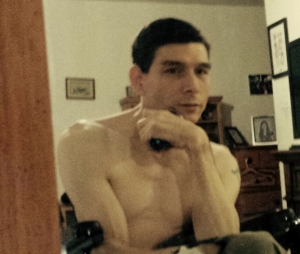
See, having cerebral palsy often makes me the opposite of poised, far outside the cultural framework of masculinity, the archetypical male model we see shaving shirtless in the mirror of Gillette commercials. Rather, I have vulnerabilities. But, that in itself gets to my definition of the epitome of masculine strength – that is, having the courage to share with others your deepest vulnerabilities, where you don’t hide any part of you, allowing others to see all of you. That takes the truest form of strength.
And, although I’d strolled through the event poised, of strength, hours earlier my partner and I shared a much different reality: my vulnerabilities. I wasn’t a recognized figure in a tie and jacket, but a man with severe cerebral palsy struggling to go through my morning routine in a hotel room not set-up for my needs. And, my partner both witnessed and assisted with my struggles. And, with the truest of strength, I shared with her my utmost vulnerabilities. Yes, it was emotionally scary. And, yes, it was embarrassing at moments. However, most of all, it was ultimately liberating. Just being you, in your most vulnerable ways, and letting another see and accept you as-is, supporting you as-is, is a life-changing experience.
What I’ve learned is that the minute that we have the strength to drop all pretenses, and share our utmost vulnerabilities with someone we trust, it removes all between us, and our relationships become deeper and totally authentic. Masks create barriers to intimacy, whereas having the courage, the strength to remove them allows us to be us, and others to love us for us.
In this way, if you want to live with ultimate strength, there’s only one way to do it: have the courage to share your ultimate vulnerabilities. And, I don’t worry about being the guy in the Gillette commercial – I have an electric razor.
I remember reading Romeo and Juliet in the 11th grade, thinking, This isn’t going to turn out well for these two young, star-crossed lovers! After all, nothing aligned for them, where even their families despised each other. And, I was right (insert 400-year-old spoiler alert here), as both end up dead.
Interestingly, Romeo and Juliet serves as a great metaphor toward how all of us should properly make life-changing decisions – albeit relationships, careers, health, and finances. Romeo and Juliet unquestionably loved each other, and many romantics for hundreds of years have wanted to believe that such love is enough. But, solely following such a single-minded view rarely turns out well. After all, Romeo demonstrated such impulsiveness that it resulted in Mercutio’s death and the ultimate double suicide. Lots of people want lots of things – including true love with the one who he or she is drawn toward – but wanting doesn’t make for good decision making. So, whether we’re in a relationship, handling finances, or making career moves, how do we know we’re truly making the right decision instead of simply following impulses?
In my life, I’ve evolved a very simple formula for making decisions, and I apply that formula especially toward the major decisions in my life. It’s a single question that must have a yes answer, or I won’t move forward: Is this healthy and will it prove successful? If the answers can be demonstrated as yes-yes, it’s a petty safe bet. If the answers are no-no, yes-no or no-yes, then it’s a poor decision. The literal answer must be, This decision will prove both healthy and successful.
Think back to Romeo and Juliet. If they’d simply asked, Is this relationship proving both healthy and successful, no one would have died, as the insanity of the situation would have been seen! Asking ourselves that simple question – is this decision both healthy and successful – will virtually always steer us in the right direction.
Now, I haven’t always been the best at doing what’s both healthy and successful – that is, I’ve learned this tool through the School of Hard Knocks. If you think you’ve done dumb, I’ve done dumber. Yet, every time I’ve applied the question of, Is this both healthy and successful, to my life, it’s proved exactly that – healthy and successful! In 2009, when the “mortgage crisis” hit, devastating countless hard-working, well-meaning Americans, I wasn’t one of them. However, I could have been. See, when I built my home – the most modest in my development – every so-called financial expert advised me that I should have assumed a very large mortgage and built a much larger home. After all, your home is your best investment, right?
Wrong. The best investment is one that’s both healthy and successful – and there’s only one right answer. If I had taken the suggested mortgage, it would have added stress to my life and cost hundreds of thousands of dollars in interest over the life of the loan. There’s nothing healthy or successful about that! To the contrary, I stayed debt-free, where when the mortgage crisis hit, I had no mortgage, and rather than putting money in a bank’s pocket, it stayed in mine. No stress and preserved income – that’s both healthy and successful.
I likewise have been applying this vital tool toward decisions of the heart. Unlike Romeo, I’ve not followed impulses lately, but have been striving to better recognize what creates a life-changing relationship, and the answer is, it has to be both healthy and successful on every level. Love between two people isn’t a vacuum. Rather, it not only directly effects their emotions, but also their children, extended families, careers and finances, to name a few. In this way, I’ve felt increasing satisfaction in my life by ensuring that my romantic life builds health and success on all levels. It’s not hard to feel happy in love, but by ensuring that all is healthy and successful – especially in building a future together – is a great way to gain perspective and get it right.
Every day we face decisions, and making the right decision is often the difference between health and success or misery and failure. Simplify the process by resisting impulses and avoiding sketchy thinking by living to the rule of making decisions based on, Is it both healthy and successful? If so, that’s a winner!
We’ve all known the phrase, It’s better to give than to receive. And, I can tell you that there’s a lot of merit to it. I know that for me, realizing that I’ve made a difference in someone’s life is exceptionally rewarding. I do right because it’s right, and I certainly don’t expect anything in return. But, it feels really good to know that I’ve supported someone’s efforts in a situation that I can relate to, assisting out of respect and appreciation for him or her.
Yet, there’s tremendous merit to receiving, too – and, as a culture and individuals, we do a horrible job at it. Nod your head if you’ve ever felt awkward, undeserving or guilty upon receiving. I’m nodding my head with you! Maybe it’s been something as simple as allowing a friend to treat us to lunch, or as profound as receiving love from our partner. No matter, we can struggle far more with receiving than giving – and we need to resolve that in each of our lives before it takes its toll. The fact is, a sure way to self-sabotage ourselves in ways ranging from subtle guilt to destroying important relationships is to not feel comfortable or worthy of receiving from those who care about us.
As a child of alcoholics, I wasn’t raised to receive. If you’ve ever been around any sort of addict, you know that the nature of addiction is that it’s fed, including by family members, where you’re on the hook, so to speak, to give, give and give, to a disturbingly unhealthy degree. And, in that process, you either never learn to receive or you lose your ability to feel comfortable receiving – and that happened to me. I never truly learned to receive graciousness, care and concern from others. And, it led me to feel unsettled later in life when others, with absolutely pure intentions, strove to give to me, where my emotions ranged from uncomfortable to guilt and shame. One area of contention in my life that I take ownership of is that in the past, I struggled to allow others in my life to physically assist me in my daily needs due to my disability. And, it frustrated and hurt some around me. At times, those close to me wanted to assist me with certain aspects of my everyday routines out of love and appreciation, and I didn’t know how to receive that. I knew how to give, give and give, but I didn’t know how to let others support me, I didn’t know how to receive. And, so rather than receive, I chose to struggle physically and emotionally, sometimes self-defeatingly pushing people away.
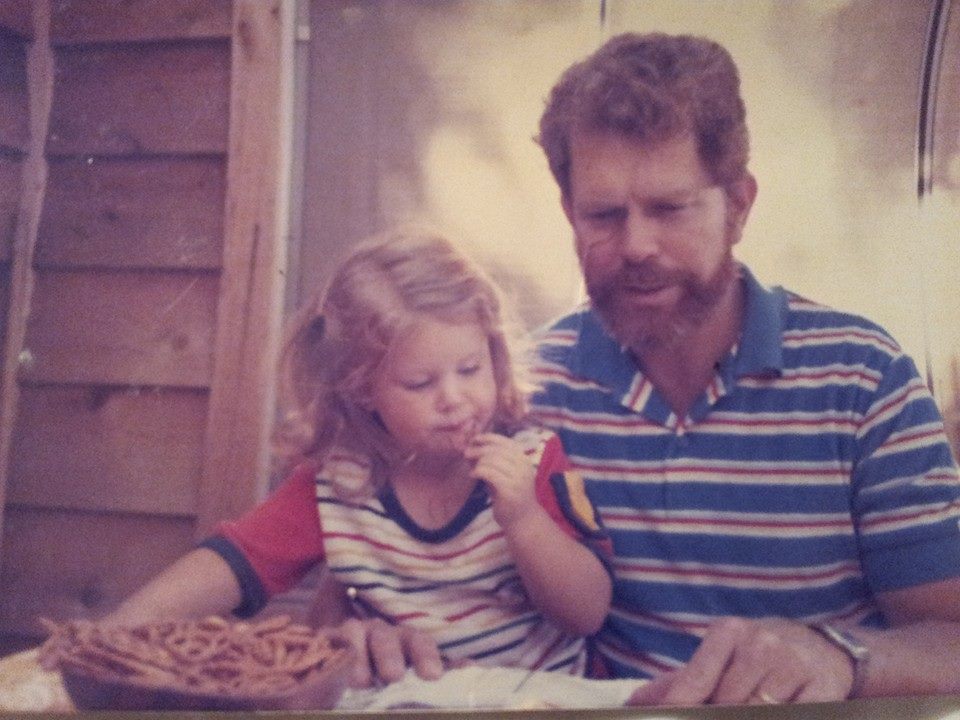
However, it was my daughter and my ultimately being a father that taught me to receive. I mean, when your 4-year-old makes you an “I Love You, Daddy” card, how can you not soak that in to the depths of your heart and receive such an unconditional act of love? As a result, I’ve had the blessing over the last 17 years – and, it’s been a learning process! – of knowing the joy of receiving in so many amazing ways, including unconditional love.
Of course, in the process of raising my daughter, I’ve done a tremendous amount of giving. After all, that’s what we do as parents – that is, we give to our children in the purest ways possible, putting them before ourselves, period. Yet, that form of giving has also been a life-changing experience for me because it’s stemmed from the healthiest of places – the heart – a complete contrast to where I gave to addicts as an adolescent out of a skewed sense of obligation, guilt and inappropriate placements of responsibility upon me.
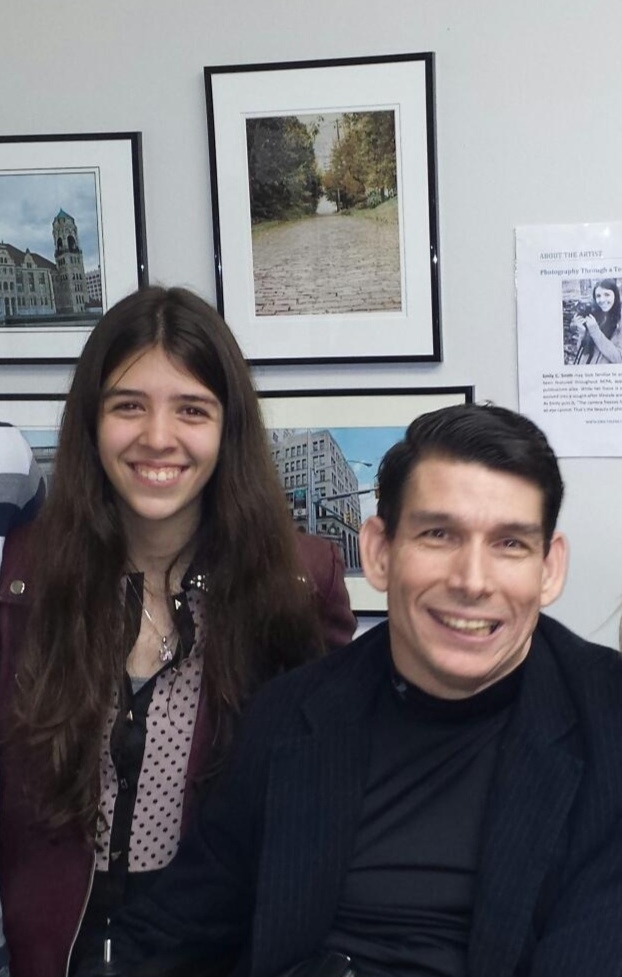
All of this has led me to among the most profound life lessons that any of us can carry. Relating with those close to us isn’t about giving or receiving, after all. Rather, relating with others around us is truly about reciprocation. See, if we’re going to have the healthiest relationships, we must give and receive. What’s wonderful is that this doesn’t mean we give and receive in the same ways, but that when we do for others, we’re comfortable with them doing for us in different but no less meaningful ways. See, reciprocation is about the sincerity of the emotion itself, not its product. I’m 43 and my daughter is 17, so obviously we have very different needs and different abilities to offer. Yet, while I make every attempt to meet her needs, she equally strives to support mine. I may surprise her with a gift that she’s really wanted, as I have the ability to buy it; whereas, she may surprise me with a home-cooked meal. We have a constant volley, where we both intuitively support each other, reciprocating in different but sincere ways. This principle applies not just to parent-child relationships, but all relationships. If, with our romantic partners, we let down our guard and truly know that we’re worthy of not just giving, but receiving, as well, our relationships – and our hearts! – will flourish because nothing is holding us back from loving and being loving.
Giving to others in the most unconditional spirit truly is rewarding. However, it’s heartwarming and soothing to the soul to likewise receive from others. Let us give, and let us receive. Most of all, let us reciprocate, where, together with those we care about, hands hold hands.
In 1967, three surfers and their German shepherd, Maverick, hiked down to Pillar Point in Northern California, discovering among the biggest waves on Earth, questionable whether they could be surfed?
As the three surfers paddled out into the seemingly impossible, literally risking their lives, they soon realized that Maverick, who loved swimming pools, was beside them, paddling along in the Pacific toward monster waves. Alarmed for the dog’s safety, they promptly returned to shore, tying him up, protecting the dog from his own fearlessness. Then, the three friends paddled out, opting to surf smaller waves off to the side, avoiding the giant waves Maverick was heading toward.
Gradually, word spread about the insanely large waves off of Pillar Point, where till this day, the best big-wave surfers in the world try their luck. …And, so “Mavericks” was named after the dog – an iconic surf destination off of Pillar Point.
However, it can be surmised that the legend of Maverick, the fearless dog, didn’t end with a renown surf location named after him. See, in California surf culture, there’s an acronym, F.I.D.L.E.R, which means, F- it, Dog, life’s a risk. In other words, have no fear, and just go for it – life’s short, so live it.
At some point, I’ve all but stopped having fear, worrying or even stressing about pretty much everything. This doesn’t mean I’m irresponsible or don’t care. To the contrary, I’m ultra-responsible and take what I do very seriously. But, I don’t fear, worry or stress about much of anything. I’m like Maverick the dog – that is, I just go for it.
In a few weeks, I’m saddling up in my power chair and hitting the skies once again – Philly to LA to Vancouver to Phoenix, then back to Philly, with a monster itinerary packed in. And, while my gracious staff has covered every possible arrangement, ensuring that my travels are as planned out as possible, I’m arguably the least concerned. I have my plane tickets, my power chair, my passport and a debit card. FIDLAR – I’m ready to roll! With so much on my itinerary, aspects will go wrong. But, when they do, I’ll handle them. I have absolute confidence in being able to address whatever comes my way. I’m like Maverick the dog, just happy to be paddling into an awesome adventure.
People often think that fear, worry and stress are signs that one cares. However, the opposite is true. Fear, worry and stress say only one thing: you don’t feel in control. We know that people who perform at peak levels – surgeons, athletes, soldiers – often have lower heart rates when in a seeming situation of extreme pressure, moving to the opposite of fear, worry and stress. Fear, worry and stress typically hurts us, it doesn’t help us.
I think about relationships a lot because they are the cornerstone of our lives. And, one key I’ve learned is that feeding unsubstantiated fear, worry and stress into a relationship will destroy it. I mean, if your partner is demonstrating absolute consistent love toward you, don’t question it with fear, worry or stress, but embrace it with security, trust and comfort. If we’re going to experience life-changing love, we can’t question and hold back on an amazing relationship. Rather, we need a bit of FIDLAR in our hearts, and just go for it.
Indeed, we live in a culture where too many hold their lives back based on fear and its corresponding emotions. However, if we want to truly live our dreams – pursue an ideal career, live in the locale we wish, have a breathtaking relationship – there’s only one dog to follow, so to speak, and that’s Maverick. The best opportunities in life are like thunderous, towering waves. Most will fear and avoid them, but those seeking true success won’t back down. Instead, they prove true “Mavericks” by yelling, FIDLAR!, and paddling in the direction of big waves and a courageous heart.
The New Year is here, and while I trust it will grace your life with much of what you’ve striven toward, it’s sure to also bring some sort of adversity. After all, none of are immune from the curve balls that life throws us, from the frustrating but mundane like your vehicle breaking down, to the much more harrowing like an ended relationship, job loss, or illness. We don’t like to think about it, but, again, none of us are immune from life’s curve balls, adversity coming our way.
I’ve spent my entire life facing adversity – from my disability at birth to my troubled family growing up to challenges in my adult life – and among my most valuable assets have been the friendships I’ve evolved over decades with others who’ve successfully faced adversity. And, between the two, I’ve developed a learned skill set that’s consistently helped me move from surviving to thriving at many points in my life. Yes, adversity will surely come my way again, too – it’s inevitable – but I’m ready.
For me, addressing adversity has become intuitive, springing into positive action when it occurs. I understand several core principles that have served me and others so well in times of adversity, where I believe they can serve all of us, no matter the circumstance.
When Opportunity Knocks, Open the Door!
When we face adversity, it’s easy and natural to focus on what’s happened to us. …I lost my job. …My marriage is over. …I’ve been diagnosed with an illness. However, in most cases, it’s futile and moot to focus on what’s happened to us. Sure it’s healthy to process emotions, but in the larger scope, we need to look forward toward opportunity – and, there’s always opportunity in adversity. As W. Mitchell – burned over 90 percent of his body, then later paralyzed – has told me for 20 years, It’s not what happens to you, it’s what you do about it. Therefore, when I face adversity, I’m always immediately seeking the opportunity in it. I don’t always make a smooth transfer into my wheelchair, sometimes landing on the floor. Yet, I’m never frustrated by the fall – it’s over, done, who cares. What I’m solely focused on is getting up, as that’s where the opportunity resides. My sister was also an amazing example in this. At 23, she had cancer and was in a bad marriage. She didn’t drift into self-pity, but focused on beating cancer and used it as a life-affirming catalyst to leave an unhealthy marriage, going on to a life closer to her dreams. Cancer for her wasn’t a tragedy; rather, it was a catalyst. If you lose your job, it’s an opportunity to find a better one; if your relationship ends, it’s an opportunity to find the partner of your dreams; if you have illness, it’s an opportunity to gain new life perspectives. We all get knocked down in life, but the wise among us only care about getting up stronger.
Never Stop Juggling!
Have you ever noticed that we have a way of allowing adversity to have a domino effect in our lives? Think about how many struggle at work, then go home to take it out on their families. The examples go on and on, where when one aspect goes astray, we let it ripple through our entire lives, being far more devastating than it should. A college buddy of mine is a juggler, and he taught me that as a juggler, if you drop a ball, you keep juggling the rest because whether you juggle four balls or three, the audience is still entertained – just don’t stop juggling! Life is like that, as when one part of your life goes wrong, don’t let it pull down the rest. Never let the bad sabotage the good. I’m the only one in my family to have ever graduated high school, and the way I did it was by refusing to let my nightmare home life effect my schooling. No matter how bad a night was at home, I still got up the next morning and went to school engaged. It doesn’t make sense to allow one area of dysfunction to void all other areas of prosperity. In fact, when one part of your life is astray, that’s the precise time to especially focus on the positive areas – and you’ll be amazed at how the negative soon turns around.
Victor, Not Victim!
When facing adversity, we have a peculiar way of embracing the blame game. I feel like this because of him. My life is like this because of what happened to me. However, we have far more control in the long run over our lives than any other person or circumstance can dictate. We can’t always control what happens, but we can totally control how it impacts our lives. We can choose at any point to be a victor or a victim. I may have been hurt in that relationship, but I grew from it and I’m more open to love than ever. Nick Vujicic could appear to many as a victim, having been born with no arms or legs. But, as Nick travels the globe speaking to hundreds of thousands each year – as an evangelist, author, husband and father – he lives by the unwavering philosophy, No arms, no legs, no worries, mate! We all possess the power to dictate what controls us. I don’t care what happens to me, I’m going to strive not to relinquish my fulfillment to an outside force – I will be victorious over adversity, not a victim.
If we summarize these core strategies, a remarkable truth is seen: not only do we each intrinsically possess means to address adversity in healthy ways, but we can often minimize its impact and literally use it in our favor. And, so the theme for adversity in the New Year is simple: we are equipped, so bring it on!
Maybe it’s what literature or movies have bred into our culture, that people are either good or bad, but one week after Paul’s death, I can tell you that it’s possible – and more common than we’d like to think – for people to be both. And, for me, Paul was both, for 35 years, which might be why I’ve always called him Dad or Paul, based on the circumstance.
Paul entered my life as Paul, a 34-year-old bachelor attorney when I was eight. My biological father had left, and my mom met Paul during some legal matter. My mom was an alcoholic and an addict, but was exceptionally attractive, and that caught Paul’s eye. Yet, as I would watch unfold till both of their deaths, Mom and Paul were a toxic mix that led to circumstances that my brother, sister and I can’t believe any of us survived – and Mom and Paul ultimately didn’t.
Paul started life as a military brat, son of a full-bird colonel who flew with Charles Lindbergh, no less, and was a highly-decorated WWII fighter pilot. Grandpa Jim, as I knew him, was never a touchy-feely kind of guy. He was a hard-drinking, cigarette-smoking man’s man, with a tall stature and broad chest to match. And, he expected Paul and his brother to be in line all the time. Both boys ended up at military academies, and Paul graduated from King’s Point, embarking on an officer’s career navigating commercial ships around the globe, pulling in an astounding $10,000 per month in the 1970s. Paul put the money to good use, paying his way through law school and buying a farmhouse on some land. And, that’s when my mom began dating him, a relationship that through my eight-year-old eyes had all the promise in the world.
Yet, there was more to it than that for me. Not only did Paul seem a knight in shining armor to pull us out of poverty, but he genuinely took to me. My own father didn’t just drink and walk out on us, but till the day of his death in my 30s, there’s no doubt he was ashamed that I had a disability. Yes, it was my father’s issues, and I always tried to have some empathy because he was so troubled, but I couldn’t help but carry the burden of that shame. However, Paul demonstrated the opposite, genuinely loving and embracing of me. He took me hunting and fishing, sometimes carrying me on his back for miles. And, after my mother and he married, he took me almost everywhere he went, always referring to me as his son. It was a different world, where for the first time I felt a sense of acceptance. And, it was then that Paul became Dad to me.
But, it all was a tale of two cities. Dad was a loving, generous father, who showed me a world I never knew existed, from the great outdoors to socialite parties. However, there were the other sides of him that were horrific – Paul’s sides. He was a drinker, too, and I lay in bed every night hearing the liquor cabinet open and close countless times. My mother and he drank and argued nightly, where eventually he became physically abusive toward her, and they crashed around the house, keeping me constantly on edge. Paul could be a happy, docile drunk, or an enraged monster. Among the low points was on my 10th birthday when I came home from school to find my mom having slit her wrists in a suicide attempt, and as Paul rushed home, he’d been drinking since lunch and slammed his truck into a tree. It’s how life was.
By 1983, my younger sister was born, and Dad was a great father to her, too, loving her to no end. And his law practice thrived, complete with a beautiful old Victorian office right across the street from the courthouse. I remember people in our community being impressed by our family’s status at that point, with Dad running both a private practice and serving in the Public Defender’s office. It was round that time that Dad even took us on vacation to Maui.
But, it was all a facade. My mom was drunk around the clock, Paul started drinking at lunch, they were mired in debt, and the nights were so violent that it’s amazing no one died during those years, albeit from domestic violence, overdose, or suicide. Meanwhile, the three of us kids fended for ourselves. It’s a chaos that haunts me to this day, where loud noises at night in my home – my daughter slamming a cabinet door – triggers immediate fear in me, taking me right back in an instant. Some trauma just never grows out of us.
By 1988, my mom and Paul divorced, and both began an even sharper decline. My mom was a full-blown Skid Row kind of drunk, but Paul remained somewhat functional. And, it would be the next 10 years that truly taught me the fallacy of the term functional alcoholic.
After the divorce, I was 18 and on my own, taking care of my then 6-year-old sister when I could, and while my mom was a disaster, Paul tried to keep his life together and we remained very close. But, he drank daily, and I watched him throughout the 1990s lose everything. His house was foreclosed on, he lost his law practice, and ended up homeless, couch hopping at wealthy friends’ homes, wearing out his welcome. Meanwhile, I grew into my late 20s, with a wife, daughter, house, career, and graduate school, when Paul landed on our couch – and never left. By that point, he was a dishwasher at a friend’s restaurant and might have had two pairs of clothes as his sole possessions. True to form, by day he was great, an amazing grandfather to my daughter, and I could count on him for anything. However, while washing dishes at night, he just drank, coming home late and passing out on our family room couch. Eventually, I moved across the country, letting him live in that house till I sold it, at which time he moved to a camp ground. And, the entire decade demonstrated what happens to functional alcoholics: they slowly lose everything.
By his death, a week ago at this writing, Paul’s life had even more crazy twists and turns. While living at the campground, he met a woman half his age, with profound mental issues, and for the coming years, they lived a volatile life of poverty, alcoholism, and mental illness.
The last time I saw Dad was this past summer when he came east for Grandpa Jim’s funeral at Arlington National Cemetery. He was in such poor health and still drinking that I loaned him a mobility scooter. During that visit, my sister and I checked him into my local VA hospital, where he spent several weeks detoxing and getting a grim diagnosis that after decades of alcoholism, his organs were failing. After getting in good enough health to fly home from Pennsylvania to California, he took his next drink upon landing. He would never be without a drink again, even dying with alcohol in his system.
The King’s Point graduate who traveled the globe, became a successful attorney and a loving father died at 2:06 pm on December 31, 2013. However, the obituaries that tell that one-dimensional portrait, as obituaries do, rob Paul’s life of ultimate meaning. Rather, all should look at the entirety of such loved ones’ lives and not dismiss the entirety of the individual, but truly learn from his or her paths. Dad was a great main, Paul was a troubled man, and both teach us invaluable lessons in life. For me, some of those lessons are beautiful and some are haunting, but they’re lessons that ultimately gave Dad’s life a larger purpose, where when I look at the sober lives of my siblings and me, and the promising future of our combined seven children, Paul’s alcoholism and life descent wasn’t without reason, but a profound lesson for us to learn.
My daughter, almost 17, ran into Nancy at the grocery store. Nancy is head of my daughter’s performing arts program each summer, a calm, cultured, collected woman in her 50s. However, as my daughter told me, Nancy was a bit odd that day at the grocery store, a bit disoriented, my daughter feeling as though Nancy didn’t recognize her, although they knew each other very well.
It was the day before Thanksgiving, so my daughter – although disconcerted by Nancy’s sudden distance – chalked it up as Nancy distracted by the holidays and outside of the usual setting where they knew each other, outside of auditions and auditoriums, the music of both their lives. And, I agreed.
Yet, Nancy knew something my daughter and I did not. Or, maybe, my daughter and I knew something Nancy did not. See, later that night, Nancy emailed my daughter, both apologizing and explaining. Nancy saw my daughter pushing a 5-year-old little girl who uses a wheelchair. She was singing and dangling a ribbon as my daughter pushed her down the aisles. But, in the email, Nancy went on, saying that she didn’t know my daughter’s connection to the little girl, but she knew what type of life the little girl must live in a wheelchair, and how difficult life will be when she grows up. Nancy had preconceived notions of what disability meant, ignorance and stereotypes locked into her mind somewhere astray from her wisdom and education, an out-of-place note in an otherwise harmonious symphonic composition.
However, my daughter and I knew something Nancy did not. What Nancy didn’t know was that there are no distinctions among children. Every child is perfect and beautiful and unique in his or her own way. As with no fall leaf being any less awe-inspiring than the next – regardless of its color, shape, or size – every child in a grocery store should bring a warm smile to your face as you pass by him or her in the aisle. Children are simply children, after all – perfect and beautiful and unique just like the leaves of fall.
To most, being a control freak means one who has to have seeming power in every situation, over every little detail. They’re rarely content, and they’re often an annoyance to all.
However, I want to talk about a different kind of control freak: the kind of person who has freakishly awesome control over his or her life, where what seems unlikely or unrealistic or impossible to most is viewed as totally feasible. See, my definition of a control freak is someone who knows that he or she has ultimate control over his or her own life, able to accomplish virtually any goal.
Think about how rare it is to be a control freak by my definition. Not only don’t people feel like they have control over their lives, they actually avoid and give up control. How many of us feel anxiety or depression because of others’ actions in our lives? How many of us stress out because a mortgage company owns our home and a finance company owns our car? How many of us work an uninspired job because we don’t think we can find better? How many of us see outside stresses as adversely effecting our relationships? How many of us have passed on life-changing opportunities and dreams because too many factors seemed in-between us and them? Indeed, perceiving a lack of control over many aspects of our lives is epidemic, and while we can’t control everything in the immediate, we have far more control to living the lives of our dreams over the long term than many fathom.
College is a big topic in my house these days as my high-school-age daughter gets closer and closer. I’m amazed at how many parents think college admission is under everyone’s control but their and their children’s. Admission boards decide who gets in, schools decide who gets scholarships, the government decides who gets grants and loans, and so on.
However, I’ve taken a dramatically different approach with my daughter – we’re in control of what college she goes to. Her job has been to maintain the grades and extracurricular activities to get into the college of her choice. It’s been my job to handle the finances needed to pay for her education. The result is that we’re in control of where she attends college. With that reality, how amazing is it not to wonder if your child will get into a given college, but to set them up to control the process of picking any college he or she wishes. That’s freakishly awesome control!
I’m also forever amazed at what little control people assume toward opportunities based geographically where they live. I’d love to take that job, but I’d have to move…. I think she could be my soul mate, but she lives all the way across the country…. Since when does geography have control our lives? It’s the 21st century. The Wright brothers figured this one out a long time ago: the continent isn’t moving, but we can! If I have to move across the country – which I’ve done – to pursue a life-changing opportunity, all I need is a phone directory to look up moving companies.
Now, I know what you’re thinking: Mark, life just isn’t that simple for most of us. And, you’d be both right and wrong. Sure, while having freakishly awesome control over your life is simple, it’s not always easy. However, it is, in fact, consistency in practicing it over the long term that fosters possessing freakishly awesome control in vital areas of your life, where virtually anything is possible. I’ve never just snapped my fingers and magically had control. Rather, I work at it every day, in small and big ways alike. Due to my cerebral palsy, there are aspects of my body that I can’t control. Yet, I have complete control over how I deal with it. I don’t mind having to physically attempt a task as many times as it takes to accomplish it because my cerebral palsy doesn’t control my life – I do. I choose patience and perseverance over allowing cerebral palsy to dictate my potentials.
In this way, personal accountability is a vital component of freakishly awesome control. You’re not a victim of circumstance, but you’re the final vote toward how your life evolves. I had no control over receiving cerebral palsy, but I’ve had complete control of how I choose to live with it. Circumstances occur, and as long as your willing to react to them with positive action, you’ll have ultimate control over their effect in the end.
More than any other aspect, though, having freakishly awesome control over your life removes excuses. If you assume freakishly awesome control over your life, you are solely responsible for your life’s successes and failures. You can’t blame disability or other people’s actions or the economy or on and on for any aspect wrong in your life over the long term. Rather, when there’s an occurrence in your life, you’re responsible for it, period. Again, you may not have caused it,, but you can control its effect. There’s no room for blame or bitterness or excuses, just personal accountability. You’re ultimately in control of your life, and if you don’t assume ultimate control, you’ll fail miserably over and over. And, it becomes amazingly liberating when you realize that the only roadblocks in your life are ones that you chose to stop at, that you have the power to turn the wheel and stomp the throttle of life, going where you wish.
Indeed, too many give up too much control to too many circumstances and others. Why not take freakishly awesome control of your life and assert that no disability, person, geography or any other factor can dictate your paths but you? Take accountability, remove excuses, assume freakishly awesome control of your life, and you’ll live the life of your dreams. After all, per the tenet of freakishly awesome control, the course of your life is solely up to you.
Here are five facts about me: I have severe cerebral palsy. I’m a middle-aged, full-time single father. I come from a deeply troubled background. I’m among the least successful people I know. And, many see me as a despicable character.
Every aspect above is literally true. If you were a woman, would you date me? Not a chance, as I’m a rolling wreck.
However, here’s the flaw in my rolling wreck of a self-description: it doesn’t reflect anywhere near the entirety of who I am. Rather, it leaves out the amazing parts of who I am, and fabricates a negative self-image from an inappropriately critical perspective. It’s like taking a beautiful diamond, and placing it under a microscope, finding the flaws, then discarding the entirety of its stunning brilliance. How many of us do that to ourselves every day? While the rest of the world sees our beauty and brilliance – like a two carat diamond – we find flaws that no one else sees. How is it that when we’re each so amazingly unique – one in four-hundred trillion, genetically, according to science – some of us can place a microscope on ourselves and only see flaws?
I recently heard a top collegiate soccer coach explain what he looks for when recruiting players. He doesn’t seek great runners or kickers – they’re easy to find, he said. In fact, he overlooks soccer skills altogether since everyone has them who applies to his program. What he looks for is the most empowering trait that an individual can have: self-confidence.
See, self-confidence isn’t about ego or narcissism, but about recognizing our own value, viewing ourselves as the rest of the world views us. And, when we have it, we don’t just perform better, we feel better. So, why don’t more of us have self-confidence, why don’t we see the beauty in who we are that others see, so unique that we’re one in 400 trillion?
The answer, as I’ve concluded, is that we’re really really bad at math. Allow me to explain….
When others view us, they add up the sum of our parts to create the whole value of who we are. We can look at someone and say, “Wow, what an amazing person, from the inside out,” and we’re able to do that because all of his or her traits add up to extraordinary. Yet, we’re often not skilled at doing math on ourselves – that is, except negative numbers. While the rest of the world looks at us as 2 + 4 + 4 = 10, we look at ourselves and add a negative to every positive -2 + -4 + -4 = -10.
Therefore, we need to do a much better job at understanding all of the variables that comprise us, and add the positives back in. Getting back to my five examples of why no woman should ever date me, let’s see what happens – mathematically – when I complete the missing variables to my equation:
I have severe cerebral palsy, and it’s fueled a life of independence, where I’ve seen first-hand that most limitations that we project are false, that the power of the human spirit runs deeper than any ocean, where few obstacles are insurmountable.
I’m a middle-aged, full-time single father who is in fantastic shape, and my daughter is a young woman of tremendous grace, wisdom, and empathy, whose hard work applied to education and the arts has her on an Ivy-League track.
I come from a deeply troubled background, and I’m the only one in generations of my family to be formally educated, to not live in poverty, to not be an addict.
I’m among the least successful people I know because I learned that if we wish to rise, surround ourselves with those who foster our growth, so I strive to associate with those of tremendous moral compasses, exceptional work ethics, and accomplished personal and professional lives.
And, many see me as a despicable character because I’m among the most read, public figures with a disability, where my success brings out some who resent it.
The result, then, is that I’m not a loser, but a remarkably successful individual with a lot to offer in my uniqueness.
And, the same goes for each one of us. None of us are perfect, but even our so-called flaws add up to remarkable when placed in the full context of who we are. The next time you look in the mirror, see yourself as everyone else sees you – and you’ll see an amazing person looking back.





 PowerchairDiaries