It’s Not a Scorecard

By Mark E. Smith

Someone asked me if struggling ever ends? After all, it seems like for many of us, no matter how far we get in life, adversity still finds us.

It’s a fair question, especially when we’ve spent decades striving to get ahead in life, yet struggles still arise. Maybe you’ve been there. You seemingly have all in order, then adversity strikes – again. Why is that?

Firstly, life is not purely positive or negative, but an ebb and flow of both. Just as all is better, all will get worse. Just as all is worse, all will get better. The key is to find blessings in life not just when we’re on a winning streak, but also when on a losing streak. The blessings are always there; we just need to see them, even during the bleakest of times. In this way, we then maintain gratitude no matter the phase of our life.

Secondly, struggles are intrinsic to life pursuits. If we are to thrive, we are going to likewise experience adversity. You can’t face challenges in a career without having a career. You can’t feel heartache without being in love. You can’t know how difficult it can be to raise children without having children. You can’t know health adversities without a semblance of health. In these ways, the more we live, the more we will intrinsically know struggle.

I, too, once wondered when the struggles would end? Then I realized that life is a process, not a scorecard.

Laughing At It All

By Mark E. Smith

Many couples face adversity. Some come together, while others fall apart. What foremost trait keeps couples together while facing among life’s toughest of times?

I recently worked an Abilities Expo, a consumer trade show for all products related to disability. During the expo, I met countless couples where one partner had experienced a life-changing illness or accident. It was the perfect opportunity to ask, What’s been the single biggest relationship key that’s helped you move through this as a couple?

The answer that most gave surprised me when it probably shouldn’t have: humor. Over and over again, couples told me that shared humor made the toughest situations bearable. And, they nailed it, knowing what all of us should know.

In fact, there are scientific reasons why humor and laughter enhance our relationships. Humor is an intrinsic “mood lifter.” When we smile or laugh, it releases endorphins, the “feel good” chemicals in our brain. In a way, we get a little high when we smile or laugh, so it dramatically points our perception toward the positive, even in the bleakest situations. Therefore, when in a relationship, humor makes uncomfortable situations comfortable and breaks us out of daunting thoughts. If there’s a surefire way to direct a moment or mood as a couple, humor is it.

There is a caveat, however. It’s vital that both people share the humor. There’s no room for jaded or cynical humor. If one person finds humor in a situation and the other doesn’t, it will only make a situation worse. Two people laughing is a shared connection; one person laughing is angering to the other. We must laugh together, not apart.

I met a couple at the show, where the husband is living with ALS. The wife told me, “We can laugh together and cry together. If you can laugh together, you can cry together. But, it’s a lot more fun to laugh together….”

Life and relationships aren’t easy – especially when adversity comes our way. However, among the best tools we can have is humor. If we can laugh amidst a situation, we can address and cope with it. After all, the couple who laughs together stays together.

Getting Better With Words

By Mark E. Smith

In March of 1862, we first saw the phrase, Sticks and stones may break my bones, but words will never break me, in the Christian Recorder, presented as an old adage. Of course, to most of us, it is a rhyme from our childhood that we sang as a self-affirmation.

However, is it true? I mean, it sounds logical, and we’d like to think we can rise to such self-confidence, but is the saying scientifically true? Can we, as a species, self-evolve to a point where the words of others don’t impact us?

I’ve faced this subject my entire life and have seen merit to both sides of the paradox: We’re innately social creatures, but don’t want to be affected by social scrutiny. As one with a disability, I’ve experienced negative dialogue from others my whole life. What’s more, as a public figure and in working with the public in my career, I’ve experienced the dark sides of dealing with the public. I’ve faced terrible adjectives slung at me. So, how have I coped with all of it?

I’ve believed in dismissing strangers as just that, strangers. If you don’t know me, how can you have a valid opinion about me? Also, two wrongs don’t make a right, so I try to be kind to others even when their words sting. These approaches have worked fairly well, but not flawlessly – for good reason.

Firstly, you and I, as humans, are hardwired as social creatures. It’s ingrained in us to care what others think as a matter of our survival mode. In modern society, the risk factors aren’t as obvious as they were in previous evolutionary periods; we don’t face getting eaten by wild animals when banished from a tribe as we once did. Yet, susceptibility to wanting social approval remains a natural instinct.

Secondly, scientists now know that our physiological connection to others is so strong that words can break us. Researchers discovered that emotional pain and physical pain both trigger the same area of the brain. They performed brain scans of those suffering a romantic breakup, and then subjected them to physical discomfort, finding identical responses in the brain based on emotional and physical pain. Further, research proves that verbal abuse can alter a child’s brain structure, that those who experienced verbal abuse experience the same degree of later-in-life impacts as those who suffered physical abuse.

When we put it all together, words really can hurt us. We can intellectualize all we wish, but to be human is to feel the literal pain of words.

With advancements in technology, it’s vital that we realize the adverse impact words can have. We, as individuals, are in more contact with others than ever in the history of mankind. You can call, email, text, direct message, or video chat loved ones at any time. You can jump on the Internet or social media platforms and say anything to almost anyone. And, it’s dangerous territory. We all know that words can hurt – because we’ve been hurt by them! – but some are still so quick to say the worst to others through the keyboard of a computer or smartphone. It doesn’t matter if it’s family, a friend, a public figure, or a complete stranger – sock it to ‘em with your words online! I’m all too familiar with this troubling mentality of others and guard myself against as much of it as I can. However, what about teens who are at a point where they’re seeking peer approval, but lack the emotional development to cope with the levels of negativity and rejection that come in deluges on social media? Words can devastate lives.

The point is, given the world we live in, we need to get better with words. We can care less what others think, despite our nature, and live rooted in reality, not worrying about what some try to project upon us. Few truly know us and it’s ridiculous to invest in what strangers say about us, good or bad. Similarly, we need to use our own words more carefully. Just because some people fill social media with garbage doesn’t mean we should add trash to the pile. In this age of such prolific communication, let us use our words as a crane that uplifts, not a sledgehammer that crushes.

After all, Sticks and stones may break my bones, and words can also break me.

Our Third Dimension

By Mark E. Smith

Henry David Thoreau wrote, “Could a greater miracle take place than for us to look through each other’s eyes for an instant?”

Of course, it’s impossible to look through someone else’s eyes. However, when we’re exceptionally fortunate, others allow us the privilege of knowing their struggles. It’s a gift of trust, one that we should honor with utmost empathy and connection.

Indeed, it’s that connection that’s so unique. For 25 years, as I’ve moved through many paths of adulthood, across a vast geography, I’ve had the humbling privilege of so many sharing their struggles with me. Part of it is that we tend to share our struggles with those who also struggle, and the physicality of my cerebral palsy inherently defines me as having faced struggles, so others intrinsically know I’m in the club, so to speak. Likewise, I hope the other contributing factor as to why so many have shared their struggles with me is due to my expressions of real connections between us.

Now, I wish I could share some examples of the breathtaking, heart-wrenching stories some have shared with me over the years. However, that’s not the way it works. When someone shares his or her most personal stories, you help bear the load, but you certainly don’t violate that confidence. There’s a sacredness to such trust. What I can share with you is the truth I’ve learned in this process….

We never know what someone has been through or is going through. I’ve met individuals from all aspects of life – some of whom you’d never imagine have a care in the world – and the stories shared range from heartbreaking to unfathomable. The cliché is that you can’t judge a book by its cover. As I say, a smile can hide a lot of pain, and a trickle of pain can stem from an ocean.

While we move through our days, we encounter many people. Some are strangers; others are as close to us as colleagues we spend our entire days with. Clothes, bravado, makeup, materialism, humor, status, and so on can create facades that make all of our lives seem like the glossy pages of a magazine – two-dimensional perfection. But there’s a third dimension to many of us, one that includes depth and pain and scars. There’s connection in realizing that. It reminds us that we’re not alone in our struggles and also enables us to treat others with the truest sense of humanity. I can’t judge someone because I don’t know what he or she has been through or is going through. But, I can extend my heart equally to all.

As you move through your days, I hope there are those who you can trust with any struggles you may have. Similarly, I hope that you’re one who others feel safe confiding in. After all, none of us need to be alone in our struggles. Share. Listen. Love.

Life as a Picasso

By Mark E. Smith

I recently spoke on a senate panel on aging. The panelists were heavy-hitters, including a U.S. senator and heads of government agencies. As speakers go, they were the best-of-the-best, both in presentation and knowledge. Then, there was me.

As a speaker, I prefer keynotes, not because I wish to be the star attraction, but because there’s a different dynamic on panels, especially when the other panelists are beyond great. It’s like sitting back stage as a musician and the band before you is phenomenal, and you’re thinking, Man, I can’t live up to what Iggy Pop just did!

What made the recent panel even more challenging was that I went last, so there I sat trembling in my boots – not emotionally, but literally, as I have uncontrollable body movements due to cerebral palsy – as I watched eloquent, brilliant speakers along our table command the room. So, how’d I move through it?

The same way that I always do. Public speaking can be tricky. Yet, if you know your subject, know your audience, and you’re skilled with rhetorical devices, public speaking is a bit of an illusion – it looks tougher than it is. For me, however, there’s a wild card added to the mix: cerebral palsy. My brain sends involuntary signals to my muscles and they do whatever they want, whenever they want. My central nervous system doesn’t care if I’m in bed watching TV or speaking in front of 250 statesmen. If it tells my legs to kick, they simply kick – formally known as a “spasm.” Speaking as a craft is easy for me; doing it with the physical unpredictability of cerebral palsy can be the harrowing part.

Given my situation, I view speaking in front of audiences like driving a race car. Driving a car at 150 mph around a race track takes skill, but even more so when the unexpected occurs. Race car drivers win races not based on simply going around a track, but in addressing peril when encountered. Did you see him keep his car from spinning off of the track!

When I’m publicly speaking, it’s the same phenomenon. I have my emotional and mental composure, but I never know what my body will throw my way. The ability to address spasms and uncontrolled body movements without missing a beat while speaking is my real craft. The way I do it is I let go of the mental and emotional constraints others often feel in such situations. When I sat on the senate panel, there was no way I could be as physically composed as the other speakers, so I threw that standard out the window and focused on being the only person I could be: me. I have cerebral palsy and a microphone – hold on to your seats, folks! In these ways, cerebral palsy becomes an asset of originality.

It doesn’t matter if we’re public speaking or living our everyday lives, the minute we let go of social pressures or preconceived notions of who we should be and just be ourselves, as-is, there’s no freer realm to be in. I understand that this is difficult for many. We live in a culture that presents ideals on how we should be. Yet, for many of us, it’s impossible for us to meet those ideals – there’s no product to resolve cerebral palsy – and in the larger scope, nor should anyone feel he or she has to live to such scripted ideals.

See, I view the world as the most spectacular art gallery. Each of our beauty isn’t blended on a single cultural canvas, in a single form, but seen within the borders of our unique frames. Photoshopped images are great; an original Picasso is amazing.

The Struggle is Real

By Mark E. Smith

Have you ever thought, I shouldn’t feel this way because others have it worse than I do? Most of us have reasoned with ourselves in that way at some point. While it’s empathetic toward others and is a coping mechanism, it has a huge downside: self-invalidation.

The fact is, everyone has struggles. However, trying to compare our adversities to those of others is impossible – because we are us and others are …well …others. Your struggles are as valid as anyone else’s because struggling isn’t based on a definable scale; rather, it’s relative to each of our experiences.

I know what it’s like to live with severe cerebral palsy, and I’m fairly emotionally adept at doing so. I’m struck when others express to me that they are inspired by me because as they face their adversities, they know individuals like me “have it much worse.” I understand the good intentions of such sentiments, but I also don’t want others discounting the totally valid emotions around their individual situations, as they very well could be struggling more than I am relative to our own circumstances. I have no idea what another is dealing with, and I never want anyone diminishing his or hers own adversities based on my visible ones.

All of this ties back into realizing that there’s validity in all adversity, in all struggles, for each individual. Just as we are kind enough to give credence to the struggles of others, we must extend it to ourselves, where we don’t compare and create a scenario of self-invalidation, but one of common experience. Adversity is not a measurement or a competition, and there’s certainly no hierarchy. We each have our struggles and no one can say one is easier to cope with than another. It’s all relative and individual.

Now, I’m not saying to wallow in self-pity – that’s at the other end of the scale and can devastate your life. What I am saying is, we shouldn’t dismiss our struggles because others have struggles. Everyone’s struggles should be embraced – including our own.

Ultimately, the truth of adversity is this: There are no struggles more or less significant than others…. Simply different.

Getting Framed

By Mark E. Smith

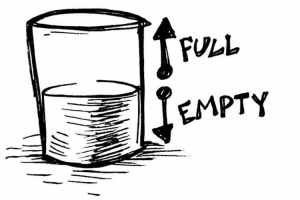
Is the glass half full or half empty? …There’re two sides to every coin. …Or, would you rather a steak that’s 80% lean or 20% fat?

All of those statements are utter clichés, but they tie into a psychological principle that dictates the way we see each situation: framing.

Framing is the psychological process that applies to whether we see a situation as negative or positive. The fact is, in even the worst of situations, we have the choice on how to frame them – that is, to see negatives, positives, or both – and the way we frame them dictates our success in addressing them, literally and emotionally.

I’m a firm believer in framing adversity as a tool for opportunity. No matter what happens, I believe in recognizing the opportunity in it. I once had a home severely flood, and as I evacuated, I told everyone, “It looks like I finally get to remodel….” And, I did get to remodel as a result of the unfortunate circumstance, where the house was far nicer than before it flooded.

So many aspects of our lives are like that: As the flood waters rush in, it’s difficult to see beyond the seeming disaster. However, if we frame life’s adversities so that we can draw positive aspects from them in the immediate and long term, it lessens the impact on us and allows us to move forward.

On top of using positive framing as a tool of coping, it’s invaluable as a tool for learning and growth. If we only see a situation as bad, we’re simply in victim mode – adversity only harms us – and we can’t move forward. However, if we frame adverse situations with at least some positives, we not only take control of the situation, but we learn and grow. Imagine if every time a professional sports team lost a game, they just went back to the locker room and sulked about how unfair the game was. They’d be the worst team in history. No team does that. Rather, they watch replays of the game to determine how mistakes were made, then they strive to improve in those areas. We lost that game, let’s learn from it to win the next.

If you’re not in the habit of framing adversity toward the positive, I know it’s hard. None of us want adversity in our life, and it can weigh us down. Yet, adversity enters our lives at times no matter what – which is why it’s so important to develop the habit of seeing positives. If we only see negatives, it tends to freeze us in place. However, if we can see a positive – even in the bleakest of situations – it allows us to begin moving forward. Most of us have had our hearts broken by an ended romance. Then, a well-meaning friend tells us, Don’t worry, there are other fish in the sea. While that cheesy saying lacks empathy in the moment, the painful end of one relationship most often does lead to a new, joyous chapter of love. In this way, even an ending in our life can eventually frame a wonderful beginning if we allow it.

If we can get to a place in our lives where we can frame adversities in the positive, we can then move forward, learn, and grow. That’s a great frame to be in.

Fear Strengthens My Grip

By Mark E. Smith

Every Monday, I meet our company’s new employees. It’s my role to share with them not what we do, but why we do what we do. We make mobility products and that’s a noble endeavor. I know that because my life depends on the products we make. And, I tell them about that. But, as a General Manager, in my slacks and button-down dress shirt, here’s what I don’t tell them or most people these days:

I’m nobody from nowhere. That truth drives me to push and pull and continue dragging myself up a mountain that I could easily fall from at any moment. Fear of falling has been my purest motivator.

Others have talent, education, abilities. I wasn’t born into any of it. If it wasn’t for my cerebral palsy, I’d likely be mowing lawns or asking at 46, Do you want fries with that? Now, there’s nothing wrong with jobs like that – it’s in my gene pool. But, that doesn’t work with cerebral palsy, so I had to go a different route: one that’s been a third luck, a third showing up, and a third blistering hard work.

Do you want to try a power wheelchair? Sure.

Do you want to take a swing at public school? Absolutely.

College? Let’s go.

So, I’ve moved through life knowing that guys like me don’t get a lot of breaks. So, when I do, I show up, shut up, and do what the task takes.

Along the way, my failure has been predicted by many. I’ve been OK with that. Although, I admit that the further I get up the mountain, the more I look down on them. Don’t tell me I can’t climb when you’re unwilling to climb with me – because I’m going for it, not out of spite, but opportunity.

The fact is, my only option in life is climbing a mountain. I know that with a single wrong move I can lose everything, I take nothing for granted. I am simply thankful for the next obstacle that comes my way – and fear strengthens my grip.

Writing Our Own Chapters

By Mark E. Smith

Do you mind if I share a quick story about my 20-year-old daughter? I hope she doesn’t. A while back, she called me from college, having received a speeding ticket. She explained that it wasn’t her fault, that she was unfamiliar with the area, that she didn’t know the speed limit, that she didn’t see the police officer. The ticket said she was traveling at 20 mph over the speed limit – and that was the only part I cared about. She broke the law and now had to pay the fine. At 20, my daughter is learning what her generation calls “adulting” – that is, how to take accountability.

Many of us, even though we don’t like to admit it, struggle with accountability, don’t we? My daughter isn’t the first to find every reason except her own lead foot for getting a speeding ticket! Many of us have likewise found every reason possible to place accountability elsewhere but on ourselves in circumstances ranging from financial difficulties to relationship struggles. It’s not that we’ve irresponsibly overspent, it’s that we just need more money. It’s not that we’re contributing to unhealthy patterns in a relationship, it’s that our partner is at fault. If we’ve lived to any experience, and we’re honest, we’ve certainly tried to wiggle out of accountability at points.

However, what about when we experience bad circumstances totally beyond our actions or control? Who’s accountable then, when some circumstance isn’t of our doing whatsoever?
The answer is, we are. See, if we want our lives to flourish, if we want to thrive amidst any adversity, we can’t pick and choose what we’re accountable for. Rather, we must assume accountability for all that happens to us, regardless if it’s our own making or a genuine misfortune. From as fleeting as my daughter’s speeding ticket to as profound as my cerebral palsy, we’re accountable for every circumstance in our lives.

Now, let’s clarify that this isn’t about blame. In fact, it’s about the polar opposite mindset. It’s about being in constructive control of our lives no matter what happens to us. Put simply, it’s about shifting from a victim mindset to a victory mindset. We don’t dwell or place responsibility on what’s happened to us, but we instead focus on moving our lives forward in ways that empower us. It’s flipping the script from reactive to constructive. This happened to me, now I’m accountable to address it, turning a negative into empowerment. I’ve spent my life living to this principle, and while I’m not flawless at it, it’s served me astoundingly well, empowering me in times of adversity more than any other factor.

As a reader of this blog – or if you’re among the many who saw the news stories and social media coverage –- you’ll recall that I experienced an unfortunate circumstance where I was removed from an American Airlines flight, arguably based on discrimination toward my disability.

In the wake of the incident, many suggested that I sue for monetary damages. We live in a litigious society and when we’re victimized, we sue. I thought of going that route, but as I explained to many, nothing could change what happened to me, but I certainly didn’t want it to happen to others with disabilities. Rather than being reactive and sue, I wanted to be accountable for what happened and thereby constructive. This ultimately meant pursuing routes of changes to air carrier policy to hopefully protect others.

I filed a formal complaint with the Department of Transportation under the Air Carrier Access Act to ensure my incident went on public record, where it helped expose a pattern of violations based on other formal complaints (I learned that in 2016, over 30,000 complaints were filed against the airlines by passengers with disabilities being mistreated). Next, we discussed my testifying before the Senate, but hearings ultimately weren’t needed because, right at that time, fortunately, Senator Tammy Baldwin and four co-sponsors introduced vital legislation that expands protection for passengers with disabilities. My point is, rather than being a victim, I assumed accountability to contribute to helping resolve a systematic issue.

We have the ability to do this in all areas of our lives. When we encounter adversity of any kind, from any origin, we don’t have to point outward toward who or what is responsible. Instead, let us turn inward and know that we’re accountable. In doing so, we remove the power from the circumstance to further victimize us and create the capacity for it to empower us. When we move from looking for responsibility to assuming accountability, we realize an amazing shift: Life doesn’t happen to us, but for us – and we’re in true control.

Let us not squander our amazing potential by looking to others for responsibility in what happens to us. It’s only when we assume accountability, regardless of circumstance, that personal empowerment occurs. Don’t let circumstances narrate your life when you can take the pen and write each captivating chapter.

Dare Not to Care What Others Think

By Mark E. Smith

If there’s one aspect of life that we all share, it’s knowing what it’s like to be judged, criticized, and disliked. Gandhi and Mother Teresa were among the greatest humanitarians in history – and even they continue being judged, criticized, and disliked by some. It’s odd but true: To be human is to know what it’s like to be disliked.

Most of us felt the pain of being disliked at some point during our school years, and that was extremely difficult because it’s a time when, according to psychology, we most want to fit in, with little coping mechanisms to help us when we’re told in some way that we don’t, as with experiencing bullying. However, being judged, criticized, and disliked doesn’t stop in school; it follows us into adulthood. And, how we address it within our adulthood dictates the quality of our lives. Others are going to judge, criticize, and dislike us – even disliking Gandhi and Mother Teresa! – but we have the choice to let it consume us or to rise to the understanding that it is what it is, and how others view us doesn’t define who we are. Which have you been choosing?

A friend of my wife recently posted on Facebook an experience that took my breath away on this subject:

I do what I do, having my family and also my career, because they make me happy and give me purpose, and have given me confidence in who I am. I was reminded of this earlier today when we were out furniture shopping. I don’t want my sons to live in a world where humans can be so cruel to each other.

We went to a large, chain furniture store, and as a male sales person was helping us, two female saleswomen were sitting at a table and immediately started speaking in another language about how fat I was, and how my dress was cute, but what a shame because I was so fat, but at least I made cute babies. I walked by, hearing this, holding my son’s hand. I told my husband to take my son and go look at the kid’s furniture, and I turned around and went passed the two women again, who continued to speak about me in another language, which I fluently speak. After about five minutes, I had had enough. I turned and faced them:

“I hope you realize I understand every word that came out of your mouths, and you should both be ashamed.”

I got back four stunned eyes looking at me and an, “Oh, I’m sorry, Ma’am.”

“Sorry” was a bit too late for this infuriated, pregnant mama, who has dealt with bullies like these all of her life. I told myself, “Leave now before you loose it!” But, my emotions got the best of me, so I turned around one more time and said to my salesman, “I want you to tell the manager what you hear me say now,” and I turned towards the women again:

“You are sad, so very sad, but you don’t break me. I’m going to continue wearing this dress no matter what you think of me and, yes, I do make beautiful babies like the one who I’m currently carrying and the one whose hand I was holding while you were belittling me, while not realizing I fluently speak and understand multiple languages. What you don’t know about me is that I’m happy. I’m a business owner. And, while you may call me fat, I wake up each day with a clear conscience that I’m raising my children to be better humans than you ever will be.”

I walked with my family out of the store.

My point for posting this is simple: Never let anyone steal your sparkle. Look at the life around you, and look within you to rise above it, and most of all, do not let it break you….

The fact is, despite self-confidence, it’s in our evolution to want validation and approval. We’re tribal creatures at heart, and once upon a time, not getting the approval of others meant banishment or death, so a momentary visceral reaction – and I emphasize, momentary – in such a situation as above is totally normal. We’ve all felt that sting and defense mechanism. So, for starters, we rightfully feel angry or hurt when judged, criticized, or disliked, regardless if it’s a stranger or someone close.

However, we no longer live in an evolutionary time of survival based on what others think. In fact, we live in a time where simply who we are – the character we demonstrate – dictates our success. Therefore, it’s to our advantage to focus not on what anyone thinks of us, but how we can purely be the best at who we are and what we do.

Have you ever noticed that the most comfortable, successful people aren’t concerned with what others think? It’s not that they’re arrogant or oblivious or don’t care. They want to be liked just as we all do. Yet, they innately understand that they don’t need to be liked in order to be of value. They know that they are of value because of who they are and what they do – and they don’t allow that to be up for debate by others.

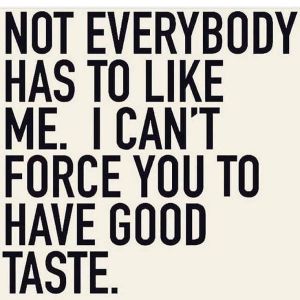
See, there’s a fundamental difference between wanting to be liked versus needing to be liked. We all want to be liked – who doesn’t? However, when we need to be liked, we alter our behavior to fit what we think others want. In that process, we may squelch the truest, most valuable parts of ourselves and, worst yet, when we don’t get approval, we feel crushed. That’s not only a tough, unhealthy way to live, but it limits us toward being the amazing person we are, as-is. If we’re always trying to please others, we can never let our true selves shine.

Indeed, we can spend our lives worrying about what others think of us, but we know that doesn’t work. So, let’s focus on what does work: being the best we can be, and letting the chips fall where they do. We can’t please everyone and not everyone is going to like us. That’s OK. Let them focus on whatever they wish while we focus on flourishing, as-is.

As one with a severe physical disability, I’ve had others try to dictate my life since the moment of my birth, when I was given only hours to live, then when I did live, I was deemed a “complete vegetable.” As my life has progressed, such projections toward me continue daily. I’ve been judged, criticized, mocked, and dismissed in every possible way, no matter due to cerebral palsy or being a public figure. But, what did cease long ago was my giving anyone’s interpretation of me credence. My path in life has been solely dictated by one person: Me. I’ve heard everyone’s opinions toward me, but my life proves the final say, as does each of ours.

Let us not worry about getting others’ approval, but focus on living to our own potential and desires. And, when we encounter people trying to get us to buy into getting their approval through their judgment, criticism, or dislike of us, let’s move past anger toward empathy. The world is a mirror, and such projections as those women in the furniture store are reflections of themselves. For this reason, I try not to get angry or pity those who seek to judge and criticize others, but have empathy for them. Healthy, happy, successful people do not judge and criticize others; rather, those with internal struggles do. I wouldn’t want to be in their shoes – or furniture store! Again, it’s normal to get angry, offended, or stung in the moment when encountering rudeness. But, empathy goes a long way toward the big picture that they’re struggling in ways we’re not.

The best impression that you can make of yourself in the world comes not from trying to impress others or by being concerned with what they think, but by being the truest you.  That’s the type of amazing individual that people ultimately flock to.