Voice of Courage

13731631_10210078069973105_6856083489733044810_n

By Mark E. Smith

What’s the origin of courage? Is it a conscious decision or an innate response? And, how does it make us rise at just the right moment when needed most?

My soon-to-be 8-year-old daughter has spina bifida and autism. While I didn’t have the privilege of being in her early life – she’s legally my step-daughter – I’ve had the blessing of having her in my life in recent years, where she’s my daughter. And, while our relationship isn’t typical – autism never is – the love and understanding is, just as with my 19-year-old.

My little one has a lot going on medically between her two disabilities, but that all just makes her unique like any child. Due to spina bifida, she’s paralyzed from the tummy, down, and uses a wheelchair. Due to her autism, she has an astonishing vocabulary, but finds it difficult to use it in context and isn’t conversational. In simple terms, she makes us smile nonstop with her constant chatter – Please to meet ya, prairie dogs!, she recently exclaimed in the middle of dinner at a restaurant – but she profoundly struggles expressing what she wants or needs.

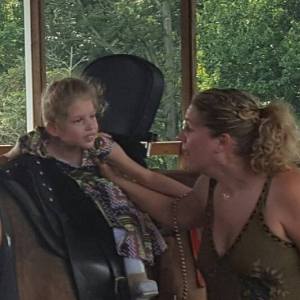
She’s also a fearless daredevil, where she doesn’t demonstrate self-protection mechanisms. However, this makes her love motion, including amusement rides. And, so when we recently had the opportunity to take her adaptive horseback riding, we knew she’d love it.

Inexplicably, my wife and I were wrong. As a team surrounded the therapy horse, and my wife tried to place our little one on the saddle, our little one was terrified. In fact, I’d never seen our daughter express fear, but as she clung to my wife, the fear was palpable. Yet, we knew if she could get past that fear, sit in the saddle and ride, she would love it. However, as I watched from the fence feet away, I knew that this had to be our little one’s decision. Yes, she was scared. No, you can’t force courage. But, could our little one find the inner-strength to ride the horse?

After many failed attempts, to the point of all of us adults about to give up, in one last try, our little one saddled up, clutching her mother. As the horse rounded the ring, the unimaginable happened. Our little one exclaimed, I am not afraid!

Was it self-reassurance? Was it a declaration to our group? Was it an affirmation of her life that we never thought she could express?

It was all of those. No, I don’t have the answers for the questions for which I began this story. However, I can tell you most profoundly, though, that all of us there that afternoon heard what few ever hear: the true, literal voice of courage.
Camp Gratitude

20160705_131714 (1)

By Mark E. Smith

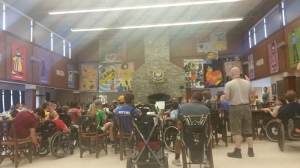
At this writing, I’ve just spent a week at a summer camp full of kids between the ages of eight and seventeen. It had all you’d expect at summer camp – swimming, fishing, boating, arts-and-crafts, horseback riding, and on and on.

However, what was different than any camp I’ve experienced was what occurred at one o’clock every afternoon. The campers – who happen to have a myriad of physical disabilities – gathered in the lodge after lunch for “Pat-on-the-Back Time.” It really should be called “Gratitude Time” because for one-half hour, kids raise their hands and express their gratitude for their peers and counselors at camp, as well as their experiences.

As you might imagine, for us adults, it was a profoundly moving experience each afternoon. To witness children with severe disabilities – many of whom having undergone countless surgeries, many using wheelchairs, all facing exceptional daily adversities – express gratitude from the heart was breathtaking. After all, such children have been through a lot, and face exceptional challenges every day; yet, their expressions of gratitude are unyielding.

Now, you may find those sentiments extraordinary, that children facing such adversities can express such unyielding gratitude toward even the smallest of deed done by another or the most typical of activity – an eight-year-old thanking her counselor for holding her hand in the swimming pool. However, as I sat and listened to their outpouring of gratitude each day, I found the children teaching me more than I ever expected.

See, their gratitude, while clearly an exception in our society, should be the rule. How many times in our careers do we hear colleagues diminishing each other instead of praising? How many times do our children have an accomplishment, and we don’t acknowledge it? How often do we go for days, months, years without complimenting our spouse? How often do we walk away from a cashier or waiter or bus driver without saying thank you? How often do we spend our time wanting instead of appreciating? How often do we dwell on negatives instead of embracing positives? The answer for most is, more often than not. It’s the society we live in – just look around – and it pulls us all down.

The fact is, there’s something really wrong when we, as adults, have to go to summer camp and learn from children how to be more heartfelt individuals of gratitude. And, yet, there’s hope in it all. If children of such adversities can express such appreciation, gratitude and love… we all can.

When Chili and Rice is all You Need

CHILI

By Mark E. Smith

When I was growing up, we were poor in every way. Yet, no matter my mother’s troubles – from poverty to substance abuse – she always had dinner on the table. No, it was never much. Pancakes or french toast were the norm, with chili-rice a treat, but we never went without. She had no money, but she sure could turn a can of chili and a bag of rice into several nights’ meals. Those dinners may not mean much to most, but till this day I’m grateful for what we had.

What my mother understood – and a life-long value she instilled in me – was the “power of poor.” That single life lesson of making the most out of how little you have has been an invaluable tool toward my successes in life, from addressing challenges of my disability to accomplishments in my career.

During the best of times, life is easy, and struggles are easily overcome. You’ve probably heard the idiom, Just throw money at it! to solve a problem. However, life is rarely that easy. For most of us, we only have what we have – and we either figure out ways to make the most of it.

Yes, there’s enormous power in making the most of it, for that’s all we have. When we live with adversity, it isn’t about what we have, but how creative, innovative and indomitable our spirit is. I may have cerebral palsy, but be darn clear that I’m making the most of it, for that’s all there is. The adversities in my life have inspired me to reach deep and find capacities that I wouldn’t need to strive for if I had limbs that functioned as they should. This reality applies to so many aspects of life. The power of poor brings out our best.

I remember years ago sitting in a product development meeting, and a manager started listing all of the people and money we’d need to put into the project. The colleague next to me whispered in my ear, “No, we need three days and a white board.” …Mr. Money Bags soon left the company. Mr. White Board is on a host of industry leading patents.

In our lives, if we wait for the right amount of money or the right conditions to pursue a goal, it’s likely to never come to fruition, and if it’s all handed to us, it likely won’t bring out the best. Yes, sometimes utilizing the power of poor is a necessity – I suspect that my mother would have relished a ham if she could afford one. However, harnessing the power of poor doesn’t have to stem from literal poverty. Sometimes, with all the resources in the world in front of us, the wise move is to reject the easy route, and simply embrace the creativity, innovation and indomitable spirit within. That’s when we turn a can of chili and a bag of rice into a phenomenal meal.

The Indirect Routes of Growth

growth-net-exit1

By Mark E. Smith

Growth. It’s never linear. I know we want it to be – in our educations, relationships, careers, finances, even in our hearts.

But, it’s not the way personal growth works. More importantly, linear growth isn’t what would best serve us. Therefore, by design, growth isn’t linear.

Many aspects of growth in our lives have an idealized route that we conjure in our wishes, our goals. We want to get from A to Z as easily and quickly as we can.

I want to loose 100 lbs.
I want to settle down with the person of my dreams.
I want to become a vice president in my company.
I want to be financially stable.
I want to graduate from college.
I want to be sober.

The I wants in all of our lives go on and on. However, if they were just achieved, how would we grow, what would we learn? See, the beauty of non-linear growth is that it challenges us to embrace perseverance, to learn creative solutions, to have gratitude, to… well… grow.

Personal growth in our lives can be difficult, if not painful at times. It often doesn’t seem fair or just in the stalls, setbacks or unwanted changes of course. Yet, those, in fact, are purpose-filled times. Those are the times when we actually do grow.

In these ways, let us not look at the non-linear times in our lives as unfair or unjust – the stalls, setbacks or unwanted changes of course. Instead, let us recognize their true purpose: launching pads for growth.

Forgiving – Ourselves

forgive

By Mark E. Smith

Among the hardest endeavors of the heart we ever make is to forgive – ourselves.

Although we live with the best of intentions, with tremendous purpose, we’re bound to make mistakes. When we’re on top of our game, the mistakes are small – maybe no one notices but us. However, when we’re not so mindful of how our actions effect ourselves and others, the mistakes can be life-altering, not just for us, but for those we love. In both cases, making mistakes can weigh on us like an anchor, keeping us submerged in shame, guilt, and self-doubt. In a way, we lose trust in ourselves, just as we imagine others lose trust in us.

However, the fact is, while those who care about us and love us are typically very forgiving, the person who most often takes the longest to forgive our mistakes is oneself. Shame and guilt are powerful emotions, not easily shaken. Yet, if we are to move beyond our mistakes, we must truly forgive ourselves. It’s not just the ultimate in humility, but also accountability.

See, when we refrain from self-forgiveness, we’re holding on to our mistake, like carrying a boulder everywhere we go. But, there’s no corrective action involved, just self-punishment. In contrast, in order to forgive ourselves, we have to deeply acknowledge our mistake and grow to trust in ourselves that we won’t make that mistake again. We must allow ourselves to give into ultimate humility. We must allow ourselves to accept ultimate accountability. Those acts of honesty and courage are the cornerstones of self-forgiveness.

Author Stephan Richards writes about self-forgiveness, “When you initially forgive, it is like letting go of a hot iron. There is initial pain and the scars will show, but you can start living again.”

In this way, the ultimate mistake we can make in life is not to offer forgiveness – to ourselves.

[Speed = Distance / Time]

lamark

By Mark E. Smith

Among my routine rituals is running my power wheelchair through my company’s test lab “speed trap.” I’ve perfected aspects like tire air pressure, straight-line tracking, and battery type to get my production chair just a scant faster than it’s built to run. In this process over the years, I’ve learned a bit about life, too.

The mathematical equation for speed is [Speed = Distance / Time]. Put simply, how long it takes you to cover an amount of distance is how fast you’re going. As I’ve run my straight-line speed trap hundreds of times – a computer system measuring my distance over time to calculate my speed – I’ve realized it’s a metaphor for life. Our successes and failures are dictated by the same equation, how much or little progress we make over an amount of time impacts our lives.

See, if in our lives, we cover little distance over time, we’re not progressing. Think about our relationships, careers, finances, you name it – if it’s all where it was five years ago, with no progress, our distance over time is dismal. Our lives are stalled or even destructing.

To the contrary, when we make quick, rash, hasty decisions, jumping from one life path to the next, we’re moving so fast that we’re bound to make mistakes. Racing through life impulsively, without considering consequences always results in disasters.

The key, then, is to look at our lives as [Speed = Distance / Time] and find that optimal balance, where we’re making great progress, without making poor decisions or mistakes.

What I’ve learned in the speed trap – and life – is that the right speed is  prudent in practice, but still a little faster than average.

I’ll Take Love Over Art

NM_iLevelMark_July16.indd

By Mark E. Smith

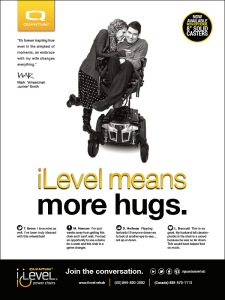
My wife and I have slowly become a poster couple – literally. And, we’ve been blessed that so many have found inspiration not just in the one iconic image, but the life we lead, commonly shared on social media, as is the way of the world nowadays.

However, we’re truly not a poster couple. No couple is. Who we are, are two unique individuals who love each other deeply, but face the challenges that every married couple faces. I note this because being the poster image of anything can be a trap all the way around.

I look at our life in ads or online, and realize that we’re doing well. And, it’s all true. However, what’s not reflected is the rest of the story – life is messy sometimes. We have a 19-year-old in college, a 7-year-old with special needs, a dog, and a house. The tuition bills for the 19-year-old never end, the 7-year-old struggles to sleep through the night, and the dog likes to eat grass and vomit on the new carpet. To top it off, our house doesn’t clean itself. Your life may not look a lot like ours publicly, but if you step in our house, chances are that our life is a lot like yours – from balancing finances, to caring for kids, to stressing over laundry, to trying not to lose your cool because the dog ate food off of the table again. And, it’s really hard to be romantic when the day has worn you down.

No, life isn’t a poster image. Rather, life is a mirror image – and there’s beauty in that. Some mornings, as my wife and I are scrambling to get ready, usually running late with all of the chaos, we’ll look in the big dresser mirror together – half dressed, hair uncombed, morning wrinkles emphasized by the sunlight – and we just laugh at what a mess we are.

See, what I’ve learned is that perfection – or the illusion thereof – doesn’t make a true marriage. What makes a true marriage is when you acknowledge how messy it all really is – and still smile at it.

Unspoken Alone

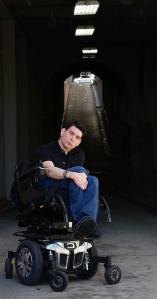
tunnel

By Mark E. Smith

Alone. We’ve all felt it. And that, in itself, is why we’re truly not.

Based on my career in working among a population where trauma is common, I often hear how alone others feel in their challenges and struggles. However, as an ordinary person, I also hear how alone many feel in challenges of all types in everyday life. Yet, I’ve never encountered a situation where someone’s struggles transcended common humanity, where others hadn’t experienced a similar situation, of similar emotions.

In this way, the uniqueness of feeling alone in our struggles isn’t unique at all. In fact, it’s among the most common emotions we all share. It is intriguing, though, that such a commonly shared emotion can be… well… generally unshared.

See, unlike other cultures in the world, we in North America are prone to keeping our struggles to ourselves. The result is, we feel alone. And, so we live in a culture that exacerbates feeling alone in times of struggle, when we’re actually not alone at all in our experiences.

If you’re like most of us, you’ve unquestionably known unfortunate experiences like relationship issues, career issues, financial issues, health issues, and on and on. And, if you’re like most of us, you’ve felt alone during these struggles, as if you’re the only one who’s ever experienced them – especially in the moment. However, most of us have experienced them, too, so why are we all feeling so alone in the process?

The answer is simple: we don’t reach out when we should. As those struggling, we don’t reach out, and when we have a hint that someone else is struggling, we don’t reach out. Why do we behave this way? Well, self-doubt and fear on both sides, that’s why.

When we’re feeling alone in our struggles, we default to these internal scripts, don’t we?

No one understands what I’m going through.

They’ll judge or ridicule me.

I don’t want to be seen as weak.

I’m just ashamed of this mess I’m in.

I don’t want to rock the boat.

Or, for that which prevents us from reaching out to those we see struggling:

It’s none of my business.

I don’t want to embarrass them.

I won’t know what to say.

Based on our culture, these are totally valid feelings. But, there’s one problem with following them – they leave us feeling alone in our struggles, isolated. And, it simply makes any struggle worse and last longer. The antidote, however, is brilliantly simple: share.

Now, sharing can be scary and tough, requiring a lot of courage and vulnerability. But, the rewards of not being alone in our struggles outweigh all of those seeming risks. If you’re struggling alone – and we all do at times in our lives – share it with someone you trust. Interestingly, trust, in itself, can be a far more liberal definition than most might think in times of struggle. Some of the most healing, profound conversations I’ve ever had have been with virtual strangers, those recently met. What’s important is that we reach out, and it’s astounding how the sharing or inquiring of just a hint of ourselves exposes the common humanity of us all, realizing we’re not alone.

I don’t know what you’re struggling with our will be struggling with. But, I know that none of us are exempt from struggles, and none of us need to be alone in our struggles. In your tough times, I encourage you to reach out, where the hand that you grasp will feel comfortingly a lot like your own.

Straight, No Chaser

thelonious-monk

By Mark E. Smith

I’m sure as a younger child I questioned it all. But, by adolescence, I was just me, and there was no room for me or anyone to question it. I mean, it was questioned – who I was because I was different, my disability seemingly made me different – and it would occasionally sting in the moment. However, I ultimately understood I was who I was, I am who I am, let’s get on with this.

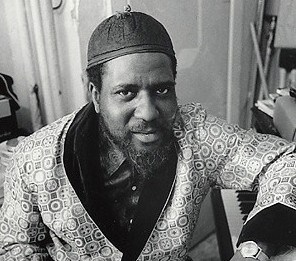
The jazz great, Thelonious Monk, was of that spirit, too, long before I was born. During the 1940s through the 1960s, when you had the greats like Duke Ellington, Miles Davis, John Coltrane, Dizzy Gillespie, Charlie Parker and Billie Holiday evolving Jazz in a linear form, Monk was innovating on the piano in ways no one had ever seen.

Monk was first and foremost a composer, with musical eccentricities that few could follow. Improvising was a staple of jazz in that era, but his obsession with improvised composition on stage made him a lone wolf, where he didn’t care what the band played or what the audience wished. Monk simply followed his passion key by key, note by note, reveling in what he discovered in the moment, oblivious to all around him. Often, the only queue to what he was playing was his right foot keeping time. He just played as him, and whether the world followed didn’t matter. John Coltrane said, “Working with Monk is like falling down a dark elevator shaft,” and Miles Davis for a time refused to play with Monk due to Monk’s defiance toward staying in line with the rest of the band. In the refined world of jazz performance, Monk was also known for stopping playing mid song, getting up to dance alone as the rest of the band played on. Indeed, Monk was Monk, and he wouldn’t meet arbitrary norms.

In the process of being him, Monk ultimately lived an obscure but free life, where beyond his immediate circle, he was generally unknown during his career, never getting the fame of his contemporaries. Yet, in the process, he composed an astounding body of recorded work, only second to Duke Ellington. Monk largely disappeared from 1971 till his death in 1982, struggling with mental health issues along the way. Posthumously, he was granted a Pulitzer Prize for his body of work, and is subsequently now known as among the greatest jazz composers and musicians of all time.

How many among us just want to be themselves, follow their hearts and passions regardless of what anyone else thinks? Yet, many don’t out of fear of rejection or not fitting in. For all of us, Thelonious Monk left us with striking words of wisdom: “I say, play your own way. Don’t play what the public wants. You play what you want and let the public pick up on what you’re doing – even if it does take them fifteen, twenty years.”

Let it Rain

adversity

By Mark E. Smith

Some had a limited life expectancy. Others had experienced life-changing injuries. While still others we’re born into it. All faced exceptional adversity, which made sense, as it was an expo for those with disability.

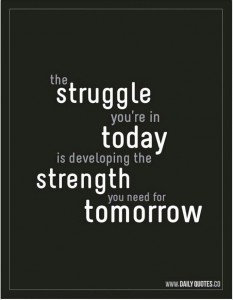
However, as I was surrounded by over 5,000 individuals that weekend facing adversity, I realized that the confidence, comfort and joy that many – not all, but many – exuded aligned with what I learned long ago: adversity dramatically improves our lives when we embrace it.

For those who haven’t experienced adversity or embraced it, they find fear in it and have sympathy toward those who live with it. For those of us who have experienced and embrace adversity know the remarkable role it serves in our lives. Our experiences have taught us that adversity shouldn’t be avoided, but actually welcomed.

See, adversity forces us to face problems and situations that are too big to resolve. In my situation, no one can change, fix or cure my cerebral palsy. And, because of that, it’s forced me to learn and grow in order to succeed in living with it. Think about what an extraordinarily fortunate situation that is to be in. Yes, we can grow without adversity, but like adding weights to a workout, adversity is a rare force that can fuel wisdom, inner-strength, understanding and perseverance, to name a few life-enhancing traits. Adversity, then, isn’t meant to restrict, but empower.

I realize that for some, adversity as empowerment is a ludicrous thought. After all, how is being seemingly down on one’s luck a positive in any way? Worse yet, when you’re down and you see someone in your situation who’s happy, that can be the perfect recipe for bitterness. But, again, if we view adversity with acceptance, we will intrinsically grow. If we embrace adversity, the challenges within will cause us to rise.

As the late singer, Prince, prepared to perform the Super Bowl half-time show, the producer called to tell him it was raining, convinced that Prince couldn’t or wouldn’t perform. Prince replied, “Can you make it rain harder?”

Prince ultimately performed among the most iconic concerts of all time, later noting that that caliber of performance could only be achieved when facing such adversity. That which he couldn’t resolve – the weather – elevated his performance.

There’s the notion in our culture that adversity is to be avoided, feared, that it’s tragic, life-detracting, that it’s asinine to even suggest welcoming it into our lives. However, that’s all gross misconception. The fact is, adversity allows us the remarkable opportunity to extract dignity from difficulty, strength from struggle, power from pain. That is, adversity allows us to not just rise in the rain, but it empowers us with the understanding that the harder it rains, the more we can rise.