Where Divorce Leads

Divorce

By Mark E. Smith

I’m at that age, in my 40s, where many I know are either divorced or in the midst of divorce. And, it’s hard for me to watch because I understand the tragedy of divorce, but not for the reasons you might presume. And, I know the ultimate goal of divorce, but, again, it’s likely not what you presume. Divorce is different for each couple – and, even more unfortunate for each “family” – yet there’s a common thread of humanity that too many overlook. It’s by understanding that common thread that takes divorce from the court room and places it back into the heart, which is really where it resides.

Interestingly, while I am a generational divorce statistic – my parents divorced, and I subsequently divorced as an adult – I’ve never been through a “typical” divorce in the legal sense. My father simply left when I was very young, then my mother and stepfather had a very simple divorce. Then, in my divorce, it likewise was a very simple legal process, no custody issues, gracefully splitting of assets amongst ourselves, never even a foot in court. My marriage was deeply dysfunctional, but we still treated each other with dignity and respect in the divorce process – there was no excuse not to. None of these divorces in my life were by any fathom ideals – divorce never is – and emotions ran deep; but, they weren’t legal battles and drawn-out War of the Roses, either.

However, I’ve helped friends emotionally get through some tough divorces. And, it’s struck me that so many divorces are a seemingly surreal process. Think about how divorce transpires. Two people have gone from loving each other, vowing to spend a lifetime together, and even having children, to needing a court to decide who gets the kids on Sundays, utterly despising each other, paying attorneys thousands of dollars to literally fight over items like who gets the $50 DVD player. And, the process takes on a life of its own, where individuals abandon all rationale and systematically their lives are devastated by one or both of their actions – home lost, bank account drained, kids made a pawn, and everything so lovingly built is destroyed, including those once-priceless wedding photos. When two people’s lives – and worse, their kids – are sanctioned entirely by court order, life has jumped the tracks in among the most tragic of ways.

Yet, as horrible as the legalities of divorce can be, it’s the impact on our humanity that’s the real toll – and this is what few realize or wish to admit. Alcoholics and addicts aside (a leading cause for divorce, where such individuals by nature of altered brain chemistry cannot process rational thoughts or feelings), it’s the emotional impact of divorce that’s more life-shaking than any other aspect. The monetary can be rebuilt, and the court appearances eventually come to an end. However, the realization that the person and union that you so believed in turned out to be completely unfulfilled in the end, rattles you to your core. What you thought was, wasn’t. What you trusted in as a forever, came to a soul-numbing hault. The person who you married isn’t recognizable anymore. And, whether you do it consciously or subconsciously, you’re bound to feel the scariest, most helpless emotion of your life: After witnessing the implosion of my beliefs, hopes and dreams, how do I believe in anything ever again? See, that’s what divorce truly is for most. While couples duke it out in court over meaningless materialism, fueled by spite and bitterness, thinking that’s the nature of divorce, they’re overlooking the real consequence and battle: How do I restore my faith in humanity, to trust again? It’s not just a dissolution of a marriage, but the dissolution of all that one believed – and that’s soul-shattering for many.

In this way, the ultimate goal of surviving divorce can’t be preservation of capital or righteousness or bitterness. Rather, the ultimate goal in surviving divorce is a preservation of faith, the ability to trust and love again. While you may lose a lot in divorce, as long as you don’t lose faith in humanity, you not only have the opportunity to recover, but to go on and live the life of your dreams.

And, to me, that’s the ultimate goal of divorce. It’s not about distribution of property, who’s right or wrong, or being bitter with your ex. Rather, the ultimate goal of divorce is among the most consequential processes of your life: Preserving your faith in trusting and loving again toward ultimate happiness wherever it awaits you – and sincerely wishing your ex the same.

The Genius of Juggling

juggling-balls

By Mark E. Smith

The New Year is here, and while I trust it will grace your life with much of what you’ve striven toward, it’s sure to also bring some sort of adversity. After all, none of are immune from the curve balls that life throws us, from the frustrating but mundane like your vehicle breaking down, to the much more harrowing like an ended relationship, job loss, or illness. We don’t like to think about it, but, again, none of us are immune from life’s curve balls, adversity coming our way.

I’ve spent my entire life facing adversity – from my disability at birth to my troubled family growing up to challenges in my adult life – and among my most valuable assets have been the friendships I’ve evolved over decades with others who’ve successfully faced adversity. And, between the two, I’ve developed a learned skill set that’s consistently helped me move from surviving to thriving at many points in my life. Yes, adversity will surely come my way again, too – it’s inevitable – but I’m ready.

For me, addressing adversity has become intuitive, springing into positive action when it occurs. I understand several core principles that have served me and others so well in times of adversity, where I believe they can serve all of us, no matter the circumstance.

When Opportunity Knocks, Open the Door!
When we face adversity, it’s easy and natural to focus on what’s happened to us. …I lost my job. …My marriage is over. …I’ve been diagnosed with an illness. However, in most cases, it’s futile and moot to focus on what’s happened to us. Sure it’s healthy to process emotions, but in the larger scope, we need to look forward toward opportunity – and, there’s always opportunity in adversity. As W. Mitchell – burned over 90 percent of his body, then later paralyzed – has told me for 20 years, It’s not what happens to you, it’s what you do about it. Therefore, when I face adversity, I’m always immediately seeking the opportunity in it. I don’t always make a smooth transfer into my wheelchair, sometimes landing on the floor. Yet, I’m never frustrated by the fall – it’s over, done, who cares. What I’m solely focused on is getting up, as that’s where the opportunity resides. My sister was also an amazing example in this. At 23, she had cancer and was in a bad marriage. She didn’t drift into self-pity, but focused on beating cancer and used it as a life-affirming catalyst to leave an unhealthy marriage, going on to a life closer to her dreams. Cancer for her wasn’t a tragedy; rather, it was a catalyst. If you lose your job, it’s an opportunity to find a better one; if your relationship ends, it’s an opportunity to find the partner of your dreams; if you have illness, it’s an opportunity to gain new life perspectives. We all get knocked down in life, but the wise among us only care about getting up stronger.

Never Stop Juggling!
Have you ever noticed that we have a way of allowing adversity to have a domino effect in our lives? Think about how many struggle at work, then go home to take it out on their families. The examples go on and on, where when one aspect goes astray, we let it ripple through our entire lives, being far more devastating than it should. A college buddy of mine is a juggler, and he taught me that as a juggler, if you drop a ball, you keep juggling the rest because whether you juggle four balls or three, the audience is still entertained – just don’t stop juggling! Life is like that, as when one part of your life goes wrong, don’t let it pull down the rest. Never let the bad sabotage the good. I’m the only one in my family to have ever graduated high school, and the way I did it was by refusing to let my nightmare home life effect my schooling. No matter how bad a night was at home, I still got up the next morning and went to school engaged. It doesn’t make sense to allow one area of dysfunction to void all other areas of prosperity. In fact, when one part of your life is astray, that’s the precise time to especially focus on the positive areas – and you’ll be amazed at how the negative soon turns around.

Victor, Not Victim!
When facing adversity, we have a peculiar way of embracing the blame game. I feel like this because of him. My life is like this because of what happened to me. However, we have far more control in the long run over our lives than any other person or circumstance can dictate. We can’t always control what happens, but we can totally control how it impacts our lives. We can choose at any point to be a victor or a victim. I may have been hurt in that relationship, but I grew from it and I’m more open to love than ever. Nick Vujicic could appear to many as a victim, having been born with no arms or legs. But, as Nick travels the globe speaking to hundreds of thousands each year – as an evangelist, author, husband and father – he lives by the unwavering philosophy, No arms, no legs, no worries, mate! We all possess the power to dictate what controls us. I don’t care what happens to me, I’m going to strive not to relinquish my fulfillment to an outside force – I will be victorious over adversity, not a victim.

If we summarize these core strategies, a remarkable truth is seen: not only do we each intrinsically possess means to address adversity in healthy ways, but we can often minimize its impact and literally use it in our favor. And, so the theme for adversity in the New Year is simple: we are equipped, so bring it on!

A Man’s Entirety

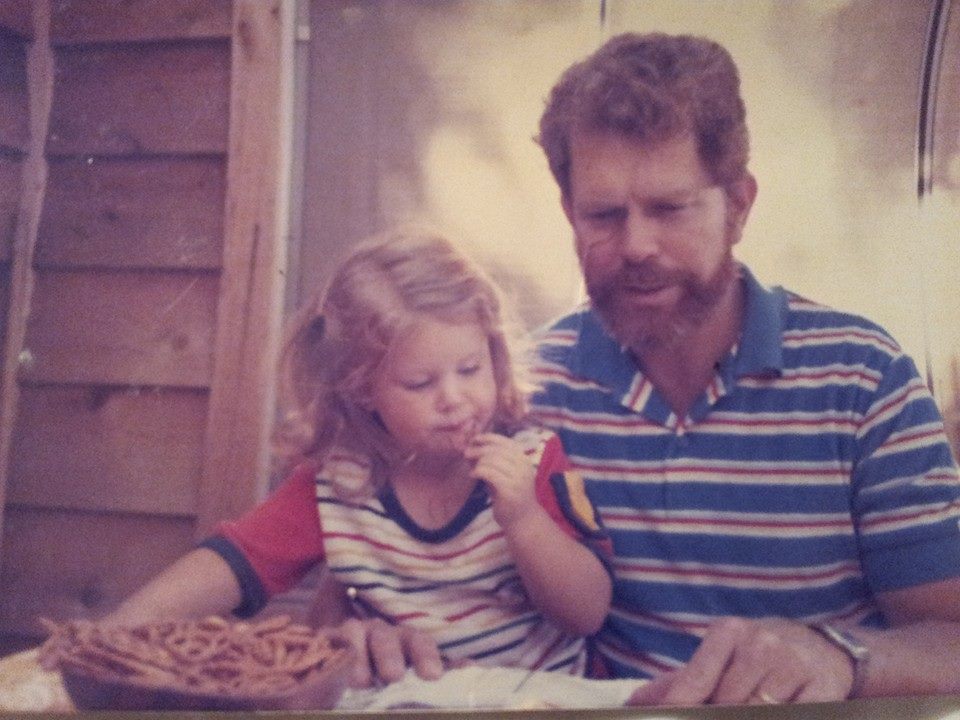
Paul and Mark's Little Sister (1985)
Paul and Mark’s Little Sister (1985)

By Mark E. Smith

Maybe it’s what literature or movies have bred into our culture, that people are either good or bad, but one week after Paul’s death, I can tell you that it’s possible – and more common than we’d like to think – for people to be both. And, for me, Paul was both, for 35 years, which might be why I’ve always called him Dad or Paul, based on the circumstance.

Paul entered my life as Paul, a 34-year-old bachelor attorney when I was eight. My biological father had left, and my mom met Paul during some legal matter. My mom was an alcoholic and an addict, but was exceptionally attractive, and that caught Paul’s eye. Yet, as I would watch unfold till both of their deaths, Mom and Paul were a toxic mix that led to circumstances that my brother, sister and I can’t believe any of us survived – and Mom and Paul ultimately didn’t.

Paul started life as a military brat, son of a full-bird colonel who flew with Charles Lindbergh, no less, and was a highly-decorated WWII fighter pilot. Grandpa Jim, as I knew him, was never a touchy-feely kind of guy. He was a hard-drinking, cigarette-smoking man’s man, with a tall stature and broad chest to match. And, he expected Paul and his brother to be in line all the time. Both boys ended up at military academies, and Paul graduated from King’s Point, embarking on an officer’s career navigating commercial ships around the globe, pulling in an astounding $10,000 per month in the 1970s. Paul put the money to good use, paying his way through law school and buying a farmhouse on some land. And, that’s when my mom began dating him, a relationship that through my eight-year-old eyes had all the promise in the world.

Yet, there was more to it than that for me. Not only did Paul seem a knight in shining armor to pull us out of poverty, but he genuinely took to me. My own father didn’t just drink and walk out on us, but till the day of his death in my 30s, there’s no doubt he was ashamed that I had a disability. Yes, it was my father’s issues, and I always tried to have some empathy because he was so troubled, but I couldn’t help but carry the burden of that shame. However, Paul demonstrated the opposite, genuinely loving and embracing of me. He took me hunting and fishing, sometimes carrying me on his back for miles. And, after my mother and he married, he took me almost everywhere he went, always referring to me as his son. It was a different world, where for the first time I felt a sense of acceptance. And, it was then that Paul became Dad to me.

But, it all was a tale of two cities. Dad was a loving, generous father, who showed me a world I never knew existed, from the great outdoors to socialite parties. However, there were the other sides of him that were horrific – Paul’s sides. He was a drinker, too, and I lay in bed every night hearing the liquor cabinet open and close countless times. My mother and he drank and argued nightly, where eventually he became physically abusive toward her, and they crashed around the house, keeping me constantly on edge. Paul could be a happy, docile drunk, or an enraged monster. Among the low points was on my 10th birthday when I came home from school to find my mom having slit her wrists in a suicide attempt, and as Paul rushed home, he’d been drinking since lunch and slammed his truck into a tree. It’s how life was.

By 1983, my younger sister was born, and Dad was a great father to her, too, loving her to no end. And his law practice thrived, complete with a beautiful old Victorian office right across the street from the courthouse. I remember people in our community being impressed by our family’s status at that point, with Dad running both a private practice and serving in the Public Defender’s office. It was round that time that Dad even took us on vacation to Maui.

But, it was all a facade. My mom was drunk around the clock, Paul started drinking at lunch, they were mired in debt, and the nights were so violent that it’s amazing no one died during those years, albeit from domestic violence, overdose, or suicide. Meanwhile, the three of us kids fended for ourselves. It’s a chaos that haunts me to this day, where loud noises at night in my home – my daughter slamming a cabinet door – triggers immediate fear in me, taking me right back in an instant. Some trauma just never grows out of us.

By 1988, my mom and Paul divorced, and both began an even sharper decline. My mom was a full-blown Skid Row kind of drunk, but Paul remained somewhat functional. And, it would be the next 10 years that truly taught me the fallacy of the term functional alcoholic.

After the divorce, I was 18 and on my own, taking care of my then 6-year-old sister when I could, and while my mom was a disaster, Paul tried to keep his life together and we remained very close. But, he drank daily, and I watched him throughout the 1990s lose everything. His house was foreclosed on, he lost his law practice, and ended up homeless, couch hopping at wealthy friends’ homes, wearing out his welcome. Meanwhile, I grew into my late 20s, with a wife, daughter, house, career, and graduate school, when Paul landed on our couch – and never left. By that point, he was a dishwasher at a friend’s restaurant and might have had two pairs of clothes as his sole possessions. True to form, by day he was great, an amazing grandfather to my daughter, and I could count on him for anything. However, while washing dishes at night, he just drank, coming home late and passing out on our family room couch. Eventually, I moved across the country, letting him live in that house till I sold it, at which time he moved to a camp ground. And, the entire decade demonstrated what happens to functional alcoholics: they slowly lose everything.

By his death, a week ago at this writing, Paul’s life had even more crazy twists and turns. While living at the campground, he met a woman half his age, with profound mental issues, and for the coming years, they lived a volatile life of poverty, alcoholism, and mental illness.

The last time I saw Dad was this past summer when he came east for Grandpa Jim’s funeral at Arlington National Cemetery. He was in such poor health and still drinking that I loaned him a mobility scooter. During that visit, my sister and I checked him into my local VA hospital, where he spent several weeks detoxing and getting a grim diagnosis that after decades of alcoholism, his organs were failing. After getting in good enough health to fly home from Pennsylvania to California, he took his next drink upon landing. He would never be without a drink again, even dying with alcohol in his system.

The King’s Point graduate who traveled the globe, became a successful attorney and a loving father died at 2:06 pm on December 31, 2013. However, the obituaries that tell that one-dimensional portrait, as obituaries do, rob Paul’s life of ultimate meaning. Rather, all should look at the entirety of such loved ones’ lives and not dismiss the entirety of the individual, but truly learn from his or her paths. Dad was a great main, Paul was a troubled man, and both teach us invaluable lessons in life. For me, some of those lessons are beautiful and some are haunting, but they’re lessons that ultimately gave Dad’s life a larger purpose, where when I look at the sober lives of my siblings and me, and the promising future of our combined seven children, Paul’s alcoholism and life descent wasn’t without reason, but a profound lesson for us to learn.

The Three P’s of Happiness

happiness

By Mark E. Smith

With nothing in my hands or up my sleeves, I’m going to share with you the magic of happiness, the guiding value in my life. I live it, I share it, and when I’m exceptionally privileged, I gift it to others in countless ways.

However, the reason why I can share the magic of happiness with nothing in my hands or up my sleeves is because the real magic of it is that there’s no magic to it at all – that is, it’s a definable process that consistently creates the lives of our dreams when we consciously choose it. That’s right, happiness isn’t happenstance, but a conscious decision we make – or don’t make! – and the choice of happiness dictates… well… our happiness.

Happiness, as I’ve learned, though, isn’t a single choice. We don’t go to the State-of-Mind aisle at the grocery store and pick the can of Happiness nestled among Discontentment, Misery and Despair. Rather, happiness resides in three distinct choices that we have ultimate control over: our perspective, the people we surround ourselves with, and the life paths we follow. If you simply get those “three P’s” right, you will live not just with unyielding happiness, but a fulfilled life where all your dreams aren’t just plausible, they’re realized.

Perspective plays such a huge role in happiness. Now, we’re not talking clinically-based depression or such, as those are medical issues that perspective can’t control. What we’re talking about is the fact that, for most of us, there’s two ways of looking at many situations, one that chooses negatives and one that leads to happiness. And, we control that perspective.

I’m a hopeless romantic, one who believes in the epics. I read epic tales, I watch happily-ever-after movies, and I strive to carry my heart and live my life with a certain idealism that anything is possible. I went through a period where my heart was in a funk. I wanted a taste of truly epic unconditional love, and questioned whether I’d die without ever having known it – to me, among the saddest tragedies any of us can have. I didn’t receive it from my troubled parents and I went on to an ended marriage and hit-and-miss relationships, and I longed to have unconditional love in my life. The despair that hung over me prevented my happiness for that period. And, then I shifted my perspective. In fact, I did have unconditional love in my life, and even experienced it on an epic scale: my daughter. From the day I shifted my perspective from what I seemingly didn’t have, to what I truly have had all along, my entire life changed. I no longer long for unconditional love, but light up at the mere thought of it, knowing what I share with my daughter.

In this way, happiness is typically a matter of choosing our perspectives. For every negative we see or feel, there’s usually a blessing that cancels it out. Look for the blessings in your life – the mere recognition of them plants seeds of happiness.

Beyond our own perspectives, the people we surround ourselves with dramatically dictate our happiness. We’re not insulated or islands – other people’s behavior effects us. If you want to be unhappy, it’s not hard to do, just surround yourself with dysfunctional, unhealthy, miserable people. We’ve all witnessed it or lived it. We can have the highest spirits, trying to do all that’s right, and the toxic people in our life pull us down, robbing our happiness. And, we let them. Stop it! When you have the choice between those who pull you down versus those who uplift – and make you happy! – run toward the uplifters! Don’t do the whole dysfunctional comfort thing by emotionally investing and being drained by hurtful people in your life. Rather, when you have amazing people around you, run toward that light at the end of the tunnel. I assure you, the light isn’t a train; it’s the radiance of your deserved happiness. Don’t mess this one up by choosing a never-ending nightmare of relationships over your deserved happiness. Only embrace those who embrace you, and literally run toward those who truly love and support you in only the healthiest ways – it will fill your heart and soul with happiness.

Lastly, make decisions toward life paths that intrinsically create happiness in your life. And, don’t be scared by logistics or time to accomplish goals – your happiness is worth addressing a few challenges to get to it. As I like to ask, do you know why some people live in paradise? They moved there! Your dream job, relationship, or residence may be across the country or around the globe – go to where you will be intrinsically happy. My college buddy, Brian, who happens to have cerebral palsy, seemed a forever bachelor with an established life in the San Francisco Bay Area. He met a woman online, fell in love and moved to be with her – in Amsterdam! They’re long married now, and if anyone’s ever decided to intrinsically seek happiness, it’s Brian – and, of course, it worked. Making such life moves isn’t always easy; but, you have to do them as a surefire path to the happiness and life you’ve yearned for and deserve.

The reality is, there’s no magic to happiness. It’s not that it appears in the lives of some but not others. We ultimately solely create it for ourselves through the choices we make. Let us choose positive perspectives over the negatives. Let us run toward the right people in our lives. And, let us make the decisions for our life paths that lead to our dreams. Indeed, all of this can take thought, time, effort, and courage. However, in applying these three principles – perspective, people and paths – you’ll achieve the happiness in your life that you’ve dreamed and deserve.

Opening Our Closets

1424552_3497001679378_1609463705_n

Soul is about authenticity. Soul is about finding the things in your life that are real and pure. -John Legend

By Mark E. Smith

With the holidays approaching, and special friends visiting my home for an extended stay, my daughter and I started making a list of what we needed to do in order to make our house as perfect as possible.

See, for my daughter and me, our home is about love, laughter, understanding, and tranquility, so we haven’t cared that we have a sheet hung across the family room window because Rosie the English bulldog attacked the custom blinds, nor have we cared that the dishwasher has been broken for years (it’s just the two of us, so we don’t need a dishwasher!). We’re blessed with a very nice home, that’s neat and clean, and we don’t sweat the small stuff. We’re happy as-is.

However, with company coming, the list got longer and longer of ways to spruce up our 12-year-old home, all to impress our house guests. And, then I realized how unauthentic I was being, how I was putting priority on a shell of a house instead of the depth of my character and heart. My daughter and I want to spend time with those close to us, and replacing blinds and a dishwasher has nothing to do with it. The quality of one’s character is far more important than the quality of one’s house.

How many of us live such a facade in many aspects of our lives, where we present an image instead of just being ourselves – namely, because we don’t think others will embrace us if they see who we truly are?

The answer is, most of us. However, here’s the issue: if we hide or disguise ourselves, others don’t truly know us, and it creates a barrier for letting other people in. We live with secrets, isolation and in the worst cases, shame. Any aspect that we falsely polish or hide from others is like placing a wall between us and others. If we want the truest connections, we must be open and authentic to an extraordinary degree. Here’s the real me – take it or leave it, but at least I’m authentic. Life isn’t Facebook, where everyone’s life is a happy two-dimensional facade on a screen. To be authentic is to be real in every sense.

And, I think all of us have been unauthentic at times, both with ourselves and others. The solution, though, to both resolving it and avoiding it is to be totally authentic. Yes, some will reject us in the process, but most will embrace us.

In my own life, I strive to only be authentic. However, it’s not always easy, and I haven’t always succeeded. I’ve struggled this year with a very weighty subject in my life: my daughter will be heading off to college in the blink of an eye. Those around me have asked whether I’m prepared for that emotionally, especially since it’s just been the two of us for years, our lives so intertwined?

I give a very enthusiastic answer, that my daughter’s worked extremely hard toward college, that I can’t wait for her to flourish on her own. After all, it will be another amazing stage to witness as a parent. Yet, if I’m to be authentic, it’s truly only telling others half of my feelings – I’m not being honest.

The fact is, my daughter has been my foremost focus since the day she was born. Then, in being a full-time single father, she’s the better half of our dynamic duo, always a life force in our home. Girlfriends have come and gone, but it’s always been Shorty and me. No, I don’t know how I’m going to handle having my little girl, housemate and, really, best friend no longer around on a daily basis. I can picture Rosie the English bulldog and me just staring at each other on a Wednesday night, saying, What do we do now? Even if I’m living with a woman, I don’t see the transition being any less heartfelt. Yes, the thought of my daughter going off to college is unquestionably what I want and will be among my proudest moments. But, it’s also painful, scary and sad.

However, as I’ve opened up with friends about my complete feelings about my daughter eventually heading off to college, they’ve been extremely supportive and full of wisdom. Again, if we are going to live with authenticity, we must share our whole self, as-is, honestly, and people do reciprocate on such a genuine basis. In this way, opening myself up to others is like having guests in my home: I’d rather choose the imperfection of openness and joy over the tidiness of isolation and despair.

Of course, authenticity is ultimately about accountability, and that can be a struggle in itself. A great tool in that area is to surround yourself with people who will out of love call you on your behavior when you’re not being authentic. Both my sister and my best friend have called me on my behavior over the years – and rightfully so, as I’ve done some freakin’ stupid stuff. I remember being on the West Coast, feeling a lot of sadness over the ending of a serious relationship, and rather than being authentic and telling my friends that I was in a lot of pain, I went the rock star route, numbing myself with everything I could find as the life of the party. And, to his credit, without his being judgmental, my best friend soon pulled me aside and said, “I suspect there’s a lot going on in your life and it’s getting to you in unhealthy ways. It’s not the Mark I know.”

And, he was right. I wasn’t being authentic. Rather, I was being an emotional coward and dishonest. Fortunately, I was able to get myself back on track – arguably with greater clarity – all thanks to a true friend who believed in me and wasn’t afraid to call me on my falling off of the authenticity wagon.

None of us are perfect or immune to real emotions that tempt us toward going astray. I’ve been there and I still go there. However, recognizing the power of living to a higher standard – authenticity – and working at it in even the most challenging situations makes living as who you are a lot more rewarding.

My house isn’t perfect and neither am I. I need new blinds and a dishwasher, and Lord knows I’ve got my emotional issues. But, my home and heart are open, as-is, so come on in.

The Right Question

Jose Perez
Jose Perez

By Mark E. Smith

I’ve been running a mobility-related message board online for around 15 years. During that time, I think I’ve seen it all – the good, the bad, and the ugly. The anonymity that some feel online knows no boundaries.

However, recently, someone posed a question to me that was a first. Admittedly taken much out of context here and paraphrased, someone asked me, “Why should you feel it morally right having a job, home, van, and ATV when so many others with disabilities do not?”

Within the context of the conversation, asking me such a question certainly seemed audacious, and even ruder paraphrased here. Nevertheless, I answered the question, simply explaining that I’ve made sacrifices and worked really hard.

However, here’s what’s interesting: If one wished to be successful, it was the wrong question to ask.

See, in my early 20s, my mentor was Dr. Wayman R. Spence. He was known as the grandfather of the anti-smoking movement starting in the 1960s, formed a health education company, went on to invent sports medicine products, and was a widely-published author and art collector. Ultimately, Dr. Spence, as we called him, sold his biggest company, Spenco Medical (going strong till this day) to Kimberly-Clark in the 1980s, making an insane amount of money. By the early 1990s, when I met Dr. Spence through my writing, his life was dedicated to supporting the arts and philanthropy. My writing was actually terrible at the time, but he insisted that if I focused on it and pursued formal education, I could build a successful career. And, I listened.

As my mentor, Dr. Spence gave me weekly assignments. His secretary called me with insane challenges like, “Dr. Spence wants you to call Norman Vincent Peale…. Here’s his number.” And, so I’d cold call all sorts of famous writers, speakers and artists who Dr. Spence knew. And, I was terrified every time.

Yet, Dr. Spence taught me a life-changing lesson that I used then and I use now: Never wonder why a person is successful. Rather, always ask how he or she became successful. Then, apply that knowledge to your own pursuits. That’s how you learn, grow, and succeed. It’s modeling positive behaviors that others prove successful over 30- or 40-year careers.

I had to call painter, Jose Perez, one day, and ask him how he became a great painter?

“I wasn’t born a painter. No one is,” he told me. “I’m a painter because I paint every day, and have done so for many years. That doesn’t make me great, it just makes me successful.”

That one conversation profoundly effected my life because simply by asking Jose how he became successful, I learned a key trait of extraordinary people: daily discipline – over decades. I could be successful at virtually any pursuit as long as I sincerely dedicated myself to it. I bet in the last 20 years, I might have missed 10 days of writing; otherwise, per Jose, I write every day, period.

Since my life lessons facilitated by Dr. Spence in the early 1990s, I’ve spent my career not just practicing what some amazing people taught me, but I’ve continued asking how? If you want to come to terms with your disability, ask others who’ve done it, how they did it? If you want to succeed in your field, ask others who are successful in the field how they’ve achieved it. If you want to have a successful relationship, ask couples who’ve been married 50 years how they’ve sustained it.

See, there’s no mystery to success. If someone has accomplished something, it can be replicated. You merely need to learn and practice those behaviors in many cases. There are always going to be extreme cases, as with Mal Mixon who, at 39, close to my present age, on a career path similar to mine, went from working a corporate job to 25 years later being a CEO and a billionaire. When I spent an afternoon interviewing him this past spring, my intent wasn’t to become a billionaire, but to understand how he’s done what he’s done, and I’ve applied many of his insights to my own career already. Namely, tenacity to a level that few dare, where no simply means, try a different approach, as was the case when he was trying to buy Invacare in 1978, then an ailing little wheelchair company owned by Johnson & Johnson, having overcome cancer, with virtually no money, and everything went wrong. Yet, his dream was to own his own company, and he flat-out refused to take no as an answer, finding ways around every road block. It’s easy to look at Mal as a billionaire now and wonder why he’s been so lucky? However, I learned one-on-one how he’s succeeded, and luck had nothing to do with it. You force your way through obstacle after obstacle, an approach I know a lot about.

Therefore, the next time you encounter someone who’s achieved what you wish, don’t ask why they have done it when others haven’t, as that voids your personal accountability, suggesting that he or she has had some magic or good fortune that no one else has. Instead, ask how the individual has accomplished it – and then you’ll be a lot closer to accomplishing it, too.

Garages

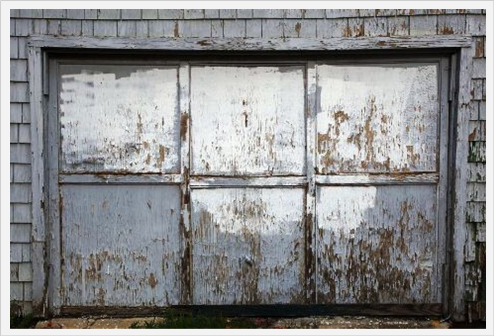
garage

By Mark E. Smith

When I was seven, my mom moved my brother and me into a friend’s garage. It was no mirage. For those few days, I felt homeless and helpless, useless and restless. It’s what happens when the rent’s not paid.

It was scary. Scars that I buried. And, now the chicks wonder why I focus on career and my daughter? Priorities straight, bills never late, and as for a date, they come and go like an occasional snow – storms in the night. It works, but is it right?

In business, I’m bustling. As a writer, I’m hustling. And, as a father I just try to do what’s right. I get done what needs to get done by day, but forever toss and turn at night. See, when we think all heals, again spin the wheels, reminding us of our original plight. Have you known such inner fight?

Work may seem an addiction, but paranoia is the affliction, getting as far from that garage as I can.

But, now I own my own, attached to a house. Dinner on the table, life turned into a fable, and my daughter sleeps soundly at night. I’ve penned books that tell stories, take stages in the glory, and look forward more than back. That’s right.

With a garage as home in your past, it’s always going to linger and always last. But, at some point I realize my past is so far. And, a garage is a garage, just some place for my daughter to park – her car.

Giving Without Having

emdadart

By Mark E. Smith

I always say that I never meet more content, fulfilled people than those giving to others, albeit a parent nurturing a child or one stranger helping another through acts of kindness and charity. And what’s intriguing is that those giving aren’t typically those who you’d think would be in a position or mindset to give. A friend of mine, for example, volunteers tirelessly with the Muscular Dystrophy Association. Yet, I’ve watched his own progression of muscular dystrophy take him from walking to needing extensive care, using a very high-end power chair, having lost the use of most of his muscles. How is it that someone losing his own health can retain the spirit to support the health of others?

The Bishop, T.D. Jakes, says that if you want to find ultimate healing and fulfillment, “give what you haven’t received.” Think about that. If you want to fill a void in your life, give to others what you haven’t received.

Now, if you’re a literal person, you’re probably thinking, How can I give what I don’t have?

Quite easily and with profound effects, actually. Anyone who knows me knows that my daughter is the center of my life, with fatherhood my single most important role. There’s nothing that I won’t do for my daughter, and literally every morning for the past 16 years, I ask myself, What does my daughter need from me today, and how can I be a better father?

However, here’s the twist: My father wasn’t in my life. Beyond a stepfather, who tried but didn’t have the functional capacities to parent, I grew up not knowing what a father was. And, I remember being in my late teens and early 20s yearning for a father, but not knowing the role of a father.

And, then my daughter was born. With her birth, in an instant, much of the void was healed within me. For the first time, I knew what a father was: me.

Through giving my daughter that which I had not received – a true father – it ended a negative cycle, and the effect was profound. Through being a father, I resolved not having a father, and knowing that I could give my daughter what I didn’t have was the purest form of healing I’ve ever known.

I see the healing power of giving to others what we have not received in so many aspects of life. In disability experience, like my friend with muscular dystrophy, if our condition can’t be controlled, let us serve others in similar situations to better their lives. Maybe you didn’t have a mentor in your career, so mentor someone yourself. Maybe no one pulled you aside when you were struggling in some way in life, so be there now to pull someone aside and help. The list goes on and on, but here’s the point: you don’t need to have in order to give.

Sure, common sense says that in order to give, one must first receive. Yet, in reality, one must not receive in order to give; but, rather, one should give what one hasn’t received. And, by doing so, the circle remarkably completes itself – because we, too, receive in the process.

Something About Mary

maryboegel

By Mark E. Smith

When Mary and I talked in the Biltmore hotel’s bar in Los Angeles three years ago, there was an unusual familiarity. We both have always been around wheelchairs — and the close-knit community that innovated them since the 1970s — but somehow never knew each other, personally. We both knew of each other, and certainly knew everyone else, but oddly just never crossed each other’s path. Yet, both knowing everyone else in the bar, as well as traveling in the same circles for 30-something years, we had an instant known-you-forever connection.

However, as I’ve learned in the subsequent three years, Mary’s graciousness had nothing to do with our common experience and friends. Rather, the instant comfort and connection I found with icon, Mary Wilson Boegel, one of the original Quadra wheelchair crew members, was simply who she is — open, embracing, encouraging, love-filled — regardless of who you are. I’ve since seen her light up every room we’ve entered when we’ve been on the road at various expos and events. And, whenever anyone needs anything, Mary and her husband, Bruce, are always there to help. She even is so gracious toward my daughter, always acknowledging her accomplishments via Facebook. There’s just something about Mary, a true soul mother to many.

And, so it was no surprise to me that on the recent 40th anniversary of the injury that caused her spinal cord injury, she shared with us who know, adore, and love her one of the most amazing pieces of writing I’ve seen on the subject, a piece that doesn’t just address her disability experience, but so beautifully captures many of our experiences who’ve used wheelchairs for decades now. And, the lesson that she ultimately shares is… well… breathtaking.

It’s with great privilege that I share with you this amazing piece of writing by such an amazing woman, where may you be blessed by having a bit of Mary’s spirit in you.

There’s Something About 40
By Mary Wilson Boegel

Today is the 40th anniversary of the day I broke my back and began living with a spinal cord injury. I have certainly acknowledged this day in my heart each year, but there’s something about 40 that steps up one’s self-awareness – reflection, which then turns to gratitude. And, of course, love… the greatest gift of all.

So much has happened in these 40 years. Huge challenges, which continue to help me nurture strength, creativity, perseverance, compassion, vulnerability, humility and, then, solutions wrapped in gratitude. And, all the amazing people I am blessed to know and have in my life… love is the best anyone can hope for… giving and receiving… I am truly blessed.

In the spirit of “you’ve come a long way, baby,” here’re just a few:

The doctors gave me a lifespan of 15 years maximum in 1973. There was no ADA. Nobody wanted to hire me. Nobody wanted to rent me an apartment because they were afraid it would offend the other tenants. Nobody wanted their kids to hang out with me, God forbid, date me. Many would cross the street when they saw me coming, so they wouldn’t get too close to me. Many store clerks would not speak to me, but rather address a companion I was with. No curb cuts, so I pushed in the street or found a driveway if lucky. Limited restaurant and “social activity” access… sat in the slanted aisle of the movie theater if fortunate enough to go (cite the little things we take for granted). No public restroom access or water fountains or payphones (yes, kids, before cell phones!). No ramps, no easy-swing doors, no public access in general. Most private homes had stairs to just get to the front door. And flying… hahaha… Crawling 101 was the rule unless someone was willing to carry you – that is, assuming the airline let you fly to begin with. Discrimination was alive and unwell. Myths and misconceptions running rampant. Cripple was a common reference. And no lightweight – never mind, ultralight – wheelchairs.

But, love made it all ok. Starting with the love of life, waking up each morning and being grateful for that day. Loving (ok, sometimes fueled by anger) the challenge of trying to improve perceptions, access, mobility. Loving the opportunity to try to make a difference. And, by far, most importantly, loving and being loved by the incredible people in my life. Breaking my back was a slap upside the head to be a better, caring, loving person, and apparently its true: when you put something out to the universe, the universe in turn brings it back to you. I am surrounded by so much love… my dear husband, family and friends… your love! So grateful am I for my wonderful life!

Complex Rehab and Punk Rock

crtpunk

To me, punk rock is the freedom to create, freedom to be successful, freedom to not be successful, freedom to be who you are. It’s freedom. -Patti Smith

By Mark E. Smith

In finishing up my book on the evolution of complex rehab technology, I’ve read virtually every book and watched every documentary on the evolution of the music genre, punk rock. Now, if you’re wondering what complex rehab technology and punk rock have in common, the answer is, everything.

During the 1970s and 1980s in the U.S., both complex rehab and punk rock fascinatingly evolved in the same time frame, with the same inspired ideology. Neither was about money or recognition, but about just wanting to make a difference in one’s community. You were in a band because you wanted to express what was around you, and you innovated complex rehab because you wanted to address what was needed around you. It was simply about one’s core values, and living them out through a craft shared with one’s peers.

I mean, take two really obvious examples from the late 1970s, the Ramones and LaBac. The members of the Ramones knew nothing about music except that they wanted to play it, so four guys from Queens, New York, taught themselves how to keep a beat, play just three chords, and sing about stuff they knew, where songs were played at a pulse-pounding pace of under two minutes. When the Ramones made their debut at the now-legendary club, CBGB, a magazine reviewer wrote, “They were all wearing these black leather jackets. And they counted off this song… and it was just this wall of noise….” Others who saw the Ramones in the early days saw them as so musically inept, they were literally offended. Yet, the band members were so true to their vision that they just kept playing, where their authenticity ultimately changed music forever. Sure, there were experimental bands before the Ramones, but none as uniquely passionate about evolving – or, deconstructing – music as them. Interestingly, the Ramones were never a commercial success, but countless bands and the genre of punk, arguably, wouldn’t have evolved as it ultimately did without them.

And, the same goes for LaBac, a true innovator in complex rehab technology. Long story short (and the fascinating full story is in my book), Greg Peek was a race car builder in the 1970s in Colorado, when a local wheelchair dealer asked him if he could fabricate some sort of power seating to help relieve seated pressure points of quadriplegics at Craig Hospital. Peek immediately found a calling and followed it with unyielding intensity, evolving the power positioning industry as, arguably, no other. Again, there were some before Peek, and many after him, but from the day he displayed his seating at an industry trade show, Peek changed everything by sticking with it, successes and failures. “I remember trying to convince the industry to use solid seat pans instead of sling upholstery because they better supported pressure management cushions, and no one wanted to listen,” Peek shared with me. Of course, today, all rehab seating uses a solid seat pan.

And, so, there’s always been a common passion of those in the two crafts, one that those dedicated to it live to no end. Like punk musicians, those who are true complex rehab individuals live it to the extreme. You’re never rich nor poor, employed or unemployed, famous or unknown. You simply do complex rehab because it’s who you are and it’s the passion that you put before everything else – and no one can take that away from you or truly dictate the terms. If things don’t work out with a company, you go somewhere else where they value complex rehab. And, if you have to live in your van during the transition (and I know people who have) you gladly do it. If you’re truly in complex rehab as a life path, nothing stops you from doing it.

The evolutions of complex rehab and punk rock “counter culture” have paralleled each other, as well, where if you’re the real deal you always have a brotherhood to support you. There’s a bond that says once you’re in, you’re in. And, like-minds seek each other out, respect the elders, and support each other. Hymie Pogir is the Iggy Pop (a punk originator still as intense as ever at age 66) of complex rehab, where he reached out to me around 15 years ago, and said, “I’m an older rehab guy, you’re a younger rehab guy – let’s have lunch,” and he flew from Ohio to California to make good on his word. I felt like I was already in the fold, but when Hymie, as among the true elder statesman of complex rehab, pulled me in, I learned really quickly to shut up, listen, and learn. What Hymie and I realized from that first lunch onward is that we both have the core belief that the heart of complex rehab is the removal of any delineation of people. In complex rehab, it doesn’t matter if you have a disability or not, whether you’re a consumer or industry person, rich or poor, black or white, straight or gay. As long as you truly understand the heart of complex rehab – ordinary people doing the extraordinary simply to contribute to our community – you’re among us and we all take care of each other, period.

Of course, like punk rock culture, when you live with such intensity, you will get yourself in trouble from time to time, as guys like Hymie and I have both done. When you live with unwavering dedication to complex rehab, it’s a culture that others aren’t going to always understand – and you don’t have a lot of patience for that. It’s a lot like, OK, I get that you don’t get complex rehab, so how about you go away because you don’t have any influence over my commitment…. Among my best, worst stories was getting called into Human Resources because there was cursing in my office, and co-workers complained. Of course, you and I know that in complex rehab culture, everyone curses because there are constant frustrations, the system just gets worse, and people are rightfully pissed off. Just the other day, complex rehab user and advocate, Paul Parino, called me on my office speaker phone and explained how, in his exact words, “New York State is giving it to us up the ass again by trying to cut attendant care funding. We already have people stuck sleeping in their power chairs because of inadequate attendant care, and now the Governor wants to F’ us some more….” That’s justified language, based on real emotion and circumstances. Complex rehab isn’t the Wonderful World of Walt Disney; rather, it’s the real lives of real people living with dignity in real adversity – and if one can’t appreciate that and the visceral language used, they have no clue what complex rehab is about. I would never dream of censoring a peer like Paul, as he’s on the front lines and deserves utmost respect.

So, I got called into H.R. a while back by a well-meaning young man, doing his job and supporting his family, which I respected tremendously. But, other than my employee file, he had no idea what I did in my role, how I fit in the complex rehab community, or what complex rehab is. So, I answered his questions with brutal honesty: Of course there’s cursing in my office. My community lives in the real world, and it isn’t always pretty. Imagine going from an able-bodied, employed father of three, to being hit by a drunk driver on your way home from work, becoming a quadriplegic. Not only can’t you walk, you can’t dress or bathe yourself. You can’t pick up your two-year-old or reach out to hold your wife’s hand. Your days are spent not just trying to physically survive and emotionally cope, but you’re in dire financial straits, fighting with insurance companies, and struggling to get attendant care. And, then your power chair breaks…. What kind of language are you going to use when you call me? And, do you want me to be a cold, corporate stooge on the other end of the phone, or be who I am, who goes through some of what you go through, where shitty circumstances are rightfully acknowledged as shitty circumstances?

The truly well-meaning H.R. young man looked at me like, Now what do I do? because I’d just given him a soliloquize on complex rehab at its most real, gritty level, the world you and I live in. Fortunately, my big boss is complex rehab at heart, so I didn’t get fired over “inappropriate language.” Instead, they moved me to a nicer office in a different department, and asked me to control the language use.

Alas, if complex rehab is punk rock, Greg Peek is the Ramones, and Hymie Pogir is Iggy Pop, where’s that leave me?

Well, I see a lot of parallels with Henry Rollins, best known as the lead singer of Black Flag, the all-immersed Renaissance man of punk rock. We both come from very little, and entered our cultures mid-stream. Many came before us, and some after – and we respect all. Henry left a job at Haagen-Dazs in D.C. to move to California to pursue punk at all costs, and I left a job at a community college in California to move to Pennsylvania to pursue complex rehab at all costs. Both of us knew that we weren’t going to compromise or fail, as while there are a lot of people smarter and more talented than us, few are as dedicated. As long as no one gets in our way or questions why we do what we do, we work till the flesh falls from our bones, and strive to honor our peers even when it gets us in trouble with those who aren’t part of our cultures. We both work at practicing intensity toward our crafts, where, as Henry puts it, intensity will always pull us through any bouts of exhaustion, poverty, and bad circumstances. Henry’s run 2.13.61 Publishing, just as I’ve run WheelchairJunkie.com, both remaining authentic to our core cultures, where we’re not just about the end product, but the history, people, and future elevations of the crafts we serve, where no one can take that extraordinary independence from us. While Henry has his Black Flag tattoo embodying who he is, I have my wheelchair tattoo embodying who I am. We’ve both built our lives as public but relatively solitary men, where our sole focus is the cultures in which we live, work, and breathe.

And, so, the cultures between complex rehab and punk rock are the same: It’s not about where you work, where you come from, or how society labels you. As long as your heart and soul is in it – where it’s a true life calling that you’ll sacrifice all for – you’re with us. …Now, get on the bus and let’s go – we’ve got work to do.