Being Broken

By Mark E. Smith

A friend of mine introduced me to the music of British musician, Marcus Foster, whose song, “I Was Broken,” is hauntingly beautiful. It’s about recovering from being “broken,” whatever that may mean to any one individual.

In the disability realm, the medical model defines us as physically “broken.” However, I’ve never seen that truly to be the case on an individual level. We know of people with extraordinarily physically severe disabilities living vastly successful lives – some far more successful than able-bodied counterparts. So, then, where does broken enter the lives of those with disabilities?

Interestingly, broken enters the lives of those with disabilities in the same way as it effects everyone else: Emotionally. See, broken isn’t an exterior condition; it’s an inner one.

If you think about our physical states as individuals, they’re so diverse and so easily compensated for – I simply use a wheelchair because I can’t walk – that it becomes all but impossible to define a physical condition as broken. Yet, where broken enters our lives – for everyone – is when we don’t feel worthy enough, when we don’t like who we are, when we feel like our lives aren’t heading where we’ve dreamt, when we feel haunted by the past, when we feel like we can’t meet others’ expectations, when we don’t feel deserving of others’ love, when we feel incomplete. These feelings – these excruciating emotional struggles – are when we’re truly broken.

I’m very fortunate to often find myself genuinely connecting with those around me, even in casual settings, and as one of my best friends warned an acquaintance as we were socializing, “Mark’s not exactly known for light conversations – they tend to go deep.” And, he’s right – because I know that there’s a common humanity among us, where no matter who we are, or where we’re from, we all share common experience – including having been broken. What’s poignant to me is that when I share with others our common struggles with identity, self-worth, longing, and so on – all of the emotions that cause us to be broken at points in our lives – it’s universally human.

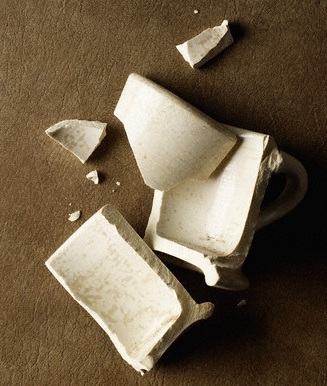
Surely, when we’re broken, it’s telling us that something is wrong, that our lives aren’t heading in the directions we wish. Sometimes being broken is based initially on uncontrollable circumstances; other times, it’s based on our own actions and poor decisions; and, yet other times it’s based on a compounding of all of the above. But, regardless of the causes, here’s what’s striking about being broken: It’s the gateway toward moving our lives in the right directions, it’s the opportunity to realign the paths of our lives to what we wish and deserve. Objects can be shattered to the point of beyond repair; but, not so the human spirit – there’s always the ability to restore and rebuild it, often to greater capacities than previously known.

I know, moving through that gateway from being broken toward wholeness is the toughest challenge we’ll ever face in life. I’ve been broken, and collecting the shattered pieces, trying to figure out how to make myself whole again at points in my life has never been quick or easy – sometimes it’s been like trying to put together a 1,000 piece puzzle with not even a picture of it to help chart the task. And, while there’s no universal answer to rebuilding ourselves from being broken – for some, time heals all; for others, personal space helps regain perspective; and, for yet others, formal processes like counseling help – we know that honesty is the first step toward repairing what’s broken, where despite our fears, shame, and hurt, we must maintain gut-wrenching honesty with ourselves and everyone around us about what we’re going through. If we avoid the candor of being broken, we can’t address it. It’s like ignoring anything that’s broken – it can’t fix itself. However, in merely our admission of being broken, we begin healing. See, when we allow others in, to truly know us – broken, as we may be – we begin to liberate ourselves in that process.

And, what I’ve learned most about being broken is that it ultimately plays an empowering role in our lives: Being broken allows us to clearly see the individual pieces of our truest essence, ones that we can eventually put back together however needed in order to achieve our hopes and dreams – finding ourselves whole, fulfilled, and content in the end.

When the Drinking was Done

By Mark E. Smith

“Alcohol and I had many, many marvelous times together. We laughed, we talked, we danced at the party together; then one day I woke up and the band had gone home….” –Harry Crews

I wrote one of my all-time favorite pieces, a short-short story on my quitting sporadic drinking, about a year ago, and never published it. Why? The answer was because I didn’t think that I could live up to it – quitting drinking for good, that is:

When the Drinking was Done (Original)
I asked the hotel concierge – a woman in her 60s, no less – where I could drink in complete anonymity, and she told me to go up to Peachtree Street, hang a right, and look for the shamrock sign over the sidewalk. No, it wasn’t my normal mode of operation by any stretch, but we just have to be honest about these things – especially with ourselves. I didn’t want a party or dressed-up chicks like usual; I just wanted a night of quiet, having been on the road for days, speaking at a conference on one side of the country, then working a trade show on the other. The noise builds up in me – the retention of events and all of the introspection, where I just want quietness, the type I only get from writing in solitude. But, that night, there was to be no writing – just a drink alone, then bed. So, I headed up to Peachtree, hung a right, found the shamrock sign, and a homeless guy opened the door for me. The place was empty – just two guys and a “barman,” as the “bartender” is called in these types of pubs. With my power wheelchair’s seat elevated, I rolled up to the bar, picked up a stool, and set it aside. The barman and two guys just watched. My knees tucked perfectly under the bar – an ideal. “I’ll have a double shot of Southern Comfort, warm, please,” I said to the barman. He set a tumbler glass in front of me, grabbed the bottle, poured the drink to maybe three or four shots, and without thinking twice, grabbed a straw, placing it in my glass. He stepped back as if to see what I was going to do, and I could see via my peripheral vision the two guys just staring at me. I placed my lips on the straw, and downed the glass full, in a single, drawn sip. The barman grabbed the bottle of Southern Comfort, refilled my glass, and said in a strong Irish accent, “This one’s on me.” It was a fine night – they all are on such terms – and when I awoke the following morning, glancing out my hotel window, the quiet was gone, and I knew so had to be gone the drinking – for good this time.

I wrote that literal, biographical short-short story with the intention that my drinking days were done. However, in my public position, if you’re going to tell the world that you’ve stopped drinking – you’d better darn well give up drinking entirely, forever – or everyone will see you as the ultimate hypocrite. If you’re a closet drinker – even an alcoholic – and you vow to yourself that you’re giving up drinking, there’s no real consequence if you don’t live up to it (other than the consequences on your own life). However, if you’re a social drinker like me, and write an essay to thousands of readers that you’ve given up drinking altogether, you’d better do it – as people are watching when you’re out on the town or on the road. Based on this reality, where my written words are in blood, so to speak, I could never get away with publishing an essay on quitting drinking unless I really did.

For the reason of integrity, I never published a piece on quitting drinking because… well… I never quit drinking! That is, despite my truly wanting to give up drinking entirely a year ago, and writing the original piece, I knew that I wasn’t ready — good times on the road, and the occasional flirtatious woman at a party or bar were so linked to a drink or two that I wasn’t prepared to give up those fleeting good feelings that came with booze. But, I also knew that at some point I’d be ready, that I’d have to give up the booze entirely. I felt so much personal guilt about even rarely drinking, that it lingered with me for days, weeks, and months after even one drink – and that wasn’t healthy. I had to just give up drinking entirely at some point.

While my own history with alcohol is one of moderation – I’ve never drank at home, my daughter never saw me drunk, and so on – the history of substance abuse around me has always been present: My great-grandparents were alcoholics, my grandparents were alcoholics and addicts, my parents were alcoholics, my ex-wife was an addict, many of my friends have been alcoholics – and I’ve seen all of their lives harmed or destroyed. And, the question I’ve wrestled with is, How can I see so many lives destroyed by alcohol and addiction, and still touch a drop myself? It’s like playing with fire when you know it burns.

With that said, I’ve had a lot of mixed feelings about my best times drinking, where I look at them with both guilt and fondness. It’s a juxtaposition that I suppose most drinkers face when they stop. I grew up with parents who were Skid Row drunks, so I’ve always known the realities of alcoholism, right down to my family’s demise and my parents’ deaths. In fact, I didn’t drink until I was 33 – that’s how freaked out I was by alcohol. However, once I started drinking, my association with alcohol literally went from the horrific to the glamorous. In my mid 30s, drinking was no longer about Mom neglecting me as a child because she was drunk, or Dad drinking himself to death; rather, drinking was now about high society, where I was at lavish social events, with beautiful people – and drinking just made it all the better. A few shots of Southern Comfort added a glossy sheen to my vision, where I felt relaxed, suave – everything more engaging, like going from watching a movie to actually being in the scene.

But, then, there was always the next morning, then week, then month where I didn’t drink, but the guilt and hypocrisy of such nights stuck with me – too much so. There was always a haunting issue in my mind, where I always knew that I have to be either assuming entire sobriety, or be unrepentant about drinking – and to try to justify living in-between was hypocritical. Sure, I realize that lots of people drink socially, and it’s not an issue. But, for me, I could never roll that line: I was either stone sober or drinking – and I couldn’t be both. Again, if I wanted to keep drinking, then I’d have to learn to be unrepentant in it, not feel guilt, not relive pains of my past, not look in the mirror and see my father staring at me, not see the hurt of a child in my own eyes looking back. But, I’ve witnessed too many around me destroyed by alcoholism and addiction, and for me to glamourize drinking in my own life, knowing all of the hurt washed down with it, seemed not just hypocritical, but morbid.

Cartoonist, John Callahan’s, later years and death have also had a profound effect on my journey toward sobriety. John was a hardcore alcoholic – it’s what led to the car crash that caused his paralysis – and he sobered up some years later, not touching a drop for decades. Despite his in-your-face antics and work, he noted that sobriety added a peace and strength to his life, not the guilt and angst he felt when he drank. If John maintained sobriety – turning off the guilt and angst – so could I.

The catalyst for me to publish this piece – that is, to sign on the page in blood that I’m done drinking for good – is really just where I’m at in life. I’m a 40-year-old, full-time single dad, focused on my career and simply trying to do right by everyone, including myself – and I have to get it all right. I’ve seen too many lives around me destroyed by alcohol, felt too much guilt and pain in myself for too long in even having an occasional drink – and I’ve deemed, Enough is enough with the booze at any level – don’t want it, don’t need it, the drinking is done. Is it a bold declaration? Maybe. Will it remove all of my unsettling feeling surrounding alcohol in my past, dating as far back as I can remember as a child? Certainly not. But, is it a move in the right direction for me to make? Absolutely. It’s one of those situations where if something isn’t working – if it’s inducing guilt, pain, shame, and hurt – stop doing it! Sometimes we just have to man-up and take accountability in ways others may not fully understand, where we say, F- it, I’m going above and beyond simply because it’s the right move to make, and I don’t care what the world thinks. And, I’ve finally said in my own life, F- it, the drinking is done, and I’ve done it for me. …All alone – after all.

At this writing, I have a speaking engagement this week in Fargo, North Dakota. I asked someone from Fargo what’s there to do in town?

“Drink,” he jokingly said. “We have more bars than anything else.”

“Perfect,” I replied. “I’ll have time to read in my hotel room, then.”

When Life Isn’t Fair

By Mark E. Smith

I had the absolute privilege of visiting a summer camp for children and teens with various forms of muscular dystrophy. It was among the most fun I’ve had, as the campers were so awesome, such spirited personalities, as children are. However, as much fun as MDA camp is for everyone involved, there’s still a looming reality: Most of the campers will pass away by their mid twenties.

There’s truly an injustice to it all, one that, for me, is impossible to explain – that is, the universal “unfairness” that within 10 years or so, many of the campers whom I met will no longer be with us, that not only will their lives have been lost, but with them, we all will have been robbed of their amazing life-long potentials. I mean, their time on this Earth is impacting – I know, they profoundly impacted me – but to think of what these amazing individuals could accomplish over sixty or seventy years – not just twenty – is limitless. Yet, we’ll never have the chance to know because of the inexplicable injustice of a life-robbing disease.

I remember leaving the camp thinking, Cash my chips in now, God, and give my lifespan to anyone of those kids – I’ve had my shot at life, and I’d gladly pass my years left on to any one of those children….

Although visiting the MDA camp was a reminder to me of the seeming inexplicable injustice in the world, the question of universal unfairness is one that I encounter almost every day – that is, why do such terrible circumstances happen to such good people? In the wheelchair world, consumers often share with me that they’ll never understand why they received their injury, illness, or disease, that they wrestle with the injustice of it all. And, I never have a direct answer. But, I do have at least one perspective that touches upon the subject of life’s “unfairness” – and the MDA campers hit home the point for me.

Of course, we know that there are direct attempts to answer why bad occurrences happen to good people. Religion has its answers that run the gamut, from it’s God’s master plan, to it’s bad karma from a previous life. And, science, too, has its direct answers, from cancer being gene mutations, to paralysis being an injury to the spinal cord. These answers, however, still leave intellectual loopholes, where we can look at examples like Dr. Wayman R. Spence, an original anti-smoking crusader, who himself ultimately died of cancer after 50 years of treating others, and it’s truly impossible to see any justice in such an uncanny circumstance – it’s haunting, really.

Still while maybe we will never be able to intellectually answer life’s injustices beyond, Life isn’t fair, we can use coping mechanisms to address them. See, we universally approach life from three perspectives: What is; what can be; and, what should be. And, by understanding the roles that each of the three perspectives play in our own lives, we can better cope with seeming injustices.

What is, is truly the givens, the realities of any situation as known in the present. It’s the, my father has cancer, my husband is an adulterer, my daughter is an alcoholic, I have multiple sclerosis.

What can be, is what we logically can do to address a situation moving forward. It’s the, my father has cancer, but treatment will extend his life; my husband is an adulterer, but I need to get a divorce and find a loyal guy; my daughter is an alcoholic, but getting her into a rehabilitation program is a wise step; I have multiple sclerosis, but medication and therapy may slow its progression.

What should be, is truly wishful thinking, not based in reality, but dwelling in questions of fairness. It’s the, my father shouldn’t have cancer; my husband shouldn’t be a cheater, my daughter shouldn’t be an alcoholic; I shouldn’t have multiple sclerosis.

What’s fascinating is that when we look at the three perspectives – what is, what can be, and what should be – only two are relevant, having any impact or meaning in our lives. The third simply leaves us empty, without the ability to do anything, trapped in despair. Can you guess which two are empowering, and which one is debilitating?

Of course, what is and what can be are very empowering – that is, we can act upon them. However, dwelling on what should be is truly debilitating because there’s nothing we can do but wish upon a seeming impossible, asking ourselves, Why?, silently screaming, It’s not fair! Nothing good comes out of stewing over what should be.

And, that’s what I ultimately took away from my visit to the MDA summer camp. As adults, we’re so caught up in the what should be’s of life – how life is unfair – that we overlook the intrinsic value of what is and what can be. For example, rather than celebrating the current life of our loved ones who have cancer, we dwell upon the unfairness of their pending passing. Rather than moving forward from bad relationships, we stew over how we were wronged. Rather than appreciating our jobs, we focus on any negatives. And, rather than accepting those around us for who they are, we want to change them. That is, we go through life lamenting – often to the point of depression – about how things should be, not recognizing what is or realistically what can be.

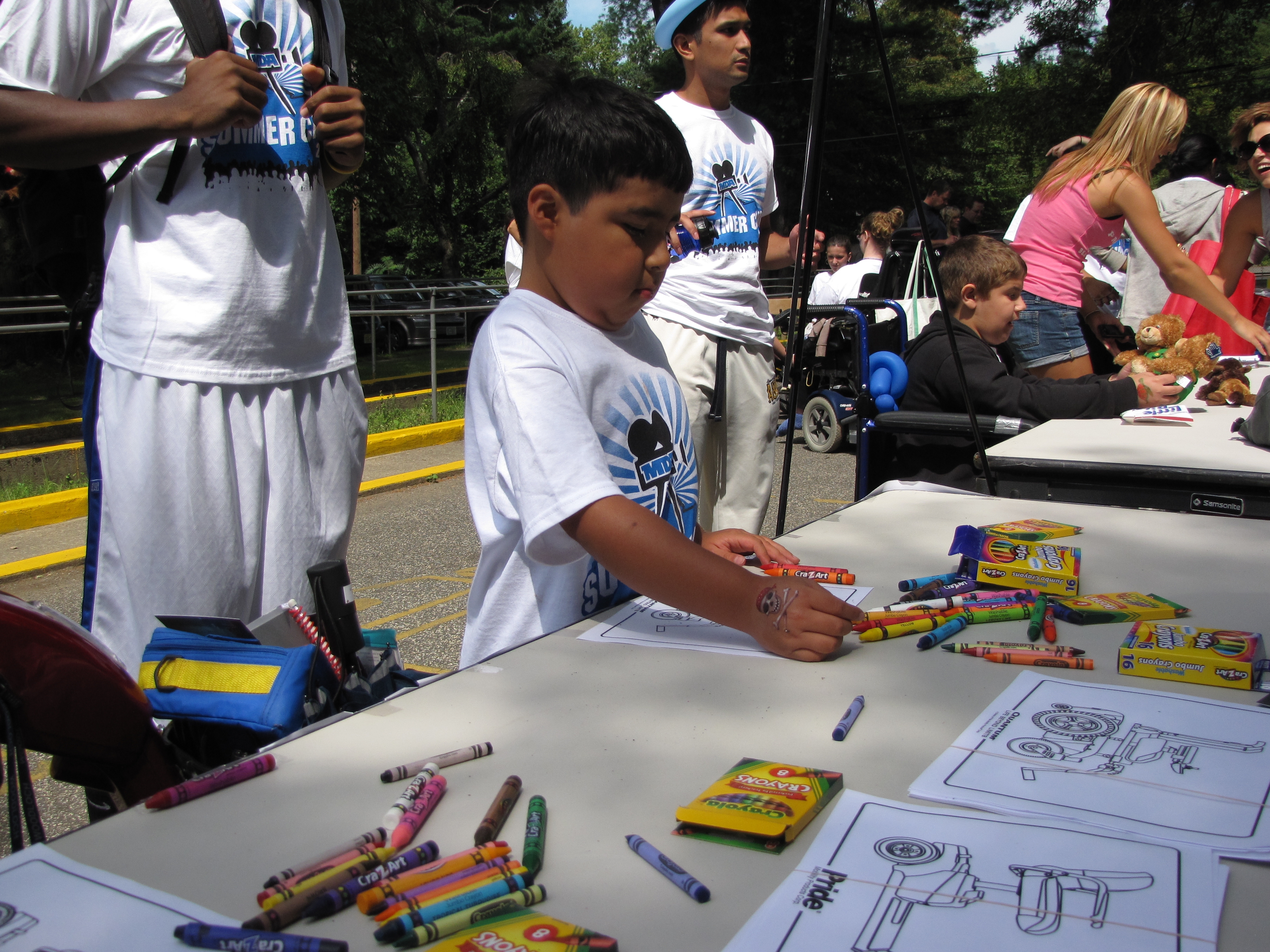
Yet, the kid’s attitude at the MDA summer camp was just the opposite – it was totally about what is and what can be, and it was contagious. I only saw life, love, and laughter. It was the most positive place on Earth, making Disney World seem glib. It was a true celebration of living in the moment, where no one questioned what should be, but reveled in what is and what could be. Even we adults ended up with our faces painted, coloring with the kids, and eating watermelon!

Yes, bad things happen to the best people, the weight of the worst can land on our shoulders – and none of it’s fair, justified, or explainable. Yet, we don’t live in a world of equitable should be’s; rather, we live in a world of what is and what can be. And, let us make the most of those, where our days aren’t filled with longing or self-pity, but are celebrated with appreciation and joy for what’s within our immediate presence: The beauty of what life is and can be.

The Glory of Vulnerability

By Mark E. Smith

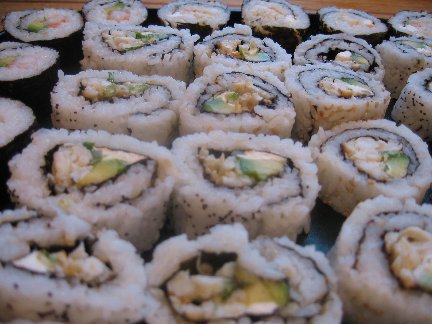
I wasn’t the least bit uncomfortable about it, nor was she. See, there I was, all dressed up to give a talk in front of a corporate group, but I was presented with a pre-talk lunch served by our gracious host, consisting of sushi rolls. I knew from the very sight of the rice-covered sushi rolls that, due to my poor coordination, there was no way that I could get them from the table to my mouth without rice and who knows what else ending up on my neatly-pressed pants….

So, I had two choices: One, I could simply not eat; or, two, I could have the courage to ask for help.

With little hesitation, I asked for help because it’s just as important to me to acknowledge my vulnerabilities as it is my strengths – that is, I want those around me to know my entirety, not just selected parts. I wouldn’t be true to myself or those around me if I only showed my strengths, and didn’t admit any limitations of my disability, my vulnerabilities.

Fortunately, my asking for help was easy in that instance based on the fact that a dear colleague of mine was with me, who’s traveled with me quite a bit, so asking her for a helping hand was natural. What’s interesting, though, is that getting to that comfort level – where I could turn to my colleague and say, “Would you mind feeding me my sushi, so I don’t get it on my clothes?” – took time and candor to evolve. On her part, my colleague’s sincere, genuine nature has been touching, and she’s proved truly intuitive in getting to know me as a person, disability and beyond – all of which speaks to the exceptional qualities of her character. However, I’ve likewise have had the openness not to hide any of my vulnerabilities – the realities of my disability – from her. She knows that I drink through a straw, I squirm in airplane seats to shift weight off of my rear, and can be a bit messy when I eat, and on and on. I am who I am, and I trust that my comfort in living with my vulnerabilities – where I don’t display only the so-called best of me, but the true me, flaws, spasms, and all! – has likewise made her more comfortable. None of us are perfect; we all need help at some point in our lives. And, allowing others to see our vulnerabilities is a positive trait, one that unifies, where asking for help and helping others is an inspiring exchange. We don’t get through life alone, and sharing our vulnerabilities is a key that we all need in living a life that allows us to truly connect with others in the most genuine ways.

Interestingly, researchers scoured the globe for the one aspect that most connects us with others – that is, what forms the deepest, most meaningful relationships on all levels? – and allowing ourselves to express our vulnerabilities topped the list. Vulnerabilities, it proves, are only weaknesses when we won’t admit them. However, when we admit our vulnerabilities, they become strengths because we’re showing ourselves to others in the most genuine ways – and that forms the most open connections with others, the sincerest relationships.

Of course, it’s easy to know why many people hide their vulnerabilities: They’re scared that others won’t accept them in their entirety, that others will judge them. But, this rarely proves the case. The basis of sharing vulnerabilities is formed within honesty and results in our fully opening ourselves up to others – and those are the foundations of healthy relationships. When we live freely with our vulnerabilities, we allow others to accept us wholly, and we accept others wholly, as well (if I expect you to accept my vulnerabilities, I likewise must accept yours, and we’re two perfectly imperfect people connecting on the sincerest level). But, here’s what’s really important: When we express vulnerabilities with others, we’re acknowledging our vulnerabilities within ourselves, and it’s the self-acknowledgment of our vulnerabilities – not denial! – that allows us to live healthier lives.

Addiction and recovery proves an enlightening study in how vulnerability can kill us or liberate us – sometimes literally – all based on whether we admit vulnerabilities. For example, an addict in the clinches of use, will never admit vulnerabilities. An addict won’t admit to causation, won’t express genuine feelings, will try to justify even the worst decisions, and will lie about everything under the sun, including lying to his or herself. That is, addicts run and hide from vulnerabilities via substance abuse – and, at best, it disconnects them from meaningful relationships, and, at worst, it literally kills them.

However, recovering addicts do just the opposite – they admit and address vulnerabilities. Think about the first words spoken by everyone at an Alcoholics Anonymous meeting: I’m Joe, and I’m an alcoholic. Admitting the vulnerability of addiction – that is, being honest and candid – liberates and connects. There’s remarkable empowerment in it. And, when getting into deep models of recovery, acknowledging the vulnerabilities that lead to the addiction – past traumas and such – is yet another way of profound recovery. That is, the only way addicts stop using is by acknowledging and addressing the underlying vulnerabilities that cause the addictive behavior in the first place.

In our personal lives, hiding behind our vulnerabilities – or, denying them through self-justification – is extremely dangerous, defeating so many potentials in our life: I’ve been hurt in a past relationship, so I’m not going to trust anyone again…. I don’t want to be seen as weak, so I’m not going to apologize…. I’m not going to show all of me because others will judge me…. Really, what such a closed emotional state says is, Overall, I’m going to self-sabotage meaningful relationships because I’m so scared to reveal my vulnerabilities – my complete self – to others.

It is astounding how painful and self-defeating it can be in not allowing ourselves to be vulnerable. At the very least, most of us can relate with the inner-conflict that occurs when we want to reach out to someone, but don’t out of the fear of feeling vulnerable – maybe it’s asking someone on a date, maybe it’s calling an estranged family member or loved-one to try to patch things up, or maybe it’s sharing one’s true feelings with a good friend. I’ve struggled with all of these – and continue to at times! – but what I’ve learned is that while there’s always the risk of the other person not being receptive, there’s also the more likely possibility that the other person will be receptive. And, the real reward in this process of overcoming our fears of vulnerability is that we’ve at least had the integrity to act on our true feelings, with sincere intent, living openly in every way – and that’s liberating, regardless of the final outcome.

The fact is, there’s a universal bond in the truth that none of us are perfect, that we all have vulnerabilities – and some are scary to admit to ourselves and others. Yet, when we live freely with our vulnerabilities, acknowledged by ourselves and shared with those close to us, we not only allow others to know us completely, but we’re far more open and accepting of others – and that builds connections of lasting trust and meaning. I have vulnerabilities, you have vulnerabilities, and it’s all OK. Let us live fully as perfectly imperfect people – with our glorious vulnerabilities exposed! – and our self-acceptance and relationships will flourish.

Just the Two of Us

Mark E. Smith

In an uncanny foreshadow, over 20 years ago, Jim Martinson – amputee, paralympic wheelchair racer, and owner of wheelchair manufacturer, Magic In Motion (purchased by Sunrise Medical) – noted about his being a single father at the time, “I want my kids to just be kids. Let me worry about the rest.”

Jim’s statement oddly stayed with me all of these years, my never fathoming that his words of wisdom would become so poignant in my own life, that I’d be in his situation decades later.

So, what is it like to be a full-time, single father, who happens to have a disability? As the full-time, single father of a 14-year-old, I can tell you it’s the ultimate joy most of the time, and scary as hell some of the time – with a lot of complexity in-between. But, all is worth it by far, with my daughter the center of my life, where I wouldn’t change any of the difficulties I’ve endured in getting to this point. Indeed, even the most challenging of times can bring miracles into our lives, and my daughter has proved one of them.

Our journey together began at 7:39pm on March 3, 1997, just a day after my own birthday. In the delivery room, I was the first to hold my daughter, and in the most profound moment of my life, she made immediate eye contact with me – and I knew in that instance that we would be forever inseparable. Yet, I wouldn’t know to what phenomenal extent for years to come.

The first three years of my daughter’s life were remarkable. I worked hard to build a life for our family, my marriage was great, and my daughter was the best toddler ever – it was all of my dreams coming true. On my daughter’s part, she seemed to intuitively understand my disability, where as a baby, she lay perfectly still for me to change her diapers, and even at the age of two, she would stick with me – either on my lap, or waddling beside my wheelchair – in even the most distracting of circumstances without a fuss. She just always seemed to understand and respect me, including my limitations, in a way that was dramatically different than I’ve seen in other parent-child relationships.

As a result, from her birth through her toddler years, my daughter and I developed a dynamic-duo effect, where we became quite the team. From that foundation, and with my marriage disintegrating over the course of many years, I assumed more and more parental responsibilities as my daughter grew, to where although all of us where still living under one roof, I was increasingly the primary parent, a role that my friends and family picked up on before I did. Even when in an unhealthy relationship, one is still in a relationship, and I suppose that because there was still a “mom” in the physical home, I didn’t realize that I was taking on more and more of a single-parenting role. I look back now and think, Wow, there were years of evolution in that process that I was oblivious to! But, even in a bad relationship, we’re not really “alone,” and I think my trying to balance my career with raising my daughter and dealing with an unhealthy relationship didn’t allow me to see the larger dynamic that was occurring: I was on track to being a truly single parent.

And, that day eventually came, in its own time as life changes go. I’d like to tell you such change has been the best thing ever, but no ended marriage is good, nor is being a single parent what’s wished. It all may be for the best given the alternatives, but it’s never an ideal. Yet, my daughter’s and my approach has been just that – let us together take a less-than-ideal situation and make it for the best. After all, that’s the only way one can succeed in trying times and move forward in healthy directions.

Toward the emotional, those of us close to my daughter haven’t seen her more content and at peace. With just her and me living together, there’s no stress in the home, just positivity, love, and support, where she has an emotionally safe place to breathe. And, it’s proved wonderful. She has amazing friends, and her relationships with strong, healthy women like my sister have been evolving into fantastic role models. Of course, the ideal would be for my daughter to have a strong, healthy mother, but that can’t be at this juncture – life isn’t fair or just – so let me, as her father, at least be aware of the importance of having only healthy female role models in her life.

My daughter and I have had to set clear boundaries on whom does what around the house. Going back to Jim Martinson’s point, kids do need to be kids – and that’s been difficult for my daughter to practice at times. The fact is, she does see me working like a maniac, in every way, and she wants to jump in and help – a testimonial to her character. But, she needs to concentrate on school, drama, band, and friends – that is, on being a teenager. Indeed, she has her chores, but I really need to be Dad, doing as much around the house as possible, even if some tasks are easier for her than for me.

Of course, my daughter isn’t perfect – and I even find great joy in that, where she’s definitely a teenager. I loved all summer when I was busting my butt from 5:00am till 11:00pm, and I’d race home at lunch to check on my daughter, only to wake her up, finding her not yet out of bed! Or, I can’t count how many times per night I have to remind her to take the dogs out, where she’s distracted by texting, Facebook, and chatting with friends. Or, when she’s oblivious to scenes like our English bulldog prancing around with a full roll of toilet paper in her mouth, and I note, “It looks like it snowed in the living room – how did you walk by that dog ten times, and not see her shredding toilet paper?” And, it’s inexplicable to me how her room is such a mess! (They tell me it’s a teenage girl thing.)

And, I’m not perfect, by any stretch. My role as father is the one that’s the most joyous and rewarding to me, where I would go to the ends of the Earth for my daughter. And, while I think I’m doing a pretty good job, it’s still scary as hell at times. As forgiving as kids are, there truly aren’t any do-overs in raising them – parenting isn’t a trial run – so getting everything right is a weighty task, especially as a single parent. For me, there’s constant listening to my daughter – and I mean truly listening – and trying to determine how I can best meet her emotional and mental needs at vital moments. Sometimes I have answers, and sometimes I don’t – and a lot of times I just follow her lead, supporting her in her processes. What I’ve learned is that, as parents, delivering the right answer isn’t always required, but simply supporting our children so that they can find the right answers for themselves in the healthiest ways is often our role. Let me guide, but not stifle.

In my personal life, there’s an overall level of “sobriety,” where my sense of accountability and responsibility is greater than it’s ever been. We know that single parents are statistically more likely to have depression, absenteeism at work, and indulge in substance abuse – but I’ll have none of that. To the contrary, I wish to do right by everyone, especially my daughter and my career, so my tact has been to step-up my game, not let it slide. Sure, I feel overwhelmed and alone at times – there’s an insane amount to accomplish in each day, and I don’t have an intimate partner to turn to for support – but those aren’t excuses to have a drink or crawl into bed and hide; rather, they’re reasons to push myself even harder, staying up as late as it takes to try to get it all done, moving through it all with healthy emotional acknowledgment and tenacity. Twenty years from now, I want my daughter to look back upon these times and say, Not only did my dad work through it all, he actually picked up the ball and ran with it!

In all, we are a dynamic duo, moving through life very well, just the two of us. It’s not always easy or perfect, but we’re striving to make the most of it – and there’s a lot of joy and laughter in our hearts and home these days. Naturally, my daughter has asked me if I foresee “us” ever having a long-term relationship with a woman, possibly step siblings in the mix?

“I don’t see why not,” I told her. “It would have to be a remarkable woman to take on us; but, as we’ve proven, we have a lot of unconditional love to give in return. For now, though, it’s just you and me, kiddo – and that’s pretty special.”

The Best Kinds of Crazy

By Mark E. Smith

One of my college buddies was the private pilot on comedian, Howie Mandel’s, national comedy tours in the early 1990s. My buddy’s observation was that Mandel was genuinely crazy, that he never saw Mandel waiver from his on-stage persona, that on the jet, Mandel would simply waffle between being hysterically funny and clinically irrational. In fact, Mandel billed himself as “a wild and crazy borderline psychotic.”

Of course, we now know that Mandel publicly discusses one of his diagnosed mental illnesses, mysophobia, an irrational fear of germs. Yet, based on my buddy’s stories and Mandel’s over-the-top persona, it’s reasonable to wonder if Mandel has other conditions, as well?

Interestingly, the psychology community has been studying a link between mental illness and very successful people for two decades, and their findings are fascinating. “Hypomania” is a persistent mood that causes an exaggeration of thoughts that’s most often linked to bipolar disorder, where one can be energized, euphoric, overflowing with ideas, extra social, and a risk-taker. These traits may not only be seen in those suffering profound mental illness, but are also seen in extraordinarily successful people. After all, from show business to entrepreneurial business, being energized, euphoric, overflowing with ideas, extra social, and a risk-taker are all traits that allow one to succeed where others would fail. Therefore, there is a debate in the psychology community that certain kinds of diagnosed mental illness may not be “crazy” at all, but actually an evolutionary advantage.

I’ve witnessed this similar phenomena in physical disability terms, where physical disability isn’t debilitating for some, but actually elevating, where their lives aren’t restricted by it, but empowered.

What’s extraordinary about physical disability is that if we’re to succeed, it requires us to more intently focus on abilities, where our lives aren’t about what we can’t do, but what we can do. The average person without disability goes through life with a fairly fixed outlook toward what’s possible, rarely questioning it, rarely recognizing the chances that present choices.

However, when it comes to physical disability, we’re forced to question at points in our lives, Can I do that? – and, what’s remarkable is that the question most often leads to, How do I do it? which leads to accomplishing what was once thought impossible. So, this progression of constantly questioning what’s possible leads to never-ending expansions of our lives, where the possibilities eventually become endless, where we forget about the initial question of, Can I do it?, and begin only asking, How do I do it? And, it’s at that point that we see nothing but potentials. Put simply, while other people stop at what’s practical or seemingly rational, we intrinsically push ours live much further, toward what’s truly achievable on a scale that others don’t fully grasp. In ways, we may seem crazy.

And, because we can live on such a larger scale, where …well …anything seems possible, it can perplex those without disabilities who live strikingly limited lives. When someone questions how you do something, or sees your goals as unrealistic, it’s not reflective of you as one with a disability – again, you think and live on a larger scale than most! – but it merely reflects the closed mindsets of those who haven’t had the opportunity to become so visionary.

Indeed, physical disability intrinsically opens us to possibilities, proving not a limiting factor in our lives, but truly an unlimited factor, where what some inaccurately define as debilitating is ultimately liberating. And, surely there’s enormous value, reward, and blessing to living in a counter-intuitive realm, where crazy can prove a higher level of sanity, and physical disability can prove a higher level of ability.

Moments In Time


(Mom and me)

By Mark E. Smith

I’m having lunch in Club 33 in Disneyland – and I’m with Amy, who my friends have only known from reading about her in my first book, published in 1995, 6 years after I graduated high school.

But, now it’s 16 years later after the publishing of that book – and 22 years since I last saw Amy – and in an uncanny twist not lost on me, we’re in “The Most Magical Place on Earth,” eating lunch at the hidden, exclusive Club 33, where a friend of mine has been kind enough to get me all-but-impossible reservations, jumping a 14-year waiting list, per Disney hype.

I struggle more than ever with the validity of my first book, and I’m glad it’s long out of print. Its title, Growing Up With Cerebral Palsy, was way too literal and boring for me as my childhood autobiography, but the publisher insisted that it would sell well to libraries and schools – and he was right. And, I dislike its simplistic, diary-type writing style – yet, people still note it as candid and enduring.

However, what troubles me most about the book is the emotional place I was in while writing it, where I was still struggling to come to terms with my mother’s profound alcoholism.

What’s haunted me is that while all other “characters” in the book are treated as they truly were, from my alcoholic father, to Amy, my high school crush, not a word was mentioned of my mother’s alcoholism – I painted her as a one-dimensional saint. The progression of her alcoholism was so painful to me at the writing of the book in my early 20s that I went from writing of her as a heroic figure raising a child with cerebral palsy to not being able to write about her at all. If you read the book cover-to-cover, my mother simply disappears by the end, an unexplained absence. It’s a book that’s both strikingly candid and full of absolute denial – and I’ve fought with that truth since the day it was published.

And, here I am, 16 years later, having lunch with Amy, my high school crush from the book, at Club 33 – and my mom is dying of cancer, her apartment being cleaned out and her cremation arrangements made. And, all of this is weighing on me. Amy thinks I’m tired from our being up all night talking, and I am, but I’m also struggling to both live in this amazing moment with Amy who’s just here for me without conditions, while simultaneously struggling with the fact that my mom is 3,000 miles away dying. It’s all just emotionally whirling around me like the constant visuals of Disney, itself, never knowing where to look because it’s all larger than me – overwhelming.

I haven’t had a real relationship with my mom in about 15 years. The initial royalty check from my first book went toward my mom’s stint in rehab where she chugged a 5th of vodka between there and coming to see me upon her “successful completion.” I’m sure now that my naive – but well-wished – attempt at her sobriety (and the many others), was just me trying to make things right – my mom’s health, the sentiments of the book, the sober relationship with my mom that I so desperately wanted. But, I never did make it right, I never found a way to sober-up my mom, not for my graduations, wedding, or the birth of my daughter. In my rational mind, I know now that only my mom could make things right through pursuing sobriety – but the loyal son in me still feels that I let her down in some way, that if I could do so much for myself and others, why’d I forever fail at helping my own mom?

And, what cuts deepest is that my mom didn’t fail me – she saved me. She was a troubled 20-year-old, with a son born with cerebral palsy, and when the doctors told her that there was no hope, that she’d best leave me to die, she took me home and somehow pulled it together to keep me alive. Yes, by the time I was 7 or 8, her addiction had the best of her – and, as a father, myself, I can’t fathom how she put alcohol before her children. But, in the most vital days of my early life, she was there for me – the only one. That can’t be overlooked or underrated in any narrative.

I previously saw my mother just a few days earlier at my sister’s wedding. She was a frail skeleton of herself – all treatments done, just waiting to die. My sister went through great lengths to make sure Mom had a custom-tailored dress, her hair and makeup done, looking like a woman of eloquence, stunning. And, yes, she was drinking. And, for once it was OK – it was all OK. I can no longer judge her; I can only love her for who she is, unconditionally, as she did for me over 40 years ago.

“I’ve never seen you look more beautiful,” I told Mom at the wedding, just living in the moment, all of our past erased by her just being there, my seeing her just as her, unconditionally.

After our lunch at Club 33, Amy and I caught up with the kids, and rode the rides with them at Disney, all in a magical universe. Later that night, Amy and I simply stayed up talking, our kids tucked asleep, where for a moment in time – two imperfect people trying to make sense of such present changes in our lives – we were just there in completeness for each other, ourselves, unconditionally.

The next morning, I awoke to my daughter singing as she packed. Amy was gone, having caught an early-morning flight. Her perfume was still in the air, a reminder of what had been for a moment in time. I had to put on a good face for my daughter, and while it took all my emotional might, I managed to get up and going. I had to go back to a reality where my mother was dying, where I was essentially a single father in a failed marriage, where I didn’t know if I’d see Amy again in a month, 22 years, or ever. But, I had to go back home, home to address it all.

I put on my Ray Ban sunglasses, heavy and dark, swung open the hotel room door, and headed out into the world – one that’s not perfect or fair or even understandable at times. But, at least I was re-entering a world where I was a more feeling man.

Upon returning home, my schedule for the work week was busy. I had a Medtrade planning committee project due and a conference call; I had a radio interview to do; I had a mid-week overnight trip to New York City involving a speaking engagement; I had all of my normal office duties and WheelchairJunkie.com responsibilities to tend to; my wife was supposed to be moving out of the house per our split-up; and, I had my daughter to care for. But, I could easily handle it all – just get it done, task by task, as always.

But, my mom was still dying. And, as much as I thought all was made amends just two weeks earlier at my sister’s wedding, I had to speak with her one more time – and on the deepest level. What was said and recognized at the wedding wasn’t enough. There was more to be said, to be healed. And, so in the middle of a crazy work day, I grabbed my cell phone and called my sister.

“I need to see Mom and talk to her tonight,” I said. “It has to be tonight.”

“She’s not doing well at all,” my sister said. “We can try to get you over there tonight, but she may not be totally with it. The hospice says she’s not doing good at all.”

“I don’t care,” I said. “I just need to see her, and tell her something.”

The day past, and by evening, my sister called, noting that Mom wasn’t doing well still, that in the next morning, she’d be moving into my sister’s for her final days, with home hospice care – the way my sister wanted it. But, inexplicably to all of us, my mother wanted to speak with me, too, and wanted to join us for a family meal, despite her inability to eat.

We made late reservations at my favorite restaurant, where I’m known, where I’ve frequented every week for quite some time, where I’m comfortable having the deepest conversations over dinner and drinks with friends, where birthdays have been celebrated, friendships strengthened, and good-byes to leaving colleagues have been said. If I was to speak with Mom, it was a comfortable place to do it.

But, as I drove to meet my sister and mom at the restaurant, I was more scared about what I was going to say than ever in my life. I’ve met with the President of the United States; I’ve done countless interviews; and, I’ve spoken in front of countless groups. But, this was different, rattling to my core. How do you look at your dying mother after so much tension and pain between you, and definitively express your ultimate gratitude and love? How can that ever be put into words?

Sitting at the table, bread and drinks served, I just followed my heart. “Mom, I wanted to talk to you not because you’re dying, but because you’re living,” I said, putting my arm around her. “Despite all that’s gone on, you were there for me at the toughest point in my life, when no one thought I would live, and you pulled me through – and I can’t express my love and gratitude enough for what you did for me.”

My mother saw my tears and stopped me there. And, in a moment I never expected, with a sobriety I hadn’t recalled in her since I was very young, she explained her side of it all – her regrets, her shortcomings, her absolute remorse toward the life she led and what she put us through. And, in the greatest act of kindness I’ve ever witnessed, she – too frail to walk by herself, eat, or talk above a slight whisper – made every effort with her words to apologize to me, my sister, and my daughter, one-by-one. A woman who long lived among the most selfish lives – which is what addicts do – used among the last moments of her life to offer among the most unselfish acts, all on her own accord, apologizing to her children, trying to make things right while she still could.

As tears flooded the table, our salads were served, and my mother asked, “Marko, do you need a spoon for that?”

And, for a split second I chuckled – after all, who eats salad with a spoon? But, then I realized that my mother literally went back to being my mother at that instant, where around the age of 5, when I was learning to feed myself, I could only manipulate a spoon, not a fork. And, although I’ve eaten with forks for decades now, my mother had taken us both back to a specific moment in time, before her world disappeared into a bottle of vodka, when she was just my mother, unconditionally.

“I’ve got this covered, Mom,” I said, picking up my fork.

At this writing, my mother is passing. For me, our life is like bookends: Yes, there was a lot of complexity in our lives in-between my birth and her death; but, on each end she gave my the greatest gifts of all – life at the beginning and healing at the end.

Will It Kill Me?

By Mark E. Smith

Is it literally going to kill me – and, if not, then I’m going through with it for my own betterment and growth. This is the code I strive to live by.

I’ve most recently been tested on this mindset, where I’ve admittedly become obsessed with riding my 6-wheel-drive, amphibious ATV on the 110 acres adjacent to my home. After my obligations for the day are done, I go out to my garage, put on full moto gear, fire up the ATV, and roar up the “Mountain Trail,” as I’ve nicknamed it. I’ve been getting faster and faster on the wooded trail sections, seeing how quickly I can slalom around the oaks without nailing a tree; and, I climb and descend hills too steep and tall to walk up or down.

At times, maybe I’m pushing myself and my vehicle to the very limits, where I drive up to the edge of embankments so high and steep that I can’t see the Earth past my ATV’s hood – just the sky straight ahead – and I summon the courage to simply drive off, where I trust that my driving skills, my vehicle, and the terrain will allow me to make it down unscathed. And, no matter how risky or uncertain a circumstance has seemed, overcoming my fear and tackling terrain I never imagined that I could, has never let me down, proving enormously liberating, where I’m pushing my mind and body far past previous barriers, to great personal growth, where if I can overcome fear and obstacles in my ATV, it carries over into my everyday life. If it’s literally not going to kill me – flying cross country alone for business, giving a talk in front of hundreds of people, being as open and honest as possible with those around me, tackling a seemingly impossible independent living skill, driving my ATV off of a several-hundred-foot-tall embankment, or any other anxiety-filled life experience – I’m going to do it, period. After all, if it won’t literally kill me, then there’s no valid excuse not to push myself forward.

Interestingly, I’ve observed that the process of moving forward once in motion is easy – it’s summonsing the courage to make the decision to initiate momentum in life that’s hard. Trust me, I’ve sat atop embankments – both in my ATV and in life, wanting to twist the throttle and just go for it – where fear had a grip on me, daring me to overcome it. Yet, once I’ve said to heck with fear, and just gunned it, my life in any circumstance has flourished. So, it’s the “saying to heck with fear” aspect that really proves the hardest part of change and growth. Life is really just one, big twelve-step program, where committing to the process of change is the hardest – and most crucial – part.

A lot of times we know what we should do – or must do – but committing to doing it, where we know there’s no turning back, can prove the hardest moves we ever make. It’s among the scariest questions in life – that is, should I or shouldn’t I? – in committing to decisions. I recently had the amazing opportunity to participate as a volunteer at an adaptive water sports clinic by Champions Made From Adversity in Georgia – a fantastic organization. Our crew was one of around six boats pulling those of all types of disabilities on tubes and sit-skis. What astounded me was that, as a seasoned boater myself, I know lots of “able-bodied” people who won’t tube or water ski out of fear. Yet, there I was in Georgia, with peers of all ages and disabilities, who were overcoming all fear to simply tackle what in many cases they never imagined doing – that is, with limited use over one’s body, putting one’s trust in a situation that was literally dragging them into the unknown: Heading out into a gigantic, deep lake at speed, bucking and bouncing, not knowing if they would drown (lifeguards on jetskis did parallel every run, so when someone fell out, rescue was immediate).

What I witnessed was that not only wasn’t anyone harmed – even when they fell out! – but the participants were actually empowered by the experience of overcoming their fear. Make no mistake, some were terrified getting in the tube – it was the hardest part of the process for them – but they still did it. And, we had the privilege of watching their lives change at 20 mph behind a boat, where they realized the liberation of, If it won’t kill me, I’m going to attempt it in an effort to better myself, even if I’m initially terrified.

Just like those with great trepidation to get into the tube at the adaptive water sports clinic, I’ve sat atop harrowing embankments in my ATV, hand on throttle, for minutes at a time, where it’s taken all of my courage to simply gun it, dropping into the unknown – but, I’ve always done it, landing tougher and more confident at the bottom. Yet, what I’ve grown to know is that overcoming short-term fear and stress is the catalyst for long-term growth and success, that getting past fear leads to liberation, no matter in the physical, emotional, or interpersonal. Much like I’ve learned that I can survive descending and climbing through the steepest ravines in my ATV, I can do the same in life, where overcoming initial fear will bring me to amazing vistas.

I wonder, what are you not tackling in your own life simply out of fear of the unknown? If you attempt it, will it literally kill you? If not, then there’s truly nothing stopping you from pursuing what you’ve thought too impractical, scary, or impossible – you, too, can summons the courage, no matter what you’re facing, to not just tackle the unknown, but to actually thrive in the attempt. Once we push beyond anxiety toward change – albeit, physical, emotional, interpersonal, or all in one – and propel ourselves forward in positive directions, the personal rewards are astounding: Vistas in our life appear that we never knew existed.

The No-Excuses Generation

By Mark E. Smith

At some point – maybe 15 or 20 years ago – the meaning of disabled became blurred to me as I began recognizing the seemingly unlimited potentials in my life. And, in more recent years, the meaning has become all but moot to me, merely definitions in medical books, as I’ve widely witnessed the truly unlimited potential in others’ lives, those who have achieved enormous success in every facet, regardless of disability.

Sure, if I put myself in the shoes of someone who doesn’t know anyone with a “severe disability,” I understand that his or her perception of disability – or, lack thereof – is pretty grim, with stereotypes of our living limited lives in countless ways, full of dependencies on others, from our families to the government.

And, while these stereotypes may hold true for some with disabilities based on any number of circumstances, there’s a fascinating segment of individuals with “severe disabilities” where limitations and dependencies aren’t the case at all – that is, where disability isn’t disability, where beyond a medical diagnosis, the scorecard of one’s life simply transcends what one might define as disabled, entering the realm of even exceeding the mainstream’s definitions of success.

While many credit the ADA in 1990 as a social door-opener for those with disabilities, it was truly 1970s legislation and that era’s independent living movement in the U.S. that created a generation – born between 1965 and 1975 with “severe disabilities” – who came into a society of every-increasing opportunities, and were encouraged by the spirit of the 1980s and 1990s to fully use every resource they could access. Therefore, we’re now seeing many between the ages of 35 and 45 – born with “severe disabilities” – living such successful lives that it truly questions the common wisdom of what it means to be “disabled.” When we look at the demographics of this generation (a notably small group compared to the overall disability population), it’s statistically distinguished from younger and older generations of those with disabilities based on education level, employment success, wealth-building, physical independence, social status, community involvement, and committed relationships. Indeed, you might say there’s a new generation of young, upwardly-mobile professionals (yuppies) – and they have disabilities.

An example is a family I know who’s truly living the American dream – custom home, pool, luxury cars, children attending a private school, vacation home, easily pulling in a 6-figure income. Oh, and the husband has very severe cerebral palsy. Because of the sensitivity of his position, I can’t tell you his job, but he’s high-up in a certain branch of the government. I recently jokingly asked his wife what she saw in a schmuck like him, and to my surprise, she gave me a candid answer: “I wanted a perfect 10. All my friends were willing to settle; but, I knew I wanted it all,” she told me. “He had to be smart, worldly, a great listener, respected by all, a hard-worker, a great father, and someone who was secure enough to support my dreams, too. And, I found it all in him, my perfect 10.”

Her ability to look at the complete picture of her husband, not his medical diagnosis, is such a profound insight – and it’s the same insight that’s defining this generation that’s arguably transcending “disability.” Put simply, this generation of those with disabilities isn’t dwelling on “disability,” but looking at the whole of life, where limitations are replaced by abilities, where dependency is replaced by independence. And, the results are astounding, where many with severe disabilities haven’t just beat all of the grim statistics of those with disabilities living in America – as in lower rates of education and higher rates of unemployment and poverty – but actually exceed the mainstream when it comes to education, income, and social mobility.

Interestingly, beyond a visibility to friends on social networks like Facebook, this generation generally avoids the limelight, not partaking in inspirational stories on television or boasting of their accomplishments in public venues. Instead, there’s a quiet humility to their successes, where they are the families next door. They demonstrate that they’re not out to prove anything to anyone, but that they’re simply living their best because it’s the right way to live, regardless of disability.

The question, however, remains: How has this generation reached the higher rungs of status and economics with inherently severe disabilities?

Again, the answer includes a combination of timing and mindset. The 1970s cracked the door of opportunity for those with disabilities, and this generation burst it wide open, seizing every opportunity in sight. Disability wasn’t seen as an obstacle, but just a trait, where all other abilities, talents, and opportunities superseded it. As one of my buddies put it, ”I wasn’t worried in the least about my spina bifida in college – I was focused on building a career.”

And, it’s a mindset that we all can learn from: Disability doesn’t have to be a defining state or ultimately limiting condition, but, in many ways, just a label – a label we can choose not to represent who we are. That is, we can have a disability, but not be “disabled” by it. As another friend of mine put it, “Why would I choose to be disabled when, with some effort, I can be educated, employed, wealthy, and in love – and then just have disability as a sidebar to it all?”

Telling Our Daughters

By Mark E. Smith

As the father of a 14-year-old, I often find myself in an odd predicament. Whenever I show someone her picture, or she’s with me at an event, people graciously note how beautiful she is. And, while I sincerely appreciate such comments, thanking them, I never really say what I’m thinking: You really have no idea how beautiful she is.

See, as with all 14-year-old girls, my daughter’s beauty isn’t based on her exterior facade that conforms to a symmetrical face, slim stature, and flowing hair that pop-culture idolizes, but a beauty that’s within – that which is inherent within all young ladies. My daughter exhibits remarkable loyalty to her friends, where her sense of popularity at school isn’t about who wears what, or who knows whom, but that everyone is her friend, where she reaches out to others based on the quality of their characters, not so-called “status.” And, she exhibits a remarkable sense of empathy, where if one of her friend’s family is going through personal struggles – divorce, job loss, abuse – she finds ways that she can help comfort that friend in times of need.

My job, of course, as her father is not just to support my daughter, but to have very direct conversations with her about how proud I am of her, that she’s inherently beautiful, that I want to support her growth into a strong, independent, emotionally healthy young woman. Researchers have proven that a woman’s most formative years toward her lifelong self-esteem and identity are in her teens – and it’s a make-or-break time for fathers who will shape, for better or for worse, their daughters’ identities.

Yet, our obligation toward building life-inspiring self-esteem in young ladies in their teens can’t stop with our own daughters, but must be extended to others we meet. The fact is, when women enter their 20s with low self-esteem, it’s often too late for any of us to have an impact. We know that low self-esteem established in the teen years often manifests itself in a woman’s adult life through destructive relationships with men – from as subtle as being controlled and having little voice in a relationship, to as blatant as abuse – and through alarming forms of “self-medication” ranging from drugs and alcohol to promiscuity. The fact is, when women need outside stimuli to feel validated, as opposed to simply knowing their intrinsic strength and beauty from within, so much of their potential is lost, where no matter how much we strive to help such an adult woman recognize her inherent beauty, the emotional scars are usually so thick that it’s among life’s toughest hurdles to overcome.

It’s for these reasons why we should all reach out to young ladies in their formative teen years, where they’re still open to seeing their intrinsic beauty, where as mothers and fathers, aunts and uncles, teachers and coaches, we should never pass on showing a teen her intrinsic beauty while we still have the opportunity to truly make a difference with strikingly simple but vital words of encouragement.

As a father himself, Rene Szalay of Ki Mobility, recently presented me with a remarkable opportunity to hopefully make a difference in a young lady’s life. I first met Rene 22 years ago at an adaptive sports camp in Chico, California. I graduated high school a few weeks before the camp, so it was my first real foray into the “wheelchair world.” Rene, however, was four years older than me, and a literal star in the wheelchair tennis world. At the camp, I witnessed how the teens looked up to Rene, and I realized the impact that we can each have on the young people around us – it was a powerful lesson in inspiration. For the following 22 years, I never crossed paths with Rene again; yet, his presence at that camp stuck with me.

Recently, while working an Abilities Expo, I joined fellow mobility industry colleagues after hours – everyone usually hangs out together regardless of our companies and roles – and Rene was among this particular group, gracious enough to note that he is a bit of a fan of my work. As I’m typically wound a bit over-the-top, I ended up horsing around with the group, and didn’t get a chance to see if Rene remembered Chico, 22 years earlier? However, the following day, true to Rene’s character that I recalled, he showed up at my booth with a 14-year-old young lady and her mother, noting that they really should speak with me. I had no idea what it was about, but I know that guys like Rene and I put people before products, and if he left his booth to bring the daughter and mother to my booth, it probably wasn’t product-related.

The young lady had cerebral palsy, and used a manual wheelchair. In typical 40-year-old-dad fashion, I asked her what her favorite subjects in school were and such – the cliché questions we use to build some rapport. However, eventually what came out was that she was struggling socially in school, that she didn’t feel like she fit in as the only one with a disability among her classmates. I told her a bit about my being the lone student with a disability when I was her age, and how my own daughter and her peers likewise struggle with questions of identity, that other young ladies feel just as insecure, but some just hide it better than others (adults are no exception at that, either!). Yet, what I mostly discussed with her was who she really was, loving Shakespeare and classical music – amazing for a 14-year-old. And, as I told her, I was in awe of her intellect and wisdom, that beyond her adorable appearance – complete with pink highlighted bangs on her blond hair – her inherent beauty shined, that there was no doubt that she would go on to do great things. “Concentrate on developing who you truly are, avoiding the no-win game of trying to fit a made-up social mold,” I shared. “Being exactly like everyone else in life gets us no where – we just blend into a crowd, or live to other people’s bland standards. But, being yourself, where your unique gifts and beauty shines, is where you thrive in the world. You are beautiful, just as everyone is in their unique ways, and your intellect and wisdom are going to propel you to an amazing, impacting life. …It only gets better from here.”

I’m known for pulling people aside and having extremely candid conversations, where I’m not bashful about laying the cards on the table if I see someone struggling in emotional pain or going down destructive paths, where I’ll share that there are healthy ways to get one’s life back on track. Again, though, with adults, such talks usually have little effect beyond the moment because one person’s caring can’t overcome the other person’s lifetime of pain – serious work must be done, and few adults have the capacity, tools, and will to shift their lives (and when it is done to a meaningful level – ridding dysfunctional behaviors – formal counseling is typically involved).

However, we know that the door is still wide open on teenagers, where adult mentors can show a 14-year-old young lady her inherent beauty and it truly registers. If you have a young lady in your life, don’t pass on those moments that emphasize her inherent beauty, where you help polish the strengths that she’ll use to live a healthy, happy, impacting life.