Living Deer Head

dearhead

By Mark E. Smith

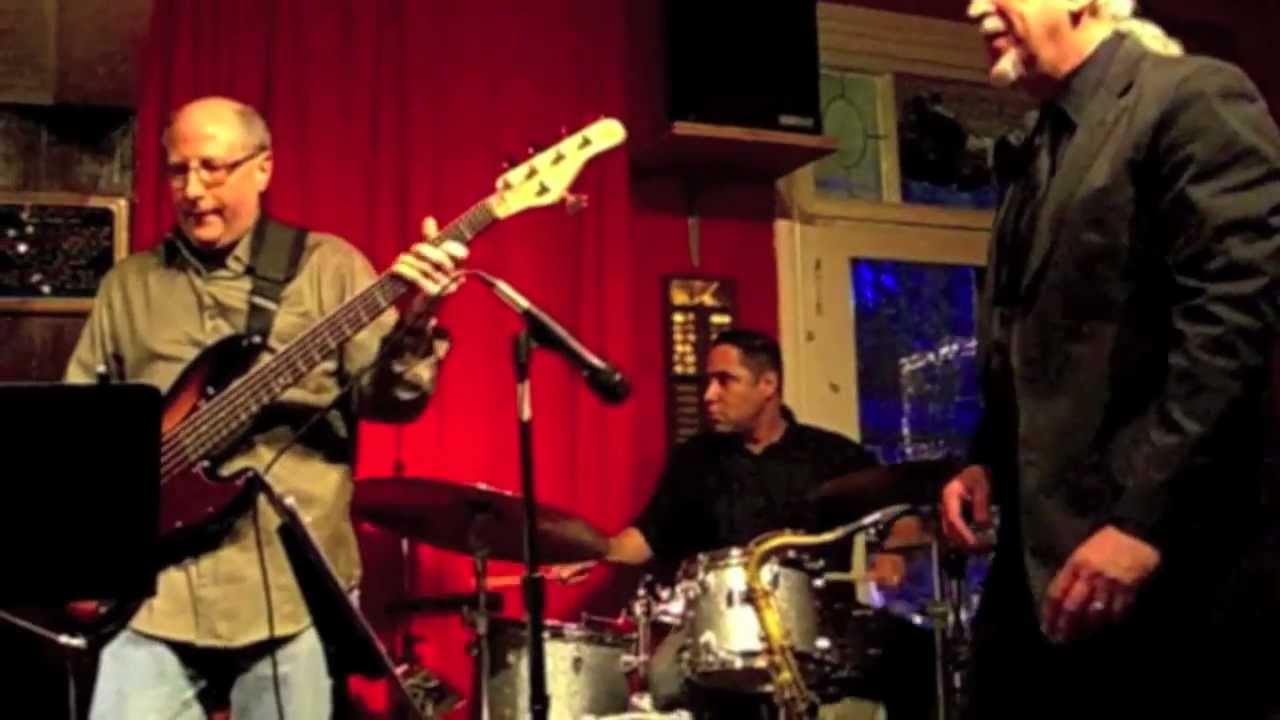
The Deer Head Inn, in the middle of virtually nowhere, in a 150-year-old saloon-hotel on the Pennsylvania-New Jersey border, claims to be the oldest continually operating jazz club in the United States. That status may be up for debate, but what’s a fact is that you’ll see literally among the best jazz musicians in the world there on any given Friday night, among a silent, eyes-fixed crowd of no more than twenty. It’s as intense as it gets.

Now, I, myself, know nothing about jazz. But, I know intensity – and I know what it takes to get that good. You play every day of your life. You play till your hands, fingers blister and bleed. And, when you’re not playing and practicing, you’re thinking about it, learning about it, breathing it. See, you don’t get to be the best in the world overnight, and you don’t do it without a drive beyond all drives, where nothing stops you, not even blisters and blood.

I’ve learned time and time again in my own life that when we start where other people stop, that’s where true progress begins.

Like the jazz musicians I go see at the Dear Head Inn, I have some idea of the sacrifice it takes to pursue the extraordinary, to start where others stop, to push yourself till you literally bleed. See, among the most intense, extraordinary times in my life was in my mid twenties, when I was broke, finishing up undergraduate work and writing freelance. I had come a long way in life, but I knew that I could write better, and by writing better, I could live better.

During that era in the literary world, San Francisco State University’s creative writing program was renown as the best-of-the-best, where from the students to the staff to the guest lecturers, it was an incubator of craft, the truest heights of writing. And, I wanted to go there; I wanted to be among the best-of-the-best.

However, there was every reason why I couldn’t go: it was unbelievably competitive to get in to, I couldn’t afford tuition, and, as one with a severe disability, I had no transportation to get there every day, 50 miles from my home. But, in growing up with cerebral palsy, I knew a lot about tenacity and perseverance.

I put together an application and portfolio, and was immediately accepted into the program. Then, I scrambled to secure grants and scholarships, getting my tuition paid. Lastly, I found that by taking two buses and a train, three hours each way, I could make the commute.

I remember sitting through my classes the first day and knowing that I was living the opportunity of a lifetime.

Semester after semester, I was being taught by and working with the top writers in the world. Guest lecturers flew in, best-selling novelists critiqued my work, and I learned the formal craft of writing to a level I never knew existed. And, then, there was the whole decadent, glamorous scene that surrounded it all – from the literati to the tantalizingly lurid.

But, for me to study and write at that level, I had to live it to an ultimately disturbing intensity. Due to my disability, I wasn’t able to simply use the bathroom, so the commute and my schedule had me not urinating or drinking for 18 hours per day. Ultimately, my body was at its breaking point.

One morning my wife of the time got to my urinal before I did, and discovered my secret: I’d been urinating blood for months, an infection so bad that I should have been hospitalized. Yet, like every other morning, I raced to catch the bus. Why would I risk my health and live in such agony, all in the name of writing?

The answer is, I didn’t want to stop where others would. If you’re going to be great at what you do, sometimes you must throw rationale out the window and push yourself beyond what’s logical. Like a jazz great, you need to play till your fingers bleed.

Bus Stop at Purpose Ave.

Jayne__Kenya_1

By Mark E. Smith

Think about the most genuinely happy, joyful person you know. I have no way of knowing that person, but I certainly can tell you all about him or her. His or her smile lights up a room. He or she is totally comfortable in his or her own skin. He or she doesn’t worry about trivial aspects in life. He or she is one of great comfort to others in an especially unique way. And, he or she is slowly but surely changing the world for the better. Who is this individual?

The answer is, it’s a person living to his or her purpose. See, when we live with purpose, it’s impossible not to be happy and successful. After all, in living with purpose, you know the value of your life, the positive ways you impact others – directly or indirectly – and how you change their lives for the better. Most importantly, you recognize the value of others, and strive to meet their needs with your unique abilities.

For some, their purpose seems obvious. A police officer protects citizens. A comedian makes people laugh. An emergency room nurse saves lives. However, for the rest of us, finding or recognizing our purpose can be less obvious.

I recently had this talk with my 18-year-old daughter: how do we know our purpose? An even more challenging question is – and it’s one of the toughest in humanity, an age-old inner-struggle – do I even have a purpose?

As one who feels tremendous purpose in my life, I thought a lot about what core questions does my daughter – or any of us! – need to find and understand our purpose?

And, so I gave my daughter some questions to ask of herself:

Who am I?
What am I passionate about?
How do I effect other people?
What do others need from me?
How can my everyday actions better other’s lives?

For me, the answer is easy. I have cerebral palsy and in understanding the liberation of mobility and independence, my purpose is in helping others achieve those vital aspects in their own lives. As a result, at the end of each day, I feel the privilege of having a tangible sense of purpose in my life.

Based in New York, Rick Guidotti is among the top fashion photographers in the world. In the 1990s, he photographed those who were deemed the most beautiful women on Earth. Then, in 1998, at a bus stop, he encountered a teenage girl with albinism. In a world that can see such conditions as strange, Rick saw beauty, and as he embarked from there to taking photos of those who weren’t known as conventionally beautiful like the models he shot for Vogue and such, he found a turning point in his life: his purpose. See, through Rick’s photos, he not only raises the esteem of his photographed subjects – many seeing their own beauty for the first time, the camera serving as the ultimate mirror of truth – but his photos have also captured the attention of the top magazines and galleries, dramatically improving society’s perception of not just those with disabilities, but also the truth that we’re all beautiful.

Rick knows who he is, what he’s passionate about, what others need from him, and how his actions change their lives. He’s a man living with purpose.

I don’t know where you are in your life, but I l know that you, too, have great purpose. Maybe you know your purpose and know the joy that comes with it. Or, maybe you’re trying to discover your purpose. Think about who you are, what you’re passionate about, what others need from you, and how your actions can change their lives. And, live it with everything you have.

Redefining Tragedy

tragedy

By Mark E. Smith

My daughter had a scholarship interview on “the challenges she’s faced.” When she asked for my advice, I suggested describing the challenges, but mainly emphasizing how she’s overcome them, what we all can learn from them. After all, a tragic story is just… well… tragic. However, when we turn tragedy into triumph, that becomes an inspiring lesson for all.

It’s really the way life, too, works, isn’t it? For example, we know that dysfunction is generational, and when we see someone – hopefully not ourselves – repeating the cycle of generational dysfunction, it’s just tragic. Imagine a Ted Talk where the thesis was, “My parents were abusive alcoholics and now so am I….” The jaw-dropped audience would leave saddened and stunned. However, if the thesis was, “My parents were abusive alcoholics and here’s how I broke the cycle,” then there’s a riveting story all can learn and grow from.

I believe all of us have the ability to not rewrite our stories, but to finish them in ways that redirect them from the tragic to the triumphant, creating a phenomenally successful narrative – read that, life. The first chapters may be already written, but we can direct new ones, dramatically changing the story at any time.

See, tragedy is rarely a finite end, but almost always a remarkable opportunity for new beginnings, redirection. Yet, it’s rarely obvious. It takes a lot of awareness, introspection, and hard work to redirect our lives from tragedy to triumph. But, when we do, it’s the most important move we ever make, where tragedy stops, and healing and success begin.

Reflection, as I shared with my daughter, is key in this process – it’s where the learning curve is. If we’re unable to reflect on the tragedies in our lives, not only can’t we gain from them, but we’re at extreme risk of continuing living them. Any time that tragedy affects us, we ultimately need to find a space of reflection and introspection to stop the suffering and start the healing, the redirecting from the negative to the positive, the end of chapters and the starting of new ones.

It can be tough to do, I know. And, it’s heartbreaking when we see anyone – from loved ones to strangers – stuck in the wake of tragedy, sometimes a whole lifetime marred by its lingering effects. There are so many situations where it’s impossible to obtain clarity of thought in the situation, where reflection or introspection can’t occur because the scars are seemingly too deep or one’s capacities seem too limited. …Or, can it?

We often hear of people “hitting rock bottom.” I did this years ago in a marriage. The common misconception is that we hit rock bottom when we’ve lost everything, our lives in shambles. However, that’s rarely the case. I define “hitting rock bottom” as a point of uncanny clarity in the wake of tragedy, the point where we can reflect so honestly upon our past and present situations that we say, “Enough! I’m learning and growing out of this situation to live a healthier and more fulfilling life.” What’s wonderful is that we don’t have to be in shambles to do this – at any point, in any aspect of our lives, we can reflect upon that which isn’t working, that which has harmed us, learn from it, and move to new levels of success.

In these ways, tragedy doesn’t have to define us, it doesn’t have to be a life-long scar or pattern, but can be a catalyst for growth and change toward living the life of our dreams. As I shared with my daughter, the ultimate triumph over tragedy isn’t the inspiring messages we convey with others, but the liberation it brings to our own lives.

Sunsets and Rooftops

perch

By Mark E. Smith

Sometimes our pasts, presents and futures collide all at once – and for a moment we see how it all makes sense.

I’m at Perch, an insanely hidden but outrageously hip rooftop patio bar and restaurant atop a skyscraper, with a 360-degree view of Los Angeles. It’s like walking onto a terrace party on Manhattan’s upper east side, only I don’t know anyone. But, they all are fashionable and laid back, sitting in upscale patio chairs around fire pits – 65 degrees in L.A. is cold, even for me, an east-coaster.

I’m with my fiancee, my soon-to-be step daughter, and my fiancee’s high-school friend, Deb. Deb is so down to earth and grounded that you’d never know she’s an exec with AE Sports, the video game giant, and her husband is some sort of brand manager for Aston Martin in Beverly Hills. I ask Deb if she knows of Magnus Walker, but she doesn’t, so I just tell her he’s a crazy Porsche guy in L.A.

The L.A. skyline at sunset is stunning. As spectacular as the ridges of the Grand Canyon, the surrounding skyscrapers create reflections and shadows that make it all appear beyond man-made. I just take it all in, and wonder amidst the beauty of it all – the rooftop, the sunset, the view, L.A., my fiancee – how’d a guy like me ends up here, at this place, this moment, this point in life where I feel blessed in so many ways?

Earlier today, I worked a big consumer trade show. While returning from lunch, I ran into my ex-girlfriend who I hadn’t seen in 24 years. We were so young when we dated, and when we broke up, I was crushed. There’s fragility to a young heart, and I just couldn’t make sense of the breakup. But, then I met who would become my wife, then we had my daughter, grew my career, moved cross country, built a very prosperous life, got divorced, raised my daughter on my own and just strove to live right by all. That first breakup turned into just good memories from my youth.

As I chatted with my ex-girlfriend, it was a very touching moment, no weirdness or awkwardness. Through the wonders of Facebook, we’d both known where each had traveled in life, and we both were genuinely happy for each other. It was sort of like just smiling at how far we’d both come. And, after a hug and a picture, we parted ways, she going to catch a flight home to her husband and daughter, and me, back to my company’s booth.

And, so as I sit on this L.A. rooftop, I look out at the sunset over the Pacific and flash back over those 24 years – my beloved daughter having turned 18 just a few days ago – and the question of how I ended up in this breathtaking spot, at this exact time, answers itself: despite the twists and turns, life always leads us to where we’re supposed to be.

A Power Chair, a Warehouse, and Me

20150218_205614-1

By Mark E. Smith

How fortunate are we when life hands us an unyielding passion? And, sometimes life-sustaining passions stem from the most unlikely of sources. In fact, they almost always do.

At the age of five or so, with severe cerebral palsy, I was blessed to have an occupational therapist place me in a power chair, and I went from a world of confinement to one of liberation at the touch of a button. And, I haven’t let off of the joystick since.

Thirty nine years later, I remain not just passionate about power chairs, but obsessed. I know the empowerment they bring, and I live it. My career revolves around power chairs; my personal life revolves around power chairs; and my friends revolve around power chairs.

But, my power chairs aside, here’s what’s amazing about having such a passion: no one can take it away from you because it’s your intrinsic life force. Lot’s of people like what they do. However, a passion is what you love to do, what you’re compelled to do – it’s who you are – and nothing can change that.

So, at 44, after 39 years of using a power chair – despite all of my life’s accomplishments – there’s still that one, ultimate thrill for me: when I have an awesome new power chair, as was the case this past week, where I immediately become that five-year-old again (a secret warehouse as my personal race track), where I feel an awe-inspiring sense of liberation and empowerment that wipes away all of the complexities of life – and I’m just living my passion to the core.

Video

Pursuing Purpose

purpose

By Mark E. Smith

After talking with my vice president of human resources about the pros and cons of joining the enormous career social network site, LinkedIn, I built my profile, an online resume of sorts. In a mere two weeks, I accumulated over 450 “connections” with people I know from my career.

However, I’ve noticed an aspect missing from LinkedIn, the same aspect missed by most employers and employees in the hiring and career process. While LinkedIn is great at demonstrating what we do and what we’ve done, it’s not a vehicle that conveys why we do what we do – that is, it doesn’t convey the purpose in our lives.

Now, this isn’t a fault of LinkedIn, but a cultural one, where most career paths are more about literal job roles and salary than an individual’s purpose. And, that is a shame because when we don’t feel we’re living to our purpose – as in, I really want to be a photographer but I work in sales because it pays the bills – we lose a part of ourselves, including passion, in the processes. Yes, all of us need to make a living, but when we don’t feel purpose in our lives, it pulls us down, a sense of longing that we carry.

I’ve been very blessed to have career for which I feel purpose. My company manufactures mobility products, and the difference our products make in the lives of those we serve is profound – they allow individuals with severe disabilities to pursue education, career, family and community. On a daily basis I encounter harrowing stories of injury, illness and injustice, and to contribute solutions to individuals’ situations – as one with a severe disability, myself – it fills my life with purpose and passion.

In fact, I see so much purpose in what I do that I’m inspired to constantly spread that passion in my leadership roles. Every Monday at 4:30, I meet with our company’s new employees of all levels and talk about the purpose in what we do. “All of us need to make a living,” I say. “But, at our company, we’re also able to make a difference – that’s a remarkable opportunity in any career.”

Monthly, I also speak alongside our CEO at what we call our birthday lunch, where employees with birthdays in that month gather for a celebration and a company update. I speak to the vital role each employee serves, regardless of position, toward empowering our customers. After all, what’s more powerful than being reminded how you’ve positively impacted the lives of others – that’s purpose.

What’s intriguing to me, however, is when I read anonymous employee reviews online. I see disgruntled comments by our employees – as a large company, we get those – yet, even within the most disgruntled reviews, there’s almost always a positive mention of helping others. No, I don’t want anyone hating one’s boss or feeling underpaid, but the fact that one acknowledges seeing purpose in one’s job is a powerful sentiment.

At the other end of the spectrum, I also spend my days speaking with those who are unemployed. My peers with disabilities have a 75% unemployment rate based on remaining social barriers toward employment. Nevertheless, when I speak with my peers about their employment goals, it’s never about money or status. Rather, when I speak with my peers about their employment goals, they touch upon simply wishing to make a difference – that is, they want to live with a certain purpose.

Now, although purpose and career are a meaningful match – who doesn’t want to feel purpose in his or her work, right? – purpose extends much farther. I mean, the definition of purpose in our lives is that we feel that we have impact. For some, this may mean parenthood, while for others, it’s creating art or volunteering, and on and on. Purpose is what gives internal meaning to our lives. And, when we don’t feel purpose, we can feel a void and longing. So, how do we move beyond that void, into purpose?

A lot of times, it takes courage. My friend and colleague, Bryan, a triple amputee wounded Iraq veteran, shared with me that he felt so much purpose when on the road speaking, acting and volunteering. But, when he was home in Chicago, he felt a certain void, alone in his condo. However, he realized that much of the roles he loved serving – his purpose – were based in Los Angeles. So, Bryan took a leap of faith, packed up, and moved to L.A. His life and career have never been better, where he’s now able to constantly pursue his passions, right down to appearing in the current blockbuster movie, American Sniper.

As we think about our purpose in life, the question is, what do we feel truly fulfilled doing? Then, we must have the courage to live to that purpose. For me, I believed 14 years ago that my purpose was in serving my peers with mobility needs, so I moved across the country to join a small team to start a division of a parent company that subsequently grew into an industry-leading company in its own right. For Charles Bukowski, he worked at the Los Angeles post office as a filling clerk while going home at night to follow his purpose, poetry, going on to be a 20th-Century great, publishing thousands of poems and over 60 books. All of our purposes are different, but the way we achieve them is the same: in our hearts, we all know what ours is – we just need the courage to live it.

When We’re De-Elevated

1422565061579

Ny Mark E. Smith

It happened in an instant. In fact, as one who doesn’t experience anxiety and is pretty calm in virtually any situation, I began to panic. There’s a horrifyingly surreal quality to suddenly becoming invisible.

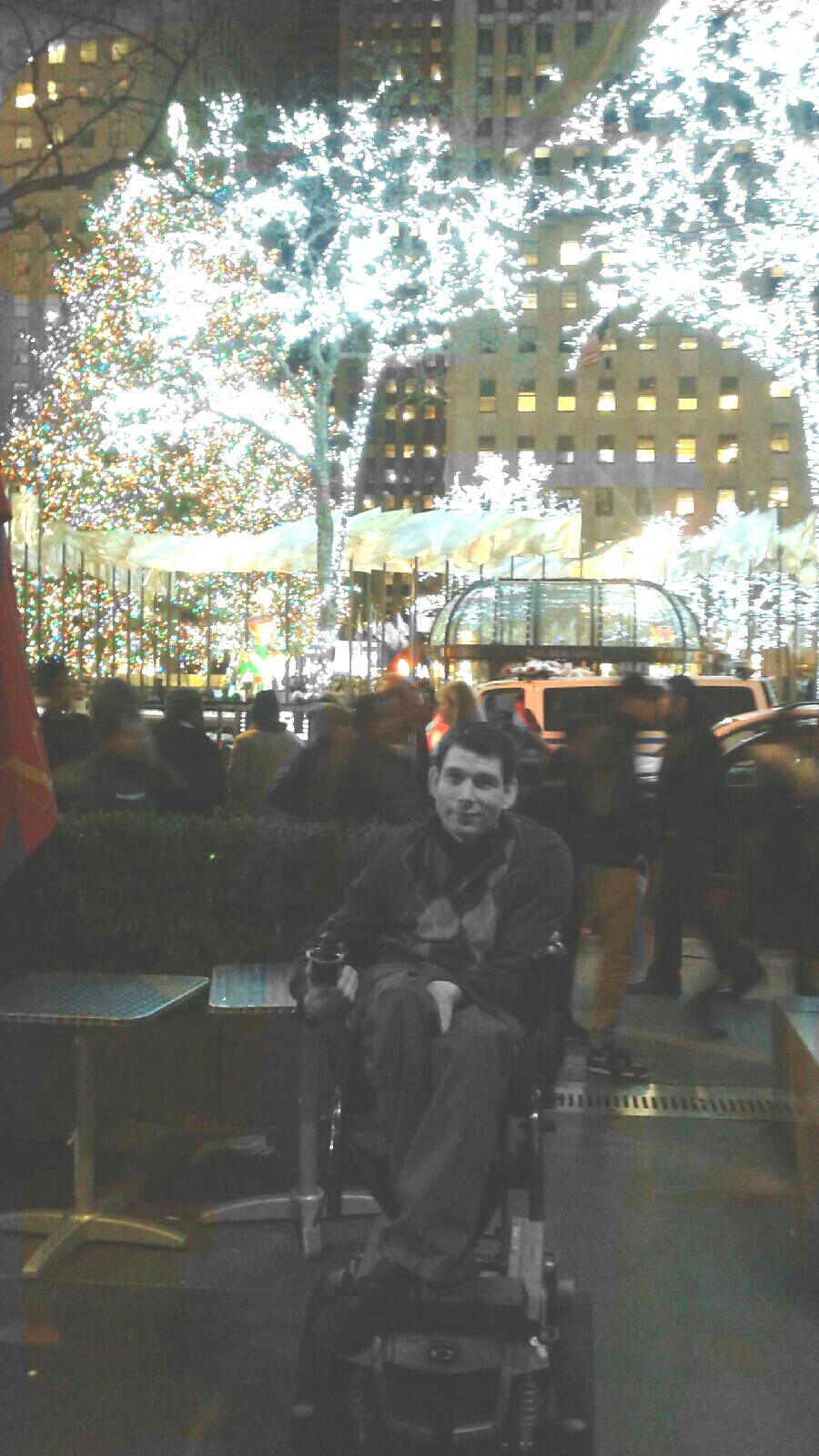
My family and I went to see the famed Rockefeller Christmas tree, and it was more crowded than anywhere I’ve ever been. However, because my power wheelchair has an elevating seat that places me at 5’7” tall, I worked my way through the crowd slowly but surely, eye-to-eye with those moving about, where people smiled at me, gingerly moving aside as needed for my 24”-wide power wheelchair to pass.

As we got closer to the tree, the crowd became so dense that I couldn’t see the ground, merely following the heads in front of me. Then, suddenly, my power wheelchair dropped down a medium-height curb leading to the tree. Although the unexpected curb startled me, all was fine and we continued to the tree, shoulder-to-shoulder in the crowd, finishing with a classic family photo of the tree behind us.

We worked our way back through the crowd, and I watched carefully for the curb, knowing that while I couldn’t climb it while elevated, I could lower my seat to standard wheelchair height and safely drive up it. As I reached the curb, the crowd continued flowing around me – that is, until I lowered my seat. Suddenly, at typical wheelchair height, my world changed. It was literally darker, more confined and, most shocking to me, I became invisible. While the crowd was moments earlier around me at standing height, now people were slamming into me, falling on me, oblivious to the fact that I was “down there.” I’d gone from a person in the crowd to suddenly invisible and of no stature simply by lowering my seat.

I yelled to my fiancee for some sort of help and in a panic, I charged the curb, clipping people along the way. For me, in among the rarest moments I’ve experienced, it felt like it was life or death – I was both fighting and fleeing.

Once up the curb, I quickly elevated my seat, and as people immediately began safely flowing back around me, I took a deep breath, composed myself, and realized a universal truth: Being invisible to society is terrifying.

For me, that was an experience I’ve culturally known in other ways as a man with a disability. Beyond the change in physical stature I described with my elevating seat, I’ve more readily been de-elevated in social stature at times. However, the de-elevation of who we are – where we become invisible in an instant based on ignorance, stereotyping and discrimination – is a disturbingly universal one.

Imagine how it feels as an African-American trying to hail a cab in a big city, and empty cabs pass you by. Imagine being gay at a dinner party where rhetoric arises, condemning homosexuality. Imagine being a woman shopping for a car, and the salesman only speaks to your husband. Imagine walking into a clothing store as one of a plus size, and the sales people ignore you. Imagine being in bed with your spouse, and he or she turns his or her back to you as you’re trying to communicate. Or, imagine being homeless on a Los Angeles sidewalk, and no one even looks at you as they pass. So many of us can relate with being de-elevated to invisible.

Yes, I was fortunate amidst the crowd at Rockefeller Center that eve because, at the touch of a button, I elevated back to being seen. However, life for many – including me as one with a disability – often isn’t so easily resolved. When we’re dismissed by others and made to feel invisible, there is no button to push. Rather, the experience of being made invisible based not on our character, but based on the ignorance, stereotyping and discrimination of others… well… just hurts.

Barbershop

BARBERSHOP

By Mark E. Smith

No, I wasn’t surprised, but it hasn’t happened to me in so long. Over my 44 years, I’ve seen so much progress toward social acceptance of all, that I simply don’t encounter such situations often anymore.

However, while society at large has changed – where diversity on all levels continues becoming the norm to the point that even using the word is becoming less relevant – some individuals don’t change. And, where I see this lack of change the most is as a generation gap.

So, when the 70-ish woman at the salon refused to cut my hair this past week due to my wheelchair and cerebral palsy, I wasn’t surprised. After all, she was raised in a time when those with disabilities were “cripples,” African-Americans were “negros,” and being openly gay didn’t exist. Yes, we hope that most evolve with the times, but we also know that limited life experiences can keep us from growing, it can keep prejudices ingrained in us. And, for this woman, I understood that disability – not me as an individual – was too much for her to process. In fact, I felt for her because she was beyond flustered while I was fine with the situation. I just wanted a haircut, not to judge her beliefs.

Of course, the salon manager, Andy, jumped in, cutting my hair – because that’s how we accept each other in society today, open, embracing, with grace and dignity, no matter who you are.

I left the salon with a haircut and a reminder that the beauty of practicing acceptance sometimes means likewise embracing those who don’t accept us at all.

Pitch 15

elcapitan

By Mark E. Smith

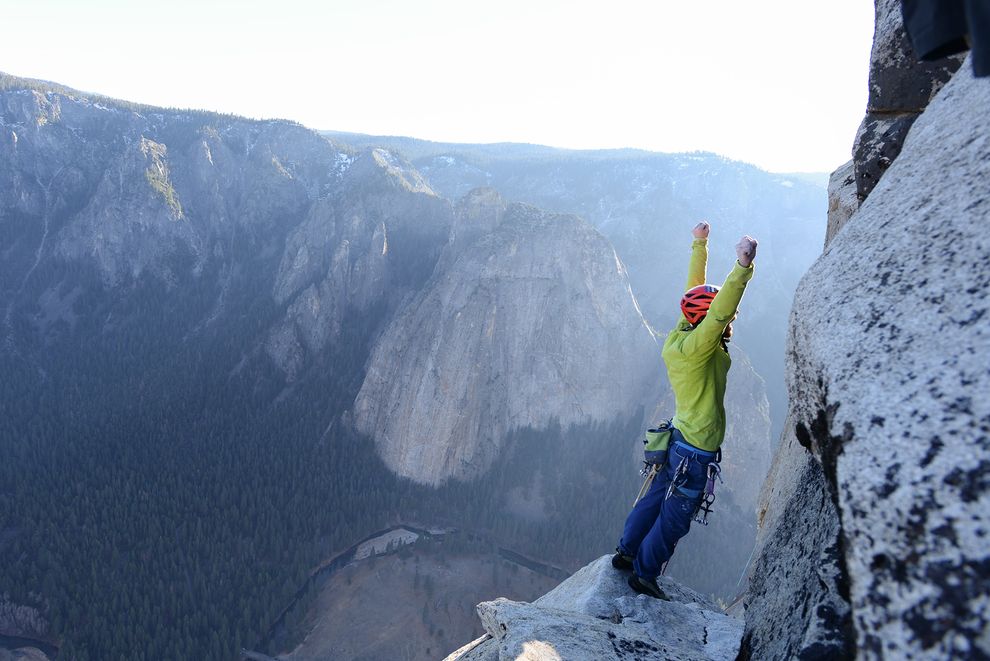
Kevin Jorgeson and Tommy Caldwell recently became the first rock climbers to “free climb” Yosemite’s mammoth 3,000-foot granite face, El Capitan. For the climbing community and public, what made the climb a record was the fact that the duo didn’t use any climbing aids – just bare hands griping crevices and climbing shoes pressed on the rock face.

However, the free climb wasn’t what impressed me. Rather, it was a story within the successful climb.

See, on day 8, on Pitch 15, one of the toughest stages, Caldwell zipped right up it. But, Jorgeson failed. In fact, he failed over a dozen more times, adding 7 days to the climb. Imagine the scene. Caldwell perched slightly above the pitch, watching his partner fail over and over, day after day. And, Jorgeson consistently failing to the point where he should have thrown in the towel. It looked to both men and the world watching that it was an impossible feat for Jorgeson.

Yet, despite exhaustion and escalating self doubt, Jorgeson finally conquered Pitch 15 after 7 days of trying. When asked what pulled him through, he replied, “Resolve. I didn’t see any other outcome but to make it….”

We all encounter Pitch 15s in our own lives, those times when we don’t think we can go on, those times where success seems impossible, adversity too looming. I’ve been there regarding living with disability many times. And, what I’ve learned, much like Jorgeson, is this: we can either concede and quit, or we can muster resolve and determination, where ultimate failure isn’t an option. We know the outcome of conceding and quitting – dreams dashed, an important part of our potential never realized. Yet, when we persevere through the seeming impossible, the results are astounding – we succeed.

Jorgeson’s dilemma on Pitch 15 was a unique one in physicality. After all, he’s among the first to free climb El Capitan. However, emotionally and mentally, his plight was universal – keep trying, against all odds, until you make it. Maybe you’re currently struggling in a college class or with sobriety or in a relationship or in your career. Again, you can always just quit tackling any adversity at any time – and if it’s obviously tough, no one will fault you.

Yet, here’s the universal truth when you have the courage not to quit: if you’re brave enough to tackle adversity, you’re brave enough to overcome it and succeed.

From Cerebral Palsy to Quaaludes

Matt Fraser
Matt Fraser

By Mark E. Smith

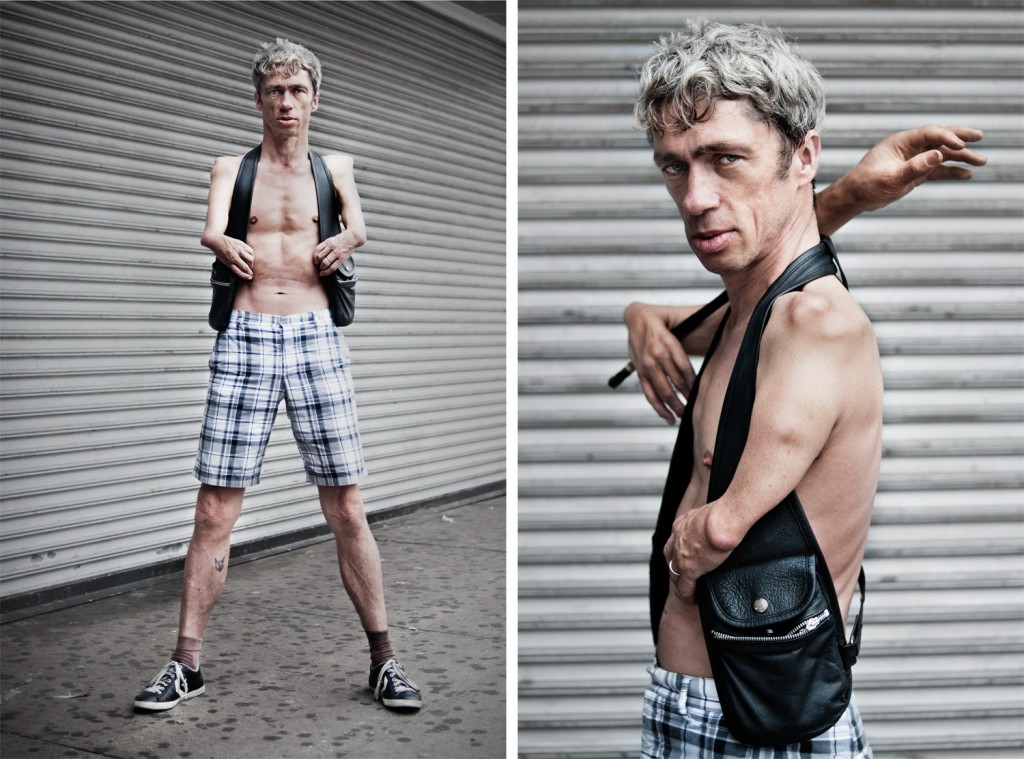
Matt Fraser isn’t afraid to be nude. He also isn’t afraid to appear on stage at venues ranging from off-Broadway plays to movies to television shows, including this season’s smash hit, American Horror Story: Freak Show. And, his fearlessness doesn’t end there. Matt is a Black Belt, a forever-charming ladies man and even a BBC radio show host.

However, here’s the single most important aspect to the success in Matt’s life: Matt Fraser isn’t afraid to be Matt Fraser. He presents himself with authenticity and doesn’t give us any other choice. We either accept Matt for who he is – disability and all – or move on.

How many of us struggle or have struggled with being who we are? Maybe as children we behaved a certain way to please our parents that wasn’t authentic to our identity. Maybe in high school, we caved to peer pressure, not feeling safe to truly express ourselves. Maybe in our careers, we squelch our personalities to fit a corporate norm. And, how many of us have curbed our behaviors, feelings and wishes to please a partner? Indeed, we’ve all been there. Yet, here’s my question for you: Have any of these scenarios worked for you in the long term?

Of course not. It’s never worked for you or me because whenever we’re not 100% authentic, parts of us feel inadequate, denied, undesired, squelched – and that’s painful. However, if you want to avoid such a terrible fate, just be yourself! It will feel risky and scary at first, but soon it will feel liberating, the freest you’ve ever felt. Now, some in your life won’t be able to handle the real you because they’re used to a watered-down, squelched version. But, your world as a whole will feel anew, fresh air filling your lungs as never before.

I remember being in my 20s and very self-aware. I watched carefully what I said to whom, and although I often had zany, witty thoughts pop into my head, I rarely uttered them, fearing I’d sound uncouth. My brother, on the other hand, who shared my wit, said anything to anyone, and I observed how charmed others were by his authenticity. With my brother as an inspiration, I slowly let my authentic voice come out – I’d say exactly what I wished on stage and in witting – and that’s when my career took off in every direction. It was time for me to be… well… me.

Some two decades later, being Mark E. Smith is a blast. I mean, if you’re an adult and ask me, “What happened to you,” I’m not going to give you a politically-correct answer about cerebral palsy as I would have in my 20s. Rather, if you’re an adult ignorant enough to ask me that question at an airport or such, I’m going to be me and you’re getting a one word answer: Quaaludes!

Each of us were born to be who we are, and assuming we’re healthy individuals, we owe it to ourselves and those around us to simply be who we are. Society, partners, and you name it may try to squelch who you are. But, your obligation is to be a Matt Fraser and live your life beautifully, exactly who you are, never compromising your authenticity – and the world will embrace you.