
Tag: disability
Surfing Mavericks

By Mark E. Smith
In 1967, three surfers and their German shepherd, Maverick, hiked down to Pillar Point in Northern California, discovering among the biggest waves on Earth, questionable whether they could be surfed?
As the three surfers paddled out into the seemingly impossible, literally risking their lives, they soon realized that Maverick, who loved swimming pools, was beside them, paddling along in the Pacific toward monster waves. Alarmed for the dog’s safety, they promptly returned to shore, tying him up, protecting the dog from his own fearlessness. Then, the three friends paddled out, opting to surf smaller waves off to the side, avoiding the giant waves Maverick was heading toward.
Gradually, word spread about the insanely large waves off of Pillar Point, where till this day, the best big-wave surfers in the world try their luck. …And, so “Mavericks” was named after the dog – an iconic surf destination off of Pillar Point.
However, it can be surmised that the legend of Maverick, the fearless dog, didn’t end with a renown surf location named after him. See, in California surf culture, there’s an acronym, F.I.D.L.E.R, which means, F- it, Dog, life’s a risk. In other words, have no fear, and just go for it – life’s short, so live it.
At some point, I’ve all but stopped having fear, worrying or even stressing about pretty much everything. This doesn’t mean I’m irresponsible or don’t care. To the contrary, I’m ultra-responsible and take what I do very seriously. But, I don’t fear, worry or stress about much of anything. I’m like Maverick the dog – that is, I just go for it.
In a few weeks, I’m saddling up in my power chair and hitting the skies once again – Philly to LA to Vancouver to Phoenix, then back to Philly, with a monster itinerary packed in. And, while my gracious staff has covered every possible arrangement, ensuring that my travels are as planned out as possible, I’m arguably the least concerned. I have my plane tickets, my power chair, my passport and a debit card. FIDLAR – I’m ready to roll! With so much on my itinerary, aspects will go wrong. But, when they do, I’ll handle them. I have absolute confidence in being able to address whatever comes my way. I’m like Maverick the dog, just happy to be paddling into an awesome adventure.
People often think that fear, worry and stress are signs that one cares. However, the opposite is true. Fear, worry and stress say only one thing: you don’t feel in control. We know that people who perform at peak levels – surgeons, athletes, soldiers – often have lower heart rates when in a seeming situation of extreme pressure, moving to the opposite of fear, worry and stress. Fear, worry and stress typically hurts us, it doesn’t help us.
I think about relationships a lot because they are the cornerstone of our lives. And, one key I’ve learned is that feeding unsubstantiated fear, worry and stress into a relationship will destroy it. I mean, if your partner is demonstrating absolute consistent love toward you, don’t question it with fear, worry or stress, but embrace it with security, trust and comfort. If we’re going to experience life-changing love, we can’t question and hold back on an amazing relationship. Rather, we need a bit of FIDLAR in our hearts, and just go for it.
Indeed, we live in a culture where too many hold their lives back based on fear and its corresponding emotions. However, if we want to truly live our dreams – pursue an ideal career, live in the locale we wish, have a breathtaking relationship – there’s only one dog to follow, so to speak, and that’s Maverick. The best opportunities in life are like thunderous, towering waves. Most will fear and avoid them, but those seeking true success won’t back down. Instead, they prove true “Mavericks” by yelling, FIDLAR!, and paddling in the direction of big waves and a courageous heart.
The Genius of Juggling

By Mark E. Smith
The New Year is here, and while I trust it will grace your life with much of what you’ve striven toward, it’s sure to also bring some sort of adversity. After all, none of are immune from the curve balls that life throws us, from the frustrating but mundane like your vehicle breaking down, to the much more harrowing like an ended relationship, job loss, or illness. We don’t like to think about it, but, again, none of us are immune from life’s curve balls, adversity coming our way.
I’ve spent my entire life facing adversity – from my disability at birth to my troubled family growing up to challenges in my adult life – and among my most valuable assets have been the friendships I’ve evolved over decades with others who’ve successfully faced adversity. And, between the two, I’ve developed a learned skill set that’s consistently helped me move from surviving to thriving at many points in my life. Yes, adversity will surely come my way again, too – it’s inevitable – but I’m ready.
For me, addressing adversity has become intuitive, springing into positive action when it occurs. I understand several core principles that have served me and others so well in times of adversity, where I believe they can serve all of us, no matter the circumstance.
When Opportunity Knocks, Open the Door!
When we face adversity, it’s easy and natural to focus on what’s happened to us. …I lost my job. …My marriage is over. …I’ve been diagnosed with an illness. However, in most cases, it’s futile and moot to focus on what’s happened to us. Sure it’s healthy to process emotions, but in the larger scope, we need to look forward toward opportunity – and, there’s always opportunity in adversity. As W. Mitchell – burned over 90 percent of his body, then later paralyzed – has told me for 20 years, It’s not what happens to you, it’s what you do about it. Therefore, when I face adversity, I’m always immediately seeking the opportunity in it. I don’t always make a smooth transfer into my wheelchair, sometimes landing on the floor. Yet, I’m never frustrated by the fall – it’s over, done, who cares. What I’m solely focused on is getting up, as that’s where the opportunity resides. My sister was also an amazing example in this. At 23, she had cancer and was in a bad marriage. She didn’t drift into self-pity, but focused on beating cancer and used it as a life-affirming catalyst to leave an unhealthy marriage, going on to a life closer to her dreams. Cancer for her wasn’t a tragedy; rather, it was a catalyst. If you lose your job, it’s an opportunity to find a better one; if your relationship ends, it’s an opportunity to find the partner of your dreams; if you have illness, it’s an opportunity to gain new life perspectives. We all get knocked down in life, but the wise among us only care about getting up stronger.
Never Stop Juggling!
Have you ever noticed that we have a way of allowing adversity to have a domino effect in our lives? Think about how many struggle at work, then go home to take it out on their families. The examples go on and on, where when one aspect goes astray, we let it ripple through our entire lives, being far more devastating than it should. A college buddy of mine is a juggler, and he taught me that as a juggler, if you drop a ball, you keep juggling the rest because whether you juggle four balls or three, the audience is still entertained – just don’t stop juggling! Life is like that, as when one part of your life goes wrong, don’t let it pull down the rest. Never let the bad sabotage the good. I’m the only one in my family to have ever graduated high school, and the way I did it was by refusing to let my nightmare home life effect my schooling. No matter how bad a night was at home, I still got up the next morning and went to school engaged. It doesn’t make sense to allow one area of dysfunction to void all other areas of prosperity. In fact, when one part of your life is astray, that’s the precise time to especially focus on the positive areas – and you’ll be amazed at how the negative soon turns around.
Victor, Not Victim!
When facing adversity, we have a peculiar way of embracing the blame game. I feel like this because of him. My life is like this because of what happened to me. However, we have far more control in the long run over our lives than any other person or circumstance can dictate. We can’t always control what happens, but we can totally control how it impacts our lives. We can choose at any point to be a victor or a victim. I may have been hurt in that relationship, but I grew from it and I’m more open to love than ever. Nick Vujicic could appear to many as a victim, having been born with no arms or legs. But, as Nick travels the globe speaking to hundreds of thousands each year – as an evangelist, author, husband and father – he lives by the unwavering philosophy, No arms, no legs, no worries, mate! We all possess the power to dictate what controls us. I don’t care what happens to me, I’m going to strive not to relinquish my fulfillment to an outside force – I will be victorious over adversity, not a victim.
If we summarize these core strategies, a remarkable truth is seen: not only do we each intrinsically possess means to address adversity in healthy ways, but we can often minimize its impact and literally use it in our favor. And, so the theme for adversity in the New Year is simple: we are equipped, so bring it on!
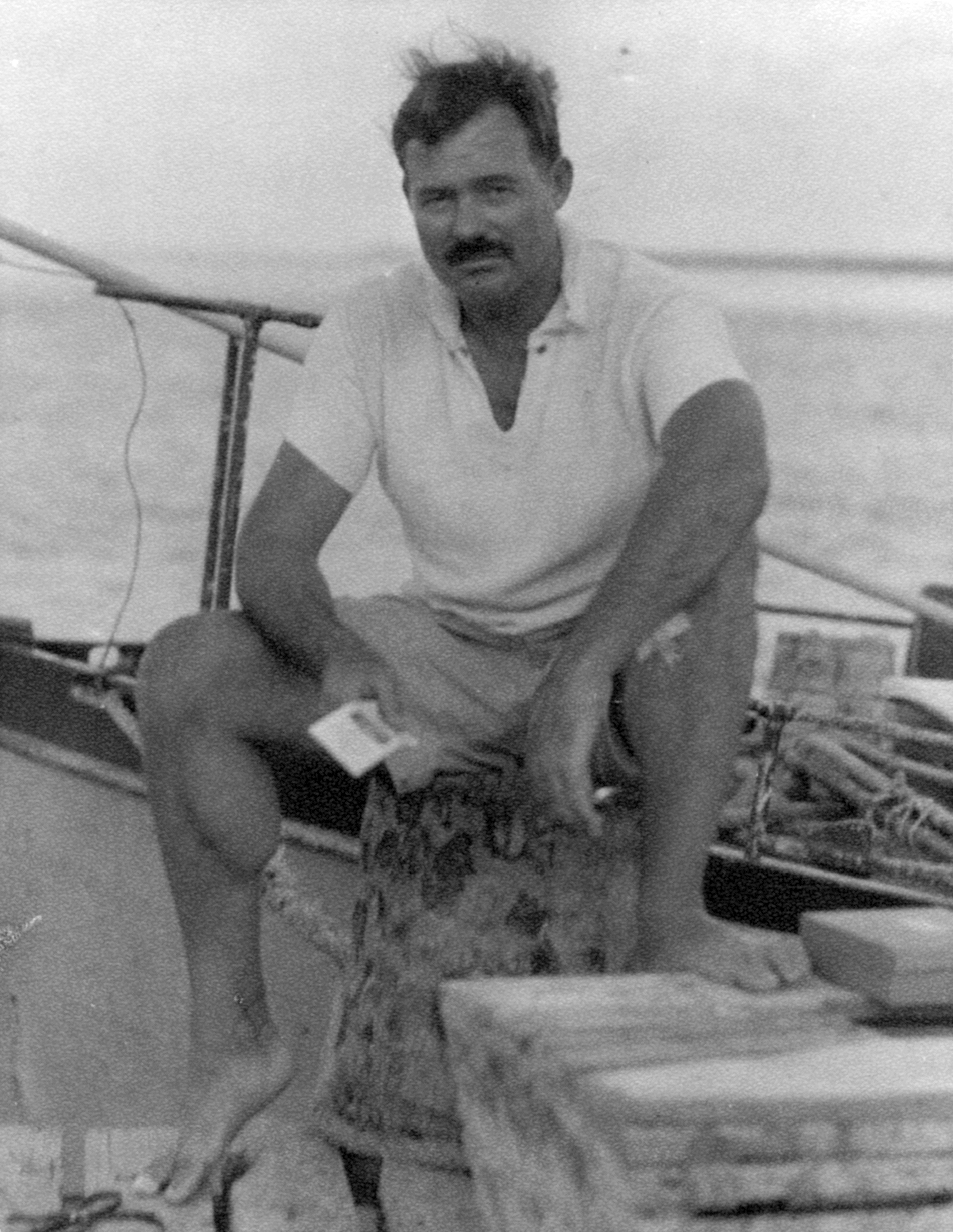
Living Like Hemingway
By Mark E. Smith
Sure, they were both great posthumously. However, during their lives, Hemingway far outlived Fitzgerald – not just in age, but in truly living.
I mean, history shows their enormous accomplishments, both helping define 20th century literature, The Great Gatsby and The Sun Also Rises leading the way, respectively. But, Ernest Hemingway, he was relentless in living life on his own terms, while F. Scott Fitzgerald was about simply doing what he had to, concerned to a fault with what others defined as success. But, I’m telling you, by following the path that others defined as success, Fitzgerald was the far less successful of the two, not just in literary accomplishment, but, again, in life.
And, Hemingway told him so, constantly. Hemingway saw that Zelda, Fitzgerald’s southern socialite wife – who broke off their engagement once because Fitzgerald wasn’t earning enough money – was destroying Fitzgerald’s spirit, killing his writing with her own agenda and issues. Yes, Hemingway was married to Hadley Richardson at the time, but she was his equal and inspiration. For Hemingway, as much as he forever loved Hadley (although the divorced in 1927, and he had three subsequent wives) he’d never let anyone or anything interfere with his greatness as a writer. This isn’t to say that I’d live to that extreme. Of course I wouldn’t – my daughter, my significant other, my family as a whole, has to come before all. But, I wouldn’t tolerate a Zelda, either. Hemingway was right: if a spouse can’t let me be me, and support my passions as I support hers, there’s no room in a writer’s life, or anyone’s life, for that. That’s the equality that Hemingway had with Hadley, a striking contrast to the never-ending requirements for money and commercial success that Zelda demanded of Fitzgerald – and he ultimately required of himself.
So, here’s how it went down. Hemingway and Fitzgerald met in 1924, when Fitzgerald already had two novels published and countless literary magazine pieces, highly in demand as a writer. They were only three years apart in age, and while Fitzgerald focused his early 20s on trying to achieve critical acclaim, fame and money, Hemingway joined the World War I effort as an ambulance driver in Italy, where he was severely wounded, going on to serve as a war correspondent for the Toronto Star. Hemingway and Hadley ended up living in Paris because it was cheap and there was a bustling literary scene.
Now, I’m skipping a bunch here, but in 1924, Hemingway, pretty much unknown, meets Fitzgerald, a forever financially broke but known writer. And, Hemingway keys in on Fitzgerald as talented but disingenuous, but Fitzgerald takes to Hemingway, serving as a mentor into the literary scene.
In 1925, Fitzgerald publishes The Great Gatsby, hell-bent on fame and fortune. To the contrary, the book fails, earning Fitzgerald a mere $2,000 in entirety (it wasn’t till 20 years or so after his death that the book finally found its fame). Yet, Hemingway liked the novel – but despised Fitzgerald’s void of integrity as an author. Hemingway referred to Fitzgerald as a literary whore, where his quest for wealth and social status corrupted his writing. Fitzgerald all but noted this, explaining that all his pieces were written with authenticity, then altered toward commercial success. Yet, beyond writing for magazines, Fitzgerald ultimately had no fame or fortune as the 1930s came.
Yet, Hemingway, originally the literary lesser of the two, was solely about authenticity in writing. He only wanted to write what he wanted to write. Having seen merit in The Great Gatsby, but also a lack of integrity in its writing, Hemingway wanted to write a novel – his way. In 1926, Hemingway’s The Sun Also Rises was published – with input by of all people, Fitzgerald – but dramatically different than Fitzgerald’s work. The Sun Also Rises was a metaphor for hope during the post-war era, and was written in a Roman-a-clef style, based on real events and people. The book sold out of its first printing, then a second, garnering much attention, skyrocketing Hemingway’s career.
Between 1929 and 1940 (the year of Fitzgerald’s death), Hemingway’s career soared, publishing A Farewell to Arms, To Have And To Have Not, and To Whom the Bell Tolls. He traveled, observed, lived and just wrote it all. There was nothing humble about “Papa,” as Hemingway became known; however, there was great humility in his writing – it’s just humanity stripped. I mean, have you read Hills Like White Elephants? You’re there, at the train station in the Ebro River Valley of Spain, over hearing the kind of interpersonal conversation people have. No superfluous dialogue, no pretense – just real.
And, Hemingway stuck with this his entire life. He truly wouldn’t compromise, and once when he felt like a publisher wasn’t respecting his work, he sent them a purposely terrible manuscript, knowing that their rejection would terminate a lucrative contract. He needed the writing (and Hadley swore it was truly what kept Hemingway from committing suicide for over 40 years), not the money or fame Fitzgerald sought. Hemingway biographer, Pauline McLain wrote, “Perhaps his [Hemingway’s] true love could only ever be his work, which mattered more than living.”
And, that was Fitzgerald’s downfall. He was so caught up in image, success and money that he failed at all of it. Near his death in 1940, Fitzgerald was a then-forgotten author, living in Hollywood, writing terrible movie scripts (ironically, though, making $29,000 one year, the most he ever made). He’d lost the respect of his Paris peers of the ’20s, known as a washed-up hack Hollywood writer, where he even told his daughter that his life was a failure. Dead at age 44, the young writer with so much talent but drawn to not his own greatness, but the lure of material success, lost everything in the end – most painfully, his dignity, as Hemingway predicted as he tried to convince Fitzgerald in the late ’20s to quit whoring his work, drop Zelda and make it all about the writing.
Of course, we know that Hemingway carried on, with The Old Man and the Sea in 1952 winning the Pulitzer, and contributing to his winning the Nobel Prize for Literature.
So, why do I tell you all of this? Well, Hemingway and Fitzgerald prove a terrific cautionary tale for all of our lives. If we don’t wish to merely live, but to truly thrive, we can’t chase after the external forms of success – we will never catch it, but it will catch up with us. However, if we follow our passions with unyielding authenticity, the world will follow us, true success will come our way. Live true to yourself and your inherent greatness, and the world will prove true to you, where the only authentic voice is your own.
The Three P’s of Happiness

By Mark E. Smith
With nothing in my hands or up my sleeves, I’m going to share with you the magic of happiness, the guiding value in my life. I live it, I share it, and when I’m exceptionally privileged, I gift it to others in countless ways.
However, the reason why I can share the magic of happiness with nothing in my hands or up my sleeves is because the real magic of it is that there’s no magic to it at all – that is, it’s a definable process that consistently creates the lives of our dreams when we consciously choose it. That’s right, happiness isn’t happenstance, but a conscious decision we make – or don’t make! – and the choice of happiness dictates… well… our happiness.
Happiness, as I’ve learned, though, isn’t a single choice. We don’t go to the State-of-Mind aisle at the grocery store and pick the can of Happiness nestled among Discontentment, Misery and Despair. Rather, happiness resides in three distinct choices that we have ultimate control over: our perspective, the people we surround ourselves with, and the life paths we follow. If you simply get those “three P’s” right, you will live not just with unyielding happiness, but a fulfilled life where all your dreams aren’t just plausible, they’re realized.
Perspective plays such a huge role in happiness. Now, we’re not talking clinically-based depression or such, as those are medical issues that perspective can’t control. What we’re talking about is the fact that, for most of us, there’s two ways of looking at many situations, one that chooses negatives and one that leads to happiness. And, we control that perspective.
I’m a hopeless romantic, one who believes in the epics. I read epic tales, I watch happily-ever-after movies, and I strive to carry my heart and live my life with a certain idealism that anything is possible. I went through a period where my heart was in a funk. I wanted a taste of truly epic unconditional love, and questioned whether I’d die without ever having known it – to me, among the saddest tragedies any of us can have. I didn’t receive it from my troubled parents and I went on to an ended marriage and hit-and-miss relationships, and I longed to have unconditional love in my life. The despair that hung over me prevented my happiness for that period. And, then I shifted my perspective. In fact, I did have unconditional love in my life, and even experienced it on an epic scale: my daughter. From the day I shifted my perspective from what I seemingly didn’t have, to what I truly have had all along, my entire life changed. I no longer long for unconditional love, but light up at the mere thought of it, knowing what I share with my daughter.
In this way, happiness is typically a matter of choosing our perspectives. For every negative we see or feel, there’s usually a blessing that cancels it out. Look for the blessings in your life – the mere recognition of them plants seeds of happiness.
Beyond our own perspectives, the people we surround ourselves with dramatically dictate our happiness. We’re not insulated or islands – other people’s behavior effects us. If you want to be unhappy, it’s not hard to do, just surround yourself with dysfunctional, unhealthy, miserable people. We’ve all witnessed it or lived it. We can have the highest spirits, trying to do all that’s right, and the toxic people in our life pull us down, robbing our happiness. And, we let them. Stop it! When you have the choice between those who pull you down versus those who uplift – and make you happy! – run toward the uplifters! Don’t do the whole dysfunctional comfort thing by emotionally investing and being drained by hurtful people in your life. Rather, when you have amazing people around you, run toward that light at the end of the tunnel. I assure you, the light isn’t a train; it’s the radiance of your deserved happiness. Don’t mess this one up by choosing a never-ending nightmare of relationships over your deserved happiness. Only embrace those who embrace you, and literally run toward those who truly love and support you in only the healthiest ways – it will fill your heart and soul with happiness.
Lastly, make decisions toward life paths that intrinsically create happiness in your life. And, don’t be scared by logistics or time to accomplish goals – your happiness is worth addressing a few challenges to get to it. As I like to ask, do you know why some people live in paradise? They moved there! Your dream job, relationship, or residence may be across the country or around the globe – go to where you will be intrinsically happy. My college buddy, Brian, who happens to have cerebral palsy, seemed a forever bachelor with an established life in the San Francisco Bay Area. He met a woman online, fell in love and moved to be with her – in Amsterdam! They’re long married now, and if anyone’s ever decided to intrinsically seek happiness, it’s Brian – and, of course, it worked. Making such life moves isn’t always easy; but, you have to do them as a surefire path to the happiness and life you’ve yearned for and deserve.
The reality is, there’s no magic to happiness. It’s not that it appears in the lives of some but not others. We ultimately solely create it for ourselves through the choices we make. Let us choose positive perspectives over the negatives. Let us run toward the right people in our lives. And, let us make the decisions for our life paths that lead to our dreams. Indeed, all of this can take thought, time, effort, and courage. However, in applying these three principles – perspective, people and paths – you’ll achieve the happiness in your life that you’ve dreamed and deserve.
Evenings in the Kitchen

By Mark E. Smith
In fairy tales and films, they end happily ever after, but in our lives, they always don’t. However, just because they haven’t till now, doesn’t mean that they won’t.
Life proves more potential than even fiction, where heart break and sorrow can lead to Etta James, John Coltrane, slow dancing and kissing to jazz as together you cook dinner, dim lights and sips of wine in the kitchen.
Jazz, rhythm and blues, life isn’t what happens to you, it’s truly about what you choose. And, as you be you and me be me, life doesn’t imitate art, but it is the only reality. Bukowski and Basquiat were not philosophers or saints, but they knew our futures are written with our own hands, a great painting is what a painter paints.
And, so we write our own lives, paint who we are, where we can reach our potentials, hearts dangling from a star. No scripts needed, just an understanding of who we are – poets and painters and jazz players in a sentimental mood. It’s all what we choose.
Life isn’t about accepting just what we’re given. It’s a novel written, a painting painted, a jazz song played, a slow kiss in the dim lights of the kitchen.
And, a life isn’t truly lived when we hesitate – great novels and paintings and jazz compositions, see, they never deliberate. They follow the flow of the heart and soul, and if you want to live great, live to your dreams and potentials – liberate. Life is an art, not a role.
What Nancy Didn’t Know

By Mark E. Smith
My daughter, almost 17, ran into Nancy at the grocery store. Nancy is head of my daughter’s performing arts program each summer, a calm, cultured, collected woman in her 50s. However, as my daughter told me, Nancy was a bit odd that day at the grocery store, a bit disoriented, my daughter feeling as though Nancy didn’t recognize her, although they knew each other very well.
It was the day before Thanksgiving, so my daughter – although disconcerted by Nancy’s sudden distance – chalked it up as Nancy distracted by the holidays and outside of the usual setting where they knew each other, outside of auditions and auditoriums, the music of both their lives. And, I agreed.
Yet, Nancy knew something my daughter and I did not. Or, maybe, my daughter and I knew something Nancy did not. See, later that night, Nancy emailed my daughter, both apologizing and explaining. Nancy saw my daughter pushing a 5-year-old little girl who uses a wheelchair. She was singing and dangling a ribbon as my daughter pushed her down the aisles. But, in the email, Nancy went on, saying that she didn’t know my daughter’s connection to the little girl, but she knew what type of life the little girl must live in a wheelchair, and how difficult life will be when she grows up. Nancy had preconceived notions of what disability meant, ignorance and stereotypes locked into her mind somewhere astray from her wisdom and education, an out-of-place note in an otherwise harmonious symphonic composition.
However, my daughter and I knew something Nancy did not. What Nancy didn’t know was that there are no distinctions among children. Every child is perfect and beautiful and unique in his or her own way. As with no fall leaf being any less awe-inspiring than the next – regardless of its color, shape, or size – every child in a grocery store should bring a warm smile to your face as you pass by him or her in the aisle. Children are simply children, after all – perfect and beautiful and unique just like the leaves of fall.
Freakishly Awesome Control

By Mark E. Smith
To most, being a control freak means one who has to have seeming power in every situation, over every little detail. They’re rarely content, and they’re often an annoyance to all.
However, I want to talk about a different kind of control freak: the kind of person who has freakishly awesome control over his or her life, where what seems unlikely or unrealistic or impossible to most is viewed as totally feasible. See, my definition of a control freak is someone who knows that he or she has ultimate control over his or her own life, able to accomplish virtually any goal.
Think about how rare it is to be a control freak by my definition. Not only don’t people feel like they have control over their lives, they actually avoid and give up control. How many of us feel anxiety or depression because of others’ actions in our lives? How many of us stress out because a mortgage company owns our home and a finance company owns our car? How many of us work an uninspired job because we don’t think we can find better? How many of us see outside stresses as adversely effecting our relationships? How many of us have passed on life-changing opportunities and dreams because too many factors seemed in-between us and them? Indeed, perceiving a lack of control over many aspects of our lives is epidemic, and while we can’t control everything in the immediate, we have far more control to living the lives of our dreams over the long term than many fathom.
College is a big topic in my house these days as my high-school-age daughter gets closer and closer. I’m amazed at how many parents think college admission is under everyone’s control but their and their children’s. Admission boards decide who gets in, schools decide who gets scholarships, the government decides who gets grants and loans, and so on.
However, I’ve taken a dramatically different approach with my daughter – we’re in control of what college she goes to. Her job has been to maintain the grades and extracurricular activities to get into the college of her choice. It’s been my job to handle the finances needed to pay for her education. The result is that we’re in control of where she attends college. With that reality, how amazing is it not to wonder if your child will get into a given college, but to set them up to control the process of picking any college he or she wishes. That’s freakishly awesome control!
I’m also forever amazed at what little control people assume toward opportunities based geographically where they live. I’d love to take that job, but I’d have to move…. I think she could be my soul mate, but she lives all the way across the country…. Since when does geography have control our lives? It’s the 21st century. The Wright brothers figured this one out a long time ago: the continent isn’t moving, but we can! If I have to move across the country – which I’ve done – to pursue a life-changing opportunity, all I need is a phone directory to look up moving companies.
Now, I know what you’re thinking: Mark, life just isn’t that simple for most of us. And, you’d be both right and wrong. Sure, while having freakishly awesome control over your life is simple, it’s not always easy. However, it is, in fact, consistency in practicing it over the long term that fosters possessing freakishly awesome control in vital areas of your life, where virtually anything is possible. I’ve never just snapped my fingers and magically had control. Rather, I work at it every day, in small and big ways alike. Due to my cerebral palsy, there are aspects of my body that I can’t control. Yet, I have complete control over how I deal with it. I don’t mind having to physically attempt a task as many times as it takes to accomplish it because my cerebral palsy doesn’t control my life – I do. I choose patience and perseverance over allowing cerebral palsy to dictate my potentials.
In this way, personal accountability is a vital component of freakishly awesome control. You’re not a victim of circumstance, but you’re the final vote toward how your life evolves. I had no control over receiving cerebral palsy, but I’ve had complete control of how I choose to live with it. Circumstances occur, and as long as your willing to react to them with positive action, you’ll have ultimate control over their effect in the end.
More than any other aspect, though, having freakishly awesome control over your life removes excuses. If you assume freakishly awesome control over your life, you are solely responsible for your life’s successes and failures. You can’t blame disability or other people’s actions or the economy or on and on for any aspect wrong in your life over the long term. Rather, when there’s an occurrence in your life, you’re responsible for it, period. Again, you may not have caused it,, but you can control its effect. There’s no room for blame or bitterness or excuses, just personal accountability. You’re ultimately in control of your life, and if you don’t assume ultimate control, you’ll fail miserably over and over. And, it becomes amazingly liberating when you realize that the only roadblocks in your life are ones that you chose to stop at, that you have the power to turn the wheel and stomp the throttle of life, going where you wish.
Indeed, too many give up too much control to too many circumstances and others. Why not take freakishly awesome control of your life and assert that no disability, person, geography or any other factor can dictate your paths but you? Take accountability, remove excuses, assume freakishly awesome control of your life, and you’ll live the life of your dreams. After all, per the tenet of freakishly awesome control, the course of your life is solely up to you.
Opening Our Closets
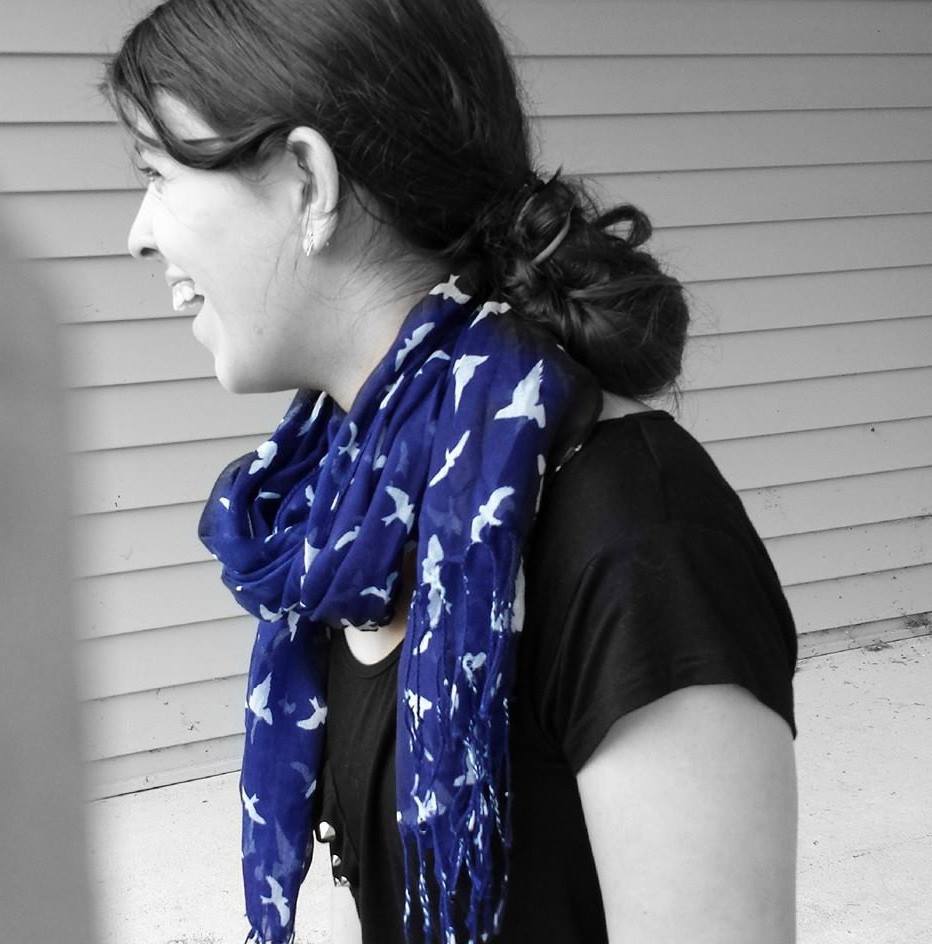
Soul is about authenticity. Soul is about finding the things in your life that are real and pure. -John Legend
By Mark E. Smith
With the holidays approaching, and special friends visiting my home for an extended stay, my daughter and I started making a list of what we needed to do in order to make our house as perfect as possible.
See, for my daughter and me, our home is about love, laughter, understanding, and tranquility, so we haven’t cared that we have a sheet hung across the family room window because Rosie the English bulldog attacked the custom blinds, nor have we cared that the dishwasher has been broken for years (it’s just the two of us, so we don’t need a dishwasher!). We’re blessed with a very nice home, that’s neat and clean, and we don’t sweat the small stuff. We’re happy as-is.
However, with company coming, the list got longer and longer of ways to spruce up our 12-year-old home, all to impress our house guests. And, then I realized how unauthentic I was being, how I was putting priority on a shell of a house instead of the depth of my character and heart. My daughter and I want to spend time with those close to us, and replacing blinds and a dishwasher has nothing to do with it. The quality of one’s character is far more important than the quality of one’s house.
How many of us live such a facade in many aspects of our lives, where we present an image instead of just being ourselves – namely, because we don’t think others will embrace us if they see who we truly are?
The answer is, most of us. However, here’s the issue: if we hide or disguise ourselves, others don’t truly know us, and it creates a barrier for letting other people in. We live with secrets, isolation and in the worst cases, shame. Any aspect that we falsely polish or hide from others is like placing a wall between us and others. If we want the truest connections, we must be open and authentic to an extraordinary degree. Here’s the real me – take it or leave it, but at least I’m authentic. Life isn’t Facebook, where everyone’s life is a happy two-dimensional facade on a screen. To be authentic is to be real in every sense.
And, I think all of us have been unauthentic at times, both with ourselves and others. The solution, though, to both resolving it and avoiding it is to be totally authentic. Yes, some will reject us in the process, but most will embrace us.
In my own life, I strive to only be authentic. However, it’s not always easy, and I haven’t always succeeded. I’ve struggled this year with a very weighty subject in my life: my daughter will be heading off to college in the blink of an eye. Those around me have asked whether I’m prepared for that emotionally, especially since it’s just been the two of us for years, our lives so intertwined?
I give a very enthusiastic answer, that my daughter’s worked extremely hard toward college, that I can’t wait for her to flourish on her own. After all, it will be another amazing stage to witness as a parent. Yet, if I’m to be authentic, it’s truly only telling others half of my feelings – I’m not being honest.
The fact is, my daughter has been my foremost focus since the day she was born. Then, in being a full-time single father, she’s the better half of our dynamic duo, always a life force in our home. Girlfriends have come and gone, but it’s always been Shorty and me. No, I don’t know how I’m going to handle having my little girl, housemate and, really, best friend no longer around on a daily basis. I can picture Rosie the English bulldog and me just staring at each other on a Wednesday night, saying, What do we do now? Even if I’m living with a woman, I don’t see the transition being any less heartfelt. Yes, the thought of my daughter going off to college is unquestionably what I want and will be among my proudest moments. But, it’s also painful, scary and sad.
However, as I’ve opened up with friends about my complete feelings about my daughter eventually heading off to college, they’ve been extremely supportive and full of wisdom. Again, if we are going to live with authenticity, we must share our whole self, as-is, honestly, and people do reciprocate on such a genuine basis. In this way, opening myself up to others is like having guests in my home: I’d rather choose the imperfection of openness and joy over the tidiness of isolation and despair.
Of course, authenticity is ultimately about accountability, and that can be a struggle in itself. A great tool in that area is to surround yourself with people who will out of love call you on your behavior when you’re not being authentic. Both my sister and my best friend have called me on my behavior over the years – and rightfully so, as I’ve done some freakin’ stupid stuff. I remember being on the West Coast, feeling a lot of sadness over the ending of a serious relationship, and rather than being authentic and telling my friends that I was in a lot of pain, I went the rock star route, numbing myself with everything I could find as the life of the party. And, to his credit, without his being judgmental, my best friend soon pulled me aside and said, “I suspect there’s a lot going on in your life and it’s getting to you in unhealthy ways. It’s not the Mark I know.”
And, he was right. I wasn’t being authentic. Rather, I was being an emotional coward and dishonest. Fortunately, I was able to get myself back on track – arguably with greater clarity – all thanks to a true friend who believed in me and wasn’t afraid to call me on my falling off of the authenticity wagon.
None of us are perfect or immune to real emotions that tempt us toward going astray. I’ve been there and I still go there. However, recognizing the power of living to a higher standard – authenticity – and working at it in even the most challenging situations makes living as who you are a lot more rewarding.
My house isn’t perfect and neither am I. I need new blinds and a dishwasher, and Lord knows I’ve got my emotional issues. But, my home and heart are open, as-is, so come on in.
The Equation of Self
By Mark E. Smith
Here are five facts about me: I have severe cerebral palsy. I’m a middle-aged, full-time single father. I come from a deeply troubled background. I’m among the least successful people I know. And, many see me as a despicable character.
Every aspect above is literally true. If you were a woman, would you date me? Not a chance, as I’m a rolling wreck.
However, here’s the flaw in my rolling wreck of a self-description: it doesn’t reflect anywhere near the entirety of who I am. Rather, it leaves out the amazing parts of who I am, and fabricates a negative self-image from an inappropriately critical perspective. It’s like taking a beautiful diamond, and placing it under a microscope, finding the flaws, then discarding the entirety of its stunning brilliance. How many of us do that to ourselves every day? While the rest of the world sees our beauty and brilliance – like a two carat diamond – we find flaws that no one else sees. How is it that when we’re each so amazingly unique – one in four-hundred trillion, genetically, according to science – some of us can place a microscope on ourselves and only see flaws?
I recently heard a top collegiate soccer coach explain what he looks for when recruiting players. He doesn’t seek great runners or kickers – they’re easy to find, he said. In fact, he overlooks soccer skills altogether since everyone has them who applies to his program. What he looks for is the most empowering trait that an individual can have: self-confidence.
See, self-confidence isn’t about ego or narcissism, but about recognizing our own value, viewing ourselves as the rest of the world views us. And, when we have it, we don’t just perform better, we feel better. So, why don’t more of us have self-confidence, why don’t we see the beauty in who we are that others see, so unique that we’re one in 400 trillion?
The answer, as I’ve concluded, is that we’re really really bad at math. Allow me to explain….
When others view us, they add up the sum of our parts to create the whole value of who we are. We can look at someone and say, “Wow, what an amazing person, from the inside out,” and we’re able to do that because all of his or her traits add up to extraordinary. Yet, we’re often not skilled at doing math on ourselves – that is, except negative numbers. While the rest of the world looks at us as 2 + 4 + 4 = 10, we look at ourselves and add a negative to every positive -2 + -4 + -4 = -10.
Therefore, we need to do a much better job at understanding all of the variables that comprise us, and add the positives back in. Getting back to my five examples of why no woman should ever date me, let’s see what happens – mathematically – when I complete the missing variables to my equation:
I have severe cerebral palsy, and it’s fueled a life of independence, where I’ve seen first-hand that most limitations that we project are false, that the power of the human spirit runs deeper than any ocean, where few obstacles are insurmountable.
I’m a middle-aged, full-time single father who is in fantastic shape, and my daughter is a young woman of tremendous grace, wisdom, and empathy, whose hard work applied to education and the arts has her on an Ivy-League track.
I come from a deeply troubled background, and I’m the only one in generations of my family to be formally educated, to not live in poverty, to not be an addict.
I’m among the least successful people I know because I learned that if we wish to rise, surround ourselves with those who foster our growth, so I strive to associate with those of tremendous moral compasses, exceptional work ethics, and accomplished personal and professional lives.
And, many see me as a despicable character because I’m among the most read, public figures with a disability, where my success brings out some who resent it.
The result, then, is that I’m not a loser, but a remarkably successful individual with a lot to offer in my uniqueness.
And, the same goes for each one of us. None of us are perfect, but even our so-called flaws add up to remarkable when placed in the full context of who we are. The next time you look in the mirror, see yourself as everyone else sees you – and you’ll see an amazing person looking back.
 PowerchairDiaries