Our Truest Voice

speaking

By Mark E. Smith

I recently watched a Ted Talk by a public speaking coach who gave the secrets to being a great speaker. She spoke of relaxed posture. She spoke of soft breathing. She spoke of using your diaphragm. She spoke of controlled speech patterns. And, she spoke of overall body composure. Really, based on all she covered, I should never roll on a stage or speak in front of a group ever again because my cerebral palsy prevents every technique she noted. According to her, I’m the antithesis of a speaker, her worst nightmare.

Yet, over the past 25 years, I’ve spoken to more groups than I can count; I’ve made a remarkable number of TV appearances; and, I speak formally within my company in many capacities every day – all with tremendous efficacy. So, how do I – as one with severe cerebral palsy – defy the rules of the experts and achieve success in my career with so much speaking?

The answer is, I am just me and I always speak from the heart. I don’t need to be a polished robot, nor do I need to try to be someone I can never be. When you hear me speak – sometimes labored, sometimes slurred, sometimes spastic – you’re getting the real me. What greater gift can we give others than the real us, perfectly imperfect, speaking from the heart?

Among the reason why I address groups within our company is because I’m so passionate about what we do and I’m so inspired by the profound difference each employee makes in the lives of our customers. And, so one of my greatest privileges is speaking to groups of our employees, both weekly with new hires, and monthly at our birthday lunch, where we celebrate employees’ birthdays.

It’s my pleasure to share with you one of my talks with our employees. What I want you to note is that I’m clearly not what that speech coach envisioned. Rather, I’m real and imperfect – the two traits that we should all embrace to make a true impact in the lives of others. There’s no one more captivating than who we truly are.

Crank up the volume and enjoy this 12-minute talk:

Jumping Out of Airplanes

skydive

By Mark E. Smith

Have you noticed that when it comes to making big life decisions, there’s rarely a “right time,” and that those who wait for the right time, rarely end up making such life changes? Why is that?

Typically because there’s never a right time when it comes to making big life changes. Yet, so many of us create right-time rules that seem responsible, but really prevent us from ever making big moves – because the fabricated right time never comes. People set the most unrealistic prerequisites that they ultimately sabotage what’s truly important, never making big life moves. I’ve had kids – there’s never a right time, but it always remarkably works.

My fiancée and I, as responsible 40-somethings with kids – one off to college, the other, second grade – have had the “right time” all figured out. Being bicoastal, we went between the two coasts for almost two years, ultimately planning every “right time” detail for her move to the East Coast. Details surrounding houses and dogs and kids and finances went on and on, and every time we tried to figure out the “right time,” something logistical wasn’t the right time. We began in May working on the move with August being the “right time.” However, based on our right-time ideals, certain logistical aspects simply hadn’t worked out. What we’re we to do? Put off the move, put off the wedding, ration our love until the intangible “right time” somehow appeared, maybe next spring?

No, we decided the only right time was now. I mean, really, with houses, dogs, kids, finances and on and on, there’s no right time! We just had to do it. We didn’t have it all figured out, but got creative and focused on what was most important, what was at our core desire: to bring our family together. So, on a Sunday night, we booked one way plane tickets, and declared three weeks from then was the “right time” to move. Of course, it wasn’t logistically the right time – but it never would be! – but it was emotionally the right time.

And, that’s what the right time comes down to – that is, are you emotionally ready to make a life changing decision? I don’t care how responsible you think you are, if you play the waiting-for-the-right-time game, you will almost never accomplish your goals. Accomplishment comes from doing, not waiting. You have to have the courage and the confidence to go for it.

See, there’s only one way to skydive – you jump out of an airplane. If you wait, you just end up back on the ground, sitting in an airplane seat. However, if you want to experience the awesome thrill of skydiving, you just have to jump.

Life is like skydiving, if you wait too long, opportunity passes you by. However, if you know what you want, and you take a healthy leap of faith, you’ll be astounded at the rewards that you experience.

Rounding Third Base

dreamfield

By Mark E Smith

There’s a counter-intuitive nature to adversity that you can’t understand or appreciate unless you’ve experienced or witnessed it. It’s a realm where, as a complete contradiction, weakness becomes strength, heartbreak becomes joy, tragedy becomes fortune. It’s where life sends you a devastating blow, only to usher in unexpected triumphs of the soul.

Two weeks ago, at this writing, I was involved in the still-unfolding story of a 10-year-old boy. On March 9, 2015, his family was involved in a devastating car accident, the jaws of life employed to remove the 10-year-old. While the parents, fortunately, quickly healed, the 10-year-old was left a C-4 quadriplegic.

Many people casually describe such a spinal cord injury as chest, down paralysis, it’s not. It’s truly chin, down paralysis. See, The fourth cervical vertebra is the level where nerves run to the diaphragm, the main muscle that allows us to breathe. It separates the chest from the abdomen, and when it contracts, air is sucked into the lungs like a bellows. No contraction, no sucking, no breathing. People who survive spinal cord injuries at or above this level need ventilators or machines to breathe.

And, so in a scene unfathomable to most, this 10-year-old boy lay in a hospital bed on a ventilator, his body motionless since March. As the boys of summer ramped up for little league, he wasn’t among them. Then, in the most tangible moment to date of how permanent his disability is, two weeks ago, his new power wheelchair was delivered to his bedside.

No, this wasn’t a typical power wheelchair. It was small, built for his childhood stature. It had a ventilator on the back. And, rather than a hand control, a small joystick was mounted aligned to match his chin and mouth.

It took a lot to get him in the power wheelchair – everything takes a lot at that injury level. Tubes had to be routed, his body positioned and strapped in. And, all the while his parents watched with fear and sorrow in their eyes, not knowing what the outcome would be – what it will ever be. It was a scene no parent can even process.

But, then, amidst all of the logistical and emotional chaos, all became still, quiet. And, with a touch of his lower lip on the joystick, the power chair moved – he moved for the first time in months. A world of tragedy and confinement was transforming before everyone’s eyes into hope and liberation. Soon, he was independently driving up and down the hospital halls, a special version of seeing your son rounding third base.

And, as the clinicians and his parents transferred him back into bed, it finally happened. For the first time since his accident, he screamed and cried. No, not because of the extent of his injury or the realization of all that has been seemingly lost. No, he cried because he wanted his power wheelchair back – it was his freedom – and he wanted to be racing up and down the halls, not back in bed.

Indeed, there is a counter-intuitive nature to adversity, where that 10-year-old boy teaches us that weakness can become strength, heartbreak can become joy, tragedy can become fortune. It’s where life sends you a devastating blow, and you ultimately can experience triumphs of the soul.

Three Words

Here_I_Am

By Mark E. Smith

The ultimate liberation of the spirit comes when you look into the mirror, realizing that you can’t change who you are – based on any number of factors totally beyond your control – and you just say to the world with pride and contentment: Here I am….

Changing Channels

tvBy Mark E. Smith

Happiness amidst adversity has always fascinated me. Yet, so has misery among fortune. Both are totally counterintuitive – that is, people facing life’s toughest adversities logically shouldn’t be genuinely happy, just as among the most fortunate shouldn’t be miserable. But, we constantly see this occur with such frequency that it’s almost a norm rather than an isolated phenomenon. We see individuals facing challenges that, logically, should defeat the soul, but instead there’s a contentment and joy. Then, we see individuals with every advantage in life who are miserable. How is it that a 23-year-old with muscular dystrophy from which he or she will eventually die by age 30 is intrinsically happier than a 40-something multi-millionaire, recreational triathlete? I witness this all of the time among people I know and acquaintances – and, as one with a severe physical disability, I’ve experienced it myself.

Psychologists, sociologists and philosophers have been studying this exact subject, trying to crack this code of human nature: how does suffering allow for happiness while good fortune allows for misery? The recent consensus is intriguing.

See, what’s been discovered is that while happiness should logically come from good fortune, good fortune unto itself doesn’t evoke happiness. You can have all of the success in the world, and it doesn’t inherently induce happiness. Of course, many of us have known this, but, here’s the intriguing part. What does inherently induce happiness is gratitude. In fact, it turns out that they’re inseparable. If you have gratitude, you inherently possess happiness. But, that leads to yet another question in this equation: where does gratitude originate?

It turns out that opportunity is the root of gratitude – both in recognizing it and in appreciating it. I know where researchers are coming from because I live it. My independent living skills, such as bathing, are extremely difficult for me, sometimes having to endure a level of literal pain, if not suffering, in the process. When you lack coordination and balance, aspects like showering aren’t just difficult but often borderline dangerous, where falls and rebounds are just part of the nightly ritual. Yet, even in the midst of tremendous struggles, I’m genuinely happy. Heck, I even catch myself singing in the shower among the controlled chaos. How can I remain truly happy during such seemingly difficult times? Well, I know a lot of individuals who aren’t able to bathe themselves, and so I’m grateful for the opportunity simply to be able to do so, no matter how trying it can be. Opportunity creates gratitude, and gratitude creates happiness.

A childhood friend of mine, John, has had a slowly-progressing form of muscular dystrophy. He’s always used a power chair, but has slowly lost more and more muscle tone to where, now in his 40s, he doesn’t have the strength to use a television remote. But, John, as a super successful guy who knows the power of opportunity, gratitude and happiness, shared a story that made me smile. He found out that by getting a different cable box, he could use his smartphone’s touch screen to change channels. And, here’s what he said in his exuberance: “I’m quite overjoyed, and delighted even, to discover the new X1 system comes with an app on which I can completely operate the cable box from my iPhone. Losing strength and losing that ability killed me (metaphorically)… But now, I again have full control of my cable box!”

No, operating a cable box doesn’t in itself make John happy; however, the gratitude that he recognizes from the opportunity does.

Of course, this isn’t to say that we don’t all experience real human emotions like sadness and frustration, nor can gratitude overcome mental health conditions like clinical depression or chemical imbalances. However, when we’re emotionally and mentally healthy, gratitude can help us move toward positive states amidst difficult times. I recently lost Rosie the English Bulldog, my companion of 10 years – a very sad loss. But, amidst my understandable sadness, I found tremendous gratitude in her companionship, where reflecting on her hilarious absurdities – her tongue always protruding from her mouth, making her constant comic relief – filled my heart with joy despite the sad loss. In this way, finding gratitude in the toughest of situations can elevate our spirits. I’m not happy that Rosie the English Bulldog passed, but I’m grateful and happy for the 10 comical, adoring years we shared.

When the everyday aspects of life aren’t seen as doom or gloom, but as amazing opportunities, it creates gratitude, and with that we’re intrinsically filled with happiness. One doesn’t need to struggle or face challenges to find gratitude in one’s life – everyone can embrace it because where there’s life, there’s opportunity and gratitude. However, one does need to have gratitude to truly have happiness. Maybe we all need to take a lesson from John and recognize that the surest path to happiness is found in simply switching the channel – to gratitude.

Coming Out of the Closet – With Everything

closet.1

By Mark E. Smith

Isn’t it amazing how incongruent we can be within ourselves and in our lives? When I say incongruent, what I mean is that the three levels of our behavior don’t align – that is, what we think and feel is different than what we do, and that’s different than how we portray ourselves to the world. It’s like splitting ourselves in three directions where our lives – let’s be blunt – can become hidden and fragmented at best or torturous lies at worst.

Here’s a great example we can all relate to…. We all have that close friend or family member who confides in us that he or she resents his or her spouse with a passion, wanting out of the relationship. However, while he or she may have a combative or distant relationship with the spouse, true feelings are never expressed and the person stays with the spouse. Then, you log on to Facebook and see him or her posting the most happy couple photos ever! It drives you crazy because you know the person is living an incongruent life – read that, a facade – doesn’t it? Again, if we are to live a congruent life, our feelings, actions and portrayals must all align.

As if our incongruent friends and family don’t drive us crazy enough, when we live with incongruence in our own lives, it’s torturous. So much of our incongruence comes from fear of being judged or rejected, and that’s a valid fear that we all struggle with at points in our lives. However, in that process, we risk our own emotional health and happiness by being incongruent. I go back to my couples example. If I tell my spouse I’m unhappy for reasons X, Y and Z, and I’m not going to keep living in limbo by acting like this relationship is somehow working, and I’m not going to present an unrealistic image to the world, what’s the result? I’m honest with my feelings, so that’s a release. I’m honest in my relationship, so it’s either going to improve or we go our separate ways. And, I’m honest with everyone around me, so they can truly know and support me.

Now, of course discretion should be used when transitioning from incongruent to congruent behavior. We want to minimize hurting others in the process of living congruent lives – although, sometimes it can’t be helped. I mean, Grandma might be mortified to know you’re gay, but she’ll get over it – you owe it to yourself to be congruent in who you are. In fact, regardless of your particular circumstance, most will embrace you more for living a congruent life because it’s rooted in authenticity and honesty.

In my own life, I’ve lived both ways, and incongruent behavior never worked. I may have thought I was presenting myself in the best light by not expressing who I truly was in one way or another, but it always failed me in the end – it harmed relationships and proved me as lacking authenticity. In later years, I just put it all out there, and if others accept me for me, great; and, if they don’t, I’m fine with that – at least I’m me. Two years ago when I first got together with my fiancée, I took it slow in healthy form, but I disclosed every aspect of my life, from the realities of my disability to my views on intimacy to the fact that my dog liked to poop in the hallway when no one was watching. I may not have been the prize she was looking for, but at least she knew I was authentic – and no trait holds more weight in a relationship than demonstrating trustworthiness through congruent behavior.

All of us have little areas in our lives that are fine to keep to ourselves (your mom doesn’t need to know specifics on your intimate life!). However, in the larger spectrum of our lives and identities, congruent behavior is vital to living a healthy, happy life. After all, the only way to be yourself is to truly be yourself.

The Math of Life

equation

By Mark E. Smith

I love having problems. See, what I’ve learned in my life is that problems are opportunities for solutions, and with solutions comes success. In fact, in most cases in our lives, our biggest successes begin with a big problem.

Many have the equations of life backward. Although in math we’re taught that problems are solved with absolute solutions, many never look at life that way. Instead, we often view problems as unsolvable or insurmountable. Often when we encounter a problem, we give up or dramatically change directions. And, this, of course, makes achieving success and accomplishing our dreams impossible.

However, if we look at a problem as the first step toward success – that is, if I overcome this challenge, I will achieve my goal – a problem becomes nothing but positive. I mean, losing a great job for example, is in most people’s minds one of life’s toughest problems. Yet, I’ve known countless people who have used a firing as a catalyst to land better-paying, more-satisfying jobs. In this way, the problem of losing a job can either be a devastation or an opportunity for career advancement – and we have the power to choose the path.

Now, there are also bad problems and good problems, and while the objective is the same – find a solution! – few realize the difference. My daughter is formally enrolled to begin college this fall, as are many of her friends. The number one topic I hear from my fellow parents these days is the problem we’re all facing with looming $30,000 to $40,000 annual tuition bills. I’ve been expressing to my peers that this is a fantastic problem to have because while it may seem a financial nightmare on the surface, it’s only because we have amazing kids who’ve worked really hard to get accepted to among the best schools. If our biggest problem is paying for our children’s college because they’re succeeding in life, we’re actually blessed – it’s a great problem to have.

I’ve been working through good versus bad problems in looking to buy a new home. While my fiancée and realtor have been diligent and patient, it’s been impossible so far to find a home that can be made reasonably accessible for my power wheelchair and interior adaptations, such as an accessible bathroom. We’ve found several homes that if I could walk would have been dream homes. However, due to my special needs, house after house has had to be ruled out. It’s seemingly becoming a bad problem because as a man using a wheelchair, I’m seeing firsthand the problem we have in this country with an overall lack of housing that can be made accessible, from rentals to purchases. However, as one with a disability – where based on remaining social stereotypes and societal barriers to employment, my peers have an 85% unemployment rate – I’m blessed to be able to afford home ownership. Therefore, the ability to afford a house, but not be able to find one quickly based on my access needs, is a good problem to have.

In both these situations, what may seem like problems are actually remarkable opportunities for success. Solving the problem of costly tuition means that my daughter is the second person in my family’s history to attend college and, ideally, go on to an amazing career.  Solving the problem of finding my accessible dream home will allow me to live in my own sanctuary, full of laughter and love for decades to come. Yes, such circumstances begin as problems, but eventually they are pathways to remarkable success.

We all encounter problems in our lives, and it’s so easy to be frustrated at best, devastated at worst. However, if we’re going to succeed amidst adversity, we need to look at problems not as obstacles, but as opportunities. When we face a problem, it’s rarely that life isn’t going our way. Rather, when we face a problem, it’s usually life simply asking us to look at the situation a little deeper – and there within most often resides a path to greater success than we ever imagined. We may have problems, but we also have solutions to achieve amazing success.

Living Deer Head

dearhead

By Mark E. Smith

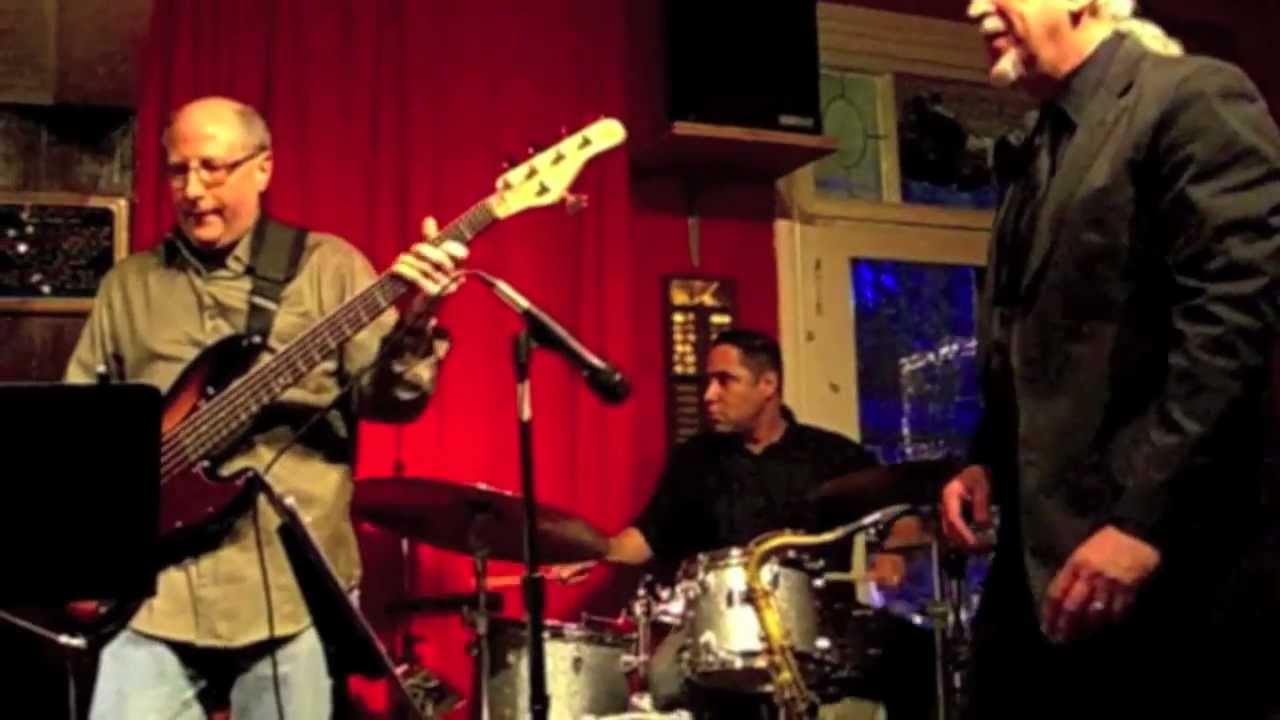
The Deer Head Inn, in the middle of virtually nowhere, in a 150-year-old saloon-hotel on the Pennsylvania-New Jersey border, claims to be the oldest continually operating jazz club in the United States. That status may be up for debate, but what’s a fact is that you’ll see literally among the best jazz musicians in the world there on any given Friday night, among a silent, eyes-fixed crowd of no more than twenty. It’s as intense as it gets.

Now, I, myself, know nothing about jazz. But, I know intensity – and I know what it takes to get that good. You play every day of your life. You play till your hands, fingers blister and bleed. And, when you’re not playing and practicing, you’re thinking about it, learning about it, breathing it. See, you don’t get to be the best in the world overnight, and you don’t do it without a drive beyond all drives, where nothing stops you, not even blisters and blood.

I’ve learned time and time again in my own life that when we start where other people stop, that’s where true progress begins.

Like the jazz musicians I go see at the Dear Head Inn, I have some idea of the sacrifice it takes to pursue the extraordinary, to start where others stop, to push yourself till you literally bleed. See, among the most intense, extraordinary times in my life was in my mid twenties, when I was broke, finishing up undergraduate work and writing freelance. I had come a long way in life, but I knew that I could write better, and by writing better, I could live better.

During that era in the literary world, San Francisco State University’s creative writing program was renown as the best-of-the-best, where from the students to the staff to the guest lecturers, it was an incubator of craft, the truest heights of writing. And, I wanted to go there; I wanted to be among the best-of-the-best.

However, there was every reason why I couldn’t go: it was unbelievably competitive to get in to, I couldn’t afford tuition, and, as one with a severe disability, I had no transportation to get there every day, 50 miles from my home. But, in growing up with cerebral palsy, I knew a lot about tenacity and perseverance.

I put together an application and portfolio, and was immediately accepted into the program. Then, I scrambled to secure grants and scholarships, getting my tuition paid. Lastly, I found that by taking two buses and a train, three hours each way, I could make the commute.

I remember sitting through my classes the first day and knowing that I was living the opportunity of a lifetime.

Semester after semester, I was being taught by and working with the top writers in the world. Guest lecturers flew in, best-selling novelists critiqued my work, and I learned the formal craft of writing to a level I never knew existed. And, then, there was the whole decadent, glamorous scene that surrounded it all – from the literati to the tantalizingly lurid.

But, for me to study and write at that level, I had to live it to an ultimately disturbing intensity. Due to my disability, I wasn’t able to simply use the bathroom, so the commute and my schedule had me not urinating or drinking for 18 hours per day. Ultimately, my body was at its breaking point.

One morning my wife of the time got to my urinal before I did, and discovered my secret: I’d been urinating blood for months, an infection so bad that I should have been hospitalized. Yet, like every other morning, I raced to catch the bus. Why would I risk my health and live in such agony, all in the name of writing?

The answer is, I didn’t want to stop where others would. If you’re going to be great at what you do, sometimes you must throw rationale out the window and push yourself beyond what’s logical. Like a jazz great, you need to play till your fingers bleed.

Sunsets and Rooftops

perch

By Mark E. Smith

Sometimes our pasts, presents and futures collide all at once – and for a moment we see how it all makes sense.

I’m at Perch, an insanely hidden but outrageously hip rooftop patio bar and restaurant atop a skyscraper, with a 360-degree view of Los Angeles. It’s like walking onto a terrace party on Manhattan’s upper east side, only I don’t know anyone. But, they all are fashionable and laid back, sitting in upscale patio chairs around fire pits – 65 degrees in L.A. is cold, even for me, an east-coaster.

I’m with my fiancee, my soon-to-be step daughter, and my fiancee’s high-school friend, Deb. Deb is so down to earth and grounded that you’d never know she’s an exec with AE Sports, the video game giant, and her husband is some sort of brand manager for Aston Martin in Beverly Hills. I ask Deb if she knows of Magnus Walker, but she doesn’t, so I just tell her he’s a crazy Porsche guy in L.A.

The L.A. skyline at sunset is stunning. As spectacular as the ridges of the Grand Canyon, the surrounding skyscrapers create reflections and shadows that make it all appear beyond man-made. I just take it all in, and wonder amidst the beauty of it all – the rooftop, the sunset, the view, L.A., my fiancee – how’d a guy like me ends up here, at this place, this moment, this point in life where I feel blessed in so many ways?

Earlier today, I worked a big consumer trade show. While returning from lunch, I ran into my ex-girlfriend who I hadn’t seen in 24 years. We were so young when we dated, and when we broke up, I was crushed. There’s fragility to a young heart, and I just couldn’t make sense of the breakup. But, then I met who would become my wife, then we had my daughter, grew my career, moved cross country, built a very prosperous life, got divorced, raised my daughter on my own and just strove to live right by all. That first breakup turned into just good memories from my youth.

As I chatted with my ex-girlfriend, it was a very touching moment, no weirdness or awkwardness. Through the wonders of Facebook, we’d both known where each had traveled in life, and we both were genuinely happy for each other. It was sort of like just smiling at how far we’d both come. And, after a hug and a picture, we parted ways, she going to catch a flight home to her husband and daughter, and me, back to my company’s booth.

And, so as I sit on this L.A. rooftop, I look out at the sunset over the Pacific and flash back over those 24 years – my beloved daughter having turned 18 just a few days ago – and the question of how I ended up in this breathtaking spot, at this exact time, answers itself: despite the twists and turns, life always leads us to where we’re supposed to be.

A Power Chair, a Warehouse, and Me

20150218_205614-1

By Mark E. Smith

How fortunate are we when life hands us an unyielding passion? And, sometimes life-sustaining passions stem from the most unlikely of sources. In fact, they almost always do.

At the age of five or so, with severe cerebral palsy, I was blessed to have an occupational therapist place me in a power chair, and I went from a world of confinement to one of liberation at the touch of a button. And, I haven’t let off of the joystick since.

Thirty nine years later, I remain not just passionate about power chairs, but obsessed. I know the empowerment they bring, and I live it. My career revolves around power chairs; my personal life revolves around power chairs; and my friends revolve around power chairs.

But, my power chairs aside, here’s what’s amazing about having such a passion: no one can take it away from you because it’s your intrinsic life force. Lot’s of people like what they do. However, a passion is what you love to do, what you’re compelled to do – it’s who you are – and nothing can change that.

So, at 44, after 39 years of using a power chair – despite all of my life’s accomplishments – there’s still that one, ultimate thrill for me: when I have an awesome new power chair, as was the case this past week, where I immediately become that five-year-old again (a secret warehouse as my personal race track), where I feel an awe-inspiring sense of liberation and empowerment that wipes away all of the complexities of life – and I’m just living my passion to the core.

Video