Elevators of Expectations

elevate
By Mark E. Smith

What would most call a 25-year-old who never went to college or worked, and is entirely supported by his parents, living at home, playing video games all day and night?

A slacker or loser might be the most common labels.

Or, what would most call a 33-year-old who doesn’t work, but pops prescription pain pills, smokes pot, and drinks around the clock, living in a filthy apartment?

An addict or junkie might be the most common labels.

Now, let me add in a single fact about these two individuals, and see if your perceptions change. What if the 25-year-old who never went to college or worked, and is entirely supported by his parents, living at home, playing video games all day and night, has severe cerebral palsy? Do you think anyone would dare call him a slacker or loser?

Or, what if the 33-year-old who doesn’t work, but pops prescription pain pills, smokes pot, and drinks around the clock, living in a filthy apartment, was a veteran, paralyzed while serving in Iraq? Would anyone dare to call him an addict or a junkie?

The answer in both these cases is, absolutely not. In fact, the opposite is true: Most people would call the guy with cerebral palsy an inspiration, while calling the paralyzed veteran a hero.

How is it, though, that disability unto itself changes peoples’ perceptions so radically, that a seeming loser becomes an inspiration, and a seeming junkie becomes a hero?

In a few words, a lack of societal expectations toward those with disabilities. The fact is, as far as we’ve come toward disability awareness and acceptance, the mainstream still has low expectations of us, they let us slide, they make excuses for us. And, worst yet, they often enable our poor behavior with positive reinforcement:

Isn’t great how his parents take care of him, cerebral palsy and all – that must be tough. But, look how happy he is, always smiling and playing video games. That family is a real inspiration.

Man, could you imagine going to Iraq to serve your country, then coming back in a wheelchair? But, look at him, just living life, drinking at the bar like everyone else. That guy’s a true hero.

In these ways, many with disabilities not only find themselves surrounded by lowered expectations, but are actually praised for poor behavior. It’s very much the same dynamic that fallen celebrities encounter, where even when they’re at their very lowest points in life – addicted to drugs, broke, unemployed – enablers around them still convince them that they’re stars and that their behavior is somehow acceptable.

So, the question then becomes, how does one with a disability escape the trap of “disability enablers” and the lowered expectations that all but encourage no accountability?

By immediately recognizing that the voices that one’s been listening to can’t be trusted, period.

When one is a 25-year-old with cerebral palsy who never went to college or worked, and is entirely supported by his parents, living at home, playing video games all day and night, a fire alarm should be going off in his head, screaming that dire changes are needed quickly. Mommy, Daddy, and the rest of society have been flat-out lying, preventing his success simply based on low disability expectations – and he must stick up for his own integrity because obviously no one else has.

Similarly, when one is a 33-year-old paralyzed veteran who doesn’t work, but pops prescription pain pills, smokes pot, and drinks around the clock, he needs to realize that those patting him on the back, calling him a hero, can’t be trusted – they’re not placing any appropriate expectations on him, just indirectly fueling the dangerous fire burning within. Every yahoo in a bar will buy him a drink, calling him a hero, but none will look at him slumped over the table at the end of the night and say, “Dude, your life is a freakin’ wreck – you need to get your act together.” He needs to realize that, with the same vigor that he defended his country, he must now defend himself – that is, fight for his own emotional health and sobriety because no one else likely will.

As blunt as it is, those of us with disabilities need to recognize that being an uneducated, unemployed, 25-year-old with cerebral palsy, living with Mommy and Daddy isn’t an inspiration, he’s a slacker, on par with any other 25-year-old do-nothing. And, a 33-year-old veteran who returns from Iraq, paralyzed, only to bounce from day to day on prescription drugs, pot, and alcohol needs to recognize that he isn’t a hero, he’s an addict, on par with any other addict. And, contrary to what one’s family, friends, or society may say, we need to recognize that disability – no matter its origin or extent – is never an excuse for poor, self-defeating behavior.

Now, surely my words may seem harsh to some – specifically, to those with low expectations of those with disabilities – but, my principles derive from absolute merit, or, more aptly, universal expectations. See, in the truest sense of equality, disability is a part of who we are, but it’s not an excuse for what we are. We, nor anyone else, should factor in disability as a limit to our personal responsibility or accountability. Let me make this very clear: Anyone who thinks that not going to school or work because of disability makes one inspiring, or thinks that living as an addict because of one’s injury qualifies one as a hero, has not only been tricked by society’s low expectations, but is also fooling oneself – a slacker, addict, or chump is no way to live, regardless of disability.

Some might also argue that I’m over simplifying disability experience by placing the same expectations on those with disabilities that are placed on those without disabilities. After all, isn’t it an exponentially tougher plight for one with cerebral palsy to go to college and get a job than others, or isn’t it devastating to return as a severely-injured veteran?

Yes and yes. But, they’re not reasons or excuses to live in defeat, ever. It wasn’t a piece of cake when I went through college – but I had expectations, and did it. And, it hasn’t been easy for an acquaintance of mine who was paralyzed in Iraq, spending several years now in counseling, getting his head straight, clean and sober – but he’s lived up to his expectations as a father and husband. See, that’s the magic of expectations – the minute that you have them, you automatically find personal accountability, and at that point, virtually any challenge is accomplishable.

If you are a loved-one or friend of someone with a disability, place only the highest of expectations upon them. Don’t fail the one you care about by viewing his or her disability as an excuse; rather, elevate your expectations of him or her, and assist toward finding solutions for his or her education, employment, housing, mental health, and sobriety. Be an elevator of expectations, not an enabler of dysfunction.

And, for all of us with disabilities, we need to disregard the voices of those who bestow us with the patronizing, self-defeating labels of inspirations and heroes, get our heads on straight, and start doing what’s right: Living as accountable, responsible, self-motivated adults who don’t buy into disability as an overall get-by-for-free card. Then, in time, when others label us as inspirational or as a hero, maybe we’ll humbly resemble one: Educated, employed, sober, successful, taking care of our families, and giving back to our communities – those are the traits that make people real, everyday inspirations and heroes.

Only When You Can Afford It

debtpic

By Mark E. Smith

As a volunteer credit counselor, I routinely work with people who are $50,000, $60,000, and $70,000 in debt, while earning take-home pay of $30,000 to $40,000 per year. Any debt notably detracts from one’s life, but what I’ve witnessed is that when it’s as much as twice one’s annual income, it’s financially devastating at best, emotionally devastating at worst, where it eventually destroys families, from the loss of a home to causing a divorce.

What’s intriguing is that when I initially meet with those in debt, they always strive to justify their debt: I needed a new car to get to work…. We didn’t want to pull our kids out of the school district, so we held onto that house we couldn’t afford…. I had to take out loans to get through college…. My ex-spouse was a shopaholic…. I had to use my personal credit to keep my ailing business afloat…. And on, and on, and on, where they always end with the same statement: If I just had more money, and bad things didn’t happen to me, I wouldn’t be in this mess….

In my counseling role, I take a fairly tough-love position to begin: Lack of income and unavoidable circumstance are usually only about 20% of the factors toward racking up large amounts of debt, while 80% of debt is usually tied directly to behavior, whether it’s someone simply not paying attention to finances, making impulsive decisions, or flat-out irresponsibility. After all, buying a $30,000 car when you only make $35,000 per year, or buying a house with a payment that’s 50% of your monthly take home pay, then living on credit cards to cover the monthly cash-flow shortage, aren’t based on poor finances – they’re based on poor decisions and impulsive, irresponsible behavior. The biggest factors that credit counselors address, then, are more behavioral than financial, where the start of the solution becomes: Are you ready to start taking control of not only your finances, but also your entire life?

For those ready to change their ways, we work through a 9-step plan, which takes disciplined behavior, but is financially summarized in one sentence: Living within your means. Through the national organization that I work with, the average family that lives by our common-sense steps is out of debt within 2-1/2 years, has 6-months of savings in the bank, they’re putting away money for their children’s college and their own retirement, and they have money left over to tithe to church or charity – that is, they’re not only debt-free, but also prospering and giving to others. Most importantly, they’ve transformed themselves from feeling like victims of debt to living as victors of their finances – they’ve found control and peace in their lives.

Interestingly, I run into the overlapping theme of debt in the disability world, as well, where many of our peers are heavily in debt. Make no mistake, disability can be costly – from staggering medical bills to outrageous equipment prices. However, there’s still a line that we must draw, where we must assume accountability for our actions, and live a responsible financial life, regardless of how taxing disability proves.

When we talk about debt and disability, it’s most often linked to “necessity,” as in needing some sort of equipment or service relating to disability, usually at great expense. But, what we must ask ourselves is, do I really need to take on debt, or am I merely justifying a poor financial decision in the name of disability necessity?

A great example of using disability to justify debt is seen in how quick many are to take out huge loans on accessible vans – again, all in the name of necessity. A $750 per month auto payment would be viewed as extremely irresponsible for the average family in America making $48,000 per year – it’s Mercedes money on a used-Chrysler budget. However, it’s not unusual for those with disabilities to pay $750 per month – often on “fixed incomes” – for a fully-accessible van, justifying it as a “necessity.” What’s more, because accessible vans can be so expensive, and fixed incomes so low, 10-year financing is increasingly used (which is all but unheard of in traditional auto lending because it’s a financial disaster for consumers), but it’s again justified out of “necessity” for those with disabilities. In fact, I’ve talked to many consumers with disabilities who are paying half of their monthly income toward an accessible van – buried in debt for years and years to come, with zero money left in their accounts by the end of each month.

Similarly, I meet many consumers with disabilities willing to assume debt to buy the latest-greatest wheelchair via a bank loan or credit cards out of “necessity,” even though they already have a perfectly good wheelchair. Still, others take out home equity loans to make their homes more accessible, though they’ve gotten by thus far. And, yet others go to the tipping point, wracking up debt on completely over-the-top items like ATVs – again, all out of “necessity.” A gentleman recently told me, “You can’t put a price on any type of convenience when you’re stuck in a wheelchair.”

However, you can put a price on debt – from overwhelming stress to financial ruin – and, at what point do we assume accountability, and stop using disability and “necessity” as justifications for having debilitating debt in our lives?

From my perspective, the answer is entirely clear-cut: Immediately. Debt shouldn’t be considered as an acceptable option for those of us with disability, ever.

Now, I’m not suggesting that we can always help “incurring” debt, as with unpreventable medical bills. However, we should never “choose” debt, as with a van purchase. In fact, assuming debt to buy an accessible van is the prime example of how we need to change our thinking from viewing debt as being a “necessity” of disability, to recognizing debt as a burden that slowly unravels our lives.

None of this is to say that there’s not a way for some to try to justify debts like a van loan – but, they’re ultimately specious arguments, sounding right while proving wrong. For instance, a seemingly logical thought process is that in order to transport someone with a complex disability, in a power wheelchair, an accessible van is needed. New accessible vans cost between $40,000 and $50,000, so to afford such a costly, needed vehicle, most people must take out a loan. Therefore, a van seems like a rightful debt out of necessity – that is, if you need an accessible van, but don’t have $45,000 in the bank, then you have no choice but to take out a loan.

However, why is it in any way acceptable for someone living on, say, $2,000 per month in disability benefits to pay $750 per month, for 7 years, for an accessible van? Where’s it written in the rule book of life that while it’s incomprehensible for an able-bodied household making $2,000 per month to have a $750 Mercedes payment, it’s justifiable for a household of someone with a disability?

It’s not. The literal financial rule – regardless if you have a disability – is that the value of one’s vehicle should not exceed half of one’s annual income, so unless one earns $90,000 per year, a $45,000 wheelchair van should be out of the question. And, if one on a limited or fixed income borrows to buy such a van, it will typically prove a haunting financial decision for years – one will likely never get out of the financial hole, and statistically risks the vehicle in the end (repossessed accessible vans are not uncommon).

The question then becomes, with wheelchair vans so expensive, and the incomes of those with disabilities often lower than those in the mainstream, how does one ever get an accessible van without going into debt unless one is fortunate to have cash on-hand?

With creativity whenever possible, sacrifice when needed, or never in some cases – that’s how.

For veterans, college students, and those who are employed, there are grants available for accessible vans, ranging from the Veterans Administration to state Vocational Rehabilitation. For those with incomes, but who don’t qualify for grants, there’s a large used market of more-affordable accessible vans, which are a much wiser cash investment than taking on long-term debt for a new van. Of course, reaching out to the community for donations, as long as one has helped others along the way, is yet another way to raise funds for an accessible van. And, lastly, the fact is, if one doesn’t have the financial means to buy a van without taking out an irresponsible loan, then one shouldn’t buy a van, period – paratransit and buses serve millions well, and are a transportation solution.

Some will continue to argue that debt is necessary toward an accessible van because while anyone without a disability can drive a $1,000 beater car, it’s impossible for one to find a reliable, super-inexpensive accessible van. But, again, it’s a specious argument – it sounds valid, but it’s not. Lots of responsible, accountable low-income families don’t have cars because they can’t afford one, where they take the bus as needed – and the same standard applies to those with disabilities: If you can’t afford a vehicle, you don’t buy one.

Still, many with disabilities state that quality-of-life outweighs concerns toward debt no matter the financial and ethical considerations that suggest negative outcomes. Some argue that taking out a loan for a new accessible van, wheelchair, home renovation, or ATV is entirely justifiable, that “necessity from disability” dictates an entitlement to debt, as in, I can’t get my power wheelchair into my spouse’s $6,000 car, so it’s OK if I take out a $45,000 loan for an accessible van. However, how does having a disability ever make debt any better than for those without disabilities? Or, more aptly, who has ever ultimately felt good about being in debt in the long-term, with or without disability?

No one in his or her right mind. It may feel great having that shiny new van in the immediate, but two or three years down the road, when you’re still saddled with a $750 per month loan payment, with no end in sight, how do you suppose that feels? Worse yet, how do you suppose it feels when you or your spouse lose a job, or other catastrophes hit your family, and you still have a van payment to cover? Or, even worse yet, if you have a progressive disability, how do you suppose it would feel to leave your family with a mountain of debt – the van, the home renovations – at your passing?

And, that’s the crux of debt: Its stresses, negative affects, and consequences don’t discriminate or offer leniency because one has a disability – one merely needs to turn on the nightly news to see how the destructive nature of debt doesn’t draw lines based on age, race, gender, status, or abilities. What’s more, the fact is, disability can be hard and unpredictable on its own – and adding debt to the equation simply makes life exponentially tougher and more risky in the long-term. In this way, it’s our obligation as accountable, responsible adults with disabilities to not justify debt, but to avoid it, period – we owe such accountability to society, our families, and ourselves.

I don’t know your personal story, but if you’re already in debt, buckle down and start making changes – don’t merely accept your debt as the status quo or feel powerless to pay it off. Start by making bold lifestyle changes, vowing to never use credit again; then, focus on paying off your debts, smallest to largest, having the self-discipline to make sacrifices along the way: Cut-off the cable TV, sell the Xbox, live on Mac ‘n’ Cheese, earn extra income wherever you can, and prove to yourself and your family that you’re adult enough to vow, Regardless of my disability, I got myself into this mess, and now I’m assuming responsibility to get myself out of it, with old-fashioned hard work, ethics, and sacrifice.

If you’re not already in debt, but are pondering if a loan for a van or home renovation will make your life easier, remember this golden rule: Assuming debt is an effortless decision in the immediate that usually takes a cruel turn, burdening your life in the long-term. However, while forgoing debt in the immediate often requires personal sacrifice, it all but guarantees that your lifestyle will be more secure and peaceful in the long-term. Don’t burden yourself or your family with debt and shortsighted thinking; rather, understand the consequences of debt – undue stress, financial risk, and a lower quality of life – and have the foresight to get creative, make sacrifices, and forgo any so-called disability “necessities” that you simply can’t afford, all in a wise effort to live a secure, peaceful, debt-free life.

Disability and debt – many assume that they go together. But, math and everyday life prove otherwise. The fundamental rule is that if you can’t pay cash for something, then you truly can’t afford it – and there’s no harm or shame in not owning what you can’t afford – you’re just proving your financial wisdom. However, when you get to where you can afford to pay cash for something, then you’re making headway in life because not only do you then own what you wish, but you never have payments or risk, where all future income remains your own – that’s financial peace and empowerment. Rid your life of debt, and your life won’t just improve in peace-of-mind, but it will afford you the opportunity to truly prosper, where you’ll set yourself on the right track to thrive in the long-term, disability, finances, and all.

The Company We Keep

hands
By Mark E. Smith

I recently read that the average person’s income is within a 10% range of his or her 10 most direct peers – that is, if your closest 10 peers earn salaries of around $50,000 per year, for example, then that’s statistically what you’ll approximately earn, as well.

Peer influence is nothing new, and it’s certainly not rocket science – we’re simply affected by those around us. After all, think back to high school where the peer group that you hung out with likely had a large influence, not only on what you did then, but also likely on the direction of where your life headed in the long run.

In our adult lives, peer influence has a similar role as when we were teens, where the company that we keep dictates much of how we live today – keeping up with the Joneses, is a well-known expression that illustrates a form of peer influence among adults. We’re social creatures, wanting to fit in and follow the pack, for better and for worse, even as seemingly secure, autonomous grownups.

Yet, we each ultimately have a choice toward selecting our peers – and their influences on us – choosing positive ones instead of negative ones when making lifestyle decisions. And, again, it isn’t rocket science. All it takes is awareness and a simple question: Who do I want to be, and can my peer group help get me there?

A poignant example from my own life is that I grew up around adults who, for the most part, were broke, uneducated, and addicted to substances – and some of my teenage peers were following that same course. Yet, as a teenager, it occurred to me that there was another way to live – that is, responsibly and successfully. But, it took me a few years to figure out exactly how to do it, not having many direct, positive peer examples. After a lot of searching, I eventually figured out that simply identifying successful people, studying their productive ways of life, and then emulating them, was a fairly straight-forward approach that I could take. That is, I identified an “ideal” peer group for myself – from those who I casually encountered in the community, to those who I read about or saw on television – and began modeling their positive behaviors.

At a turning point, a very successful businessman entered my life in my very early twenties. He introduced me to his circle of friends – those who had master’s degrees, and some who were millionaires – and they immediately impressed upon me that the fundamentals of higher education, hard work, financial responsibility, and giving to others were the keys to successful living. Hearing of their expectations toward success raised my own expectations – focusing me on college and larger life goals – and it taught me that, in many ways, we’re only as good as the people with whom we surround ourselves. As the years have past, I’ve seen the lesson proved time after time, that if we want to succeed, surrounding ourselves with positive, successful people, who bring out our best, gives us a strategic advantage in life.

Living with disability is no different than any other way of life when it comes to the power of peer influence. The fact is, although disability can intrinsically frustrate us – as with undeniable physical difficulties and health conditions – many of our emotions surrounding disability experiences directly reflect the attitudes of the peers around us. For example, if your family and friends treat you like you’re helpless and incapable of living independently due to your disability, you’ll likely feel helpless and incapable to some extent. However, if your family and friends emphasizes that you’re as capable as anyone to make your way in the world, you’ll likely feel empowered, equipped with a seek-and-conquer outlook. In this way, our families, as peer groups, can tremendously influence our disability experience, for better or for worse.

Similarly, your peers with disabilities can heavily influence how you view yourself as one with a disability. If those around you with disabilities chronically complain, using disability as a reason for all that’s wrong in life, surely your outlook toward your own disability will be bleaker. However, in contrast, if those around you with disabilities are go-getters, with positive attitudes, you’ll likely feel more empowered toward successfully living with your own disability. Our friends’ attitudes rub off on us, and those who are downers typically pull us down, while those who are positive unquestionably lift us up.

From this viewpoint, it’s clear, then, that those who view disability from healthy, positive vantages are better peers for us than those with negative outlooks. Therefore, you don’t need a Ph.D. in psychology to figure out that avoiding disability-negative people is a wise, healthy lifestyle choice.

Yet, identifying negative and positive peer influences toward disability isn’t always so clear-cut. In fact, deciphering negative peer influences from positive ones can seem counterintuitive and prove outright tricky toward disability experience.

In a cunning paradox, when it comes to disability and deciphering the nature of peer influences, those peers who feel the best to us can sometimes actually be the worst for us. For example, a doting family, who views one with a disability as dependent, often has only the best of intentions, wanting to care for their loved one – and that feels good to many with disabilities who are being so well cared for. Yet, if one’s not careful, such a doting family can dramatically diminish one’s autonomy and independence, where one with a disability then assumes the role of entirely dependent, losing motivation toward overall self-sufficiency. Loving parents are a blessing, but when you’re 40, and your parents handle every aspect of your life, from your attendant care to your finances, you lose your potential as an adult in the process – and that’s extremely unhealthy.

Likewise, friends with disabilities who are always complaining about disability experience can actually feel good to be around. After all, if you’re struggling with disability, few sentiments are more validating than listening to a peer go on and on about how universally bad it is to have a disability – as in, I feel your pain because disability is terrible for all of us. But, when all you hear are grim disability experiences from your peers, you are likely to feel even more grim about your own disability.

In these ways, the peers who seem to support us the most – an over-doting family and share-my-misery friends – can truly pull us down the most. And, it’s in understanding this reality that’s the key to reorganizing our peer groups so that we consciously weed-out the disability-negative peers around us, and bring in the positive ones, focusing our time and attention on those who simply bring out our best.

Now, I’m not suggesting divorcing overly-doting parents or dumping depressed friends. You, of course, should love and respect them as they are. Rather, what I’m suggesting is being cautious of the negative peers in your life, and heavily focusing your attention on positive peers, letting them bring out your best. If your parents are over-doting, reluctant to let you leave the house, but Cousin Frankie sees no reason why you shouldn’t be going to community college like him, then Frankie is the guy to cozy up to – he’ll help show you the way. If your one friend with a disability spends days hanging out at home, depressed, while your other friend with a disability is working at a great job, then make a point to spend time with your employed friend – you will learn and grow from his or her successes. And, rather than reading online message boards plagued with negativity about how the world is a terrible, discriminatory place for those with disabilities, focus on reading truly inspiring, motivating stories about those with disabilities who are leading successful lives, learning from their positive insights.

The fact is, there’s no shortage of positive peer influences – right down to those who you may not personally know, but can still admire from afar – so it’s most often just a matter of consciously aligning yourself with positive people, raising your own ethics, values, and outlooks to be in line with theirs in a noble attempt to be your best.

What’s amazing is how easy it is to practice positive peer influence toward living with disability: Simply choose your peers wisely by surrounding yourself with positive, successful people, and they will help improve your life. That is, hang out with those of emotional wealth – those with master’s degrees in personal success, and those who are millionaires in emotional health! – and your mental and emotional wealth will increase, as well, toward disability and all of life.

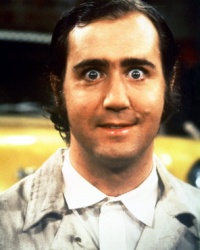
Follow Andy’s Grand Purpose

andy
By Mark E. Smith

The late entertainer, Andy Kaufman, was brilliant – but not as the “comic” that most labeled him. Rather, Andy Kaufman was brilliant as a person, knowing that self-assurance and perseverance always succeeds over any seeming roadblocks or ignorance by others, that no one individual could defeat his grand purpose in life as a great entertainer.

See, in many ways, although now known as an iconic genius in comedy and performance art, Kaufman faced a lot of ignorance in his time toward his “performances” and personality. In fact, he was so different, so seemingly outrageous at times, that a lot of people outright hated the guy. But, Kaufman simply didn’t care. Even when Kaufman’s material bombed, he kept doing it night after night anyway, wisely ignoring criticism because he recognized his own grand purpose even when others didn’t.

What we now know is that despite the critics of his time, Kaufman’s self-assurance was right – his craft was genius, leading the way for new forms of entertainment that are now mainstream, 35 years after Kaufman began befuddling audiences with his uniqueness.

Kaufman died of cancer in 1984, at the age of 35. And, beyond his now-recognized place in entertainment history, his legacy is one that we all can learn from: When we truly know who we are, and know our grand purpose, any ignorance by others is inconsequential – that is, no one can thwart our power to ultimately succeed.

As those with disabilities, we all need a bit of Andy Kaufman in us – that is, a self-assurance that no matter what others toss at us in the form of ignorance, it rolls right off us, and we keep going on to our grand purposes.

If you think about the most common instances of ignorance that we face today as those with disabilities, they’re usually on very small, inconsequential levels. You might roll up to a counter in a coffee shop with your spouse, and the Coffee Captain may ask your spouse what you’d like, rather than speaking directly to you. And, in the typical living-with-disability model, it would be easy for you to become personally offended, take it to heart, feeling outraged and defeated that someone’s seemingly dismissed you because of your disability. But, in the whole scheme of your life, does it really matter toward your grand purpose if the Coffee Captain is ignorant or uncomfortable toward your disability?
Does it truly matter if he speaks to your spouse or you?

Of course not. In fact, if you’re secure with yourself, you wouldn’t hesitate to simply speak up, order your own Guatemala Casi Cielo cup of Joe, and go about the rest of your day totally unfaded. The Coffee Captain doesn’t know you, and maybe he’s never known someone with a disability, so why would you personalize the experience in any way if you’re secure with yourself and empathetic toward others? Order your coffee, cut Mr. Coffee Captain a break, enjoy your Java, and get on with accomplishing your own goals for the day.

In my own life, I, of course, often encounter ignorance toward my disability. Although others who act with ignorance toward me typically don’t bother me at all, it is interesting that my family and friends around me get far more offended by others than I’d ever expect. My sister is the worst, totally hot-headed when she thinks that others are acting with ignorance toward my disability. I remember being in a restaurant with my sister, and every time that the waitress tended to us, the waitress yelled to me as if I were deaf. As dinner went on, my sister became more and more angry. “What’s her problem, talking to you like you’re deaf?” my sister asked me, rhetorically.

Finally, the waitress came back, and yelled at me very loudly, “Would you like desert?”

“You don’t need to yell – he’s not deaf!” my sister snapped back.

The waitress looked startled, her body tightening, looking toward me with immediate concern.

I put my hand on the waitress’ elbow, and said calmly, “Miss, you can talk to me as loudly as you like. Any woman as cute as you, offering me desert, is marriage material in book.”

The waitress put her arm around me, and said quietly, “Honey, I’ll get you whatever desert you wish – it’s on the house.”

Truly, if my sister hadn’t raised the issue, it would have been equally fine by me if the waitress talked loudly to me all night. My goal was to have a nice dinner, not to try to educate and change a stranger. And, this is where many with disabilities get stuck in life: They feel the need to correct and educate every stranger who acts with ignorance toward disability – at the grocery store, at the dinner party, at the bank, and on and on – and end up doing little more than derailing their own pursuits, burying themselves in unnecessarily negative situations.

Surely, disability awareness is great, and we should all embrace groups and individuals open to learning more about those with disabilities – I personally speak to countless groups regarding disability awareness. Yet, the world’s a big place, full of countless individually ignorant, rude people, and getting caught in the emotional trap of constantly confronting others out of anger and frustration simply wastes your own time. Instead, concentrate on fulfilling your own grand purpose – as a parent, lawyer, farmer, entertainer, whatever – and leave those who are ignorant or rude to straighten out their own lives. If an opportunity arises to make an embracing gesture – as I did with the waitress – that’s great. But, don’t make trying to straighten strangers’ ignorant or rude attitudes your mission in life – let them go, and you focus on accomplishing your own grand purpose.

The next time that you encounter ignorance toward your disability, don’t get angry or flustered – let it roll right off of you. Remind yourself to have empathy toward people of seeming ignorance – you don’t really know where they’re coming from in their actions, so give them the benefit of the doubt. Remind yourself that many people’s reactions of ignorance usually reflect their own perceptions, not you as an individual, so don’t take them personally. And, most importantly, remind yourself of, I know who I am, I know my grand purpose in this world, and I’m not bothered by any individual treating me with seeming ignorance – I hope that they learn in their own time, but I’m not giving up my life’s focus in order to confront every form of ignorance that I encounter throughout my busy day.

Andy Kaufman knew that his power was in his difference, and he refused to let anyone strip him of it. You’re power is also in your difference – the entirety of your person, disability and all – and when you feel the seeming ignorance of others trying to strip you of that power, just smile, knowing that you’re self-assured, and go on to live your grand purpose. After all, why waste your time trying to change individual instance of ignorance, when you can ultimately influence the greater good of many with your own life’s iconic work.

Play Your “C” Game

courage
By Mark E. Smith

The terms disability and courage are forever linked in mainstream culture. After all, there’s rarely a disability-related story in the media where we don’t hear an individual with disability labeled as courageous. The two terms are so intertwined at this point that many people even label those with disability as courageous upon mere sight, where a stranger in the grocery store, knowing nothing about you, might even pat you on the shoulder, noting, “You’re courageous.”

Yet, there’s nothing intrinsically courageous about disability. When one acquires disability, courage does not come with it as a package deal. And, we see this clearly when we think of those with disability who have no willpower or desire to do anything with their lives but feel sorry for themselves, believing that the world is one big injustice. Nope, there’s no courage there.

However, the media does have an absolutely correct point: If you’re going to succeed with disability, you must practice courage. In fact, in much of life, regardless of disability, courage is essential to success. Whether it’s starting a business, speaking in front of a group, asking out a dream date, or dealing with addictions head-on, countless areas of life require courage. And, succeeding with disability is no different – it takes courage.

I recently learned of an acquaintance, a quadriplegic, who interviewed for a fantastic job two states away from where he lived. He drove out to the interview with an attendant, toured the company, and immediately received a job offer – a remarkable opportunity in today’s tough economy, and even more impressive when one realizes that the unemployment rate among those with disabilities is upwards of 65%.

But, he promptly turned down the job. When I inquired why he rejected the remarkable job offer, he explained that the move would simply be too difficult for him due to his disability. At 26, he didn’t own a home or have a wife or kids, but he did have an apartment and established attendant care, and he didn’t want to risk his seeming security by moving two states away for employment.

I had to bite my tongue during that conversation, especially since he’d already turned down the job offer – my challenging him on his decision would have been pointless. However, it’s unquestionable in my mind that the reason why he didn’t take the job was because he simply panicked, letting fear get the best of him. Really, he initially had the motivation at some level to apply and interview for the position, but when he actually received the job offer – that is, when life actually presented him the rare opportunity to rise to the occasion – he failed to pull the trigger, he lacked the courage to move forward.

Now, maybe you’re thinking, “Mark, you’re being too harsh. It’s not that easy for someone with a profound disability to just pickup and move two states away for a job.”

And, you’d be absolutely right – it’s not easy for someone with a profound disability to just pickup and move two states away. I’ve been in similar situations, and make no mistake, it’s an intimidating proposition. But, that’s where courage comes in. As I would tell my best friends, I don’t care that you have a disability. When you’re unemployed, and you’re offered a fantastic job two states away – and you have courage – you confront any fears in healthy ways, contact the independent living center in the new area, and begin planning the move – it’s that simple. See, courage is when you’re emotionally strong enough to actively move your life forward despite any fears, and you’re able to cope with adversity in order to find success. Courageous people acknowledge the challenge, determine what needs accomplishing to address the challenge, and then take action to overcome the challenge. It’s an elementary process intrinsic to successful living.

Interestingly, courage isn’t a strength that we always possess – again, it’s not intrinsic to disability. Courage is a tool that we accept or deny when life presents it as an option. However, a fascinating aspect of courage is that when we do rise to an occasion and accept courage, it sets us up toward greater successes in life, building upon itself as exponential growth. If the gentleman with the job offer, for example, made the move two states away, starting his career with a very courageous life change, he would have quickly learned that his independence was intrinsic to him, not limited to a subsidized apartment and care. If he’d made the move once, he would have set himself up for the ability to make a second, third, and fourth career move down the road, possessing the courage to go wherever in the world that opportunity called him. Imagine how his career opportunities would have blossomed with the inspiration gained from accepting courage. Instead, he chose to pass on a terrific opportunity, electing to stick to the familiarity that he knows – and it will likely limit his life, geographically, economically, and emotionally in the future unless he overcomes his fears and embraces courage when needed.

Still, none of us have to shun courage when it calls. Again, the first move toward embracing courage sets us up for success long after that initial dare. We don’t graduate college without having used courage to enroll. We don’t raise children to become successful adults without having used courage to address our own parental coping skills along the way. We don’t overcome addictions without using courage to face our fears in the process. And, we don’t succeed with disability without using courage to rise above the adversities that we encounter. Courage, it’s clear, is where all of life’s opportunities for growth, reward, and success begin.

In my own life, I’ve let courage lead me to some fantastic opportunities, having put myself through college, changed career fields, moved entirely across the country, spoken in front of thousands, met the President, traveled extensively, and on and on. Without a doubt, I’ve found that accepting courage opens doors of opportunity that always improve my life. In fact, I’ve learned to use the call for courage at turning points in my life as a barometer for recognizing the opportunities that I should not let pass, no matter how scary – that is, the more intimidated that I feel toward a life event, the more courage I know that I must demonstrate to embrace it, as it’s a sure sign that I’m heading toward a remarkable experience. Till this day, when I get calls to travel cross-country alone, meet with someone famous, or speak in front of thousands, of course I’m initially nervous; yet, more importantly, I kick in my courage, close-out any apprehensions, and know that it’s game on – that is, I play my C Game, the “C” being courage.

As you approach the New Year, I hope you’ll join me and vow to embrace courage in your own life when the occasions arise. No, I don’t know exactly what opportunities the New Year will bring for you, but every day will present moments for you to accept or deny opportunities of courage. Maybe some of those moments will be on a grand scale, a job offer cross-country – so, pack up and go! Or, maybe some of those moments will be on a smaller scale, as with enrolling in community college – so, go down to campus and sign up! Or, maybe some of those moments will be emotional, confronting an addiction or unhealthy relationship – so, seek the support services that you need, and get your personal life on track!

Put simply, in 2009, opportunities for personal growth, reward, and success will present themselves to you everyday – some relating to disability, some toward your career path, others toward your relationships, and on and on. When these opportunities arise, don’t let fear or complacency get the best of you. Rather, embrace courage, and pursue all opportunities – you’ll always find success when you play your C Game.

Too Hot For Sitting

jeans
By Mark E. Smith

If you haven’t heard, blue jeans are out of control. I was reading the fashion section of a men’s lifestyle magazine during a two-hour flight layover at an airport, intrigued by an article on high-end denim trends, where a pair of “in” jeans now range from $200 to $1,800 – and, according to the article, people are lining up to buy them.

Now, I haven’t been a jeans kind of guy in 20 years. Sure, in high school, all I wore were jeans; but, back then, I don’t recall any alternative. When I was in college, Levi’s began marketing Dockers – bringing back the khaki, chino type of pant – so I latched onto those as a bit more comfortable and upscale than jeans. And, once I entered the working world, I moved into dress slacks, sticking there ever since.

Nevertheless, on a whim, I bought my first pair of jeans in decades about a year ago at Wal-Mart for $14.99. I’ve worn them maybe 4 times, and they’ve seemed fine to me – jeans are just jeans, after all.

So, I was reading the magazine article in the airport terminal, thinking to myself, who in the hell would spend hundreds of dollars on a pair of jeans, when you can get them for $14.99 at Wal-Mart?

In fact, I was so intrigued by who would buy stratospherically-priced jeans, that I pulled up the web browser on my laptop, and punched in some of the jean designers mentioned in the article, looking at their web sites, seeing jeans after jeans that looked like… well… jeans. But, they were crazy-expensive. Out of curiosity, I clicked on the sale section of one designer’s web site, and browsed the so-called deals for the holidays: $798 jeans slashed to $449. However, as I scrolled past the still-crazy-priced sale jeans, I read what I thought was a typo: $345 jeans marked down to $29.95. Yes, $29.95 – with free shipping, no less!

And, as I read the product description, I couldn’t find any catch. Supposedly, these were the company’s signature jeans, made entirely in the U.S., from denim woven on an antique loom, hand dyed 56 times, and sewn by an individual who signed his or her name inside the pocket. Oh, and they were supposed to make my butt look fantastic. All for $29.95, with free shipping.

Of course, I couldn’t resist ordering a pair – the sole shock value alone of telling my friends at holiday parties that I was wearing $300 jeans would be worth the $29.95. So, I ordered them right there from my laptop in the airport, selecting the dark “1-year worn” denim color, instead of the 3- or 5-year light-colored options, because I also read in the magazine article that darker-colored jeans are a more upscale look. And, if I was paying a whopping $29.95 instead of Wal-Mart’s $14.99 – that’s double the price I would normally pay! – I expect to appear upscale.

A few days later, I fetched the package off of my porch after work, eager to see what $345 – or, $29.95 – jeans look like? Inside the cardboard box was a hinged wooden box. As I cautiously opened the wooden box, there were the jeans, wrapped in tissue paper, pressed, immaculately folded, with an embossed, leather pamphlet tied to the belt loop with a ribbon of raw denim, telling the story of their handcrafted origin. No, this wasn’t like coming home from Wal-Mart with a plastic grocery bag, and a pair of wrinkled jeans to throw in the washer before daring to wear them.

As I looked over the jeans, what struck me next was the “1-year-worn” appearance. The jeans looked exquisite, but with subtle color and crease lines where one moves most, including the fly area, which is a by-hand process that the pamphlet called “whiskering.” Beyond the extravagant packaging, I suppose that a good portion of the jeans’ manufacturing cost goes toward the dedicated garment worker who spends his or her days carefully sculpting weathered-looking crotches.

Lucky for me, I had a party to attend that night, so I slipped right into my new jewels of jeans. I must admit, they fit like a million bucks – or 345 bucks, or at least $29.95, with free shipping.

I also read in the men’s magazine that the way to rock jeans is to pair them with a button-up oxford shirt, sweater vest, and a weathered blazer, so I pulled those out of my closet, shaved, and hit my party.

After an hour or so at the party, I received my first comment on my jeans. “I’ve never seen you in jeans,” my friend, Jen, said, patting my knee. “They look good.

“They cost $300,” I said.

“No way?” she replied, looking at them closer, rubbing the fabric on my leg carefully with the tips of her nails, a freshly-lit cigarette between her fingers.

“Totally.” I said. “They’re from a boutique designer in Manhattan. I saw them in a magazine, and had to have them. They’re hot.”

“You’re insane,” she replied, laughing, then sipping her drink.

“Check this out,” I said, spinning my wheelchair around. “How do they make my butt look? Is my ass hot in them or what?”

“I don’t know – you’re sitting down,” she said, taking a drag off of her cigarette, blowing smoke upwards, then giggling.

Roll In Like You Own the Place

partymark
By Mark E. Smith

We hear of those who note that disability can be a hindrance in social settings. After all, if you roll into a club of the glamorous, and you’re the one using a wheelchair, it visually tags you as “different.” However, even in the most superficial of social scenes, who says that appearing as “different” because you use a wheelchair has to be bad for your social life? In fact, is it possible that your “difference” can actually work for you in the positive when it comes to making new friends and winning over a room full of strangers?

If you’ve ever met me in person, you know that I’m an always-upbeat, outgoing kind of guy, enjoying any social setting. I smile and say hello to everyone. I shake hands with men, and kiss women on the cheek. And, I always throw humor, wit, and charm into every conversation. I genuinely like people, and I learned long ago that when I relate warmly to others, they respond equally well to me. Sure, my disability still freaks out some people, but I find that in almost any circumstance, my personality can move them over to a level of comfort that helps them see beyond my disability, to the point where it can even give me an edge over others in a social scene.

I have been known to end up out carousing with friends every once in a while, landing at hip, trendy clubs where the guys and gals take pages from the Hollywood set. The dudes are typically pumped-up and decked-out in their designer duds, and the women are usually bleached, tanned, and nail-polished like Barbie dolls on the loose with Daddy’s platinum card. What’s often striking among such crowds, though, is that at some point, one of the “beautiful people” usually asks someone in my group who I am? In fact, recently a woman in such a scene asked if I was someone famous? My friends and I, of course, thought that the woman’s question was hilarious, especially since we overheard one of my friends reply, “That’s Mark – of course he’s famous.”

But, why would a stranger in a club ask if a cerebral-palsied guy using a wheelchair like me was famous?

Probably because when I’m out, I go big – all in, large and in charge.

I roll in elevated on my power chair’s seat lift, bump fists with the door man, and smile as I stroll through the crowd. I make eye contact with everyone I see, saying, “Hey, how are ya,” and move in like I owned the place. Within minutes, I’m chatting it up with folks around me, soon I’m grooving to the music, and my cache grows from there. At some point, the band often dedicates a song to me, and I end up partying the night away like a rock star, drawing moral boundaries when needed, but having such an over-the-top time that my friends know that there will be Monday morning stories to tell – or deny.

So, how do we, as those with disabilities, roll into a social situation and sway it our way? Or, more aptly, how does a big-eared, goofy-smiled, spastic dork like me me win over a jet-set crowed of strangers?

With energy and confidence – that’s how. It amazes me how some with disabilities automatically presume that the fact that they appear physically different penalizes them socially among strangers. But, it doesn’t have to. I mean, sure, if you’re utterly self-conscious about you’re disability, it will absolutely hold you back, where people may very well observe that you are shy, insecure, and uncomfortable when you roll into a room. And, no one seeking a good time wants to be around a shy, insecure, uncomfortable person with a disability – or any such person, for that matter.

However, what I’ve learned is that our “differences,” including disability, don’t have to be limiting disadvantages; rather, our “differences” can unquestionably serve us as empowering distinctions. It’s all in how we present ourselves – that is, outgoing, confident, and comfortable.

When you roll into a social scene in a wheelchair, people will notice you – and that can be a huge advantage over others who simply blend in when they enter a room. With everyone’s eyes drawn to you because you’re different, you then have the opportunity to turn it into a distinction by flashing your smile, making eye contact, saying hello to everyone you encounter, acting like you’re all but running for political office – that is, you can exude a confidence and charisma that’s unmistakable, where people think to themselves, “Who’s this cool cat in the wheelchair working the room?”

Then, there’s a snowball effect, with others noticing that people are warming up to you, peaking everyone’s interest even further. Next thing you know, you’ve got an entire scene of people comfortable, with women and men alike actually coming up and introducing themselves to you, where you’re holding court in the center of the place like you’re a true celeb. In these ways, it’s amazing how quickly you can turn your entire persona as one with a disability from one of obviously different to captivatingly distinct.

Surely, rolling into a room full of strangers like you’re a rock star is a scary thought for some. After all, lots of people are self-conscious and shy, and the perceived difference that disability suggests can absolutely affect one’s self-confidence for the worst – all of which adds up to making it seemingly impossible to pickup one’s social game and view one’s wheelchair as a people-magnet. Plus, based on lifestyle and career, some people don’t have an opportunity to hone their social skills as much as others.

However, it truly doesn’t take too much confidence or skill to begin – just enough courage and awareness to thrust yourself into the scene, and smile, make eye contact, and have light conversation. I often try to ditch my friends at some point when we’re out, and go off on my own to meet new people simply because it’s a skill that takes constant developing, where the more we socialize with strangers, the easier it gets – practice makes perfect. If you look at it that way, it’s truly quite simple, isn’t it? I may feel insecure on the inside, but I’m going to suck it up, flash a smile, look others in the eyes, and work my way through the crowd like I’m the popular co-ed on campus! And, you will be.

Now, just like anyone looking to work a social scene, it’s important to address the occasion as a whole, aware of how you present yourself and who you associate with. For starters, always dress appropriately for the occasion. If you show up at your local hot-spot in stained sweatpants and a wheelchair expecting to win over a crowed, you’ll appear out of place at best, creepy at worst. Disability doesn’t negate pride in appearance, and you should dress with flair, where people’s eyes transition from your wheelchair to noting how well you’re decked-out. Call it shallow, but simply dressing nice, with good grooming, goes a long way toward increasing one’s status, wheelchair or not.

Similarly, use discretion toward who you’re around – and who’s around you. Let’s face it, if the social scene has booze, the person using a wheelchair will likely become a draw for drunks. “I love you, man!” every drunk will say, putting their arms around you, patronizing. Stay away from these people, and when they approach, make it clear that you want them to leave you alone, period. You want others in the room to see you as empowered, and if others see you engaged with drunks patronizing you, others will likely write you off, back to “different” instead of as distinct. Esteemed, empowered people don’t associate with slobbering drunks, and neither should those with disabilities.

Put simply, view your wheelchair as a positive hook toward capturing attention, then let your class, character, and personality carry you the rest of the way. Dress the part, act the part, and make yourself the one to be known, disability and all.

Make no mistake, your disability will get others’ attention, but you have the ability to dictate that it’s for the better. The next time you’re out on the town, roll into the social scene like you own it, flashing a never-ending smile, acknowledging everyone with eye contact, striking up conversations with a quick wit, and show the room with your empowered presence that you’re not just the one with the wheelchair, but also the one with the charisma and personality to set the place ablaze.

Children First

markemily200
By Mark E. Smith

When we’re very young, we dream of having “heroic” careers as police officers, doctors, nurses, and teachers – that is, careers where one notably helps others beyond oneself.

However, once grown, we can lose sight of our intrinsic heroic abilities, living in a culture where many of our roles are defined as anything but heroic, living meaningful but admittedly common lives, where we’re not fighting on the front lines or performing heart transplants. Yet, we still have the ability to serve as heroic in our everyday lives: As parents.

If you think about the best parents, they truly are heroic in the eyes of their children. The best parents put the family’s needs before their own; they demonstrate the willpower to make tough decisions and set boundaries; they live by devout morals and ethics; they persevere; and, most of all, they demonstrate in deliberate ways every day that they love their children, showing a clear belief in their children’s abilities to grow up and become a remarkable individuals. Indeed, being a hero doesn’t take an esteemed career, money, or fame – just dedication as a parent.

As one with a disability, and as a parent, I’ve learned that disability not only effects our ability to be heroes in our children’s eyes, but often serves as a make-or-break situation for the role. Countless times, a young person in his or her teens or early twenties has come up to me at an event, noting that his or her parent has a disability, and I always ask, “How’s your parent doing?”

The child’s response is usually unmistakable, and never middle-of-the-road. He or she either lights up with a smile and says, “Great,” or he or she looks down at the ground and quietly says, “Not so good.”

As we’ve talked further, the optimistic children always note how despite hardships, their parents with disabilities remain remarkably positive and involved in their lives, whereas the somber children express how disability has removed their parents from their lives in many ways. What’s strikingly obvious in these conversations, though, is that the conversations aren’t about the parent at all; rather, these conversations are truly about the child.

No matter the age, children look to their parents for examples on how to live, how to cope in the complex world around them. When a child sees his or her parent challenge disability with resilience, perseverance, and optimism, that has a profoundly positive affect on the child’s self-image and life skills. A friend of mine lost both legs and one arm in an automobile accident when his two daughters were ten and twelve. The two girls watched as their father went through unimaginable changes, including the scary realities of rehab, which hits home the true impact of one’s injury toward daily living with profound disability. Yet, my friend kept his daughters close to him through every moment of the process, reassuring them that while life was going to be different, it would ultimately be alright. As the years passed, the girls saw him return to work, they saw him helping with their homework at night, they saw him coach their soccer team, and, most importantly, they saw him just be Dad. The girls are now in college, and are doing exceptionally well. Their dad’s disability, it proved, helped them see perseverance, resilience, accountability, and humility in action – traits that can only be modeled by a mindful parent. There’s no doubt that as a father, he’s a true hero to his daughters.

See, when a child witnesses such pronounced parental dedication, it unquestionably builds tremendous esteem within the child. A child ultimately takes life queues from a parent based on what’s modeled, not what’s said, where a parent’s proven perseverance, resilience, accountability, humility, and love creates the healthiest of child. Add to this a parent’s positive approach to disability – which emphasizes the aforementioned traits – and a child recognizes an even greater hero in his or her parent, where children like those of my friend intrinsically know that Dad’s done it, and so can we.

While a parent’s healthy approach to disability can inspire a child’s life to remarkable heights, an unhealthy approach can devastate it – forever. If there’s one aspect that a child needs in daily life, it’s positive forms of assurance and stability. When a parent is upset, a child is upset. When a parent is fearful, a child is fearful. When a parent can’t cope with life, a child has no way to cope with life. And, when a parent allows disability to destroy his or her life, it also destroys a child’s life.

Truly, among the most destructive paths that a parent can take is to use his or her disability as an excuse to allow out-of-control emotions and circumstances to enter the family’s life. Such circumstances strip a child’s sense of security and leave him or her void of healthy coping skills. What’s more, children naturally assume a role of caring, wanting to “fix” their clearly emotionally broken parent, and when a child can’t, a child experiences tremendous guilt. What a parent’s inability to cope with disability adds up to, then, is grim statistics, where no parental guidance or coping skills, compounded with a sense of shame and guilt within the child, fosters unhealthy life choices in children, teens, and adults alike.

I’ve seen it play-out first-hand, time and time again, where the children of parents who tune out due to disability end up virtually lost. My initial realization of this fact began in the fourth grade, where an able-bodied classmate’s dad was recently paralyzed from the neck, down, a very high quadriplegic. We lived in the same neighborhood, so my classmate and I hung out together. I remember witnessing it month by month as his parents’ marriage disintegrated, and his dad became a profound substance abuser, living in squaller, with no concern toward his son. In fact the situation was so bad that my own father, an alcoholic who was in and out of my life, actually intervened in my friend’s dad’s situation, moving him into a nursing home when he was on such a downward spiral that his life was at risk. I remember often going with my friend to see his dad at the local nursing home after school, and his dad would just stare at the television, motionless. “Tell your mom to bring me cigarettes,” is the only thing I ever remember him saying to his son.

My friend’s mother was a successful business woman in our town, and by all accounts, she did the best that she could toward raising my friend alone. My friend and I ended up losing touch in junior high when I moved to a neighboring school district. However, during my senior year of high school, I ran into my old friend at a party, and he was a complete mess – drunk, stoned, and not graduating like the rest of us. After a while of catching up, I, of course, asked how his dad was, and he explained that his dad had died two years earlier. And, what he said next haunted me even then: “I wish I was there for him more. I feel like Mom and I let him down.”

Think about the profoundness of that 17-year-old’s statement: His father completely dropped out of life due to disability, leaving his son feeling entirely responsible, clearly unable to cope. Do you really think that that young man went on to the healthy, happy life he deserved?

Of course not. His father used disability as an excuse to leave his son full of shame and guilt – a devastating legacy.

Well into my disability-related career now, it saddens me how often I encounter teens and adult children alike whose parents’ inability to cope with disability is destroying the children’s entire sense of self-worth. Sure, the dysfunctional parents always grab onto the excuse that they didn’t choose disability, that everyone in the family is a victim, especially them for physically suffering. But, I’m bold enough to tell such parents that their self-centered nature isn’t about disability, but about poor parenting, where the only victim is the child. In no uncertain terms, parents with disabilities need to get over themselves and their disabilities, and simply be parents.

The fact is, disability does not dismiss parental responsibility, nor does it give any right to place any additional emotional burdens on one’s children. Someone questioned me on this stance, asking, so then how does a parent who’s emotionally struggling with disability realistically not let it spill over to his or her child?

My answer is simple as it gets: Your child’s needs must come before your own. If you feel that you’re struggling with coping skills, you don’t let it spill out on your child; rather, you must act as a grownup, and seek healthy outlets among other adults and professionals. And, along the way, you take accountability for your actions, form healthy coping skills, demonstrate perseverance, and build dignity – traits that you should pass onto your child through modeling positive behavior every day.

Make no mistake, the equation is strikingly clear: When we place parenting above all else, our children excel, but when we put our disability above all else, our children suffer. And, there’s no in-between. Disability isn’t easy, and neither is parenting. However, when you have the integrity to put your child before your disability, and make the daily effort to model perseverance, resilience, accountability, humility, and love, you live up to your responsibility as a parent – that is, you become a true hero in your child’s life.

The Power of Five

By Mark E. Smith

In the late 1990s, my best friend and I had among the most candid conversations. Many people with his condition pass away in their mid to late 30s, and with my friend approaching that age, he was understandably troubled by it – especially since peers he’d grown up with recently passed. Although, I didn’t let on at the time, the realities of the conversation touched me deeply, not only out of fear loosing my best friend, but also in the sense of considering mortality due to complications of disability, a subject that’s pondered with apprehension by many.

Here we are decade later, and my best friend continues giving me a constant run for my money to keep up with his successes. I had the honor of serving as his Best Man exactly a year ago, so he’s currently celebrating his one-year anniversary; he continues his long-time career in the software industry; and, he’s made terrific moves toward long-term financial success. In all bluntness, for a guy who questioned the realities of his lifespan ten years ago, he’s more alive than ever. In fact, it can be argued that my friend is far more alive than many of us, where he demonstrates that living is as much about tomorrow as it is today – a lesson that we all should learn from.

Now, I know that living for tomorrow seems a contradiction to the new-age adage to make the most of today because you don’t know what tomorrow brings – and the unpredictable nature of disability can emphasize that point. However, contrary to pop-motivational rhetoric that says live like there’s no tomorrow, dismissing a long-term outlook is ultimately a very pessimistic, self-defeating perspective, stifling our growth and diminishes the quality of our future, especially when it comes to living with disability.

Interestingly, when we think about the overall will to live – not just in a life-or-death sense, but also toward living an overall passionate life every day – it’s striking how it all comes down to our optimism for the future. I mean, when we feel the most positive, it’s usually because we’re looking forward to something in our future: Climbing the corporate ladder at work; the anticipation of graduating college; finally paying off a car loan; having a child; or, taking a long-awaited cruise next summer; and, on and on. It’s the long-term hallmarks and goals that give us a sense that life is simply worth living because our best days are sure to come.

It is true that some with disability and illness don’t believe that they will maintain any semblance of health long enough to have a future, while others simply feel so defeated by disability that they have no interest in planning a future. After all, if one believes that one’s future will be bleaker than the past due to disability, what’s the point of living for tomorrow?

To dramatically improve one’s life – it’s that simple. While we all must live today to the best of our abilities, living for tomorrow is truly what inspires our lives. And, if we place no emphasis on dictating the quality of our future, surely it will be bleak. See, living for tomorrow moves us forward both in the immediate and in the longterm. In the immediate, a sense of purpose is the surest way to maintain our daily spirits. If one sits at home, feeling that the best days are behind, with no plan for the future, of course misery, depression, and despair set in. However, if one’s working toward a future goal, one can’t help but feel more positive. I can’t wait till the day my car’s paid off – I’ll be that much farther ahead financially. I can’t wait till our wedding day, when we start the rest of our lives together. I can’t wait to graduate college and start my dream career. When we look to our futures with optimism, it’s impossible not to feel more empowered in the immediate.

I’ve been speaking at a lot of colleges recently, and one of my recurring messages that I deliver is recognizing the power of five in our everyday lives, where setting five-year goals gives us an astounding opportunity to bring tremendous change – and toward life wife disability, it can prove even more impacting for some:

The unemployment rate among those with disabilities is approximately 65%, with a median household income of $13,500. However, studies show that those with disabilities who have a bachelor’s degree have the same employment success as those without disabilities, experiencing an unemployment rate of 6%, with a median income of $51,000. Therefore, one with a disability can go from a high school diploma to a bachelor’s degree, from unemployment to employed, from living in poverty to a meaningful income – all in just five years. That’s astounding change, in a relatively short amount of time, simply by living for tomorrow.

A terrific universal example is that the average household income-to-debt ration in the U.S. dictates that, with focus, all household debt, except for the mortgage, can be paid off within three years. Therefore, an average household can not only be debt free, but have savings in the bank – all in just 5 years. Again, that’s an amazing change in one’s life by living for tomorrow.

I, myself, have always used goal setting and the power of five to remain remarkably optimistic and keep momentum in my life. In junior high, I knew that with very little family support, I had to ensure that I was as physically independent as possible by the end of high school, so that I could go out and live on my own. By graduation, I was astoundingly independent for someone of my disability severity level – it took about five years for me to accomplish. When I enrolled in college, I wanted to obtain my degree, publish a book, and have a job in the education field – it all occurred within about five years. I knew from our first date at age 22, that I wanted to marry my wife and have children, and eventually it all came true – within around five years. When I set my sights on graduate school, then changing careers, moving my family across country to take a role in the wheelchair industry, it all came to fruition within five years. Five years, it’s proven to me, allows us to make amazing changes in our lives, and when we work toward our goals, it inspires our everyday – that is, it’s hard not to be enamored by the lure of a promising future.

Surely, some with progressive disabilities or terminal conditions can have a hard time finding enthusiasm toward the future, where health declines are foreseeable, suggesting that the best of life is behind, where looking to tomorrow may seem scary, with a five-year vision seeming impossible. However, the positive impacts of living for tomorrow don’t change. My mother-in-law recently passed away from cancer. A big question upon her terminal diagnosis was, how long did she have to live? The doctors and hospice nurses all told us the same prognosis, that because her cancer was throughout her body, there was nothing medically that could save her life. However, they couldn’t give us an actual life expectancy. Instead, they explained to us that beyond the realities of the body, an “undefinable” comes into play – known commonly as the will to live – where some in my mother-in-law’s condition die hours after diagnosis, while others live for a year or more. “I’ve seen a woman in outwardly good shape say goodbye to her family, then died that night, while I’ve seen another woman who just refused to die and lived beyond any medical explanation for three years,” a hospice nurse told me.

When I asked the nurse if she saw a common factor among those who lived longer than others, the nurse was adamant in her reply: “Absolutely,” she said. “It’s just the will to live that makes the difference. Many patients, even when unconscious, hold on until their families have a chance to come say goodbye. Of those who live well beyond where they medically should have died, they’ve usually held out for the wedding of a child or the birth of a grandchild or other monumental, joyous life event.”

It’s interesting, then, how even in the most terminal of situations, living for tomorrow empowers our lives till the very end. And, if we have the intrinsic capacity to actually prolong our own passings, no matter by hours or years, it makes the potential for positive foresight in our everyday lives seem limitless, where goals toward education, career, family, finances, and community seem easily achievable in the long term.

The fact is, I’ve never meet an inspired, engaged, successful person who wasn’t living for tomorrow – including those with disabilities, no matter progressive, terminal, or otherwise. Taking initiatives to set goals for our future literally improves our lives by giving us a sense of control and empowerment, keys to dealing with disability and all areas of life.

No, there are no guarantees that we will achieve all of our goals in any of our lifetimes. However, if you’re reading this today, I can guarantee you that tomorrow will surely come – and you now have the perfect opportunity to set goals of what you’ll accomplish to bring positive change in your life. Better yet, I say aim high, and shoot for the five-year plan – after all, life snowballs for those actively pursuing it, where in no time, you can transform the challenges of today into the successes of tomorrow, where even the most seemingly insurmountable challenges can be overcome in a just few short years.

Hedging Our Bets


By Mark E. Smith

A few days per week, on my wheelchair ride to and from work, I encounter an older woman who sits on her porch, watching the traffic go by. I roll up her walk, and we chat for just a minute or so, and the conversation is always the same: She tells me of how her ultimate salvation is going to be when she wins the state lottery, unyielding in her conviction toward it.

Indeed, she tells me of how in 77 years of living in the same house, never having left the valley that we live in, she’s going to take her lottery winnings and buy an “around-the-world steamship ticket.” She tells me of how she’s going to take her lottery winnings and pay off the debt that her “no-good husband” left her with when he died. And, she’s tells me of how she’s going to take her lottery winnings and put her great-grandchildren through college, the first generation to attend, she hopes. I once asked her how long she’s played the lottery, and she replied, “Since it began. Eventually, I have to win.”

Of course, statistically, she’ll never hit the jackpot, and she’ll likely spend the rest of her life on that porch, caught in the trap of wishful thinking. No, I certainly don’t want to judge the woman’s views, as I don’t know the entirety of the life she’s led. However, I can’t help but think that if she’d always applied her unyielding belief in winning the lottery to a belief in her own ability to simply work and achieve financial goals on her own accord, she’d be a lot farther in life. Truly, it’s indisputable that working day and night, and saving for one’s retirement and children’s education is the surest bet for financial peace – whereas, simply sitting on one’s porch counting on winning the lottery for financial salvation is sad at best.

I’ve seen this same waiting-for-the-lottery mentality stall the lives of some with disabilities. It must have been 15 years ago when I met a young man, my age, with quadriplegia, who was waiting to win his own lottery. We were both in our early 20s, and while others with disabilities and I pursued college and career, he was waiting for a cure – literally. He was paralyzed in a car accident at 16, and after that, he and his family focused all of their attention on awaiting a cure for his spinal cord injury. He told me of how after his accident, he never returned to high school, but was merely waiting for a medical breakthrough. “We’re not accepting anything short of a cure,” his father told me.

Here we are fifteen years later, and although I have no idea whatever happened to that young man, science tells us that he hasn’t been cured, that he’s never won the lottery that his family hinged his life upon. Yet, I hope that at some point he realized that while holding out hope for a cure can prove positive, it shouldn’t include putting one’s life on hold. I hope that he realized the importance of moving his life forward, irregardless of a cure, as time ticks for all of us, and years spent simply waiting are waisted when one can be reaping the rewards of doing. In all, I hope that he went back to school, got his degrees, built a career, started his family, and made his life more about doing and succeeding than waiting and longing.

I know that some believe that making the most of what we have, not waiting for a cure to save us, lacks vision toward accomplishing the impossible. But, the opposite is actually true. In a literal sense, those with disabilities who are most influential toward promoting real potentials toward cures aren’t sitting around with their lives on hold wishing for a cure. Rather, those with true hope are out making the most of themselves in the here-and-now with disability, pursuing education and career, raising their families, engaging in community – accomplishing whatever they can with their individual potentials – all while lobbying for research and creating awareness toward cures. After all, cures don’t come from wishful thinking, but from actually doing.

Along the lines of common sense, what does one truly have to gain from simply waiting for a cure? I mean, if one truly believes that a cure is coming, why wouldn’t someone best prepare for it by pursuing education, career, and family – or living the fullest life possible to one’s abilities – in the meantime? As I always say, there’s no benefit to being uneducated, poor, uninspired, lonely, and disabled, so why would one plan on being uneducated, poor, uninspired, lonely, and cured? I know that sounds a bit funny, but there’s a real point to it: If one is going to ensure a successful life, cured or otherwise, it can only start with the immediate, or one will never succeed.

As those with disabilities, if we’re going to lead successful lives, surely we can focus partly on the quest for a cure, if we wish – but we shouldn’t hinge our lives upon it. What we must do is, start with the here-and-now – disability and all – and focus on making moves that universally improve our lives: Education, employment, relationships, and community, using whatever abilities we have at any given moment to create impact and momentum. And, along the way, if we wish, we can also contribute to the quest for a cure, understanding that it’s part of our lives, but not the sum of it. That is, we can still buy lottery tickets, but it can’t be in place of working to ensure our own wealth.

If we simply follow that common-sense path – making the most of our lives, disability and all, working toward a balanced life of accomplishment – an astounding transformation occurs: After 15 years, one awakens not in one’s parents’ house, with life still on hold, but in one’s own home, with a spouse, children, and inspired career. And, if some day a cure comes, it will be terrific icing on the cake – because one has already worked to make life so remarkably fulfilling.