Coming Out of the Closet – With Everything

closet.1

By Mark E. Smith

Isn’t it amazing how incongruent we can be within ourselves and in our lives? When I say incongruent, what I mean is that the three levels of our behavior don’t align – that is, what we think and feel is different than what we do, and that’s different than how we portray ourselves to the world. It’s like splitting ourselves in three directions where our lives – let’s be blunt – can become hidden and fragmented at best or torturous lies at worst.

Here’s a great example we can all relate to…. We all have that close friend or family member who confides in us that he or she resents his or her spouse with a passion, wanting out of the relationship. However, while he or she may have a combative or distant relationship with the spouse, true feelings are never expressed and the person stays with the spouse. Then, you log on to Facebook and see him or her posting the most happy couple photos ever! It drives you crazy because you know the person is living an incongruent life – read that, a facade – doesn’t it? Again, if we are to live a congruent life, our feelings, actions and portrayals must all align.

As if our incongruent friends and family don’t drive us crazy enough, when we live with incongruence in our own lives, it’s torturous. So much of our incongruence comes from fear of being judged or rejected, and that’s a valid fear that we all struggle with at points in our lives. However, in that process, we risk our own emotional health and happiness by being incongruent. I go back to my couples example. If I tell my spouse I’m unhappy for reasons X, Y and Z, and I’m not going to keep living in limbo by acting like this relationship is somehow working, and I’m not going to present an unrealistic image to the world, what’s the result? I’m honest with my feelings, so that’s a release. I’m honest in my relationship, so it’s either going to improve or we go our separate ways. And, I’m honest with everyone around me, so they can truly know and support me.

Now, of course discretion should be used when transitioning from incongruent to congruent behavior. We want to minimize hurting others in the process of living congruent lives – although, sometimes it can’t be helped. I mean, Grandma might be mortified to know you’re gay, but she’ll get over it – you owe it to yourself to be congruent in who you are. In fact, regardless of your particular circumstance, most will embrace you more for living a congruent life because it’s rooted in authenticity and honesty.

In my own life, I’ve lived both ways, and incongruent behavior never worked. I may have thought I was presenting myself in the best light by not expressing who I truly was in one way or another, but it always failed me in the end – it harmed relationships and proved me as lacking authenticity. In later years, I just put it all out there, and if others accept me for me, great; and, if they don’t, I’m fine with that – at least I’m me. Two years ago when I first got together with my fiancée, I took it slow in healthy form, but I disclosed every aspect of my life, from the realities of my disability to my views on intimacy to the fact that my dog liked to poop in the hallway when no one was watching. I may not have been the prize she was looking for, but at least she knew I was authentic – and no trait holds more weight in a relationship than demonstrating trustworthiness through congruent behavior.

All of us have little areas in our lives that are fine to keep to ourselves (your mom doesn’t need to know specifics on your intimate life!). However, in the larger spectrum of our lives and identities, congruent behavior is vital to living a healthy, happy life. After all, the only way to be yourself is to truly be yourself.

The Math of Life

equation

By Mark E. Smith

I love having problems. See, what I’ve learned in my life is that problems are opportunities for solutions, and with solutions comes success. In fact, in most cases in our lives, our biggest successes begin with a big problem.

Many have the equations of life backward. Although in math we’re taught that problems are solved with absolute solutions, many never look at life that way. Instead, we often view problems as unsolvable or insurmountable. Often when we encounter a problem, we give up or dramatically change directions. And, this, of course, makes achieving success and accomplishing our dreams impossible.

However, if we look at a problem as the first step toward success – that is, if I overcome this challenge, I will achieve my goal – a problem becomes nothing but positive. I mean, losing a great job for example, is in most people’s minds one of life’s toughest problems. Yet, I’ve known countless people who have used a firing as a catalyst to land better-paying, more-satisfying jobs. In this way, the problem of losing a job can either be a devastation or an opportunity for career advancement – and we have the power to choose the path.

Now, there are also bad problems and good problems, and while the objective is the same – find a solution! – few realize the difference. My daughter is formally enrolled to begin college this fall, as are many of her friends. The number one topic I hear from my fellow parents these days is the problem we’re all facing with looming $30,000 to $40,000 annual tuition bills. I’ve been expressing to my peers that this is a fantastic problem to have because while it may seem a financial nightmare on the surface, it’s only because we have amazing kids who’ve worked really hard to get accepted to among the best schools. If our biggest problem is paying for our children’s college because they’re succeeding in life, we’re actually blessed – it’s a great problem to have.

I’ve been working through good versus bad problems in looking to buy a new home. While my fiancée and realtor have been diligent and patient, it’s been impossible so far to find a home that can be made reasonably accessible for my power wheelchair and interior adaptations, such as an accessible bathroom. We’ve found several homes that if I could walk would have been dream homes. However, due to my special needs, house after house has had to be ruled out. It’s seemingly becoming a bad problem because as a man using a wheelchair, I’m seeing firsthand the problem we have in this country with an overall lack of housing that can be made accessible, from rentals to purchases. However, as one with a disability – where based on remaining social stereotypes and societal barriers to employment, my peers have an 85% unemployment rate – I’m blessed to be able to afford home ownership. Therefore, the ability to afford a house, but not be able to find one quickly based on my access needs, is a good problem to have.

In both these situations, what may seem like problems are actually remarkable opportunities for success. Solving the problem of costly tuition means that my daughter is the second person in my family’s history to attend college and, ideally, go on to an amazing career.  Solving the problem of finding my accessible dream home will allow me to live in my own sanctuary, full of laughter and love for decades to come. Yes, such circumstances begin as problems, but eventually they are pathways to remarkable success.

We all encounter problems in our lives, and it’s so easy to be frustrated at best, devastated at worst. However, if we’re going to succeed amidst adversity, we need to look at problems not as obstacles, but as opportunities. When we face a problem, it’s rarely that life isn’t going our way. Rather, when we face a problem, it’s usually life simply asking us to look at the situation a little deeper – and there within most often resides a path to greater success than we ever imagined. We may have problems, but we also have solutions to achieve amazing success.

Living Deer Head

dearhead

By Mark E. Smith

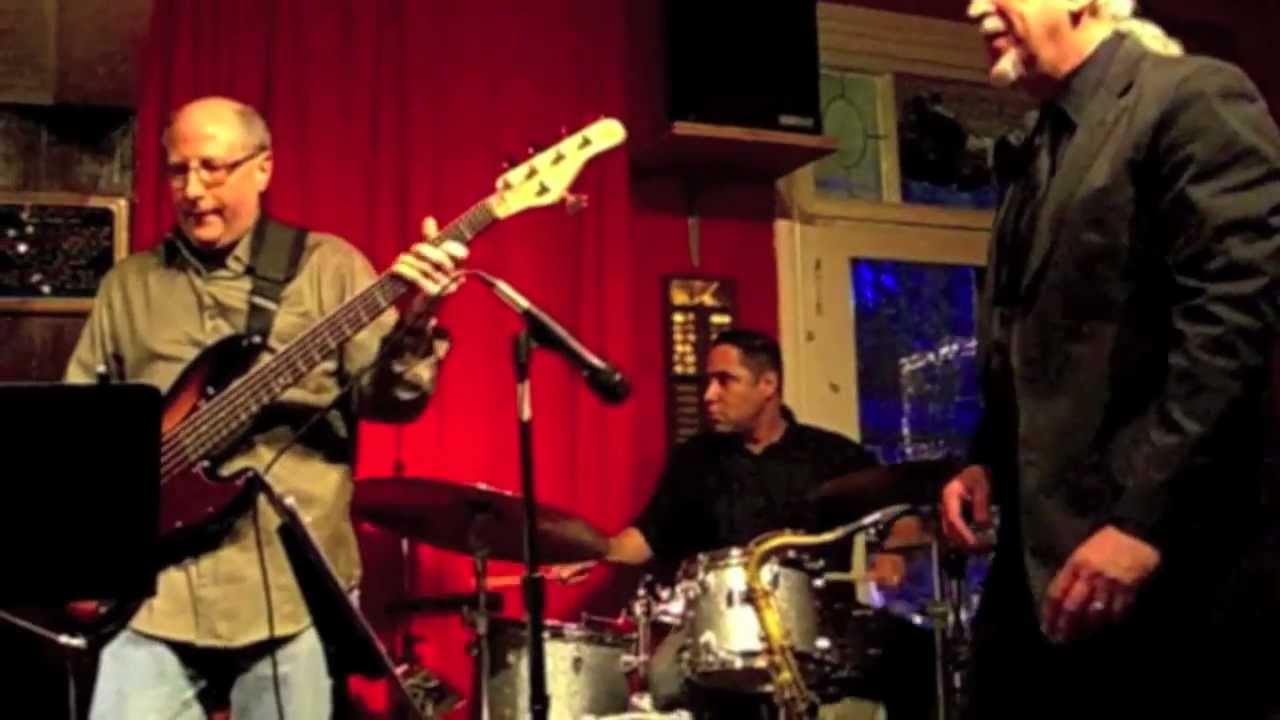
The Deer Head Inn, in the middle of virtually nowhere, in a 150-year-old saloon-hotel on the Pennsylvania-New Jersey border, claims to be the oldest continually operating jazz club in the United States. That status may be up for debate, but what’s a fact is that you’ll see literally among the best jazz musicians in the world there on any given Friday night, among a silent, eyes-fixed crowd of no more than twenty. It’s as intense as it gets.

Now, I, myself, know nothing about jazz. But, I know intensity – and I know what it takes to get that good. You play every day of your life. You play till your hands, fingers blister and bleed. And, when you’re not playing and practicing, you’re thinking about it, learning about it, breathing it. See, you don’t get to be the best in the world overnight, and you don’t do it without a drive beyond all drives, where nothing stops you, not even blisters and blood.

I’ve learned time and time again in my own life that when we start where other people stop, that’s where true progress begins.

Like the jazz musicians I go see at the Dear Head Inn, I have some idea of the sacrifice it takes to pursue the extraordinary, to start where others stop, to push yourself till you literally bleed. See, among the most intense, extraordinary times in my life was in my mid twenties, when I was broke, finishing up undergraduate work and writing freelance. I had come a long way in life, but I knew that I could write better, and by writing better, I could live better.

During that era in the literary world, San Francisco State University’s creative writing program was renown as the best-of-the-best, where from the students to the staff to the guest lecturers, it was an incubator of craft, the truest heights of writing. And, I wanted to go there; I wanted to be among the best-of-the-best.

However, there was every reason why I couldn’t go: it was unbelievably competitive to get in to, I couldn’t afford tuition, and, as one with a severe disability, I had no transportation to get there every day, 50 miles from my home. But, in growing up with cerebral palsy, I knew a lot about tenacity and perseverance.

I put together an application and portfolio, and was immediately accepted into the program. Then, I scrambled to secure grants and scholarships, getting my tuition paid. Lastly, I found that by taking two buses and a train, three hours each way, I could make the commute.

I remember sitting through my classes the first day and knowing that I was living the opportunity of a lifetime.

Semester after semester, I was being taught by and working with the top writers in the world. Guest lecturers flew in, best-selling novelists critiqued my work, and I learned the formal craft of writing to a level I never knew existed. And, then, there was the whole decadent, glamorous scene that surrounded it all – from the literati to the tantalizingly lurid.

But, for me to study and write at that level, I had to live it to an ultimately disturbing intensity. Due to my disability, I wasn’t able to simply use the bathroom, so the commute and my schedule had me not urinating or drinking for 18 hours per day. Ultimately, my body was at its breaking point.

One morning my wife of the time got to my urinal before I did, and discovered my secret: I’d been urinating blood for months, an infection so bad that I should have been hospitalized. Yet, like every other morning, I raced to catch the bus. Why would I risk my health and live in such agony, all in the name of writing?

The answer is, I didn’t want to stop where others would. If you’re going to be great at what you do, sometimes you must throw rationale out the window and push yourself beyond what’s logical. Like a jazz great, you need to play till your fingers bleed.

Bus Stop at Purpose Ave.

Jayne__Kenya_1

By Mark E. Smith

Think about the most genuinely happy, joyful person you know. I have no way of knowing that person, but I certainly can tell you all about him or her. His or her smile lights up a room. He or she is totally comfortable in his or her own skin. He or she doesn’t worry about trivial aspects in life. He or she is one of great comfort to others in an especially unique way. And, he or she is slowly but surely changing the world for the better. Who is this individual?

The answer is, it’s a person living to his or her purpose. See, when we live with purpose, it’s impossible not to be happy and successful. After all, in living with purpose, you know the value of your life, the positive ways you impact others – directly or indirectly – and how you change their lives for the better. Most importantly, you recognize the value of others, and strive to meet their needs with your unique abilities.

For some, their purpose seems obvious. A police officer protects citizens. A comedian makes people laugh. An emergency room nurse saves lives. However, for the rest of us, finding or recognizing our purpose can be less obvious.

I recently had this talk with my 18-year-old daughter: how do we know our purpose? An even more challenging question is – and it’s one of the toughest in humanity, an age-old inner-struggle – do I even have a purpose?

As one who feels tremendous purpose in my life, I thought a lot about what core questions does my daughter – or any of us! – need to find and understand our purpose?

And, so I gave my daughter some questions to ask of herself:

Who am I?
What am I passionate about?
How do I effect other people?
What do others need from me?
How can my everyday actions better other’s lives?

For me, the answer is easy. I have cerebral palsy and in understanding the liberation of mobility and independence, my purpose is in helping others achieve those vital aspects in their own lives. As a result, at the end of each day, I feel the privilege of having a tangible sense of purpose in my life.

Based in New York, Rick Guidotti is among the top fashion photographers in the world. In the 1990s, he photographed those who were deemed the most beautiful women on Earth. Then, in 1998, at a bus stop, he encountered a teenage girl with albinism. In a world that can see such conditions as strange, Rick saw beauty, and as he embarked from there to taking photos of those who weren’t known as conventionally beautiful like the models he shot for Vogue and such, he found a turning point in his life: his purpose. See, through Rick’s photos, he not only raises the esteem of his photographed subjects – many seeing their own beauty for the first time, the camera serving as the ultimate mirror of truth – but his photos have also captured the attention of the top magazines and galleries, dramatically improving society’s perception of not just those with disabilities, but also the truth that we’re all beautiful.

Rick knows who he is, what he’s passionate about, what others need from him, and how his actions change their lives. He’s a man living with purpose.

I don’t know where you are in your life, but I l know that you, too, have great purpose. Maybe you know your purpose and know the joy that comes with it. Or, maybe you’re trying to discover your purpose. Think about who you are, what you’re passionate about, what others need from you, and how your actions can change their lives. And, live it with everything you have.

Say Anything

say-anything-main-review

By Mark E. Smith

When you have a disability like me, you get used to some referring to you as “brave.” Yet, there’s nothing intrinsically brave about disability, in itself. You have it, life goes on, no place for bravery.

However, the human experience requires tremendous – sometimes, stomach-churning – bravery if we are living authentically to our best. My daughter, at this writing, has three weeks to decide if she’s attending Pratt in New York City to major in photography, or George Mason in Washington D.C. to major in psychology. Those are not only two completely different college experiences, but totally different life paths. Imagine the bravery it takes for an 18-year-old to make such a decision.

Bravery, after all, is an inner-feeling spoken – there’s nothing scarier than that. For example, while my daughter deliberates colleges, there’s little on the line. However, once she discloses her choice, she’s committed to it – it will take bravery for her to utter the words, “Dad, I’ve chosen….”

But, let’s go deeper, let’s think about the bravest moments in our lives, feelings spoken. What do they sound like?

I’m falling in love with you.

I love you, but I’m not in love with you.

I just had to come over here and introduce myself.

I’m sorry.

I was wrong.

I wish I was who you need me to be, but I’m not.

I’m scared.

I need help.

I want a divorce.

Will you marry me?

I can’t.

I’m doing it!

The list goes on, and the words are different for each of us at vital turning points in our lives. Yet, the definition is a universal truth: bravery is a feeling spoken.

Here’s the real question, though: if bravery is a feeling spoken, what’s its impact on our lives?

Authenticity to ourselves. If we want to truly be ourselves, we must… well… be ourselves. We must be honest with our feelings, honest enough to vocalize them even when so much is at stake, when our deepest, sometimes scariest feeling are vocalized – and that takes the ultimate bravery.

The Walmart Effect

smiley

By Mark E. Smith

According to a new survey by Yahoo Travel, 31% of travelers think New York City is the unfriendliest city in the world.

As I read the articles on this, I was initially puzzled by how anyone could declare New York City the least friendly city in the world? After all, in recent years, I’ve spent a remarkable amount of time there, not so much as a tourist, but as one who’s immersed myself in the neighborhood culture, where Brooklyn, in particular, has become a sort of weekend getaway.

Now, if NYC was the least friendly city in the world, you’d think that I – as a power chair user, with severe cerebral palsy, with all of the social stigmas around it – should be invisible, if not shunned, in NYC, especially in local neighborhoods where people tend to know each other. Yet, to the contrary. From Brooklyn to the Upper East Side, it’s tough passing someone on the sidewalk who doesn’t say hello; people treating me so kindly, from opening doors to pulling out access ramps at local restaurants; and, people talk to me without reservation, as if they know me.

So, how is it possible that as a man with a severe disability, I find NYC among the friendliest places on Earth, while 31% of travelers find it the unfriendliest city in the world?

The answer is, those 31% are the most miserable people on Earth! If there’s one truth I know, it’s that the world is a mirror, and what we project is what we get back. New York City isn’t unfriendly; rather, 31% of travelers are. If you move through NYC with a scowl and a miserable attitude, people are going to scowl and give you a miserable attitude back. However, if you smile and treat everyone with gratitude and graciousness, they open up in the same way. It doesn’t matter what city or situation you’re in – your own behavior and persona dictates how others react to you.

I call all of this the Walmart Effect. I grocery shop at Walmart because I’m a no-nonsense kind-of-guy – I want all that I need in one store. What I’ve observed over the years is that every stereotype you’ve heard about Walmart is true – it’s a lower socio-economic demographic, where everyone from the customers to the cashiers can be from rude to crude. Yet, my experience doesn’t fit that stereotype at all.

I took my sister with me shopping at Walmart one eve, and half-way through, she stopped in an aisle and asked, “How come everyone is so nice to you here? I get treated like crap.”

Again, there’s no secret. I simply present myself in a welcoming way, where the world’s a reflection of my behavior. I smile, I acknowledge people, I excuse myself when moving among crowds. Graciousness goes a long way, and even at Walmart, if you smile and make eye contact, people smile and greet you back. People are good and kind, and when you treat them as such, they react equally.

Recently, I flew alone to Nashville, and I needed to get my airline seat upgraded because coach seats don’t suit my unconventional posture well. As a waited in line, the gentleman in front of me was screaming at the agent, leaving furious. I don’t know why he was so angry – a 31% club member, obviously! – but his behavior was totally inappropriate. I rolled up to the counter and explained that while I didn’t know the gentleman or his situation, his behavior was unacceptable and I offered my apologies for him to the agent. It was just a natural reaction for me, but she seemed genuinely touched that I acknowledged her not just as an airline agent, but as a person. What touched me was that when I explained that a bulkhead seat makes flying easier on me, she punched some buttons on her computer and said, “Mr. Smith, I’m putting you in the first row of First Class, where I’m sure you’ll be the most comfortable.” Indeed, kindness begets kindness.

The world is a mirror, reflecting what we project. If we want to live in a world that’s full of friendly, gracious, kind people, it begins with a smile on our own face, a pleasant demeanor and a kindness toward others. If we simply present ourselves with genuine positivity toward others, not only does New York City become the friendliest place on Earth, but so does everywhere we go.

Redefining Tragedy

tragedy

By Mark E. Smith

My daughter had a scholarship interview on “the challenges she’s faced.” When she asked for my advice, I suggested describing the challenges, but mainly emphasizing how she’s overcome them, what we all can learn from them. After all, a tragic story is just… well… tragic. However, when we turn tragedy into triumph, that becomes an inspiring lesson for all.

It’s really the way life, too, works, isn’t it? For example, we know that dysfunction is generational, and when we see someone – hopefully not ourselves – repeating the cycle of generational dysfunction, it’s just tragic. Imagine a Ted Talk where the thesis was, “My parents were abusive alcoholics and now so am I….” The jaw-dropped audience would leave saddened and stunned. However, if the thesis was, “My parents were abusive alcoholics and here’s how I broke the cycle,” then there’s a riveting story all can learn and grow from.

I believe all of us have the ability to not rewrite our stories, but to finish them in ways that redirect them from the tragic to the triumphant, creating a phenomenally successful narrative – read that, life. The first chapters may be already written, but we can direct new ones, dramatically changing the story at any time.

See, tragedy is rarely a finite end, but almost always a remarkable opportunity for new beginnings, redirection. Yet, it’s rarely obvious. It takes a lot of awareness, introspection, and hard work to redirect our lives from tragedy to triumph. But, when we do, it’s the most important move we ever make, where tragedy stops, and healing and success begin.

Reflection, as I shared with my daughter, is key in this process – it’s where the learning curve is. If we’re unable to reflect on the tragedies in our lives, not only can’t we gain from them, but we’re at extreme risk of continuing living them. Any time that tragedy affects us, we ultimately need to find a space of reflection and introspection to stop the suffering and start the healing, the redirecting from the negative to the positive, the end of chapters and the starting of new ones.

It can be tough to do, I know. And, it’s heartbreaking when we see anyone – from loved ones to strangers – stuck in the wake of tragedy, sometimes a whole lifetime marred by its lingering effects. There are so many situations where it’s impossible to obtain clarity of thought in the situation, where reflection or introspection can’t occur because the scars are seemingly too deep or one’s capacities seem too limited. …Or, can it?

We often hear of people “hitting rock bottom.” I did this years ago in a marriage. The common misconception is that we hit rock bottom when we’ve lost everything, our lives in shambles. However, that’s rarely the case. I define “hitting rock bottom” as a point of uncanny clarity in the wake of tragedy, the point where we can reflect so honestly upon our past and present situations that we say, “Enough! I’m learning and growing out of this situation to live a healthier and more fulfilling life.” What’s wonderful is that we don’t have to be in shambles to do this – at any point, in any aspect of our lives, we can reflect upon that which isn’t working, that which has harmed us, learn from it, and move to new levels of success.

In these ways, tragedy doesn’t have to define us, it doesn’t have to be a life-long scar or pattern, but can be a catalyst for growth and change toward living the life of our dreams. As I shared with my daughter, the ultimate triumph over tragedy isn’t the inspiring messages we convey with others, but the liberation it brings to our own lives.

Making Humpty Whole

humpty-dumpty

By Mark E. Smith

An individual I helped out along the way with his mobility was gracious in sending me a signed print of his artwork. It hangs wonderfully behind me in my office, intentionally placed so that those meeting with me at my desk can look above my head and see the framed print.

What makes the print intriguing is that it’s Humpty Dumpty in a wheelchair – and it contradicts the outcome of the nursery rhyme :

Humpty Dumpty sat on a wall,
Humpty Dumpty had a great fall.
All the king’s horses and all the king’s men,
Couldn’t put Humpty together again.

No, in the piece hung on my wall, Humpty is, in fact, whole. He’s just sitting in a wheelchair.

I see the wonderfully whimsical piece of art on my office wall as a simile for so many of our lives – that is, once thought missing pieces, but now whole. Yet, it raises the question of how did Humpty go from shattered to whole again?

Have you ever felt like the original Humpty, where based on events in your life, you were shattered, resulting in a space you had a yearning to fill? For a lot of us – I’m raising my hand! – these voids or the yearning to feel complete often come from the darkest places, trauma in our lives. We’ve been metaphorically pushed off of a wall in life – abuse, abandonment, loss, injury – and while we can pick ourselves up, there’s often that one piece missing, isn’t there?

And, damn, we can do some completely counter-intuitive, self-destructive behaviors in trying to fill that void, trying to create wholeness. If you get to the pathology of any self-medicating behavior – substance abuse, co-dependent relationships, obsessive-compulsiveness – they’re all rooted in trying to fill that void, that missing piece. However, voids are just that – empty space – and no matter how much vodka we drink or sex we have or clothes we buy, the void can never be filled. The voids in our lives are bottomless.

Yet, there’s an absolute solution. See, while voids within us can never be filled – pour whatever you want into them, but they can never be filled! – they can ultimately be healed. There’s a monumental difference between filling and closing a void. Filling a void sustains it, but closing a void – read that, healing – makes us whole again. And, when we’re whole, there’s nothing to chase, no need to self-medicate, just security in who we are. Wholeness is the ultimate in self.

I could give you a whole list of causes of voids within me, ones that haunted me in my 20s and 30s. Yes, I did some stupid stuff trying to fill the voids, but it wasn’t until I strove to heal them that the angst I felt slowly turned into serenity and esteem. For a lot of us, I’ve learned that healing comes from breaking patterns, ones that may have been set into motion by circumstances beyond our control. Humpty may have fallen off of the wall, but he didn’t need to sit on it again! For me, being a truly present father healed the void of not having my father in my life. For me, getting an education and building a career healed the void of living in poverty at times as a child. For me, not being a drinker healed the void of having an alcoholic mother. And, for me, taking pride in who I am helped me heal the void of not feeling as enough when I was growing up with cerebral palsy.

What I’ve learned is that the human heart isn’t a shell. Yes, it can be shattered and left with voids, but it also has the amazing capacity to heal. Let us not strive to fill those voids – we know that does more harm than good – but let us be self-aware and give ourselves the time and space to heal, to close our voids for good. It is then that we know true contentment because rather than forever needing, we’re finally whole in just being.

Sunsets and Rooftops

perch

By Mark E. Smith

Sometimes our pasts, presents and futures collide all at once – and for a moment we see how it all makes sense.

I’m at Perch, an insanely hidden but outrageously hip rooftop patio bar and restaurant atop a skyscraper, with a 360-degree view of Los Angeles. It’s like walking onto a terrace party on Manhattan’s upper east side, only I don’t know anyone. But, they all are fashionable and laid back, sitting in upscale patio chairs around fire pits – 65 degrees in L.A. is cold, even for me, an east-coaster.

I’m with my fiancee, my soon-to-be step daughter, and my fiancee’s high-school friend, Deb. Deb is so down to earth and grounded that you’d never know she’s an exec with AE Sports, the video game giant, and her husband is some sort of brand manager for Aston Martin in Beverly Hills. I ask Deb if she knows of Magnus Walker, but she doesn’t, so I just tell her he’s a crazy Porsche guy in L.A.

The L.A. skyline at sunset is stunning. As spectacular as the ridges of the Grand Canyon, the surrounding skyscrapers create reflections and shadows that make it all appear beyond man-made. I just take it all in, and wonder amidst the beauty of it all – the rooftop, the sunset, the view, L.A., my fiancee – how’d a guy like me ends up here, at this place, this moment, this point in life where I feel blessed in so many ways?

Earlier today, I worked a big consumer trade show. While returning from lunch, I ran into my ex-girlfriend who I hadn’t seen in 24 years. We were so young when we dated, and when we broke up, I was crushed. There’s fragility to a young heart, and I just couldn’t make sense of the breakup. But, then I met who would become my wife, then we had my daughter, grew my career, moved cross country, built a very prosperous life, got divorced, raised my daughter on my own and just strove to live right by all. That first breakup turned into just good memories from my youth.

As I chatted with my ex-girlfriend, it was a very touching moment, no weirdness or awkwardness. Through the wonders of Facebook, we’d both known where each had traveled in life, and we both were genuinely happy for each other. It was sort of like just smiling at how far we’d both come. And, after a hug and a picture, we parted ways, she going to catch a flight home to her husband and daughter, and me, back to my company’s booth.

And, so as I sit on this L.A. rooftop, I look out at the sunset over the Pacific and flash back over those 24 years – my beloved daughter having turned 18 just a few days ago – and the question of how I ended up in this breathtaking spot, at this exact time, answers itself: despite the twists and turns, life always leads us to where we’re supposed to be.

The Ten-Percenters

marriage

By Mark E. Smith

Whenever I meet couples who’ve been married for several decades, I always ask them what’s their secret to a successful marriage?

“You need to weather the storms, the peaks and valleys,” they all essentially note. “You need to compromise and be willing to stick out the tough times. Love will pull you through.”

Interestingly, people always elude to how difficult marriage is, that to make it work, you have to be “too stubborn to quit,” as a gentleman told my fiancee and me on Valentine’s day.

However, while toughing out the bad times and being too stubborn to quit will keep any couple together, is that what anyone really wants in a marriage?

Out of every couple I’ve spoken with over the years, not one has ever told me that the success of their marriage has been due to mutual respect, unwavering trust, and sustained passion. No one’s ever said, “We constantly inspire each other….”

Respect, trust, passion, inspiration — why aren’t these the tenants of decades of a successful marriage? Why are couples accepting “toughing it out” as the key to marriage?

We live in a society with a fifty-one-percent divorce rate, and those who remain married are deemed successful. But, if your marriage is lacking respect, trust, passion, and inspiration, that’s not a success by any stretch.

Interestingly, if you look at the top reasons for divorce – communication breakdowns, infidelity, substance abuse, financial woes, lack of physical intimacy – they all go back to couples violating the four core values I note: respect, trust, passion and inspiration.

All of this leads me to a provocative question: where is accountability in relationships and marriages? There’s no magic to what makes a marriage a dream, a nightmare or a form of merely co-existing in-between: the two individuals’ behavior. Disrespect, infidelity or substance abuse don’t just randomly appear – pathology or not, someone makes the decision at some point to go down such paths. Again, marriages don’t mysteriously self-destruct – one or both partners pulls the pin, so to speak.

However, If you maintain respect, earn trust, fuel passion and foster inspiration, you’re guaranteed to live the most fulfilling life together. On the other hand, if you’re disrespectful, violate trust, defeat passion and uninspire each other, you’re doomed – either to a dissatisfying marriage or divorce. Go ahead and justify being in an unsatisfying marriage all one wishes – kids, money, being too stubborn to quit – but the goal should be living as a truly happy and passionate couple, not simply avoiding divorce. Again, there’s accountability where, as a couple from day one, over decades, you don’t justify or settle for poor behavior, but are dedicated to a lifetime of unwavering respect, trust, passion and inspiration.

Now, I may sound like an idealist, one who doesn’t know the challenges of marriage. To the contrary. I’ve known not only the challenges of marriage, but more so the opportunity within marriage to live to a higher standard. No, I haven’t been willing to accept disrespect, distrust, a lack of passion or inspiration. I’d rather be healthy and happy than in a dysfunctional, relationship. Yet, even more so, I’d rather share a life of respect, trust, passion and inspiration with my soul mate.

I know that some may see my relationship aspirations as unrealistic. I see them as accountable – and unquestionably possible. Of course, if everyone took my hard line toward love, that we shouldn’t compromise core healthy behavior and stay in dysfunctional relationships, the divorce rate might push 90%. But, the 10% of sustained marriages would be blissfully happy, living and loving with unwavering passion and ultimate security. I say, don’t settle, don’t compromise your marital happiness – and find yourself in the right relationship as a ten-percenter.