Where Divorce Leads

Divorce

By Mark E. Smith

I’m at that age, in my 40s, where many I know are either divorced or in the midst of divorce. And, it’s hard for me to watch because I understand the tragedy of divorce, but not for the reasons you might presume. And, I know the ultimate goal of divorce, but, again, it’s likely not what you presume. Divorce is different for each couple – and, even more unfortunate for each “family” – yet there’s a common thread of humanity that too many overlook. It’s by understanding that common thread that takes divorce from the court room and places it back into the heart, which is really where it resides.

Interestingly, while I am a generational divorce statistic – my parents divorced, and I subsequently divorced as an adult – I’ve never been through a “typical” divorce in the legal sense. My father simply left when I was very young, then my mother and stepfather had a very simple divorce. Then, in my divorce, it likewise was a very simple legal process, no custody issues, gracefully splitting of assets amongst ourselves, never even a foot in court. My marriage was deeply dysfunctional, but we still treated each other with dignity and respect in the divorce process – there was no excuse not to. None of these divorces in my life were by any fathom ideals – divorce never is – and emotions ran deep; but, they weren’t legal battles and drawn-out War of the Roses, either.

However, I’ve helped friends emotionally get through some tough divorces. And, it’s struck me that so many divorces are a seemingly surreal process. Think about how divorce transpires. Two people have gone from loving each other, vowing to spend a lifetime together, and even having children, to needing a court to decide who gets the kids on Sundays, utterly despising each other, paying attorneys thousands of dollars to literally fight over items like who gets the $50 DVD player. And, the process takes on a life of its own, where individuals abandon all rationale and systematically their lives are devastated by one or both of their actions – home lost, bank account drained, kids made a pawn, and everything so lovingly built is destroyed, including those once-priceless wedding photos. When two people’s lives – and worse, their kids – are sanctioned entirely by court order, life has jumped the tracks in among the most tragic of ways.

Yet, as horrible as the legalities of divorce can be, it’s the impact on our humanity that’s the real toll – and this is what few realize or wish to admit. Alcoholics and addicts aside (a leading cause for divorce, where such individuals by nature of altered brain chemistry cannot process rational thoughts or feelings), it’s the emotional impact of divorce that’s more life-shaking than any other aspect. The monetary can be rebuilt, and the court appearances eventually come to an end. However, the realization that the person and union that you so believed in turned out to be completely unfulfilled in the end, rattles you to your core. What you thought was, wasn’t. What you trusted in as a forever, came to a soul-numbing hault. The person who you married isn’t recognizable anymore. And, whether you do it consciously or subconsciously, you’re bound to feel the scariest, most helpless emotion of your life: After witnessing the implosion of my beliefs, hopes and dreams, how do I believe in anything ever again? See, that’s what divorce truly is for most. While couples duke it out in court over meaningless materialism, fueled by spite and bitterness, thinking that’s the nature of divorce, they’re overlooking the real consequence and battle: How do I restore my faith in humanity, to trust again? It’s not just a dissolution of a marriage, but the dissolution of all that one believed – and that’s soul-shattering for many.

In this way, the ultimate goal of surviving divorce can’t be preservation of capital or righteousness or bitterness. Rather, the ultimate goal in surviving divorce is a preservation of faith, the ability to trust and love again. While you may lose a lot in divorce, as long as you don’t lose faith in humanity, you not only have the opportunity to recover, but to go on and live the life of your dreams.

And, to me, that’s the ultimate goal of divorce. It’s not about distribution of property, who’s right or wrong, or being bitter with your ex. Rather, the ultimate goal of divorce is among the most consequential processes of your life: Preserving your faith in trusting and loving again toward ultimate happiness wherever it awaits you – and sincerely wishing your ex the same.

The Genius of Juggling

juggling-balls

By Mark E. Smith

The New Year is here, and while I trust it will grace your life with much of what you’ve striven toward, it’s sure to also bring some sort of adversity. After all, none of are immune from the curve balls that life throws us, from the frustrating but mundane like your vehicle breaking down, to the much more harrowing like an ended relationship, job loss, or illness. We don’t like to think about it, but, again, none of us are immune from life’s curve balls, adversity coming our way.

I’ve spent my entire life facing adversity – from my disability at birth to my troubled family growing up to challenges in my adult life – and among my most valuable assets have been the friendships I’ve evolved over decades with others who’ve successfully faced adversity. And, between the two, I’ve developed a learned skill set that’s consistently helped me move from surviving to thriving at many points in my life. Yes, adversity will surely come my way again, too – it’s inevitable – but I’m ready.

For me, addressing adversity has become intuitive, springing into positive action when it occurs. I understand several core principles that have served me and others so well in times of adversity, where I believe they can serve all of us, no matter the circumstance.

When Opportunity Knocks, Open the Door!
When we face adversity, it’s easy and natural to focus on what’s happened to us. …I lost my job. …My marriage is over. …I’ve been diagnosed with an illness. However, in most cases, it’s futile and moot to focus on what’s happened to us. Sure it’s healthy to process emotions, but in the larger scope, we need to look forward toward opportunity – and, there’s always opportunity in adversity. As W. Mitchell – burned over 90 percent of his body, then later paralyzed – has told me for 20 years, It’s not what happens to you, it’s what you do about it. Therefore, when I face adversity, I’m always immediately seeking the opportunity in it. I don’t always make a smooth transfer into my wheelchair, sometimes landing on the floor. Yet, I’m never frustrated by the fall – it’s over, done, who cares. What I’m solely focused on is getting up, as that’s where the opportunity resides. My sister was also an amazing example in this. At 23, she had cancer and was in a bad marriage. She didn’t drift into self-pity, but focused on beating cancer and used it as a life-affirming catalyst to leave an unhealthy marriage, going on to a life closer to her dreams. Cancer for her wasn’t a tragedy; rather, it was a catalyst. If you lose your job, it’s an opportunity to find a better one; if your relationship ends, it’s an opportunity to find the partner of your dreams; if you have illness, it’s an opportunity to gain new life perspectives. We all get knocked down in life, but the wise among us only care about getting up stronger.

Never Stop Juggling!
Have you ever noticed that we have a way of allowing adversity to have a domino effect in our lives? Think about how many struggle at work, then go home to take it out on their families. The examples go on and on, where when one aspect goes astray, we let it ripple through our entire lives, being far more devastating than it should. A college buddy of mine is a juggler, and he taught me that as a juggler, if you drop a ball, you keep juggling the rest because whether you juggle four balls or three, the audience is still entertained – just don’t stop juggling! Life is like that, as when one part of your life goes wrong, don’t let it pull down the rest. Never let the bad sabotage the good. I’m the only one in my family to have ever graduated high school, and the way I did it was by refusing to let my nightmare home life effect my schooling. No matter how bad a night was at home, I still got up the next morning and went to school engaged. It doesn’t make sense to allow one area of dysfunction to void all other areas of prosperity. In fact, when one part of your life is astray, that’s the precise time to especially focus on the positive areas – and you’ll be amazed at how the negative soon turns around.

Victor, Not Victim!
When facing adversity, we have a peculiar way of embracing the blame game. I feel like this because of him. My life is like this because of what happened to me. However, we have far more control in the long run over our lives than any other person or circumstance can dictate. We can’t always control what happens, but we can totally control how it impacts our lives. We can choose at any point to be a victor or a victim. I may have been hurt in that relationship, but I grew from it and I’m more open to love than ever. Nick Vujicic could appear to many as a victim, having been born with no arms or legs. But, as Nick travels the globe speaking to hundreds of thousands each year – as an evangelist, author, husband and father – he lives by the unwavering philosophy, No arms, no legs, no worries, mate! We all possess the power to dictate what controls us. I don’t care what happens to me, I’m going to strive not to relinquish my fulfillment to an outside force – I will be victorious over adversity, not a victim.

If we summarize these core strategies, a remarkable truth is seen: not only do we each intrinsically possess means to address adversity in healthy ways, but we can often minimize its impact and literally use it in our favor. And, so the theme for adversity in the New Year is simple: we are equipped, so bring it on!

A Man’s Entirety

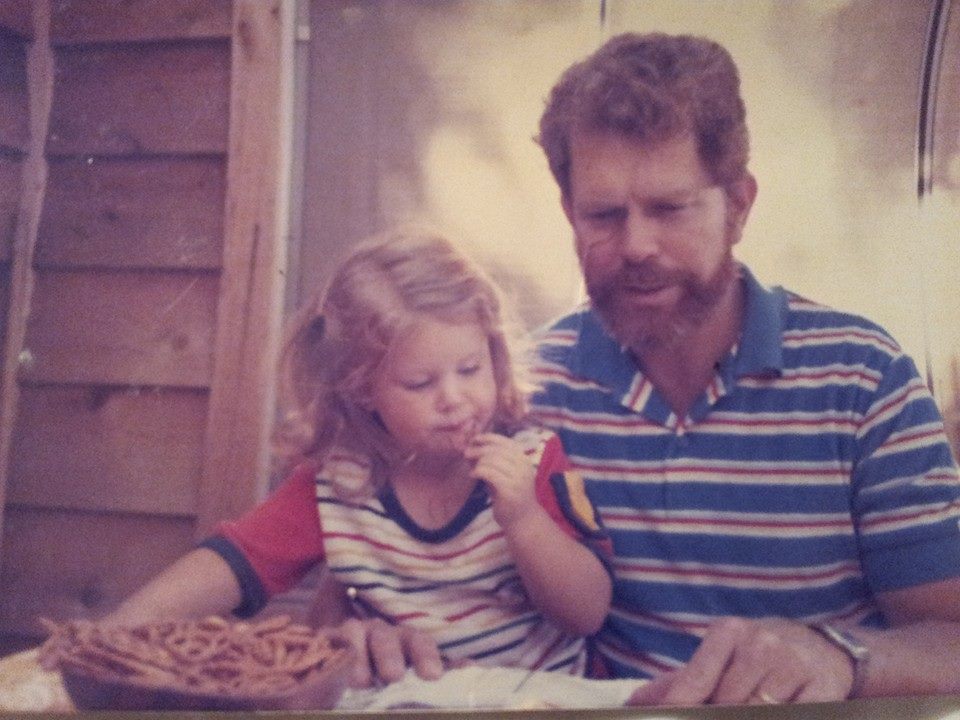
Paul and Mark's Little Sister (1985)
Paul and Mark’s Little Sister (1985)

By Mark E. Smith

Maybe it’s what literature or movies have bred into our culture, that people are either good or bad, but one week after Paul’s death, I can tell you that it’s possible – and more common than we’d like to think – for people to be both. And, for me, Paul was both, for 35 years, which might be why I’ve always called him Dad or Paul, based on the circumstance.

Paul entered my life as Paul, a 34-year-old bachelor attorney when I was eight. My biological father had left, and my mom met Paul during some legal matter. My mom was an alcoholic and an addict, but was exceptionally attractive, and that caught Paul’s eye. Yet, as I would watch unfold till both of their deaths, Mom and Paul were a toxic mix that led to circumstances that my brother, sister and I can’t believe any of us survived – and Mom and Paul ultimately didn’t.

Paul started life as a military brat, son of a full-bird colonel who flew with Charles Lindbergh, no less, and was a highly-decorated WWII fighter pilot. Grandpa Jim, as I knew him, was never a touchy-feely kind of guy. He was a hard-drinking, cigarette-smoking man’s man, with a tall stature and broad chest to match. And, he expected Paul and his brother to be in line all the time. Both boys ended up at military academies, and Paul graduated from King’s Point, embarking on an officer’s career navigating commercial ships around the globe, pulling in an astounding $10,000 per month in the 1970s. Paul put the money to good use, paying his way through law school and buying a farmhouse on some land. And, that’s when my mom began dating him, a relationship that through my eight-year-old eyes had all the promise in the world.

Yet, there was more to it than that for me. Not only did Paul seem a knight in shining armor to pull us out of poverty, but he genuinely took to me. My own father didn’t just drink and walk out on us, but till the day of his death in my 30s, there’s no doubt he was ashamed that I had a disability. Yes, it was my father’s issues, and I always tried to have some empathy because he was so troubled, but I couldn’t help but carry the burden of that shame. However, Paul demonstrated the opposite, genuinely loving and embracing of me. He took me hunting and fishing, sometimes carrying me on his back for miles. And, after my mother and he married, he took me almost everywhere he went, always referring to me as his son. It was a different world, where for the first time I felt a sense of acceptance. And, it was then that Paul became Dad to me.

But, it all was a tale of two cities. Dad was a loving, generous father, who showed me a world I never knew existed, from the great outdoors to socialite parties. However, there were the other sides of him that were horrific – Paul’s sides. He was a drinker, too, and I lay in bed every night hearing the liquor cabinet open and close countless times. My mother and he drank and argued nightly, where eventually he became physically abusive toward her, and they crashed around the house, keeping me constantly on edge. Paul could be a happy, docile drunk, or an enraged monster. Among the low points was on my 10th birthday when I came home from school to find my mom having slit her wrists in a suicide attempt, and as Paul rushed home, he’d been drinking since lunch and slammed his truck into a tree. It’s how life was.

By 1983, my younger sister was born, and Dad was a great father to her, too, loving her to no end. And his law practice thrived, complete with a beautiful old Victorian office right across the street from the courthouse. I remember people in our community being impressed by our family’s status at that point, with Dad running both a private practice and serving in the Public Defender’s office. It was round that time that Dad even took us on vacation to Maui.

But, it was all a facade. My mom was drunk around the clock, Paul started drinking at lunch, they were mired in debt, and the nights were so violent that it’s amazing no one died during those years, albeit from domestic violence, overdose, or suicide. Meanwhile, the three of us kids fended for ourselves. It’s a chaos that haunts me to this day, where loud noises at night in my home – my daughter slamming a cabinet door – triggers immediate fear in me, taking me right back in an instant. Some trauma just never grows out of us.

By 1988, my mom and Paul divorced, and both began an even sharper decline. My mom was a full-blown Skid Row kind of drunk, but Paul remained somewhat functional. And, it would be the next 10 years that truly taught me the fallacy of the term functional alcoholic.

After the divorce, I was 18 and on my own, taking care of my then 6-year-old sister when I could, and while my mom was a disaster, Paul tried to keep his life together and we remained very close. But, he drank daily, and I watched him throughout the 1990s lose everything. His house was foreclosed on, he lost his law practice, and ended up homeless, couch hopping at wealthy friends’ homes, wearing out his welcome. Meanwhile, I grew into my late 20s, with a wife, daughter, house, career, and graduate school, when Paul landed on our couch – and never left. By that point, he was a dishwasher at a friend’s restaurant and might have had two pairs of clothes as his sole possessions. True to form, by day he was great, an amazing grandfather to my daughter, and I could count on him for anything. However, while washing dishes at night, he just drank, coming home late and passing out on our family room couch. Eventually, I moved across the country, letting him live in that house till I sold it, at which time he moved to a camp ground. And, the entire decade demonstrated what happens to functional alcoholics: they slowly lose everything.

By his death, a week ago at this writing, Paul’s life had even more crazy twists and turns. While living at the campground, he met a woman half his age, with profound mental issues, and for the coming years, they lived a volatile life of poverty, alcoholism, and mental illness.

The last time I saw Dad was this past summer when he came east for Grandpa Jim’s funeral at Arlington National Cemetery. He was in such poor health and still drinking that I loaned him a mobility scooter. During that visit, my sister and I checked him into my local VA hospital, where he spent several weeks detoxing and getting a grim diagnosis that after decades of alcoholism, his organs were failing. After getting in good enough health to fly home from Pennsylvania to California, he took his next drink upon landing. He would never be without a drink again, even dying with alcohol in his system.

The King’s Point graduate who traveled the globe, became a successful attorney and a loving father died at 2:06 pm on December 31, 2013. However, the obituaries that tell that one-dimensional portrait, as obituaries do, rob Paul’s life of ultimate meaning. Rather, all should look at the entirety of such loved ones’ lives and not dismiss the entirety of the individual, but truly learn from his or her paths. Dad was a great main, Paul was a troubled man, and both teach us invaluable lessons in life. For me, some of those lessons are beautiful and some are haunting, but they’re lessons that ultimately gave Dad’s life a larger purpose, where when I look at the sober lives of my siblings and me, and the promising future of our combined seven children, Paul’s alcoholism and life descent wasn’t without reason, but a profound lesson for us to learn.

Evenings in the Kitchen

kitchen-dance

By Mark E. Smith

In fairy tales and films, they end happily ever after, but in our lives, they always don’t. However, just because they haven’t till now, doesn’t mean that they won’t.

Life proves more potential than even fiction, where heart break and sorrow can lead to Etta James, John Coltrane, slow dancing and kissing to jazz as together you cook dinner, dim lights and sips of wine in the kitchen.

Jazz, rhythm and blues, life isn’t what happens to you, it’s truly about what you choose. And, as you be you and me be me, life doesn’t imitate art, but it is the only reality. Bukowski and Basquiat were not philosophers or saints, but they knew our futures are written with our own hands, a great painting is what a painter paints.

And, so we write our own lives, paint who we are, where we can reach our potentials, hearts dangling from a star. No scripts needed, just an understanding of who we are – poets and painters and jazz players in a sentimental mood. It’s all what we choose.

Life isn’t about accepting just what we’re given. It’s a novel written, a painting painted, a jazz song played, a slow kiss in the dim lights of the kitchen.

And, a life isn’t truly lived when we hesitate – great novels and paintings and jazz compositions, see, they never deliberate. They follow the flow of the heart and soul, and if you want to live great, live to your dreams and potentials – liberate. Life is an art, not a role.

Freakishly Awesome Control

controlfreak

By Mark E. Smith

To most, being a control freak means one who has to have seeming power in every situation, over every little detail. They’re rarely content, and they’re often an annoyance to all.

However, I want to talk about a different kind of control freak: the kind of person who has freakishly awesome control over his or her life, where what seems unlikely or unrealistic or impossible to most is viewed as totally feasible. See, my definition of a control freak is someone who knows that he or she has ultimate control over his or her own life, able to accomplish virtually any goal.

Think about how rare it is to be a control freak by my definition. Not only don’t people feel like they have control over their lives, they actually avoid and give up control. How many of us feel anxiety or depression because of others’ actions in our lives? How many of us stress out because a mortgage company owns our home and a finance company owns our car? How many of us work an uninspired job because we don’t think we can find better? How many of us see outside stresses as adversely effecting our relationships? How many of us have passed on life-changing opportunities and dreams because too many factors seemed in-between us and them? Indeed, perceiving a lack of control over many aspects of our lives is epidemic, and while we can’t control everything in the immediate, we have far more control to living the lives of our dreams over the long term than many fathom.

College is a big topic in my house these days as my high-school-age daughter gets closer and closer. I’m amazed at how many parents think college admission is under everyone’s control but their and their children’s. Admission boards decide who gets in, schools decide who gets scholarships, the government decides who gets grants and loans, and so on.

However, I’ve taken a dramatically different approach with my daughter – we’re in control of what college she goes to. Her job has been to maintain the grades and extracurricular activities to get into the college of her choice. It’s been my job to handle the finances needed to pay for her education. The result is that we’re in control of where she attends college. With that reality, how amazing is it not to wonder if your child will get into a given college, but to set them up to control the process of picking any college he or she wishes. That’s freakishly awesome control!

I’m also forever amazed at what little control people assume toward opportunities based geographically where they live. I’d love to take that job, but I’d have to move…. I think she could be my soul mate, but she lives all the way across the country…. Since when does geography have control our lives? It’s the 21st century. The Wright brothers figured this one out a long time ago: the continent isn’t moving, but we can! If I have to move across the country – which I’ve done – to pursue a life-changing opportunity, all I need is a phone directory to look up moving companies.

Now, I know what you’re thinking: Mark, life just isn’t that simple for most of us. And, you’d be both right and wrong. Sure, while having freakishly awesome control over your life is simple, it’s not always easy. However, it is, in fact, consistency in practicing it over the long term that fosters possessing freakishly awesome control in vital areas of your life, where virtually anything is possible. I’ve never just snapped my fingers and magically had control. Rather, I work at it every day, in small and big ways alike. Due to my cerebral palsy, there are aspects of my body that I can’t control. Yet, I have complete control over how I deal with it. I don’t mind having to physically attempt a task as many times as it takes to accomplish it because my cerebral palsy doesn’t control my life – I do. I choose patience and perseverance over allowing cerebral palsy to dictate my potentials.

In this way, personal accountability is a vital component of freakishly awesome control. You’re not a victim of circumstance, but you’re the final vote toward how your life evolves. I had no control over receiving cerebral palsy, but I’ve had complete control of how I choose to live with it. Circumstances occur, and as long as your willing to react to them with positive action, you’ll have ultimate control over their effect in the end.

More than any other aspect, though, having freakishly awesome control over your life removes excuses. If you assume freakishly awesome control over your life, you are solely responsible for your life’s successes and failures. You can’t blame disability or other people’s actions or the economy or on and on for any aspect wrong in your life over the long term. Rather, when there’s an occurrence in your life, you’re responsible for it, period. Again, you may not have caused it,, but you can control its effect. There’s no room for blame or bitterness or excuses, just personal accountability. You’re ultimately in control of your life, and if you don’t assume ultimate control, you’ll fail miserably over and over. And, it becomes amazingly liberating when you realize that the only roadblocks in your life are ones that you chose to stop at, that you have the power to turn the wheel and stomp the throttle of life, going where you wish.

Indeed, too many give up too much control to too many circumstances and others. Why not take freakishly awesome control of your life and assert that no disability, person, geography or any other factor can dictate your paths but you? Take accountability, remove excuses, assume freakishly awesome control of your life, and you’ll live the life of your dreams. After all, per the tenet of freakishly awesome control, the course of your life is solely up to you.

Opening Our Closets

1424552_3497001679378_1609463705_n

Soul is about authenticity. Soul is about finding the things in your life that are real and pure. -John Legend

By Mark E. Smith

With the holidays approaching, and special friends visiting my home for an extended stay, my daughter and I started making a list of what we needed to do in order to make our house as perfect as possible.

See, for my daughter and me, our home is about love, laughter, understanding, and tranquility, so we haven’t cared that we have a sheet hung across the family room window because Rosie the English bulldog attacked the custom blinds, nor have we cared that the dishwasher has been broken for years (it’s just the two of us, so we don’t need a dishwasher!). We’re blessed with a very nice home, that’s neat and clean, and we don’t sweat the small stuff. We’re happy as-is.

However, with company coming, the list got longer and longer of ways to spruce up our 12-year-old home, all to impress our house guests. And, then I realized how unauthentic I was being, how I was putting priority on a shell of a house instead of the depth of my character and heart. My daughter and I want to spend time with those close to us, and replacing blinds and a dishwasher has nothing to do with it. The quality of one’s character is far more important than the quality of one’s house.

How many of us live such a facade in many aspects of our lives, where we present an image instead of just being ourselves – namely, because we don’t think others will embrace us if they see who we truly are?

The answer is, most of us. However, here’s the issue: if we hide or disguise ourselves, others don’t truly know us, and it creates a barrier for letting other people in. We live with secrets, isolation and in the worst cases, shame. Any aspect that we falsely polish or hide from others is like placing a wall between us and others. If we want the truest connections, we must be open and authentic to an extraordinary degree. Here’s the real me – take it or leave it, but at least I’m authentic. Life isn’t Facebook, where everyone’s life is a happy two-dimensional facade on a screen. To be authentic is to be real in every sense.

And, I think all of us have been unauthentic at times, both with ourselves and others. The solution, though, to both resolving it and avoiding it is to be totally authentic. Yes, some will reject us in the process, but most will embrace us.

In my own life, I strive to only be authentic. However, it’s not always easy, and I haven’t always succeeded. I’ve struggled this year with a very weighty subject in my life: my daughter will be heading off to college in the blink of an eye. Those around me have asked whether I’m prepared for that emotionally, especially since it’s just been the two of us for years, our lives so intertwined?

I give a very enthusiastic answer, that my daughter’s worked extremely hard toward college, that I can’t wait for her to flourish on her own. After all, it will be another amazing stage to witness as a parent. Yet, if I’m to be authentic, it’s truly only telling others half of my feelings – I’m not being honest.

The fact is, my daughter has been my foremost focus since the day she was born. Then, in being a full-time single father, she’s the better half of our dynamic duo, always a life force in our home. Girlfriends have come and gone, but it’s always been Shorty and me. No, I don’t know how I’m going to handle having my little girl, housemate and, really, best friend no longer around on a daily basis. I can picture Rosie the English bulldog and me just staring at each other on a Wednesday night, saying, What do we do now? Even if I’m living with a woman, I don’t see the transition being any less heartfelt. Yes, the thought of my daughter going off to college is unquestionably what I want and will be among my proudest moments. But, it’s also painful, scary and sad.

However, as I’ve opened up with friends about my complete feelings about my daughter eventually heading off to college, they’ve been extremely supportive and full of wisdom. Again, if we are going to live with authenticity, we must share our whole self, as-is, honestly, and people do reciprocate on such a genuine basis. In this way, opening myself up to others is like having guests in my home: I’d rather choose the imperfection of openness and joy over the tidiness of isolation and despair.

Of course, authenticity is ultimately about accountability, and that can be a struggle in itself. A great tool in that area is to surround yourself with people who will out of love call you on your behavior when you’re not being authentic. Both my sister and my best friend have called me on my behavior over the years – and rightfully so, as I’ve done some freakin’ stupid stuff. I remember being on the West Coast, feeling a lot of sadness over the ending of a serious relationship, and rather than being authentic and telling my friends that I was in a lot of pain, I went the rock star route, numbing myself with everything I could find as the life of the party. And, to his credit, without his being judgmental, my best friend soon pulled me aside and said, “I suspect there’s a lot going on in your life and it’s getting to you in unhealthy ways. It’s not the Mark I know.”

And, he was right. I wasn’t being authentic. Rather, I was being an emotional coward and dishonest. Fortunately, I was able to get myself back on track – arguably with greater clarity – all thanks to a true friend who believed in me and wasn’t afraid to call me on my falling off of the authenticity wagon.

None of us are perfect or immune to real emotions that tempt us toward going astray. I’ve been there and I still go there. However, recognizing the power of living to a higher standard – authenticity – and working at it in even the most challenging situations makes living as who you are a lot more rewarding.

My house isn’t perfect and neither am I. I need new blinds and a dishwasher, and Lord knows I’ve got my emotional issues. But, my home and heart are open, as-is, so come on in.

The Right Question

Jose Perez
Jose Perez

By Mark E. Smith

I’ve been running a mobility-related message board online for around 15 years. During that time, I think I’ve seen it all – the good, the bad, and the ugly. The anonymity that some feel online knows no boundaries.

However, recently, someone posed a question to me that was a first. Admittedly taken much out of context here and paraphrased, someone asked me, “Why should you feel it morally right having a job, home, van, and ATV when so many others with disabilities do not?”

Within the context of the conversation, asking me such a question certainly seemed audacious, and even ruder paraphrased here. Nevertheless, I answered the question, simply explaining that I’ve made sacrifices and worked really hard.

However, here’s what’s interesting: If one wished to be successful, it was the wrong question to ask.

See, in my early 20s, my mentor was Dr. Wayman R. Spence. He was known as the grandfather of the anti-smoking movement starting in the 1960s, formed a health education company, went on to invent sports medicine products, and was a widely-published author and art collector. Ultimately, Dr. Spence, as we called him, sold his biggest company, Spenco Medical (going strong till this day) to Kimberly-Clark in the 1980s, making an insane amount of money. By the early 1990s, when I met Dr. Spence through my writing, his life was dedicated to supporting the arts and philanthropy. My writing was actually terrible at the time, but he insisted that if I focused on it and pursued formal education, I could build a successful career. And, I listened.

As my mentor, Dr. Spence gave me weekly assignments. His secretary called me with insane challenges like, “Dr. Spence wants you to call Norman Vincent Peale…. Here’s his number.” And, so I’d cold call all sorts of famous writers, speakers and artists who Dr. Spence knew. And, I was terrified every time.

Yet, Dr. Spence taught me a life-changing lesson that I used then and I use now: Never wonder why a person is successful. Rather, always ask how he or she became successful. Then, apply that knowledge to your own pursuits. That’s how you learn, grow, and succeed. It’s modeling positive behaviors that others prove successful over 30- or 40-year careers.

I had to call painter, Jose Perez, one day, and ask him how he became a great painter?

“I wasn’t born a painter. No one is,” he told me. “I’m a painter because I paint every day, and have done so for many years. That doesn’t make me great, it just makes me successful.”

That one conversation profoundly effected my life because simply by asking Jose how he became successful, I learned a key trait of extraordinary people: daily discipline – over decades. I could be successful at virtually any pursuit as long as I sincerely dedicated myself to it. I bet in the last 20 years, I might have missed 10 days of writing; otherwise, per Jose, I write every day, period.

Since my life lessons facilitated by Dr. Spence in the early 1990s, I’ve spent my career not just practicing what some amazing people taught me, but I’ve continued asking how? If you want to come to terms with your disability, ask others who’ve done it, how they did it? If you want to succeed in your field, ask others who are successful in the field how they’ve achieved it. If you want to have a successful relationship, ask couples who’ve been married 50 years how they’ve sustained it.

See, there’s no mystery to success. If someone has accomplished something, it can be replicated. You merely need to learn and practice those behaviors in many cases. There are always going to be extreme cases, as with Mal Mixon who, at 39, close to my present age, on a career path similar to mine, went from working a corporate job to 25 years later being a CEO and a billionaire. When I spent an afternoon interviewing him this past spring, my intent wasn’t to become a billionaire, but to understand how he’s done what he’s done, and I’ve applied many of his insights to my own career already. Namely, tenacity to a level that few dare, where no simply means, try a different approach, as was the case when he was trying to buy Invacare in 1978, then an ailing little wheelchair company owned by Johnson & Johnson, having overcome cancer, with virtually no money, and everything went wrong. Yet, his dream was to own his own company, and he flat-out refused to take no as an answer, finding ways around every road block. It’s easy to look at Mal as a billionaire now and wonder why he’s been so lucky? However, I learned one-on-one how he’s succeeded, and luck had nothing to do with it. You force your way through obstacle after obstacle, an approach I know a lot about.

Therefore, the next time you encounter someone who’s achieved what you wish, don’t ask why they have done it when others haven’t, as that voids your personal accountability, suggesting that he or she has had some magic or good fortune that no one else has. Instead, ask how the individual has accomplished it – and then you’ll be a lot closer to accomplishing it, too.

From Suitcases to Slates

slate

Holding on is believing that there’s only a past; letting go is knowing there’s a future. -Daphne Rose Kingma

By Mark E. Smith

We all know that we can’t physically be in two places at once, so what makes us think that we can do it emotionally? Or, more specifically, what makes us think that we can thrive in the present while dwelling on the past?

We can’t. Just as we can’t physically be in two places at once, emotionally we can’t dwell on our pasts and thrive in our presents. Yet, how many of us try or have tried or know those who have tried. But, in the end, we must pick one: are we going to dwell on the past or live in the present – we can’t have both, and if we try to juggle both, it will destroy us and often hurt those around us.

In my line of work and life, I see it every day. I’ve even lived it. In the disability realm, I encounter those so longing for their pre-disability pasts that they can’t see the value of all around them in the present. In relationships, I encounter those so bitter about an ex that they’re blind to the life-changing love in front of them. In the work force, I encounter those so resentful of a career lost that they won’t pursue a new career. And, I see adults so enveloped by the pain of what they experienced as children that they’re incapable of parenting their own children. Every day, I see people pretend to live in the present, but truly living in the past. And, when we live in the past, we’re not living at all. We’re simply reliving a story that will never change.

And, that’s the difference between living in our pasts versus living in our presents. When we live or dwell in our pasts – even if they were great – there’s no potential or hope. The past is frozen, never changing, and it freezes us, preventing any chance of moving our lives forward. You cannot move forward when focused on the past.

However, living in the present is the opposite – that is, it offers potential and hope, where virtually anything is possible.

Want to sabotage the rest of your life? Bring a packed suitcase of the pain from the past wherever you go. Want to live the life of your dreams? Live with an unguarded slate that’s available for all to leave loving inscriptions.

Nevertheless, living in the past can prove successful in one profound way: avoiding accountability. If you focus on how great your life was before acquiring a disability, you can find every excuse not to make the most of yourself now. If you focus on how your heart was broken in your last relationship, it gives the perfect excuse not to let love into your life now. If you focus on your long lost job, it gives the perfect excuse not to look for a new job now. And, if you focus on how dysfunctional your childhood was, it gives the perfect excuse not to be a great parent now. Living in the past is great because it makes you a forever victim, and victims aren’t held responsible. Of course, this mindset is completely self-defeating – and usually hurts those around you, too – but if you truly want to ruin your life, and accept no accountability, dwelling on your past is a dysfunctional person’s dream come true. You mean, I can ruin my life, hurt those who truly love me, and do it all with no sense of accountability – awesome!

With so many among us unsuccessfully trying to live in the past and present at once – which we know doesn’t work! – how do we go through the process, then, of moving beyond our past to relishing our present? Well, that’s just it, it’s a process, a literal movement. Just as we must physically move to go from one place to another, we must do the same with our emotions in a healthy process. And, “process” is the operative word. We must address and heal from the past, and that will bring us into the present. Let’s address what was, and move into what is. By accepting the past, and recognizing that potential and hope only are possible in the present, we go from surviving to truly thriving, achieving the levels of success, contentment, and love that we all deserve.

As my friend, W. Mitchell puts it, “Have you ever noticed that windshields are much larger than rear-view mirrors?” …There’s good reason for that in cars – and even more so in life.

Garages

garage

By Mark E. Smith

When I was seven, my mom moved my brother and me into a friend’s garage. It was no mirage. For those few days, I felt homeless and helpless, useless and restless. It’s what happens when the rent’s not paid.

It was scary. Scars that I buried. And, now the chicks wonder why I focus on career and my daughter? Priorities straight, bills never late, and as for a date, they come and go like an occasional snow – storms in the night. It works, but is it right?

In business, I’m bustling. As a writer, I’m hustling. And, as a father I just try to do what’s right. I get done what needs to get done by day, but forever toss and turn at night. See, when we think all heals, again spin the wheels, reminding us of our original plight. Have you known such inner fight?

Work may seem an addiction, but paranoia is the affliction, getting as far from that garage as I can.

But, now I own my own, attached to a house. Dinner on the table, life turned into a fable, and my daughter sleeps soundly at night. I’ve penned books that tell stories, take stages in the glory, and look forward more than back. That’s right.

With a garage as home in your past, it’s always going to linger and always last. But, at some point I realize my past is so far. And, a garage is a garage, just some place for my daughter to park – her car.