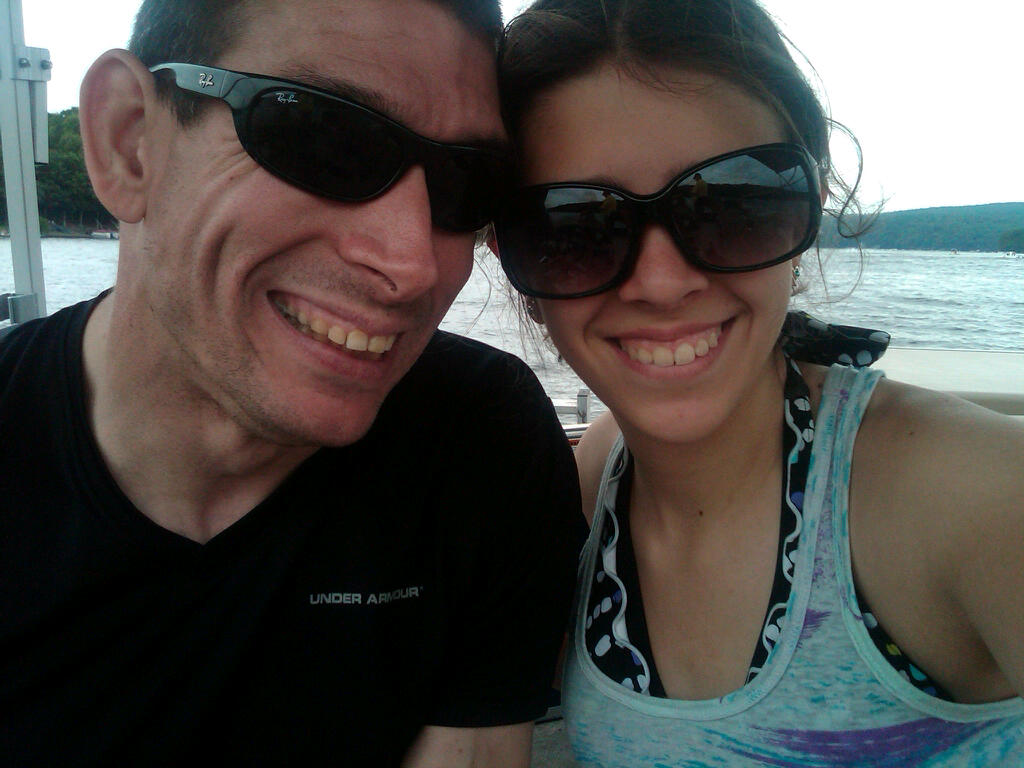
Just the Two of Us

Mark E. Smith

In an uncanny foreshadow, over 20 years ago, Jim Martinson – amputee, paralympic wheelchair racer, and owner of wheelchair manufacturer, Magic In Motion (purchased by Sunrise Medical) – noted about his being a single father at the time, “I want my kids to just be kids. Let me worry about the rest.”

Jim’s statement oddly stayed with me all of these years, my never fathoming that his words of wisdom would become so poignant in my own life, that I’d be in his situation decades later.

So, what is it like to be a full-time, single father, who happens to have a disability? As the full-time, single father of a 14-year-old, I can tell you it’s the ultimate joy most of the time, and scary as hell some of the time – with a lot of complexity in-between. But, all is worth it by far, with my daughter the center of my life, where I wouldn’t change any of the difficulties I’ve endured in getting to this point. Indeed, even the most challenging of times can bring miracles into our lives, and my daughter has proved one of them.

Our journey together began at 7:39pm on March 3, 1997, just a day after my own birthday. In the delivery room, I was the first to hold my daughter, and in the most profound moment of my life, she made immediate eye contact with me – and I knew in that instance that we would be forever inseparable. Yet, I wouldn’t know to what phenomenal extent for years to come.

The first three years of my daughter’s life were remarkable. I worked hard to build a life for our family, my marriage was great, and my daughter was the best toddler ever – it was all of my dreams coming true. On my daughter’s part, she seemed to intuitively understand my disability, where as a baby, she lay perfectly still for me to change her diapers, and even at the age of two, she would stick with me – either on my lap, or waddling beside my wheelchair – in even the most distracting of circumstances without a fuss. She just always seemed to understand and respect me, including my limitations, in a way that was dramatically different than I’ve seen in other parent-child relationships.

As a result, from her birth through her toddler years, my daughter and I developed a dynamic-duo effect, where we became quite the team. From that foundation, and with my marriage disintegrating over the course of many years, I assumed more and more parental responsibilities as my daughter grew, to where although all of us where still living under one roof, I was increasingly the primary parent, a role that my friends and family picked up on before I did. Even when in an unhealthy relationship, one is still in a relationship, and I suppose that because there was still a “mom” in the physical home, I didn’t realize that I was taking on more and more of a single-parenting role. I look back now and think, Wow, there were years of evolution in that process that I was oblivious to! But, even in a bad relationship, we’re not really “alone,” and I think my trying to balance my career with raising my daughter and dealing with an unhealthy relationship didn’t allow me to see the larger dynamic that was occurring: I was on track to being a truly single parent.

And, that day eventually came, in its own time as life changes go. I’d like to tell you such change has been the best thing ever, but no ended marriage is good, nor is being a single parent what’s wished. It all may be for the best given the alternatives, but it’s never an ideal. Yet, my daughter’s and my approach has been just that – let us together take a less-than-ideal situation and make it for the best. After all, that’s the only way one can succeed in trying times and move forward in healthy directions.

Toward the emotional, those of us close to my daughter haven’t seen her more content and at peace. With just her and me living together, there’s no stress in the home, just positivity, love, and support, where she has an emotionally safe place to breathe. And, it’s proved wonderful. She has amazing friends, and her relationships with strong, healthy women like my sister have been evolving into fantastic role models. Of course, the ideal would be for my daughter to have a strong, healthy mother, but that can’t be at this juncture – life isn’t fair or just – so let me, as her father, at least be aware of the importance of having only healthy female role models in her life.

My daughter and I have had to set clear boundaries on whom does what around the house. Going back to Jim Martinson’s point, kids do need to be kids – and that’s been difficult for my daughter to practice at times. The fact is, she does see me working like a maniac, in every way, and she wants to jump in and help – a testimonial to her character. But, she needs to concentrate on school, drama, band, and friends – that is, on being a teenager. Indeed, she has her chores, but I really need to be Dad, doing as much around the house as possible, even if some tasks are easier for her than for me.

Of course, my daughter isn’t perfect – and I even find great joy in that, where she’s definitely a teenager. I loved all summer when I was busting my butt from 5:00am till 11:00pm, and I’d race home at lunch to check on my daughter, only to wake her up, finding her not yet out of bed! Or, I can’t count how many times per night I have to remind her to take the dogs out, where she’s distracted by texting, Facebook, and chatting with friends. Or, when she’s oblivious to scenes like our English bulldog prancing around with a full roll of toilet paper in her mouth, and I note, “It looks like it snowed in the living room – how did you walk by that dog ten times, and not see her shredding toilet paper?” And, it’s inexplicable to me how her room is such a mess! (They tell me it’s a teenage girl thing.)

And, I’m not perfect, by any stretch. My role as father is the one that’s the most joyous and rewarding to me, where I would go to the ends of the Earth for my daughter. And, while I think I’m doing a pretty good job, it’s still scary as hell at times. As forgiving as kids are, there truly aren’t any do-overs in raising them – parenting isn’t a trial run – so getting everything right is a weighty task, especially as a single parent. For me, there’s constant listening to my daughter – and I mean truly listening – and trying to determine how I can best meet her emotional and mental needs at vital moments. Sometimes I have answers, and sometimes I don’t – and a lot of times I just follow her lead, supporting her in her processes. What I’ve learned is that, as parents, delivering the right answer isn’t always required, but simply supporting our children so that they can find the right answers for themselves in the healthiest ways is often our role. Let me guide, but not stifle.

In my personal life, there’s an overall level of “sobriety,” where my sense of accountability and responsibility is greater than it’s ever been. We know that single parents are statistically more likely to have depression, absenteeism at work, and indulge in substance abuse – but I’ll have none of that. To the contrary, I wish to do right by everyone, especially my daughter and my career, so my tact has been to step-up my game, not let it slide. Sure, I feel overwhelmed and alone at times – there’s an insane amount to accomplish in each day, and I don’t have an intimate partner to turn to for support – but those aren’t excuses to have a drink or crawl into bed and hide; rather, they’re reasons to push myself even harder, staying up as late as it takes to try to get it all done, moving through it all with healthy emotional acknowledgment and tenacity. Twenty years from now, I want my daughter to look back upon these times and say, Not only did my dad work through it all, he actually picked up the ball and ran with it!

In all, we are a dynamic duo, moving through life very well, just the two of us. It’s not always easy or perfect, but we’re striving to make the most of it – and there’s a lot of joy and laughter in our hearts and home these days. Naturally, my daughter has asked me if I foresee “us” ever having a long-term relationship with a woman, possibly step siblings in the mix?

“I don’t see why not,” I told her. “It would have to be a remarkable woman to take on us; but, as we’ve proven, we have a lot of unconditional love to give in return. For now, though, it’s just you and me, kiddo – and that’s pretty special.”
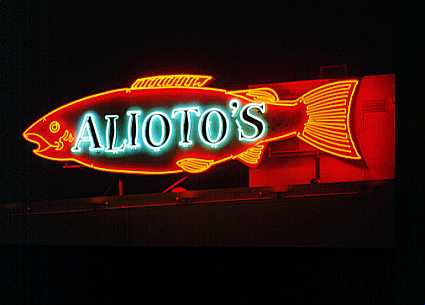
Alioto’s By The Bay

By Mark E. Smith

I just made my way back from the City by the Bay, San Francisco, where my whole family was born, where I went to college, where my daughter was born. And, my daughter was with me, 14 years old now, and I wanted her to see where it all began, especially following my mother’s recent passing. One might conclude that it was like going home; but, it wasn’t. Everything’s different now – Pennsylvania’s home, I’m a single father, my only roots left in the city are the train tracks upon which I used to ride to college.

But, one night at Alioto’s, a well-known restaurant on the water front, I ran into a couple, the only one’s at the bar – and they were clearly in love, sneaking kisses, rubbing noses. My friend and I were bold enough to ask their story, what brought them together? We learned she was 50, and he, 60. She was slender, blonde, professional – a business woman, I presumed. He, well, reminded us of Shrek – big belly and ears, exaggerated features. And, man, they were in love.

The couple told us of how they met at a conference, and she blew him off; but, then they met again, by chance, at a bar, and they’ve been together ever since. In love.

I asked what advice he had for the rest of us – their being so lucky in love – and he laid it out. “Look, life isn’t a trial run,” he said. “When you find something amazing like this, don’t hesitate, don’t let a person pass without loving to the fullest. There’s no time for fear or regrets.”

Life isn’t a trial run. It’s so simple but yet so many of us miss that part. In life, love, disability, whatever – grab on to what’s in front of you like there’s no tomorrow because there may not be a second chance. And, they – the couple at the bar – were holding on to each other, no trial run for them.

I Refuse….

By Mark E. Smith

I refuse to be that guy, the one in the wheelchair, who strangers see rolling from here to there – crumpled-up and bound. No, I’m flying by, with bulging biceps and a tattoo that say, You can’t define me, so F- you and F- him, too.

I refused to be pigeonholed, stereotyped, or discriminated against – because, while I can’t kick-in doors with my legs, I can obliterate them with my intellect, where I will outwit, out-charm, and alarm with an I.Q. that will rock you like The Who trashing a stage.

I refuse to be dismissed – swinging palsied fists when I get pissed – and when I say I’m going to do it, you better step back, stand away, and make a path because I will not stop till it’s done, son. The ticktock of the clock tells me to do it better, faster, more accomplished, like I’m a man on fire trying to outrun the flames, where my disability is empowerment, not an object of shame.

I refuse to be undesired – my game is my attire – where I smile while chugging a double of Southern Comfort at a bar, with a swagger that women must admire – my distinctions aren’t distress but a cut above the rest. Man, I love her in that low-cut, red dress.

I refuse to sing the blues or follow the rules that say disability is tragic. In my mind, it’s a blessing of magic, where I’m different as you can see, and I refuse to be anyone but me – and I dare… you heard me… I dare to disagree.

Yeah, World, as you may or may not see… damn… it’s good to be me, no matter what you think of my dis-a-bility.

Hot Mess

By Mark E. Smith

So, I’m drinking at Tao in Las Vegas, parked in my power chair sideways against the bar, so I can sip my vodka and Red Bull through a straw. Whoopi Goldberg and Rod Stewart are with me – no, not the real Whoopi and Rod, but impersonators.

Prior to several hours ago, none of us knew each other. My plan was to go to Vegas alone as an adventure, but then my buddy was to meet me there. However, as the world is meant to be I suppose, my buddy opted not to meet me after all, leaving me on my own in Vegas for four days. So, after checking into my hotel, I headed to Tao – a top Vegas club that’s hard to get into unless you’re a hot chick, a dude with a hot chick, or a celeb – and I was ushered right in, skirting the line of smoking hot chicks and their steroid-strutting dudes, not even a cover charge for me.

What I’ve learned is that as a guy with a disability, using a power chair, in a suit and tie, with a big smile and gregarious personality, I can go into virtually any scene and immediately find great conversation – or have it find me. A lone guy at a bar is typically seen as creepy, where if he says hi to people walking by, they’re probably going to keep on walking – and, they certainly won’t approach him. However, I find that the novelty of my disability and inherently nonthreatening nature – along with a super-outgoing personality – really attracts people, where I can very quickly build rapport, becoming immediately engaged in great conversations, making fast friends, where even if I just park somewhere, someone will ultimately come up and start a conversation. In these ways, I get by very well, able to get into any club, quickly fitting into the scene. So, I end up in Tao within hours of landing in Vegas, surrounded by barely-dressed super-model type chicks and buffed bozos – rock-starring it on my own, one might say.

Now, vodka and Red Bull isn’t my drink of choice – that would be Southern Comfort, straight, by the double-shot. However, unbeknown to me when booking the trip, I picked spring break week, when all of the mid- and southwest college kids flock to Vegas. And, in a brilliant – and deviant – marketing ploy, Red Bull is the official sponsor, where at virtually any bar or club for the week, one can get a house vodka and Red Bull mixer for $6, whereas a double shot of Southern Comfort averages $15, so I opted to drink on the cheap (plus, being alone and looking to meet people, I had no interest in getting hammered drunk, but remaining sober while socially sipping a single drink much of the night).

So, I’m sipping my cheap drink at Tao, checking out the countless chicks who, on average, must be 19 years younger than me, when Whoopi Goldberg walks up and joins me at the bar. I immediately comment that she’s the striking image of Oprah, and she laughs – and we get to chatting. It turns out that she is, of course, Berndottea, a Whoopi Goldberg impersonator, complete with SAG card and all. However, the drunk college kids don’t know any better, so I’m in theory sitting at the bar with Whoopi Goldberg, with everyone wanting to take pictures with Whoopi.

And, then in walks Rod Stewart. No, not the real Rod Stewart, but Clyde, a chef who’s been in Vegas for seven months, and just so happens to be an exact image of a younger Rod Stewart, ’80s vintage, dressing the part and teasing his hair, no less. He immediately joins Bernodettae and me, likely because we’re a fitting lot, a bit of character and age to us compared to the young, hot bodies who fill the club with alcohol-fueled hormones running wild.

Sipping my vodka and Red Bull, I swap life stories with Bernodettae and Clyde, who are among the sincerest, kindest folks I’ve met, and we’re constantly interrupted by party-seekers who only see Whoopi, Rod, and a guy in a wheelchair at the bar – a spectacle that draws a non-stop crowd.

With the night in full swing, I end up with a drunk chick next to me, who knocks my drink off of the bar, spilling it all over my power chair, and she immediately apologizes, telling me that she’ll make it up to me. With all watching, she kisses me on the cheek, takes my hand, and gently slides it up her top, placing it on her bare breast. This, however, is little consolation to me, as having to clean vodka and Red Bull out of every crack of my power chair and losing my $6 drink is no price to pay to feel a chick’s boob – been there, done that, don’t care, over it – so while the surrealism of having my hand up a chick’s top with Whoopie Goldberg and Rod Stewart watching me isn’t lost in the moment, I’m really just perturbed that this drunk chick spilled my drink all over my power chair. Boobs are just boobs – they’re everywhere. It’s my custom-finished, carbon fiber power chair that I care about!

With my hand still on her breast, I look up and realize that she’s wearing a tiara that says, Bachelorette. I pull my hand out of her top, and ask loudly, “Can I get your fiancé’s phone number?”

“Why?” she asks.

“I want to tell him not to marry a hot mess like you,” I say.

Without hesitation or even a blink, she hauls off and slaps me across the face – hard. And, people grab her, pulling her into the crowd, away from me.

I turn to the bartender like, Did you see that?, and the bartender has already served me up a fresh drink, on the house.

Rod Stewart walks around and puts his arm around me.

“You know, Mark,” Rod says, “I’ve put my hands on women’s breasts and been slapped, but never have I had a woman place my hand on her own breast, then slap me for it. You’re a champ in my book.”

“Welcome to Vegas, Marko!” Whoopi says, holding up her drink.

Where It All Leads

By Mark E. Smith

With my 40th birthday here, I wished to note it with an act emblematic of the life I’ve lived – overcoming some personal challenge, and hoping to meet others and grow in the process.

Friends suggested skydiving, which is strikingly cliché, and actually void of any real risk. When it comes to tandem skydiving, your odds of dying I learned are 0.4 out of 100,000, whereas my riding my power wheelchair to work each day has my risk of dying many times higher, 2.5 out of every 100,000. Therefore, while most unknowingly see skydiving as a brave, risky feat, it’s actually a totally controlled, unrisky feat, far safer than simply crossing a street.

No, for my 40th birthday, I want real adventure, real risk on my own terms, so I’ve bought a plane ticket to Las Vegas, heading out by myself, cross country, to see where it all leads.

The first part of my journey is getting to Vegas. We’re in an odd time of post-ADA corporate disability rebellion it seems, where airlines, in particular, have been proving alarmingly disability-phobic. Over the past two years, we’ve heard discouraging stories of airlines refusing to fly single disabled passengers. In fact, two days before this writing, a young woman with muscular dystrophy, who uses a ventilator, was by all accounts illegally denied boarding a Delta flight home.

I fly often on business, but with colleagues, so this will be my first solo trip in quite some time (I always flew alone years ago based on necessity, never having an issue, but this recent trend toward disability discrimination by airlines has me curious as to my forthcoming solo flights). I know CFR 14, Part 382 that outlines federal guidelines for how airlines must treat passengers with disabilities, but gate agents, in their ignorance, don’t seem to follow federal regulations or acknowledge basic human dignity these days, so I’m curious to see what it’s like for a guy as severely disabled as me to fly alone during these times. Again, it’s easy for any of us to say it’s a piece of cake to fly with a companion. An acquaintance of mine is always boasting to others how easy it is to fly with a disability; yet, his wife or a caregiver is always with him – man-up and go it alone, and see how you’re treated, is what I always want to tell him. Therefore, that’s what I’m doing – manning-up and leaning into it – seeing what it’s truly like to travel alone with a severe disability in 2011. Do I think I’ll get kicked off of a flight like Johnie Tuitel, the motivational speaker with cerebral palsy similar to mine who made national headlines by being unjustly removed from a flight? I hope not – namely, because I’m extremely familiar with federal airline regulations and my airline’s policy, where I trust that I can cordially talk my way through any situation. However, I am curious to see what, if any, ignorance I encounter.

Of course, logistically, a lot else could go wrong during the trip. What if I get stranded at an airport based on weather? What if my power wheelchair gets damaged or breaks? What if any number of scenarios go wrong? Again, I fly all over the country with colleagues and there are no worries on such trips. But, now I’m a 40-year-old with severe cerebral palsy flying to Vegas alone – that’s an adventure, one where I’m placing myself in my sole confidence to get by no matter what.

Once I’m in Vegas, I’m pursuing an interesting tact – as a person first, and as a writer second. I’m meeting up with a lifelong friend, and the goal isn’t to know Vegas, but to get to know the people of Vegas, seeing where it all leads. We’ve both been to Vegas countless times – mostly on business – and the uniqueness of Vegas is that everyone is from somewhere else, all with an often amazing story – from the inspiring to the tragic. I’ve spent the last 22 years telling my story, and I want to hear others’ stories on a diverse, candid scale, the types of conversations you’ll typically only find in Vegas. Drinking, gambling, and strippers, don’t interest me – been there, done that, didn’t impress me. I want to know about the waitress working at the Denny’s on the Vegas Strip at 1:00am – what’s her story, what brought her to this point in her life?

The fact is, at 40, there’s absolutely nothing remarkable about me or my story – I’ve merely lived life potentials that everyone possesses – and I’m eager to hear how others have accessed their potential, or struggled to do so. I have no idea who we’ll meet, or where conversations will lead, but I hope realizations by all will be made in the process, that a common humanity runs among us regardless of who we are, where we come from, or the lives we live.

I’m getting on a plane headed for Vegas. Where it will lead is the mystery that is sure to create the adventure.

Spastic Half-Wit

By Mark E. Smith

I read that 92% of women and 56% of men struggle with some sort of low self-esteem, most commonly relating to “body image” or “feeling like one doesn’t measure up to others.”

In my experience, those statistics prove unfortunately true in everyday life, as I encounter many who confide in me – or indirectly suggest – such feelings of self-insufficiency. However, what’s striking is that it implies to me that I should be horrified by who I am: A spastic, half-witted guy with cerebral palsy, big ears, a goofy smile, and no talent, who doesn’t really fit in anywhere. I might as well put out a self-titled album, Rolling Disaster.

Really, I have attractive, intelligent, popular, able-bodied people tell me all of the time how insufficient they feel. Women who have model-like beauty and super intellects tell me that they’re disturbingly unattractive and unintelligent. Men who are brilliant tell me of their constant insecurities. And, it leaves me thinking that if all of these truly perfect people feel so horribly about themselves, I must really be a freakish wreck on wheels, where I truly do have many of the deficiencies that they wrongly project upon themselves. I mean, let’s be real – have you seen me? Again, I’m a spastic, half-witted guy with cerebral palsy, big ears, a goofy smile, and no talent, who doesn’t really fit in anywhere – who’s more of a literal mess than me? And, readers send me hate emails confirming those facts all of the time, so surely they’re true.

Of course, unlike the 92% of women and 56% of men with low self-esteem, I actually accept and embrace who I am. Indeed, I may be a rolling wreck, but I know that I can’t change aspects like having cerebral palsy, so rather than despising who I am, I make the most of who I am – much of which is based in gratitude for whatever I’ve been bestowed in life. Sure, I’m a spastic, half-witted guy with cerebral palsy, big ears, a goofy smile, and no talent, who doesn’t really fit in anywhere, but even those are traits not to be squandered. I say, why not be the best spastic, half-witted guy with cerebral palsy, big ears, a goofy smile, and no talent, who doesn’t really fit in anywhere, that I can be, right?

See, what I know is that our potential isn’t limited by what we lack; rather, our potential is maximized by what we have. And, too many of us count ourselves short, only seeing deficiencies – or, worst of all, buying into the criticisms of others – when we should be focused on our true potentials, our greatness within. We have this one body, mind, and life, and let’s make the most of them, where it’s not what we have, but what we do with what we have that makes all of the difference.

I could have looked at my life with spastic cerebral palsy and believed the pundits from birth, settling for an institutionalized life of physical dependency on others; but, instead, I sought to believe in developing whatever physical abilities that I could muster toward independence. I could have seen myself as having the cognitive deficiencies that doctors diagnosed me with when I was an infant; but, instead, I scored an I.Q. atop the charts, pursued a college education, going on to a successful career path serving others. I could have looked at myself in the mirror, seeing my cerebral palsied body – my undeniable “freakishness” – and never pursued relationships or a family; but, instead, I have a beautiful daughter, the center of my life. I could have presumed that I had no talent; but, instead, I write, give talks, and work in the wheelchair industry with great creativity. And, I could have looked at my power wheelchair as a device that prevented me from fitting in; but, instead, I combine my unique appearance with my personality to shine in crowds.

Indeed, every day I could write a thousand-line list as to how I’m not on par with everyone else, how I’m a spastic, half-witted guy with cerebral palsy, big ears, a goofy smile, and no talent, who doesn’t really fit in anywhere; but, instead, I recognize the positive attributes that I do have, and make the most of them, dedicating myself to family, career, and community.

Really, we’re a lot like old cars, where we may think of ourselves as clunkers, but with the right attitude, we truly shine as collector-quality classics. Take some time to look in the mirror, and see the shine in you – it’s there, you just have to open yourself to it. And, if it makes you feel better, you can say, At least I’m not a spastic, half-witted guy with cerebral palsy, big ears, a goofy smile, and no talent, who doesn’t really fit in anywhere, like Mark!

After all, if I’m doing great with all of my freakish flaws, you must be nothing short of a spectacular masterpiece of a person with your remarkable strengths, talents, and good-looks.

The Great Diaper Caper

My sister didn’t believe that I could actually go through with it. After all, we’re taught from an early age via potty training that peeing our pants – especially in public – is bad. So, as a guy pushing 40, how could I possibly just sit there and pee my pants at will in public, she wondered?

By Mark E. Smith

My sister didn’t believe that I could actually go through with it. After all, we’re taught from an early age via potty training that peeing our pants – especially in public – is bad. So, as a guy pushing 40, how could I possibly just sit there and pee my pants at will in public, she wondered?

This all began two decades ago when I flew from San Francisco to Lisbon, Portugal, and I went 21 hours without urinating. I’m sure that it was some sort of record at the time, but because the Guinness World Record officials weren’t there to document it, it didn’t count. Nevertheless, I didn’t go without urinating for 21 hours to set a record – though such recognition would have been nice – but I did it out of necessity, as my using unaccommodating restrooms, as with those on airplanes, was too difficult based on my disability.

In college, my long days similarly required me to refrain from using the restroom for 16-hour stretches, and while bladder infections and urinary tract inflammations ensued, I prided myself on having a bladder of steel – able to go entire days on a single sip of water.

Once established in my career and routinely flying, I returned to my old tricks, dehydrating myself for several days, able to fly cross-country without using the restroom – but not without the same, old toll on my body. I inevitably found myself with bladder infections and such once again, but I just did as I needed, keeping it all to myself. I was glad to be working, and any toll on my body was a small price to pay – I was a sort of binge-and-purge bladder expert, where it was part of my professional skill set.

Of course, along the way, some suggested solutions like catheters, but none seemed practical – at least not as practical as simply holding it for 21 hours (OK, holding it for 21 hours isn’t practical, either, but it is impressive, which is why I wish Guinness was there!). So, for two decades, I played bladder roulette, and as unhealthy as it was, it got me by. And, what always struck me was that in the grand physical scope of my disability, my bladder – that is, situations where I couldn’t use a restroom – was among the biggest issues. Forget walking – I just wanted to pee when I had to.

However, the last year brought dramatic changes to my life. I’ve been on a crazy fitness routine that requires a phenomenal high-protein diet, and at least 72 ounces of water per day to metabolize it all. The result is that I’m constantly hydrated and maintaining the best bladder health of my life. On top of that, I attended more pee-limiting events this past year than ever before, so the juxtaposition of being super-hydrated, with a bladder that doesn’t seem to be made of steel anymore, created some long days and flights when I couldn’t use a bathroom, all with a bursting bladder. I knew that with my career in high gear, and wishing to optimize my health, I had to find a solution to my decades-old bladder dilemma. And, that’s when it occurred to me, like a Freudian revelation mixed with a scene from the series, “Jackass”: Mark, you just need to man-up and pee your pants when in a pinch like everyone else these days!

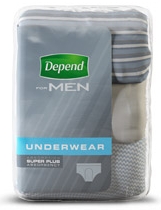
It turns out that a huge number of people in the U.S., out of medical necessity, rely on adult diapers – to the tune of a $4-billion per year industry. Even bad-ass ball player, Ken Griffey, Sr., is a spokesmen for the Depends brand of adult diapers – and without discounting his battle with prostate cancer, one has to admit that it’s pretty cool that he’s like, Yeah, I’ve rocked the Depends – and you should, too. And, the adult diaper industry has become marketing savvy, where they’re not calling the product “adult diapers,” but “maximum absorbency underwear.” Therefore, it occurred to me that if such a product was serving so many others so well, “maximum absorbency underwear” might solve my issue on cross-country flights and such, where, let’s be frank, I could simply pee my pants – just like bad-ass ball player, Ken Griffey, Sr.

Yet, I was still skeptical – I needed more research, more proof that “maximum absorbency underwear” really worked. Naturally, I turned to the most authoritative source online for such subjects: YouTube. I discovered that college kids are big reviewers of “maximum absorbency underwear,” where they put them on, get plastered drunk, and pee themselves, noting the results. And, overwhelmingly, they remark how much the product absorbs, how dry it keeps you, and how fresh you smell (namely due to pH-balancing qualities in the product). So, with bad-ass ball players like Ken Griffey, Sr., and binge-drinking college kids touting the merits, I figured that I couldn’t go wrong with sporting “maximum absorbency underwear.”

Coincidentally, around this time, I was at a home-medical trade show, and came across a giant booth of a particular adult diaper brand, with a hot, 40-ish woman working it. I was immediately drawn into the booth – admittedly to both perform further diaper research, and talk to the hot sales woman. As she gave me her sales pitch, she, in fact, explained, that she, herself, wore her company’s diapers – not out of medical necessity, but out of belief in the product. Of course, I couldn’t resist pushing the subject, morbidly intrigued that this woman, without real need, would put on “maximum absorbency underwear,” and just pee herself, and she went on to explain that she likes to wear them under her Spanx compression undergarments, so no one knows she’s wearing a diaper. I immediately realized that this woman could be the most shocking one-night-stand ever for an unsuspecting guy. Not only would she suddenly appear 20-pounds heavier upon removing her Spanx, but her further undressing would reveal her wearing a diaper for no apparent reason. I’ve never been the most discriminating guy toward getting lucky, but even that scene would have me peddling my wheelchair as fast as possible, like Fred Flintstones’ car, to get the heck out of that hotel room!

So, with my research done – Ken Griffey, Sr., binge-drinking college kids, and a bat-wit-crazy diaper saleswoman – I was ready to take the plunge into “maximum absorbency underwear” for my next flight. It turned out that Depends makes briefs, with patterns and all, that look close to actual designer underwear. No, they don’t actually pass for designer underwear – they are diapers, after all – but I reckoned that I’d look closer to Austin Powers on a water bed than Baby Huey in a giant crib. I say, if you’re going to rock a diaper, at least rock it well.

Now, I’m raising my teen daughter with a sense of awareness – and reluctant humor – so I dragged her to the pharmacy with me to buy my first 6-pack (a subliminal marketing ploy by Depends, associating manly diaper quantities with manly beer quantities), of designer Depends. And, my daughter, to her credit, was totally cool with it all – except when I showed her the woman’s version, noting that she would never have to leave class for a restroom break again if she wore them to school, that they were really a great study tool. Alas, I just got the stare, the one that says, Dad, I’m already putting up with your shenanigans – don’t push your luck.

Upon returning home with not just a 6-pack of Depends designer “maximum absorbency underwear,” but a 12-pack – because I’m a real 12-pack manly man – I called my sister, and she suggested that I put on a pair and test them out. However, I saw nothing practical or funny about peeing myself in the privacy of my own home for no good reason. I’m of the Generation X, where despite the necessity, I saw the real humor in peeing myself for the first time on an airplane, where the person sitting next to me would have no clue, where I might even be inclined to turn to him or her and say, Wanna know something awesome? I just pissed myself, and look, no one can even tell.

The next day, I drank an absurd amount during breakfast, saddled up in my diaper – read that, designer “maximum absorbency underwear” – and hopped a flight out of town. As cruel as life can be, the one time that I wanted to pee on a flight – the first time in my life! – I didn’t have to go. I was beginning to wonder if the magic to Depends was psychosomatic just as my sister suggested, that it’s tougher to voluntarily pee your pants than one might think.

Finally, with the plane’s engines humming, I looked out the window next to my seat, and realized that it was game on – I had to pee. So, I did – I just let it rip. And, everything that everyone said – Ken Griffey, Sr., binge-drinking college kids, and the bat-wit-crazy diaper saleswoman – was true. The pee seemingly disappears into a little pouch of technological marvel – no wetness, no leaking, no smell.

I turned to the guy next to me, but he was sound asleep, so I looked across the aisle to make eye contact with someone for an admittedly juvenile sense of amusement. And, an old lady leaned forward, smiling at me, just as if she was welcoming me to the club.

Swallowing Swords: A Death-Defying Monologue

By Mark E. Smith

During my eighth-grade daughter’s summer vacation, she learned how to swallow a 20-inch stainless-steel sword. Now, that may sound a bit disturbing to you; but, don’t worry, she learned from two of the best sword swallowers around: Donny Vomit and Heather Holiday, headliners at Coney Island’s historical Circus Sideshow, where Mat Fraser, a noted international performer with a disability, also serves as Sealo the Sealboy each summer. And, in case you’re wondering, despite her pushed-up bosom, bull-ring nose piercing, tattoos, and sword swallowing, Heather Holiday is the type of sweet young woman who you could take home to meet Mother – if your mother is OK with sideshow performers, that is.

The story behind the story is that I took my daughter to the Sideshow, in fact, to see Mat Fraser – who has self-described flipper-like arms due to a birth defect – but we found studying sword swallowing via Donny Vomit and Heather Holiday to be a lot more interesting (those with disabilities are really just a dime a dozen these days, slowing down public transit and such as we make others wait for us to awkwardly maneuver our wheelchairs, as if we never get better at driving these things).

As it turned out, witnessing sword swallowing was a lesson that might serve my daughter well in life in more ways than simply working as a sideshow act – which, in my accountant’s opinion, would prove as a fiscally beneficial alternative to college, freeing up hundreds of thousands of dollars for me that I could then spend on a yacht or a 23-year-old girlfriend, or ideally both. See, as my daughter and I learned, there’s truly no trickery to sword swallowing. By tilting one’s head back, it creates a straight line from the throat, down the esophagus, right to the stomach – a nice human sheath for a sword to slip into. Of course, along the way, one has to be aware of the ever-so-minor detail of not tearing one’s heart or other vital organs by which the sword passes (27 sword swallowers have died in recent years by breaking this simple rule), but once the organs are cleared, it’s a straight shot down the hatch.

However, where the real challenge to sword swallowing comes in is in one’s mental capacity to block out one’s natural gag reflex, and then ignore the extreme discomfort of sliding a 20-inch sword down one’s esophagus – and make it appear pleasant and easy on stage. Sword swallowing, therefore, is less a physical skill, and more mind over matter.

Of course, my daughter never actually swallowed a sword, and expresses no interest in doing so – at least not until she’s 18 or when I’m not home. Yet, we both learned a valuable lesson toward mind over matter – that is, how we control our instinctive reflexes makes all of the difference when facing challenges in life.

I know all too well that in living life, not unlike sword swallowing, we need to move ourselves past any discomfort, and have the willpower to simply push through to the accomplishment, sometimes with a die-trying, sword-swallowing attitude. We need to be willing to go where others wouldn’t dare, where we’re willing to swallow our own metaphorical swords in pursuit of living to our fullest. Avoiding a challenge, giving up, or stopping short can’t be an option. It’s how we transcend from merely surviving to truly thriving. It’s how the sword goes from the tip of one’s tongue, to the pit of one’s stomach.

I’m celebrating my one-year anniversary of maintaining a rigorous diet and workout routine – a shift in lifestyle, really, from Twinkies and Southern Comfort, to nutrient bars and protein shakes. Despite my compulsions toward gluttony and binge drinking, I embarked on this path toward higher levels of physical fitness not because I was strikingly unhealthy or out of shape, but because I wanted to simply be a better me (though, I’ve long been remarkably stunning, as you may have noted by my perfectly deformed appearance), pushing myself physically and mentally farther, tackling swallowing yet another sword – and doing so without clipping an organ in the process, per se.

My biggest challenge – or should I say, nemesis? – has been my left arm. You’ll note that I do virtually everything with my right arm – no slight-of-hand or trickery involved – and I keep my left arm on my lap, hand between my knees, namely due to the effects of my cerebral palsy, but also because it’s cozy and warm. See, cerebral palsy is random in its physiological distribution – you might say, it has its own sick sense of humor – so it effects my left arm more than my right, limiting coordination. Fortunately, I’ve developed the larger motor skills in my left arm and hand over the decades for many independent living skills (except for that one favorite “skill” of us gentleman, if you know what I mean); but, overall, Lefty is an unwieldy fellow with a mind of his own.

In my workouts, however, I don’t allow my left arm any slack. If I do given sets and amounts of weight with my right arm, I hold my left arm to the exact same standard – Lefty has to literally pull his own weight, just like Righty. And, it proves little short of torturous much of the time, but, other times, just mocking. Ha ha, I’m Lefty, and you can’t control me – neener, neener, neener!

While my right arm has the coordination to blow through sets on my workout machine, it can be a workout in itself just trying to get my left hand to grip the darn bar (which is also why Lefty is of such little use for that gentlemanly compulsion, if you know what I mean), then I need to muster the coordination for my left arm to move through the workout rep as it spasms and contracts beyond my control. Then, once I fight through one rep, I have to do it all 49 more times, or however many more reps based on a given exercise. Inevitably, a set that takes three minutes with my right arm takes 15 minutes with my left arm – and it’s among the most frustrating, miserable processes ever. I crank up my iPod, shut my eyes, grit my teeth, and just fight through every spasm and contraction, pushing through the reps, no matter how agonizing – with a dose of angst toward Lefty that motivates me, of course. I refuse to let Lefty’s defiant behavior win, ever.

What’s intriguing, though, is a simple question: Why indefinitely torture myself with such a workout? Why not scale it back on my left arm? Or, why not just stop when my left arm seems impossible to control at times? After all, nothing in my life literally depends upon whether I do 30 reps or the full 60 with my left arm. No one’s watching, and there’s no consequence on my career, family, or health if I simply let my left arm have a little leeway. So, why not just do what’s reasonable and practical, and give myself some slack based on the very real limitations imposed by my cerebral palsy?

The answer is, reasonable and practical doesn’t get us ahead in life – a die-trying attitude does, where we’re not willing to give up, where we’re willing to ignore our gag reflex, and ease the sword down our throats, regardless of the discomfort. See, I figured out that my workouts serve as both a metaphor and precedent for other aspects of my life, that working out allows me to reinforce that I don’t care how difficult a challenge may be – I’m not quiting until I’m satisfied that I’ve met the goal, or die trying. It may be uncomfortable as the tip of the sword slides past my tongue, triggering my gag reflex, but I will move past it, till the sword’s tip touches my stomach, the handle against my lips, and my mind has won over matter.

Indeed, what I’ve learned from the principles of sword swallowing is that it’s not a physiological gag reflex that prevents 99.99% of people from swallowing swords, but our mental excuse reflex. Sword swallowers are simply willing to push themselves physically and mentally farther than others – they eliminate their excuse reflex, and just accomplish their goal, where they’re willing to die trying, so to speak.

No, I don’t suggest that anyone attempt sword swallowing – especially my daughter, and if she does attempt it, please don’t tell me (denial as a parenting skill works wonders). However, the mental techniques that sword swallowers use are ones that we should all apply to our lives, where we know that gag reflexes are really excuse reflexes, where we’re dedicated and bold enough to push beyond any hardships to reach the extremes of our potential, swallowing the swords of life, no matter how daunting they appear.

Night Clubbing with Maslow

By Mark E. Smith

What a man can be, he must be. That’s the basis of Abraham Maslow’s theory of “self-actualization” – that is, an individual’s desire and potential to be more than what one already is. See, Maslow, an early 20th-century psychologist, studied people of great accomplishments, from Frederick Douglas to Albert Einstein, and defined the common traits that allowed them to propel themselves beyond the ordinary, into the extraordinary, and one of the key components that Maslow defined was self-actualization – or, the self-awareness to push oneself further and further, especially during circumstances that others might avoid.

Interestingly, in my college psychology and philosophy classes, I, too, studied many great thinkers, from the Greek philosophers to existentialists. However, the one that truly made me sit up in class was, in fact, Maslow – namely because he defined what I practiced in my life every day. Even as a child, I was totally aware of what made me feel intimidated or insecure or vulnerable, and rather than avoiding or denying emotionally disconcerting situations, I moved toward them, much like Maslow defined through self-actualization. I remember being terrified to read aloud in class when I was first mainstreamed into public school; yet, whenever the teacher asked for volunteers to read, I raised my hand and read aloud. Somehow I recognized my vulnerability and fear, and rather than denying my emotions, I had the innate self-awareness to know that I had to push myself beyond them in order to reach new potentials.

As an adult, my once childhood instinct to acknowledge my trepidations and challenge them – not avoid them – has become truly conscious. If I’m intimidated by a situation, I refuse to deny or avoid it; rather, I throw myself fully into it, knowing that I will grow in the process, that I can overcome any unsettling emotions and circumstances that I face.

A recent experience at among Los Angeles’ hottest night clubs was no different for me, where Maslow was on my side – my “wing man” of sorts – guiding me past my insecurities, onward toward my potentials. The scene was a rarity for me as a guy who’s more akin to working late into the night, instead of partying late into the night. Nevertheless, there I was at among the hippest of night club scenes: A table in the VIP section, with our own security guard, a dedicated hostess, and among my closest friends. And, all I wanted to do was to go onto the dance floor and dance – ideally with one of the ladies in our group. Yet, no one else in our group wanted to dance. I charmed, nagged, and eventually begged, but no one wanted to dance – nothing personal, they all just wanted to kick it VIP, as the hip kids say. But, for me, wanting to dance, while surrounded by my happy-to-just-relax friends who didn’t feel like dancing… well… that was like taking a kid to a playground and making him just sit and watch.

I soon realized that if I was going to go out on the dance floor and dance, I was on my own. Think for a moment of that proposition, and how intimidating it was: Theoretically, I had to roll out onto the dance floor, amongst the hippest of the hip in L.A., and just start dancing by myself, a guy in a power wheelchair – and somehow pull it off without looking ridiculous at best, creepy at worst. Now, maybe you have bigger apples in your basket than I do, but that’s an overall intimidating proposition, where most – namely, me – would feel vulnerable going to dance alone among the crowd.

Yet, I had Maslow as my wing man, where the voice in my head said, “Your insecurities and vulnerabilities now require you to just get out there and dance!”

I slipped out of our VIP section, and went and sat across the club for a bit by myself to muster my courage – then I just rolled myself out, into the middle of the dance floor, bopping to the music. I danced a few songs by myself, and then, as Maslow’s theory proves, a small group of women worked their way toward me, and one young lady, in particular, started dancing with me – a little eye contact going on – and I was high-fiving Maslow for once again getting me beyond my insecurities and into the chicks!

Within no time, members of my group were out dancing with me, random hotties (and not-so-hotties), were grinding on me, and I never left the dance floor, where everyone was getting down with the “fully self-actualized” me, being the best I could be, not avoiding an intimidating circumstance, but tackling it head-on – to a club beat, no less.

What I’ve learned is that the hardest aspects of life aren’t literally doing what we’re capable of doing, but convincing ourselves that we’re capable of doing them. When we think about propositions like speaking in front of a group, going on a job interview, asking someone on a date, or chasing any wild dream where our insecurities and vulnerabilities arise at the mere thought of taking such a “risk,” there’s always that overprotective voice that tries to steer us away from any pursuits that may create disconcerting feelings. And, most people use those intimidating thoughts and vulnerable emotions to avoid ever pushing their lives to the fullest. However, the moment that we turn the table on our insecurities and vulnerabilities, where we refuse to use that negative voice as a justification to avoid intimidating situations, but to instead use it as a catalyst to move us to pursue intimidating circumstances with all of our might, we grow exponentially and our lives dramatically improve. Our job, then, isn’t to avoid intimidating and vulnerable circumstances, but to actively pursue them, where our vulnerabilities aren’t weaknesses but strengths, where we are willing to risk feeling scared or embarrassed in the noble attempt to better ourselves. And, what’s amazing is that this self-actualized process always works. No, we may not get the job, win over the date, or immediately find success at the pursuit; however, by working through our intimidation and vulnerabilities at any given moment, we’re empowered to tackle more and more in life, where we eventually find amazing levels of personal growth, reward, and success.

Alas, Maslow’s theory of self-actualization never lets us down – not in life or L.A. night clubs! – where when we acknowledge our insecurities and vulnerabilities, and then consciously push ourselves beyond them, we don’t merely live as who we are, but we move closer to who we must be.

Check His Hands

TSA
By Mark E. Smith

So, my colleague, Jeff, and I are making our way through Detroit’s Metropolitan airport’s passenger security checkpoint. Jeff is a good guy to travel with because he’s ultra-responsible – great company to have on business trips when you’re visiting providers and giving a talk at an event like we just finished.

Luckily, because I use a power wheelchair, we’re being ushered ahead of all of the people in the security line. Jeff grabs my briefcase and carry-on bag from where they’ve been hanging on the back of my wheelchair, and I shoot off through a security gate, directed by a Transportation Security Administration officer – a TSA agent, as they’re commonly called. I look over and see Jeff start loading our gear into the bins on the X-ray conveyor belt.

“Right this way, sir,” the TSA agent on the other side of the gate says, leading me to a spot that I know well – they’re the same at every airport – where they’ll search me and my wheelchair by hand.

“Have you been through this before, sir?” the agent asks, putting on rubber gloves.

“Many times,” I say, holding my arms out for a pat-down, looking like a well-dressed guy in a wheelchair being arrested.

“Do you have any sensitive spots?” he asks.

I pause before answering, carefully considering my exact words.

See, I once told a TSA agent that my only sensitive spot was my crotch, thinking that I was being funny. However, that particular TSA agent didn’t share my humor – and threatened not to let me through security, so I’ve learned to keep my off-handed comments to myself.

“No – no sensitive spots,” I say.

The agent pats me down – arms, torso, legs – then grabs three cookie-sized white swatches of cloth, and wipes down my wheelchair, my shoes, and the palms of my hands with them. I know what the swatches are for from having been wiped-down many times – they pick up any residue of chemicals, and when scanned by a machine, they tell the agent whether there are any traces of chemicals or explosives on you.

I’m distracted by a guy wearing a waist-length, dark-brown fur coat, carrying a shiny-aluminum briefcase, and I’m reminded of the crazy characters who I only seem to see in airports.

I turn back to the TSA agent and watch as he puts one of my swatches in the reader, and it buzzes a sound I’ve never heard. He looks at the machine, then me, then the machine again. Then he walks toward me.

“Sir, I’m gonna need to check your palms again,” he says, holding a new swatch.

I nod. I know something is up with the buzzer and this second swatch check of my palms, so I’m just playing it cool.

“No problem,” I say.

The TSA agent wipes my palms, walks over to another machine, and runs the test. That machine, too, buzzes.

What could be on my hands that’s setting off the alarm, I wonder, looking at my hands.

“Sir, please don’t move while I get my supervisor,” the TSA agent says to me.

Jeff strolls up, struggling to carry both sets of our bags, hanging mine back on my wheelchair.

“Dude, my hands are setting off the chemical residue alarm,” I whisper to Jeff, and he just stares at me like here we go….

The TSA agent returns with his supervisor, and the supervisor asks, “Are you two traveling together?”

“Yep, he’s with me,” I reply, glancing at Jeff.

“Have you handled any chemicals this morning, sir?” the supervisor asks me.

“Just soap, shampoo, toothpaste, deodorant, breath spray, and a muffin,” I reply, trying to think if I’ve overlooked anything.

“No, none of that would do it,” the supervisor replies.

“What about hand sanitizer?” the TSA agent adds.

“I haven’t used any, but Jeff, here, is addicted to it,” I reply, pointing at Jeff. “I’m not kidding, Jeff bathes in it. During our whole trip, every time I look, he’s putting the stuff on his hands.”

“That could be it,” the TSA agent says. “Have you guys shook hands or anything this morning?”

“No, but we’ve been handling the same bags,” I reply. “…Maybe you should check Jeff’s hands.”

Jeff turns his eyes down at me like, Mark, shut up!, but doesn’t say a word.

“Oh no,” the TSA agent says with a nervous chuckle. “We don’t want to make this situation any worse than it is.”

Worse than it is? That doesn’t sound good.

“No, really, check Jeff’s hands – I’m curious to know what’s on them,” I say.

“Sir, we’d best not,” the TSA agent says.

The supervisor looks Jeff and me up and down. “You guys should probably just go catch your plane,” he says, looking around as if no one else should hear what he’s said. “The machine reads to a 10-billionth, so I’m sure it’s just picking up the hand sanitizer.”

“Well, thanks for your help,” I say, and Jeff and I turn and get out of there as fast as we can.

“Great move,” Jeff says as we head down the corridor. “Check his hands! – what are you, crazy, trying to get us in more trouble?”

“Well, you’re the one addicted to hand sanitizer, so I just wanted to see if the buzzer went off for you, too,” I replied. “There’s nothing on my hands, so it has to be your hand sanitizer rubbing off on me….”

“Remind me never to go through security with you again,” Jeff says as we head toward our gate.