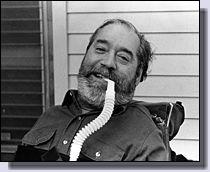
Play Your “C” Game

courage
By Mark E. Smith

The terms disability and courage are forever linked in mainstream culture. After all, there’s rarely a disability-related story in the media where we don’t hear an individual with disability labeled as courageous. The two terms are so intertwined at this point that many people even label those with disability as courageous upon mere sight, where a stranger in the grocery store, knowing nothing about you, might even pat you on the shoulder, noting, “You’re courageous.”

Yet, there’s nothing intrinsically courageous about disability. When one acquires disability, courage does not come with it as a package deal. And, we see this clearly when we think of those with disability who have no willpower or desire to do anything with their lives but feel sorry for themselves, believing that the world is one big injustice. Nope, there’s no courage there.

However, the media does have an absolutely correct point: If you’re going to succeed with disability, you must practice courage. In fact, in much of life, regardless of disability, courage is essential to success. Whether it’s starting a business, speaking in front of a group, asking out a dream date, or dealing with addictions head-on, countless areas of life require courage. And, succeeding with disability is no different – it takes courage.

I recently learned of an acquaintance, a quadriplegic, who interviewed for a fantastic job two states away from where he lived. He drove out to the interview with an attendant, toured the company, and immediately received a job offer – a remarkable opportunity in today’s tough economy, and even more impressive when one realizes that the unemployment rate among those with disabilities is upwards of 65%.

But, he promptly turned down the job. When I inquired why he rejected the remarkable job offer, he explained that the move would simply be too difficult for him due to his disability. At 26, he didn’t own a home or have a wife or kids, but he did have an apartment and established attendant care, and he didn’t want to risk his seeming security by moving two states away for employment.

I had to bite my tongue during that conversation, especially since he’d already turned down the job offer – my challenging him on his decision would have been pointless. However, it’s unquestionable in my mind that the reason why he didn’t take the job was because he simply panicked, letting fear get the best of him. Really, he initially had the motivation at some level to apply and interview for the position, but when he actually received the job offer – that is, when life actually presented him the rare opportunity to rise to the occasion – he failed to pull the trigger, he lacked the courage to move forward.

Now, maybe you’re thinking, “Mark, you’re being too harsh. It’s not that easy for someone with a profound disability to just pickup and move two states away for a job.”

And, you’d be absolutely right – it’s not easy for someone with a profound disability to just pickup and move two states away. I’ve been in similar situations, and make no mistake, it’s an intimidating proposition. But, that’s where courage comes in. As I would tell my best friends, I don’t care that you have a disability. When you’re unemployed, and you’re offered a fantastic job two states away – and you have courage – you confront any fears in healthy ways, contact the independent living center in the new area, and begin planning the move – it’s that simple. See, courage is when you’re emotionally strong enough to actively move your life forward despite any fears, and you’re able to cope with adversity in order to find success. Courageous people acknowledge the challenge, determine what needs accomplishing to address the challenge, and then take action to overcome the challenge. It’s an elementary process intrinsic to successful living.

Interestingly, courage isn’t a strength that we always possess – again, it’s not intrinsic to disability. Courage is a tool that we accept or deny when life presents it as an option. However, a fascinating aspect of courage is that when we do rise to an occasion and accept courage, it sets us up toward greater successes in life, building upon itself as exponential growth. If the gentleman with the job offer, for example, made the move two states away, starting his career with a very courageous life change, he would have quickly learned that his independence was intrinsic to him, not limited to a subsidized apartment and care. If he’d made the move once, he would have set himself up for the ability to make a second, third, and fourth career move down the road, possessing the courage to go wherever in the world that opportunity called him. Imagine how his career opportunities would have blossomed with the inspiration gained from accepting courage. Instead, he chose to pass on a terrific opportunity, electing to stick to the familiarity that he knows – and it will likely limit his life, geographically, economically, and emotionally in the future unless he overcomes his fears and embraces courage when needed.

Still, none of us have to shun courage when it calls. Again, the first move toward embracing courage sets us up for success long after that initial dare. We don’t graduate college without having used courage to enroll. We don’t raise children to become successful adults without having used courage to address our own parental coping skills along the way. We don’t overcome addictions without using courage to face our fears in the process. And, we don’t succeed with disability without using courage to rise above the adversities that we encounter. Courage, it’s clear, is where all of life’s opportunities for growth, reward, and success begin.

In my own life, I’ve let courage lead me to some fantastic opportunities, having put myself through college, changed career fields, moved entirely across the country, spoken in front of thousands, met the President, traveled extensively, and on and on. Without a doubt, I’ve found that accepting courage opens doors of opportunity that always improve my life. In fact, I’ve learned to use the call for courage at turning points in my life as a barometer for recognizing the opportunities that I should not let pass, no matter how scary – that is, the more intimidated that I feel toward a life event, the more courage I know that I must demonstrate to embrace it, as it’s a sure sign that I’m heading toward a remarkable experience. Till this day, when I get calls to travel cross-country alone, meet with someone famous, or speak in front of thousands, of course I’m initially nervous; yet, more importantly, I kick in my courage, close-out any apprehensions, and know that it’s game on – that is, I play my C Game, the “C” being courage.

As you approach the New Year, I hope you’ll join me and vow to embrace courage in your own life when the occasions arise. No, I don’t know exactly what opportunities the New Year will bring for you, but every day will present moments for you to accept or deny opportunities of courage. Maybe some of those moments will be on a grand scale, a job offer cross-country – so, pack up and go! Or, maybe some of those moments will be on a smaller scale, as with enrolling in community college – so, go down to campus and sign up! Or, maybe some of those moments will be emotional, confronting an addiction or unhealthy relationship – so, seek the support services that you need, and get your personal life on track!

Put simply, in 2009, opportunities for personal growth, reward, and success will present themselves to you everyday – some relating to disability, some toward your career path, others toward your relationships, and on and on. When these opportunities arise, don’t let fear or complacency get the best of you. Rather, embrace courage, and pursue all opportunities – you’ll always find success when you play your C Game.


Children First

markemily200
By Mark E. Smith

When we’re very young, we dream of having “heroic” careers as police officers, doctors, nurses, and teachers – that is, careers where one notably helps others beyond oneself.

However, once grown, we can lose sight of our intrinsic heroic abilities, living in a culture where many of our roles are defined as anything but heroic, living meaningful but admittedly common lives, where we’re not fighting on the front lines or performing heart transplants. Yet, we still have the ability to serve as heroic in our everyday lives: As parents.

If you think about the best parents, they truly are heroic in the eyes of their children. The best parents put the family’s needs before their own; they demonstrate the willpower to make tough decisions and set boundaries; they live by devout morals and ethics; they persevere; and, most of all, they demonstrate in deliberate ways every day that they love their children, showing a clear belief in their children’s abilities to grow up and become a remarkable individuals. Indeed, being a hero doesn’t take an esteemed career, money, or fame – just dedication as a parent.

As one with a disability, and as a parent, I’ve learned that disability not only effects our ability to be heroes in our children’s eyes, but often serves as a make-or-break situation for the role. Countless times, a young person in his or her teens or early twenties has come up to me at an event, noting that his or her parent has a disability, and I always ask, “How’s your parent doing?”

The child’s response is usually unmistakable, and never middle-of-the-road. He or she either lights up with a smile and says, “Great,” or he or she looks down at the ground and quietly says, “Not so good.”

As we’ve talked further, the optimistic children always note how despite hardships, their parents with disabilities remain remarkably positive and involved in their lives, whereas the somber children express how disability has removed their parents from their lives in many ways. What’s strikingly obvious in these conversations, though, is that the conversations aren’t about the parent at all; rather, these conversations are truly about the child.

No matter the age, children look to their parents for examples on how to live, how to cope in the complex world around them. When a child sees his or her parent challenge disability with resilience, perseverance, and optimism, that has a profoundly positive affect on the child’s self-image and life skills. A friend of mine lost both legs and one arm in an automobile accident when his two daughters were ten and twelve. The two girls watched as their father went through unimaginable changes, including the scary realities of rehab, which hits home the true impact of one’s injury toward daily living with profound disability. Yet, my friend kept his daughters close to him through every moment of the process, reassuring them that while life was going to be different, it would ultimately be alright. As the years passed, the girls saw him return to work, they saw him helping with their homework at night, they saw him coach their soccer team, and, most importantly, they saw him just be Dad. The girls are now in college, and are doing exceptionally well. Their dad’s disability, it proved, helped them see perseverance, resilience, accountability, and humility in action – traits that can only be modeled by a mindful parent. There’s no doubt that as a father, he’s a true hero to his daughters.

See, when a child witnesses such pronounced parental dedication, it unquestionably builds tremendous esteem within the child. A child ultimately takes life queues from a parent based on what’s modeled, not what’s said, where a parent’s proven perseverance, resilience, accountability, humility, and love creates the healthiest of child. Add to this a parent’s positive approach to disability – which emphasizes the aforementioned traits – and a child recognizes an even greater hero in his or her parent, where children like those of my friend intrinsically know that Dad’s done it, and so can we.

While a parent’s healthy approach to disability can inspire a child’s life to remarkable heights, an unhealthy approach can devastate it – forever. If there’s one aspect that a child needs in daily life, it’s positive forms of assurance and stability. When a parent is upset, a child is upset. When a parent is fearful, a child is fearful. When a parent can’t cope with life, a child has no way to cope with life. And, when a parent allows disability to destroy his or her life, it also destroys a child’s life.

Truly, among the most destructive paths that a parent can take is to use his or her disability as an excuse to allow out-of-control emotions and circumstances to enter the family’s life. Such circumstances strip a child’s sense of security and leave him or her void of healthy coping skills. What’s more, children naturally assume a role of caring, wanting to “fix” their clearly emotionally broken parent, and when a child can’t, a child experiences tremendous guilt. What a parent’s inability to cope with disability adds up to, then, is grim statistics, where no parental guidance or coping skills, compounded with a sense of shame and guilt within the child, fosters unhealthy life choices in children, teens, and adults alike.

I’ve seen it play-out first-hand, time and time again, where the children of parents who tune out due to disability end up virtually lost. My initial realization of this fact began in the fourth grade, where an able-bodied classmate’s dad was recently paralyzed from the neck, down, a very high quadriplegic. We lived in the same neighborhood, so my classmate and I hung out together. I remember witnessing it month by month as his parents’ marriage disintegrated, and his dad became a profound substance abuser, living in squaller, with no concern toward his son. In fact the situation was so bad that my own father, an alcoholic who was in and out of my life, actually intervened in my friend’s dad’s situation, moving him into a nursing home when he was on such a downward spiral that his life was at risk. I remember often going with my friend to see his dad at the local nursing home after school, and his dad would just stare at the television, motionless. “Tell your mom to bring me cigarettes,” is the only thing I ever remember him saying to his son.

My friend’s mother was a successful business woman in our town, and by all accounts, she did the best that she could toward raising my friend alone. My friend and I ended up losing touch in junior high when I moved to a neighboring school district. However, during my senior year of high school, I ran into my old friend at a party, and he was a complete mess – drunk, stoned, and not graduating like the rest of us. After a while of catching up, I, of course, asked how his dad was, and he explained that his dad had died two years earlier. And, what he said next haunted me even then: “I wish I was there for him more. I feel like Mom and I let him down.”

Think about the profoundness of that 17-year-old’s statement: His father completely dropped out of life due to disability, leaving his son feeling entirely responsible, clearly unable to cope. Do you really think that that young man went on to the healthy, happy life he deserved?

Of course not. His father used disability as an excuse to leave his son full of shame and guilt – a devastating legacy.

Well into my disability-related career now, it saddens me how often I encounter teens and adult children alike whose parents’ inability to cope with disability is destroying the children’s entire sense of self-worth. Sure, the dysfunctional parents always grab onto the excuse that they didn’t choose disability, that everyone in the family is a victim, especially them for physically suffering. But, I’m bold enough to tell such parents that their self-centered nature isn’t about disability, but about poor parenting, where the only victim is the child. In no uncertain terms, parents with disabilities need to get over themselves and their disabilities, and simply be parents.

The fact is, disability does not dismiss parental responsibility, nor does it give any right to place any additional emotional burdens on one’s children. Someone questioned me on this stance, asking, so then how does a parent who’s emotionally struggling with disability realistically not let it spill over to his or her child?

My answer is simple as it gets: Your child’s needs must come before your own. If you feel that you’re struggling with coping skills, you don’t let it spill out on your child; rather, you must act as a grownup, and seek healthy outlets among other adults and professionals. And, along the way, you take accountability for your actions, form healthy coping skills, demonstrate perseverance, and build dignity – traits that you should pass onto your child through modeling positive behavior every day.

Make no mistake, the equation is strikingly clear: When we place parenting above all else, our children excel, but when we put our disability above all else, our children suffer. And, there’s no in-between. Disability isn’t easy, and neither is parenting. However, when you have the integrity to put your child before your disability, and make the daily effort to model perseverance, resilience, accountability, humility, and love, you live up to your responsibility as a parent – that is, you become a true hero in your child’s life.

The Power of Five

By Mark E. Smith

In the late 1990s, my best friend and I had among the most candid conversations. Many people with his condition pass away in their mid to late 30s, and with my friend approaching that age, he was understandably troubled by it – especially since peers he’d grown up with recently passed. Although, I didn’t let on at the time, the realities of the conversation touched me deeply, not only out of fear loosing my best friend, but also in the sense of considering mortality due to complications of disability, a subject that’s pondered with apprehension by many.

Here we are decade later, and my best friend continues giving me a constant run for my money to keep up with his successes. I had the honor of serving as his Best Man exactly a year ago, so he’s currently celebrating his one-year anniversary; he continues his long-time career in the software industry; and, he’s made terrific moves toward long-term financial success. In all bluntness, for a guy who questioned the realities of his lifespan ten years ago, he’s more alive than ever. In fact, it can be argued that my friend is far more alive than many of us, where he demonstrates that living is as much about tomorrow as it is today – a lesson that we all should learn from.

Now, I know that living for tomorrow seems a contradiction to the new-age adage to make the most of today because you don’t know what tomorrow brings – and the unpredictable nature of disability can emphasize that point. However, contrary to pop-motivational rhetoric that says live like there’s no tomorrow, dismissing a long-term outlook is ultimately a very pessimistic, self-defeating perspective, stifling our growth and diminishes the quality of our future, especially when it comes to living with disability.

Interestingly, when we think about the overall will to live – not just in a life-or-death sense, but also toward living an overall passionate life every day – it’s striking how it all comes down to our optimism for the future. I mean, when we feel the most positive, it’s usually because we’re looking forward to something in our future: Climbing the corporate ladder at work; the anticipation of graduating college; finally paying off a car loan; having a child; or, taking a long-awaited cruise next summer; and, on and on. It’s the long-term hallmarks and goals that give us a sense that life is simply worth living because our best days are sure to come.

It is true that some with disability and illness don’t believe that they will maintain any semblance of health long enough to have a future, while others simply feel so defeated by disability that they have no interest in planning a future. After all, if one believes that one’s future will be bleaker than the past due to disability, what’s the point of living for tomorrow?

To dramatically improve one’s life – it’s that simple. While we all must live today to the best of our abilities, living for tomorrow is truly what inspires our lives. And, if we place no emphasis on dictating the quality of our future, surely it will be bleak. See, living for tomorrow moves us forward both in the immediate and in the longterm. In the immediate, a sense of purpose is the surest way to maintain our daily spirits. If one sits at home, feeling that the best days are behind, with no plan for the future, of course misery, depression, and despair set in. However, if one’s working toward a future goal, one can’t help but feel more positive. I can’t wait till the day my car’s paid off – I’ll be that much farther ahead financially. I can’t wait till our wedding day, when we start the rest of our lives together. I can’t wait to graduate college and start my dream career. When we look to our futures with optimism, it’s impossible not to feel more empowered in the immediate.

I’ve been speaking at a lot of colleges recently, and one of my recurring messages that I deliver is recognizing the power of five in our everyday lives, where setting five-year goals gives us an astounding opportunity to bring tremendous change – and toward life wife disability, it can prove even more impacting for some:

The unemployment rate among those with disabilities is approximately 65%, with a median household income of $13,500. However, studies show that those with disabilities who have a bachelor’s degree have the same employment success as those without disabilities, experiencing an unemployment rate of 6%, with a median income of $51,000. Therefore, one with a disability can go from a high school diploma to a bachelor’s degree, from unemployment to employed, from living in poverty to a meaningful income – all in just five years. That’s astounding change, in a relatively short amount of time, simply by living for tomorrow.

A terrific universal example is that the average household income-to-debt ration in the U.S. dictates that, with focus, all household debt, except for the mortgage, can be paid off within three years. Therefore, an average household can not only be debt free, but have savings in the bank – all in just 5 years. Again, that’s an amazing change in one’s life by living for tomorrow.

I, myself, have always used goal setting and the power of five to remain remarkably optimistic and keep momentum in my life. In junior high, I knew that with very little family support, I had to ensure that I was as physically independent as possible by the end of high school, so that I could go out and live on my own. By graduation, I was astoundingly independent for someone of my disability severity level – it took about five years for me to accomplish. When I enrolled in college, I wanted to obtain my degree, publish a book, and have a job in the education field – it all occurred within about five years. I knew from our first date at age 22, that I wanted to marry my wife and have children, and eventually it all came true – within around five years. When I set my sights on graduate school, then changing careers, moving my family across country to take a role in the wheelchair industry, it all came to fruition within five years. Five years, it’s proven to me, allows us to make amazing changes in our lives, and when we work toward our goals, it inspires our everyday – that is, it’s hard not to be enamored by the lure of a promising future.

Surely, some with progressive disabilities or terminal conditions can have a hard time finding enthusiasm toward the future, where health declines are foreseeable, suggesting that the best of life is behind, where looking to tomorrow may seem scary, with a five-year vision seeming impossible. However, the positive impacts of living for tomorrow don’t change. My mother-in-law recently passed away from cancer. A big question upon her terminal diagnosis was, how long did she have to live? The doctors and hospice nurses all told us the same prognosis, that because her cancer was throughout her body, there was nothing medically that could save her life. However, they couldn’t give us an actual life expectancy. Instead, they explained to us that beyond the realities of the body, an “undefinable” comes into play – known commonly as the will to live – where some in my mother-in-law’s condition die hours after diagnosis, while others live for a year or more. “I’ve seen a woman in outwardly good shape say goodbye to her family, then died that night, while I’ve seen another woman who just refused to die and lived beyond any medical explanation for three years,” a hospice nurse told me.

When I asked the nurse if she saw a common factor among those who lived longer than others, the nurse was adamant in her reply: “Absolutely,” she said. “It’s just the will to live that makes the difference. Many patients, even when unconscious, hold on until their families have a chance to come say goodbye. Of those who live well beyond where they medically should have died, they’ve usually held out for the wedding of a child or the birth of a grandchild or other monumental, joyous life event.”

It’s interesting, then, how even in the most terminal of situations, living for tomorrow empowers our lives till the very end. And, if we have the intrinsic capacity to actually prolong our own passings, no matter by hours or years, it makes the potential for positive foresight in our everyday lives seem limitless, where goals toward education, career, family, finances, and community seem easily achievable in the long term.

The fact is, I’ve never meet an inspired, engaged, successful person who wasn’t living for tomorrow – including those with disabilities, no matter progressive, terminal, or otherwise. Taking initiatives to set goals for our future literally improves our lives by giving us a sense of control and empowerment, keys to dealing with disability and all areas of life.

No, there are no guarantees that we will achieve all of our goals in any of our lifetimes. However, if you’re reading this today, I can guarantee you that tomorrow will surely come – and you now have the perfect opportunity to set goals of what you’ll accomplish to bring positive change in your life. Better yet, I say aim high, and shoot for the five-year plan – after all, life snowballs for those actively pursuing it, where in no time, you can transform the challenges of today into the successes of tomorrow, where even the most seemingly insurmountable challenges can be overcome in a just few short years.

Hedging Our Bets


By Mark E. Smith

A few days per week, on my wheelchair ride to and from work, I encounter an older woman who sits on her porch, watching the traffic go by. I roll up her walk, and we chat for just a minute or so, and the conversation is always the same: She tells me of how her ultimate salvation is going to be when she wins the state lottery, unyielding in her conviction toward it.

Indeed, she tells me of how in 77 years of living in the same house, never having left the valley that we live in, she’s going to take her lottery winnings and buy an “around-the-world steamship ticket.” She tells me of how she’s going to take her lottery winnings and pay off the debt that her “no-good husband” left her with when he died. And, she’s tells me of how she’s going to take her lottery winnings and put her great-grandchildren through college, the first generation to attend, she hopes. I once asked her how long she’s played the lottery, and she replied, “Since it began. Eventually, I have to win.”

Of course, statistically, she’ll never hit the jackpot, and she’ll likely spend the rest of her life on that porch, caught in the trap of wishful thinking. No, I certainly don’t want to judge the woman’s views, as I don’t know the entirety of the life she’s led. However, I can’t help but think that if she’d always applied her unyielding belief in winning the lottery to a belief in her own ability to simply work and achieve financial goals on her own accord, she’d be a lot farther in life. Truly, it’s indisputable that working day and night, and saving for one’s retirement and children’s education is the surest bet for financial peace – whereas, simply sitting on one’s porch counting on winning the lottery for financial salvation is sad at best.

I’ve seen this same waiting-for-the-lottery mentality stall the lives of some with disabilities. It must have been 15 years ago when I met a young man, my age, with quadriplegia, who was waiting to win his own lottery. We were both in our early 20s, and while others with disabilities and I pursued college and career, he was waiting for a cure – literally. He was paralyzed in a car accident at 16, and after that, he and his family focused all of their attention on awaiting a cure for his spinal cord injury. He told me of how after his accident, he never returned to high school, but was merely waiting for a medical breakthrough. “We’re not accepting anything short of a cure,” his father told me.

Here we are fifteen years later, and although I have no idea whatever happened to that young man, science tells us that he hasn’t been cured, that he’s never won the lottery that his family hinged his life upon. Yet, I hope that at some point he realized that while holding out hope for a cure can prove positive, it shouldn’t include putting one’s life on hold. I hope that he realized the importance of moving his life forward, irregardless of a cure, as time ticks for all of us, and years spent simply waiting are waisted when one can be reaping the rewards of doing. In all, I hope that he went back to school, got his degrees, built a career, started his family, and made his life more about doing and succeeding than waiting and longing.

I know that some believe that making the most of what we have, not waiting for a cure to save us, lacks vision toward accomplishing the impossible. But, the opposite is actually true. In a literal sense, those with disabilities who are most influential toward promoting real potentials toward cures aren’t sitting around with their lives on hold wishing for a cure. Rather, those with true hope are out making the most of themselves in the here-and-now with disability, pursuing education and career, raising their families, engaging in community – accomplishing whatever they can with their individual potentials – all while lobbying for research and creating awareness toward cures. After all, cures don’t come from wishful thinking, but from actually doing.

Along the lines of common sense, what does one truly have to gain from simply waiting for a cure? I mean, if one truly believes that a cure is coming, why wouldn’t someone best prepare for it by pursuing education, career, and family – or living the fullest life possible to one’s abilities – in the meantime? As I always say, there’s no benefit to being uneducated, poor, uninspired, lonely, and disabled, so why would one plan on being uneducated, poor, uninspired, lonely, and cured? I know that sounds a bit funny, but there’s a real point to it: If one is going to ensure a successful life, cured or otherwise, it can only start with the immediate, or one will never succeed.

As those with disabilities, if we’re going to lead successful lives, surely we can focus partly on the quest for a cure, if we wish – but we shouldn’t hinge our lives upon it. What we must do is, start with the here-and-now – disability and all – and focus on making moves that universally improve our lives: Education, employment, relationships, and community, using whatever abilities we have at any given moment to create impact and momentum. And, along the way, if we wish, we can also contribute to the quest for a cure, understanding that it’s part of our lives, but not the sum of it. That is, we can still buy lottery tickets, but it can’t be in place of working to ensure our own wealth.

If we simply follow that common-sense path – making the most of our lives, disability and all, working toward a balanced life of accomplishment – an astounding transformation occurs: After 15 years, one awakens not in one’s parents’ house, with life still on hold, but in one’s own home, with a spouse, children, and inspired career. And, if some day a cure comes, it will be terrific icing on the cake – because one has already worked to make life so remarkably fulfilling.

Thinking Inside of the Box


By Mark E. Smith

We need to think outside of the box. If you’ve been around any sort of business environment – or, even pop-culture – you’ve surely heard that expression, one used by countless management coaches and motivational speakers for decades. Of course, what thinking outside of the box means is using creativity and originality to find new solutions, ones that others presumably haven’t found.

Interestingly, the term thinking outside of the box is said to have mainly originated through corporate coaching at Walt Disney Corporation in the late 1960s, based on the nine-dot puzzle, in which the goal is to connect nine dots by drawing four straight, continuous lines without lifting the pencil. The key is that the puzzle is only solved by connecting the dots and drawing a shape that voids the puzzle’s initial “box” shape – hence, thinking outside of the box.

Despite the catch-phrase appeal of thinking outside of the box, the way that most people view the motivational concept – arguably, including Walt Disney – is the completely wrong . Literally, the nine-dot puzzle requires us to think inside the box – that is, we’re given a specific situation, and to solve the puzzle, we must work with the constraints of what we have, exactly nine dots. Sure, we must unconventionally connect the dots to solve the puzzle, but we’re still only working with what we literally have, nine dots.

When we live with disability, thinking inside of the box is among our best strategies toward successful living, where we simply make the most of what we literally have. Indeed, some can think outside of the box, hoping for a cure, or wishing to turn back time. However, such thinking that’s outside of our realities – beyond our nine dots – is truly futile. After all, we can’t work with what we don’t have.

However, to the contrary, when we think inside of the box – that is, when we look at the “dots” that we actually have, and work with them to our fullest potentials – we can then create true progress, from solving puzzles to succeeding in every aspect of our lives. Quite simply, thinking inside of the box is when we recognize the literal resources that we have, and then we work them to their most fruitful, advantageous outcomes: I may have cerebral palsy, but within those limitations, I have the ability to excel in business, to write and communicate at an impacting level, to live as a role model for my daughter, and on and on. That is, thinking inside of the box allows us to focus on our true potentials, no matter framed by disability, and succeed with the inherent capacities that we have.

Countless times, I’ve sat talking with someone – someone with a lifelong disability, or a recent injury, or a progressive condition – and I’ve heard him or her thinking outside of the box, longing for a cure, wanting to change the way life has gone, wishing for the impossible. Meanwhile, inside the box – that is, within the person’s true daily life – there’s a wealth of potential and blessing, from a great intellect, to a supportive family, to some physical abilities. Yet, the person is so stuck on thinking outside of the box, that he or she has no capacity to value all that life has truly provided within its seeming limitations. In this way, thinking outside of the box simply stifles one’s potential for growth and joy in life, whereas, in contrast, thinking inside of the box allows us to realize our full potentials. The simple truth is this: Working with what we have, to our best abilities, is how we succeed – disability or otherwise.

I volunteer one night per week as a credit counselor, helping others get their financial lives back under control. What’s striking to me is that the vast majority of consumers I’ve worked with initially believed that their debt was due to not having enough money: If I only had more money, I wouldn’t be in debt, is often said. However, as we’ve listed their incomes and expenditures, it usually becomes clear that they make more than enough money to live comfortably, but that they’ve simply been spending more than they’ve made – or, as I like to say, their wants have been larger than their wallets. In this way, much of their financial woes aren’t based on income, but based on perspective, where their thinking outside of the box – charging big-screen TVs while truly having small-screen budgets! – has lead them directly into debt. However, what’s surprising to many is that in helping clients get their finances under control, there’s no magic or skill to it – as financial counselors, we simply show them how to live within their budgets, or how to think inside of the box. The fact is, financially-secure, successful people simply don’t spend more than they earn – that is, they think inside of the box. Again, there’s no question that simply using precisely what we have to its fullest potential works every time, in money, life, and disability.

When it comes to the success of thinking inside of the box that we call disability, I’m reminded of a friend of mine who lived for flying. In fact, he was an airline pilot with a major airline for 15 years, working his way up to captain. One night, while walking through London during a layover at Heathrow airport, he was robbed at gunpoint, and as he tried to get away from his attacker, he was was shot in the back, resulting in quadriplegia. By any account, his ability to captain airliners was over.

Yet, rather than giving up on the career that he loved, my friend found the value of looking inside of the box that he now had. No, he couldn’t professionally captain an airliner ever again – that was way too far out of the box. However, with all of his education, training, knowledge, and personality, he realized that he could pursue his passions for flying in a new way, working within his present abilities – inside of his box – and he became a ground instructor, teaching young pilots in the classroom.

If there’s one motto that we should live by, it’s to think inside of the box. No, not all of our boxes are equal, where some have nine dots in their boxes, while some of us have fewer. Yet, if we forgo any impossible wishful thinking or any stifling regret, and merely utilize the full potentials that we each truly have in our lives, opportunity becomes boundless. Let us think inside of the box, fully valuing all that we have, and make the most of our dots – our lives – each day.

Practicing the Unoriginal


By Mark E. Smith

I remember my first day in San Francisco State University’s creative writing program years ago. It was a big deal to get accepted into it, and as I sat in my first class, I was undoubtedly surrounded by some of the best and brightest – especially since now they’re running magazines, managing newspaper syndicates, and publishing best-selling novels. But, on that first morning, rather than an inspired welcome by our department’s head celebrating our admittance, we were told that we were merely legacies of the past, void of originality, that all worth writing had already been written, that we were kidding ourselves if we thought that we could contribute anything but mimicry to the literary canon.

Of course, I knew that the department head was just trying to shake us up, seeing if we had the guts to put ourselves out there when it came to trying to find our individual voices in a craft so heavily populated with historical talent. However, her words stuck with me, not relating to writing, but to disability experience: There’s nothing original about succeeding with disability – it’s already been widely accomplished, and there’s nothing intrinsically unique about any one individual’s experience. And, there’s tremendous inspiration in that reality.

This year, I had among my most amazing summers. No, I didn’t take an exquisite vacation – in fact, I’m not sure that I even took a day off of work. Rather, what made my summer so extraordinary was that I was on the road almost every weekend, jumping in the van or on a plane on Friday nights or Saturday mornings, shooting off to remarkable events, speaking in front of groups and having one-on-one dinners with intriguing people, all relating to disability experience in some way. And, the life stories that I witnessed along the way were emblematic of so many ordinary folks simply succeeding with disability:

A 40-something mother, who likely won’t experience another summer, told me that she’s using her rapidly-progressing ALS to teach her children about the joys of living, not the sorrows of dying.

A young lady with spina bifida explained to me that she’s been on over 20 job interviews in her field this year, all to no avail. When I asked if she was getting disillusioned in her job search, she smiled and said, “No, I’m just getting warmed up.”

A gentleman who dove off of a dock, into three feet of water, resulting in paralysis, told me that when he came out – of the water, of the rehab, of the depression – he found himself sober and better for it for the first time in twenty years.

A six-year-old girl with cerebral palsy told me that she can’t wait to receive her new power wheelchair. And, when I asked what she was going to first do with it, she replied, “I gunna dance with my sisters.”

It’s amazing how when you get out there and meet people with disabilities, of all ages and backgrounds, you realize that so many are living successful lives, a contrast to statistics or bummed-out posts on Internet message boards. What’s more when you delve deeper, getting to know those living successfully with disability, a pattern emerges to their success: There’s no magic, talent, or originality to it. Living successfully with disability is simply intrinsic to our humanity.

No, I’m not saying that everyone draws upon their capacity to thrive while living with disability. In fact, some entirely convince themselves that disability is destroying their lives, that their self-pity and bitterness is completely justified, while still others have misaddressed psychological or emotional conditions that prevent disability acceptance or optimism, as well. Yet, their defeated rhetoric manifests itself all the same:

When you live with ALS, every tick of the clock means that you have one less minute to live – that makes living with hope and optimism impossible.

When every job interviewer shuts the door on you because you use a wheelchair, it’s impossible to continue.

Why should I stop drinking? Since my accident, I’ve got nothing left to live for.

I wish I wasn’t in a wheelchair, so I could dance like the other kids.

Of course, none of the people who I remember so clearly from this summer took such self-pity routes, and rightfully so. Again, if you really get at he heart of disability experience, taking the negative route goes against our humanity. From birth, we’re wired with tremendous survival instincts, and when we face challenges, we rise to the occasion. I think of the flooding throughout the southern U.S. in recent years where people hustled to prepare for storms, rode them through, and lost almost everything in the process. Yet, with little more than the clothes on their backs, they’ve had tremendous optimism toward rebuilding their lives. What we see time and time again is that we are indomitable survivors, where resilience proves itself as the core of who we are.

Now, I know that rebuilding a house or even an entire town after flooding doesn’t equate to living with a profound disability. However, my point is, we all face storms; but, more importantly, we all have the innate ability to weather them, riding them with grace and dignity no matter how they impact our lives. In this way, there’s nothing original about living successfully with disability, as people accomplish it everyday, moving forward with positivity, dignity, and resilience – the very capacities we’re born with.

This realization is so important because it allows us the clarity needed to pull ourselves out of the self-pity trap. When one looks at those who successfully live with disability as exceptions to oneself, it simply serves as a justification for one to continue living in defeat. However, once we realize that successfully living with disability is, in fact, commonplace, we’re forced to ask ourselves a question of ultimate accountability: Many others are succeeding with disability, why aren’t I?

And, it’s at that point where we can then stop looking to outside factors as excuses, and start looking to ourselves for solutions, where we actively shift from self-pity to empowerment. In this light, when we find ourselves feeling depressed or defeated, we then know to seek support from peers, counselors, doctors, and pastors because we realize that disability, itself, simply should not be defeating us – that is, there’s work to be accomplished, success to be achieved, and we must get to it.

Interestingly, I asked the mother with ALS how she so optimistically focuses on living during a stage when medically she’s withering, whether she thought that her successful outlook was unique to her or something that we all share? “I’m going to die once,” she told me, “but, till then, I get to live every day. Only a fool would stop the celebration of life early, no matter the circumstance.”

What a beautifully unoriginal thought – unoriginal in the way that we can all practice her outlook, and live every day successfully, with disability or otherwise.

Three Pages in the Trash


By Mark E. Smith

If you told me of all of the complications of your disability – physically, emotionally, mentally, socially, economically – and I simply replied, “So what?” would you be offended?

In fact, I give this very response to my friends – and, more importantly, myself – every day when it comes to the challenges of living with disability: You and I have disability hardships, so what?

No, I’m not insensitive or crass or jaded. Rather, I simply know that when it comes to viewing our disabilities, often simply saying to ourselves so what? is a key to success, a game-changing move that allows us to accomplishing our goals.

This summer, I’ve had the pleasure of getting to know a 21-year-old young lady with very severe cerebral palsy. She’s unable to speak or use her limbs in any way, but with slight moves of her head, she’s able to operate a communication board, as well as operate a power wheelchair. As you might imagine, however, both tasks are very intensive for her, where communicating a single word can take literally one minute, and operating her wheelchair is a constant stop-and-go procedure. Still, beyond her communication device and power wheelchair, she has no other physical abilities whatsoever, and requires full-time care. In fact, she’s what some in the clinical community might call “locked in,” meaning that she has no natural way of expressing her needs to the outside world.

Yet, what might surprise some is that my friend attends college and has a part-time job – just like many 21-year-olds.

Now, don’t feel embarrassed if you’re wondering how someone with such a severe disability – “locked in,” in many ways – attends college and holds down a part-time job? After all, maybe you’ve attended college or certainly worked, so you know the physical, social, and interactive demands required; or, maybe you are profoundly disabled and can’t imagine going to college or working. Therefore, you might logically be wondering, how does someone like my friend with such a severe disability accomplish such seemingly enormous goals despite her condition?

By saying so what? – that’s how. We can make a list three pages long why college and employment should be impossible for my friend – she can’t speak, has no control over her body, can’t feed or toilet herself, and so on. But, to each one, she’ll tell you the same response: So what?

And, I agree with her – so what? No, I’m not surprised that she attends college and works despite severe disability – lots of us with disabilities have done that, as we should. However, what impresses me is that at such a young age, she’s put into practice a key to success: Accepting full accountability as she lives with her disability, unwilling to use it as an excuse in any way, avoiding playing the victim role, saying to herself, so what if I have a disability?

Sure, my friend could have easily dived headfirst into victimhood at some point, making a three-page list of reasons why she couldn’t attend school or work: I can’t speak. I can’t move my limbs. I can’t feed myself. I can’t toilet myself. My cerebral palsy prevents me from doing what I want and dream. And, as a society, we’d never argue with that reasoning.

However, there’s no accountability in such thinking, is there? The minute that we look at disability as happening to us – where we make a list of excuses why we can’t rise to its challenges – we live in defeat. It’s not my fault that I can’t attend college or work – I have cerebral palsy. It’s victim thinking at its best – and it serves no one.

Yet, my friend completely avoids victim thinking by viewing her disability as of her, not happening to her, and that’s a vital distinction, where the mindset of I have cerebral palsy – so what? allows her to simply move forward. It’s common sense that the minute that when we shift our thinking from the victimhood of why me? to the accountability of so what? – I’m moving forward despite disability our lives open to progress and accomplishment.

Often when it comes to the presumed limiting factors of our disabilities, they’re based almost entirely on our own negative thinking – our embracing victimhood – instead of valid barriers. Sure, we could all play the victim, make our own three-page list of how our disabilities limit our potentials – and, we could check off every box as yet another reason why we can’t pursue our goals or live up to what we should achieve, why we’re casualties of disability. Heck, we could even get everyone from family to doctors to society to sign off on that tragic list, validating why we can’t do something we should be doing, acknowledging why we deserve to feel robbed, defeated, and depressed.

At some point, though, if we’re going to fully live up to our potentials – and, most importantly, move our lives forward – we must assume full accountability for how we live with disability, and throw our three pages of disability excuses in the trash, just as my friend has done, where victim thinking is replaced by accountability, where we pronounce to ourselves, I have a disability – so what? and just get on with life.

On Schooling Incorrigibles


By Mark E. Smith

A non-disabled friend and I recently discussed whether employer-sponsored disability-awareness programs are truly effective – that is, does giving employees a course on how to interact with people with disabilities truly change the way that they view others of physical diversity, as in those who use wheelchairs?

As an ideal, my argument is that if a company’s workforce, as a whole, doesn’t know how to treat all people with acceptance and equality, it’s a systemic issue that needs to be addressed through better employee screening during the hiring process, not through retraining those presently employed. However, I recognize that such an ideal is not realistic, as you truly can’t ever know the entire fabric of those who you interview during the screening process. Therefore, it’s all but impossible to create my view of a Utopian a workforce where every single employee is accepting of diversity from the start, especially in large companies.

In the way that a Utopian workforce of disability acceptance can’t be created, then responsible companies must strive to train and educate their workforces toward recognizing and accepting cultural diversity, including disability. However, this brings us back to my original question: Does giving employees a course on how to interact with people with disabilities truly change the way that the employees view others?

In some cases it does; but, in a lot of cases it doesn’t. The fact is, as humans, our instinct is to be hesitant toward the unfamiliar – it’s our survival mode. Fortunately, we also have the capacity to learn very quickly, and so when we encounter that which is new and different, we’re initially cautious, but then we use our intellect to best understand how we should approach a particular situation, building comfort and acceptance.

My entire life, I’ve seen people’s natural hesitance come into play regarding my disability, where some people have been understandably apprehensive upon first meeting me, never having interacted with someone with a disability; but, then they quickly warm up to me, recognizing that I’m just like everyone else. This process of becoming comfortable with my disability takes seconds for some; and, for others, it takes them longer. And, I’m sure that you, yourself, have experienced or observed this toward disability, where some people just need more time than others to become comfortable with those of diversity.

Of course, employees are people first, and certainly experience this same learning curve – that is, they may be understandably apprehensive about those with disabilities if they’ve never encountered such diversity. And, in these cases, when employees go through a disability-awareness program, a light bulb turns on in their heads, where being exposed to disability – becoming familiar with it – allows them to realize, “Yep, people with disabilities are just like me.”

Yet, there are those employees where disability-awareness programs – or any diversity training – will never enlighten their views of others. In fact, you could force some employees to sit through a course six times – and even teach it! – and they still wouldn’t recognize the equality or commonality in others. No, such a discomfort or closed mind toward others doesn’t necessarily make them bad employees; but it certainly limits their potentials, where they simply won’t succeed in working with all people, behind the scenes or in public.

Interestingly, as those with disabilities, many of us personally encounter those who are apprehensive or non-accepting of us, of our disabilities, in all areas of our lives – from waitresses to co-workers to family members. And, although some around us try to hide it, it’s often blatantly obvious, as when a co-worker raises her voice three octaves when she speaks to you, like you’re a seven-year-old at the pediatric dentist, and she’s the nurse trying to keep you calm: You just sit here in Mr. Comfy Chair, and we’ll put on the happy mask like this, and when we’re all done, if you’re a good little tyke, you can go pick out a treat from the toy chest!

I know that for many with disabilities, it’s a natural reaction to want to educate those who don’t treat us with the normality and dignity that we deserve. However, just as employers can’t ultimately train all employees to sincerely accept diversity in others, where it becomes a waste of company resources to try to teach the unreachable, we can’t waste our own time trying to change the way some individuals view us as those with disabilities in everyday life. The fact is, there will always be some people who will simply treat us differently due to our disabilities no matter how hard we strive to educate them – and trying to educate them till we’re blue in the face does no one any good.

I don’t want to sound arrogant, but I’m proud of what I’ve accomplished in my life despite disability, and I know that it occasionally helps me overcome some interpersonal hurdles, where if someone knows of my accomplishments, they can be a little more open to meeting and working with me, putting my disability a little less in the forefront of our interactions. However, there are those who will never, ever find acceptance of me as one with cerebral palsy. I could take that proverbial high-pitched co-worker into a room, show her my college degrees, my career successes, my books, articles about me, awards, my finances, my daughter, how I’ve striven to make a difference in the world – and how my omnipotent disability power allows me to biblically roll on water! – and she’d still talk to me like I’m a seven-year-old.

And, I’m entirely fine with it – that is, I’m OK with people who will never have the capacity to view me, as one with disability, on an even playing field with others.

Now, you’re probably screaming at me right now, “Mark, it’s not OK for people to dismiss those of us with disabilities in any way!”

And, you’d be right – it’s not acceptable for anyone to dismiss those of us with disabilities. But, some people do dismiss us, demonstrating no capacity for growth and understanding, and it’s not our roles in life to try to educate or change them. In fact, if we allow ourselves to fall into the trap of trying to educate those with closed minds, of trying to prove ourselves as those with disabilities, we end up merely stalling our own lives, wasting our own time, detracting from our own potentials for success.

See, disability or not, life is a simple return on investment, where we achieve success by focusing our efforts on the areas in our lives that make the most difference for us and others in our lives. Getting ourselves riled up into feeling compelled to change others’ ways toward us, when they’ve demonstrated no capacity for change, does absolutely nothing for us – it’s completely futile. I say, chuckle at that co-worker talking to you like a seven-year-old – her behavior is of no ultimate consequence to you – and when she’s wasting her time doing that, you should be focusing on how you’re going to knock the sales ball out of the park with that innovative business plan that you’ve been working on. Live your life solely focused on your true potentials, ignoring those who don’t have the capacity to fully embrace you or others, and you’ll go far in any situation.

Indeed, my disability-awareness program comes down to a simple course for all of those around me: As one with a disability, I live my life. On my grading scale, some people immediately accept me; some take time to accept me; and, others will never accept me. In other words, 66.6% of my program graduate, and even though I don’t pay any attention to the other 33.3% who flunk, I suspect that they go on to great careers in pediatric dentistry.

Ed Did It, Why Can’t I?


By Mark E. Smith

If someone told you that you’re solely accountable for your disability, what would you think about that? Would you be offended? After all, when most use the term accountable they mean responsible for or to blame. And, how outrageous would it be for someone to blame you for your disability?

However, I believe that we all are accountable for our disabilities – and, arguably, for others’, as well – but not in the way most define accountability. See, I define accountability as the willingness to take action, especially when others don’t expect it.

In honor of the 18th anniversary of the Americans With Disabilities Act, I was asked to give a speech recounting how far we’ve come as those with disabilities. And, when I looked back at the origins of the disability rights movement, I realized that it all came down to one, all-encompassing theme: Personal accountability toward disability.

Ed Roberts, a gentleman who I had the pleasure of meeting several times while I was growing up, has been called the father of the disability rights and the independent living movements. Contracting polio in the early 1950s as an adolescent, Roberts was required to spend most of his time in an iron lung. As if the severity of his disability wasn’t challenging enough, Roberts experienced it in an era when there simply was no such thing as disability rights or awareness.

However, at some point, Roberts made a bold move, a shift in the way that he viewed his own humanity. Roberts realized that it was solely up to him to make the most of his life, irregardless of the cards seemingly stacked against him – that is, he realized that it was up to him to move his life from merely surviving to truly thriving. To accomplish this, Roberts did what we all must do in order to succeed: He assume full accountability for his disability – and, ultimately, for others with disabilities, as well.

Roberts applied to the California Department of Vocational Rehabilitation for college tuition, and when the agency denied him, stating that he was too disabled to ever productively work, he assumed accountability for his disability by not accepting the way he was being viewed, suing the agency, and won. When Roberts applied for admissions to the University of California at Berkeley, and the Dean proclaimed, “We’ve tried cripples before, and it didn’t work,” Roberts assumed accountability for the ignorance of others toward disability, fighting his way into admittance, living in his iron lung in the campus infirmary while studying to his Bachelor’s degree, going on to a Master’s, then a PhD. Candidacy – a newspaper of the time published an article on Roberts, with the headline, “Hopeless Cripple Goes to School.” When Roberts found the city of Berkeley inaccessible to wheelchairs, he assumed accountability for wheelchair access, lobbying and winning to have among the first curb-cut ramps in the nation installed. And, when Roberts realized the injustices of hundreds of thousands of others with disabilities being denied access to education, employment, housing, and other essential liberties, he assumed accountability for all with disabilities, and co-founded the nation’s first Center for Independent Living, going on to serve as Director of California’s Department of Rehabilitation, building it up to 2,500 employees and $140 million annual budget during his tenure.

Among the lessons that I long ago learned from life-changing examples like Ed Roberts is that accountability isn’t a trait that we should look for in others, but it’s a requirement that we must place upon ourselves, that we can’t settle for merely surviving, but must propel ourselves toward truly thriving – again, especially for those of us with disabilities.

The fact is, we live in a culture that implies – and, arguably, institutionalizes – a lack of accountability when it comes to disability. It’s accepted by many with disabilities that due to their conditions, they can’t work, just as it’s equally accepted by some employers that they’re not obligated to hire those with disabilities because they’re seemingly less productive and more problematic to employ – there’s no accountability on either side of that fence. Or, what about those with disabilities who elect to live indefinitely with their families because they see moving out on their own as too challenging, just as with landlords refusing to rent to those with disabilities because they perceive it as a hassle or liability – neither side is accountable there, either.

Now, some might argue that the reason why some with disabilities seemingly lack accountability is because remaining social barriers toward disabilities prevents it, that it’s a direct cause-and-effect relationship. After all, how can those with disabilities be accountable if employers won’t hire them , or landlords won’t rent to them, right?

Yet, this is where our ultimate accountability comes in. It doesn’t matter what barriers are against us – we must hold ourselves personally accountable for our disabilities, to work our ways around obstacles. Ed Roberts didn’t write himself off when the rest of society tried – he didn’t use the clear barriers of disability as an excuses not to move his life forward. And, it’s this outlook that’s intrinsic in all who succeed with disability, where they simply don’t care how physically disabled they are, or how others view them, or what obstacles or challenges that they face – they simply hold themselves accountable to do what it takes, whenever it takes, to get the job done. It’s my disability, and at the end of the day, I’m solely accountable for it.

I write and speak of these types of empowered topics all of the time these days, and I hear from people who to tell me why accountability shouldn’t apply to them:

Fatigue makes my symptoms worse, so the harder I try in life, the worse I get.

I don’t live in an area with resources for those with disabilities, so I’m stuck.

My progressive disability takes a big psychological toll, so it’s not as easy for me to move forward as it is for others.

I’m so severely disabled, not having speech, all of which makes it impossible for me to go to college or get a job.

I encounter such reasoning every day, and my argument to such people is a blunt: If someone like Ed Roberts could assume absolute accountability for his life – with polio, dependent upon an iron lung, living in an era prior to disability rights – there’s not a darn excuse on the planet why you and I shouldn’t assume full accountability for our lives. What’s more, beyond Roberts’ stellar example, it’s not difficult to point to countless individuals with far more involved disabilities than most of our own, who live phenomenally successful lives – demonstrating that our abilities to move our lives forward with education, career, family, and community, is liberated by our humanity, not restricted by our disabilities.

As for me, it’s interesting in that when people know me from my public roles – from reading me and seeing photos of me, but never meeting me in-person – they sometimes note being surprised by “how disabled I am” when they finally meet me in-person. While on the surface, it is a bit odd for someone to say to me, “You know, from seeing all that you do, I never would’ve guessed that you’re so disabled in real life,” I’m actually not offended by it, but flattered by it, as such words suggest to me that my accountability is shinning through. I would never be as direct as evangelist, David Ring, born with a disability, who puts his audiences on the spot, asking them, “I have cerebral palsy; now, what’s your problem?” However, I hope that I set a standard of personal accountability in my own life that suggests Ring’s precise question to those who I reach and meet.

Toward my own accountability, if, at this writing, I use only the past three weeks of my schedule as a barometer, I’ve covered a lot of ground. In addition to my full-time day job in the mobility industry, and my dedication to supporting the WheelchairJunkie online community around the clock, I’ve coordinated and hosted a disability event, appeared on live morning television, delivered two keynote talks, and worked at night on a rehab text book that I’m co-authoring and editing – to name a few accomplishments. And, along the way, as always, I’ve dealt with the physical realities of my disability, and encountered stereotypes and ignorance from others regarding it from time to time. No, my accountability doesn’t protect my from hardship, trials, and setbacks ushered in by my disability, but it does move me forward in spite of them – and it’s my sense accountability to move my life forward that I focus on every day, irregardless of my disability level or the obstacles that I encounter.

Maybe you’re not as optimistic as I am, where you don’t think that you have the power at this moment to catch the curve balls that life sends you, polish them up, and toss them back twice as hard. Maybe you feel like disability has held you back, knocked you down, or robbed you. Yet, in even the bleakest moments, simply reminding ourselves that we’re personally accountable for our disabilities – that it’s solely within our capabilities to move our lives from merely surviving to truly thriving – changes our lives, empowering us to begin seeing that success is within our reach. Again, if someone like Ed Roberts could change his life in the 1950s, living with polio, living in an iron lung, then there’s nothing that we can’t accomplish today as long as we hold ourselves personally accountable for our potentials in life, no matter disability or otherwise.

I suppose that it all comes down to one fundamental statement of ultimate accountability that each of us can make toward succeeding with disability: If Ed did it, so can I.

Getting up from the Floor


By Mark E. Smith

It’s been said that if you want to succeed in corporate management, you have to be a problem-solver. After all, problems arise in any business venture, and while lots of lesser managers will call attention to the problems, place blame, and make excuses, if you’re the one who immediately shifts from dwelling on the problem, to focusing on the solution, you’ll be among the most valuable players on the company team – you’ll be the one moving the bottom line past adversity, into success.

The same mindset proves absolutely vital toward living with disability. It doesn’t matter if it’s relating to the challenges of independent living, or in addressing the emotional struggles of disability acceptance, or all in-between – the fact is, when it comes to facing disability, success doesn’t come from dwelling on problems, but from focusing on solutions.

Maybe it’s not the biggest problem in the world, but a friend of mine, always wanted a Corvette, never having the opportunity to get one when he wished. He told me of saving for his dream car in his 20s, only to fall in love, spending the money on his wedding. Then, in his 30s, after owning a home for a few years, and having two children, he again scraped and saved enough money to buy his dream car, a 2006 yellow Corvette. However, just days after beginning to seriously shop for the car, he was paralyzed in a construction accident, resulting in low-level quadriplegia.

Once out of rehab, he went through an adaptive driving course, and while his driving instructor assessed him for an accessible minivan, my friend longed for the Corvette that always escaped him. In fact, despite the medical bills and financial setbacks of his injury, he never touched his Corvette money, as it was still in the bank, his desire remaining strong for his dream car. However, the driving instructor told him in no uncertain terms that a low-level quad couldn’t drive a Corvette, that there was no room for a wheelchair or hand controls, that there was no way that he could transfer in and out of it. The instructor saw nothing but problems.

Yet, my friend didn’t buy into the driving instructor’s negative focus on the problems that he may encounter in trying to drive a Corvette. Instead, my friend began looking for solutions. He learned of the exact height of a Corvette’s driver’s seat, which sits low to the ground, and he mocked-up the height in his garage with an old car seat, teaching himself to transfer between his wheelchair and the low height. Then, he spoke with hand control manufacturers, discovering that hand controls for a Corvette were possible. And, he purchased an ultralight, folding wheelchair that was so thin that it would fit in the behind the front seats of a Corvette. Indeed, in no time, my friend was driving his beloved yellow Corvette.

The fact is, when it comes to disability, the easiest perspective to take is to dwell on the associated problems. It would have been effortless for my friend to dwell on all of the seeming problems in his life, chalking up quadriplegia as robbing him of all of his dreams, including preventing him from ever owning a Corvette. Yet, he didn’t dwell on the problems in his life; instead, he focused on solutions, using optimism and tenacity to discover the ways to successfully live his life – disability, Corvette dreams, and all.

In my own life, I’m always ready to enter my problem-solving mode. Due to my cerebral palsy, I’m not the most gracious of transferrer, with it being tough to go from my wheelchair to my bed or such – and, as a problem-solver at heart, I like to jest that I’m already thinking of how I’m going to get back up from the floor before I’ve landed on it!

But, there’s absolute truth to my mindset that extends to all areas of my life, where when I encounter a problem, I immediately move toward looking for a solution instead of being thrown for a loop by the issue and dwelling on it.

In a fitting metaphor, life doesn’t always allow us to make it from our wheelchairs to our beds – sometimes we land on the floor. And, at those points in life, we can either lie on the floor and shed tears, cursing everything around us, or we can simply focus on how we can get back up, onto the bed – that is, we can figure out how to get our lives back on track. No, it’s not always easy climbing up from the floor – that is, it’s not always easy overcoming challenges when life knocks us down – but only a lazy or foolish person chooses to wallow on the hard floor when a comfortable bed awaits. Personally, I choose the rewards of climbing onto a soft bed over the misery of sulking on a hard floor whenever the situation presents itself.

Interestingly, people often post very discouraged tales regarding their wheelchairs on the WheelchairJunkie.com message board, which is understandable – when one’s wheelchair isn’t working properly, that’s a very upsetting circumstance. And, as you may have noted, I usually have an answer for many situations, stating to try this or that, or suggesting that I get the provider and rep involved to resolve the issue in-person. However, what I really strive to accomplish is in shifting the situation as quickly as possible from a problem to a solution – namely because that’s the only way to restore one’s mobility. In the most literal sense, talking about how terrible it is that one’s wheelchairs isn’t working doesn’t restore one’s mobility. Instead, while we should appreciate the emotions that others have, we should see the sole goal of postings as finding the solutions to getting one’s mobility physically restored as quickly as possibly – because that’s what will ensure that one can get back on the track of life.

The notion of finding a solution instead of dwelling on the problem goes straight to the heart of most successful outlooks: No matter what obstacles one encounters, it’s striving to solve the problems that creates success, not dwelling on the problem:

My wheelchair just broke, now I’m really stuck – my life is one big nightmare! No, I’m immediately calling my provider, then I’m having my brother come over to help me transfer into my backup chair. I’ll be mobile today, and hopefully, my provider will have my chair fixed by week’s end.

There’s no way that I can go back to college with my disability – it’ll be too hard. I have no money for tuition, no transportation, and there’s no one to help me with personal care. No, I’m making an appointment with Disabled Student Services at my community college to arrange all of the support that I need to get back in school. I’m going to find grants and scholarships, sign-up for the paratransit bus, and arrange for on-campus support. Heck, there’s no reason why I can’t start classes next semester.

I can’t get my dream Corvette because I’m a quad. No, I’m going to find a way to transfer into the car, and obtain the appropriate hand controls and wheelchair that allows me to hit the open road with the top down!

The reality is, people with disabilities – and without – face real challenges every day, and the only way that they move their lives forward is by focusing on solutions, not defeating themselves by dwelling on problems.

Still, there are those who have no wish or desire to even attempt seeking solutions, where they elect to wallow in their problems. My wheelchair situation is terrible, but I’m not going to pursue changing it. I can’t get a job because I lack the needed education, but I’m not going back to school. I always wanted a Corvette, but since I have quadriplegia, I’m not going to look into driving one. And, unfortunately, no matter how much we may wish to pull them out of their rut, it’s up to them, alone, to put forth effort to change the directions of their lives. That is, sometimes, the best that we can do toward those of such negativity is to lend a little inspiration by sitting on the bed, saying, “Man, it sure is comfortable up here – I’m glad that I pursued a way to get off the floor!”

If you’re like many of us, you’ve found yourself on the downside of life more than once, where the sky seemed to be falling and all was going wrong. Maybe it was due to your disability, or a troubled childhood, or a failed marriage, or an addiction, or debt, or a lost career. Regardless of the particular situation, if you wallowed in despair and misery during those trying times, then you know that such a defeated mindset did nothing but bring you down further – that is, you don’t get out of ruts by digging them deeper. However, if you dealt with those bleak moments by striving with perseverance and courage to find a solution – to climb your way back toward a successful path – then you know that it allowed you to move your life forward. As we can each see from assessing our own coping skills in life, these simple truths prove themselves undeniable: Dwelling on problems holds us back, whereas focusing on solutions moves us forward.

When you find yourself on the floor – and maybe you’re there now, as life knocks us all down from time to time – remind yourself that lying there does nothing but creates misery and prevents success, that you must sit up, and just start climbing back to where you wish to be, seeking one solution at a time. No, it’s not always easy, but when we forgo the trap of dwelling on our problems, and focus on finding solutions, we inevitably move our lives to where we wish: Achievement and success.