The Elegance of Ties

By Mark E. Smith

The sight of a hospital bed in a living room is as emotionally troubling to me today as when I first saw such a scene many years ago – it jolts me to the core. I mean, I’m as animated and as enthusiastic as ever when I enter one’s home, but it’s impossible to see the hospital bed in the living room and not be emotionally impacted by how unjustly out of place it is. The normality that surrounds the hospital bed often makes it even tougher to bear – couches, a flat-screen TV, children playing, maybe a tail-wagging dog – a home in every sense. But, then, in the middle of the living room is a hospital bed, an unavoidable symbol of all of the emotional, mental, and physical pain that’s been endured, is being endured, and will be endured. And, it’s all touchable – heart-wrenching touchable – right there in the middle of the living room, a hospital bed.

I awoke that Sunday morning with one thing on my mind: I needed to add a black skinny tie to my wardrobe. While I have to dress business casual at work, and wear suits for public occasions, I’ve taken to a refined, retro look in my personal life. Certain ensembles simply never go out of style. And, trousers, a crisp white button-up shirt, and a black skinny tie take masculinity to an all-time classic note. As long as you’ve got a thin build and a tailored fit to your garments, you just can’t go wrong with the look – it’s timeless elegance on the town. But, I didn’t own a black skinny tie, and wanted one for the coming week’s dinner out. So, I didn’t know if I should I go to the mall or shop online – where could I find a 2” -wide black skinny tie on a Sunday morning?

But, then my colleague sent me a text message, saying that he was running a little behind schedule. We had to deliver and fit a new wheelchair around noon that Sunday, and I suspected that it might be an emotionally tough situation. Maybe that was my fixation on the black skinny tie that morning, to keep my mind off of our appointment later that day.

The back story that I knew for our appointment was of a car wreck where the best friend died, and the twenty-something young man was paralyzed. No matter how professional you are, you’re still a person, and to deliver a wheelchair under such circumstances can be harrowing, no matter how many times you’ve done it. Yes, you’re helping someone with the gift of mobility, but you’re also seeing our humanity in its most vulnerable state – and it’s impossible not to feel helpless, as well, wishing you could do more than merely provide a wheelchair.

When we arrived at the young man’s house, it wasn’t fully-accessible yet, so my colleague and the young man’s father had to help get my own power wheelchair up a step. And, then, as I entered the house, there was the hospital bed – in the front room.

As I rolled past the hospital bed, I encountered the young man using the wheelchair given to him right out of in-patient rehab. I introduced myself, shook his hand, and was struck by his eyes, the clarity in them. I met the mother and father, and all seemed pleased to see my colleague and me. In such situations, a new wheelchair can be seen as both a blessing and a curse by families. On the one hand, a new, custom wheelchair makes life easier and more comfortable because it’s usually a big leap in technology from what’s given to those right out of rehab. Yet, on the other hand, a permanent wheelchair can reflect just that – permanency – so it’s typically an occasion of rightfully mixed emotions.

Nevertheless, the family was glad to see us, and enthusiastic about the new wheelchair, and after it was properly fitted and all of the workings were explained, we just kind of sat in an informal circle in their small family room and talked.

As I learned, prior to the accident, the young man had left college and was working at a restaurant. But, just a few months after the accident, right out of rehab, he was already involved with Vocational Rehabilitation, working on getting enrolled back in college. And, as we talked, it was as if he had a check list titled, “Exactly the Right Moves to Make,” and was nailing every item.

Yet, while every individual, family, and situation is different, I have witnessed that it’s common for family members to initially have far more of an emotional realization than the injured individual, namely because the injured individual is in all-out survival mode, whereas the family is absorbing it in an emotional and mental way. And, with this particular family, I perceived that while the son was learning to live with the physicality of his paralysis, the parents hinted at struggling with the emotions of it all – you could just see it in the tiredness of their eyes.

As we sat talking, the mother in a wing-back chair beside me, I shared with them that they were on a journey, one that was shared, yet would be experienced by each individual in different ways, at different times. And, in this process, over months and years, they’ll have good days and bad, that no mountain ascent is a steady pace, that like a magician pulling countless scarves from a hat, just when they think they’re out of inner-strength, they’ll find more – we all do.

And, then everyone just cried. But, in the air wasn’t despair; rather, for a moment, it was as if someone opened all of the windows, allowing a cleansing breeze to flow in, and there was relief – just tears of relief.

Indeed, so early in recovery, the family is taking it day-by-day, and while the long-term prognosis looks good, they do have a long way to go in the process of healing – physically, emotionally, and mentally. However, with the young man having such clear eyes and a supportive family, there’s no doubt that one day he’ll awake in his own bedroom on a Sunday morning, where the only thought in his mind will be as trivial as, “Where can I buy a black skinny tie?”

What the Weights Teach

By Mark E. Smith

If you’re going to be somebody, you can’t be just anybody. To be an individual is the art of introspection. You must only be yourself, from within, outward – entirely.

I first began working out with weights in middle school. My school didn’t have an adaptive physical education class, so I was sent across the street to the high school, to its adaptive P.E. class every day for an hour. However, its adaptive P.E. class wasn’t for those with disabilities, but injured jocks. So, there I was, a scrawny, spastic kid with cerebral palsy who used a power wheelchair, in a class with a bunch of football players and wrestlers. And, as kind as everyone was, I never felt so out of place.

Mr. Thompson, a 50-something wrestling coach who stood no more than 5’5”, with bulging biceps and a barrel chest, was our teacher. And, he made no exceptions for me in his class based on my disability – that is, regardless of my cerebral palsy, I was to work as hard as everyone else. To me, that meant I was sure to fail. After all, how could I ever compete in the weight room with able-bodied jocks who were three times my size and years older? But, as Mr. Thompson explained to me, he thought differently. My effort wasn’t based on who everyone else was or what they were capable of doing; rather, my effort was to be based solely on who I was and what I was doing. See, whether I bicep-curled three pounds or thirty pounds didn’t matter to Mr. Thompson. He just wanted me pushing my limits as an individual – entirely.

But, it all mattered to me. I wanted to compete with the big boys in the weight room, to live to their standards. So, unbeknownst to Mr. Thompson, I got a dumbbell set and started working out in my bedroom every evening. And, I was quickly humbled – humiliated, really – realizing that when it came to weights, I was a world away from everyone else. I had eight-pound dumbbells that took all of my strength and coordination to manipulate, and as the days, weeks, and school year passed, I never came anywhere near the weight-lifting prowess of the high school guys – I would clearly never be in the same league as the jocks, forever a weakling compared to them.

However, as that school year ended, I didn’t give up on lifting weights. Instead, I dedicated more time to it during the summer, realizing what Mr. Thompson knew all along: I wasn’t competing against anyone; rather, I was competing against myself to live up to my individual potential, whatever that may be.

I kept working out well into my twenties, truly living up to my own physical potentials, when I then let graduate school, career, and having a family all get in the way of my obligation to pursue my physical best, ceasing working out. What I now know is that the only way we fail at working out is to quit working out – and I failed miserably, tossing away over a decade of discipline because I got distracted by the externalities of life, neglecting my core self.

Nevertheless, by my late thirties, realizing a hole in my life – realizing that if quitting working out meant failure years prior, then starting again meant success – I got back into working out, making not a New Year’s resolution, but a life resolution. I vowed that I wasn’t going to get in shape for any reason except to live up to the potential that Mr. Thompson first taught me decades earlier, that I was ready to not just start anew, but to start anew within myself, where accomplishment wasn’t based on vanity – how strong I was, or how big I was – but simply effort.

Upon restarting working out, I initially felt like I was in middle school again, where the weights that I could handle were low and the progress slow, but I knew that it wasn’t an overnight process, that I had to be prepared for years of grueling work. I committed myself to the lifestyle by putting in an accessible home gym that originally far exceeded my fitness level, knowing that it wouldn’t go to waste, that I was going to work my way up the weights, not over weeks or months, but over years, where I would eventually reach the upper numbers on my gym equipment.

I’ve stayed true to my life resolution – read that, I’ve stayed true to my core self – where hitting the gym didn’t become a passing resolution, but a lasting lifestyle. I both work my schedule around training, as well as work my training around my schedule, and I’ve maintained working out as a life priority for several years now – and it’s become my center, a sort of meditative time, even. What I’ve learned is, if you’re truly dedicated to working out as a life quest – not for vanity or a New Year’s resolution, but for personal growth and introspection – you realize how humbling and grounding it is, where it’s about acknowledging your weaknesses not demonstrating your strengths. Weights don’t lie, and they don’t let you lie to them – and if you try to cheat them, they always win, showing you as a fool. However, if you stick with working out – honestly, introspectively, for years, driven not by living to anyone’s standards, but to simply live up to your own potential – weights truly show you who you are, instilling an unyielding work ethic, teaching goal-achieving patience, building life-inspiring perseverance, and shaping character-based humility. Most importantly, lifting weights teaches you that strength literally comes from knowing weakness and enduring pain – and you can’t maximize the first without embracing the latter. If we wish to grow, we must be prepared to reach deep, where mental, emotional, and physical pain aren’t avoided, but welcomed – in the gym and, more importantly, in life.

I don’t know where any of the jocks from that high school class are today, now in their mid-forties, or whether they have beer bellies or washboard abs. However, as Mr. Thompson taught me, I don’t care where they are today or what shape they’re in. What matters to me is that I know where I’m at: In my gym, door shut, alone, pumping out reps, acknowledging my weaknesses and enduring the pain needed to live up to my sole potentials – entirely.

See, what the weights continue teaching me is not to waste our time trying to be like everybody else, but to truly live up to our own fullest potentials, whatever they may be. And, it’s only in such introspective pursuits that we shift from being anybody to truly being somebody, all within ourselves.

Tennis, Anyone?

By Mark E. Smith

Indeed, the winter holidays are among the most romantic times of the year, lovers snuggled by the fireplace, exchanging precious, heartfelt gifts, a season that will carry their love for decades to come.

Unless, of course, you’re single, curled up in a fetal position on the couch, sobbing to Titanic, wearing a stained T-shirt and sweat pants, longing for that special someone who you know is never going to come along – your dreams slowly sinking like a ship into the abyss that is your life.

While such perspectives surrounding romance around the holidays are exaggerated – for the better and the worst – it can be tough for singles, where parties and celebrations abound with couples, where it can feel isolating to not have someone to kiss when the ball drops on New Year’s Eve. However, the holidays really don’t exemplify single-hood, but merely call attention to it in distinctly seasonal ways.

My single friends have been asking me how I’m handling the holidays as a single guy, a question that I think they ask in hopes that I’ll answer, terribly, as misery loves company. But, instead, I’ve been surprising them with my answer: “I’m still perfecting my individual tennis game,” I say. “I’ve got great coaches, I’m in better shape all of the time, and my serve is getting blistering fast.”

My friends look at me like I’m insane. But, what they are slow to catch onto is that a romantic partnership at its highest level – soul mates – has a lot in common with tennis. See, a successful doubles tennis team isn’t made up of two inexperienced, below-average tennis players who pair together. Rather, a successful double tennis team is comprised of two remarkable individual players, and when two such distinct individuals are paired, they surely form a winning team. Put simply, a team doesn’t create winning players; rather, winning players create a winning team – and it’s my obligation to evolve in the present toward creating the healthiest personal foundations possible for me to be in a life-inspiring relationship in the future.

But, too many people skip the “singles” step. You might say, rather than becoming an excellent individual tennis player, then partnering with someone of the same high skills, they think that simply partnering with anyone will make a winning team. And, it never works – not in tennis, and certainly not in love. As individuals, we must have established our own healthy identities in order for a partnership to work in the long term. I know, we like to think that “love conquers all” and “opposites attract,” but this rarely proves true over time. Instead, mutual respect and common understanding – where core values align, and we inspire each other, not overshadow each other – is where genuine compatibility occurs.

In real world practice, working on ourselves when single – or even when in a relationship! – is the surest way to lasting love, to truly connecting with a soul mate. If I strive to be the best individual that I can be – focused on evolving my emotional health, my skills as a parent, my career, my roles as friend, my place in the community, my spirituality – it sets me up to not just be a better person, but to be a great partner, a soul mate. Again, professional tennis players aren’t looking to partner with amateurs, so if we want to find true success in partnerships, we must first develop ourselves.

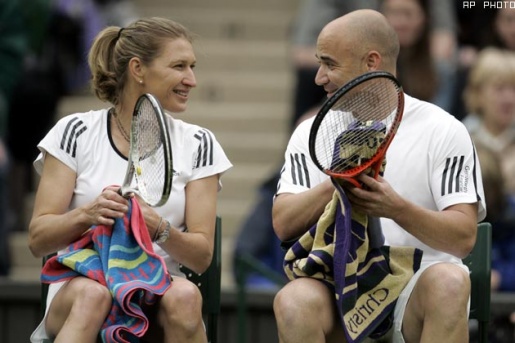
Interestingly, few people take this approach to finding love – that is, evolving as an individual before entering a serious relationship. I see it all the time with friends who aren’t focused on their own characters, but who just want “love” – a desperation as haphazard as grabbing a stranger’s hand and running onto the court at Wimbledon, and thinking that the fact that they’re “partnered” means success. Yet, it never does. Sure, they’ll fumble around for a while trying to make it work, but eventually they fail – and just like watching two people who can’t play tennis struggle and fail, it’s equally as obvious when watching two people “in love” struggle and fail. Sure, you can meet someone in a bar or other superficial means and try to make it work, but the odds of finding your true soul mate under such shallow pretense – such a lack of life-inspiring connection – is about as likely as finding a literal professional doubles tennis partner at your local honky-tonk joint.

So, here’s the real question: How do we grow in ways when single that will not only improve our lives and strengthen our characters, but attract those truly suitable to date, ideally finding not just love, but a soul mate?

The answer is, we live the life we wish, ideally to the highest standard. If we live the life we wish, we’re more than half-way on the road to finding a true soul mate. If we’re living to the standards we wish, that’s who we’re going to attract – and, even if we never meet that someone special, we’re more importantly living a truly fulfilling life. I love attending my daughter’s drama events; I love boating; I love traveling; I love Broadway shows; I love reading and writing; and I love charity events. Rather than sit home pining about how I wish I had someone with whom to share all of these interests, I’m out pursuing these interests by myself – and thereby increasing my odds of meeting someone with my same interests because we’re at the same places enjoying the same activities. If you want to meet someone who plays tennis, go to a tennis court! But, again, even if I never meet my soul mate – though, trusting that I might is an important part of the process – I’m still living a content, rewarding life. Living life to the fullest as an individual is the goal, and if love is found with another in the process, then it’s a double blessing.

In these ways, the single life fosters remarkable potential for us in both the present and future. It’s the chance to better ourselves through personal growth, allowing every opportunity to pursue the life we’ve dreamed, where we’re not hinging our ultimate self-fulfillment on a “relationship,” but on living life to the fullest of our individual capacities. And, what’s fascinating is that focusing on ourselves as individuals actually makes us better future partners, placing us in the amazing position to not fall into a relationship that we’ve “settled for,” but to actually discover the one that we’re “meant for.” See, when we’re emotionally healthy and embracing all that life has to offer, love doesn’t stop when we’re single – it begins.

Step Back From That Ledge, My Friend

By Mark E. Smith

In 1995, I opened a book preface with the line, “There’s no challenge more or less significant than another; merely different.” And, in the many years since, that line has remained with me, with my understanding that empathy and compassion are two of the most sincere traits that we can possess. See, what I’ve learned through my own challenges and struggles is that while no two people or struggles are the same, challenges and struggles effect most individuals at some point in life – often at several points in life – and although the origins of challenges and struggles vary greatly, their impact is universal, requiring all of us in moments of desperation to find an inner-strength to step back from the ledges we find ourselves on. And, when we’ve stood on the ledges of life – on the verge of slipping off, falling off, jumping off – we know how tough it is for others in those situations, where we naturally reach out to them in their moments of harrowing need. Through our own vying, we recognize first-hand that no one should have to climb the mountains of life alone, but that everyone deserves a patient guide to support them along the way, to reassuringly say, Step back from that ledge, my friend – you’ll get through this.

When you live successfully with disability – and, dare I say, honestly, where you don’t portray life as perfect, but as simply survivable, regardless of challenge or struggle – it is inevitably clear to others that you’ve been to the ledge and back, gaining wisdom along to way. After all, if one is struggling, one can relate with someone who’s obviously struggled, too – and there’s a sort of reassurance in seeing that another has somehow made it through the tougher times in life, mountains climbed, scars earned, wisdom gained, and ledges safely passed.

When you put these perspectives together – those who are facing life’s challenges and struggles, with those who have struggled and survived – an amazing bond can occur, where it’s two people communicating and sharing on the most genuine levels, climbing the mountains of life together. And, such shared emotional ascents are among life’s most magical interpersonal experiences, the best of friendships.

The fact is, many are too often alone in facing their challenges and struggles – and it is scary, isolating, and debilitating. What’s even worse is when one discusses one’s challenges and struggles with someone who hasn’t “been there,” and ends up being judged, lectured, and ridiculed – harmful feedback that can only make one feel more defeated, pushing one farther out on the ledge. But, when there’s a true mutual understanding between two people – I’ve been through the ringer of life, and know what it’s like, so let me be here for you now in your time of need – real support and solutions occur. We share, we listen, and we build trust – that is, we create the foundations of truly the most meaningful, supportive, healing relationships in our lifetimes.

And, when we’re in need, with such an empathetic, compassionate friend in our midst, the outcomes are life-changing: We can exhale our true feelings, we can open ourselves up in a safe place, we can explore our emotions, we can express true wishes, and we can just be – yes, at last, just be. When it all comes together, it’s not just a friendship that’s life-sustaining, but can actually be life-saving – conversations that allow us to restart living.

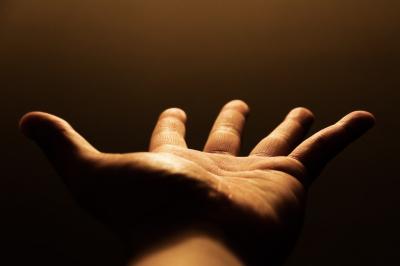
Providing such genuine support to another should be a given by any of us who have faced challenges and struggles, knowing how others could – or did – make a difference when we were standing on the ledge, about to slip off, to fall off, to jump off. However, both friends must realize that these times are intensely interpersonal. And, when such friendships are in true effect, there’s a mutual exchange of gratitude, where both individuals truly embrace each other, hands stretched out to each other, clinging. Of course, one of the individuals may obviously be in far more emotional need in the moment than the other – standing on the ledge looking down – but this doesn’t preclude a demonstrated deep appreciation and mutual respect for the supporting member, as well. If someone’s truly there for us – when one extends one’s hand at those moments in life and says, Step back from that ledge, my friend – that’s such an amazing gesture, and let us be faithful enough to directly acknowledge the remarkable value in that type of genuine friendship.

As those who have faced life’s challenges and struggles, we know how tough they can be to overcome, especially alone. Yet, when we overcome them, we have an evolved empathy and compassion for others of such kindred spirits. Let us be there for others – without judgment, as unconditionally as possible. And, if we’re fortunate enough to have someone who’s there for us unconditionally – offering an open hand, drawing us back when we’re standing on a ledge – let us cherish that friendship and reciprocate. See, the goal in the best friendships is to not just top the mountains of life, but to top the mountains of life together, hand-in-hand.

Slow Dancing

By Mark E. Smith

I heard a woman who uses a wheelchair note that among the saddest parts of her having paraplegia is that it’s kept her from slow dancing, that she longs for a cure so that she can slow dance with a man.

It was a heartfelt longing that I’m sure would resonate with those who are able-bodied, as well as some with disabilities, truly personifying the tragedy of disability at the most poignant level: One’s loss of the ability to simply slow dance, life unjustly constricted by a wheelchair.

However, there was another poignant component to the woman’s experience: It was totally specious nonsense – that is, while it sounded true, it was completely false, a made-up construct in her mind about her disability that simply wasn’t based in reality.

See, those of us who use wheelchairs slow dance all of the time. In fact, we ballroom dance, line dance, and generally boogie down like everyone else. And, when a song comes on for a slow dance, the DJ doesn’t kick us off of the dance floor and the party doesn’t stop; rather, when a song comes on for a slow dance, we naturally cuddle up with our partners and sway to the motions of the music. It’s not climbing Mount Everest, nor does it require one to be a rocket scientist. It’s just two people slow dancing, where one – or both – happens to use a wheelchair.

So, why then would the woman see slow dancing as out of the realm of possibilities for her as one who uses a wheelchair, making slow dancing entirely contingent upon her being able to walk?

The answer is, she’s not basing life on its realities, but basing it on her own outlook, one that’s skewed, where she is the only factor limiting her life, tragically defeating her own happiness. We know that, logistically, slow dancing while using a wheelchair is effortless, and we know that the intimate experience of slow dancing with someone you’re passionate about is no less gratifying when seated than on two legs. Therefore, not only is the woman technically wrong about being unable to slow dance while using a wheelchair, but she’s likely going to go through her whole life depriving herself of a wonderfully intimate experience with another person.

Here’s the real question, though: How often do each of us get in our own way – how often do we tell ourselves we can’t slow dance, so to speak? – creating roadblocks in our lives that aren’t based in reality, but in our own minds? I’m not looking for a better job because I know they won’t see me as qualified. I’m staying in this unsatisfying relationship because I know I can’t find better or won’t be happy alone. I’m too physically unfit to get in shape. I could never save up enough money for the down payment on a home. I don’t have time to go back to college at night. …The list goes on and on.

While such life hurdles can seem totally out of our control as we run them through our heads, the opposite is true. In virtually every challenge we face, it’s not life’s circumstances or someone else holding us back, it’s simply ourselves – we’re getting in our own way. In the long term – and goals of great personal reward do take time! – no one but ourselves keeps us from seeking a better job, getting out of an unsatisfying relationship, getting in shape, saving money, or going back to school – we have ultimate power over these and most other aspects of life if we put forth courage, effort, and time. I tell you from my own experience that the only one who’s ever stopped me from pursuing my potentials has been me, and once I’ve pushed that fool out of my way, a world of possibilities has always opened up.

When I look chronologically at among the three biggest seeming challenges that I’ve ever faced – going to college, moving cross country, and becoming a full-time single father – prior to my committing to each them, I could have written a book on why they were completely unrealistic and unfeasible, why I couldn’t slow dance, you might say. Yet, when I got out of my own way, and based my reactions not on skewed emotions, but on reality, and said, “Not only can I do this and survive, but actually thrive,” I succeeded.

Indeed, life is a lot like slow dancing at a wedding reception: The only deciding factor between failure and success is whether we choose to simply move from our table to the dance floor. …And, I say, never pass on an opportunity to slow dance.

Being Broken

By Mark E. Smith

A friend of mine introduced me to the music of British musician, Marcus Foster, whose song, “I Was Broken,” is hauntingly beautiful. It’s about recovering from being “broken,” whatever that may mean to any one individual.

In the disability realm, the medical model defines us as physically “broken.” However, I’ve never seen that truly to be the case on an individual level. We know of people with extraordinarily physically severe disabilities living vastly successful lives – some far more successful than able-bodied counterparts. So, then, where does broken enter the lives of those with disabilities?

Interestingly, broken enters the lives of those with disabilities in the same way as it effects everyone else: Emotionally. See, broken isn’t an exterior condition; it’s an inner one.

If you think about our physical states as individuals, they’re so diverse and so easily compensated for – I simply use a wheelchair because I can’t walk – that it becomes all but impossible to define a physical condition as broken. Yet, where broken enters our lives – for everyone – is when we don’t feel worthy enough, when we don’t like who we are, when we feel like our lives aren’t heading where we’ve dreamt, when we feel haunted by the past, when we feel like we can’t meet others’ expectations, when we don’t feel deserving of others’ love, when we feel incomplete. These feelings – these excruciating emotional struggles – are when we’re truly broken.

I’m very fortunate to often find myself genuinely connecting with those around me, even in casual settings, and as one of my best friends warned an acquaintance as we were socializing, “Mark’s not exactly known for light conversations – they tend to go deep.” And, he’s right – because I know that there’s a common humanity among us, where no matter who we are, or where we’re from, we all share common experience – including having been broken. What’s poignant to me is that when I share with others our common struggles with identity, self-worth, longing, and so on – all of the emotions that cause us to be broken at points in our lives – it’s universally human.

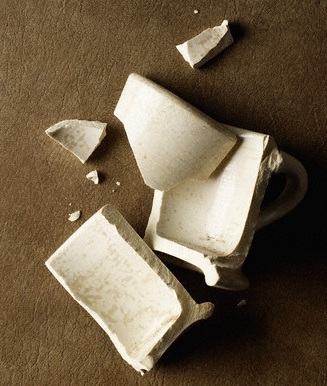
Surely, when we’re broken, it’s telling us that something is wrong, that our lives aren’t heading in the directions we wish. Sometimes being broken is based initially on uncontrollable circumstances; other times, it’s based on our own actions and poor decisions; and, yet other times it’s based on a compounding of all of the above. But, regardless of the causes, here’s what’s striking about being broken: It’s the gateway toward moving our lives in the right directions, it’s the opportunity to realign the paths of our lives to what we wish and deserve. Objects can be shattered to the point of beyond repair; but, not so the human spirit – there’s always the ability to restore and rebuild it, often to greater capacities than previously known.

I know, moving through that gateway from being broken toward wholeness is the toughest challenge we’ll ever face in life. I’ve been broken, and collecting the shattered pieces, trying to figure out how to make myself whole again at points in my life has never been quick or easy – sometimes it’s been like trying to put together a 1,000 piece puzzle with not even a picture of it to help chart the task. And, while there’s no universal answer to rebuilding ourselves from being broken – for some, time heals all; for others, personal space helps regain perspective; and, for yet others, formal processes like counseling help – we know that honesty is the first step toward repairing what’s broken, where despite our fears, shame, and hurt, we must maintain gut-wrenching honesty with ourselves and everyone around us about what we’re going through. If we avoid the candor of being broken, we can’t address it. It’s like ignoring anything that’s broken – it can’t fix itself. However, in merely our admission of being broken, we begin healing. See, when we allow others in, to truly know us – broken, as we may be – we begin to liberate ourselves in that process.

And, what I’ve learned most about being broken is that it ultimately plays an empowering role in our lives: Being broken allows us to clearly see the individual pieces of our truest essence, ones that we can eventually put back together however needed in order to achieve our hopes and dreams – finding ourselves whole, fulfilled, and content in the end.

When Life Isn’t Fair

By Mark E. Smith

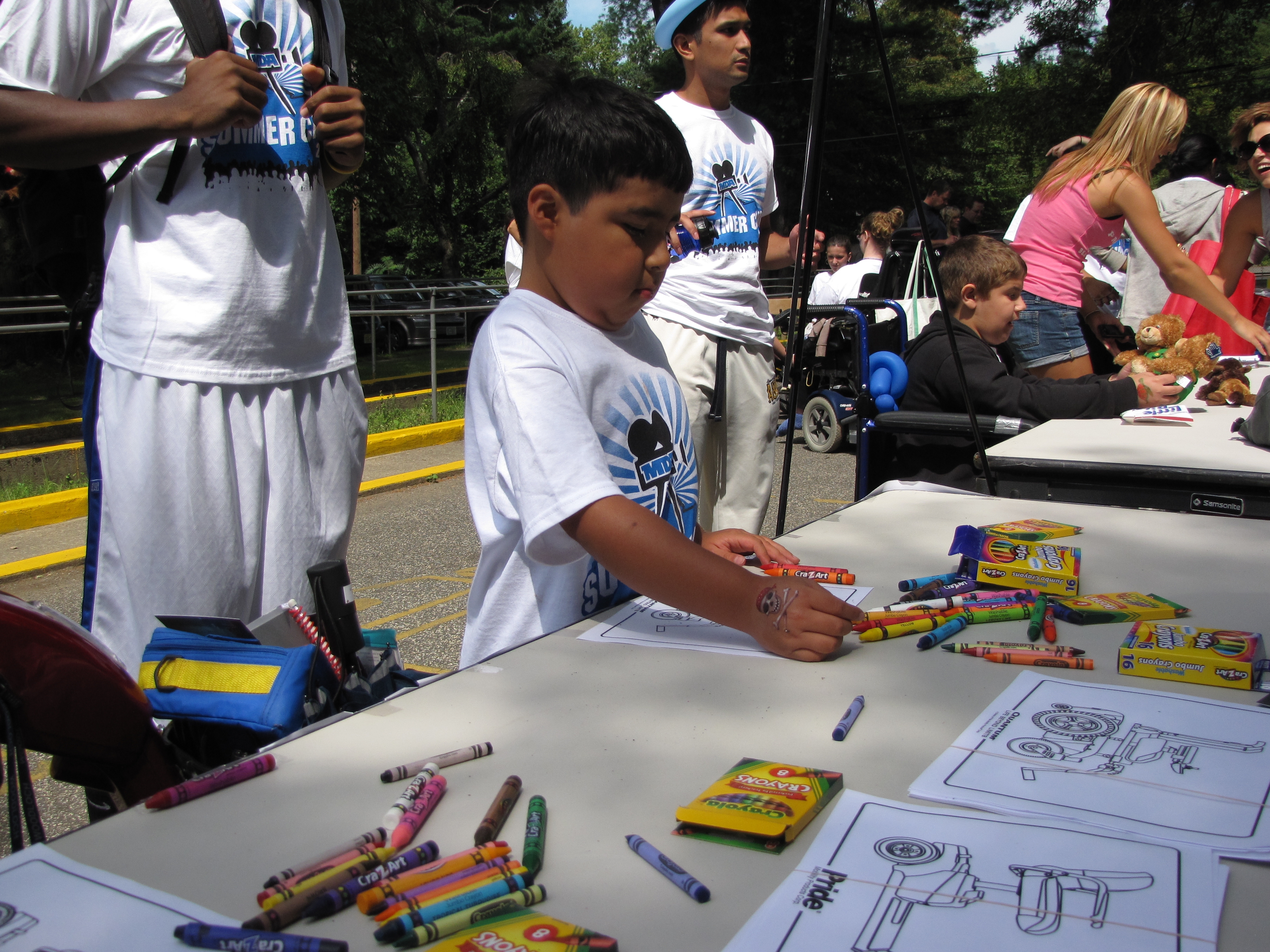
I had the absolute privilege of visiting a summer camp for children and teens with various forms of muscular dystrophy. It was among the most fun I’ve had, as the campers were so awesome, such spirited personalities, as children are. However, as much fun as MDA camp is for everyone involved, there’s still a looming reality: Most of the campers will pass away by their mid twenties.

There’s truly an injustice to it all, one that, for me, is impossible to explain – that is, the universal “unfairness” that within 10 years or so, many of the campers whom I met will no longer be with us, that not only will their lives have been lost, but with them, we all will have been robbed of their amazing life-long potentials. I mean, their time on this Earth is impacting – I know, they profoundly impacted me – but to think of what these amazing individuals could accomplish over sixty or seventy years – not just twenty – is limitless. Yet, we’ll never have the chance to know because of the inexplicable injustice of a life-robbing disease.

I remember leaving the camp thinking, Cash my chips in now, God, and give my lifespan to anyone of those kids – I’ve had my shot at life, and I’d gladly pass my years left on to any one of those children….

Although visiting the MDA camp was a reminder to me of the seeming inexplicable injustice in the world, the question of universal unfairness is one that I encounter almost every day – that is, why do such terrible circumstances happen to such good people? In the wheelchair world, consumers often share with me that they’ll never understand why they received their injury, illness, or disease, that they wrestle with the injustice of it all. And, I never have a direct answer. But, I do have at least one perspective that touches upon the subject of life’s “unfairness” – and the MDA campers hit home the point for me.

Of course, we know that there are direct attempts to answer why bad occurrences happen to good people. Religion has its answers that run the gamut, from it’s God’s master plan, to it’s bad karma from a previous life. And, science, too, has its direct answers, from cancer being gene mutations, to paralysis being an injury to the spinal cord. These answers, however, still leave intellectual loopholes, where we can look at examples like Dr. Wayman R. Spence, an original anti-smoking crusader, who himself ultimately died of cancer after 50 years of treating others, and it’s truly impossible to see any justice in such an uncanny circumstance – it’s haunting, really.

Still while maybe we will never be able to intellectually answer life’s injustices beyond, Life isn’t fair, we can use coping mechanisms to address them. See, we universally approach life from three perspectives: What is; what can be; and, what should be. And, by understanding the roles that each of the three perspectives play in our own lives, we can better cope with seeming injustices.

What is, is truly the givens, the realities of any situation as known in the present. It’s the, my father has cancer, my husband is an adulterer, my daughter is an alcoholic, I have multiple sclerosis.

What can be, is what we logically can do to address a situation moving forward. It’s the, my father has cancer, but treatment will extend his life; my husband is an adulterer, but I need to get a divorce and find a loyal guy; my daughter is an alcoholic, but getting her into a rehabilitation program is a wise step; I have multiple sclerosis, but medication and therapy may slow its progression.

What should be, is truly wishful thinking, not based in reality, but dwelling in questions of fairness. It’s the, my father shouldn’t have cancer; my husband shouldn’t be a cheater, my daughter shouldn’t be an alcoholic; I shouldn’t have multiple sclerosis.

What’s fascinating is that when we look at the three perspectives – what is, what can be, and what should be – only two are relevant, having any impact or meaning in our lives. The third simply leaves us empty, without the ability to do anything, trapped in despair. Can you guess which two are empowering, and which one is debilitating?

Of course, what is and what can be are very empowering – that is, we can act upon them. However, dwelling on what should be is truly debilitating because there’s nothing we can do but wish upon a seeming impossible, asking ourselves, Why?, silently screaming, It’s not fair! Nothing good comes out of stewing over what should be.

And, that’s what I ultimately took away from my visit to the MDA summer camp. As adults, we’re so caught up in the what should be’s of life – how life is unfair – that we overlook the intrinsic value of what is and what can be. For example, rather than celebrating the current life of our loved ones who have cancer, we dwell upon the unfairness of their pending passing. Rather than moving forward from bad relationships, we stew over how we were wronged. Rather than appreciating our jobs, we focus on any negatives. And, rather than accepting those around us for who they are, we want to change them. That is, we go through life lamenting – often to the point of depression – about how things should be, not recognizing what is or realistically what can be.

Yet, the kid’s attitude at the MDA summer camp was just the opposite – it was totally about what is and what can be, and it was contagious. I only saw life, love, and laughter. It was the most positive place on Earth, making Disney World seem glib. It was a true celebration of living in the moment, where no one questioned what should be, but reveled in what is and what could be. Even we adults ended up with our faces painted, coloring with the kids, and eating watermelon!

Yes, bad things happen to the best people, the weight of the worst can land on our shoulders – and none of it’s fair, justified, or explainable. Yet, we don’t live in a world of equitable should be’s; rather, we live in a world of what is and what can be. And, let us make the most of those, where our days aren’t filled with longing or self-pity, but are celebrated with appreciation and joy for what’s within our immediate presence: The beauty of what life is and can be.

The Glory of Vulnerability

By Mark E. Smith

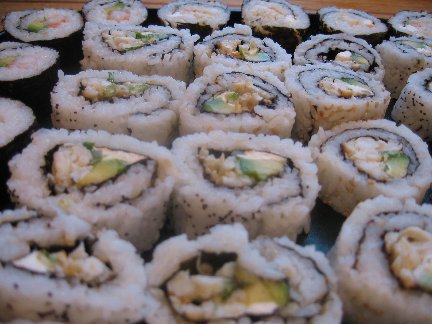
I wasn’t the least bit uncomfortable about it, nor was she. See, there I was, all dressed up to give a talk in front of a corporate group, but I was presented with a pre-talk lunch served by our gracious host, consisting of sushi rolls. I knew from the very sight of the rice-covered sushi rolls that, due to my poor coordination, there was no way that I could get them from the table to my mouth without rice and who knows what else ending up on my neatly-pressed pants….

So, I had two choices: One, I could simply not eat; or, two, I could have the courage to ask for help.

With little hesitation, I asked for help because it’s just as important to me to acknowledge my vulnerabilities as it is my strengths – that is, I want those around me to know my entirety, not just selected parts. I wouldn’t be true to myself or those around me if I only showed my strengths, and didn’t admit any limitations of my disability, my vulnerabilities.

Fortunately, my asking for help was easy in that instance based on the fact that a dear colleague of mine was with me, who’s traveled with me quite a bit, so asking her for a helping hand was natural. What’s interesting, though, is that getting to that comfort level – where I could turn to my colleague and say, “Would you mind feeding me my sushi, so I don’t get it on my clothes?” – took time and candor to evolve. On her part, my colleague’s sincere, genuine nature has been touching, and she’s proved truly intuitive in getting to know me as a person, disability and beyond – all of which speaks to the exceptional qualities of her character. However, I’ve likewise have had the openness not to hide any of my vulnerabilities – the realities of my disability – from her. She knows that I drink through a straw, I squirm in airplane seats to shift weight off of my rear, and can be a bit messy when I eat, and on and on. I am who I am, and I trust that my comfort in living with my vulnerabilities – where I don’t display only the so-called best of me, but the true me, flaws, spasms, and all! – has likewise made her more comfortable. None of us are perfect; we all need help at some point in our lives. And, allowing others to see our vulnerabilities is a positive trait, one that unifies, where asking for help and helping others is an inspiring exchange. We don’t get through life alone, and sharing our vulnerabilities is a key that we all need in living a life that allows us to truly connect with others in the most genuine ways.

Interestingly, researchers scoured the globe for the one aspect that most connects us with others – that is, what forms the deepest, most meaningful relationships on all levels? – and allowing ourselves to express our vulnerabilities topped the list. Vulnerabilities, it proves, are only weaknesses when we won’t admit them. However, when we admit our vulnerabilities, they become strengths because we’re showing ourselves to others in the most genuine ways – and that forms the most open connections with others, the sincerest relationships.

Of course, it’s easy to know why many people hide their vulnerabilities: They’re scared that others won’t accept them in their entirety, that others will judge them. But, this rarely proves the case. The basis of sharing vulnerabilities is formed within honesty and results in our fully opening ourselves up to others – and those are the foundations of healthy relationships. When we live freely with our vulnerabilities, we allow others to accept us wholly, and we accept others wholly, as well (if I expect you to accept my vulnerabilities, I likewise must accept yours, and we’re two perfectly imperfect people connecting on the sincerest level). But, here’s what’s really important: When we express vulnerabilities with others, we’re acknowledging our vulnerabilities within ourselves, and it’s the self-acknowledgment of our vulnerabilities – not denial! – that allows us to live healthier lives.

Addiction and recovery proves an enlightening study in how vulnerability can kill us or liberate us – sometimes literally – all based on whether we admit vulnerabilities. For example, an addict in the clinches of use, will never admit vulnerabilities. An addict won’t admit to causation, won’t express genuine feelings, will try to justify even the worst decisions, and will lie about everything under the sun, including lying to his or herself. That is, addicts run and hide from vulnerabilities via substance abuse – and, at best, it disconnects them from meaningful relationships, and, at worst, it literally kills them.

However, recovering addicts do just the opposite – they admit and address vulnerabilities. Think about the first words spoken by everyone at an Alcoholics Anonymous meeting: I’m Joe, and I’m an alcoholic. Admitting the vulnerability of addiction – that is, being honest and candid – liberates and connects. There’s remarkable empowerment in it. And, when getting into deep models of recovery, acknowledging the vulnerabilities that lead to the addiction – past traumas and such – is yet another way of profound recovery. That is, the only way addicts stop using is by acknowledging and addressing the underlying vulnerabilities that cause the addictive behavior in the first place.

In our personal lives, hiding behind our vulnerabilities – or, denying them through self-justification – is extremely dangerous, defeating so many potentials in our life: I’ve been hurt in a past relationship, so I’m not going to trust anyone again…. I don’t want to be seen as weak, so I’m not going to apologize…. I’m not going to show all of me because others will judge me…. Really, what such a closed emotional state says is, Overall, I’m going to self-sabotage meaningful relationships because I’m so scared to reveal my vulnerabilities – my complete self – to others.

It is astounding how painful and self-defeating it can be in not allowing ourselves to be vulnerable. At the very least, most of us can relate with the inner-conflict that occurs when we want to reach out to someone, but don’t out of the fear of feeling vulnerable – maybe it’s asking someone on a date, maybe it’s calling an estranged family member or loved-one to try to patch things up, or maybe it’s sharing one’s true feelings with a good friend. I’ve struggled with all of these – and continue to at times! – but what I’ve learned is that while there’s always the risk of the other person not being receptive, there’s also the more likely possibility that the other person will be receptive. And, the real reward in this process of overcoming our fears of vulnerability is that we’ve at least had the integrity to act on our true feelings, with sincere intent, living openly in every way – and that’s liberating, regardless of the final outcome.

The fact is, there’s a universal bond in the truth that none of us are perfect, that we all have vulnerabilities – and some are scary to admit to ourselves and others. Yet, when we live freely with our vulnerabilities, acknowledged by ourselves and shared with those close to us, we not only allow others to know us completely, but we’re far more open and accepting of others – and that builds connections of lasting trust and meaning. I have vulnerabilities, you have vulnerabilities, and it’s all OK. Let us live fully as perfectly imperfect people – with our glorious vulnerabilities exposed! – and our self-acceptance and relationships will flourish.

Moments In Time


(Mom and me)

By Mark E. Smith

I’m having lunch in Club 33 in Disneyland – and I’m with Amy, who my friends have only known from reading about her in my first book, published in 1995, 6 years after I graduated high school.

But, now it’s 16 years later after the publishing of that book – and 22 years since I last saw Amy – and in an uncanny twist not lost on me, we’re in “The Most Magical Place on Earth,” eating lunch at the hidden, exclusive Club 33, where a friend of mine has been kind enough to get me all-but-impossible reservations, jumping a 14-year waiting list, per Disney hype.

I struggle more than ever with the validity of my first book, and I’m glad it’s long out of print. Its title, Growing Up With Cerebral Palsy, was way too literal and boring for me as my childhood autobiography, but the publisher insisted that it would sell well to libraries and schools – and he was right. And, I dislike its simplistic, diary-type writing style – yet, people still note it as candid and enduring.

However, what troubles me most about the book is the emotional place I was in while writing it, where I was still struggling to come to terms with my mother’s profound alcoholism.

What’s haunted me is that while all other “characters” in the book are treated as they truly were, from my alcoholic father, to Amy, my high school crush, not a word was mentioned of my mother’s alcoholism – I painted her as a one-dimensional saint. The progression of her alcoholism was so painful to me at the writing of the book in my early 20s that I went from writing of her as a heroic figure raising a child with cerebral palsy to not being able to write about her at all. If you read the book cover-to-cover, my mother simply disappears by the end, an unexplained absence. It’s a book that’s both strikingly candid and full of absolute denial – and I’ve fought with that truth since the day it was published.

And, here I am, 16 years later, having lunch with Amy, my high school crush from the book, at Club 33 – and my mom is dying of cancer, her apartment being cleaned out and her cremation arrangements made. And, all of this is weighing on me. Amy thinks I’m tired from our being up all night talking, and I am, but I’m also struggling to both live in this amazing moment with Amy who’s just here for me without conditions, while simultaneously struggling with the fact that my mom is 3,000 miles away dying. It’s all just emotionally whirling around me like the constant visuals of Disney, itself, never knowing where to look because it’s all larger than me – overwhelming.

I haven’t had a real relationship with my mom in about 15 years. The initial royalty check from my first book went toward my mom’s stint in rehab where she chugged a 5th of vodka between there and coming to see me upon her “successful completion.” I’m sure now that my naive – but well-wished – attempt at her sobriety (and the many others), was just me trying to make things right – my mom’s health, the sentiments of the book, the sober relationship with my mom that I so desperately wanted. But, I never did make it right, I never found a way to sober-up my mom, not for my graduations, wedding, or the birth of my daughter. In my rational mind, I know now that only my mom could make things right through pursuing sobriety – but the loyal son in me still feels that I let her down in some way, that if I could do so much for myself and others, why’d I forever fail at helping my own mom?

And, what cuts deepest is that my mom didn’t fail me – she saved me. She was a troubled 20-year-old, with a son born with cerebral palsy, and when the doctors told her that there was no hope, that she’d best leave me to die, she took me home and somehow pulled it together to keep me alive. Yes, by the time I was 7 or 8, her addiction had the best of her – and, as a father, myself, I can’t fathom how she put alcohol before her children. But, in the most vital days of my early life, she was there for me – the only one. That can’t be overlooked or underrated in any narrative.

I previously saw my mother just a few days earlier at my sister’s wedding. She was a frail skeleton of herself – all treatments done, just waiting to die. My sister went through great lengths to make sure Mom had a custom-tailored dress, her hair and makeup done, looking like a woman of eloquence, stunning. And, yes, she was drinking. And, for once it was OK – it was all OK. I can no longer judge her; I can only love her for who she is, unconditionally, as she did for me over 40 years ago.

“I’ve never seen you look more beautiful,” I told Mom at the wedding, just living in the moment, all of our past erased by her just being there, my seeing her just as her, unconditionally.

After our lunch at Club 33, Amy and I caught up with the kids, and rode the rides with them at Disney, all in a magical universe. Later that night, Amy and I simply stayed up talking, our kids tucked asleep, where for a moment in time – two imperfect people trying to make sense of such present changes in our lives – we were just there in completeness for each other, ourselves, unconditionally.

The next morning, I awoke to my daughter singing as she packed. Amy was gone, having caught an early-morning flight. Her perfume was still in the air, a reminder of what had been for a moment in time. I had to put on a good face for my daughter, and while it took all my emotional might, I managed to get up and going. I had to go back to a reality where my mother was dying, where I was essentially a single father in a failed marriage, where I didn’t know if I’d see Amy again in a month, 22 years, or ever. But, I had to go back home, home to address it all.

I put on my Ray Ban sunglasses, heavy and dark, swung open the hotel room door, and headed out into the world – one that’s not perfect or fair or even understandable at times. But, at least I was re-entering a world where I was a more feeling man.

Upon returning home, my schedule for the work week was busy. I had a Medtrade planning committee project due and a conference call; I had a radio interview to do; I had a mid-week overnight trip to New York City involving a speaking engagement; I had all of my normal office duties and WheelchairJunkie.com responsibilities to tend to; my wife was supposed to be moving out of the house per our split-up; and, I had my daughter to care for. But, I could easily handle it all – just get it done, task by task, as always.

But, my mom was still dying. And, as much as I thought all was made amends just two weeks earlier at my sister’s wedding, I had to speak with her one more time – and on the deepest level. What was said and recognized at the wedding wasn’t enough. There was more to be said, to be healed. And, so in the middle of a crazy work day, I grabbed my cell phone and called my sister.

“I need to see Mom and talk to her tonight,” I said. “It has to be tonight.”

“She’s not doing well at all,” my sister said. “We can try to get you over there tonight, but she may not be totally with it. The hospice says she’s not doing good at all.”

“I don’t care,” I said. “I just need to see her, and tell her something.”

The day past, and by evening, my sister called, noting that Mom wasn’t doing well still, that in the next morning, she’d be moving into my sister’s for her final days, with home hospice care – the way my sister wanted it. But, inexplicably to all of us, my mother wanted to speak with me, too, and wanted to join us for a family meal, despite her inability to eat.

We made late reservations at my favorite restaurant, where I’m known, where I’ve frequented every week for quite some time, where I’m comfortable having the deepest conversations over dinner and drinks with friends, where birthdays have been celebrated, friendships strengthened, and good-byes to leaving colleagues have been said. If I was to speak with Mom, it was a comfortable place to do it.

But, as I drove to meet my sister and mom at the restaurant, I was more scared about what I was going to say than ever in my life. I’ve met with the President of the United States; I’ve done countless interviews; and, I’ve spoken in front of countless groups. But, this was different, rattling to my core. How do you look at your dying mother after so much tension and pain between you, and definitively express your ultimate gratitude and love? How can that ever be put into words?

Sitting at the table, bread and drinks served, I just followed my heart. “Mom, I wanted to talk to you not because you’re dying, but because you’re living,” I said, putting my arm around her. “Despite all that’s gone on, you were there for me at the toughest point in my life, when no one thought I would live, and you pulled me through – and I can’t express my love and gratitude enough for what you did for me.”

My mother saw my tears and stopped me there. And, in a moment I never expected, with a sobriety I hadn’t recalled in her since I was very young, she explained her side of it all – her regrets, her shortcomings, her absolute remorse toward the life she led and what she put us through. And, in the greatest act of kindness I’ve ever witnessed, she – too frail to walk by herself, eat, or talk above a slight whisper – made every effort with her words to apologize to me, my sister, and my daughter, one-by-one. A woman who long lived among the most selfish lives – which is what addicts do – used among the last moments of her life to offer among the most unselfish acts, all on her own accord, apologizing to her children, trying to make things right while she still could.

As tears flooded the table, our salads were served, and my mother asked, “Marko, do you need a spoon for that?”

And, for a split second I chuckled – after all, who eats salad with a spoon? But, then I realized that my mother literally went back to being my mother at that instant, where around the age of 5, when I was learning to feed myself, I could only manipulate a spoon, not a fork. And, although I’ve eaten with forks for decades now, my mother had taken us both back to a specific moment in time, before her world disappeared into a bottle of vodka, when she was just my mother, unconditionally.

“I’ve got this covered, Mom,” I said, picking up my fork.

At this writing, my mother is passing. For me, our life is like bookends: Yes, there was a lot of complexity in our lives in-between my birth and her death; but, on each end she gave my the greatest gifts of all – life at the beginning and healing at the end.

Will It Kill Me?

By Mark E. Smith

Is it literally going to kill me – and, if not, then I’m going through with it for my own betterment and growth. This is the code I strive to live by.

I’ve most recently been tested on this mindset, where I’ve admittedly become obsessed with riding my 6-wheel-drive, amphibious ATV on the 110 acres adjacent to my home. After my obligations for the day are done, I go out to my garage, put on full moto gear, fire up the ATV, and roar up the “Mountain Trail,” as I’ve nicknamed it. I’ve been getting faster and faster on the wooded trail sections, seeing how quickly I can slalom around the oaks without nailing a tree; and, I climb and descend hills too steep and tall to walk up or down.

At times, maybe I’m pushing myself and my vehicle to the very limits, where I drive up to the edge of embankments so high and steep that I can’t see the Earth past my ATV’s hood – just the sky straight ahead – and I summon the courage to simply drive off, where I trust that my driving skills, my vehicle, and the terrain will allow me to make it down unscathed. And, no matter how risky or uncertain a circumstance has seemed, overcoming my fear and tackling terrain I never imagined that I could, has never let me down, proving enormously liberating, where I’m pushing my mind and body far past previous barriers, to great personal growth, where if I can overcome fear and obstacles in my ATV, it carries over into my everyday life. If it’s literally not going to kill me – flying cross country alone for business, giving a talk in front of hundreds of people, being as open and honest as possible with those around me, tackling a seemingly impossible independent living skill, driving my ATV off of a several-hundred-foot-tall embankment, or any other anxiety-filled life experience – I’m going to do it, period. After all, if it won’t literally kill me, then there’s no valid excuse not to push myself forward.

Interestingly, I’ve observed that the process of moving forward once in motion is easy – it’s summonsing the courage to make the decision to initiate momentum in life that’s hard. Trust me, I’ve sat atop embankments – both in my ATV and in life, wanting to twist the throttle and just go for it – where fear had a grip on me, daring me to overcome it. Yet, once I’ve said to heck with fear, and just gunned it, my life in any circumstance has flourished. So, it’s the “saying to heck with fear” aspect that really proves the hardest part of change and growth. Life is really just one, big twelve-step program, where committing to the process of change is the hardest – and most crucial – part.

A lot of times we know what we should do – or must do – but committing to doing it, where we know there’s no turning back, can prove the hardest moves we ever make. It’s among the scariest questions in life – that is, should I or shouldn’t I? – in committing to decisions. I recently had the amazing opportunity to participate as a volunteer at an adaptive water sports clinic by Champions Made From Adversity in Georgia – a fantastic organization. Our crew was one of around six boats pulling those of all types of disabilities on tubes and sit-skis. What astounded me was that, as a seasoned boater myself, I know lots of “able-bodied” people who won’t tube or water ski out of fear. Yet, there I was in Georgia, with peers of all ages and disabilities, who were overcoming all fear to simply tackle what in many cases they never imagined doing – that is, with limited use over one’s body, putting one’s trust in a situation that was literally dragging them into the unknown: Heading out into a gigantic, deep lake at speed, bucking and bouncing, not knowing if they would drown (lifeguards on jetskis did parallel every run, so when someone fell out, rescue was immediate).

What I witnessed was that not only wasn’t anyone harmed – even when they fell out! – but the participants were actually empowered by the experience of overcoming their fear. Make no mistake, some were terrified getting in the tube – it was the hardest part of the process for them – but they still did it. And, we had the privilege of watching their lives change at 20 mph behind a boat, where they realized the liberation of, If it won’t kill me, I’m going to attempt it in an effort to better myself, even if I’m initially terrified.

Just like those with great trepidation to get into the tube at the adaptive water sports clinic, I’ve sat atop harrowing embankments in my ATV, hand on throttle, for minutes at a time, where it’s taken all of my courage to simply gun it, dropping into the unknown – but, I’ve always done it, landing tougher and more confident at the bottom. Yet, what I’ve grown to know is that overcoming short-term fear and stress is the catalyst for long-term growth and success, that getting past fear leads to liberation, no matter in the physical, emotional, or interpersonal. Much like I’ve learned that I can survive descending and climbing through the steepest ravines in my ATV, I can do the same in life, where overcoming initial fear will bring me to amazing vistas.

I wonder, what are you not tackling in your own life simply out of fear of the unknown? If you attempt it, will it literally kill you? If not, then there’s truly nothing stopping you from pursuing what you’ve thought too impractical, scary, or impossible – you, too, can summons the courage, no matter what you’re facing, to not just tackle the unknown, but to actually thrive in the attempt. Once we push beyond anxiety toward change – albeit, physical, emotional, interpersonal, or all in one – and propel ourselves forward in positive directions, the personal rewards are astounding: Vistas in our life appear that we never knew existed.