More Than Enough

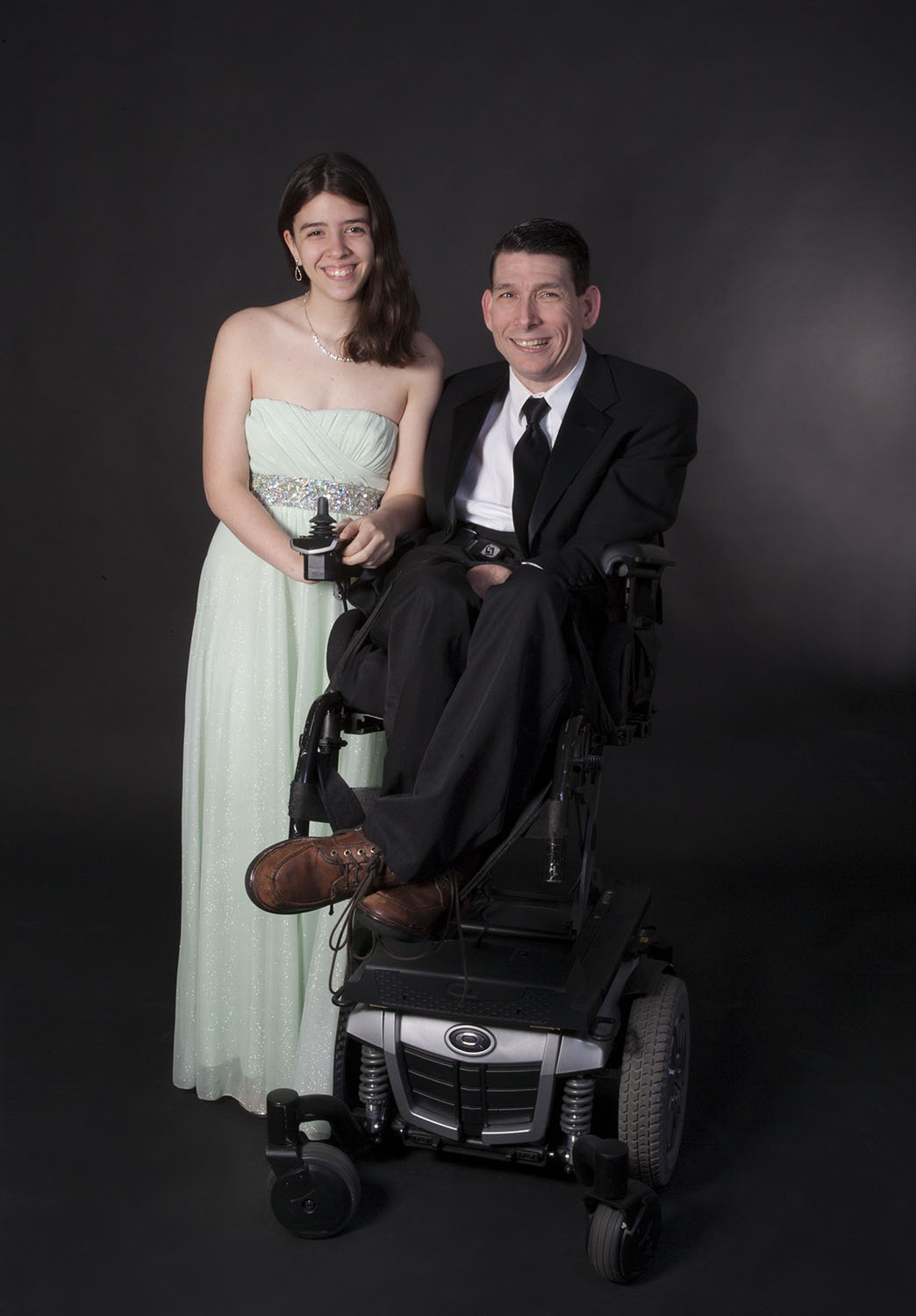
Mark and Emily001

By Mark E. Smith

I’ve spent my whole life not being enough. Truly, from my birth, onward, I’ve never been enough. The doctors declared me a vegetable who should be institutionalized. My father was so ashamed of my disability that he refused to push me in my wheelchair in public. Mrs. Robinson, my third-grade public school teacher, fought to keep me of her classroom because I wasn’t physically on par with the other students. My prom date wouldn’t dance with me because I used a wheelchair. Waitresses have refused to serve me, and even in 2014, I still occasionally face discrimination because in the eyes of some strangers, I am not enough.

And, it remains the case, that in so many situations and perceptions, I am not enough. However, I want to share with you a very fitting story about what it’s like to face such a struggle, what it means to be labeled, to go through life as never being enough. See, when I was around 13, I desperately pursued my physical independence, knowing that in a world that didn’t view me as enough, I was in a race for survival, avoiding the potential of ending up in a long-term care facility because I couldn’t care for myself. And, so as part of enhancing my physical strength toward independent living skills, I began going out every day after school and pushed my manual wheelchair along the street in front of my house. I was severely spastic, with terrible coordination, and used a power chair, so pushing a manual wheelchair was a tremendous struggle. I fought to get both hands on the push rims, and gave a single thrust of the wheelchair, throwing my body into spasms – then, as the wheelchair coasted to a stop, I started the process all over again. It took me over an hour to go down the block and back.

However, it wasn’t physically pushing the manual wheelchair that was the biggest challenge. Rather, it was the literal voices along the block. A few neighborhood boys of my age taunted me every day, calling me retard, mocking me with spastic gestures, telling me I was not enough, that I couldn’t even push a wheelchair correctly.

Nevertheless, every day for that school year, I put myself in the line of ridicule and humiliation and pushed that wheelchair up and down the block, literally being told I wasn’t enough with each challenging push of the wheels. It was a set schedule: at 3:30 every day, I pushed my manual wheelchair, and the other kids followed along humiliating me. It was painful and scary and enraging and embarrassing, but I had to endure it for my greater good.

That one year taught me a lot about not being enough. In pushing that manual wheelchair, all the while being mocked, I didn’t merely improve my physical abilities, I developed perseverance, determination and autonomy. I wasn’t pushing to be enough to the other kids or the rest of those who discounted me. Rather, I was pushing my own race to become more than enough.

The fact is, I’ll never be enough. Heck, my own father went to his grave unquestionably ashamed of me, I had a ex-girlfriend give me a written list of why I wasn’t worthy of her love, and I still face public discrimination and humiliation from time to time. I will never meet certain standards or be enough as a person in the eyes of some.

So, then, how are many aspects of my life explained? If I was not enough to my parents, how did I go on to successful careers in the mobility industry, writing and speaking? If I was not enough to my third-grade teacher, how was I able to go on to college and grad school? If I have not been enough of a man in the view of some strangers, how have I succeeded in raising a beautiful daughter as a full-time single father? The list goes on and on, but the point is, despite my never being enough in the eyes of so many, how have I, to the contrary, had so many successes?

The answer is universal. We should never strive to be enough in the eyes of others – it’s a low bar to measure ourselves. Instead, we should ignore the false ceilings that others place upon us and instead push to our own best abilities. And, in that process an amazing transformation occurs: we eclipse never being enough by actually becoming more than enough.
Reasons Not Excuses

Love and Reason

By Mark E. Smith

My brother, six days less than a year older than me, is a private man, and so rarely do I speak or write of him. And, his story is one that he may not want told. But, it should be told, a cautionary tale for many.

At 17, my brother dropped out of high school and lived in his car. And, it all made sense. He was on the plight that made perfect sense coming from estranged, alcoholic parents and a childhood that went from harrowing to hellish at times. Incarceration, substance abuse and poverty were par for the course. And, so if I told you that from that point on, my brother drifted, dabbled in drugs and jail time, there’d be no surprise – he had every reason to do so.

But, he didn’t do that. With no family support, he worked at a gas station, lived in his car, and saved enough money to rent an apartment. He enrolled in adult school, was promoted to Assistant Manager at the gas station, then Manager, then became a Regional Manager for Shell service stations. He got married, rented a nicer apartment, and made a bold move, becoming a tile setter, getting his contractor’s license, establishing himself as a master tile setter, doing the likes of Danny Glover’s house and multi-million dollar homes. He had two daughters, and after 20 years in the same little apartment, he saved up the cash to buy his dream home, nestled on wooded property in Northern California.

At any time, my brother’s life could have jumped the tracks. The grips of our family lineage could have led his life down a dark past, just as it did every generation before us. Instead, he’s lived with intentionality. He’s refused to be a substance abuser, where he knows when not to drink and certainly knows when to stop. He, who didn’t have a dad, has proved himself as a lifelong amazing dad. And, never knowing a sustained marriage in our family’s history, he’s passed the two-decade mark with his wife.

See, here’s what you need to know about my brother: He’s an astounding father, husband and man. And, he’s done it based on a core principle of personal accountability. Our upbringing demonstrates that there are reasons why so many fall into generational traps of abhorrent behavior. Yet, my brother’s intentional life proves a far more valuable lesson. While we can point to reasons for issues like substance abuse and poor parenting, there simply are no excuses. We all make decisions, we all have control over our life paths, and there’s no gray between right and wrong when it comes to individuals of true integrity like my brother.

At the End of the Tunnel

lightendtunnel
By Mark E. Smith

In my roles within the mobility industry, I often encounter very difficult situations. No, I don’t mean broken wheelchairs or grumpy customers – those are typically easy to resolve. Rather, the difficult situations I face are families in emotional crises, where a husband is newly paralyzed or parents have lost a child to a progressive condition like muscular dystrophy. And, along that harrowing road over the past 15 years, I’ve seen such families turn tragedy into triumph, while others crumbled into ruins. What is it, then, that separates these two outcomes? What is it that allows couples to survive devastating circumstance while others dissolve?

I’m not a psychologist or a sociologist, nor have I done any scientific studies. But, I am a real, thinking, feeling person with empathy toward those facing adversity – I’ve been there and I know what it’s like. And, as I’ve been in the trenches with families in crises, I’ve observed two very distinct factors that allow couples to face and overcome life’s most profound tragedies, actually strengthening relationships, not destroying them.

The first is factor that successful couples have in the face of adversity is unyielding love and respect for each other. Now, all couples will say that they have unyielding love and respect for each other, and it seems obvious that couples would have this. But, we live in a culture where relationships are about as sacred as trip through a drive-thru, and there’s too often very little respect among partners. Think about couples around you, or maybe your own relationship, where each individual makes him or herself the priority, not the relationship or partner. Or, think about how moodiness, arguing and name calling are deemed acceptable by many. Those are traits of dishonor and disrespect, and when crisis hits, such couples are doomed. In crises, the blame-game ensues and rather than protecting each other’s hearts, they go for the jugular.

However, surviving couples are different. Mutual respect reigns over moodiness, arguing and name calling. Surviving couples run toward the safety and shelter of their relationship during crises, not away from it. There’s a sanctity to the relationship that’s upheld, serving as an unconditional safety net during crises.

Statistically, the average length of marriage prior to divorce is eight years. Why eight years? Money magazine recently reported that over any 10-year period, we have a 98% chance of facing a major life crisis, albeit financial, health-related, and so on. Therefore, if we’re in rocky relationships, and are all but certain to face a crisis, of course it’s just a matter of time before it’s game over, logically right around that 8-year mark.

Yet, truly loving, respectful couples ultimately find crises as opportunities to grow close together. So, at eight years, having faced crises and embraced each other, their commitment is stronger. A couple simply has to have unyielding love and respect to weather crises. I have yet to meet a couple who’s stayed together through a life-changing crisis who didn’t have a foundation of unyielding love and respect for each other.

The second trait that I’ve found couples must have in order to survive a life-changing crisis is a sense of a higher power. Now, I don’t mean formal religion – although it’s often the case – but a true belief in a guiding force that everything happens for a reason, with larger meaning and purpose. This is such a powerful tool toward coping and healing because it often explains the inexplicable.

I was born with severe cerebral palsy. If I looked at that as a random act, solely making me suffer, can you imagine how bleak my world view would be – there’d be no purpose for my life. However, if I truly believe that there’s a purpose to why I received cerebral palsy, I then naturally look for the positives, giving my life purpose and meaning. Couples who succeed through tragedy do exactly this – that is, they share a belief in a larger purpose and meaning to all. If one or both partners are bitter or resentful over a crisis, again, they’ll go for the jugular, not the heart – and the relationship won’t survive. Both partners must believe in a higher power of meaning and purpose.

What I know is that given enough time – statistically within a 10-year period – couples will face crises. And, having witnessed many families experience the most harrowing of circumstances, I can attest to this fact: As long as you and your partner have unyielding love and respect, and believe in a larger meaning and purpose to all, you’ll make it hand-in-hand to the light at the end of the tunnel.

Times of Need

timesofneed

By Mark E. Smith

For most of us, we’re far more comfortable giving than receiving. Yet, giving and receiving must be equally embraced if we are to truly have healthy, reciprocating relationships. Just as we strive to love and support others in their times of need, we must welcome their love and support in our times of need.

Now, I know it can be hard, where pride and ego can make it very emotionally difficult to receive in times of need. If you’ve been the bread-winner in your family, and your in-laws want to pay your mortgage because you’ve been out of work, that may be a difficult gift to receive. If you have a disability and your spouse wants to help with your daily care, that can be a difficult gift to receive. Or, if you’re a single parent and friends wish to watch your children to give you a break, that can be a difficult gift to receive. The examples go on and on, and I’m sure that you can think of examples from your own life where you’ve emotionally struggled with receiving from others on some level. However, here’s the heartfelt truth: when others offer to support us in our times of need, they do so out of love, and if we – again, out of falsities of pride, ego or embarrassment – reject their support, it will almost always be interpreted as some sort of rejection of their love. What’s more, in an intimate relationship, if we are always striving to be there for our partners, but won’t allow them to be there for us, it can be like slamming an emotional door in their face – and the inequity created will destroy the relationship. The fact is, love isn’t just about giving, but receiving.

One aspect of my life is that I can aspirate in my sleep, a very dangerous condition. Fortunately, due to preventative measures, I keep it under control, and when I do awake aspirating, I’m able to roll over and sit up, literally saving my life at times. Unfortunately, because my lungs fill with fluid, I become extraordinarily ill for 10 to 12 hours, with a 102-degree fever, till my lungs clear. As you might imagine, this can be really scary for my partner. Therefore, in wanting to protect her, I wouldn’t wake her up when it happened. In the morning, however, she’d become upset with me, knowing that I aspirated but didn’t wake her up. However, she wasn’t upset out of anger but love. When our partner is sick, we want to be there for him or her, and through my stubbornness, I wasn’t allowing her to be there for me. Not only was I wrong by robbing her of peace of mind – as she wanted to be immediately aware of the situation so she could help – but I also wasn’t fostering a reciprocating relationship. I wanted to give, give, give to her, but indirectly, I wasn’t fully allowing her to give back in among my times of need. That was painful for her to experience, and lousy on my part by thwarting reciprocation in our relationship. As a result, I became much more respectful of her concern for me, letting her know when I aspirated, allowing her to care for me. If we are to truly love someone, we must let him or her truly love us in our times of need, as well.

See, in loving, the one aspect we wish most is peace of mind. We want to know that those we love are healthy, safe and secure. The same goes for those who love us – that is, they want to know we’re healthy, safe and secure. And when we don’t allow others in, it causes them stress, anxiety and heartache. Letting others be there for us, as we wish to be there for them, offers peace of mind to those we love – and that’s one of the most humble yet powerful gifts we can give.

I discussed this overall subject with my sister, and she replied that it takes tremendous humility to allow others to be there for us in our most vulnerable times of need. And, she was right. We must let down our guard and inherently trust that those wishing to be there for us do so out of unconditional love and respect, and we should never interject insecurities into the dynamic. If someone wishes to assist you out of love and respect, allow him or her, as it’s a testament to your character, too.

Ultimately, no one gets through life alone. When we’re fortunate, we have the opportunity to love and support others in their times of need. However, let us not forget that love is reciprocation, and we must allow others to likewise love and support us if we are to have truly healthy relationships. Therefore, sometimes the greatest gift that we can give someone we love is the sincere opportunity for him or her to love and support us in return – especially in our times of need.

I Have no Time for Busy

Too busy concept.

By Mark E. Smith

Let’s be honest, there’s no such thing as busy. I mean, it’s a cop-out word that really means insensitive, unorganized, self-absorbed and, sometimes, lazy. It’s the epitome of an overwhelmed, often self-centered person that says nothing about productivity.

See, I’m a very productive person, but I never consider myself busy, especially when it comes to people. Melissa sits outside my office in her cubicle, and I suppose that if you asked her if I’m busy, she’d tell you yes because I’m usually a flurry of activity, with my keyboard keys clanking, phone chattering, door opening and closing. Yet, I’m never busy. Rather, I’m productive To me, busy is an end-all, a shut-down. It’s when you walk into someone’s office and he or she says, I can’t talk now, I’m busy. Or, it’s when your romantic partner says, I don’t have time for this discussion, I’m busy. It’s a complete dismissal of who you are and your importance – and it hurts and erodes trust. And, I avoid such insensitive behavior like the plague because I want to be productive, emotionally available and successful – and busy doesn’t allow any of that.

Now, this isn’t to say we shouldn’t set healthy boundaries. None of us can do all tasks and meet all needs at once. However, prioritizing instead of shutting down is the key. If I’m given a task at work and I already have a full plate, I simply state, Thank you, I’ll get to it once I’m finished with X, Y, and Z. I never turn down work based on being busy – again, self-absorbed, lazy people do that. Similarly, I prioritize people, where I try to offer immediate availability, but if I can’t, I’ll acknowledge their sincere importance by saying such a validating reply as, Can I call you back in an hour, as I’m in the middle of this urgent task, and I really want to focus on you when we talk. And, I strive to keep others abreast to my day’s schedule, so they know why I may be unavailable at certain times.

Of course also in the area of boundaries, we don’t want to become dumping stations for others’ work or have emotionally unhealthy, needy people consume our time. However, even then, busy is a cop-out. Rather, address the root causes and define boundaries instead of simply proclaiming, I’m busy.

In this way, if you want to be productive, successful and emotionally available, being busy doesn’t work. Ultimately, I have all the time in the world for work and those I care about. But, I have no time for people who tell me they’re busy.

Something About 17 Years

Dr. Brett C. Weber 1969 - 2014
Dr. Brett C. Weber
1969 – 2014

By Mark E. Smith

Sitting at my desk in my bedroom on a Friday night, it all goes through my head. My 17-year-old is at a birthday party, her driver’s license and the SATs behind her, colleges filling up our broken mailbox with admissions invites. And, my serious girlfriend is at her place, doing the whole bi-coastal thing as we figure it all out. And, as I stare at the message Internet forum that I’ve run for 17 years, it pisses me off, to the point of angry tears running down my face. And, I want to tell them what it’s all really about.

Yesterday, I watched one of my closest real-world friends and longest members of our online community, Brett, lay in a casket — eyes closed beneath his trademark glasses – after 17 years of fighting multiple sclerosis with an open heart, brilliant mind, and the deliberate hands of a painter – and you people are trying to argue with me about how much power chair batteries cost? Brett’s dad hugged me and didn’t want to let go because I carry with me a part of his son. I held Brett’s mom’s hand, and stared into her eyes, seeing a pain I’d never seen or felt – a mother lost her son, the same age as me, and that’s something I never wanted to see and pray that I never have to see again. But, I know I will because many other families face a loved one with a progressive condition. So, while you all are focused on the pettiness of an Internet message forum and the price of f-ing power chair batteries, Brett’s parents face the stillness of his bedroom, all of him there, but he is gone. To love and be loved is a desire Brett and I shared, talking about it to a philosophical level late one night years ago in his bedroom. And, it’s the ultimate lesson that his life and his death reinforced in me – to love and be loved is all that matters.

And, I’m reminded that my girlfriend and her little one will light up our home again in just a few weeks, back to me, the east coast, to love and be loved with my daughter – all of us.

And, I have to get up early tomorrow to fix our broken mailbox to receive more college material, go grocery shopping, and then figure out what needs cleaning around the house – the stuff dads do.

And, life goes on. Only it’s different, where the small stuff in life matters less and less, and my girlfriend and our precious daughters – to love and be loved – matter more than ever. And, Brett’s not here.

Real Men Use Electric Razors

photo (9)

By Mark E. Smith

I know a lot about strength. No, it’s not because I’ve long worked out with weights, toned and trim for a man my age. Rather, I know a lot about strength because I know that’s what it takes to expose my every vulnerability to those around me.

It’s natural that all of us feel a need to “present” ourselves in the best light, not wanting others to see our vulnerabilities, possibly perceived as weaknesses, at least in our own minds. After all, our biggest fear as social creatures is rejection. And, while there are certain environments where putting only our best face forward is appropriate, such as a job interview, there are other circumstances where if we’re going to demonstrate our ultimate strength, it means exposing our ultimate vulnerabilities.

I was recently at an event where I was fortunate to be a known figure, fitting the cultural norm of “strength.” I was a bit of a celebrity or politician, you might say. I was well-dressed, poised, blessed with the graciousness of many recognizing me. And, I had the privilege of having my partner with me, where she witnessed me move through the event as a “man of strength.” And, isn’t that how we want our romantic partners to see us: successful, poised and recognized as someone of merit?

Yet, for me, there was ultimately nothing proud or strong about any of that. Sure, I was authentic in truly caring about the people around us, and humbled by the recognition. But, breezing through a crowd with my hair combed just right and people recognizing me didn’t make me strong. What made me strong was what happened hours earlier, that only one other person knew about – my partner.

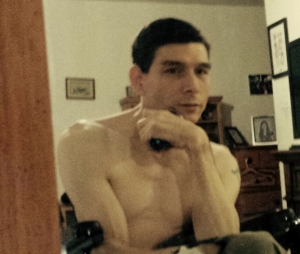
See, having cerebral palsy often makes me the opposite of poised, far outside the cultural framework of masculinity, the archetypical male model we see shaving shirtless in the mirror of Gillette commercials. Rather, I have vulnerabilities. But, that in itself gets to my definition of the epitome of masculine strength – that is, having the courage to share with others your deepest vulnerabilities, where you don’t hide any part of you, allowing others to see all of you. That takes the truest form of strength.

And, although I’d strolled through the event poised, of strength, hours earlier my partner and I shared a much different reality: my vulnerabilities. I wasn’t a recognized figure in a tie and jacket, but a man with severe cerebral palsy struggling to go through my morning routine in a hotel room not set-up for my needs. And, my partner both witnessed and assisted with my struggles. And, with the truest of strength, I shared with her my utmost vulnerabilities. Yes, it was emotionally scary. And, yes, it was embarrassing at moments. However, most of all, it was ultimately liberating. Just being you, in your most vulnerable ways, and letting another see and accept you as-is, supporting you as-is, is a life-changing experience.

What I’ve learned is that the minute that we have the strength to drop all pretenses, and share our utmost vulnerabilities with someone we trust, it removes all between us, and our relationships become deeper and totally authentic. Masks create barriers to intimacy, whereas having the courage, the strength to remove them allows us to be us, and others to love us for us.

In this way, if you want to live with ultimate strength, there’s only one way to do it: have the courage to share your ultimate vulnerabilities. And, I don’t worry about being the guy in the Gillette commercial – I have an electric razor.

Unlike Romeo and Juliet

romeo

By Mark E. Smith

I remember reading Romeo and Juliet in the 11th grade, thinking, This isn’t going to turn out well for these two young, star-crossed lovers! After all, nothing aligned for them, where even their families despised each other. And, I was right (insert 400-year-old spoiler alert here), as both end up dead.

Interestingly, Romeo and Juliet serves as a great metaphor toward how all of us should properly make life-changing decisions – albeit relationships, careers, health, and finances. Romeo and Juliet unquestionably loved each other, and many romantics for hundreds of years have wanted to believe that such love is enough. But, solely following such a single-minded view rarely turns out well. After all, Romeo demonstrated such impulsiveness that it resulted in Mercutio’s death and the ultimate double suicide. Lots of people want lots of things – including true love with the one who he or she is drawn toward – but wanting doesn’t make for good decision making. So, whether we’re in a relationship, handling finances, or making career moves, how do we know we’re truly making the right decision instead of simply following impulses?

In my life, I’ve evolved a very simple formula for making decisions, and I apply that formula especially toward the major decisions in my life. It’s a single question that must have a yes answer, or I won’t move forward: Is this healthy and will it prove successful? If the answers can be demonstrated as yes-yes, it’s a petty safe bet. If the answers are no-no, yes-no or no-yes, then it’s a poor decision. The literal answer must be, This decision will prove both healthy and successful.

Think back to Romeo and Juliet. If they’d simply asked, Is this relationship proving both healthy and successful, no one would have died, as the insanity of the situation would have been seen! Asking ourselves that simple question – is this decision both healthy and successful – will virtually always steer us in the right direction.

Now, I haven’t always been the best at doing what’s both healthy and successful – that is, I’ve learned this tool through the School of Hard Knocks. If you think you’ve done dumb, I’ve done dumber. Yet, every time I’ve applied the question of, Is this both healthy and successful, to my life, it’s proved exactly that – healthy and successful! In 2009, when the “mortgage crisis” hit, devastating countless hard-working, well-meaning Americans, I wasn’t one of them. However, I could have been. See, when I built my home – the most modest in my development – every so-called financial expert advised me that I should have assumed a very large mortgage and built a much larger home. After all, your home is your best investment, right?

Wrong. The best investment is one that’s both healthy and successful – and there’s only one right answer. If I had taken the suggested mortgage, it would have added stress to my life and cost hundreds of thousands of dollars in interest over the life of the loan. There’s nothing healthy or successful about that! To the contrary, I stayed debt-free, where when the mortgage crisis hit, I had no mortgage, and rather than putting money in a bank’s pocket, it stayed in mine. No stress and preserved income – that’s both healthy and successful.

I likewise have been applying this vital tool toward decisions of the heart. Unlike Romeo, I’ve not followed impulses lately, but have been striving to better recognize what creates a life-changing relationship, and the answer is, it has to be both healthy and successful on every level. Love between two people isn’t a vacuum. Rather, it not only directly effects their emotions, but also their children, extended families, careers and finances, to name a few. In this way, I’ve felt increasing satisfaction in my life by ensuring that my romantic life builds health and success on all levels. It’s not hard to feel happy in love, but by ensuring that all is healthy and successful – especially in building a future together – is a great way to gain perspective and get it right.

Every day we face decisions, and making the right decision is often the difference between health and success or misery and failure. Simplify the process by resisting impulses and avoiding sketchy thinking by living to the rule of making decisions based on, Is it both healthy and successful? If so, that’s a winner!

Learning to Hold Hands

holding-hands

By Mark E. Smith

We’ve all known the phrase, It’s better to give than to receive. And, I can tell you that there’s a lot of merit to it. I know that for me, realizing that I’ve made a difference in someone’s life is exceptionally rewarding. I do right because it’s right, and I certainly don’t expect anything in return. But, it feels really good to know that I’ve supported someone’s efforts in a situation that I can relate to, assisting out of respect and appreciation for him or her.

Yet, there’s tremendous merit to receiving, too – and, as a culture and individuals, we do a horrible job at it. Nod your head if you’ve ever felt awkward, undeserving or guilty upon receiving. I’m nodding my head with you! Maybe it’s been something as simple as allowing a friend to treat us to lunch, or as profound as receiving love from our partner. No matter, we can struggle far more with receiving than giving – and we need to resolve that in each of our lives before it takes its toll. The fact is, a sure way to self-sabotage ourselves in ways ranging from subtle guilt to destroying important relationships is to not feel comfortable or worthy of receiving from those who care about us.

As a child of alcoholics, I wasn’t raised to receive. If you’ve ever been around any sort of addict, you know that the nature of addiction is that it’s fed, including by family members, where you’re on the hook, so to speak, to give, give and give, to a disturbingly unhealthy degree. And, in that process, you either never learn to receive or you lose your ability to feel comfortable receiving – and that happened to me. I never truly learned to receive graciousness, care and concern from others. And, it led me to feel unsettled later in life when others, with absolutely pure intentions, strove to give to me, where my emotions ranged from uncomfortable to guilt and shame. One area of contention in my life that I take ownership of is that in the past, I struggled to allow others in my life to physically assist me in my daily needs due to my disability. And, it frustrated and hurt some around me. At times, those close to me wanted to assist me with certain aspects of my everyday routines out of love and appreciation, and I didn’t know how to receive that. I knew how to give, give and give, but I didn’t know how to let others support me, I didn’t know how to receive. And, so rather than receive, I chose to struggle physically and emotionally, sometimes self-defeatingly pushing people away.

However, it was my daughter and my ultimately being a father that taught me to receive. I mean, when your 4-year-old makes you an “I Love You, Daddy” card, how can you not soak that in to the depths of your heart and receive such an unconditional act of love? As a result, I’ve had the blessing over the last 17 years – and, it’s been a learning process! – of knowing the joy of receiving in so many amazing ways, including unconditional love.

Of course, in the process of raising my daughter, I’ve done a tremendous amount of giving. After all, that’s what we do as parents – that is, we give to our children in the purest ways possible, putting them before ourselves, period. Yet, that form of giving has also been a life-changing experience for me because it’s stemmed from the healthiest of places – the heart – a complete contrast to where I gave to addicts as an adolescent out of a skewed sense of obligation, guilt and inappropriate placements of responsibility upon me.

All of this has led me to among the most profound life lessons that any of us can carry. Relating with those close to us isn’t about giving or receiving, after all. Rather, relating with others around us is truly about reciprocation. See, if we’re going to have the healthiest relationships, we must give and receive. What’s wonderful is that this doesn’t mean we give and receive in the same ways, but that when we do for others, we’re comfortable with them doing for us in different but no less meaningful ways. See, reciprocation is about the sincerity of the emotion itself, not its product. I’m 43 and my daughter is 17, so obviously we have very different needs and different abilities to offer. Yet, while I make every attempt to meet her needs, she equally strives to support mine. I may surprise her with a gift that she’s really wanted, as I have the ability to buy it; whereas, she may surprise me with a home-cooked meal. We have a constant volley, where we both intuitively support each other, reciprocating in different but sincere ways. This principle applies not just to parent-child relationships, but all relationships. If, with our romantic partners, we let down our guard and truly know that we’re worthy of not just giving, but receiving, as well, our relationships – and our hearts! – will flourish because nothing is holding us back from loving and being loving.

Giving to others in the most unconditional spirit truly is rewarding. However, it’s heartwarming and soothing to the soul to likewise receive from others. Let us give, and let us receive. Most of all, let us reciprocate, where, together with those we care about, hands hold hands.

Surfing Mavericks

mavericks

By Mark E. Smith

In 1967, three surfers and their German shepherd, Maverick, hiked down to Pillar Point in Northern California, discovering among the biggest waves on Earth, questionable whether they could be surfed?

As the three surfers paddled out into the seemingly impossible, literally risking their lives, they soon realized that Maverick, who loved swimming pools, was beside them, paddling along in the Pacific toward monster waves. Alarmed for the dog’s safety, they promptly returned to shore, tying him up, protecting the dog from his own fearlessness. Then, the three friends paddled out, opting to surf smaller waves off to the side, avoiding the giant waves Maverick was heading toward.

Gradually, word spread about the insanely large waves off of Pillar Point, where till this day, the best big-wave surfers in the world try their luck. …And, so “Mavericks” was named after the dog – an iconic surf destination off of Pillar Point.

However, it can be surmised that the legend of Maverick, the fearless dog, didn’t end with a renown surf location named after him. See, in California surf culture, there’s an acronym, F.I.D.L.E.R, which means, F- it, Dog, life’s a risk. In other words, have no fear, and just go for it – life’s short, so live it.

At some point, I’ve all but stopped having fear, worrying or even stressing about pretty much everything. This doesn’t mean I’m irresponsible or don’t care. To the contrary, I’m ultra-responsible and take what I do very seriously. But, I don’t fear, worry or stress about much of anything. I’m like Maverick the dog – that is, I just go for it.

In a few weeks, I’m saddling up in my power chair and hitting the skies once again – Philly to LA to Vancouver to Phoenix, then back to Philly, with a monster itinerary packed in. And, while my gracious staff has covered every possible arrangement, ensuring that my travels are as planned out as possible, I’m arguably the least concerned. I have my plane tickets, my power chair, my passport and a debit card. FIDLAR – I’m ready to roll! With so much on my itinerary, aspects will go wrong. But, when they do, I’ll handle them. I have absolute confidence in being able to address whatever comes my way. I’m like Maverick the dog, just happy to be paddling into an awesome adventure.

People often think that fear, worry and stress are signs that one cares. However, the opposite is true. Fear, worry and stress say only one thing: you don’t feel in control. We know that people who perform at peak levels – surgeons, athletes, soldiers – often have lower heart rates when in a seeming situation of extreme pressure, moving to the opposite of fear, worry and stress. Fear, worry and stress typically hurts us, it doesn’t help us.

I think about relationships a lot because they are the cornerstone of our lives. And, one key I’ve learned is that feeding unsubstantiated fear, worry and stress into a relationship will destroy it. I mean, if your partner is demonstrating absolute consistent love toward you, don’t question it with fear, worry or stress, but embrace it with security, trust and comfort. If we’re going to experience life-changing love, we can’t question and hold back on an amazing relationship. Rather, we need a bit of FIDLAR in our hearts, and just go for it.

Indeed, we live in a culture where too many hold their lives back based on fear and its corresponding emotions. However, if we want to truly live our dreams – pursue an ideal career, live in the locale we wish, have a breathtaking relationship – there’s only one dog to follow, so to speak, and that’s Maverick. The best opportunities in life are like thunderous, towering waves. Most will fear and avoid them, but those seeking true success won’t back down. Instead, they prove true “Mavericks” by yelling, FIDLAR!, and paddling in the direction of big waves and a courageous heart.