From Cerebral Palsy to Quaaludes

Matt Fraser
Matt Fraser

By Mark E. Smith

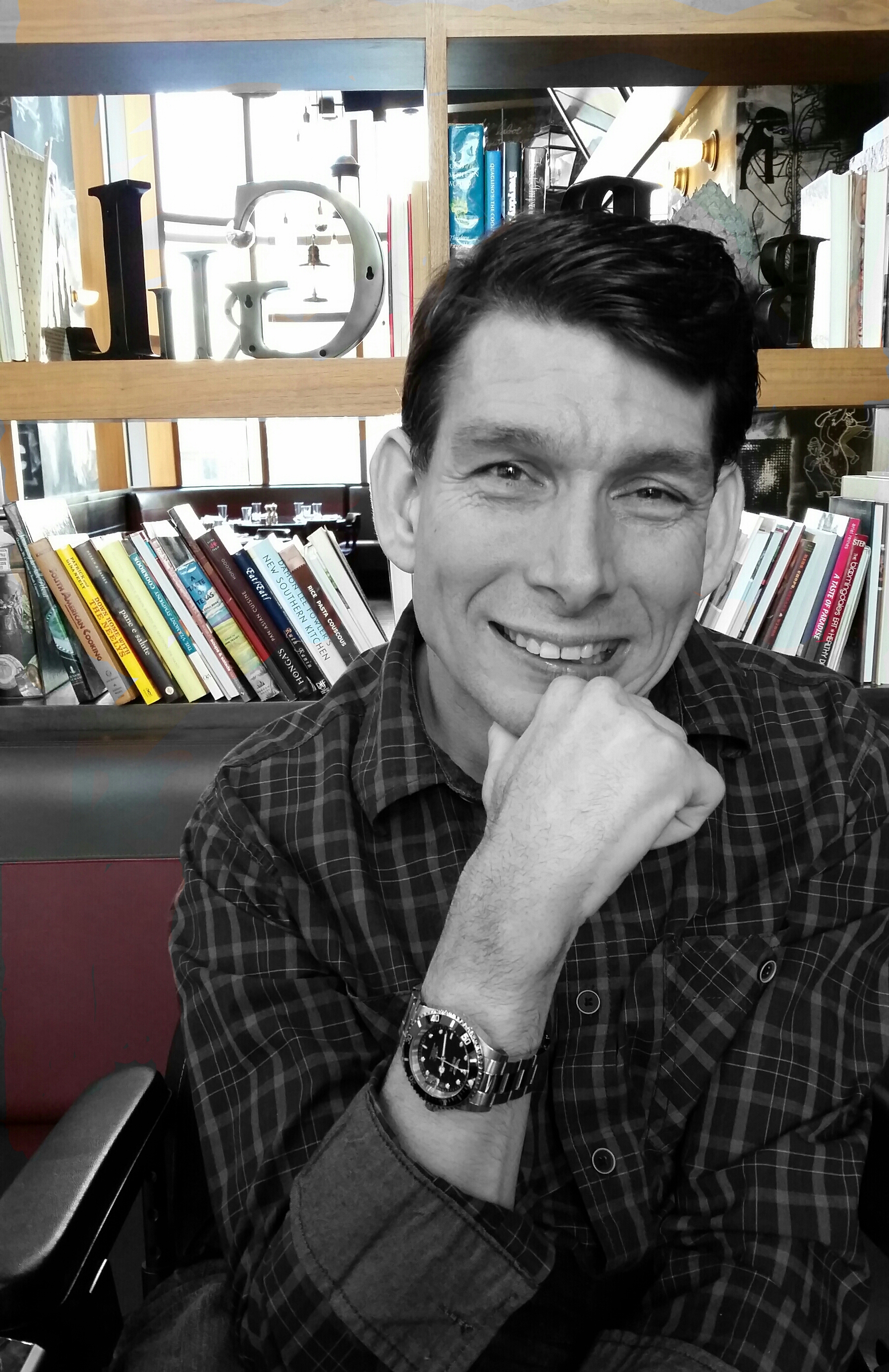
Matt Fraser isn’t afraid to be nude. He also isn’t afraid to appear on stage at venues ranging from off-Broadway plays to movies to television shows, including this season’s smash hit, American Horror Story: Freak Show. And, his fearlessness doesn’t end there. Matt is a Black Belt, a forever-charming ladies man and even a BBC radio show host.

However, here’s the single most important aspect to the success in Matt’s life: Matt Fraser isn’t afraid to be Matt Fraser. He presents himself with authenticity and doesn’t give us any other choice. We either accept Matt for who he is – disability and all – or move on.

How many of us struggle or have struggled with being who we are? Maybe as children we behaved a certain way to please our parents that wasn’t authentic to our identity. Maybe in high school, we caved to peer pressure, not feeling safe to truly express ourselves. Maybe in our careers, we squelch our personalities to fit a corporate norm. And, how many of us have curbed our behaviors, feelings and wishes to please a partner? Indeed, we’ve all been there. Yet, here’s my question for you: Have any of these scenarios worked for you in the long term?

Of course not. It’s never worked for you or me because whenever we’re not 100% authentic, parts of us feel inadequate, denied, undesired, squelched – and that’s painful. However, if you want to avoid such a terrible fate, just be yourself! It will feel risky and scary at first, but soon it will feel liberating, the freest you’ve ever felt. Now, some in your life won’t be able to handle the real you because they’re used to a watered-down, squelched version. But, your world as a whole will feel anew, fresh air filling your lungs as never before.

I remember being in my 20s and very self-aware. I watched carefully what I said to whom, and although I often had zany, witty thoughts pop into my head, I rarely uttered them, fearing I’d sound uncouth. My brother, on the other hand, who shared my wit, said anything to anyone, and I observed how charmed others were by his authenticity. With my brother as an inspiration, I slowly let my authentic voice come out – I’d say exactly what I wished on stage and in witting – and that’s when my career took off in every direction. It was time for me to be… well… me.

Some two decades later, being Mark E. Smith is a blast. I mean, if you’re an adult and ask me, “What happened to you,” I’m not going to give you a politically-correct answer about cerebral palsy as I would have in my 20s. Rather, if you’re an adult ignorant enough to ask me that question at an airport or such, I’m going to be me and you’re getting a one word answer: Quaaludes!

Each of us were born to be who we are, and assuming we’re healthy individuals, we owe it to ourselves and those around us to simply be who we are. Society, partners, and you name it may try to squelch who you are. But, your obligation is to be a Matt Fraser and live your life beautifully, exactly who you are, never compromising your authenticity – and the world will embrace you.
Grinnin’ In Your Face

Son House
Son House

By Mark E. Smith

When I attended San Francisco State University’s creative writing program, we were allowed to focus on the genre of our choice. My peers mostly focused on poetry, fiction or full-length feature writing. I was the only one in my class, however, who focused almost exclusively on the short-short story, a genre others found too difficult because of its inherent limitations. Whether writing autobiography or fiction, I loved the constraint of having to tell a story – convey a profound message – in 1,000 words or less (that’s no more than two typed pages). The constraints of the short-short form, I found, made me maximize what I had, it made me more creative because I had to learn ways to do more with less.

Of course, looking back, I simply grabbed onto what I knew based on growing up with disability – that is, I was really good at taking limitations and using them to utmost potentials. Constraints, you see, don’t box us in; rather, they challenge us to find innovative solutions to work with what we have. I’ve never found that ease or excess bring out our full potential. However, constraints and limitations do. I know that it sounds counter-intuitive, but if you want to grow, work within limitations.

The way I learned really quickly how to manage money was by being broke. Again, I know that sounds counter-intuitive – how do you manage money that you don’t have? – but what being broke is really about is expertly managing the money that you do have. It goes right back to disability experience, doesn’t it? I focus on what I have, not what I lack.

I was grocery shopping with my daughter recently and we encountered a sort of mirror image of us at the grocery store – a presumed single father and two daughters. In his hand, he had a grocery list and a calculator, adding up the cost of items as he went. It was a familiar sight because I’ve done that. When you have financial constraints, you find ways to do more with less. In that moment, that gentleman was a financial wizard compared to many with far more money because each of his dollars was wisely watched and allocated. Attentiveness and creativity filled his cart beyond financial limitations. Again, limitations bring out the best in us.

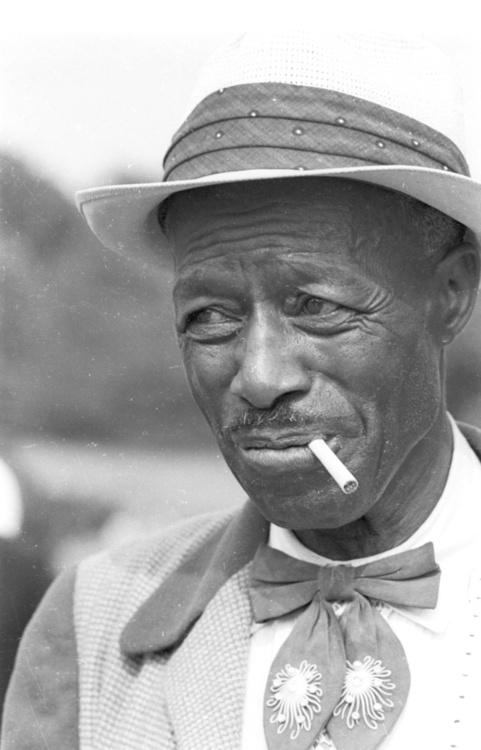
One of the greatest blues songs of all time is the mid 20th-century, “Grinnin’ in Your Face,” by Son House. In conceiving and performing the song, House had the ultimate constraints: no instruments and no formal musical training. How do you make an iconic song with none of that? Yet, by working around those constraints, he created a soul-penetrating song using just his voice and clapping, setting time to what sounded great to him. House found the ultimate instrument within the ultimate limitation: he used his voice and hands. Contemporary musician, Jack White, noted about House’s classic piece, “I didn’t know you could do that, just singing and clapping. It said everything about rock ‘n’ roll, expression, creativity, art – one man against the world.”

If we look at ourselves as writers, single parents, musicians, those with disabilities, and on and on, it’s amazing what we can do within constraints grinnin’ in our face. What’s fascinating is that constraints don’t limit us; rather, they inspire creativity, help us find better ways, and ultimately foster personal growth. However, what living with limitations truly does is empower us to realize that we don’t have limitations after all.

Curveball King

The pitch

By Mark E. Smith

As a writer, I can tell you that life is a story that unfolds page-by-page as we live it. Some of it we can predict and when we get to those particular pages in life, those where our intuition is right. However, most aspects of life are totally unpredictable, and much like a novel that we can’t set down, each page brings twists and turns that leave us only wondering what will happen next?

As a person, much like a voracious reader, I learned to stop trying to predict life, to guess or try to control what comes next. Why? Because like a page-turner of a novel, we can rarely guess what comes next. Think about your own life. Go back 10 years. Could you have predicted the twists and turns – the unforeseen plots – that got you to where you are today? Certainly not.

Yet, it’s human nature to want to know how’s it all going to unfold? People may give you answers, from friends giving you comforting thoughts to medical professionals giving absolute diagnosis. However, no one truly knows. The couple who everyone proclaimed would be together forever ends up in a bitter divorce, while the individual with a grim medical prognosis goes on to a inexplicable cure. We’ve all seen these plot twists, the unpredictable nature of life. Therefore, if you try to predict life over the long term, you’re likely going to be both disheartened and surprised much of the time based on any given circumstance.

So, if it’s so difficult to predict life, how do we handle the twists and turns, the unknowns that are bound to come our way? To use a sports analogy that’s fitting, life throws us two pitches: a predictable fastball and an unpredictable curveball. But, here’s what’s astounding, in baseball and life: researches found that when batters hit a curveball, they’re more likely to hit a home run (it has to do with the spin of the ball, the way it deflects from the bat, and so on). Therefore, both our biggest disappointments and successes in life often come from the unforeseen, an unpredictable curveball that can either strike us out or bring us amazing opportunity. Yet, again, one can’t predict the outcome, but merely take each ball – life’s twists and turns, that is – as it comes.

What I’ve learned is to not try to predict or question the future, but to embrace whatever it brings. Whether life sends me a predictable fastball or unpredictable curveball, I accept them equally and take my best swing. Life is a novel – a baseball novel – and I’m forever excited to see how the plot unfolds as my protagonist strives to be the Curveball King.

Gala of the Messy and Miserable

20141118_175743-2

By Mark E. Smith

Facebook and disability – they’re both masters of illusion, where publicly you never see the whole picture of a person, just the best parts possible. But, what happens when you remove that curtain, where life isn’t glamorous postings or a guy in a power wheelchair, wearing a suit and tie, whizzing by you at work?

We really do live in a kaleidoscope culture, where people only want to see and present the pretty parts of life. The real and gritty parts are scary and painful – and yet all so real. None of our lives are pretty and perfect all of the time. In fact, they can often be messy and miserable. And, what I’ve learned is that the pretty and perfect parts don’t unite us; it’s the messy and the miserable that do – because they’re heartwrenchingly real. We can only relate to the pretty and the perfect to a limited degree. However, the messy and the miserable is often where life lands us – and we all can relate to that. In this way, there’s a reason in all of our lives to shatter the illusion and get real, where we have the courage to expose the messy and the miserable, and that’s when we truly connect with others.

My own Facebook and disability form an illusion. No, not intentionally, but by the nature of it all. My colleagues see me poised and polished in my career – perfect hair, whizzing by in a power wheelchair – and my Facebook shows an amazing life. So, if that’s the pretty and the perfect, where’s the messy and the miserable come in?

All over the place! I attended a gala recently and, if I say so myself, I looked GQ-hot rolling in. But, what no one saw was what it took me to get to that point. I’m no GQ model. Rather, I’m a guy with severe cerebral palsy whose life can be messy and miserable. Like many with complex disabilities, I had to build in my “bathroom regimen” in the process of getting ready, which takes time and is physically taxing. Then, the reason why I was polished and on time at the event was because my daughter and fiancee helped me get dressed. I can do it on my own, but it takes hours, so the more practical of the two options was accepting the gracious help of my daughter and fiancee to get me ready.

But, we never have these conversations, right? It’s not like someone says to me at a gala, “Mark, you look so handsome tonight.”

And, I reply, “Thanks. I struggled through a bathroom regimen this afternoon, then my fiancee buttoned my pants, tied my shoes and styled my hair….”

Yet, that’s the reality, and when I think about that gala, I know that many people there had messy, miserable aspects to their lives, too. After all, life isn’t easy for any of us. Maybe there were couples who argued like mad on the way, but walked in with smiles. Maybe they were couples who drove there in a car with the gas light on because they’re broke, but walked in like a million bucks. Maybe someone recently lost a family member and it took all of his or her strength to get dressed up and attend such a chipper gala. And, how many individuals there had disabilities or conditions unseen, from depression to epilepsy? I know that the beautiful lady on my arm – my fiancee, the one who helped me face my challenges to get to the gala – had her own challenges that eve, ones that no one knew, as she continues recovering from a recent cancer-related surgery.

The fact is, everyone’s life can look pretty and perfect on the outside. But, how many of our lives truly are? Life is often messy and miserable – and, as a result, absolutely beautiful. See, when we let down our facades, and with grace and dignity discuss the messy and the miserable in our lives, it makes those around us let down their guards, and that’s when we truly connect with others. And, when we connect, we’re not alone in the messy and miserable, and it makes all in our life – the messy and the miserable – dramatically easier to cope with.

And, so at that gala, I made my own silent toast to the messy and the miserable hidden beneath the facade of the pretty and the perfect – because we’re all in the trials of life together.

The Most Human Experience

empathy

By Mark E. Smith

Much of my life is spent around those like myself who have physical disabilities. And, because I have faced adversity in my life, many have turned to me for understanding, reassurance and comfort. After all, if you look at me – body twisted, spastic in my power wheelchair – I personify adversity.

Yet, while I know of my adversities – and, yes, some components of adversity are universal – I can never fully understand someone else’s adversities. While two individuals may even have the exact same disability, condition or other life circumstance, what I’ve learned over decades of sharing stories of adversity with others is that no two experiences are the same.

This raises several intriguing questions. Firstly, if no two experiences are the same, how do we meet the innate need for connection with others in the face of adversity? And, secondly, how do we support others in their times of adversity when we haven’t had the exact same experience?

The answer to both these questions is a singular one: empathy. Empathy is an amazing human capacity because it allows us to connect with others on the most genuine levels, where it’s not about relating to an exact circumstance, but truly relating to the person who’s experiencing that circumstance in his or her own way. So, you may wonder, how have I done that in my own life? After all, I was born with cerebral palsy, so how can I relate with a mother who was able-bodied till age 36, then paralyzed from the chest, down? Yes, they’re both disability experiences – but vastly different.

The first interpersonal connection I make is to try to best understand the other individual’s perspective. I mean, can you imagine what it emotionally and psychologically feels like to be the nurturer and caregiver to your children and spouse, and now you’re physically unable to fulfill those roles in many ways? I know, we want to swoop in and rescue and say, “As a mother and spouse, you’re more than your body, and everyone views and loves you just the same.” And, it’s true – but that’s not empathizing with the person’s real, valid emotions. I’ve said in this exact situation, “I can imagine how difficult it is to have gone from the caregiver to needing caregivers. That’s a harrowing life transition. How are you dealing with that?” When we approach others’ adversities by letting them know we’re striving to see their situations from their perspectives, it creates true connection and validation – invaluable aspects of empathy.

This leads to the other aspect of empathy: being truly present in the other person’s time of adversity. No, I don’t know what that recently-paralyzed 36-year-old mother is literally going through – I’ve never experienced it and no one has ever been in her exact circumstance, either. However, I’ve made it through harrowing times in my life and there’s common humanity in that. And, so there’s the remarkable ability to quietly relate with someone, not on a circumstance level, but a human level. This is a scary place. I know scary places, so I’m just going to hold your hand as you move through it.

In these ways, through my decades around disability – both in my profession and in my personal life – I’ve learned a lot about being there for others. Empathy isn’t about having gone through an exact experience. Rather, empathy is about striving to understand another’s perspective and embracing him or her as-is, wherever he or she is in the midst of adversity. If we do that, we navigate toward the most uniting experience of them all: shared human experience.

The Science of Hope

emilybarn

(Beyond general admissions, my daughter is applying to an honors college program that includes research within the student’s field. In the applications process, a 750-word essay is required, explaining the desired area of research, why it’s of importance to the student, and its impact on humanity. It’s a lofty task that, ideally, begins students on an extraordinary academic journey, one that ultimately changes the lives of others. My daughter’s essay is in line with the inspired writing you read here week after week, and so it’s my privilege to share her essay with you this week.)

By Emily C. Smith

As I pursue my undergraduate studies in psychology, there is a much larger life mission at work for me. It’s a passion, a field of study, a research quest that ultimately effects each one of our lives: what’s the origin of hope within the human psyche?

It’s a very personal subject to me, and one that effects the life of every person on the planet. We either have hope or others have hope for us, and if hope is removed from our perspectives and lives, virtually all possibilities cease. Yet, with hope, potential dramatically expands our horizons, where a bleak prognosis becomes potential, where vying is a path for victory. However, the questions remain. What are the origins of hope? Why do some people have hope while others do not? And, how does hope, itself, impact the many circumstances throughout our lives?

I’ve learned about hope in my own life, and wish to extend the power of hope to others. I want to empower others with what I refer to as the “science of hope.”

As a very young child, my mother became addicted to prescription medication. I went through grade school, then junior high watching my mother drift away. I struggled with having hope. I remember being 11, and picking my unconscious mother off of the bedroom floor, tucking her in bed, my heading off to school. I remember sitting in class that morning thinking about all of the times I rushed to hospitals with my father because my mother had overdosed. I thought about all of the times I locked myself in my room as my mom crashed about the house. I remember all of the efforts my father made to put my mother through rehab, threatening to sue doctors who prescribed her more pills. Indeed, I remember sitting in class that morning, knowing my mother’s addiction was killing her – and there was no hope.

My father, though, knew something I didn’t. See, he was born with severe cerebral palsy. He wasn’t expected to live more than a few hours, and once he did, he was declared an absolute vegetable. His life ended up a lesson in never believing in a negative prognosis, but using hope as a guiding light, even in the bleakest of times – maintaining a high-profile career and giving me as much of his time as possible as my mother wasted away.

Soon, the inevitable occurred. My mother moved out, removing herself entirely from our lives. With bare walls because my mother took all of the pictures and very little experience running a house, especially at my young age, I wasn’t just void of hope, I was terrified. We were a 12-year-old and a suddenly-single father with severe cerebral palsy who used a power wheelchair in a bare-bones house – alone.

Yet, my father introduced the one component that would rescue me from my stifling fear and pain: the power of hope.

He hugged me and said, “It’s now just you and me. I don’t know how we’re going to do this, but we are. Soon these walls will be filled with pictures of our life, our dreams rebuilt.”

My father’s unshakable hope was my guide post. I held onto his hope as we learned together how to not just live, but to thrive, that guide post slowly becoming less of a need as it was replaced by my own intrinsic sense of hope.

Despite the tragedy of my family, hope has been the ultimate gift. We all face adversity, but when you have hope, you have the ability to not just survive, but excel. From my home life to my academics to my extracurricular activities, hope has led me to empowering heights. Give me a negative circumstance and I will show you the positives; show me limitations and I will show you possibilities; and show me a grim prognosis and I will show you hope.

I know where I got my hope – that is, from my father, from experiencing adversity and having him lead the way with hope. And, I want to further that legacy by not just portraying hope, but by scientifically defining it for humanity. See, I don’t want hope to merely be a mysterious state of mind that some have and some don’t. Rather, I want to research hope to a tangible level, where it’s a definable tool that doesn’t just elevate our individual lives, but all of humanity.

Me Being Me

1412359724784

By Mark E. Smith

At 43, I’ve had my challenges in life, but with a mix of hard work, the support of others and luck, I’ve been privileged to have accomplished a bit, from fatherhood to a pretty cool career. Nevertheless, someone asked me what my ultimate dream is from here? My answer could have been related to a next career challenge or maybe a materialistic goal like a lake house. However, none of that’s the case – its all too easy, too meaningless in ways. My answer from the depths of my heart was, “I just want to be me.”

Assuming that we’re healthy, productive, loving individuals, isn’t that our ultimate dream: to not only be free within to be ourselves, but to be truly embraced for who we are by others? How many of us have felt at times that for any number of reasons – a work environment, a relationship, family expectations – we couldn’t just be ourselves? Maybe it’s a seemingly huge issue like if your family knew you were gay, they’d disown you. Or maybe it’s a seemingly small issue like someone correcting your grammar. Or, somewhere in the middle, where your love interest wants to change something about you. All of these and countless other examples prevent you from being you, and it’s painful and it’s isolating – and I’ve been there.

I had a cute conversation with a buddy of mine. He shared with me that if he could find a woman who loved comic books as much as he does, she would be his soul mate. See, he’s had girlfriends in the past who’ve ridiculed him for collecting comics, so finding a woman who loves comics would be a dream come true. Yet, that’s not truly what he needs, is it? He doesn’t need a woman who loves comics; rather, he simply needs a woman who loves him for him, comics and all. It’s what we all want and deserve: to be loved as-is.

And, that is an epic battle of the heart for many of us, where we just want to be rightfully loved as-is, where we’re perfectly imperfect and nothing about us needs to change to fit in or be loved. We just need to be us and be loved on that merit alone.

Unfortunately, others may not get that concept and so it’s up to us to set the standard and set the boundaries. I genuinely love people, and there’s nothing I enjoy more than a great conversation. I don’t care who you are, what you look like, or how you live. Assuming you’re doing right by others, I don’t want to change anything about you. I just want to know the real you.

It’s this way of embracing others that I more and more expect in my own life. Regardless of the situation, I’m just going to be me as authentically as possible. I don’t need to prove anything or be anything – I just need to be me. And, when I’m not good enough for someone or criticized for just being me, I’ve developed the strength to put the onus back where it belongs – on the person doing the pointing.

I am me, you are you, and for anyone who wants to see flaws in us or seek to change us, well, we need to hand him or her a mirror and go about being just who we are: perfectly imperfect, as-is.

Honoring Being Wanted

GEORGEMASON

By Mark E. Smith

I’ve just returned from my daughter’s first college visit. It was actually a bit more than a typical college visit that high school seniors do because she’s being recruited by the school based on her achievements. As a dad, I see aspects like a waived application fee, streamlined early application, early acceptance and a scholarship as all the reasons to go there – plus, it’s a great school in a great part of the country for internships and a subsequent career. However, there’s a more profound reason why my daughter is leaning heavily toward this particular school: she’s wanted.

So many people want; yet, in most circumstances, wanting isn’t emblematic of success. However, being wanted has everything to do with success. As I’ve told my daughter, anyone can want to go to any college and apply, hoping to get in. However, the ultimate success is in being sought out based on merit, where a college wants you.

The realized value of being wanted instead of simply wanting, applies to so much of life. Top executives never apply for jobs – they’re recruited. When we’re in the most fulfilling relationships, we’re desired by our partners. Among the greatest successes in life involve being wanted, not just wanting.

However, there’s a caveat to being wanted, one that I continue seeking to instill in my daughter. Being wanted has nothing to do with entitlement, but everything to do with unyielding dedication and responsibility. You earn being wanted by being extraordinarily dedicated, and then you honor being wanted by striving even more. In my daughter’s case, she’s being wanted by a college because she’s worked hard in high school, but now she must work even harder to honor the college’s recognition. The recruited executive can’t rest once he’s landed among the country’s top jobs, but must honor it by working even harder. And, in our relationships, we must always honor our spouses with love and attention, where desire is unwavering.

I’ve been fortunate to experience the privilege of being wanted via the writing portion of my career. I used to have to hustle and try to secure paid writing jobs. However, I’m fortunate that now editors come to me with writing assignments. However, tight deadlines and working late nights are par for the course — again, the privilege of being wanted must be honored with dedication or it won’t last. Being wanted means being unyielding in what you do.

Wanting is great, especially when there’s effort behind it to achieve a goal. However, being wanted is emblematic of ultimate success because it’s where dedication intrinsically leads our lives to new levels of potential and opportunity.

Not Different But Authentic

authentic

By Mark E. Smith

I had the privilege of being at a public venue with a five-year-old and his mother. The little boy uses a power chair due to a severe form of muscular dystrophy – and, man, he’s a go-getter! He’s happy, adorable, and a people magnet. And, everyone at the event saw what I saw: An adorable little boy with the world at his finger tips.

Yet, as he was literally surrounded by crowds who thought he was the cutest kid ever, there was a side that many didn’t know, nor wanted to know. Everyone wants to be inspired and delighted but a cute kid buzzing around in a power chair being… well… a kid. After all, it’s painful to think of any other possibilities, that maybe his life isn’t what it seems, that it might be disturbingly complex, something no child should experience.

And, so, as he charmed the crowds, I was with his mom, knowing the whole story. The seemingly care-free little boy averages one hospital stay per month, sleeps hooked up to a breathing machine, and he must be turned every few hours to keep his lungs clear at night. For his mom – single, with three children – this means around-the-clock care. And, get this, she works from 12:00am to 3:00am as a reservations clerk from home to help make ends meat. The carefree child and family that all assumed, in fact, has unfathomable challenges every day. I discussed the challenges with the mom and gave her a hug, and she got a bit teary-eyed.

How many of us can relate to this story? How many of us gloss over the challenges of others because they’re too painful to learn the realities? How many of us hide our own struggles because we don’t want others to see us as different, to know how difficult our lives really are?

But, we all have struggles. And, when we don’t recognize them in others or disclose our own at appropriate times, a facade goes up and we don’t make connections to the depths that our humanity allows. No, we shouldn’t then treat each other “differently,” but more authentically.

My point is, let us strive to recognize and embrace the entirety of others, and allow others to know the entirety of us, struggles and all, where adversity isn’t ignored but unites.

Learning to Love to Capacity

love

By Mark E. Smith

Currently, with tremendous strain, I can bench press 210 lbs. one rep. But, I don’t. Instead, three days per week, I bench press 120 lbs. 20 reps, then I drop to 100 lbs. and bench press another 20 reps. Guys all boast how much they can bench press one rep because it sounds impressive. However, it’s truly a specious exercise – they’re not building endurance or true fitness because they’re only doing it once, lifting beyond their real capacity. Me, I choose to lift less weight at higher reps because I want to build meaningful fitness to my genuine capacity.

It’s a lesson from the gym that’s even more important in our relationships. We should only represent ourselves to our truest capacities, as well as recognize the true capacities in our partners. Otherwise, relationships fail and people get hurt.

All of us mean well going into relationships. We put our best self forward and we see only the best in our love interest. Yet, it’s so easy to get caught up in that which we’re not. We want to be what the other person seeks, and we want him or her to be what we seek. And, it all works perfectly – that is, till we realize one or both of us are beyond our capacities. It’s like my bench pressing 210 lbs. I can do it once to impress, but I can’t sustain that level. If you want the real me, I bench press 120 lbs. really well.

In relationships it’s vital that we know our true capacities from the start, adhere to them, and truly recognize our love interest’s capacities. It’s just being honest, and when we do this, it dramatically reduces the odds of someone getting hurt.

Yet, it’s tough to do. It’s so hard because ideals don’t always align with reality. What we want in a relationship can be the antithesis of what we’re capable of. There are classic examples we all can relate with. Someone wants a relationship, but makes no time for it. Someone wants a relationship, but is emotionally still buried in a past one. Someone wants a relationship, but doesn’t have the emotional health to cultivate it. We’ve all done this, experienced this or witnessed this – and it only results in pain.

Bishop T.D. Jakes talks about the importance of realizing our capacities for love and how they vary based on who we are and what we’ve been through. He uses the metaphor that if we’re 10-gallon people looking to be filled with love, we’re never going to be filled by someone who only has an ounce to offer. By the same token, if we only have an ounce to offer, that’s fine, but let’s know that we can’t promise to give more than we have. There’s no right answer, just an honest one.

In this way, we must approach a relationship with accountability on our part, and clarity toward our partner’s capacities. We may want a certain type of relationship, but are we capable of it, and are we being honest and fair to our partner? And, are we able to view our partner with clarity, ensuring he or she is capable of the relationship?

The key to this is utter honesty and following our instincts. If we overextend our capacities in any way, it never feels right, and we have an obligation to stop it or, ideally, be authentic enough not to do it in the first place. Similarly, if our partner’s words are contradicted by actions or circumstances, don’t overlook that. Recognize each other’s true capacities and respect them because if you don’t, someone will get hurt.

Now, this isn’t psycho babble or new-age psychology, but common-sense life experience. I’ve been on both sides, as many of us have. I’ve tried to be someone who I wasn’t, and it didn’t work. And, I’ve overlooked signs in others that I shouldn’t have. There was no ill will in any of it, just intentions wishful beyond our capacities. What I learned in the process, though, is that there’s ultimate joy in being authentic in acknowledging both our own true capacities. Maybe the relationship will reveal itself as soul mates or prove unrealistic. It’s the variables of love. But, the beauty in being authentic in our capacities is that we have the honesty, authenticity and courage to just be us.