Where Divorce Leads

Divorce

By Mark E. Smith

I’m at that age, in my 40s, where many I know are either divorced or in the midst of divorce. And, it’s hard for me to watch because I understand the tragedy of divorce, but not for the reasons you might presume. And, I know the ultimate goal of divorce, but, again, it’s likely not what you presume. Divorce is different for each couple – and, even more unfortunate for each “family” – yet there’s a common thread of humanity that too many overlook. It’s by understanding that common thread that takes divorce from the court room and places it back into the heart, which is really where it resides.

Interestingly, while I am a generational divorce statistic – my parents divorced, and I subsequently divorced as an adult – I’ve never been through a “typical” divorce in the legal sense. My father simply left when I was very young, then my mother and stepfather had a very simple divorce. Then, in my divorce, it likewise was a very simple legal process, no custody issues, gracefully splitting of assets amongst ourselves, never even a foot in court. My marriage was deeply dysfunctional, but we still treated each other with dignity and respect in the divorce process – there was no excuse not to. None of these divorces in my life were by any fathom ideals – divorce never is – and emotions ran deep; but, they weren’t legal battles and drawn-out War of the Roses, either.

However, I’ve helped friends emotionally get through some tough divorces. And, it’s struck me that so many divorces are a seemingly surreal process. Think about how divorce transpires. Two people have gone from loving each other, vowing to spend a lifetime together, and even having children, to needing a court to decide who gets the kids on Sundays, utterly despising each other, paying attorneys thousands of dollars to literally fight over items like who gets the $50 DVD player. And, the process takes on a life of its own, where individuals abandon all rationale and systematically their lives are devastated by one or both of their actions – home lost, bank account drained, kids made a pawn, and everything so lovingly built is destroyed, including those once-priceless wedding photos. When two people’s lives – and worse, their kids – are sanctioned entirely by court order, life has jumped the tracks in among the most tragic of ways.

Yet, as horrible as the legalities of divorce can be, it’s the impact on our humanity that’s the real toll – and this is what few realize or wish to admit. Alcoholics and addicts aside (a leading cause for divorce, where such individuals by nature of altered brain chemistry cannot process rational thoughts or feelings), it’s the emotional impact of divorce that’s more life-shaking than any other aspect. The monetary can be rebuilt, and the court appearances eventually come to an end. However, the realization that the person and union that you so believed in turned out to be completely unfulfilled in the end, rattles you to your core. What you thought was, wasn’t. What you trusted in as a forever, came to a soul-numbing hault. The person who you married isn’t recognizable anymore. And, whether you do it consciously or subconsciously, you’re bound to feel the scariest, most helpless emotion of your life: After witnessing the implosion of my beliefs, hopes and dreams, how do I believe in anything ever again? See, that’s what divorce truly is for most. While couples duke it out in court over meaningless materialism, fueled by spite and bitterness, thinking that’s the nature of divorce, they’re overlooking the real consequence and battle: How do I restore my faith in humanity, to trust again? It’s not just a dissolution of a marriage, but the dissolution of all that one believed – and that’s soul-shattering for many.

In this way, the ultimate goal of surviving divorce can’t be preservation of capital or righteousness or bitterness. Rather, the ultimate goal in surviving divorce is a preservation of faith, the ability to trust and love again. While you may lose a lot in divorce, as long as you don’t lose faith in humanity, you not only have the opportunity to recover, but to go on and live the life of your dreams.

And, to me, that’s the ultimate goal of divorce. It’s not about distribution of property, who’s right or wrong, or being bitter with your ex. Rather, the ultimate goal of divorce is among the most consequential processes of your life: Preserving your faith in trusting and loving again toward ultimate happiness wherever it awaits you – and sincerely wishing your ex the same.

The Genius of Juggling

juggling-balls

By Mark E. Smith

The New Year is here, and while I trust it will grace your life with much of what you’ve striven toward, it’s sure to also bring some sort of adversity. After all, none of are immune from the curve balls that life throws us, from the frustrating but mundane like your vehicle breaking down, to the much more harrowing like an ended relationship, job loss, or illness. We don’t like to think about it, but, again, none of us are immune from life’s curve balls, adversity coming our way.

I’ve spent my entire life facing adversity – from my disability at birth to my troubled family growing up to challenges in my adult life – and among my most valuable assets have been the friendships I’ve evolved over decades with others who’ve successfully faced adversity. And, between the two, I’ve developed a learned skill set that’s consistently helped me move from surviving to thriving at many points in my life. Yes, adversity will surely come my way again, too – it’s inevitable – but I’m ready.

For me, addressing adversity has become intuitive, springing into positive action when it occurs. I understand several core principles that have served me and others so well in times of adversity, where I believe they can serve all of us, no matter the circumstance.

When Opportunity Knocks, Open the Door!
When we face adversity, it’s easy and natural to focus on what’s happened to us. …I lost my job. …My marriage is over. …I’ve been diagnosed with an illness. However, in most cases, it’s futile and moot to focus on what’s happened to us. Sure it’s healthy to process emotions, but in the larger scope, we need to look forward toward opportunity – and, there’s always opportunity in adversity. As W. Mitchell – burned over 90 percent of his body, then later paralyzed – has told me for 20 years, It’s not what happens to you, it’s what you do about it. Therefore, when I face adversity, I’m always immediately seeking the opportunity in it. I don’t always make a smooth transfer into my wheelchair, sometimes landing on the floor. Yet, I’m never frustrated by the fall – it’s over, done, who cares. What I’m solely focused on is getting up, as that’s where the opportunity resides. My sister was also an amazing example in this. At 23, she had cancer and was in a bad marriage. She didn’t drift into self-pity, but focused on beating cancer and used it as a life-affirming catalyst to leave an unhealthy marriage, going on to a life closer to her dreams. Cancer for her wasn’t a tragedy; rather, it was a catalyst. If you lose your job, it’s an opportunity to find a better one; if your relationship ends, it’s an opportunity to find the partner of your dreams; if you have illness, it’s an opportunity to gain new life perspectives. We all get knocked down in life, but the wise among us only care about getting up stronger.

Never Stop Juggling!
Have you ever noticed that we have a way of allowing adversity to have a domino effect in our lives? Think about how many struggle at work, then go home to take it out on their families. The examples go on and on, where when one aspect goes astray, we let it ripple through our entire lives, being far more devastating than it should. A college buddy of mine is a juggler, and he taught me that as a juggler, if you drop a ball, you keep juggling the rest because whether you juggle four balls or three, the audience is still entertained – just don’t stop juggling! Life is like that, as when one part of your life goes wrong, don’t let it pull down the rest. Never let the bad sabotage the good. I’m the only one in my family to have ever graduated high school, and the way I did it was by refusing to let my nightmare home life effect my schooling. No matter how bad a night was at home, I still got up the next morning and went to school engaged. It doesn’t make sense to allow one area of dysfunction to void all other areas of prosperity. In fact, when one part of your life is astray, that’s the precise time to especially focus on the positive areas – and you’ll be amazed at how the negative soon turns around.

Victor, Not Victim!
When facing adversity, we have a peculiar way of embracing the blame game. I feel like this because of him. My life is like this because of what happened to me. However, we have far more control in the long run over our lives than any other person or circumstance can dictate. We can’t always control what happens, but we can totally control how it impacts our lives. We can choose at any point to be a victor or a victim. I may have been hurt in that relationship, but I grew from it and I’m more open to love than ever. Nick Vujicic could appear to many as a victim, having been born with no arms or legs. But, as Nick travels the globe speaking to hundreds of thousands each year – as an evangelist, author, husband and father – he lives by the unwavering philosophy, No arms, no legs, no worries, mate! We all possess the power to dictate what controls us. I don’t care what happens to me, I’m going to strive not to relinquish my fulfillment to an outside force – I will be victorious over adversity, not a victim.

If we summarize these core strategies, a remarkable truth is seen: not only do we each intrinsically possess means to address adversity in healthy ways, but we can often minimize its impact and literally use it in our favor. And, so the theme for adversity in the New Year is simple: we are equipped, so bring it on!

A Man’s Entirety

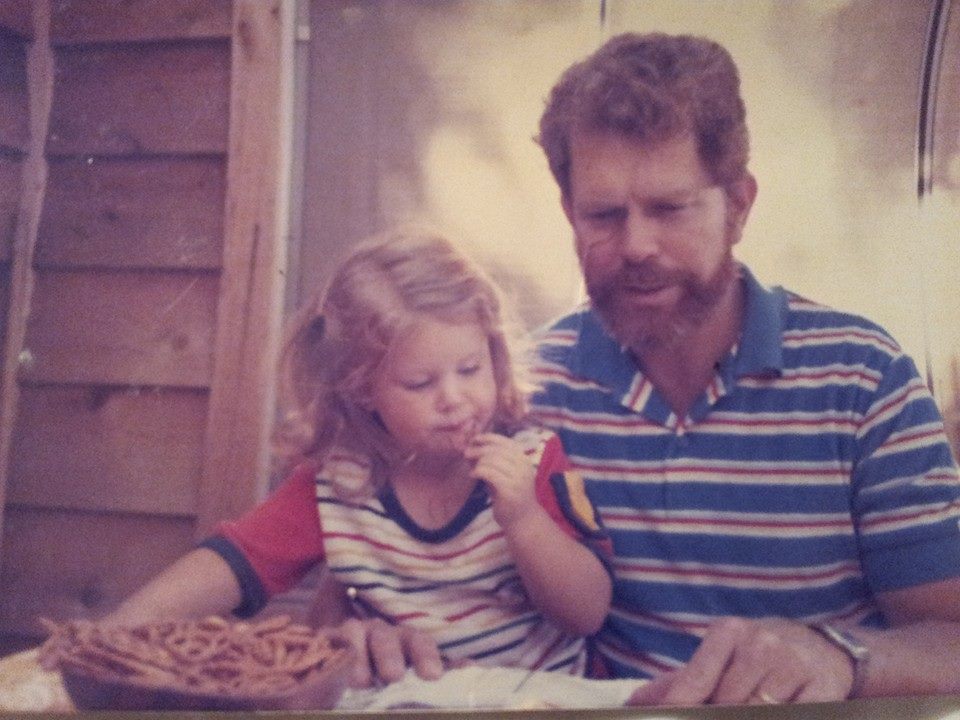
Paul and Mark's Little Sister (1985)
Paul and Mark’s Little Sister (1985)

By Mark E. Smith

Maybe it’s what literature or movies have bred into our culture, that people are either good or bad, but one week after Paul’s death, I can tell you that it’s possible – and more common than we’d like to think – for people to be both. And, for me, Paul was both, for 35 years, which might be why I’ve always called him Dad or Paul, based on the circumstance.

Paul entered my life as Paul, a 34-year-old bachelor attorney when I was eight. My biological father had left, and my mom met Paul during some legal matter. My mom was an alcoholic and an addict, but was exceptionally attractive, and that caught Paul’s eye. Yet, as I would watch unfold till both of their deaths, Mom and Paul were a toxic mix that led to circumstances that my brother, sister and I can’t believe any of us survived – and Mom and Paul ultimately didn’t.

Paul started life as a military brat, son of a full-bird colonel who flew with Charles Lindbergh, no less, and was a highly-decorated WWII fighter pilot. Grandpa Jim, as I knew him, was never a touchy-feely kind of guy. He was a hard-drinking, cigarette-smoking man’s man, with a tall stature and broad chest to match. And, he expected Paul and his brother to be in line all the time. Both boys ended up at military academies, and Paul graduated from King’s Point, embarking on an officer’s career navigating commercial ships around the globe, pulling in an astounding $10,000 per month in the 1970s. Paul put the money to good use, paying his way through law school and buying a farmhouse on some land. And, that’s when my mom began dating him, a relationship that through my eight-year-old eyes had all the promise in the world.

Yet, there was more to it than that for me. Not only did Paul seem a knight in shining armor to pull us out of poverty, but he genuinely took to me. My own father didn’t just drink and walk out on us, but till the day of his death in my 30s, there’s no doubt he was ashamed that I had a disability. Yes, it was my father’s issues, and I always tried to have some empathy because he was so troubled, but I couldn’t help but carry the burden of that shame. However, Paul demonstrated the opposite, genuinely loving and embracing of me. He took me hunting and fishing, sometimes carrying me on his back for miles. And, after my mother and he married, he took me almost everywhere he went, always referring to me as his son. It was a different world, where for the first time I felt a sense of acceptance. And, it was then that Paul became Dad to me.

But, it all was a tale of two cities. Dad was a loving, generous father, who showed me a world I never knew existed, from the great outdoors to socialite parties. However, there were the other sides of him that were horrific – Paul’s sides. He was a drinker, too, and I lay in bed every night hearing the liquor cabinet open and close countless times. My mother and he drank and argued nightly, where eventually he became physically abusive toward her, and they crashed around the house, keeping me constantly on edge. Paul could be a happy, docile drunk, or an enraged monster. Among the low points was on my 10th birthday when I came home from school to find my mom having slit her wrists in a suicide attempt, and as Paul rushed home, he’d been drinking since lunch and slammed his truck into a tree. It’s how life was.

By 1983, my younger sister was born, and Dad was a great father to her, too, loving her to no end. And his law practice thrived, complete with a beautiful old Victorian office right across the street from the courthouse. I remember people in our community being impressed by our family’s status at that point, with Dad running both a private practice and serving in the Public Defender’s office. It was round that time that Dad even took us on vacation to Maui.

But, it was all a facade. My mom was drunk around the clock, Paul started drinking at lunch, they were mired in debt, and the nights were so violent that it’s amazing no one died during those years, albeit from domestic violence, overdose, or suicide. Meanwhile, the three of us kids fended for ourselves. It’s a chaos that haunts me to this day, where loud noises at night in my home – my daughter slamming a cabinet door – triggers immediate fear in me, taking me right back in an instant. Some trauma just never grows out of us.

By 1988, my mom and Paul divorced, and both began an even sharper decline. My mom was a full-blown Skid Row kind of drunk, but Paul remained somewhat functional. And, it would be the next 10 years that truly taught me the fallacy of the term functional alcoholic.

After the divorce, I was 18 and on my own, taking care of my then 6-year-old sister when I could, and while my mom was a disaster, Paul tried to keep his life together and we remained very close. But, he drank daily, and I watched him throughout the 1990s lose everything. His house was foreclosed on, he lost his law practice, and ended up homeless, couch hopping at wealthy friends’ homes, wearing out his welcome. Meanwhile, I grew into my late 20s, with a wife, daughter, house, career, and graduate school, when Paul landed on our couch – and never left. By that point, he was a dishwasher at a friend’s restaurant and might have had two pairs of clothes as his sole possessions. True to form, by day he was great, an amazing grandfather to my daughter, and I could count on him for anything. However, while washing dishes at night, he just drank, coming home late and passing out on our family room couch. Eventually, I moved across the country, letting him live in that house till I sold it, at which time he moved to a camp ground. And, the entire decade demonstrated what happens to functional alcoholics: they slowly lose everything.

By his death, a week ago at this writing, Paul’s life had even more crazy twists and turns. While living at the campground, he met a woman half his age, with profound mental issues, and for the coming years, they lived a volatile life of poverty, alcoholism, and mental illness.

The last time I saw Dad was this past summer when he came east for Grandpa Jim’s funeral at Arlington National Cemetery. He was in such poor health and still drinking that I loaned him a mobility scooter. During that visit, my sister and I checked him into my local VA hospital, where he spent several weeks detoxing and getting a grim diagnosis that after decades of alcoholism, his organs were failing. After getting in good enough health to fly home from Pennsylvania to California, he took his next drink upon landing. He would never be without a drink again, even dying with alcohol in his system.

The King’s Point graduate who traveled the globe, became a successful attorney and a loving father died at 2:06 pm on December 31, 2013. However, the obituaries that tell that one-dimensional portrait, as obituaries do, rob Paul’s life of ultimate meaning. Rather, all should look at the entirety of such loved ones’ lives and not dismiss the entirety of the individual, but truly learn from his or her paths. Dad was a great main, Paul was a troubled man, and both teach us invaluable lessons in life. For me, some of those lessons are beautiful and some are haunting, but they’re lessons that ultimately gave Dad’s life a larger purpose, where when I look at the sober lives of my siblings and me, and the promising future of our combined seven children, Paul’s alcoholism and life descent wasn’t without reason, but a profound lesson for us to learn.

Living Like Hemingway

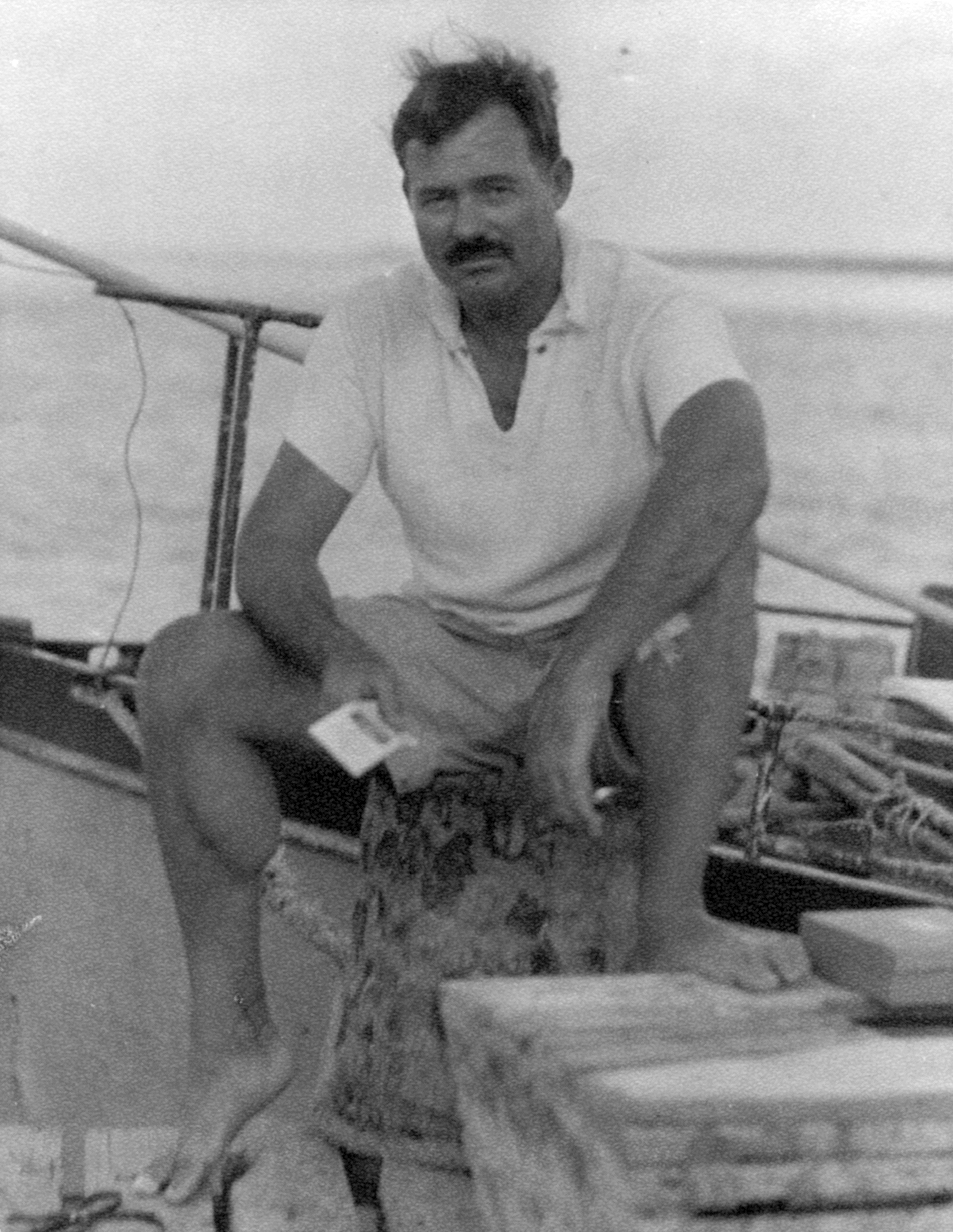
Hemingway (circa 1930)

By Mark E. Smith

Sure, they were both great posthumously. However, during their lives, Hemingway far outlived Fitzgerald – not just in age, but in truly living.

I mean, history shows their enormous accomplishments, both helping define 20th century literature, The Great Gatsby and The Sun Also Rises leading the way, respectively. But, Ernest Hemingway, he was relentless in living life on his own terms, while F. Scott Fitzgerald was about simply doing what he had to, concerned to a fault with what others defined as success. But, I’m telling you, by following the path that others defined as success, Fitzgerald was the far less successful of the two, not just in literary accomplishment, but, again, in life.

And, Hemingway told him so, constantly. Hemingway saw that Zelda, Fitzgerald’s southern socialite wife – who broke off their engagement once because Fitzgerald wasn’t earning enough money – was destroying Fitzgerald’s spirit, killing his writing with her own agenda and issues. Yes, Hemingway was married to Hadley Richardson at the time, but she was his equal and inspiration. For Hemingway, as much as he forever loved Hadley (although the divorced in 1927, and he had three subsequent wives) he’d never let anyone or anything interfere with his greatness as a writer. This isn’t to say that I’d live to that extreme. Of course I wouldn’t – my daughter, my significant other, my family as a whole, has to come before all. But, I wouldn’t tolerate a Zelda, either. Hemingway was right: if a spouse can’t let me be me, and support my passions as I support hers, there’s no room in a writer’s life, or anyone’s life, for that. That’s the equality that Hemingway had with Hadley, a striking contrast to the never-ending requirements for money and commercial success that Zelda demanded of Fitzgerald – and he ultimately required of himself.

So, here’s how it went down. Hemingway and Fitzgerald met in 1924, when Fitzgerald already had two novels published and countless literary magazine pieces, highly in demand as a writer. They were only three years apart in age, and while Fitzgerald focused his early 20s on trying to achieve critical acclaim, fame and money, Hemingway joined the World War I effort as an ambulance driver in Italy, where he was severely wounded, going on to serve as a war correspondent for the Toronto Star. Hemingway and Hadley ended up living in Paris because it was cheap and there was a bustling literary scene.

Now, I’m skipping a bunch here, but in 1924, Hemingway, pretty much unknown, meets Fitzgerald, a forever financially broke but known writer. And, Hemingway keys in on Fitzgerald as talented but disingenuous, but Fitzgerald takes to Hemingway, serving as a mentor into the literary scene.

In 1925, Fitzgerald publishes The Great Gatsby, hell-bent on fame and fortune. To the contrary, the book fails, earning Fitzgerald a mere $2,000 in entirety (it wasn’t till 20 years or so after his death that the book finally found its fame). Yet, Hemingway liked the novel – but despised Fitzgerald’s void of integrity as an author. Hemingway referred to Fitzgerald as a literary whore, where his quest for wealth and social status corrupted his writing. Fitzgerald all but noted this, explaining that all his pieces were written with authenticity, then altered toward commercial success. Yet, beyond writing for magazines, Fitzgerald ultimately had no fame or fortune as the 1930s came.

Yet, Hemingway, originally the literary lesser of the two, was solely about authenticity in writing. He only wanted to write what he wanted to write. Having seen merit in The Great Gatsby, but also a lack of integrity in its writing, Hemingway wanted to write a novel – his way. In 1926, Hemingway’s The Sun Also Rises was published – with input by of all people, Fitzgerald – but dramatically different than Fitzgerald’s work. The Sun Also Rises was a metaphor for hope during the post-war era, and was written in a Roman-a-clef style, based on real events and people. The book sold out of its first printing, then a second, garnering much attention, skyrocketing Hemingway’s career.

Between 1929 and 1940 (the year of Fitzgerald’s death), Hemingway’s career soared, publishing A Farewell to Arms, To Have And To Have Not, and To Whom the Bell Tolls. He traveled, observed, lived and just wrote it all. There was nothing humble about “Papa,” as Hemingway became known; however, there was great humility in his writing – it’s just humanity stripped. I mean, have you read Hills Like White Elephants? You’re there, at the train station in the Ebro River Valley of Spain, over hearing the kind of interpersonal conversation people have. No superfluous dialogue, no pretense – just real.

And, Hemingway stuck with this his entire life. He truly wouldn’t compromise, and once when he felt like a publisher wasn’t respecting his work, he sent them a purposely terrible manuscript, knowing that their rejection would terminate a lucrative contract. He needed the writing (and Hadley swore it was truly what kept Hemingway from committing suicide for over 40 years), not the money or fame Fitzgerald sought. Hemingway biographer, Pauline McLain wrote, “Perhaps his [Hemingway’s] true love could only ever be his work, which mattered more than living.”

And, that was Fitzgerald’s downfall. He was so caught up in image, success and money that he failed at all of it. Near his death in 1940, Fitzgerald was a then-forgotten author, living in Hollywood, writing terrible movie scripts (ironically, though, making $29,000 one year, the most he ever made). He’d lost the respect of his Paris peers of the ’20s, known as a washed-up hack Hollywood writer, where he even told his daughter that his life was a failure. Dead at age 44, the young writer with so much talent but drawn to not his own greatness, but the lure of material success, lost everything in the end – most painfully, his dignity, as Hemingway predicted as he tried to convince Fitzgerald in the late ’20s to quit whoring his work, drop Zelda and make it all about the writing.

Of course, we know that Hemingway carried on, with The Old Man and the Sea in 1952 winning the Pulitzer, and contributing to his winning the Nobel Prize for Literature.

So, why do I tell you all of this? Well, Hemingway and Fitzgerald prove a terrific cautionary tale for all of our lives. If we don’t wish to merely live, but to truly thrive, we can’t chase after the external forms of success – we will never catch it, but it will catch up with us. However, if we follow our passions with unyielding authenticity, the world will follow us, true success will come our way. Live true to yourself and your inherent greatness, and the world will prove true to you, where the only authentic voice is your own.