Hill Holders for Life

hill

By Mark E. Smith

In the realm of manual wheelchair technology, there’s a mechanism commonly called a “hill holder.” As you push up a hill, the hill holder works as an automatic, one-direction brake – the wheelchair can’t roll backward, only forward, allowing ultimate progress pushing up the hill. In fact, even on the steepest of hills, you can push forward, let your hands off of the wheels, and the wheelchair stays right where you want it, guaranteeing constant progress.

I often think that we need hill holders in life – emotionally, mentally, financially, physically, spiritually. We need a mechanism that prevents backward slides on our momentum. You’ve heard the saying, Two steps forward, one step back… well… that’s our hill holders not working.

No, if we’re to learn, grow, and succeed, we need hill holders firmly in place, where we only go forward in life, not backward. Have you ever paid off your credit cards, only to use them again? Have you ever struggled with an addiction, only to start again? Have you ever vowed to stay out of unhealthy relationships, only to get in yet another one? Have you ever vowed to diet and workout, only to overindulge and go back to being a couch potato? In whole, have you ever tried to make positive changes, forward momentum in life, only to end up going backward, to old patterns? Most of us have, for any number of reasons – returning to negative comfort zones, being scared of progress, low self-esteem… self-sabotaging roots. I know, I’ve been there, and still find myself there at times!

But, that’s where real life hill holders come into play – when things get tough, they keep us from going backward, from losing momentum, from throwing away great progress in our life.

I met an acquaintance who had completely turned around his whole life. He went from divorced, broke, alcoholic, and spiritually bankrupt to having a soul mate, a great career, not drinking, and becoming a pastor – all in about six years. Now, six years is a long time, but to make such complete, radical changes over any period is impressive. When I asked him his secret to success, he said that it started with personal accountability – the ultimate hill holder – but then he went the extra step and only surrounded himself with people who brought out excellent in him (even if we’re not savvy enough to catch ourselves off of track, let’s at least surround ourselves with those who care enough to catch us).

My acquaintance is a great example of installing hill holders in our lives. We may be compelled to go backward toward that which is bad for us – it’s easier to roll back down the hill than to push up it! However, if we do that, our lives never improve, and we never succeed. Instead, hill holders keep our forward momentum, where despite being scared or self-sabotaging or lazy, accountability and our support network kicks in to bolster our progress.

Be brave enough to use hill holders in your life, and you”ll achieve greater vistas than you ever imagined.
Palm Tree in the Wind

By Mark E. Smith

Indeed, my friend, I continue working on this thing called life – physically, emotionally, mentally. I’ve concluded that it’s all a bit like exercise. From the physical to the emotional, if we do nothing, life is effortless. However, such a no-effort approach is also the worst thing for us – we don’t grow, nothing changes, nothing gets easier, things just stay the same or degrade. Yet, like physical exercise, when we put in the effort to change ourselves for the better, we grow and become healthier – and life gets better. It’s the nature of personal growth: It takes effort, but the more we do it, the easier it gets – more intuitive, more natural – and the healthier we get.

I just spoke at the University of Scranton, and a student asked where I got my resiliency as a child? I couldn’t give an absolute answer other than there was something intrinsic in me toward facing adversity. I know that in changing our lives for the better as adults, we need a conscious desire to improve ourselves, as well as an innate inner capacity to accomplish it. There’s often a catalyst for conscious change – and I’ll get to that more in a moment – but the innate part is more complex.

I recently learned about the resilience of palm trees. While all other trees topple in hurricane force winds, the palm bows for hours in horrendous storms, then simply uprights to normal. Oaks, pines, maples, you name it, all topple – but not the palm. I think all of us are born as palms – that is, having utmost resilience – but for some, the roots are eroded by others, where hellish upbringings can kill our capacities to grow beyond the scars that were left. But, fortunately, I wasn’t one of those people whose spirit was ever lost or destroyed. I’ve weathered my storms, but my roots – my capacities to learn, grow, and change – stayed intact.

For a lot of years, I relied on my innate capacities to change and grow, but it wasn’t until the passing of both my parents due to their troubled lives that I truly understood the power of combining innate strength with the conscious desire to change, to move beyond their negative examples and live a better life for myself. It’s one thing to survive and get by; but, it’s another to thrive and do well. I guess with my parents’ deaths, I was able to shake away a lot of shadows, and truly work on moving beyond the pain of my past. It may be a shame that their passing liberated me in ways – that’s not how parent-child relationships should work – but it did put so much of the dysfunction to rest. I guess those who aren’t there anymore can’t hurt us – but the memories still can – and moving beyond both has been my goal for several years now.

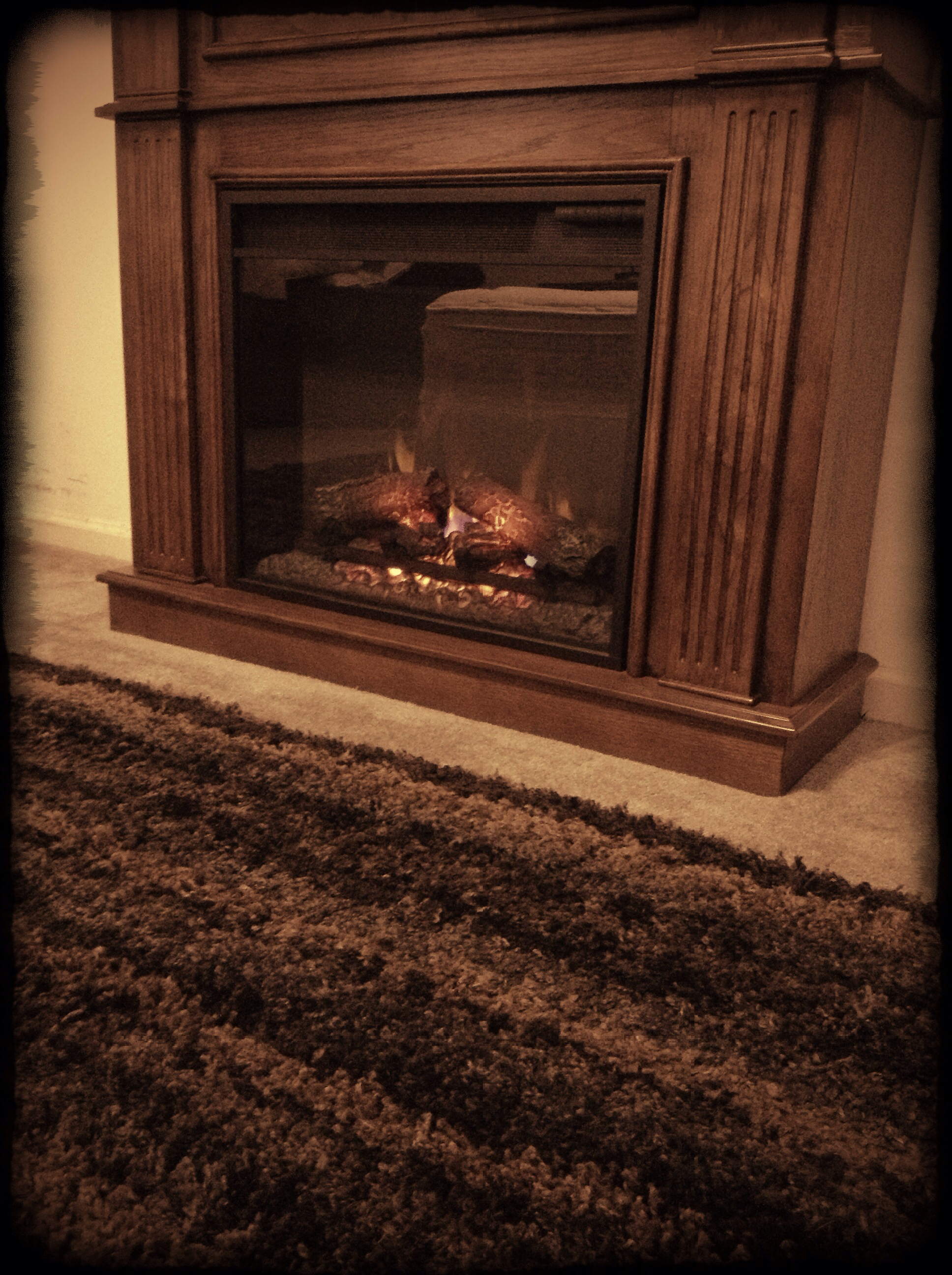
And, the newly-made memories are better these days, all of them. I added a fireplace to my master bedroom. No, it’s not a real one, but what they call “vent-free.” But it’s a beautiful mantel, with a realistic flame and logs, and heats the room with a toasty warmth and glow. I also picked out a thick, shag area rug that nicely frames my bed. It all cozies up my space, a tranquil one, where my daughter and I have nightly conversations about her life, my life, our life – life overall. She’s in driver’s education now, with her first formal gallery showing of her photography coming up, and a boyfriend who’s an Eagle Scout. So, there’s a lot to talk about around the fake fireplace and shag rug – warmth abound.

We recently went and saw The Perks of Being a Wallflower. It’s the movie adaptation from the 1990s novel by the same name. A central theme of the movie is, We accept the love we think we deserve, meaning that if we think we deserve little, then that’s what we’ll get, that we should all raise our expectations – in life and love. And, the movie was not lost on who we’re each striving to become, the wounds we’re each healing, the ever-rewarding effort that we’re each putting into loving, learning, and growing.

It’s said that if we don’t address the trauma of our pasts and heal, we statistically will relive it, making ourselves forever either a victim or a perpetrator – or both. If you were raised by an alcoholic, chances are that unless you make a conscious change, along with possessing the innate capacity to do so, you will marry an alcoholic, be an alcoholic, or, forbid, do both. This holds true for any trauma in our lives, where, again, if we don’t address it, we relive it – the only creature on Earth known by science that revictimizes itself. And, I’ve done it, now taking absolute accountability for choosing relationships where I simply found those who fit the mold of those I knew in my insanely dysfunctional upbringing – emotionally unavailable for any number of dysfunctional reasons. However, with my own value at stake – raising the bar on the health and love that I deserve, and breaking the cycle of dysfunction for the sake of my daughter – I continue working on myself, changing my own flawed programming, moving out of the shadows of my past and into the glow of my potential. And, like exercise, it’s been painful getting into shape, and it’s all just scary and confusing at times. But, I just keep working at it – the strength of a lone man just trying to do right.

And, so it’s around the fake fireplace and shag rug that I continue building an ever-inspired life of laughter, love, learning, and growth. Sure, it was once just my daughter and me in a house left both literally and figuratively empty by my ended marriage, repeated dysfunctional patterns from my childhood on. But, now there are new pictures on the walls, a fake fireplace, and shag rug that are just quirky enough to feel so right. Palm trees, my friend, do always find ways to right themselves – it just takes time.

It Happens for Us

By Mark E. Smith

I’m always intrigued when I hear people say, “Life isn’t fair.” It intrigues me because it’s simply never proves true in the long run. See, I’ve learned that while in the short term, bad occurrences – disability, divorce, job loss, addiction, you name it – can seem like they happen to us, they really ultimately happen for us – unexpected blessings that only come from adversity.

I remember in the mid 1990s, just such an example, where a terrible situation that initially happened to me, ultimately proved to happen for me, bettering my quality of life. I was in college and working, not making a lot of money, but enough to own my little 1,100-square-foot home in a borderline part of town. I felt blessed to own the home, but it was in no way ideal – it wasn’t fully accessible, and it needed a lot of expensive repairs. I couldn’t afford to replace the leaking roof, let alone renovate my bathroom to make it fully accessible.

To make matters worse, a big storm hit us, and although I lived on a hill, my side patio flooded, water pouring through the patio doors, filling my entire house with 6” of water. I remember the feeling of helplessness as I watched the water flow throughout my entire house within moments, destroying what little I had.

Soon, the water receded, and I was left with a horrendous muddy, soggy mess. The wall-to-wall carpeting was destroyed; the wall furnaces were destroyed; the sheet rock wicked moisture, needing dramatic repair; and, everything that was on the floor was soaked, from my wheelchair’s battery charger to my couch. I wasn’t sure how I could ever afford to repair my home, not having flood insurance.

However, while neighbors tore out my water-logged carpet and piled all of my destroyed goods on the lawn – my having no way to replace any of it – a FEMA claims inspector came along within a day or two. He assessed my property, and wrote me a several-thousand-dollar check on the spot. Within a week, I received another FEMA check, and with the help of my city’s building department, I was able to get a reputable contractor to start repairing my home.

But, here’s what’s amazing. As the city’s building inspector checked on my home’s progress one day, he noted my accessibility needs. And, within days, he had grant money for me to not only make my bathroom accessible, but to replace the roof and make other improvements. My home was ultimately in far better shape after the flood than before.

My point is, while the flood initially happened to me, it ultimately happened for me. A terrible occurrence was the catalyst for ultimate blessing.

If you truly look at the floods in your life – that is, the adversities that happen to you – you’ll clearly see that they are really happening for you in the end – winter always ushers in spring. I know, you may be thinking, Mark, bad thing after bad thing just keeps happening to me, there is nothing happening for me.

You need to look a little closer, that’s all – and you’ll see how turmoil always leads to triumph. Closed doors always become open doors. My dysfunctional upbringing didn’t happen to me, it happened for me, making me constantly strive to be a better father to my daughter. My ended marriage didn’t happen to me, it happened for me, placing me on a much healthier emotional path that’s brought greater levels of love, laughter, and contentment into my life. My cerebral palsy didn’t happen to me, it happened for me, instilling countless lessons within me as to the extraordinary potentials within all of us.

Really, we should each possess a bring-it-on! attitude, where we know that life plays its roles in magnificently mysterious ways, where vying always leads to victory, where turbulent times are merely life’s good graces getting ready to come our way. The next adversity that you face, remind yourself that nothing happens to you, but for you, where closed doors open, and a flood of prosperity and success are coming your way. Have faith and patience, and you’ll be amazed at how the tides in your life turn.

That Thing Called Integrity

By Mark E. Smith

I did an interview recently, and both the interviewer and my public relations manager both expressed that if any of the questions were too personal, I should feel free to not answer them. And, so I tried to figure out what would be too personal for me to publicly address?

And, I couldn’t come up with what would be too personal for me to publicly answer, especially because the interview was for a mobility industry publication. I mean, it’s not like they’d ever ask if I’ve had sex in my wheelchair, right? But, if they did, I’d pull a Bill Clinton, and ask for a clarification of terms – and then reply with a resounding, Yes, and then share every sordid detail of each encounter that I could squeeze in before my publicist wisely censored me. …So, I was 20, and in the all-girls dorm at Santa Clara University one night, dating this really hot Psych major….

But, alas, to me at least, the questions were strikingly normal – just questions about growing up with my disability. And, then it hit me: I suppose some people do view speaking of their disabilities as too personal to discuss in public. But, not me, and as I got into the interview questions, I had no qualms about answering them, to an as-honestly-personal level as I could.

See, I know that everyone has differing levels of comfort and privacy. But, if you’re going to put yourself out there, don’t hold back. And, I believe that if someone – or, a readership – is candid enough to ask you a question, you owe it to them and yourself to give a completely candid answer, even when a lump develops in your throat and you have to say what you’re going to say in one breath or the tears will start flowing. After all, if you’re not going to expose yourself completely – your heart and soul, fear and shame – you’re lying to everyone, including yourself. It all comes down to a greatly underestimated trait called integrity.

So, I worked my way through the questions with what I learned about Gandhi. He never planned a speech. What he said, felt, and did were so congruent that he spoke solely from intuition and heart. To each question, I just strove to give an authentic answer.

The interview went great, and not thinking much about it, I left the transcript on my kitchen table. My daughter and sister were hanging out that eve, and began reading through it, par for the course, till they got to one specific question and answer:

What do you know now that you wish you knew then?
That I am worthy of love. I mean, I still struggle with it, but not nearly as much as I did in my teens and twenties. My father, till the day he died, expressed shame toward my disability, and my mother always blamed my disability for their divorce (which occurred when I was a toddler). My mother was also a life-long substance abuser and experienced mental illness, so I took the brunt of that chaos, much of which she blamed on my having a disability, as well. So, when you add that into the normal teen equation of wanting to fit in – but not fitting in due to disability – it was hard for me to look at myself in the mirror at, say, 17. Based on a lot of work on personal growth, and raising my daughter, I’ve come a long way toward truly feeling worthy of love – but, admittedly, I still struggle with it at times.

“Wow, that’s really brave of you to publicly share,” my sister said.

“It’s not brave at all,” I said. “It’s just being honest.”

Wanna be a Rock Star?

By Mark E. Smith

At some point, one must get smarter about these things – I must get smarter about these things. At some point, unlike Peter Pan, we should all grow up.

I’m heading out on the road, with a jam-packed schedule – first Detroit, then Atlanta for Medtrade. They’re back-to-back trips, with one whole day home in-between, just enough to repack and catch-up with my daughter. It’s a nine-day stint in total.

After well over a decade of these types of trip, I’ve seen it all and done it all, and while it’s been a blast – and made for some great writing and tales to be told – at some point one has to put the work above all else, and dial down the after hours shenanigans for healthier pursuits like sleep. The goal isn’t to pride yourself on rock-starring it all night, then showing up for your gig on time the next day, but to prioritize your actual job at hand – and that means forgoing the whole rock-star part. It’s almost like there has to be humility to it all, where you just do your job, find something to eat, and go back to your hotel room for some reading and a full night’s sleep. No boozing, no parties, no chasing chicks – just a call home, shower, and eight hours of sleep. Is that the life of over-the-top stories and rock-star fantasies come true? No, but it’s a heck of a wise way to live if your career is a priority and you want to live by example for those around you – in my case, my teen daughter.

In Detroit, one day, I have an 8:00am corporate talk, then an 8:00pm keynote, more of a ruckus, rousing one-man show, introduced by one of Detroit’s top news anchors. I have to be up by 5:00am, knock the ball out of the park during the morning talk, then shift gears for a totally different gig that evening, where my energy level is through the roof. And, Medtrade is far more demanding yet, in that it’s a grueling schedule day after day, all week. Work like that, to the levels that I wish to perform, just can’t be done without a good night’s rest and sobriety.

I’ve written and talked about the highs and lows on the road, where the self-imposed chaos could take me from among the most glamorous scenes to the darkest of depression, the type of emotional roller-coaster that contributed to Vic Chestnut’s suicide. And, what I’ve realized is that it’s not the travel, or the work, or the scenes that cause such extremes, but the way we handle them – a loss of perspective and humility.

Sure, most want to be a rock star on the road, living clips of the lifestyle. But, the fact is, I’m no musician with throngs of fans, fueled by booze and chicks. Rather, I’m just a full-time single dad, trying to make a living while making a difference, where good work and clean living is a boring truth. My goal is to do my jobs, move on to the next city, and get home to just being Dad and cleaning my bathroom.

Five-by-Seven

The smell doesn’t change – it hasn’t for over 100 years. It’s the smell of urine, feces, body odor, musty hair. And it fills the halls, where it permeates everything within its path – it’s the smell of despair, stripped humanity, the ever-slowly-wasting-away of souls. It’s where some of us visit, some of us live, and too many of us die.

I am, of course, describing residential care facilities for those with physical disabilities – or, more aptly, institutions. Over the 100 years, the common verbiage has changed from asylum, to home for incurables, to institution, to residential care facility. Yet, beyond a name, fundamentally, nothing has changed – not the facilities, not our cultural practices, not even the smells. Those with disabilities still line the halls, locked away from society in literal five-by-seven-foot rooms that have fewer amenities than a prison cell – not even a commode of their own. What you’ll see is a twin bed pressed against the wall, a dresser, a TV, and a common cardboard box with one’s worldly possessions. Nine years, a woman with multiple sclerosis told me she’d been in her room – and I looked at the windowless walls of degraded paint, and thought to myself, Nine years of starring at blank walls absorbing her dignity, humanity, sanity. Nine years dying an emotional death, where she’s treated with less dignity than a convicted murderer on death row.

Now, it’s easy to point fingers and blame the mainstream for still accepting institutionalized care, still locking those with physical disabilities behind stone facades while the rest of the community drives by in luxury cars, never giving a thought to who’s hidden away in that “historic” building. And, it’s easy for families to convince themselves that it’s what’s best for their Billy or Diane, those who have severe physical disabilities, whose families know not else what to do.

However, I hold myself to a much tougher standard, knowing that I, too, am to blame. See, with a flip of a coin, I could have spent my life in a five-by-seven-foot room, where my humanity was stripped, and I wasted away, never to be known. As I tour institutions today, I see not those who should be there, but those just like me if a simple call had been made or the right question asked, where my severe disability and ultimately neglectful parents should have landed me in an institution. But, like missing a flight by moments, later to learn that it crashed, I didn’t end up in an institution. Instead, I went on to college, career, and family – a normality I could have easily never known. And, for those of us with disabilities living independent, upper-middle-class lives, we’d like to think that it’s due to our hard work or perseverance. But, it’s not. It’s just happenstance and luck, where the only difference between us and them was a cosmic coin toss, a stroke of luck that flung us down one path instead of the other, saving our lives while those just as worthy as us – our exact image – weren’t so fortunate.

And, with that reality – that the only factor that prevented me from being institutionalized due to disability was a random, cosmic coin toss – I struggle to live with the guilt and shame that consumes me: What have I done to help any of my peers who remain locked away? Who am I to sleep soundly at night in my custom home, on Egyptian cotton sheets, while my peers lay in a degraded five-by-seven-foot room, on soiled bedding, starring at windowless walls, their lives absorbed by the stench of it all? Who the hell am I to have escaped the death sentence of an institution, and not have had the presence of mind to go back and carry even one of my peers out on my shoulders?

Where Love Grows

By Mark E. Smith

The Hayes stop by my company once per year, either on their way to Maine in May, or on their way back to North Carolina in September. Snowbirds, they are.

I have no idea exactly how long they’ve been married, but I’d guess 45 years, based their age, as well as having three grown grandchildren. And, they’re madly in love – and it’s contagious to everyone around them.

And, so, it’s no surprise that when Mrs. Hayes was diagnosed with multiple sclerosis years ago, Mr. Hayes took an early retirement, and dedicated himself not just to his wife’s eventual full-time care, but also toward doing an astounding job of continuing with their dream retirement, going between North Carolina and Maine.

I’ve been in a unique position in that I’ve seen snapshots of Mrs. Hayes’ progression, yearly glimpses into her loss of function, to the point this September that she can only move her head a bit. Yet, what would seem like bittersweet annual visits are actually uplifting, a true lesson in life – and love.

See, despite the progression of multiple sclerosis, the Hayes simply seem happier every time I visit with them – projecting a contentment, zest, and love for life we should all be blessed with. And, it’s intrigued me to the point that I’ve striven to define what they intrinsically know that many others don’t, how they simply get happier the tougher life gets?

What I’ve determined is a profound truth: They continually inspire each other.

Think about how many couples we know with everything to be thankful for – health and wealth – but all they do is bicker and disrespect each other. There’s no admiration or inspiration seen in each other – just two unappreciative people, living a devalued life.

However, the Hayes are different. They know that the other is putting 100% into life, the marriage, and everyone around them – and are so inspired by each other that they each give more and more. The result is a cumulative effect, where it’s like inspiration squared, admiration compounded, love volleyed back and forth that just grows and grows and grows.

And, so there are two questions that the Hayes teach us to ask in our own relationships: Does our partner inspire us, and are we inspiring our partner?

If the answer is, yes, then we are doing everything right, living an ultimately-fulfilled life of truly reciprocating love – a love that just grows and grows and grows.

However, if we’re in a relationship where we’re not mutually inspired with our partners, then we need to make changes for the better – starting with ourselves, allowing ourselves to inspire and love fully.

Yet, the ultimate lesson that the Hayes teach us is that we don’t have a limited reservoir for inspiration and love. Rather, we have the unique capacity for boundless inspiration, where love doesn’t merely exist, but can constantly grow.

Just Jump!

By Mark E. Smith

OK, I know what you’re thinking: Mark’s back in Vegas again? Publicly, I guess it does seem like I’m in Vegas a lot, but really it’s only a few weekends per year. …OK, so, yes, I’m in Vegas again – but I love this place! And, this time is different, namely because I’m with my girlfriend and our two daughters – sort of like the Brady Bunch, minus four kids, Alice, Sam the Butcher, and Cousin Oliver. But, really, we’re in Vegas for a three-day weekend on a much more serious note: Personal growth as individuals and as a group.

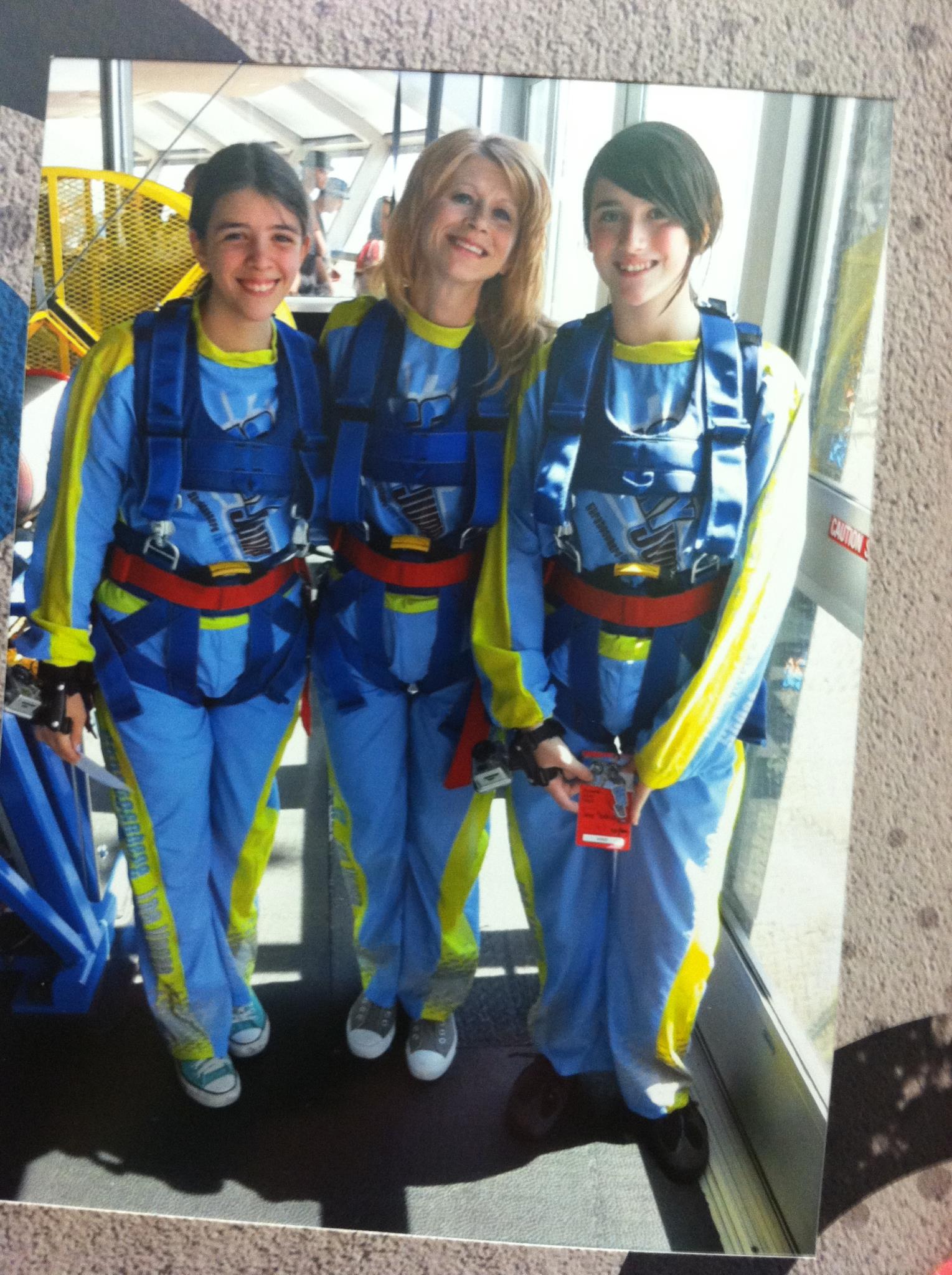
Our daughters are moving toward 14 and 16, mine being the older. It’s a pivotal time in their lives, where we want them to be empowered, to know their amazing potentials as strong, poised, confident young ladies. In this messed-up culture that sends airbrushed, cosmetically-enhanced messages that no woman is ever good enough, we say, nonsense – every woman is more than enough, perfect as-is, capable of whatever she dreams. And, this is why we’re in Vegas, encouraging our daughters to step of the 108th floor of the Stratosphere, plummeting 855 feet to the ground.

…Well, maybe I should clarify the jumping off of the building part. See, the Stratosphere, on the outreach of the Vegas strip, is a replica of Seattle’s Space Needle. The only real difference is that if you jump off the Space Needle, you die; whereas, with the Stratosphere, you’re perched on a ledge, wearing a harness, and as you leap, control cables guide you safely to the ground, slowing you to your feet at the end. Yet, despite the safety factors, stepping off of that ledge on the 108th floor, 855 feet off of the ground, and virtually free falling, takes a huge amount of courage and confidence. And, I explain this to our girls at dinner the night before:

At points in our lives, we each find ourselves perched on a ledge. If we have the courage to jump – maybe it’s a career step, or starting or ending a relationship, or any aspect of life that requires us to stretch our comfort zone – we grow. However, if we don’t have the courage to make those leaps, our lives stagnate, we go nowhere. Both of you girls are doing an amazing job in school, with huge life potential ahead of you. But, you’ll need to take leaps of courage along the way to do it. Let the literal Stratosphere SkyJump be a lesson in life, where you’ll carry it with you, knowing that you have the courage and strength to take big leaps in life whenever needed….

After the jump, I tell the girls how proud of them I am, and they share how the scariest part was preparing for the jump, that once they summoned the courage to step off of the ledge, the liberation of flying through the air was amazing.

Really, for all us, no matter our backgrounds or challenges, there’s a lesson to be learned here, isn’t there? Success in all areas of life is all but guaranteed, as long as we have the courage to take initial leaps out of our comfort zones. A lot of times challenges are easy, but stepping off of the ledge, into a seemingly new territory is the hard part. Yet, when we summon the courage to simply step off of the ledge, our lives always move to the next level. As I told the girls, just jump!

Raising Expectations

By Mark E. Smith

At this writing, my daughter is in her first week of the 10th grade. It’s unquestionably the most pivotal point in her academic career – and, make no mistake, the expectations are set high.

See, the 10th grade is where colleges begin looking at grade-point averages, curriculum, and extra-curricular activities toward college admissions – and, again, make no mistake, their expectations are set high, where they want the best of the best.

However, it’s really not the universities’ expectations that matter; rather, it’s my daughter’s expectations that matter. My daughter’s self-expectations will determine how well her school year – and ultimately all of high school – goes toward college admissions. So, wisely, she has set her expectations high, too. Her grade-point average can’t be below 3.8 and, ideally, should be a perfect 4.0 or higher (honors classes can increase it). Her expectations aren’t to cruise through high school with no forethought, but to expect nothing less than to remain at the top of her class.

Yet, here’s what’s interesting about my daughter: She’s not an intellectual genius or such – just a regular 15-year-old who happens to know that whatever expectations she sets create her success.

It’s truly a lesson for all of us: What we expect is typically what we achieve. Set low expectations for yourself, and you’ll receive dismal results. Set high expectations for yourself and you’ll achieve amazing results. My great-grandmother always said, “It’s just as easy to love a good man as it is a bad man, so why not love a good man?” Really, she was hitting at the heart of self-expectation – what you pursue is what you get, so pursue the best.

In the disability realm, I can tell you for a fact that self-expectations play the single largest role toward successful living. I’ve known those with the severest of disabilities, and those with minor disabilities – and while physicality should dictate that those with more severe disabilities should have a tougher plight, that those with minor disabilities should be more successful, it simply doesn’t prove true. We see some with minor disabilities wallowing in life, while those with sever disabilities achieve amazing success. It becomes evident, then, that the single key factor between success and failure is self-expectation. If one with a minor disability believes one’s life is over, it is – low self-expectation achieve low results. However, if one with high self-expectations believes one can accomplish anything, one can – again, high self-expectations accomplish high results.

The key, then, is for all of us to look at each aspect of our lives, and ask ourselves the vital question of, Am I setting my expectations high enough? I mean, Am I pursuing the career I’m capable of; am I pursuing the relationships I’m worth of; am I being the best parent that I can be? Most importantly, Am I setting my expectations high enough in all aspects of my life to achieve the high results I’m worthy of and that those around me deserve?

Of course, increasing our self-expectations can be scary at first. If we expect little, then there’s no risk of disappointment, right? Going back to my daughter, if she had low expectations toward her grades, a D wouldn’t matter. However, because her expectations are to achieve a 3.8 grade-point average or better, a D would be devastating. But, setting low expectations to avoid feelings of failure is flawed logic. Sure, if you have low expectations, you’re less likely to be disappointed by any failure; yet, that’s only because you’re setting yourself up for failure! Setting high self-expectations may seem like a risk for failure – and it sometimes can be in the short term – but in the long term, it’s the only true guarantee for success. Again, what we expect plays a key role in what we achieve, so simply raising our self-expectations – and putting effort toward it, of course – will bring success. Put simply, there’s nothing but risk in low expectations, as we will fail; however, there’s virtually no risk in high expectations because it ensures success at some level.

Let us each raise our self-expectations in all aspects of our lives, and live to those standards. Why? Because we’re each worth it.

Living as Josh Does

By Mark E. Smith

Twenty-one-year-old Josh has been an increasingly remarkable spirit in my life since I met him four years ago. I’ve never known a young person with such wisdom and insight, making our recent conversation par for the course based on Josh’s amazing character.

Josh was diagnosed in his adolescence with a very progressive form of muscular dystrophy. However, unlike many others with his prognosis, the disease didn’t progress as rapidly as usual – that is until approximately two years ago. In fact, when I first met Josh, he was still walking, using a mobility scooter for longer distances. Yet, in the last two years, the disease caught up with him, dramatically diminishing muscle tone. I’ve seen Josh go from drinking from a soda can normally, to struggling to lift it with two hands; and, I’ve seen Josh go from walking to not being able to transfer himself from a power wheelchair.

Make no mistake, the physical realities of Josh’s condition are disheartening. But, the lessons learned and the personal growth that’s resulted from his challenges have been inspiring, teaching us both invaluable lessons along the way.

Josh and I have traveled a lot together, working trade shows, summer camps, and advocacy events. We’ve lobbied the halls of Capitol Hill, and rock-starred it in Los Angeles. However, the heart of our friendship has been formed from our weekly phone calls, where every Thursday, Josh and I talk on the phone, tossing around subjects ranging from relationships to dealing with disability to music. My role is supposed to be that of mentor, but Josh has so much wisdom and is so reflective of the struggles and victories that we all face, that I often think I learn more from him than he does from me.

One of Josh’s recent victories – and a process that we talked about for many months – was his driving independently via an accessible van. After a year and a $120,000 in technology, Josh now independently drives a van with ultra-high-end hand controls that are closer to resembling those that control an airplane more so than a car. And, for his first long-distance drive this summer, he drove 3-1/2 hours to vacation at a lake where he vacationed often as a child.

When we spoke the week after his vacation, he explained to me that the trip was ultimately a realization for him: Most of the activities that he could do as a teen – boating, fishing, and so on – were no longer feasible or easily accomplished, that he realized in very real terms the progression of his condition.

I, of course, asked how he felt about his sudden realization of the progression of his condition? And, his answer was a lesson for all of us. Josh explained that what realizing how much his condition has progressed made him intimately understand is the importance of making the most of today because we don’t know what tomorrow brings.

I couldn’t have been prouder of Josh’s insight because it demonstrated a perspective that we should all live by: Being bitter or regretful of our pasts – or of what’s seemingly been lost – is pointless. Valuing our present – no matter the circumstances – is truly what it’s about.

Moving well beyond disability, think about how many of us dwell on past relationships, childhood trauma, lost jobs – you name it – where rather than accepting, healing, and evolving to live fully in the present, we just get stuck in the past. Josh could have likewise gotten caught in the past, returning home bitter as to what his condition has done. Instead, he recognized the past as just that – gone, done, over – and was even more inspired to appreciate whatever abilities that he has today. It’s kind of like rather than dwelling on how bad your past relationship was, you focus on how great the current one is – that’s how you move forward.

And, if there’s a single lesson that Josh teaches us, it’s to live in the present, simply appreciating all that we have today.