Life Vows

20151010_174902-2

By Mark E. Smith

We’ve all heard at least some version of among the most traditional wedding vows in modern western culture:

I offer you my solemn vow to be your faithful partner in sickness and in health, in good times and in bad, and in joy as well as in sorrow. I promise to love you unconditionally, to support you in your goals, to honor and respect you, to laugh with you and cry with you, and to cherish you for as long as we both shall live.

And, for those among us who are married, ideally we live up to those vows, at minimum.

However, here’s an intriguing question – why don’t we practice such vows toward ourselves, as individuals? Put simply, why are we so reluctant to apply such unconditional love to ourselves? Why don’t we consistently honor ourselves in sickness and in health, in good times and in bad, and in joy as well as in sorrow, loving ourselves, supporting ourselves in our goals, to honor and respect ourselves, to cherish ourselves?

I see the struggles of this every day, on a multitude of levels, from family to friends to within the community. Countless life experiences can throw us into emotional tail spins, where our identity – namely, self-worth – degrades. Why is that? After all, when someone we love faces challenges, we embrace, love and respect them. We’re remarkably unconditional when it comes to applying the practice of vows not just toward our spouses, but toward everyone around us. Yet, we’re not so generous toward ourselves, are we? We can see the beauty in others, but not ourselves. We can note the strength in others, but not ourselves. We can compliment others, but not ourselves. And, alas, we can love others unconditionally, but not ourselves.

A lot of this is conditioned into us, whether by a society that suggests it in so many ways – from airbrushed models in magazines to the notion of thinking highly of oneself is “arrogant” – or by being emotionally abused and convinced we’re not worthy. In fact, a startling statistic in the U.S. is that 60% of us have been emotionally abused to a degree that diminishes our self-esteem. When we add all this up, it’s clear that we live in a society where little priority is put on valuing “oneself” in sickness and in health, in good times and in bad, and in joy as well as in sorrow. The fact is, many of us are conditioned to not feel good enough, no matter the circumstance.

And, it has to stop. We owe it not just to our spouses and others to practice vows of unconditional love and acceptance, but to ourselves. None of us are perfect, but why not commend ourselves for trying our best at what we do? We don’t invite adversity in our lives, so why not allow ourselves to recognize all is not our fault? We all have weaknesses, but why not be proud of our strengths? No one is better than another, but why not embrace our uniqueness? We love others, so why not love ourselves?

As one who’s struggled with all of the above, I can tell you that making that shift – that is, making the vow to love and honor yourself in sickness and in health, in good times and in bad, and in joy as well as in sorrow – doesn’t just improve your life, but also everyone’s life around you. When we humbly understand all that we are worthy of, it makes it so much easier to smile and offer all of us to others in ways that enrich the lives of both.

I know it’s extremely difficult to heal all of the wounds that blur our vision to how amazing we each are, how the words of affirmation we hear from those who know our beauty somehow don’t appear to us in a mirror. And, yet, the true “us” is there, to love in sickness and in health, in good times and in bad, and in joy as well as in sorrow. Yes, it’s in honoring such vows toward ourselves that not only elevates our lives, but it’s also the key to elevating our vows toward all others. Let us vow to love and cherish – including ourselves.

Don’t Give Up The Ship!

dontgiveup_2

By Mark E. Smith

At this writing, my daughter is at rehersal with seven other speakers as they prepare for the next TED event in exactly one week. TED events gather the world’s best speakers throughout the year, filmed in front of a live audience, then they put the talks on TED.com where each talk reaches a global audience – typically in the millions of views. At 19, my daughter is among the youngest speakers TED has ever had. No, she’s not a PhD or a leading professional in any field. So, how is it she’s been chosen to not just speak at TED, but be the opening speaker, setting the tone for the event?

The answer is, she knows the subject. The theme of the event is don’t give up the ship – and she knows that well. In fact, it’s that very philosophy toward facing adversity that has gotten her not only to remarkable paths in life, but also to the literal stage of TED.

See, while it’s historically a maritime battle cry, what don’t give up the ship is really about for all of us, just as with my daughter, is how adversity is a solidifying force in our lives, teaching us to weather storms with strength and grace. So many who have never faced adversity understandably assume it a destabilizing force – and it initially is when we first face it. However, once we face adversity, we recognize it as an equalizing force. From that point on, it’s our ballast that adds remarkable stability to all aspects of our lives. Life occurrences that might throw others into a tailspin suddenly seem manageable, if not minuscule, because our understanding of adversity intrinsically gives us clarity and perspective to handle the really tough stuff.

In these ways, experiencing adversity adds ballast to our lives that allows us to weather storms with amazing strength. And, when it comes to not giving up the ship, having previous experience in adversity is our best skill set at the helm. Let adversity not be our deterrent, but our guide, and never give up the ship!

Cerebral Palsy and Cigarettes

cigarettes

By Mark E. Smith

I don’t believe in self-confidence or ego. Those can waiver, be swayed or mislead us. What I believe in is self-comfort.

See, self-comfort is when we truly accept who we are, as we are, to the core – mind, body and soul. We’re comfortable with ourselves beyond all else. It doesn’t mean we’re full of ourselves or delusional. It simply means we know who we are, from the inside, out – and live as such.

And, it makes life so much easier and successful. Rather than wasting energy on trying to be what we’re not or invest in the opinions of others, we can simply thrive by being who we are. With self-comfort, we know our value, we know our favors and our faults, and we work with it all. Life need not be a struggle; it can be as easy and graceful as a leaf drifting in a breeze.

Being a teenager with cerebral palsy taught me this lesson young. I remember being a freshman starting high school, wanting to squelch every spasm, correct every slur in my speech – an overall fantasy of being someone I could never be. I had unbelievable anxiety on the first morning of school that year. The last person I wanted to be was “the kid with cerebral palsy” at my high school. I did an awesome job at covering up all my insecurities, though, by creating the most ridiculous smoke screen – literally. …I took up smoking.

At my high school, in those days, there was a smoking section, and as long as you could score cigarettes, you could smoke. So, as the initial weeks passed, I slowly merged in with the “tough crowd” in the smoking area After all, when it comes to insecurities, there’s strength in numbers. I bought a black leather jacket and biker boots out of the Sears catalog, stuffed my chest pocket with a Zippo lighter and a Marlboro Hard Pack, and my insecurities flipped into rock-solid confidence. Again, self-confidence and ego can fool even ourselves. In my insecure, skewed mind, however, I was a bad-boy in a power chair – right down to smoking Marlboros, no less.

However, as the school year went on, I realized that I didn’t need to be a so-called tough guy. As my classmates of all sorts embraced me, cerebral palsy and all, I didn’t need to hide behind a smoke screen or facade. I could just be me. I was a teenager with cerebral palsy, and if my peers accepted it, why shouldn’t I?

Ultimately, I gave up cigarettes, and fell in with the general crowd, focusing on my grades, girlfriends, and just being me, spasms, slurred speech and all. And, life was so much easier when I was comfortable truly being me. …But, I wore the leather jacket and motorcycle boots all the way through graduation because …well …they were awesome.

Why I Stopped Jumping Power Chairs

(Click image to enlarge)

By Mark E. Smith

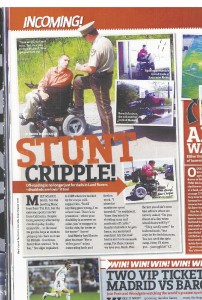
In my 20s, I achieved notoriety for jumping power wheelchairs off of ramps. To see a guy with cerebral palsy rev up a power wheelchair and jump it off of a ramp, a few feet in the air, was quite the spectacle. For me, it was a mix of misguided bravado, showmanship and stupidity. Unfortunately, though, it worked.

See, although I had overcome and was accomplishing a lot – I was a formal academic and writer at the time – people seemed mildly interested in any of that. But, the power wheelchair jumping, which I cringe to think now as a bit of a freak show, was an attention magnet. Before I knew it, I was featured in big-time magazines, and due to the advent of the Internet, I became widely known as “the guy who jumped power wheelchairs.” Soon, my reputation was bigger than I ever imagined, labeled by one men’s magazine as the “Stunt Cripple” – and my identity fractured.

There was no talent or point in jumping power wheelchairs. It, again, was a shameless spectacle. And, it surely wasn’t who I was. There was so much more to my life and accomplishments. Yet, a single aspect was defining me by reputation. I began to feel boxed in – and I wanted to be who I really was, instead of a one-dimensional caricature.

Many of us have found ourselves in such an identity crisis, haven’t we? We find ourselves in the situation of who others project us as isn’t who we are. In my case, it was admittedly of my own doing, but so often misconceptions, projections or circumstances by others can leave us feeling boxed in. No one should be defined by one dimension; rather, we should be seen in our entirety.

Now, my example of falling into an identity trap is a unique, ridiculous one – stupidity reigned – but it wasn’t the end of the world for my life and career. In far more serious examples, some of us have been boxed in to identities who we’re really not – and it’s been painful and extremely detrimental. How many of us have been in relationships where we felt obligated to act as someone we’re not? How many of us have been stereotyped based on our ethnicity, religion, sexual orientation, disability, and so on? How many of us have been labeled based on where we live, what we do for a living, or even how we dress? Indeed, most of us at some point have felt our entirety stripped down to a single trait that doesn’t just make us seem one-dimensional, but may not reflect us at all. The vital question is, how do we avoid that trap?

In some cases, we can’t. We may inevitably encounter stereotypes and ignorance that we can’t control. However, we can control our own behavior and teach people how to treat us. I recently did a big press conference in the New York City metro area. With a podium full of microphones, a row of TV cameras and a crowd of people, I don’t think a person in the room expected me to take the podium. After all, when’s the last time you saw a guy with severe cerebral palsy and a speech impairment command a press conference? But, I wasn’t going to let others’ perceptions or my disability define me. I made it clear that I’d take the podium – and I ended up on the NYC ABC affiliate’s 6 o’clock news that night holding the press conference.

We don’t have to be boxed in by ourselves or anyone else. With a little courage and a lot of introspection, we can most often avoid one-dimensional identities we misguidedly create or are thrust upon us by others. People call me a lot of titles nowadays – General Manager, writer, advocate, humanitarian, intellectual – but there’s one title that taking control of my own actions and identity buried a long time ago: Stunt Cripple.

Forgiving – Ourselves

forgive

By Mark E. Smith

Among the hardest endeavors of the heart we ever make is to forgive – ourselves.

Although we live with the best of intentions, with tremendous purpose, we’re bound to make mistakes. When we’re on top of our game, the mistakes are small – maybe no one notices but us. However, when we’re not so mindful of how our actions effect ourselves and others, the mistakes can be life-altering, not just for us, but for those we love. In both cases, making mistakes can weigh on us like an anchor, keeping us submerged in shame, guilt, and self-doubt. In a way, we lose trust in ourselves, just as we imagine others lose trust in us.

However, the fact is, while those who care about us and love us are typically very forgiving, the person who most often takes the longest to forgive our mistakes is oneself. Shame and guilt are powerful emotions, not easily shaken. Yet, if we are to move beyond our mistakes, we must truly forgive ourselves. It’s not just the ultimate in humility, but also accountability.

See, when we refrain from self-forgiveness, we’re holding on to our mistake, like carrying a boulder everywhere we go. But, there’s no corrective action involved, just self-punishment. In contrast, in order to forgive ourselves, we have to deeply acknowledge our mistake and grow to trust in ourselves that we won’t make that mistake again. We must allow ourselves to give into ultimate humility. We must allow ourselves to accept ultimate accountability. Those acts of honesty and courage are the cornerstones of self-forgiveness.

Author Stephan Richards writes about self-forgiveness, “When you initially forgive, it is like letting go of a hot iron. There is initial pain and the scars will show, but you can start living again.”

In this way, the ultimate mistake we can make in life is not to offer forgiveness – to ourselves.

Straight, No Chaser

thelonious-monk

By Mark E. Smith

I’m sure as a younger child I questioned it all. But, by adolescence, I was just me, and there was no room for me or anyone to question it. I mean, it was questioned – who I was because I was different, my disability seemingly made me different – and it would occasionally sting in the moment. However, I ultimately understood I was who I was, I am who I am, let’s get on with this.

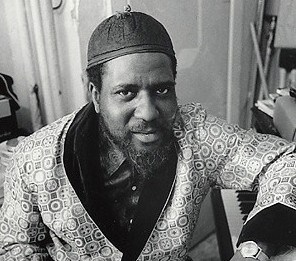
The jazz great, Thelonious Monk, was of that spirit, too, long before I was born. During the 1940s through the 1960s, when you had the greats like Duke Ellington, Miles Davis, John Coltrane, Dizzy Gillespie, Charlie Parker and Billie Holiday evolving Jazz in a linear form, Monk was innovating on the piano in ways no one had ever seen.

Monk was first and foremost a composer, with musical eccentricities that few could follow. Improvising was a staple of jazz in that era, but his obsession with improvised composition on stage made him a lone wolf, where he didn’t care what the band played or what the audience wished. Monk simply followed his passion key by key, note by note, reveling in what he discovered in the moment, oblivious to all around him. Often, the only queue to what he was playing was his right foot keeping time. He just played as him, and whether the world followed didn’t matter. John Coltrane said, “Working with Monk is like falling down a dark elevator shaft,” and Miles Davis for a time refused to play with Monk due to Monk’s defiance toward staying in line with the rest of the band. In the refined world of jazz performance, Monk was also known for stopping playing mid song, getting up to dance alone as the rest of the band played on. Indeed, Monk was Monk, and he wouldn’t meet arbitrary norms.

In the process of being him, Monk ultimately lived an obscure but free life, where beyond his immediate circle, he was generally unknown during his career, never getting the fame of his contemporaries. Yet, in the process, he composed an astounding body of recorded work, only second to Duke Ellington. Monk largely disappeared from 1971 till his death in 1982, struggling with mental health issues along the way. Posthumously, he was granted a Pulitzer Prize for his body of work, and is subsequently now known as among the greatest jazz composers and musicians of all time.

How many among us just want to be themselves, follow their hearts and passions regardless of what anyone else thinks? Yet, many don’t out of fear of rejection or not fitting in. For all of us, Thelonious Monk left us with striking words of wisdom: “I say, play your own way. Don’t play what the public wants. You play what you want and let the public pick up on what you’re doing – even if it does take them fifteen, twenty years.”

Let it Rain

adversity

By Mark E. Smith

Some had a limited life expectancy. Others had experienced life-changing injuries. While still others we’re born into it. All faced exceptional adversity, which made sense, as it was an expo for those with disability.

However, as I was surrounded by over 5,000 individuals that weekend facing adversity, I realized that the confidence, comfort and joy that many – not all, but many – exuded aligned with what I learned long ago: adversity dramatically improves our lives when we embrace it.

For those who haven’t experienced adversity or embraced it, they find fear in it and have sympathy toward those who live with it. For those of us who have experienced and embrace adversity know the remarkable role it serves in our lives. Our experiences have taught us that adversity shouldn’t be avoided, but actually welcomed.

See, adversity forces us to face problems and situations that are too big to resolve. In my situation, no one can change, fix or cure my cerebral palsy. And, because of that, it’s forced me to learn and grow in order to succeed in living with it. Think about what an extraordinarily fortunate situation that is to be in. Yes, we can grow without adversity, but like adding weights to a workout, adversity is a rare force that can fuel wisdom, inner-strength, understanding and perseverance, to name a few life-enhancing traits. Adversity, then, isn’t meant to restrict, but empower.

I realize that for some, adversity as empowerment is a ludicrous thought. After all, how is being seemingly down on one’s luck a positive in any way? Worse yet, when you’re down and you see someone in your situation who’s happy, that can be the perfect recipe for bitterness. But, again, if we view adversity with acceptance, we will intrinsically grow. If we embrace adversity, the challenges within will cause us to rise.

As the late singer, Prince, prepared to perform the Super Bowl half-time show, the producer called to tell him it was raining, convinced that Prince couldn’t or wouldn’t perform. Prince replied, “Can you make it rain harder?”

Prince ultimately performed among the most iconic concerts of all time, later noting that that caliber of performance could only be achieved when facing such adversity. That which he couldn’t resolve – the weather – elevated his performance.

There’s the notion in our culture that adversity is to be avoided, feared, that it’s tragic, life-detracting, that it’s asinine to even suggest welcoming it into our lives. However, that’s all gross misconception. The fact is, adversity allows us the remarkable opportunity to extract dignity from difficulty, strength from struggle, power from pain. That is, adversity allows us to not just rise in the rain, but it empowers us with the understanding that the harder it rains, the more we can rise.

Turning Off Autopilot

autop

By Mark E. Smith

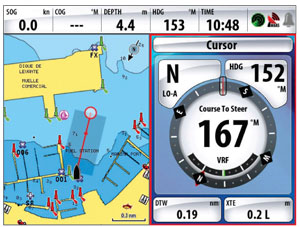
I’ve spent a lot of my life around two areas – boats and dysfunction – and what I’ve learned is that in either case, if we’re not careful, “autopilot” will fail us.

See, living in dysfunction is a lot like being aboard a boat running on autopilot – we’re not questioning or changing, but continuing on a haphazardly set course. And, as waters worsen or dangers approach, if we don’t take control, our boats – read that, our lives – will collide with them in the most harrowing ways.

For me, taking life off of autopilot has been a very personal process. As one raised in a dysfunctional family, I only knew what I knew, and my emotions were on autopilot for a long time. Turning off that autopilot proved harder in some ways than others.

Alcoholism, addiction, poverty, and a lack of education were all fairly easy for me to avoid because my awareness was so blatant. When I had welfare Christmases, parents with ninth-grade educations, and an unbroken family lineage of alcoholism and addiction, it was fairly obvious that our family’s autopilot was a disaster in full swing, cruising in the Oblivion Sea.

For me, turning off autopilot started as young as 10, but really by my teens I saw my life set on a course for collision and I took control of the helm. I saw everyone around me literally dying from living on autopilot, and I knew I had to turn that monster off for myself. Once aware and assuming conscious control of my life, I steered around the many dangers my family collided with. However, I was fortunate in that aspect – that I somehow had the understanding to do so – where I empathize with how difficult it becomes for many to turn off autopilot the longer we’ve unwittingly been on it, often from birth. It’s simply not as easy as my words read to break cycles of dysfunction, to turn off autopilot.

And, emotionally, I absolutely remained on autopilot for quite some years. Again, for me, getting off of autopilot has proved harder in some ways than others. I grew up knowing that those who loved me also hurt me, so love and hurt were intertwined. My head was off of autopilot – sober and successful – but my heart was still running its course. And, so I found myself in relationships of all sorts – from marital to sibling to friendship – that hurt, that as the psychobabble calls it, were toxic. It’s what I knew, what I grew up in, and continued living. That’s the sinister beauty of autopilot – once you’re on it, it continues on a course without any effort by you.

Awareness, though, once again proved my switch to turning off autopilot. Once I was aware that my heart was on autopilot, steering me into collision after collision, all my relationships changed. Some I just cut off; some I set healthy boundaries; and some I started anew with healthy individuals.

I’m still not perfect at any of this, and never will be, but every once in a while, when the autopilot that I grew up in intrinsically kicks in, my awareness takes the helm in a reflex type action, where I’m able to quickly correct and stay on a healthy course.

Through what I’ve lived and learned, I see among the greatest gifts that we can give others is the truth that they can break cycles of dysfunction, turning off autopilot. There’s a big difference between preaching from the mouth and speaking from the heart. I believe in speaking from the heart, and when a young person at risk in my circle was recently running on autopilot – it’s what they grew up in, escaped, then were thrust back into it based on a traumatic chain of events – I took the time to remind them of how far they’d come, to be aware that although understandably they’d temporarily returned to autopilot, awareness was what would keep them emotionally safe – that is, regrasping the helm and steering a healthy course.

Now, it’s not possible for everyone to just turn off autopilot and get their lives moving in healthy directions. We know of the medical effects that alcoholism, addiction, and mental illness have on those immersed in those conditions. These aren’t autopilots that just turn off. But, for the rest of us – and especially youth in our families and communities at risk – the ultimate intervention isn’t once there’s no turning off autopilot, but acknowledging our vulnerabilities to it early on, and elevating our awareness to the point that we turn it off and truly take control of our lives in healthy ways before life is spiraling beyond our control.

The fact is, we have no choice in how the dysfunction of autopilot gets turned on in our lives – typically, we’re born into it or trauma ushers it in. However, when we’re aware that it’s been turned on and we are running on it or at risk of running on it, that’s the time to turn it off. See, turning off autopilot removes continuing living the pain of our pasts, and allows taking the healthy helms of our futures. May you and I chart the healthy course our lives are meant for.

The Success of Being You

kermit

By Mark E. Smith

If you look back at the GOP primaries of 2016, an interesting dynamic occurred at one point. There were two candidates – Marco Rubio and Donald Trump – with very different dispositions. Rubio was historically one of a positive message, while Trump was much more aggressive. And, both personalities had their place, per voters. Some were drawn to Rubio’s personality, while others were drawn to Trump’s.

Going into the Florida primary, the state was arguably up for grabs. It was Rubio’s home state, giving a candidate typically an advantage, but Trump, a known businessman in Florida, had very strong poll numbers.

However, the week of the primary, a lot changed. While Trump stayed with his aggressive messaging, Rubio made an abrupt change with his. To supporters’ dismay, Rubio went from his typical messaging to very aggressive, Trump-like messaging. And, it contributed to costing Rubio the primary.

See, voters wanted the Marco Rubio they’d always known, not a candidate who suddenly engaged in Trump-like aggressive rhetoric. By all accounts, Rubio becoming someone he wasn’t proved a catastrophic mistake.

Of course, there were a lot of other dynamics – some going back years – that cost Rubio Florida, but by most political observers’ accounts, his trying to be someone he wasn’t in the final week was the tipping point for Rubio’s loss.

The whole situation reminds me of our personal lives, how miserably we fail when we try to be someone we’re not – and worse yet, the toll it takes on us.

Outwardly, we can seem ridiculous in trying to be someone we’re not. A buddy of mine is one of the kindest, most sincere guys you’ll ever meet – the kind of gentleman many women would fall for in an instant. But, he has it in his head that he has to be a “cool player” when it comes to meeting the ladies, transforming into a cologne-drenched show-off who’s… well… ridiculous. The female friends in our circle have told him the simple truth: being yourself attracts others, not trying to be a studly caricature.

When we’re outwardly trying to be someone we’re not, we mostly risk embarrassment – or not getting dates in my buddy’s case! However, when we’re trying to be someone we’re not on the inside, it’s painful at best, self-defeating at worst. When I began dating my wife, I put my best foot forward, but I also vowed to myself – and ultimately her – that I wasn’t going to hold any aspect of myself back. If she fell in love with me, great. But, if any aspect of who I am chased her away, it would be my loss, but at least I was honest in the process. Nowadays, when we’re in the kitchen and I’m admittedly letting my twisted sense of humor fly, sometimes to her dismay, I have the ultimate defense, “You knew who you were marrying!”

Imagine, though – or maybe you’re there now – how painful it is not to be able to fully express yourself out of fear of rejection by those you love. Think about what it’s like to be in a family dynamic or relationship where you don’t feel safe expressing who you truly are. We know clinically that when we keep aspects of our identity bottled up, rates of depression, low self-esteem, substance abuse, and even suicide all skyrocket. Not being ourselves can literally be dangerous. Marco Rubio lost an election; but, Tyler Clementi lost his life when he jumped off of the George Washington bridge due to the shame he felt from being outed as gay.

None of this need be – and it’s a two way street. We must have the courage to just be ourselves, and we likewise must create an interpersonal dynamic where we welcome others to be themselves. In living such an open life, just think of how easy, comfortable and fulfilling it all becomes, where you can just be you. A Chinese proverb puts it best: Tension is who you think you should be. Relaxation is who you are….

That Man – Spoken Word Video

Transcript:

That man. That man. No Sam I am, but I am a minority, rolling with authority, living life proudly as who I am – because, man, I am that man.

No, I’m not a misfit, but a paradigm shift, where when the world says I can’t, and I say screw you, Captain Sulu – because I can. Man, I am that man.

Like a two-dollar bill oddity disband, I can thrive and jive – on the dance floor, had a boombox back in ’84 – and the band plays on and on and on like the wheels rolling on my chair, wind blowing in hair. Because, man, I am that man.

There’s no price of admission – disability isn’t a curse or condition – it’s just the way it is, say it like it is, live it as it is – screw those with ignorance, where what some call a hairdo is really just friz. Because, man, I’m that man.

Bold and determined, bulldozing like a tank named Sherman, I am a minority, and I’ll use my authority to make the world stand on end – screw you, I refuse to pretend who I am, because I’m proud to be me, all that you see – shout it, cerebral palsy – because, man, I am that man.