Days of Powdered Milk

powdered-milk

By Mark E. Smith

People keep asking me about the recent issues – actually, I don’t even know what to call them – at The Scooter Store, leaving a reported 1,800 people out of work on “furlough,” many in a region of the country where jobs are hard to come by.

As I’ve explained to a few, I don’t know any more about the situation than what’s been posted on news outlets. However, what I do know is that I feel deeply for the employees and their families. See, these are 1,800 hard-working Americans, doing jobs as phone operators, data processors, delivery drivers, and virtually every other honest position one can hold. They are moms and dads, some single parents, some working their way through school, most paying bills on Friday and going to church on Sunday. Indeed, for me, there’s not a story about The Scooter Store, but 1,800 stories, ones of how the rent will get paid, ones of keeping gas in the car, ones of, How do we survive as a family from here?

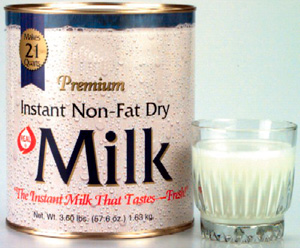
I truly don’t know precisely what the 1,800 families of The Scooter Store are going through, as I have a good-paying career and don’t need to worry about rent or gas these days. However, I come from a very humble background of being poor at times as a child – I remember being in food lines with my mom to get big boxes of government powdered milk and blocks of cheese – and it’s stuck with me my whole life, never wanting to go back to that. And, so, I can only imagine how scary this time is for the 1,800 families of The Scooter Store, including their children.

Beyond the fear of being broke and hungry, I also relate to the all-American work ethic that most of The Scooter Store employees personify. Folks are sometimes kind to note my talent based on the volume of my career, but it’s truly an allusion. Really, at the heart of what I do is simply an intense work ethic, where I keep my mouth shut, my head down, and do the best possible job I can in any given situation. And, I learned long ago to never say no to any type of work, no matter the task or amount – because that’s what it takes to survive. Nashville for a conference? Sure. L.A. for the Abilities Expo the next week? Of course. All of my other duties, and working on a book at the same time? Not a problem – I’ll do it all. I don’t care how heavy the work load, how tough the independent travel, how exhausting the schedule, I’m just grateful to have the work. And, I forever watch, listen, and learn as I go.

See, when you know where you come from – just poor – and you know that you can go back to that at any time, and the only line between then and now is hard work, you work really hard, like your life depends on it – because it does. Mine does.

Disability experience teaches us all a lot in that way, where often all we have to get us through is pure tenacity, and when we rely on that, it’s really all that we need. Talent and luck can get you so far, but just good ol’ back-breaking hard work is among the truest keys to not just surviving but thriving. And, when something doesn’t work out, you’re ready to employ Plan B, C, and D, doing whatever it takes.

My brother is presently a great example of a life fueled by tenacity and back-breaking work. He’s a master tile setter, living in a very expensive part of the country. In order to afford a home for his family, he lives three hours from the city where he works. He gets up at 2am, six days per week, drives three hours to work, sets tile all day, then drives three hours home – generally just to go to bed and get up and do it again. So, why does he do it? Well, he knows the value of hard work and keeping the lights on. We were in government food lines together, and he never wants to go back there, either. He couldn’t afford to give his wife and daughters the lifestyle he wished in the city, so he moved where they could afford, making remarkable personal sacrifices in the process. He’s no genius or extraordinary talent; rather, he’s just working really, really hard.

And, for the 1,800 employees of The Scooter Store, who worked really, really hard, and now find themselves wondering how to pay the rent and keep gas in the car, my sentiment is this: Let’s not allow these families to get lost in a news story about whatever becomes of The Scooter Store; rather, let us each remind ourselves where we come from, and how scary it would be to be out of work, maybe even waiting in a food line for government boxes of powdered milk and blocks of cheese. Most of all, let’s keep those 1,800 Scooter Store employees in our prayers.


The Power of Choice

choice

By Mark E. Smith

I recently had the pleasure of speaking to a very large group of diverse professionals – executives, CEOs, managers, and small-business owners.

In a rapport-building exercise, I asked the group to be open and trusting, and by a show of hands, how many of them felt that 2012 was a great year for them? Two of us – yes, I was one of them – raised our hands.

I then asked how many people had a terrible year in 2012, and it was a sea of hands in the air, with seemingly everyone raising their hands.

Then, I asked how many people had an in-between year in 2012, and three people raised their hands.

There was a fairly round number of attendees at the conference, of diverse backgrounds and occupations, and what I realized was that, mathematically, 95% of them raised their hands that they’d had a terrible year.

I went on to do my talk about “recognizing the treasure within each of us,” and then we had a question-and-answer session. And, as is my ultimate blessing and privilege, the program went fantastic, where from the host to attendee surveys, I was noted as the highlight of the conference.

Yet, as my publicist and good friend, Haley, and I got in my van, starting it to leave, I asked, “How is it that 95% of those participants had a terrible year?” It really did trouble me, where I wanted to go back and learn each person’s story. I mean, I know all of us go through tough – sometimes, hellish – times in our lives, so there undoubtedly is more pain in the lives of those around us than we realize. I can only imagine how many people in that room experienced a painful relationship, illness in the family, financial troubles, depression, and on and on during 2012. Yet, to have 95% of a large audience tell me they’ve had a terrible year truly saddened me.

Interestingly, just prior to that conference, I’d read that 63% of Americans feel that the best is past, that only worst times are to come – a record high of discouragement in our country today. Again, I know that these are tough times for many, but the lack of hope and optimism is downright alarming.

All of this reminded me of the hellish times in my life – from the petty like riding my power wheelchair to work in horrible snow storms, to the more serious like finding my mother with her wrists slit on my 10th birthday, to my sister having cancer, to being in painful relationships, and so on – but I don’t recall having what I would label an outright bad year, not to mention a bad week (a bad day, here or there, but that’s to be expected). There’s always some blessing – yes, even during hellish times.

So, what was it that made 2012 a great year for me, as opposed to 95% of my peers that day? Gratitude and personal growth. Sure, I can make the year sound terrible, too: As a full-time single father with cerebral palsy, with the economy in the dumps, and my sister having another cancer scare, the year had its challenges. Yet, while I acknowledged each adversity, I chose not to let them define my year. Instead, I had a great year. My daughter’s doing extremely well, there’s a special lady in my life, I still live totally debt free, my sister is healthy, and I maintain rewarding work. No, my life isn’t easy on the daily basis, but in the larger picture, all is blessed. Why focus on the trying times of 2012, when there’s so much to be thankful for?

And, that’s where all of this ties together. While we can’t control many circumstances that bring adversities into our lives, we always retain the ultimate ability to address them: Are you going to choose to focus on defeat or victory, the challenges or the successes, the curses or blessings? You have the power to choose the perspectives in your life – we all do.

And, it was Haley who raised a great point that day. Maybe the 95% of people at that conference who declared having a terrible year were only thinking of the bad, not the blessings? Despite some adversities, surely there were great moments in all of their lives in 2012 – they were just choosing to focus on the negative, albeit even if just being put on the spot with my question.

For the New Year, I hope more of us employ the conscious power of choice – that is, choosing to focus on the positives. The fact is, focusing on the negative stalls us, while focusing on the positive empowers us. When we’re negative, we dwell; when we’re positive, we accomplish. …And, we know which gets results and inspires us. The power of choice isn’t rocket science.

We’re all going to face adversities in 2013, and of course we should acknowledge and address them. I’m not saying pretend that adversities don’t exist – they do, and the only way to resolve them is to address them. However, rather than hyper focusing on only the negatives in a situation – or, forbid, our whole lives – let us focus on the positives. I’ve never encountered an adversity in my life where there ultimately wasn’t opportunity or blessing. It hasn’t always been immediately evident or timely, but truly, even the worst times of pain have brought my life to higher levels of opportunity and blessing.

So, how do we shift toward the positive powers of choice? …By consciously looking at the positives, and moving our perspectives in that direction – it’s that simple.

Maybe you’re entering the New Year with a relationship on the rocks because you’re both dwelling on the negatives. Get on the same page as a couple, remind each other why you fell in love in the first place, and choose as a team to focus on those positives – don’t settle for an end when you can reignite the beginning. Choose to keep learning, growing, and loving.

Just because the economy is down, doesn’t mean you have to be down – choose to focus on the positives and opportunity – and look for them where you wouldn’t expect. A college buddy of mine was an executive at the country’s largest newspaper chain, but was laid off a year ago based on changing times. He’s been out of work ever since, but has volunteered with Habitat for Humanity, filling his time of adversities with efforts that bless others, having now helped build dozens of homes for those in need. Nevertheless, his actions weren’t always so selfless. His ultimate dream for years was simply to own a Ferrari, loving the car when he finally bought it in 2008. He called me not too long ago and said, “Mark, I have great news – I sold my Ferrari.”

I was puzzled because he loved that car, and it was a dream realized, so how was selling it great news?

“That car was a double blessing in disguise,” he told me. “When I bought it, it was my most prized possession, and when I sold it, it was a true blessing – that car just paid my daughter’s college tuition when I couldn’t have afforded it.”

My friend didn’t look at dreams lost by having to sell his beloved car based on job loss, but he saw dreams realized by using it to pay his daughter’s tuition. He chose to look at the positive in what those who were more superficial may have seen as a disappointment.

Of course, we’re not islands, and those around us have a huge impact on how we see the world and feel. Part of the power of positive choice is choosing who’s in our lives and how we deal with them. In my life, I’ve made big strides over the years to avoid those who bring negativity and drama into my life. I want reciprocating relationships of inspiration – and I’m striving to be that person, as well. If we’re around lousy people, with bleak outlooks, who are emotional and psychological vacuums, we’re going to get sucked into what Dave Ramsey calls the “language of losers,” people who are so negative that they just pull us down. Instead, we should surround ourselves with champions, those who ooze positivity and are our peers in positive outlooks. People who pump us up – who are excited about life – are who we should choose to have around us, just as we should do for others.

With 2013 right around the corner, I still have no idea what it has in store for me. I’m betting that there will be adversity – I don’t know in what form, or how severe, but it will be there. Nevertheless, I’m also betting that I’ll get through it with strides, as I always have, knowing that adversity is always lined with opportunity and blessing. Join me in choosing the power of positivity to make 2013 among our best years ever, regardless of what it brings.

Hill Holders for Life

hill

By Mark E. Smith

In the realm of manual wheelchair technology, there’s a mechanism commonly called a “hill holder.” As you push up a hill, the hill holder works as an automatic, one-direction brake – the wheelchair can’t roll backward, only forward, allowing ultimate progress pushing up the hill. In fact, even on the steepest of hills, you can push forward, let your hands off of the wheels, and the wheelchair stays right where you want it, guaranteeing constant progress.

I often think that we need hill holders in life – emotionally, mentally, financially, physically, spiritually. We need a mechanism that prevents backward slides on our momentum. You’ve heard the saying, Two steps forward, one step back… well… that’s our hill holders not working.

No, if we’re to learn, grow, and succeed, we need hill holders firmly in place, where we only go forward in life, not backward. Have you ever paid off your credit cards, only to use them again? Have you ever struggled with an addiction, only to start again? Have you ever vowed to stay out of unhealthy relationships, only to get in yet another one? Have you ever vowed to diet and workout, only to overindulge and go back to being a couch potato? In whole, have you ever tried to make positive changes, forward momentum in life, only to end up going backward, to old patterns? Most of us have, for any number of reasons – returning to negative comfort zones, being scared of progress, low self-esteem… self-sabotaging roots. I know, I’ve been there, and still find myself there at times!

But, that’s where real life hill holders come into play – when things get tough, they keep us from going backward, from losing momentum, from throwing away great progress in our life.

I met an acquaintance who had completely turned around his whole life. He went from divorced, broke, alcoholic, and spiritually bankrupt to having a soul mate, a great career, not drinking, and becoming a pastor – all in about six years. Now, six years is a long time, but to make such complete, radical changes over any period is impressive. When I asked him his secret to success, he said that it started with personal accountability – the ultimate hill holder – but then he went the extra step and only surrounded himself with people who brought out excellent in him (even if we’re not savvy enough to catch ourselves off of track, let’s at least surround ourselves with those who care enough to catch us).

My acquaintance is a great example of installing hill holders in our lives. We may be compelled to go backward toward that which is bad for us – it’s easier to roll back down the hill than to push up it! However, if we do that, our lives never improve, and we never succeed. Instead, hill holders keep our forward momentum, where despite being scared or self-sabotaging or lazy, accountability and our support network kicks in to bolster our progress.

Be brave enough to use hill holders in your life, and you”ll achieve greater vistas than you ever imagined.

It Happens for Us

By Mark E. Smith

I’m always intrigued when I hear people say, “Life isn’t fair.” It intrigues me because it’s simply never proves true in the long run. See, I’ve learned that while in the short term, bad occurrences – disability, divorce, job loss, addiction, you name it – can seem like they happen to us, they really ultimately happen for us – unexpected blessings that only come from adversity.

I remember in the mid 1990s, just such an example, where a terrible situation that initially happened to me, ultimately proved to happen for me, bettering my quality of life. I was in college and working, not making a lot of money, but enough to own my little 1,100-square-foot home in a borderline part of town. I felt blessed to own the home, but it was in no way ideal – it wasn’t fully accessible, and it needed a lot of expensive repairs. I couldn’t afford to replace the leaking roof, let alone renovate my bathroom to make it fully accessible.

To make matters worse, a big storm hit us, and although I lived on a hill, my side patio flooded, water pouring through the patio doors, filling my entire house with 6” of water. I remember the feeling of helplessness as I watched the water flow throughout my entire house within moments, destroying what little I had.

Soon, the water receded, and I was left with a horrendous muddy, soggy mess. The wall-to-wall carpeting was destroyed; the wall furnaces were destroyed; the sheet rock wicked moisture, needing dramatic repair; and, everything that was on the floor was soaked, from my wheelchair’s battery charger to my couch. I wasn’t sure how I could ever afford to repair my home, not having flood insurance.

However, while neighbors tore out my water-logged carpet and piled all of my destroyed goods on the lawn – my having no way to replace any of it – a FEMA claims inspector came along within a day or two. He assessed my property, and wrote me a several-thousand-dollar check on the spot. Within a week, I received another FEMA check, and with the help of my city’s building department, I was able to get a reputable contractor to start repairing my home.

But, here’s what’s amazing. As the city’s building inspector checked on my home’s progress one day, he noted my accessibility needs. And, within days, he had grant money for me to not only make my bathroom accessible, but to replace the roof and make other improvements. My home was ultimately in far better shape after the flood than before.

My point is, while the flood initially happened to me, it ultimately happened for me. A terrible occurrence was the catalyst for ultimate blessing.

If you truly look at the floods in your life – that is, the adversities that happen to you – you’ll clearly see that they are really happening for you in the end – winter always ushers in spring. I know, you may be thinking, Mark, bad thing after bad thing just keeps happening to me, there is nothing happening for me.

You need to look a little closer, that’s all – and you’ll see how turmoil always leads to triumph. Closed doors always become open doors. My dysfunctional upbringing didn’t happen to me, it happened for me, making me constantly strive to be a better father to my daughter. My ended marriage didn’t happen to me, it happened for me, placing me on a much healthier emotional path that’s brought greater levels of love, laughter, and contentment into my life. My cerebral palsy didn’t happen to me, it happened for me, instilling countless lessons within me as to the extraordinary potentials within all of us.

Really, we should each possess a bring-it-on! attitude, where we know that life plays its roles in magnificently mysterious ways, where vying always leads to victory, where turbulent times are merely life’s good graces getting ready to come our way. The next adversity that you face, remind yourself that nothing happens to you, but for you, where closed doors open, and a flood of prosperity and success are coming your way. Have faith and patience, and you’ll be amazed at how the tides in your life turn.

Play In Pain

By Mark E. Smith

At this writing, hurricane Sandy is bearing down on us, and it looks like I have to ride home in my power wheelchair in rain and 40mph winds. And, I’m totally fine with that – no big deal. Now, I have other options, but they seem illogical to me. I have over 400 hours of accumulated time off, so I could have stayed home, or even worked from home. Or, I could call someone to bring my van and pick me up. But, why would I do either of those? Schools are closed, and people are hunkering down with storm supplies, but a little discomfort – or, a lot – never persuaded me to stop from doing what’s best for me and those who count on me, like my going to work like any other day, regardless of a supposed looming hurricane.

We live in culture where too many people seem to resist “playing in pain,” sidelining themselves from the game of life, albeit due to emotional, physical, or mental challenges. It’s as if why try when you can just give up? There’s a storm brewing, so let’s cancel school. I’m sick, so I’m not going to work. My boyfriend broke up with me, so I’m going to sleep all weekend. I lost my job, so I’m just going to sit around the house….

No, just because bad things happen doesn’t mean that we throw in the towel, give up on ourselves, make excuses, or stop our lives. Rather, in times of adversity, we should pick up the pace. They make rain gear to weather storms, and when storms hit our own lives, you might say that rather than run and hide, we should don our rain gear – that is, our inner-strength – and head into the storm, head on. After all, weathering storms is how we grow and become stronger.

The next time you find yourself with the two options of adversity – to play in pain with pride, or seat yourself on the sidelines of life with pity – don your rain gear and head into the storm, with courage and tenacity. Choose to “play in pain,” and you will come out stronger.

The Disability-Technology Continuum

By Mark E. Smith

From my CEO to my life-long best friend, a conversation keeps popping up that’s quite fascinating. It’s what I’ve coined “The Disability-Technology Continuum.”

The disability-technology continuum, as I’ve defined it, is an extremely simple yet profound concept. It’s the fact that technology literally makes us less disabled – that is, it improves upon virtually every aspect of our lives, that when we have appropriate technology, our abilities and quality of life expand.

I can use the disability-technology continuum as a prime example in my own life toward how it works and its ultimate results. Imagine there’s a scale from 0 to 100. Zero is totally disabled, as in bed-ridden, and 100 is totally independent. Without a mobility device, I’m at 0 because, based on my disability, I’d be bed-ridden. However, if I have a manual wheelchair, my functionality increases to, say, 30 on the continuum. Yet, with a power chair, now I may be at, say, 60, and with an elevating seat added, I’m bumped up to 65. You get the idea: appropriate technology increases independence, lessening the impact of disability.

Of course, many aspects move one along the disability-technology continuum. Mobility equipment, computer technology, adaptive transportation, and accessible housing, to name a few, all play key roles in moving us from the bottom end of the continuum toward the upper end – and it’s near the upper end where aspects like education, employment, and community involvement skyrocket. And, as we move up the continuum, we don’t just win, everyone wins, as our independence benefits many, where we simply can contribute more toward society.

All of this, however, requires exactly that – societal support, where, culturally all understand the importance of supporting moving others up the disability-technology continuum. See, technology can only get those with disabilities so far. It’s societal support and acceptance that both allow and complete the disability-technology continuum. Technology can physically liberate those of us with severe disabilities, but, make no mistake, we need a society that fosters that process.

Smashed-Up

By Mark E. Smith

For the third time, U.S. Airways luggage handlers have dropped my power chair from around eight feet in the air (off of the top of the conveyor belt near the cargo door). Fortunately, that particular power chair is like a Timex watch: After two years of use, travel, and being dropped from the conveyor belt three times, it takes a lickin’ and keeps on tickin’!

But, not without battle scars, of course. I mean, when a 300-something-pound power chair falls from eight feet onto the pavement, bad things happen. This time, the power chair landed with such a blow that it actually twisted – not bent, but twisted – some seriously-stout metal structures, destroying an armrest and back cane. Still, the power seating system and power base are fine, ready for more flights (and drops). And, because I’m part of my own power chair company, yes, I am a bit more fortunate than others because I can piece it back together, cover up the gashed areas with black paint, and be off to the next event in real time. Still, in the moment, I’m as stuck as anyone would be at the airport with a smashed-up power chair – not a good feeling or scene.

However, here’s what I really don’t understand: A bunch of people saw my power chair fall off of the conveyor belt – clearly smashed-up – and no one acknowledged it, pretending that it never happened. This time, someone parked it, tweaked as heck, at the gate counter (rather than bringing it to the plane door like they should), and the gate agent came down to the plane door, simply telling me that they couldn’t bring my chair down because it wasn’t working. Duh – it took an 8-foot tumble to the tarmac!

I really appreciate the hard work that the luggage handlers perform – it’s back-breaking, in weather extremes, for not a lot of pay. I also understand that they’re not trained to handle mobility devices, nor is the equipment that they use designed for loading and transporting a big, heavy object like a power chair. However, on a deeper level, how have the airlines created a culture of no responsibility? Call me naïve, but where are accident reports and such? How can a company’s employees and procedures damage customer property without any sort of personnel accountability? Sure, a damage claim can be filled, but that doesn’t resolve the systemic issue of zero accountability among employees – they literally can destroy your property, and no one cares. And, the slight cynic in me wonders if the airlines have determined that it’s more cost effective to just pay an occasional claim than to train personnel and create procedures?

A portion of my career involves flying, and the highlights of my life have been traveling with my teenage daughter the past few years. So, despite a bad track record, and undoubtedly more challenges to come, the rewards of air travel far outweigh the risks and consequences.

Yet, I’d still feel better if I could just fly somewhere without worrying if I’ll be mobile when I land?

Living as Josh Does

By Mark E. Smith

Twenty-one-year-old Josh has been an increasingly remarkable spirit in my life since I met him four years ago. I’ve never known a young person with such wisdom and insight, making our recent conversation par for the course based on Josh’s amazing character.

Josh was diagnosed in his adolescence with a very progressive form of muscular dystrophy. However, unlike many others with his prognosis, the disease didn’t progress as rapidly as usual – that is until approximately two years ago. In fact, when I first met Josh, he was still walking, using a mobility scooter for longer distances. Yet, in the last two years, the disease caught up with him, dramatically diminishing muscle tone. I’ve seen Josh go from drinking from a soda can normally, to struggling to lift it with two hands; and, I’ve seen Josh go from walking to not being able to transfer himself from a power wheelchair.

Make no mistake, the physical realities of Josh’s condition are disheartening. But, the lessons learned and the personal growth that’s resulted from his challenges have been inspiring, teaching us both invaluable lessons along the way.

Josh and I have traveled a lot together, working trade shows, summer camps, and advocacy events. We’ve lobbied the halls of Capitol Hill, and rock-starred it in Los Angeles. However, the heart of our friendship has been formed from our weekly phone calls, where every Thursday, Josh and I talk on the phone, tossing around subjects ranging from relationships to dealing with disability to music. My role is supposed to be that of mentor, but Josh has so much wisdom and is so reflective of the struggles and victories that we all face, that I often think I learn more from him than he does from me.

One of Josh’s recent victories – and a process that we talked about for many months – was his driving independently via an accessible van. After a year and a $120,000 in technology, Josh now independently drives a van with ultra-high-end hand controls that are closer to resembling those that control an airplane more so than a car. And, for his first long-distance drive this summer, he drove 3-1/2 hours to vacation at a lake where he vacationed often as a child.

When we spoke the week after his vacation, he explained to me that the trip was ultimately a realization for him: Most of the activities that he could do as a teen – boating, fishing, and so on – were no longer feasible or easily accomplished, that he realized in very real terms the progression of his condition.

I, of course, asked how he felt about his sudden realization of the progression of his condition? And, his answer was a lesson for all of us. Josh explained that what realizing how much his condition has progressed made him intimately understand is the importance of making the most of today because we don’t know what tomorrow brings.

I couldn’t have been prouder of Josh’s insight because it demonstrated a perspective that we should all live by: Being bitter or regretful of our pasts – or of what’s seemingly been lost – is pointless. Valuing our present – no matter the circumstances – is truly what it’s about.

Moving well beyond disability, think about how many of us dwell on past relationships, childhood trauma, lost jobs – you name it – where rather than accepting, healing, and evolving to live fully in the present, we just get stuck in the past. Josh could have likewise gotten caught in the past, returning home bitter as to what his condition has done. Instead, he recognized the past as just that – gone, done, over – and was even more inspired to appreciate whatever abilities that he has today. It’s kind of like rather than dwelling on how bad your past relationship was, you focus on how great the current one is – that’s how you move forward.

And, if there’s a single lesson that Josh teaches us, it’s to live in the present, simply appreciating all that we have today.

Getting Away with Murder

By Mark E. Smith

When she shouted, “Quick, get his gun!” I should have known it all would go downhill from there….

This all started with a group of us anchored in an empty cove, sunbathing on my boat after an afternoon of swimming. I was stretched out on a front lounge when I heard the sirens, poking my head up to see a patrol boat coming toward us, lights flashing – water cops, we call them.

I sit up, and my crew looks puzzled, the water cop pulling beside us. “Is everyone alright onboard?” he asks, shutting off his engine.

“Uh, yeah,” everyone says at once. We’re a mix of parents, teens, and toddlers, kicking back in 85-degree weather. The stereo isn’t even on.

“May I have permission to board?” the water cop asks.

“Absolutely,” I say.

With his boat loosely tied to mine, the water cop jumps from his fore deck, on to mine. And, in the process, his handgun tumbles from its holster, bouncing off of the front boarding deck of my boat.

With kids onboard, and not wanting the water cop’s gun to fall in the lake, my friend screams, “Quick, get his gun!”

But, the water cop doesn’t know he lost his gun, and reaches for his empty holster in an immediate panic. “It’s by your feet,” I say.

He picks up his gun, puts it in the holster, and snaps it shut, regaining his composure. “Has anyone been drinking today?”he asks.

“No,” everyone answers.

“Whose vessel is this?” he asks.

“Mine,” I reply.

“What year were you born?” he asks, and glances at my wheelchair sitting behind the helm, then back at me.

“1971,” I reply, knowing that my age exempts me from needing a boating license. “But, I have my boater’s license, Coast Guard Auxiliary certification, and Auxiliary boat certification. And, my daughter over there has her Red Cross CPR and water certifications. Want to see all of them?”

“No, you’re fine,” he says, leaning over my wheelchair to read both the gauge on my helm-mounted fire extinguisher, and the tag on my throwable floatation device – required safety gear.

“How long is this vessel?” he asks?”

“Twenty-two feet,” I reply.

“Well, it’s good that the kids are wearing life vests,” he says, knowing that they legally don’t have to wear them all of the time on a boat this big.

“I need to see an emergency life vest for every adult on board,” he says.

Everyone stands up, opens all compartments, piling the deck with 20 assorted life vests – all high-quality ski vests, not cheap orange ones. “Why do you have so many vests,” he asks.

“I entertain a lot, so I have a few in every size,” I reply.

“Smart,” he says. “Do you mind if I look under the rear sundeck?”

“No,” I say, and my daughter and her friend scoot off of it.

The rear sundeck opens into a changing room that contains a commode, as well. The water cop fumbles around trying to open it, but no one gives him advice. Finally, he opens it, seeing the commode sitting there, the compartment otherwise empty. He shuts the sundeck, and returns to midship. “Did anyone have difficulty swimming today?” he asks.

“Nope,” everyone replies.

“We got a call that this vessel pulled a body from the lake, and put it in the rear of the vessel,” the water cop says. “The call was from a house on shore.”

We all look at each other, and know exactly what he’s talking about, but play dumb. “Sorry to disappoint the neighbors, but we’re just having a quiet family day on the lake,” I say.

The water cop thanks us for our patience, wishes us well, and heads off in his boat. And, we all laugh like heck, knowing that the neighbor saw my brother-in-law pull me from the water and drag me to the rear changing room so that I could put on dry clothes. “See how easy it is to get away with murder,” I say, and everyone laughs as they stuff life vests back into storage compartments.

Consider the Source

By Mark E. Smith

Have you ever noticed how quick others are to make negative, diminishing comments as to your value as a person, from little snipes to direct put-downs? Often those closest to us are the worst offenders, using words to painfully try to degrade us. I remember as a very young child, my father constantly implying that I would never amount to anything due to my disability, and as much as the sting of that stays with me till this day, from as young as I can recall, I somehow had the insight to know that he was among the least qualified men on Earth to assess my “value.” The reality was, he was an unemployed alcoholic, who went on to be the poster boy for deadbeat dads – not exactly someone who should have been throwing stones in his glass house. If I could have expressed it at that young age, I would have gladly said, Remind me again how that beer can in your hand qualifies you as ultimate judge of my potential? You might say that I learned to “consider the source” at a very young age as to others’ assessments of me.

Of course, my father was no exception. It’s downright alarming how quick many are to strive to diminish others’ “value,” and it’s even more alarming how readily many take it to heart, feeling lesser because of what others have said. …Don’t be silly, you’ll never accomplish that. …Why would anyone ever love someone like you? …You’ll never amount to anything… I mean, I’m keeping my examples here tame compared to how vicious some can be – words from others that sting, scar, and damage. Think about how many children have had their dreams crushed, or how many spouses have had their self-worth shattered, by so-called loved ones diminishing their value with spiteful, hurtful, abusive words. Maybe you, too, have been there?

However, here’s what’s ironic about those who strive to diminish your value: They are not just morally wrong, they’re factually wrong. Assuming you’re living an integrity-based life, no one ever has a right to assess your value as a person – not your parents, not your significant other, not your friends, no one. While none of us are perfect – we all can always grow and improve – you are intrinsically “enough,” where you deserve to be embraced, wholly, as-is. No one gets a vote as to your intrinsic value – ever. You – and your higher power, if you practice such – are the sole deciding factor toward who you are, and what you can achieve, point blank.

What’s even more telling is when we consider the source of such verbal attacks. It’s never anyone of real merit. The Dali Lama or President never call to tell us how worthless we are. Rather, it’s always a bitter, deeply-troubled person – an alcoholic parent, spiteful spouse, or teen bully – who has no right to judge anyone. We know that anyone who’s compelled to belittle others to make oneself feel better is really projecting one’s own horrendous self image onto others.

I live my life very simply. I set my value high, where I know that I bring a vast offering to the table of life. Cerebral palsy is part of who I am, but not all of who I am. Yet, if someone is to be in my life at a sincere level, he or she must truly love and accept me wholly, as-is – no exceptions. In return, I love and accept others wholly, as-is. It’s these reciprocated, unconditional relationships that elevate our lives to levels of love, trust, and safety that are greater than many have ever known.

The next time someone takes a verbal swing at your value – not accepting you wholly, as-is – consider the source and don’t give such ignorant words credit. Little people say belittling things. Know that you are a giant in comparison, where you have unlimited potential to not just rise above all, but to truly soar.