Grinnin’ In Your Face

Son House
Son House

By Mark E. Smith

When I attended San Francisco State University’s creative writing program, we were allowed to focus on the genre of our choice. My peers mostly focused on poetry, fiction or full-length feature writing. I was the only one in my class, however, who focused almost exclusively on the short-short story, a genre others found too difficult because of its inherent limitations. Whether writing autobiography or fiction, I loved the constraint of having to tell a story – convey a profound message – in 1,000 words or less (that’s no more than two typed pages). The constraints of the short-short form, I found, made me maximize what I had, it made me more creative because I had to learn ways to do more with less.

Of course, looking back, I simply grabbed onto what I knew based on growing up with disability – that is, I was really good at taking limitations and using them to utmost potentials. Constraints, you see, don’t box us in; rather, they challenge us to find innovative solutions to work with what we have. I’ve never found that ease or excess bring out our full potential. However, constraints and limitations do. I know that it sounds counter-intuitive, but if you want to grow, work within limitations.

The way I learned really quickly how to manage money was by being broke. Again, I know that sounds counter-intuitive – how do you manage money that you don’t have? – but what being broke is really about is expertly managing the money that you do have. It goes right back to disability experience, doesn’t it? I focus on what I have, not what I lack.

I was grocery shopping with my daughter recently and we encountered a sort of mirror image of us at the grocery store – a presumed single father and two daughters. In his hand, he had a grocery list and a calculator, adding up the cost of items as he went. It was a familiar sight because I’ve done that. When you have financial constraints, you find ways to do more with less. In that moment, that gentleman was a financial wizard compared to many with far more money because each of his dollars was wisely watched and allocated. Attentiveness and creativity filled his cart beyond financial limitations. Again, limitations bring out the best in us.

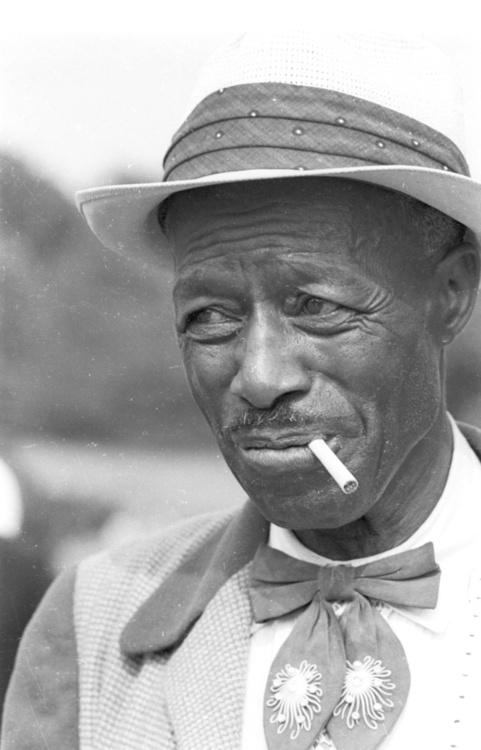
One of the greatest blues songs of all time is the mid 20th-century, “Grinnin’ in Your Face,” by Son House. In conceiving and performing the song, House had the ultimate constraints: no instruments and no formal musical training. How do you make an iconic song with none of that? Yet, by working around those constraints, he created a soul-penetrating song using just his voice and clapping, setting time to what sounded great to him. House found the ultimate instrument within the ultimate limitation: he used his voice and hands. Contemporary musician, Jack White, noted about House’s classic piece, “I didn’t know you could do that, just singing and clapping. It said everything about rock ‘n’ roll, expression, creativity, art – one man against the world.”

If we look at ourselves as writers, single parents, musicians, those with disabilities, and on and on, it’s amazing what we can do within constraints grinnin’ in our face. What’s fascinating is that constraints don’t limit us; rather, they inspire creativity, help us find better ways, and ultimately foster personal growth. However, what living with limitations truly does is empower us to realize that we don’t have limitations after all.

Curveball King

The pitch

By Mark E. Smith

As a writer, I can tell you that life is a story that unfolds page-by-page as we live it. Some of it we can predict and when we get to those particular pages in life, those where our intuition is right. However, most aspects of life are totally unpredictable, and much like a novel that we can’t set down, each page brings twists and turns that leave us only wondering what will happen next?

As a person, much like a voracious reader, I learned to stop trying to predict life, to guess or try to control what comes next. Why? Because like a page-turner of a novel, we can rarely guess what comes next. Think about your own life. Go back 10 years. Could you have predicted the twists and turns – the unforeseen plots – that got you to where you are today? Certainly not.

Yet, it’s human nature to want to know how’s it all going to unfold? People may give you answers, from friends giving you comforting thoughts to medical professionals giving absolute diagnosis. However, no one truly knows. The couple who everyone proclaimed would be together forever ends up in a bitter divorce, while the individual with a grim medical prognosis goes on to a inexplicable cure. We’ve all seen these plot twists, the unpredictable nature of life. Therefore, if you try to predict life over the long term, you’re likely going to be both disheartened and surprised much of the time based on any given circumstance.

So, if it’s so difficult to predict life, how do we handle the twists and turns, the unknowns that are bound to come our way? To use a sports analogy that’s fitting, life throws us two pitches: a predictable fastball and an unpredictable curveball. But, here’s what’s astounding, in baseball and life: researches found that when batters hit a curveball, they’re more likely to hit a home run (it has to do with the spin of the ball, the way it deflects from the bat, and so on). Therefore, both our biggest disappointments and successes in life often come from the unforeseen, an unpredictable curveball that can either strike us out or bring us amazing opportunity. Yet, again, one can’t predict the outcome, but merely take each ball – life’s twists and turns, that is – as it comes.

What I’ve learned is to not try to predict or question the future, but to embrace whatever it brings. Whether life sends me a predictable fastball or unpredictable curveball, I accept them equally and take my best swing. Life is a novel – a baseball novel – and I’m forever excited to see how the plot unfolds as my protagonist strives to be the Curveball King.

Gala of the Messy and Miserable

20141118_175743-2

By Mark E. Smith

Facebook and disability – they’re both masters of illusion, where publicly you never see the whole picture of a person, just the best parts possible. But, what happens when you remove that curtain, where life isn’t glamorous postings or a guy in a power wheelchair, wearing a suit and tie, whizzing by you at work?

We really do live in a kaleidoscope culture, where people only want to see and present the pretty parts of life. The real and gritty parts are scary and painful – and yet all so real. None of our lives are pretty and perfect all of the time. In fact, they can often be messy and miserable. And, what I’ve learned is that the pretty and perfect parts don’t unite us; it’s the messy and the miserable that do – because they’re heartwrenchingly real. We can only relate to the pretty and the perfect to a limited degree. However, the messy and the miserable is often where life lands us – and we all can relate to that. In this way, there’s a reason in all of our lives to shatter the illusion and get real, where we have the courage to expose the messy and the miserable, and that’s when we truly connect with others.

My own Facebook and disability form an illusion. No, not intentionally, but by the nature of it all. My colleagues see me poised and polished in my career – perfect hair, whizzing by in a power wheelchair – and my Facebook shows an amazing life. So, if that’s the pretty and the perfect, where’s the messy and the miserable come in?

All over the place! I attended a gala recently and, if I say so myself, I looked GQ-hot rolling in. But, what no one saw was what it took me to get to that point. I’m no GQ model. Rather, I’m a guy with severe cerebral palsy whose life can be messy and miserable. Like many with complex disabilities, I had to build in my “bathroom regimen” in the process of getting ready, which takes time and is physically taxing. Then, the reason why I was polished and on time at the event was because my daughter and fiancee helped me get dressed. I can do it on my own, but it takes hours, so the more practical of the two options was accepting the gracious help of my daughter and fiancee to get me ready.

But, we never have these conversations, right? It’s not like someone says to me at a gala, “Mark, you look so handsome tonight.”

And, I reply, “Thanks. I struggled through a bathroom regimen this afternoon, then my fiancee buttoned my pants, tied my shoes and styled my hair….”

Yet, that’s the reality, and when I think about that gala, I know that many people there had messy, miserable aspects to their lives, too. After all, life isn’t easy for any of us. Maybe there were couples who argued like mad on the way, but walked in with smiles. Maybe they were couples who drove there in a car with the gas light on because they’re broke, but walked in like a million bucks. Maybe someone recently lost a family member and it took all of his or her strength to get dressed up and attend such a chipper gala. And, how many individuals there had disabilities or conditions unseen, from depression to epilepsy? I know that the beautiful lady on my arm – my fiancee, the one who helped me face my challenges to get to the gala – had her own challenges that eve, ones that no one knew, as she continues recovering from a recent cancer-related surgery.

The fact is, everyone’s life can look pretty and perfect on the outside. But, how many of our lives truly are? Life is often messy and miserable – and, as a result, absolutely beautiful. See, when we let down our facades, and with grace and dignity discuss the messy and the miserable in our lives, it makes those around us let down their guards, and that’s when we truly connect with others. And, when we connect, we’re not alone in the messy and miserable, and it makes all in our life – the messy and the miserable – dramatically easier to cope with.

And, so at that gala, I made my own silent toast to the messy and the miserable hidden beneath the facade of the pretty and the perfect – because we’re all in the trials of life together.

The Most Human Experience

empathy

By Mark E. Smith

Much of my life is spent around those like myself who have physical disabilities. And, because I have faced adversity in my life, many have turned to me for understanding, reassurance and comfort. After all, if you look at me – body twisted, spastic in my power wheelchair – I personify adversity.

Yet, while I know of my adversities – and, yes, some components of adversity are universal – I can never fully understand someone else’s adversities. While two individuals may even have the exact same disability, condition or other life circumstance, what I’ve learned over decades of sharing stories of adversity with others is that no two experiences are the same.

This raises several intriguing questions. Firstly, if no two experiences are the same, how do we meet the innate need for connection with others in the face of adversity? And, secondly, how do we support others in their times of adversity when we haven’t had the exact same experience?

The answer to both these questions is a singular one: empathy. Empathy is an amazing human capacity because it allows us to connect with others on the most genuine levels, where it’s not about relating to an exact circumstance, but truly relating to the person who’s experiencing that circumstance in his or her own way. So, you may wonder, how have I done that in my own life? After all, I was born with cerebral palsy, so how can I relate with a mother who was able-bodied till age 36, then paralyzed from the chest, down? Yes, they’re both disability experiences – but vastly different.

The first interpersonal connection I make is to try to best understand the other individual’s perspective. I mean, can you imagine what it emotionally and psychologically feels like to be the nurturer and caregiver to your children and spouse, and now you’re physically unable to fulfill those roles in many ways? I know, we want to swoop in and rescue and say, “As a mother and spouse, you’re more than your body, and everyone views and loves you just the same.” And, it’s true – but that’s not empathizing with the person’s real, valid emotions. I’ve said in this exact situation, “I can imagine how difficult it is to have gone from the caregiver to needing caregivers. That’s a harrowing life transition. How are you dealing with that?” When we approach others’ adversities by letting them know we’re striving to see their situations from their perspectives, it creates true connection and validation – invaluable aspects of empathy.

This leads to the other aspect of empathy: being truly present in the other person’s time of adversity. No, I don’t know what that recently-paralyzed 36-year-old mother is literally going through – I’ve never experienced it and no one has ever been in her exact circumstance, either. However, I’ve made it through harrowing times in my life and there’s common humanity in that. And, so there’s the remarkable ability to quietly relate with someone, not on a circumstance level, but a human level. This is a scary place. I know scary places, so I’m just going to hold your hand as you move through it.

In these ways, through my decades around disability – both in my profession and in my personal life – I’ve learned a lot about being there for others. Empathy isn’t about having gone through an exact experience. Rather, empathy is about striving to understand another’s perspective and embracing him or her as-is, wherever he or she is in the midst of adversity. If we do that, we navigate toward the most uniting experience of them all: shared human experience.

Wheelchairs in Heaven

thegates

By Mark E. Smith

Every so often, a well-meaning soul of tremendous faith says to me, “You need not worry, there are no wheelchairs in Heaven.”

And, while I appreciate the deep, faith-based perspective of such individuals, I have to bite my tongue to keep from exclaiming, “What do you mean there are no wheelchairs in Heaven! How am I going to get around?”

I’m no theologian, but I understand the Judeo-Christian belief that there is no suffering in Heaven, and this is what individuals are truly getting at when they make such comments. And, I share the belief that there is no suffering in Heaven.

However, their words on this earth imply that I am suffering, that in Heaven, God will make the injustice of my life right. Yet, my faith says that they have it all misunderstood.

See, God made me right. Is my life in living with cerebral palsy a bit physically different than others? Of course. But, no one can justly declare it as suffering or needing to be resolved. Such beliefs are rooted in the unintentional ignorance of individuals, not in the intentionality of God. If we are to believe in an intentional God, then we must likewise believe that each of our lives was blessed with beautiful intention. My faith says that my cerebral palsy is part of exactly who I’m supposed to be, today, tomorrow, eternally – and I’m blessed with that. None of us need miracles, as we are already each a miracle.

In this way, if we are to have true faith, we must believe that each of our lives and circumstances has been created with an intention and purpose that some may not have the earthly insights to recognize. But, that’s OK. As long as we know our own value, intentionality and purpose, we know we’re blessed with being exactly who we are, perfect as-is – on earth as it is in Heaven. Just as houses of worship have accessible parking, wheelchair ramps and elevators, I’m positive that there’s an awesome custom-fit wheelchair awaiting me in Heaven.

Really Skilled at Sucking

nike

By Mark E. Smith

Imagine spending years running alone. Per your pace, you’ve gone from a 30-minute walk of a mile to running a 15-minute mile. That’s quite an accomplishment.

But, then, you get a running partner, and that running partner runs a 6-minute mile. What would you realize in this process?

For me, I’ve realized that this is my life and I’m really good at being really bad at much of what I do. I suck, and I’m proud of that fact. You can’t suck at as much as me without a lot of hard work and determination.

See, for years now, it’s been just my daughter and me in our home, where I live as independently as possible with cerebral palsy – and I’m pretty good at it, moving along at my own pace. A lot of it takes time and tenacity, but so be it. I’ve always looked at my independent living skills as the result, not the effort. I don’t care what I have to do as long as I can accomplish the task.

However, now I have a running superstar by my side – my beautiful fiancee – and it’s made me realize that I’m really good at being really bad. A task that takes me, say, 10 minutes on my own, takes one minute with her helping. And, for the most part, I’m secure and appreciative of her helping because I equally contribute to her needs in other ways.

Nevertheless, we’ve had an ongoing dialogue about how beyond my neanderthal stubbornness, she’s raised good points that just because I can accomplish a task doesn’t mean I do it the easiest way, that I often make things harder than needed, that just because I’ve used a haphazard technique for 20 years doesn’t make it necessarily the best approach.

Beyond me, her point is one that’s strikingly universal: Questioning how we do what we do can help us find better solutions, from our careers to parenting to everyday life. But, I have my point, too: It’s taken me a lot of years to get this good at doing independent living tasks really badly – that’s hard to give up when you’re so talented at sucking as I am!

Pink Undies in the O.R.

photo (24)

By Mark E. Smith

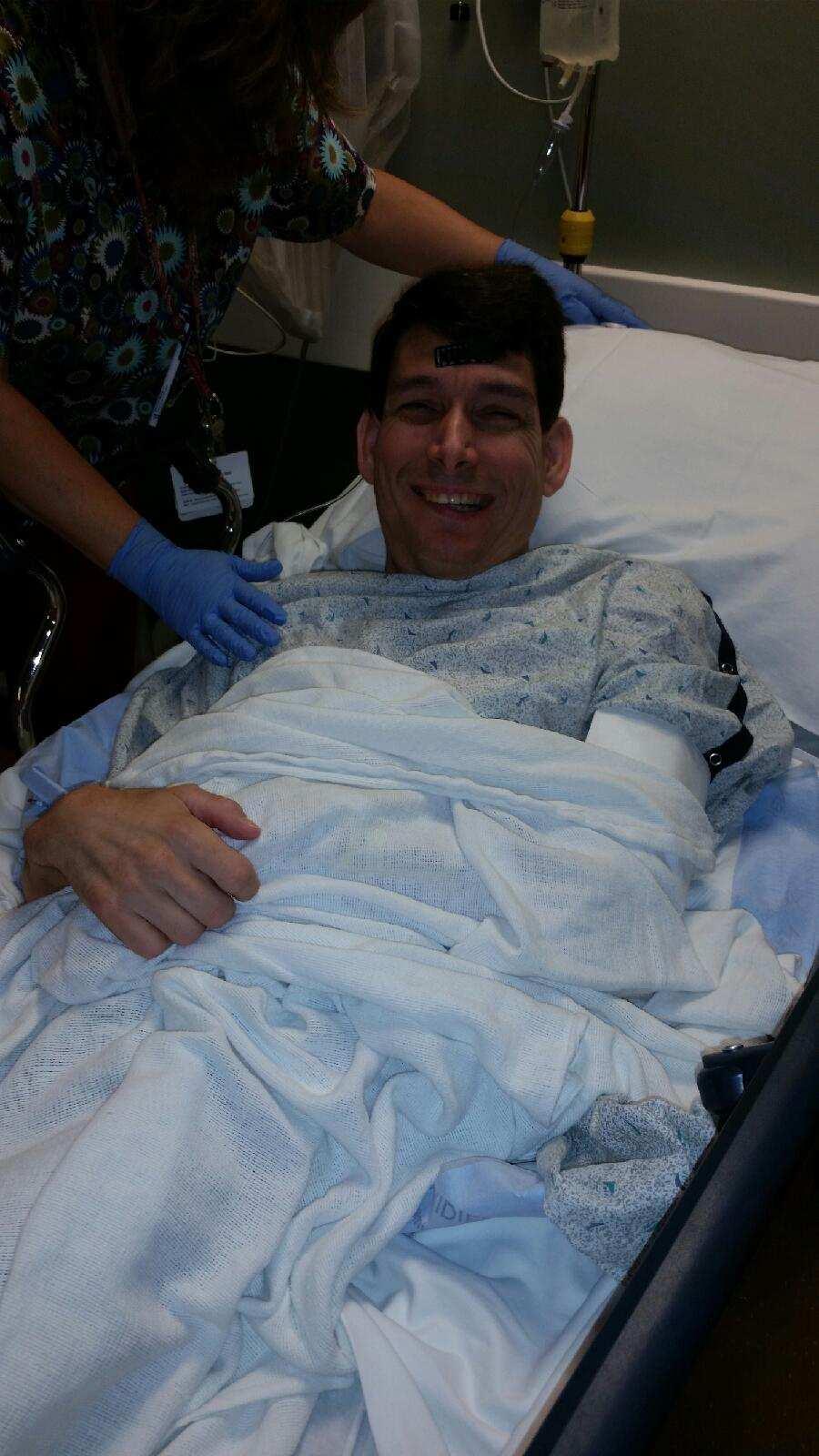
So, I’m laying stretched out on the surgical hospital bed in my neon-pink underwear and nothing else. And, I’m great with it. Muscular, with my trademark tattoo of the universal wheelchair symbol on my shoulder, I feel like a superhero. Cerebral Palsy Man here to save the day! But, the medical staff is here to save me – or at least figure out how to fix me up so they don’t have to literally save me. This is pre-surgery surgery, or as I like to call it, surgery.

My sister is with me because she’s had the worst luck of anyone I know – cancer, a critical automobile accident, over 20 surgeries. She knows the practice of medicine so well that I often have medical professionals ask if she’s one, herself. In this way, my sister is a double-edged sword: she’s great to have in the room as a medical advocate, but I don’t want her touching me out of fear her bad luck will rub off.

The nurse loves my pink undies, and I think she’s a bit charmed by my sense of humor around it all – my pink undies, flaunting my body regardless of disability, and my optimism toward the procedure itself.

Yet, I’m genuinely scared. I’m so scared that I’ve waited to do this far longer than I should have. It was my physician and friend who finally convinced me, knowing how potentially serious this could all be if I kept putting off surgery and treatment of anything else found in the process. Then once the specialists told me of the extreme risk my health was under, I knew I had to take responsibility, not just for myself, but for the sake of those who love me. And, I still have a lot of lovin’ to do.

The nurse asks me to put on the hospital gown, and I want to wear it as a cape. But, she insists I wear it the right way. My sister helps me put it on as I pout like her four-year-old. But, I want to wear it like a cape!

The anesthesiologist comes in and notes my “chronic” cerebral palsy. Is there non-chronic cerebral palsy, where you only have it on, say, Thursdays? She then stands at a computer and asks me questions from the screen, including, do I get short of breath walking up stairs?

My sister bursts out laughing and I point to my power chair parked against the wall, saying with absolute seriousness, “Only when I’m carrying that up stairs.”

Finally, the surgeon comes in to give me the rundown before we go into the O.R. He’s wearing the exact model watch I own and love, and for a moment I wonder if a man of such impeccable taste is wearing pink undies, too?

Now I’m getting even more scared, and the anesthesiologist isn’t helping. The initial shot that was supposed to put me in La-La Land still allows me to recite the first page of Chaucer’s Canterbury Tales – from the tenth grade. Still alert, I watch out of my peripheral vision as they roll me into the O.R. And, I see the size of the camera they’re going to slide down my esophagus and the table of tools they’ll ultimately use to take three biopsies. And, I watch as the anesthesiologist injects a new drug into my I.V.

Next thing I know, I awake. I think I’m still in the O.R., but as I open my eyes, a nurse tells me I’m in recovery. I’m still on my back, with the gown on, but I’m oddly now wearing pants, socks and shoes, with no recollection of the procedure or getting dressed.

“How are you feeling?” the nurse asks.

“…Like the morning after an awesome night in Vegas,” I reply. “How’d I end up here, and where’s my shirt?”

Kids Be Kids

specialneeds


By Mark E. Smith

As a classically-trained writer, I understand words – their efficacy or impotence, the way they twirl off of the tongue and echo in the ear. Words are powerful, captivating, emotive. And, sometimes, words are defining, both in the positive and negative.

For some time, as a writer, as a parent and as one with a disability – but, really, just as a person – I’ve been struggling with three words that we use to define what I’ve come to know as an ambiguous, possibly specious term: special needs child.

I, of course, understand our social definition of a special needs child, that of a child with a physical, emotional or intellectual disability. But, is it – special needs child – a logical term to use? I mean, I’m not questioning it from a political-correctness or ethical perspective. I simply question if the label is logical?

And, I don’t think it is. After all, have you ever met a child who didn’t have special needs? Of course not. If we truly acknowledge what each child in our life needs, every child is a special needs child. There are eight children in my close family, and they’re all so unique in character and at different stages from one another that each one has special needs. Why only project “special needs” onto children who have disabilities when every child clearly has special needs?

The label also represents a type of reverse discrimination that’s unfair to all children. If you’re with several children in public, and one has a disability, adults often fawn over the child who has a disability and ignore the other children. Yes, such adults mean well, but they’re doing more harm than good. Such situations inadvertently patronize disability and ignore others – everyone loses.

Instead, let’s see kids as kids. Each is special and unique and has needs, and should be recognized as such. Most importantly, let’s drop the labels altogether, and just let all kids be kids.

The Real Investment of Complex Rehab Technology

MarkESmith300

By Mark E. Smith

I strive not to overlap my print writing with my online writing because, really, there’s too much of my work floating around the literary world as it is. How much of me can any one reader take? However, I’m crossing my own boundaries and linking you to a very poignant piece in this month’s print edition of Mobility Management Magazine. You’ll learn a bit more about my life journey — and hopefully a bit more about others’ and your own. http://mobilitymgmt.com/Articles/2014/06/01/Complex-Rehab-Technology-Investment.aspx

The Effort of Faith

faith

By Mark E. Smith

When I look at the three biggest challenges that have spanned my adulthood – writing, disability and romance – there’s a common denominator that forever keeps me pushing forward during both highs and lows: Faith.

Now, I don’t mean faith in religious terms – although, many people do, and that’s great. Rather, faith for me is belief, it’s an innate understanding that no matter what I face, I will pull through ultimately to my own betterment – that is, the light will be brighter at the end of each tunnel.

Faith for me, however, doesn’t function on its own. Faith directly correlates with effort. When I was in my early 20s as a young writer, my rejection ratio by magazine editors was around 20 to 1. For several years, my mail box was a literal daily dose of rejection, seemingly indisputable proof that I was failing as a writer. Yet, I simply had faith and I used all of that rejection as inspiration. I knew I wanted to write and I had faith that I could make it as a writer, so I put effort behind my faith and went to college to learn formalities and hone my craft. It’s taken over two decades, but my closet shelves are now lined with over 1,000 formal publications that I’ve been published in, plus all of my books and countless essays from the web. I went from spending my days seemingly writing for the sake of rejection to now editors offer me assignments. The factor of success has been having faith that I could be what I believed, and then applying the effort to become that success.

Disability and romance in my life have followed the same faith-based path. At many points individuals, situations and society have told me that I’m lesser, that I couldn’t achieve based on my disability. But, my faith has ultimately had the final vote. Dismiss me or count me out, but my faith assures that in the end, with effort, I will overcome. I may face challenges, but my faith dictates that I will succeed in the end in spite of them.

Of course, the struggle to find enduring love is a universal, epic one. Think about the canon of literature, art, music and movies that address our desire for enduring love. And, I’ve faced that struggle, too. Yet, I’ve had faith that as long as I live my best, with effort and awareness, enduring love will sustain itself in my life.

I put it this way: Life is a roller coaster – the highs are exhilarating and the lows are frightening. Yet, there’s a surefire way to even out the course. It’s called faith. With faith, and effort behind it, it’s impossible to get emotionally mired in even the bleakest situations because no matter what all signs may tell us, there’s only one truth: We will ultimately overcome. Have faith, put effort behind it, and believe that you are intrinsically capable of living the life of your dreams.