Forgiving – Ourselves

forgive

By Mark E. Smith

Among the hardest endeavors of the heart we ever make is to forgive – ourselves.

Although we live with the best of intentions, with tremendous purpose, we’re bound to make mistakes. When we’re on top of our game, the mistakes are small – maybe no one notices but us. However, when we’re not so mindful of how our actions effect ourselves and others, the mistakes can be life-altering, not just for us, but for those we love. In both cases, making mistakes can weigh on us like an anchor, keeping us submerged in shame, guilt, and self-doubt. In a way, we lose trust in ourselves, just as we imagine others lose trust in us.

However, the fact is, while those who care about us and love us are typically very forgiving, the person who most often takes the longest to forgive our mistakes is oneself. Shame and guilt are powerful emotions, not easily shaken. Yet, if we are to move beyond our mistakes, we must truly forgive ourselves. It’s not just the ultimate in humility, but also accountability.

See, when we refrain from self-forgiveness, we’re holding on to our mistake, like carrying a boulder everywhere we go. But, there’s no corrective action involved, just self-punishment. In contrast, in order to forgive ourselves, we have to deeply acknowledge our mistake and grow to trust in ourselves that we won’t make that mistake again. We must allow ourselves to give into ultimate humility. We must allow ourselves to accept ultimate accountability. Those acts of honesty and courage are the cornerstones of self-forgiveness.

Author Stephan Richards writes about self-forgiveness, “When you initially forgive, it is like letting go of a hot iron. There is initial pain and the scars will show, but you can start living again.”

In this way, the ultimate mistake we can make in life is not to offer forgiveness – to ourselves.

[Speed = Distance / Time]

lamark

By Mark E. Smith

Among my routine rituals is running my power wheelchair through my company’s test lab “speed trap.” I’ve perfected aspects like tire air pressure, straight-line tracking, and battery type to get my production chair just a scant faster than it’s built to run. In this process over the years, I’ve learned a bit about life, too.

The mathematical equation for speed is [Speed = Distance / Time]. Put simply, how long it takes you to cover an amount of distance is how fast you’re going. As I’ve run my straight-line speed trap hundreds of times – a computer system measuring my distance over time to calculate my speed – I’ve realized it’s a metaphor for life. Our successes and failures are dictated by the same equation, how much or little progress we make over an amount of time impacts our lives.

See, if in our lives, we cover little distance over time, we’re not progressing. Think about our relationships, careers, finances, you name it – if it’s all where it was five years ago, with no progress, our distance over time is dismal. Our lives are stalled or even destructing.

To the contrary, when we make quick, rash, hasty decisions, jumping from one life path to the next, we’re moving so fast that we’re bound to make mistakes. Racing through life impulsively, without considering consequences always results in disasters.

The key, then, is to look at our lives as [Speed = Distance / Time] and find that optimal balance, where we’re making great progress, without making poor decisions or mistakes.

What I’ve learned in the speed trap – and life – is that the right speed is  prudent in practice, but still a little faster than average.

I’ll Take Love Over Art

NM_iLevelMark_July16.indd

By Mark E. Smith

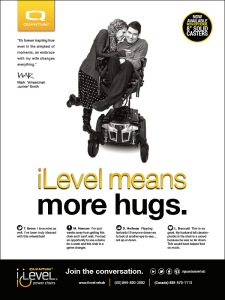
My wife and I have slowly become a poster couple – literally. And, we’ve been blessed that so many have found inspiration not just in the one iconic image, but the life we lead, commonly shared on social media, as is the way of the world nowadays.

However, we’re truly not a poster couple. No couple is. Who we are, are two unique individuals who love each other deeply, but face the challenges that every married couple faces. I note this because being the poster image of anything can be a trap all the way around.

I look at our life in ads or online, and realize that we’re doing well. And, it’s all true. However, what’s not reflected is the rest of the story – life is messy sometimes. We have a 19-year-old in college, a 7-year-old with special needs, a dog, and a house. The tuition bills for the 19-year-old never end, the 7-year-old struggles to sleep through the night, and the dog likes to eat grass and vomit on the new carpet. To top it off, our house doesn’t clean itself. Your life may not look a lot like ours publicly, but if you step in our house, chances are that our life is a lot like yours – from balancing finances, to caring for kids, to stressing over laundry, to trying not to lose your cool because the dog ate food off of the table again. And, it’s really hard to be romantic when the day has worn you down.

No, life isn’t a poster image. Rather, life is a mirror image – and there’s beauty in that. Some mornings, as my wife and I are scrambling to get ready, usually running late with all of the chaos, we’ll look in the big dresser mirror together – half dressed, hair uncombed, morning wrinkles emphasized by the sunlight – and we just laugh at what a mess we are.

See, what I’ve learned is that perfection – or the illusion thereof – doesn’t make a true marriage. What makes a true marriage is when you acknowledge how messy it all really is – and still smile at it.

Unspoken Alone

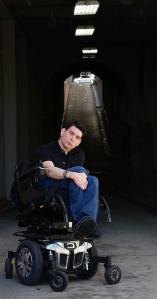
tunnel

By Mark E. Smith

Alone. We’ve all felt it. And that, in itself, is why we’re truly not.

Based on my career in working among a population where trauma is common, I often hear how alone others feel in their challenges and struggles. However, as an ordinary person, I also hear how alone many feel in challenges of all types in everyday life. Yet, I’ve never encountered a situation where someone’s struggles transcended common humanity, where others hadn’t experienced a similar situation, of similar emotions.

In this way, the uniqueness of feeling alone in our struggles isn’t unique at all. In fact, it’s among the most common emotions we all share. It is intriguing, though, that such a commonly shared emotion can be… well… generally unshared.

See, unlike other cultures in the world, we in North America are prone to keeping our struggles to ourselves. The result is, we feel alone. And, so we live in a culture that exacerbates feeling alone in times of struggle, when we’re actually not alone at all in our experiences.

If you’re like most of us, you’ve unquestionably known unfortunate experiences like relationship issues, career issues, financial issues, health issues, and on and on. And, if you’re like most of us, you’ve felt alone during these struggles, as if you’re the only one who’s ever experienced them – especially in the moment. However, most of us have experienced them, too, so why are we all feeling so alone in the process?

The answer is simple: we don’t reach out when we should. As those struggling, we don’t reach out, and when we have a hint that someone else is struggling, we don’t reach out. Why do we behave this way? Well, self-doubt and fear on both sides, that’s why.

When we’re feeling alone in our struggles, we default to these internal scripts, don’t we?

No one understands what I’m going through.

They’ll judge or ridicule me.

I don’t want to be seen as weak.

I’m just ashamed of this mess I’m in.

I don’t want to rock the boat.

Or, for that which prevents us from reaching out to those we see struggling:

It’s none of my business.

I don’t want to embarrass them.

I won’t know what to say.

Based on our culture, these are totally valid feelings. But, there’s one problem with following them – they leave us feeling alone in our struggles, isolated. And, it simply makes any struggle worse and last longer. The antidote, however, is brilliantly simple: share.

Now, sharing can be scary and tough, requiring a lot of courage and vulnerability. But, the rewards of not being alone in our struggles outweigh all of those seeming risks. If you’re struggling alone – and we all do at times in our lives – share it with someone you trust. Interestingly, trust, in itself, can be a far more liberal definition than most might think in times of struggle. Some of the most healing, profound conversations I’ve ever had have been with virtual strangers, those recently met. What’s important is that we reach out, and it’s astounding how the sharing or inquiring of just a hint of ourselves exposes the common humanity of us all, realizing we’re not alone.

I don’t know what you’re struggling with our will be struggling with. But, I know that none of us are exempt from struggles, and none of us need to be alone in our struggles. In your tough times, I encourage you to reach out, where the hand that you grasp will feel comfortingly a lot like your own.

Straight, No Chaser

thelonious-monk

By Mark E. Smith

I’m sure as a younger child I questioned it all. But, by adolescence, I was just me, and there was no room for me or anyone to question it. I mean, it was questioned – who I was because I was different, my disability seemingly made me different – and it would occasionally sting in the moment. However, I ultimately understood I was who I was, I am who I am, let’s get on with this.

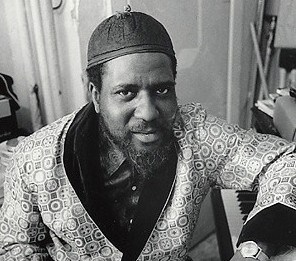
The jazz great, Thelonious Monk, was of that spirit, too, long before I was born. During the 1940s through the 1960s, when you had the greats like Duke Ellington, Miles Davis, John Coltrane, Dizzy Gillespie, Charlie Parker and Billie Holiday evolving Jazz in a linear form, Monk was innovating on the piano in ways no one had ever seen.

Monk was first and foremost a composer, with musical eccentricities that few could follow. Improvising was a staple of jazz in that era, but his obsession with improvised composition on stage made him a lone wolf, where he didn’t care what the band played or what the audience wished. Monk simply followed his passion key by key, note by note, reveling in what he discovered in the moment, oblivious to all around him. Often, the only queue to what he was playing was his right foot keeping time. He just played as him, and whether the world followed didn’t matter. John Coltrane said, “Working with Monk is like falling down a dark elevator shaft,” and Miles Davis for a time refused to play with Monk due to Monk’s defiance toward staying in line with the rest of the band. In the refined world of jazz performance, Monk was also known for stopping playing mid song, getting up to dance alone as the rest of the band played on. Indeed, Monk was Monk, and he wouldn’t meet arbitrary norms.

In the process of being him, Monk ultimately lived an obscure but free life, where beyond his immediate circle, he was generally unknown during his career, never getting the fame of his contemporaries. Yet, in the process, he composed an astounding body of recorded work, only second to Duke Ellington. Monk largely disappeared from 1971 till his death in 1982, struggling with mental health issues along the way. Posthumously, he was granted a Pulitzer Prize for his body of work, and is subsequently now known as among the greatest jazz composers and musicians of all time.

How many among us just want to be themselves, follow their hearts and passions regardless of what anyone else thinks? Yet, many don’t out of fear of rejection or not fitting in. For all of us, Thelonious Monk left us with striking words of wisdom: “I say, play your own way. Don’t play what the public wants. You play what you want and let the public pick up on what you’re doing – even if it does take them fifteen, twenty years.”

Let it Rain

adversity

By Mark E. Smith

Some had a limited life expectancy. Others had experienced life-changing injuries. While still others we’re born into it. All faced exceptional adversity, which made sense, as it was an expo for those with disability.

However, as I was surrounded by over 5,000 individuals that weekend facing adversity, I realized that the confidence, comfort and joy that many – not all, but many – exuded aligned with what I learned long ago: adversity dramatically improves our lives when we embrace it.

For those who haven’t experienced adversity or embraced it, they find fear in it and have sympathy toward those who live with it. For those of us who have experienced and embrace adversity know the remarkable role it serves in our lives. Our experiences have taught us that adversity shouldn’t be avoided, but actually welcomed.

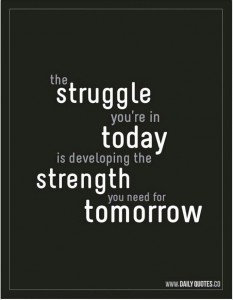
See, adversity forces us to face problems and situations that are too big to resolve. In my situation, no one can change, fix or cure my cerebral palsy. And, because of that, it’s forced me to learn and grow in order to succeed in living with it. Think about what an extraordinarily fortunate situation that is to be in. Yes, we can grow without adversity, but like adding weights to a workout, adversity is a rare force that can fuel wisdom, inner-strength, understanding and perseverance, to name a few life-enhancing traits. Adversity, then, isn’t meant to restrict, but empower.

I realize that for some, adversity as empowerment is a ludicrous thought. After all, how is being seemingly down on one’s luck a positive in any way? Worse yet, when you’re down and you see someone in your situation who’s happy, that can be the perfect recipe for bitterness. But, again, if we view adversity with acceptance, we will intrinsically grow. If we embrace adversity, the challenges within will cause us to rise.

As the late singer, Prince, prepared to perform the Super Bowl half-time show, the producer called to tell him it was raining, convinced that Prince couldn’t or wouldn’t perform. Prince replied, “Can you make it rain harder?”

Prince ultimately performed among the most iconic concerts of all time, later noting that that caliber of performance could only be achieved when facing such adversity. That which he couldn’t resolve – the weather – elevated his performance.

There’s the notion in our culture that adversity is to be avoided, feared, that it’s tragic, life-detracting, that it’s asinine to even suggest welcoming it into our lives. However, that’s all gross misconception. The fact is, adversity allows us the remarkable opportunity to extract dignity from difficulty, strength from struggle, power from pain. That is, adversity allows us to not just rise in the rain, but it empowers us with the understanding that the harder it rains, the more we can rise.

Turning Off Autopilot

autop

By Mark E. Smith

I’ve spent a lot of my life around two areas – boats and dysfunction – and what I’ve learned is that in either case, if we’re not careful, “autopilot” will fail us.

See, living in dysfunction is a lot like being aboard a boat running on autopilot – we’re not questioning or changing, but continuing on a haphazardly set course. And, as waters worsen or dangers approach, if we don’t take control, our boats – read that, our lives – will collide with them in the most harrowing ways.

For me, taking life off of autopilot has been a very personal process. As one raised in a dysfunctional family, I only knew what I knew, and my emotions were on autopilot for a long time. Turning off that autopilot proved harder in some ways than others.

Alcoholism, addiction, poverty, and a lack of education were all fairly easy for me to avoid because my awareness was so blatant. When I had welfare Christmases, parents with ninth-grade educations, and an unbroken family lineage of alcoholism and addiction, it was fairly obvious that our family’s autopilot was a disaster in full swing, cruising in the Oblivion Sea.

For me, turning off autopilot started as young as 10, but really by my teens I saw my life set on a course for collision and I took control of the helm. I saw everyone around me literally dying from living on autopilot, and I knew I had to turn that monster off for myself. Once aware and assuming conscious control of my life, I steered around the many dangers my family collided with. However, I was fortunate in that aspect – that I somehow had the understanding to do so – where I empathize with how difficult it becomes for many to turn off autopilot the longer we’ve unwittingly been on it, often from birth. It’s simply not as easy as my words read to break cycles of dysfunction, to turn off autopilot.

And, emotionally, I absolutely remained on autopilot for quite some years. Again, for me, getting off of autopilot has proved harder in some ways than others. I grew up knowing that those who loved me also hurt me, so love and hurt were intertwined. My head was off of autopilot – sober and successful – but my heart was still running its course. And, so I found myself in relationships of all sorts – from marital to sibling to friendship – that hurt, that as the psychobabble calls it, were toxic. It’s what I knew, what I grew up in, and continued living. That’s the sinister beauty of autopilot – once you’re on it, it continues on a course without any effort by you.

Awareness, though, once again proved my switch to turning off autopilot. Once I was aware that my heart was on autopilot, steering me into collision after collision, all my relationships changed. Some I just cut off; some I set healthy boundaries; and some I started anew with healthy individuals.

I’m still not perfect at any of this, and never will be, but every once in a while, when the autopilot that I grew up in intrinsically kicks in, my awareness takes the helm in a reflex type action, where I’m able to quickly correct and stay on a healthy course.

Through what I’ve lived and learned, I see among the greatest gifts that we can give others is the truth that they can break cycles of dysfunction, turning off autopilot. There’s a big difference between preaching from the mouth and speaking from the heart. I believe in speaking from the heart, and when a young person at risk in my circle was recently running on autopilot – it’s what they grew up in, escaped, then were thrust back into it based on a traumatic chain of events – I took the time to remind them of how far they’d come, to be aware that although understandably they’d temporarily returned to autopilot, awareness was what would keep them emotionally safe – that is, regrasping the helm and steering a healthy course.

Now, it’s not possible for everyone to just turn off autopilot and get their lives moving in healthy directions. We know of the medical effects that alcoholism, addiction, and mental illness have on those immersed in those conditions. These aren’t autopilots that just turn off. But, for the rest of us – and especially youth in our families and communities at risk – the ultimate intervention isn’t once there’s no turning off autopilot, but acknowledging our vulnerabilities to it early on, and elevating our awareness to the point that we turn it off and truly take control of our lives in healthy ways before life is spiraling beyond our control.

The fact is, we have no choice in how the dysfunction of autopilot gets turned on in our lives – typically, we’re born into it or trauma ushers it in. However, when we’re aware that it’s been turned on and we are running on it or at risk of running on it, that’s the time to turn it off. See, turning off autopilot removes continuing living the pain of our pasts, and allows taking the healthy helms of our futures. May you and I chart the healthy course our lives are meant for.

Meals or Feasts?

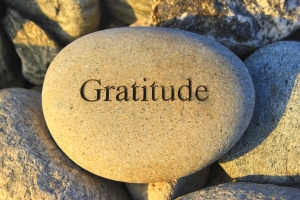
Gratitude rock

By Mark E. Smith

My life has been somewhat extraordinary in that I’ve known both sides of human experience – that is, what it’s like to live with exceptional adversity versus what it’s like to experience great fortune.

However, while my own life has made me acutely aware of extremes, it’s the individuals I encounter that have raised a profound question for me. In parts of my life, I interact with those facing tremendous adversity, while in others, I interact with those of great fortune. Overall, I’ve witnessed that people are people, and no matter how different two individuals’ life paths are, there’s a uniting humanity – people are people.

Yet, I’ve also witnessed a juxtaposition that’s intrigued me. If I shared that I knew a 40-year-old mother with progressing ALS who was bitter at the world because she would not live to see her children graduate high school, we all could empathize with her. On the other hand, if I shared that I knew a 40-year-old mother of great health and wealth who was dedicated to serving her community, we could empathize with her, as well. In both these scenarios, we could say that both women are doing the best that they can. And, indeed, in some form, I’ve known these women – and likewise men in the same situations – many times over.

But, here’s where the intriguing juxtaposition comes in. I similarly meet those facing tremendous adversity – literally that 40-year-old mother dying of ALS – who approaches every day with grace and joy, appreciative regardless of the devastating blow life has dealt. Meanwhile, I encounter those who are extremely fortunate – with health and wealth and thriving lives – who are bitter, jaded, living with a miserable sense of entitlement, as if the world owes them. How is it, then, that someone facing unimaginable adversity in life can live with such grace, while by contrast, I’ve more than once witnessed someone of great health and wealth throw a tantrum over the smallest, most trivial circumstance? How can this juxtaposition logically occur?

The answer is, gratitude. See, gratitude is the great equalizer – and you have it or you don’t. If you have it, it’s irrelevant what your situation is in life, as you’re grateful regardless of any circumstance. However, if you don’t have gratitude, you’ll conversely be bitter and jaded no matter how fortunate your plight. In this way, what life deals us has no bearing on our outlook – unimaginable adversity or great fortune are of no matter. What dictates our perspectives is whether we have… gratitude.

Author Melody Beattie writes, “Gratitude unlocks the fullness of life. It turns what we have into enough, and more. It turns denial into acceptance, chaos to order, confusion to clarity. It can turn a meal into a feast, a house into a home, a stranger into a friend….”

Therefore, if we are to understand the true origins of fulfillment in our lives and whether we find true contentment, we don’t need to weigh the scales of adversity versus good fortune. Rather, to understand fulfillment and contentment in our lives, we merely need to consider the levels of sincere gratitude we possess.

One Person at a Time

ServingOthers

By Mark E. Smith

If there’s one principle I’ve learned in my 20-year career, it’s that you can have a tremendous impact on a global scale by simply serving one person at a time.

Somehow a mythology has evolved over recent centuries that in order to have a notable impact on the world, we have to do a single, epic act: invent electricity, cure a disease, write an ageless book, or any number of extraordinary acts that win a Nobel Prize.

However, that’s not, in fact, how we change the world. The fact is, if you look at the way the world’s changed over the past 100 years, it’s been by far because a single person had the vision to change lives of individuals one at a time.

We’re not a country of advanced automobiles because Henry Ford magically gave every person in America a car at once and changed the world. Rather he sought to build a car that individuals could buy, one by one, and individual lives changed, ultimately creating a cumulative effect. Fast forward toward the end of the 20th century, where personal computers fueled by Gates and Jobs, among others, and we saw the same process, where PCs were adopted by individuals one by one, where slowly the movement changed our lives. Now, in the present, look at Facebook – 1.59 billion users didn’t just pop up, but joined, one by one. Indeed, even in the most monumental success stories of world change, they’ve all started with individuals and flourished by the individuals’ lives impacted by them, one by one.

The Gates Foundation has been on a mission to change the world for millions of children in third-world countries. Over 1.5 million children die each year from diseases of which there are vaccines, but to which they don’t have access. The Gates Foundation has been eradicating this issue. How? By vaccinating one child at a time.

Now, most of us aren’t Fords or Gates. However, we possess the same ability to profoundly impact the world – by making a difference in the lives of others, one person at a time. It doesn’t matter who you are or what you do. All you have to do is be aware of who around you needs a touch of whatever it is you have to offer. Maybe you have a particular skill set that many can use, but not everyone can afford. Think of the difference it makes in a single life when you donate that skill to someone in need. Think about the contractor who quietly fixes up an elderly widow’s home; the college math student who tutors inner-city kids across town; the auto mechanic who fixes the single father’s truck at no charge so he can get to work and support his kids; the store clerk who asks everyone how they are because she truly cares; the pizza shop owner who makes every customer feel like family; the person who always answers the phone when a friend just needs someone to talk with. The list goes on and on, but the principle is the same: we each have the profound power to change the world one person at a time.

We can have a way of saying to ourselves, I’m nobody, with nothing to change the world. No, we’re each somebody – unique, with so much to offer, so many ways to change the world one person at a time. It doesn’t matter who you are, where you live, or what you do – you have the ability to improve the life of another person, and that single act alone does change the world.

I recently was interviewed, and the interviewer asked me what I saw as the greatest accomplishment of my career?

“I shipped a farmer in Iowa a part for his wheelchair this morning,” I said.

She looked surprised at my seemingly simple answer considering the complexity of my career.

“Is that an unusual situation?” she asked.

“No, it happens every day,” I replied. “But, you make a difference on this planet by embracing one person at a time.”

As Mother Teresa put it, “Never worry about numbers. Help one person at a time and always start with the person nearest you.”

Crystal Glasses of Ginger Ale

ginger ale

By Mark E. Smith

By the time I was vomiting uncontrollably in the shower that eve, I felt it a mixed blessing. On the one hand, I made it through a day that encompassed a media feature of my company, and I suspect vomiting in front of the press and my CEO may have influenced the story a bit. The press is fickle that way.

On the other hand, I was perplexed how I became so sick, so fast? And, so, as my wife brought me a baker’s bowl, so I could make it from the shower to the bed, vomiting on the move, I sought her expertise. After all, she’s a skilled medical professional – or, at least a high-end optician. If you can’t trust an optician to advise you on stomach viruses, who can you trust? OK, you can’t trust an optician at all for medical advice. While my wife could fit me for awesome eye wear, she was likewise clueless as as to why I was suddenly so sick?

Once in bed, things got worse. In my 45 years of having cerebral palsy, I’ve learned an invaluable lesson: the one downside to not being able to walk is not being able to walk. And, so as I felt my condition worsening, unable to sprint to the bathroom, I broke out my secret weapon: Depends. But, here’s the thing – as much as Depends are marketed as “underwear,” they’re diapers, poofy, odd diapers, sans the tape closure tabs. So, there I sat in bed – 1 am, 2 am, 3 am, 4 am – wearing a diaper while vomiting uncontrollably all night into a baker’s bowl. Some might find that embarrassing, but I found it an ingenious evolutionary system of survival. Prehistoric man and his tools had nothing on me – I had Depends and a baker’s bowl.

By the next day, I was gut-wrenching sick, vomiting ad nauseam, to painful dry heaves beyond anything I’d ever experienced. On the upside, it gives you one heck of an ab workout. I see dry-heave gyms catching on. But, I was getting sicker and sicker.

Now, here’s the brilliance of medical science: when you’re vomiting uncontrollably, they tell you to drink lots of clear fluids – all so that you can promptly vomit them back up. Gatorade in, Gatorade out. Water in, water out. It’s like I was the opposite of a waste water treatment plant, putting perfectly good fluids in me only to vomit them back up as bio hazard.

Finally, I settled on ginger ale. No, it wasn’t anymore effective than the other liquids. However, there was an elegance to it. Darling, won’t you please bring me a glass of ginger ale, with ice, in our finest crystal? And, that my beautiful wife did. Was I a sick, pathetic mess? Absolutely. I was in bed, wearing a diaper, vomiting into a baker’s bowl! But, the crystal glasses of ginger ale added a certain class to it all – even as I vomited every last drop. I was a hint of a British gentleman – vomiting, wearing a diaper.

After a few days, my wife wisely wanted to call an ambulance. I was only getting worse, unable to eat in days, and arguably pushing the line toward dangerous dehydration. My wife knew best. However, I’ve long trusted a slightly off-kilter Italian – my doctor. He’s long lectured me on trying to stay out of the hospital. English is his second language, so I don’t always know what he’s saying, but his theory is something to the effect of: Hospitals are full of viruses. You eat bad fruit, go to the E.R., touch something, get a flesh-eating bacteria, and, boom, you die! Yes, he’s prone to slippery-slope exaggeration, but has his points.

Still I followed my doctor’s advice and opted to stay in bed, wearing diapers, and vomiting the finest ginger ale from crystal glasses that money can buy – $1.79 per 2-liter bottle, imported from Canada.

Out of boredom one eve, I lay watching CNN political coverage. I was already sick, so the dynamics of the 2016 political race technically couldn’t make me any sicker. Governor John Kasich told the story of confiding in former governor Arnold Schwarzenegger that he didn’t know how to handle personal attacks? Schwarzenegger replied with classic Arnold advice, “Enjoy the punishment.”

Schwarzenegger is no philosopher, but he was on to something. We have choices in our lives. We can be bitter and resentful, or find some sense of gratitude, no matter how bleak the circumstance. Yes, I was sick to a troubling level, but at least I was sipping – and vomiting – ginger ale from a fine crystal glass.