A $20 Christmas


By Mark E. Smith

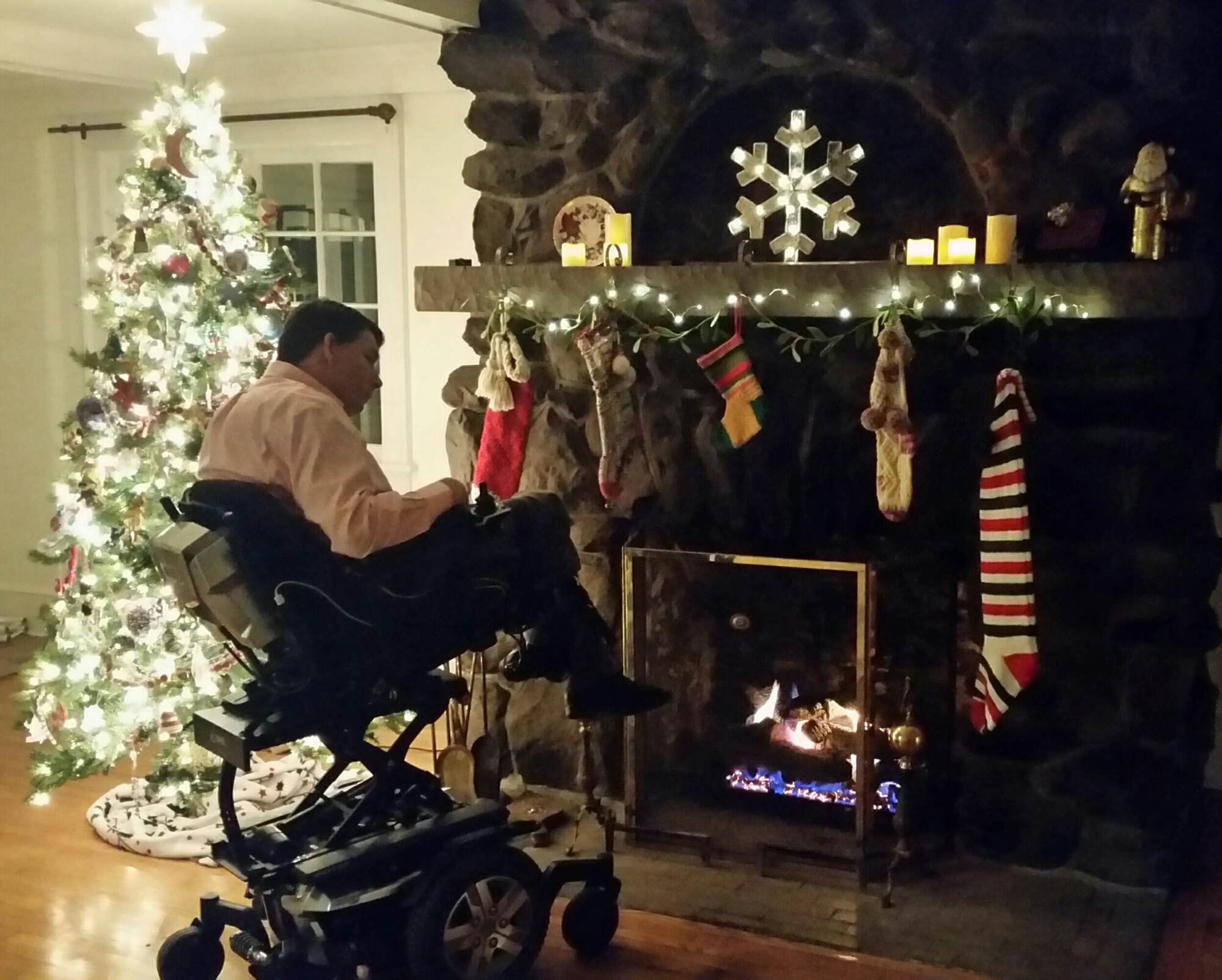
Through my six-year-old eyes, it seemed like a Christmas miracle. One day it was a drugstore parking lot, and the next eve it was a forest of Christmas trees, with strung lights and sawdust covering the pavement like snow. Christmas tree lots have long been common; but. based on my age and where my family was in the course of our lives that year, made that one tree lot appear as a beacon of hope to me when I first saw it through the window of my mother’s old station wagon.

It was a tough year for my mother, brother and me. No, it wasn’t tougher than any other; it was just tougher in a different way. We were used to being broke. We were used to volatility with my parents. And, we were used to not having much of anything, including at Christmas. However, that year, my father was long gone, my mother was drinking more than ever, and the only good  fortune I recall was that a church left several boxes of food on our porch at our little rental on Robinson Street.

But, my mother somehow saved $20, which wasn’t just a lot of money in 1977, but a fortune to us. She loaded my brother and me in the station wagon and drove us to that magical Christmas tree lot. It would be a great Christmas after all – food and a tree. We didn’t want for anything else because just those two aspects, we were warned by our mother weeks earlier, may not happen that year.

We picked out a wonderful tree, and as my mother reached in her jeans’ pocket to get the $20, it wasn’t there. She searched her other pockets, then her purse, then the car, then the lot. But, the $20 dollars was gone. She’d downed a half-pint of vodka before leaving the house, and as the frantic search for the $20 transpired, she became increasingly drunk – stumbling, crying. The gentleman at the Christmas tree lot remained silent as she begged him to let her take the tree. My brother and I likewise remained silent as Mom drove us home without a tree.

Christmas was never normal in our family before or after that. My mother was never sober, and while my friends’ trees were piled with presents, ours was often scarce. Still, we were lucky to get a new winter coat and school clothes most years, sometimes something we wanted, as well. Mom at least always tried in her own ways.

Still, I can never defend my mother’s life choices. Her never being sober on a single Christmas will always be inexcusable to me as a son and a father. Yet, all of those Christmases growing up with my mother taught me invaluable lessons about what Christmas should be. Christmas should be about joy, not struggle. Christmas should be about people, not presents. And, Christmas should be about peace, not volatility. I didn’t have those growing up, but I’ve been blessed in my fatherhood that I’ve been able to bring those attributes to my own family’s Christmases – and along with the love of those around me, a warm meal and decorated tree remain all I could ever wish for. Like my mother, I, too, try in my own ways.

Winds of Life

wind-in-sails

By Mark E. Smith

If you’ve ever sailed a boat, you know it’s a combination of skill, faith and patience. Life, I’ve learned, is a lot like that, too. Many times, I’ve set a course in my life, where my abilities were only part of the equation, and having faith that it would all work out in the end – like counting on an unpredictable wind, far from landfall – was all I had to trust.

What might surprise you is that trusting in the wind of life has never failed me. As long as I’ve applied myself – like a sailor heading to sea at the helm – the winds of life have always come to carry me on my course. In the process, I’ve learned to be vigilant and have faith and patience – sometimes maintaining seemingly irrational faith and indomitable patience. But, the wind – that wind! – has always ultimately filled my sails.

Sure, I’ve found myself adrift at points in my life. As Coleridge put it in the Rime of the Ancient Mariner,”Water, water, every where / And all the boards did shrink / Water, water, every where / Nor any drop to drink.” We’ve all found ourselves adrift at points in our lives, waiting, wanting, needing a metaphorical wind to fill our sails and set our lives back on course. Maybe it was after a break-up or when we were broke or while looking for a job or, or, or…. When is my life going to get back on track?!

I’ve been there. And, what I’ve learned is that as long as we stay the helm – holding the course with faith and patience – we are never let down. The wind always comes, always fills our sails, and we always reach our destination, our purpose. We may encounter lulls and rough seas, adrift for weeks, months or years; but, eventually – hands blistered from grasping the helm – the wind comes.

For some in life, they never leave port, not wanting any risk. But, they never reach their intended destination, their potential. For others, they lose hope, giving up the ship, likewise never reaching their destination, their life’s purpose. However, for those among us who have vigilance, faith and patience to stay the course, the winds of life will take us to destinations beyond our dreams. All life asks of each of us is to take the helm and trust that the wind – although often unpredictable – will lead us through whatever journey we are meant for….

The Wet Pants Approach to Life

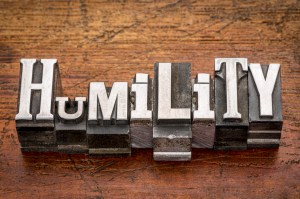
humility word in mixed vintage metal type printing blocks over grunge wood

By Mark E. Smith

A friend told me how she knew her fiancé was originally the right guy for her. They pulled up to a grocery store in his car, and she insisted that he go in alone. He never shopped without her and found her insistence odd. Upon his wondering what was going on, she burst into tears, explaining that due to her paralysis and related bladder control issues, she’d wet her pants.

She shared with me that, in the moment, she felt so embarrassed and humiliated, and didn’t know how he’d respond? After all, they’d only been dating a short time.

He hugged her, told her it was alright, then leaned back in his seat, closed his eyes and hummed. She asked what he was doing, and he explained that he was wetting his pants, too, so they could be together in the moment. They both burst out laughing.

What my friend’s story illustrates is what we all need in our lives and relationships, regardless of disability: humility and humor. Truly, if you can live just in that space – with humility and humor – you can gracefully move through even the most awkward of life’s moments.

So often we fall into modes of pride, perfectionism and self-consciousness, and everyone is defeated by it. Perfection in life is a myth, and when we fight against that reality – clinging to false senses of Pride – we and those around us lose. The destructive emotions range from feeling shame to pushing others away.

Yet, when we’re humble and acknowledge that we all have vulnerabilities, and have the capacity to laugh at ourselves in the most trying times, that’s when we’re most receptive and endearing to others. After all, empathy binds two people, and when you can build that connection with humility and humor, in life’s awkward moments, it’s arguably the healthiest approach to such circumstances.

Now, I’m not saying that wetting your pants will lead to true love – although apparently it can. What I’m saying is that living our lives with humility and humor, in spite of adversity, opens us up to others, and them to us. So, let us pass on pride and portrayals of perfection, and find humility and humor in who we are – wet pants and all.

What We Might Be

family16

By Mark E. Smith

The philosopher, Laozi, founder of Taoism, asserted, “When I let go of what I am, I become what I might be.”

How many of us have felt trapped in our existence at points in our lives, where circumstances dictate who we are? So much of our lives can be painfully defined by such aspects as our physicality, our family history, our socio-economics, and what’s projected upon us. I know, as I’ve spent my whole life as “one with cerebral palsy,” where from the moment of my birth, I was told what I am. If we go back in time, or even today, as some may still see me, seemingly incapable on realms ranging from the physical to the mental. And, in some ways, they are right. After all, as one with cerebral palsy, my wife does help me on and off of the commode, and, no, I can’t physically even write my own name.

I could have spent my whole life buying into what I am. We all could, no matter our circumstance or situation. However, there’s nothing to gain by buying into “what we are.” Rather, we have everything to gain by striving toward what we might be. I often recount the story of being thrust from an institutionalized school as a seven-year-old to being one of the first publicly mainstreamed students with a severe disability in the U.S. I had no support, but I did have two choices: I could be the child with severe cerebral palsy who many thought belonged in an institutionalized school – after all, that’s who I literally was. Or, I could push toward who I might be – that is, in my young mind, a “normal kid in a normal school.” Everyone knew what I was, but few believed in who I might be. At seven, I didn’t know who Laozi was, or even the gravity of what I was pursuing. The power of the human spirit drove me toward who I might be.

Here’s the key that I now realize: no matter where we find the courage, consciously or intuitively, we must believe in our power to rise above what we are in order to achieve what we might be. I know it’s hard. In ways, it’s easier as a child because the human spirit is naive to how brutal life can be. As adults, time can wear on us – broken and battered. Toxic relationships, dysfunctional upbringings, social pressures, and on and on can all weigh us down, teaching us what we are, in ways that defeat us instead of inspiring us. There was a period in my 30s where I looked in the mirror and saw what I was: a divorced, full-time single dad with severe cerebral palsy. That’s a grim prospect on the dating scene. What woman would ever take on that mess?

But, that wasn’t what I had to be. What I might be is a loving father, and a man who grew and learned from his past marriage, where life-long cerebral palsy instilled in me attributes of perseverance, self-confidence and empathy toward others who’ve faced adversity. Who I might be was once again what I looked toward, and while change didn’t occur overnight, it led to finding my wife and a second daughter, where my life has remained on an empowered, blessed trajectory encased by love for years now.

See, whenever we find ourselves trapped or discontent with what we are, it’s an opportunity to pursue what we might be. We don’t have to settle for where we’re at. We can strive toward what we might be. Is it easy? No. Is it scary? Yes. Might we fall short in the attempt? Absolutely. Yet, as one who’s found himself at such crossroads many times, indeed, it is only when I’ve let go of what I am that I’ve moved closer to what I might be.

One Night in Suite 500H

waldorf

By Mark E. Smith

When I roll into my suite at the famous Waldorf Astoria Hotel on Park Avenue in Manhattan, around 5:00 pm, nothing seems different from any other hotel – that is, except the suite is a multi-room apartment, with lavish mid-1900s furnishings and a view straight up Park Ave. I picked the room online through my Hilton Honors reward program based on location and accessibility. Frills don’t impress me; practicality does. I need a bed and an accessible bathroom – no more, no less. That’s how I ended up here.

So, late for a dinner engagement, I dump my well-traveled adventure backpack luggage on the rug in the entry and split.

Nice suite. Who cares. I’m out of here, late for dinner.

Around 11:00 pm that night, I return to the suite with my wife and her friends and everyone who’s met up in the city, and we gather in the living room. Good friends, great conversation, New York City on a Saturday night – great times. As the late night gets later, right before crashing into bed, I wind my way to the bathroom. I pass through a huge dressing room, and stop dead in my tracks as I gaze at the truly palatial bathroom. While it’s the biggest, most lavish bathroom I’ve ever seen – gold and marble throughout – that’s not what’s stopped me in my tracks. Rather, what’s stopped me in my tracks is there’s a step up to the bathroom, steps to every feature in the bathroom, and even the commode is recessed in a tiny closet.

It’s some time past midnight, I have to use the bathroom beyond belief, and I have no access whatsoever.

In these situations, I strive to retain the dignity we all deserve. And, I need to clarify what I mean by that. Sure, I could call the hotel staff and have an entourage of them do whatever it takes to get me into that bathroom. But, at what personal price? And, why, in 2016, at arguably the most prestigious hotel in the world, at which I booked an accessible room, should I have to?

I just want to pee like anyone else, and it shouldn’t have to be an all hands-on-deck production with strangers to do so.

I pick my battle, and just want to crash into bed, so we find a water bottle, I pee in it, and go to bed. The next morning, I use the wet bar in the foyer to get cleaned up for the day. Of course, I roll down to the manager’s office, and we have a very candid and poignant talk about my experience, where the error in accommodations occurred, and how they need better protocols.

If a dude books an accessible suite, he should get that.

Disability is a fascinating life experience. It’s not just grounding and humbling, but it demands that we maintain perspective. I suppose the Waldorf Astoria exists because some people see luxury and lavishness as adding some sort of value or meaning to their lives – and that’s fine. However, for me, for better or worse, I’m just genuinely grateful to use a bathroom.

Pursuing the Ultimate in Failure

emilyted

By Mark E. Smith

I don’t know if having my physical disability created my thirst for that which is difficult, or if it’s uncanny luck that as one who thrives off of that which is difficult, I was bestowed disability? Regardless, the two have formed an incredible synergy that’s fueled my life since I was a young child.

A big part of it is that, as a result, failure is innate to me. By physical nature of my disability, I fail a lot – sometimes as simple as tying my shoes or transferring from my wheelchair to the commode. Yet, what it’s taught me is that when we fail a lot, we counter-intuitively gain a confidence toward trying. If I do this, what’s the worst that can happen? I’ll fail. So what – I fail every day. But, I also have the chance to succeed. In this way, if we’re not afraid to fail, we’ll try anything, and when we’re that bold, it’s bound to lead to successes.

I witnessed this in action with my 19-year-old daughter recently. She took the bold step of doing a TED talk. Once you are selected, it takes months of work to prepare for the talk on stage. Then, when you’re up there in front of a live audience, with a huge production crew filming you, really it’s a chance for failure on the grandest scale. Some people try to cheat the risk of failure, wanting the glory without the guts. For example, at my daughter’s TED event, some other speakers used notes. However, you can’t fake risking failure, and when we do, we cheat ourselves in the end by not giving our all.

To the contrary, my daughter got up on stage with nothing but a microphone and the willingness to fail. She knew the obligation she had to herself and the audience to be authentic in every word that came not from shaky notes but the depth of her sincere heart. She was willing to risk failure in a shot at positively impacting the lives of countless others. And, that she did, arguably delivering the best performance at the event.

See, what I’ve learned is that the risk of failure shouldn’t deter, but inspire. As the adage goes, we shouldn’t dare to be great; rather, we’re great because we dare. As long as we try with absolute authenticity, we will risk failure while simultaneously setting ourselves up for success. It’s in that process of having the courage to put it all on the line – no matter transferring from a wheelchair to a commode or giving a TED talk – that our character is shown. Let us fail big and succeed even bigger because there’s nothing to gain from the safety of mediocrity….

The Greatest Election

winnie

By Mark E. Smith

I want to share with you one of the most influential, but least known, political races of all time.

The year was 1982, and it was a mid-term election amidst the first term of President Reagan. Two years earlier, in 1980, Reagan beat Carter in a landslide, 489 electoral votes to 49. There was, however, a bigger loser in that race – John B. Anderson, an Independent who garnered zero electoral votes. And, as history now shows, an even larger defeat was to come in two years, one that might even surpass Anderson’s.

By the 1982 mid-term election, a lot was at stake. The Dems needed to gain 27 seats or so to secure a majority in the House. However, down-ballot, there was a far more consequential election occurring, one that would alter my life forever: the Valley View Intermediate school elections.

See, I was on the ballot in the sixth grade, running for Vice President of School Spirit. After all, who was more fitting than me, the ever-chipper kid with cerebral palsy to represent school spirit?

Actually, Winnie, to be exact. Her name wasn’t really Winnie, but it should have been, as she was every bit as adorable and popular as Winnie from the television show, The Wonder Years. And, she was my competition.

Still, I wasn’t deterred. Like among the biggest losers of all time, John B. Anderson, I campaigned hard. I plastered the school with posters and even put a billboard on the back of my power wheelchair. I had a fighting chance, and I was going for it!

On the day of elections, I was more scared than I’d ever been. All office candidates had to give a stump speech in front of the whole school in the auditorium. As I sat on stage awaiting my turn, everything was a blur of sights and sounds drowned out by my pounding heartbeat – except for the unbelievable cheers and applause Winnie received after her speech. Then it was my turn.
I rolled up to the microphone and gave my speech – with courage and conviction – and as I finished, I realized I had no idea what I’d just said. Apparently, neither did anyone else, as they just stared, silent.

After votes were counted, I listened anxiously as the principal read the winners over the intercom system. Then, it happened – Winnie’s name was announced. No, they didn’t share the vote count – that is, how badly I lost – but some things are better left unknown.

I never ran for office again, but I say that having the courage to do so and learning humility through loss at such a young age was among my greatest victories. We can only hope that the conceding candidates in this election cycle possess the innate dignity and grace of a sixth grader.

Don’t Give Up The Ship!

dontgiveup_2

By Mark E. Smith

At this writing, my daughter is at rehersal with seven other speakers as they prepare for the next TED event in exactly one week. TED events gather the world’s best speakers throughout the year, filmed in front of a live audience, then they put the talks on TED.com where each talk reaches a global audience – typically in the millions of views. At 19, my daughter is among the youngest speakers TED has ever had. No, she’s not a PhD or a leading professional in any field. So, how is it she’s been chosen to not just speak at TED, but be the opening speaker, setting the tone for the event?

The answer is, she knows the subject. The theme of the event is don’t give up the ship – and she knows that well. In fact, it’s that very philosophy toward facing adversity that has gotten her not only to remarkable paths in life, but also to the literal stage of TED.

See, while it’s historically a maritime battle cry, what don’t give up the ship is really about for all of us, just as with my daughter, is how adversity is a solidifying force in our lives, teaching us to weather storms with strength and grace. So many who have never faced adversity understandably assume it a destabilizing force – and it initially is when we first face it. However, once we face adversity, we recognize it as an equalizing force. From that point on, it’s our ballast that adds remarkable stability to all aspects of our lives. Life occurrences that might throw others into a tailspin suddenly seem manageable, if not minuscule, because our understanding of adversity intrinsically gives us clarity and perspective to handle the really tough stuff.

In these ways, experiencing adversity adds ballast to our lives that allows us to weather storms with amazing strength. And, when it comes to not giving up the ship, having previous experience in adversity is our best skill set at the helm. Let adversity not be our deterrent, but our guide, and never give up the ship!

From Rocks to Balloons

balloons

By Mark E. Smith

Why do you eat at your favorite restaurant? Is it the food?

And, what’s been your favorite job? Was it because of the salary?

As different as these two questions seem, the answers are one in the same: the people.

The theme to the television classic, Cheers, where everybody knows your name and they’re always glad you came, tells a life truth – that is, the quality of the people in our lives directly correlates with the ultimate quality of our lives.

From family to friends to colleagues to acquaintances, people in our lives aren’t hard to come by. However, how well do we really vet them? I don’t mean that in a snobbish way, but in a healthy, heartfelt way. Are the people we surround ourselves with bringing positive aspects into our lives or negativity? In fact, even neutrality leans toward negativity because such individuals aren’t enhancing our lives, just existing in it.

My wife and I are working on an ambitious personal project, and it’s required us to assemble a team of varied professionals. Competency is a given, but we’ve also understood that in order for the project to succeed, we needed to assemble the kindest, most empathetic souls. And, it’s worked. Slowly, we’ve seen this diverse cast of characters come together who are truly loving, supportive people. Every get together just elevates everyone’s spirits. The project is the project, but it’s the quality of the people that are elevating not just its success, but all of our lives in the process.

Yet, there’s a process to having quality people in our lives, an awareness that has to occur, especially with those we spend a lot of time with. Not everyone is a right fit. How do we know? We feel it. There are those in our lives who bring an incredible spirit that leaves us feeling great, and others who emotionally pull us down. For me, I go by my “hug factor” – that is, if I feel the natural draw to hug someone after spending time together, that’s someone who’s a great force to have in my life. However, if someone makes me feel some sort of negativity, I know it’s someone to keep at arms length or eliminate altogether from my life. I want to hold on to helium balloons that uplift, not rocks that sink. I likewise, though, strive to equally be a helium balloon to others – and, man, if you get two helium balloons together, a sky of unlimited possibilities is literally yours.

Sometimes this process is innate when we’re lucky; sometimes it takes awareness, which is most common; and, sometimes it requires difficult decisions, setting boundaries. My wife and I have had someone on our project team who by profession had to be involved, but has become a very negative force. No matter the kindness all have extended, this individual has ticked everyone off with rude comments and an overall negative disposition. Needless to say, this individual won’t be invited to the wrap-up party. Yes, we should always extend empathy, but we likewise shouldn’t allow negative individuals to pull us down. And, in leadership roles of groups, it’s vital for morale not to allow one individual to diminish the camaraderie of the group.

Ultimately, we can’t always control who’s in our lives. Yet, we can control how we recognize and interact with them. Observe how those around you effect you and others, and realize that the quality of those in your life directly correlates with the quality of your life. So, let the rocks go, and grab on to those helium balloons. They will elevate your life, as you do theirs.