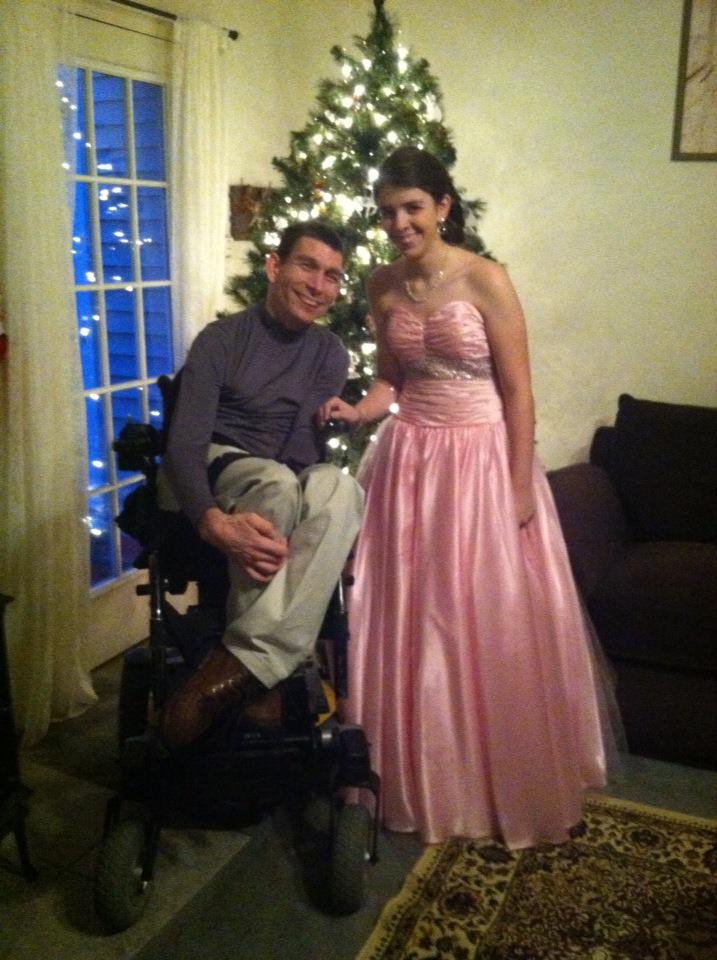
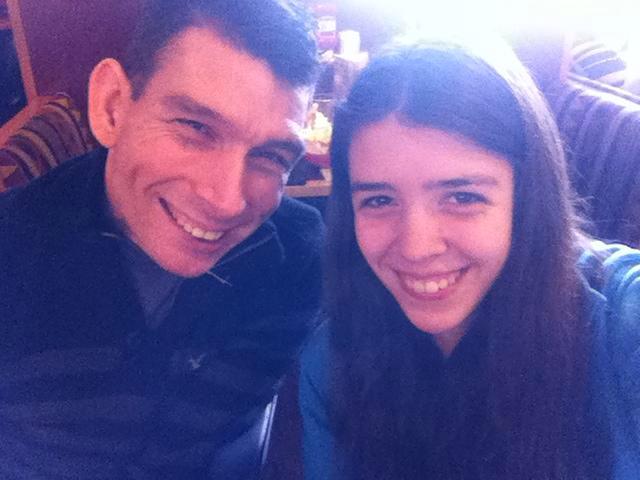
Find A Way

findaway

By Mark E. Smith

I’m not a miracle worker, but no matter what problem you throw at me, I can tell you in three words how to solve it: Find a way.

If there’s one life-changing, ever-empowering truth that disability experience has taught me, it’s that there’s always a way to resolve or accomplish what we wish – we just have to find a way to do it. It may not be initially evident; it may not be easy; it may not seem practical; and, it may even seem ludicrous. Yet, to any challenge or situation in life, there is a way to resolve it – we just have to find the way.

I often share the story of my shoe laces. For the first 25 years of my life, I couldn’t tie my own shoes based on my lack of dexterity and coordination. Now, in the grand scheme of life, not being able to tie one’s own shoes may not seem like a big deal – after all, there are far more serious limitations in life – but it was one of the last pieces to my physical independence. The ability to tie my own shoes meant the difference between being able to fully dress independently or forever rely on others.

For years, I tried all sorts of shoes, with all sorts of practice. But, alas, I could never coordinate shoe laces well enough to tie them. I even got to the point where I could make the loops, but as I went to cross them, all fell apart. It was forever frustrating, to say the least, right down to my brother having to tie my shoes on my wedding day.

Yet, after years of practice, trial, error, and failure, I was so close to tying my own shoes that I knew that I could do it – I just had to find a way. And, so I reanalyzed my process, and realized that where the issue was, was that when I went to cross the shoe lace loops, my poor coordination over-extended the shoelaces, causing them to come undone. If only I had more shoelace length to work with, I could cinch the loops before pulling the ends out…. And, in that was the answer: get longer shoelaces! Indeed, I found a way, and till this day, 72” shoelaces are the solution I use to tie my shoes. It wasn’t that I couldn’t tie my own shoes; rather, I simply had to find a way to do it.

Finding a way is amazing because it empowers us to find a solution to any problem rather than accepting it. A task or situation may seem impossible, but if we truly believe that there is a way to successfully solve it – we just have to find it – it inspires us to not just try, but try harder, as well as go into situations with a can-do attitude.

I admit, I’ve become pretty skilled at finding a way, where when I encounter a challenge, I don’t shy from it; rather, I go into find-a-way mode. I recently wanted to interview a business titan for a book I’m writing. The individual is bigger than life, worth an estimated $2-billion, and has an insanely busy schedule. I remember thinking, How am I going to track this individual down, let alone get a several-hour interview? The answer immediately struck me: Find a way.

I thought for a moment who might have the individual’s personal contact information – as I wanted to get direct to the source – and with a single email exchange, I scored both the individual’s and the individual’s assistant’s contact information. Bingo! I then sent an email to the assistant, and within 20 minutes, I had an interview scheduled. I flew to the individual’s headquarters, and ended up with an amazing two-hour interview. If I had told most folks who I wanted to interview and where, they would have thought it crazy. There’s no way you’ll pull that off, most would have said. However, knowing that I just had to find a way to pull it all together made the seemingly impossible ridiculously easy. There I was, having flown partly across the country, sitting in the individual’s stately office, hearing amazing, never-before-told stories to include in my book.

See, that’s the eloquence of find a way – it immediately makes the impossible totally plausible. Are you having difficulty accomplishing a goal? Find a way. Are you struggling to get the results in a particular aspect of your career that you want? Find a way. Do you want to make major changes to your life? Find a way. Do you want to live your dreams? Find a way!

No, anything truly worth striving for isn’t easy, nor without complications. But, if it’s truly worth doing – if you’re truly dedicated to accomplishing it – there’s a way to do it. Find it. Live it. Never give up hope, as there’s always a way….

Dream On

equalrights

I never doubted that equal rights was the right direction. Most reforms, most problems are complicated. But to me there is nothing complicated about ordinary equality. -Alice Paul

By Mark E. Smith

When I was born, there was no humility in disability, just the medical authority calling people like me the vegetative minority. No, I couldn’t walk, speak or crawl; but, with my toddler eyes and ears, I saw and heard it all. Dream on.

And, as I grew, no one knew what my fate would be, a prognosis based on speculative hyperbole. But, still, with ignorance, everyone all labeled me – crippled. …Yep, that was me. Yet, inside hid the person I knew I could be. And, at night, when I cried — trapped by an ignorant society — even my mother couldn’t comfort me. Dream on.

When I was seven and sent to the back of the church, I was taught children like me didn’t go to Heaven. How could a God, who I came from, not let me with a disability into his kingdom? It wasn’t some Father’s place to say we aren’t anointed by the Lord based on physicality, when inside me, I knew I was appointed, worthy of spirituality. Dream on.

Mainstream education brought taunts and stares – kids who didn’t know better, teachers who didn’t care. I could read but I couldn’t write, so I bought a thrift-store typewriter and clicked the keys, teaching myself to type one night. And the words that flowed were bold and grew, and I knew I had something to say to the world – even at eight years old. That’s right. Dream on.

My family fell apart, ignorance toward my condition stung at my heart, and back in those days, a step into a store meant I could get in, and they had the right to refuse me service, a hypocrisy to no win. America the beautiful, the bold and the brave; but, my wheels of steel made everyone my master, gave me little more than the rights of slave. A country founded from oppression, surviving wars and the Depression, and I still I faced daily oppression? Stigmas did follow me, and I felt this: Where was truth in equality? Dream on.

But, for me segregation didn’t stop my education, and I wouldn’t give up my mind’s elevation. Heart strings tatter, but a spirit that wouldn’t shatter, I’d just move on; different day, same song. Things went wrong, but I’d move on. Dream on.

I remember at the prom when she wouldn’t dance with me, then going home that night, questioning my sexuality – for months it went on, the depression, a repeated song. I awoke in the hospital despite the pills taken, and it registered with me that I wasn’t a soul forsaken. I was who I was and just had to be me, why drown in self-loathing when I could swim in a sea – of acceptance. That had to be me. Dream on.

It all got easier as I went, worth the sweat and the tears that were spent – but who knows. I was always told that life goes as it goes till we grow old, and the forces that once held us down soon push us up from the ground. Our weaknesses become our strength, and those who’ve wronged us, we should thank – adversity from diversity is a character that we build, and successes that are earned create lives that are willed. Dream on.

Still, think what you will, but when I travel from the Pacific Northwest to Capitol Hill, there’s ground to be gained, equality sustained, where one nation for all is exactly where we fall – short. And, until everyone – regardless of disability, gender, sexual orientation, race, or religion, of unity, not division –is seen as humanly proficient, not different or deficient, I will continue to question America, the bold, the beautiful, and the brave as it holds up discrimination and prejudice to save – yes, even in this so-called progressive age. Until there’s equality for all, as a nation we fall. But, as for me, I’m optimistic. I dream on.

Empty Chairs

KITCHENCHAIRS

There’s a grief that can’t be spoken. –Empty Chairs at Empty Tables, Les Miserables

By Mark E. Smith

I’m really striving to keep a super clean house these days. It’s always been tidy, but after 11 years of living there, dust bunnies and cobwebs collect in corners. However, my close friend sneaked into my house while I was away working an Abilities Expo, and did a dramatic deep cleaning, where my kitchen looks new again. So, I’ve been doing my best to keep the house spotless.

Yet, my 16-year-old isn’t so mindful. She has a bad habit of piling jacket after jacket on a kitchen chair. And, with her virtually never home anymore – at school during the day, and drama rehearsal, band practice, and hanging out with friends at night – I’m the cerebral palsy version of Ozzy Osborne, with this over-the-top career by day, but puttering alone in the house in the eves, somewhat lost beyond my work.

So, amidst my immaculate kitchen, I saw my daughter’s myriad of coats, sweaters, and hoodies once again piled on a kitchen chair one evening, and I got really mad. How come she can’t just put these jackets in her bedroom? I’m stuffing all of this in a garbage bag, putting it on the curb, and teaching her a lesson!

Of course, I didn’t really do that. Instead, I went and lay on my bed, surrounded by the silence of the house. And, when my daughter got home around 10pm, I asked her how rehearsal was, not mentioning the jackets piled on the chair.

A few days later, I was working on a project, and a distant colleague raised a very trivial issue, one of no real consequence other than to get a rise out of others. “Why’s he making an issue of nothing?” I asked another colleague.

And, she said among the most profound insights, “Sometimes when people feel a lack of control over aspects of their lives or careers, they focus on that which they can control, the small things.”

Indeed, we do often focus on the small things that we can control when the bigger aspects seem overwhelming or uncontrollable. In the wheelchair world in which I work, consumers sometimes hyper focus on small details regarding a wheelchair, only later to share how overwhelmed he or she is by the entirety of disability experience, that the small issue with the wheelchair was merely a way to avoid facing the larger issues in life. Similarly, think about how often emotions build up in relationships, where a small issue ends up representing much deeper issues. Even in the movies, think about how often one character wants to tell another his or her feelings, but can’t get the words out, instead rambling about something trivial – it’s a classic cinematic tension builder based on human nature. …It’s true that it’s often emotionally easier to hyper focus on small issues rather than tackle the big ones – especially when we’re not ready or don’t feel emotionally safe doing so.

For me, I immediately thought back to the jackets on my kitchen chair. In the grand scheme, it really doesn’t matter if they’re there. But, as a single dad puttering around my empty house, it’s about all that I felt that I could truly control these days in the larger picture of my parental life. After all, my daughter’s growing up, times are changing, and while it’s all good, healthy, and normal, it’s also a bit scary – namely on my own, as a single dad, where my daughter has been my foremost focus. It’s the realization of, Wow, I’m not caretaker of a child anymore, but father of a wonderfully-flourishing young lady…. and where do I fit into all of this, and go from here?

Of course, I know the logical answers. My role remains vital, where my daughter comes home at night, plops on the big, stuffed chair in my master suite, as I’m already tucked in bed, and I listen to what’s going on in her life, asking questions, sometimes giving advice. Sure, she still needs me very much – just in different ways – and I’m forever there for her.

But, the heart isn’t so logical. It realizes that my little girl is growing up, and soon the jackets piled on the kitchen chair will be a fond memory as she heads off to college. And, there’s both a joy and sadness in that process. So, what I’ve realized is that those aren’t just jackets piled on the kitchen chair, but my own emotions as a father watching his truest pride, joy, and love grow up – and rightfully struggling with it all.

And, so for now, I’ll just leave the jackets on the kitchen chair, not worrying about it, but appreciating this stage of her life – our life – before it changes even more. Why strive to control such trivial aspects when I can just enjoy the more important aspects of life as a father.

Days of Powdered Milk

powdered-milk

By Mark E. Smith

People keep asking me about the recent issues – actually, I don’t even know what to call them – at The Scooter Store, leaving a reported 1,800 people out of work on “furlough,” many in a region of the country where jobs are hard to come by.

As I’ve explained to a few, I don’t know any more about the situation than what’s been posted on news outlets. However, what I do know is that I feel deeply for the employees and their families. See, these are 1,800 hard-working Americans, doing jobs as phone operators, data processors, delivery drivers, and virtually every other honest position one can hold. They are moms and dads, some single parents, some working their way through school, most paying bills on Friday and going to church on Sunday. Indeed, for me, there’s not a story about The Scooter Store, but 1,800 stories, ones of how the rent will get paid, ones of keeping gas in the car, ones of, How do we survive as a family from here?

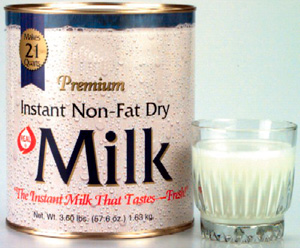
I truly don’t know precisely what the 1,800 families of The Scooter Store are going through, as I have a good-paying career and don’t need to worry about rent or gas these days. However, I come from a very humble background of being poor at times as a child – I remember being in food lines with my mom to get big boxes of government powdered milk and blocks of cheese – and it’s stuck with me my whole life, never wanting to go back to that. And, so, I can only imagine how scary this time is for the 1,800 families of The Scooter Store, including their children.

Beyond the fear of being broke and hungry, I also relate to the all-American work ethic that most of The Scooter Store employees personify. Folks are sometimes kind to note my talent based on the volume of my career, but it’s truly an allusion. Really, at the heart of what I do is simply an intense work ethic, where I keep my mouth shut, my head down, and do the best possible job I can in any given situation. And, I learned long ago to never say no to any type of work, no matter the task or amount – because that’s what it takes to survive. Nashville for a conference? Sure. L.A. for the Abilities Expo the next week? Of course. All of my other duties, and working on a book at the same time? Not a problem – I’ll do it all. I don’t care how heavy the work load, how tough the independent travel, how exhausting the schedule, I’m just grateful to have the work. And, I forever watch, listen, and learn as I go.

See, when you know where you come from – just poor – and you know that you can go back to that at any time, and the only line between then and now is hard work, you work really hard, like your life depends on it – because it does. Mine does.

Disability experience teaches us all a lot in that way, where often all we have to get us through is pure tenacity, and when we rely on that, it’s really all that we need. Talent and luck can get you so far, but just good ol’ back-breaking hard work is among the truest keys to not just surviving but thriving. And, when something doesn’t work out, you’re ready to employ Plan B, C, and D, doing whatever it takes.

My brother is presently a great example of a life fueled by tenacity and back-breaking work. He’s a master tile setter, living in a very expensive part of the country. In order to afford a home for his family, he lives three hours from the city where he works. He gets up at 2am, six days per week, drives three hours to work, sets tile all day, then drives three hours home – generally just to go to bed and get up and do it again. So, why does he do it? Well, he knows the value of hard work and keeping the lights on. We were in government food lines together, and he never wants to go back there, either. He couldn’t afford to give his wife and daughters the lifestyle he wished in the city, so he moved where they could afford, making remarkable personal sacrifices in the process. He’s no genius or extraordinary talent; rather, he’s just working really, really hard.

And, for the 1,800 employees of The Scooter Store, who worked really, really hard, and now find themselves wondering how to pay the rent and keep gas in the car, my sentiment is this: Let’s not allow these families to get lost in a news story about whatever becomes of The Scooter Store; rather, let us each remind ourselves where we come from, and how scary it would be to be out of work, maybe even waiting in a food line for government boxes of powdered milk and blocks of cheese. Most of all, let’s keep those 1,800 Scooter Store employees in our prayers.

The Humanity of Foot Washing

footwashing

By Mark E. Smith

There’s been an amazing trend across the country of very financially and socially successful people – from business titans to professional athletes – washing the feet of the homeless.

Now, we know how superficial we in the U.S. can be, where many look down on the homeless, walking around them on city sidewalks like they’re invisible.

And, yet, they’re not invisible. They’re as human as you and me, with a value and depth to their humanity that’s no less than anyone else’s. And, this is where foot washing comes in. See, while “foot washing” is biblical, it’s also very much about humility. It’s about simply connecting with others as-is, caring just to care, loving just to love, where superficial pettiness doesn’t separate us. Rather, our humanity unites us. After all, what’s more socially leveling and caring than washing others’ feet?

I’ve just entered my 42nd year, and if there’s one lesson I’ve learned in my life it’s not to judge others – and not to allow them to judge me. My ultimate role is to love and be loved, as ideally all of our roles should be. I don’t care if you’re worth $2-billion like a gentleman I’m currently interviewing for a writing project, or if you’re flat broke like a homeless gentleman I met in Vegas last summer and shared a poignant moment with. You can smell like cologne or urine. You can live in a mansion or a shack. You can be of any color, of any religion, of any sexual orientation, from any educational background. I don’t care. My only concern is, are you a kind person, and if so, I will be glad to wash your feet, human to human, where I trust you’d do the same for me.

The fact is, in my 42 years, I’ve known the pain and injustice of, as Martin Luther King Jr. put it, being judged not based on the quality of my character, but the color of my skin, so to speak. Strangers and those close to me alike have judged me many of times, obviously based on my physical disability but for other petty reasons, as well. And, it all hurt. However, it’s all taught me to love and accept others at deeper, truer levels. I will love you for you, as-is, period. And, it’s an amazing process where it’s brought amazing people into my life who I wouldn’t have known if I were judging and stereotyping.

For some of us, we see having the opportunity to “wash others’ feet” as a blessing. Yet, imagine how wonderful it is to have one’s own feet washed, to just know that someone cares.

Jumping Off Cliffs

cliff

Your time is limited, so don’t waste it living someone else’s life. Don’t be trapped by dogma – which is living with the results of other people’s thinking. Don’t let the noise of others’ opinions drown out your own inner voice. And most important, have the courage to follow your heart and intuition. -Steve Jobs

Mark E. Smith

At what points do you throw logic and reason and expert opinions and friendly advice into the wind and just believe in yourself? Everyone in the world can tell you that if you jump off of that proverbial cliff you’re going to die. Yet, you know something they don’t: You’ve jumped off of that cliff many times, and haven’t just survived, you’ve soared.

There’s a lot of value to following others’ advice, to not making the mistakes they’ve made. Yet, what about what you know, what about what you’ve learned, what about the power that your spirit has taught you, truths that others — more realistic, more grounded, with less vision — simply don’t know or understand? Maybe you have done the seemingly impossible, maybe you have seen fairy tales come true, maybe you have experienced what others will never understand is possible. Why let the ordinary dictate your life when you can live the extraordinary.

I look back on my own life, and if I had listened to anyone but my own potential, will, and heart, I wouldn’t be here, period. I was supposed to be a vegetable, with no cognitive skills. I was supposed to fail as among the first mainstream students. I was supposed to never have kids or career or live independently. I was never supposed to accomplish virtually everything I’ve accomplished. I’ve always been told that I’ll never succeed at this or that. But, every time I’ve found myself perched on a cliff, where everyone — following the rules of gravity, medicine, psychology, social norms — told me that I was destine for failure, I’ve just looked back, smiled a confident grin, and jumped, never hitting the ground but soaring.

Of course we, ourselves, can be our biggest roadblocks, where past disappointments and fears can keep us from making life-changing leaps of faith. I’m not going to apply for that job because I’ll never get it…. I’m not going to pursue that relationship because it’s just going to end in heartache…. I’m not going to follow my dream because it’s too unrealistic…. No, if we’re ever to achieve what we truly want and deserve, it requires us to make huge leaps of faith at times. We don’t know we can soar till we make the leap.

You’re going to find yourself at crossroads in life, perched on cliffs of decision, where everyone is going to give you advice, telling you it will never work, you’ll never succeed, you’re in denial, you’re destine for failure. Maybe you’ll even doubt yourself. But, if you simply trust that we all can accomplish the seemingly impossible, that fairy tales can come true, then you’re going to look back at the crowd, maybe even look at your own fears, smile a confident grin — because your heart and spirit know best — and you’re not just going to jump, you’re going to soar. All it takes is that one leap of faith to better your life forever.

Open-Ended

LOVE

By Mark E. Smith

I love you without knowing how, or when, or from where. I love you simply, without problems or pride: I love you in this way because I do not know any other way…. -Pablo Neruda

As we sat talking – strangers seated next to each other on an airplane – I told him what I know about love as I glanced out the window, clouds beneath us drifting by, uncertainties ahead, the unknowns of travel and life….

Love isn’t about chances, I told him. It’s about trust. When you see a woman walking toward you – maybe the most beautiful woman you’ve ever seen – and you smile warmly, looking into her eyes, you trust that she’ll smile back. Maybe it’s a stranger, and the electricity of her eyes says it all. Or, maybe she’s someone you know, and the squeeze of her hug says it all. However it occurs, it’s not about chances, it’s about trust.

When you ask a woman out on a date – maybe you put it casually, Do you want to go grab something to eat? – it’s not about chances, it’s about trust.

When you’re the first to initiate any milestones – …Can I see you again? …Do you want to come in? …How about meeting my friends? …What would you think about us going away this weekend? …I’m falling in love with you… – it’s not about chances, it’s about trust.

When there’s a petty argument, a disagreement, moodiness, and you’re the first to say, I’m sorry, it’s not about chances, it’s about trust.

When either one of you is confused or scared by it all, don’t run away from the relationship, run toward it. And, if she says that she needs time and space – maybe she’s even told you, It’s over – you step back as a gentleman, as a guy who cares and understands, and you give her that time and space because love isn’t about chances, it’s about trust.

And, when you have her picture still on your dresser, looking at it with fond memories – her head tilted back, smiling – but she’s not calling you on the phone anymore, your heart isn’t aching but warmed. Because, love isn’t about chances, it’s about trust.

Now, I can’t tell you whether it’s over or not in such cases – sometimes love has a vagueness and timing of its own. The cadence of the heart can’t be explained. But, I can tell you this: Love isn’t about chances. It’s about trust. …And, if you’re going to love – truly, madly, deeply – you have to trust more than you ever thought possible.

And, the clouds – the clouds, looking like I could float on them – just kept drifting by….

The Real American Dream

537534_10200108382422591_1767967630_n

By Mark E. Smith

We often hear of the American Dream, but what does that really mean? In my home, it means a lot – because we’re living it.

This past week, I was in Atlanta, working with the Georgia Association of Medical Equipment Services, advocating at the Capitol and its Legislature for sustained mobility funding and disability-related services.

Before I left, my daughter and I sat at our kitchen table, and laid out our 2013 schedules, finances, and priorities. As a family – even though it’s just the two of us – we must be on the same page, as a team, pursuing my goals, her goals, and most importantly, our goals as a family building a legacy.

At just turning 16, my daughter is on her high school’s honor role, and on an Ivy-League track toward college, leaning heavily toward an ultimate doctorate in psychology. She plays and holds a seat not just in the school band, but regional orchestra, too, and is next auditioning for the state level in March. She’s a member of the National Thespian Society, where she acts, as well as serves as Secretary for her troop, and she’s a gallery-shown photographer. This summer, she’s attending George Mason University, where she was nominated as among the top 250 youth leaders in the country, and she’s also volunteering as a counselor at a muscular dystrophy summer camp. Yes, the kid is freakin’ awesome, nailing life at 16!

My career continues in full swing, where I have more corporate, advocacy, writing, and speaking projects lined up than in the history of my career, and what I’ve accomplished in just the first month of the year makes my head spin. Again, I was in Atlanta last week – recently back from Detroit! – now I have a radio interview, magazine columns (both in print and in process), a MDA Muscle Walk fundraiser, which I’m helping coordinate, an on-going book project, engagements in Nashville, and Los Angeles, and a full-time corporate job, message board, and weekly blog. And, that only gets me to mid March! (Then it’s Capitol Hill time, Abilities Expos… you get the idea….)

Yet, as a family, my daughter and I not only have to annually budget time, but also finances. We take money management very seriously in our home, where it’s not just about wealth-building and security, but “stewardship.” We believe that what we’re blesses with isn’t truly ours, but that we manage it for a greater good. We live totally debt free, put necessity before want, share with others, and give as much as we can to charity. We don’t live with a scarcity mindset, where we hoard for ourselves; rather, we live an abundant mindset, where there’s enough for us to really enjoy life and not worry, but we have the ability to give generously, as we believe giving to others is the absolute most fun that one can have with money (and, it’s the reason why we’re “stewards” of income – that is, to ultimately do good with it for others, as opposed to seeing it as ours to keep).

But, here’s what struck me about our 2013 family schedules, finances, and priorities meeting: We’re living the American Dream. In two generations – mine, now my daughter’s – we’ve changed our family tree beyond what many would deem possible. The number of firsts for us is astounding. Although a non-traditional family of just the two of us – there’s no mother figure in our family photos – we personify the American Dream.

See, it’s easy to look at me in a suit and tie traveling the country, speaking to audiences, or read my magazine columns, or know of my corporate career, or see me sunning on my boat or jetting off to Vegas, and say, Sure, Mark, life is easy for you when you and your daughter have money and opportunity….

However, the fact is, I was born into less than nothing, with the four generations before me living in abject poverty, all addicts, most serving prison time, none with an education, most just to steal and harm whoever they could. As I open some of my speaking engagements, On the day I was born, my grandfather was in prison, a lifelong criminal; my grandmother was a heroin-addicted prostitute; my father was an alcoholic, drinking in a bar at noon; and, as I was born on that day, I wasn’t breathing….

And, my family tree got worse from there. My grandmother called my mother on the phone and shot herself in the head, committing suicide. My grandfather died of a heroin overdose after endless years of prison time. Both my parents were Skid Row alcoholics, dead by the time I was 40. And, it all made sense, going back for generations on both sides of my family.

So, how did my daughter and I end up here today? Well, there’s been a lot of hurt, pain, struggle, and success in-between; but for me, it all started with getting myself in and out of a bathtub at age 11, where I simply learned that with unyielding tenacity and vision, my potentials could extend as far as I wished. I couldn’t just change the direction of my family tree, I could grow my own. …And, I did.

I was the first one ever to graduate high school in four generations. I was the first to go through college. I was the first to never serve jail time. I was the first to have a career. I was the first to own and invest. I was the first to not be an addict of any sort. I was the first to not do what those before me and around me had done, but to live by a radically different moral and ethical compass. I was the first to live the American Dream.

Yet, the climb has never been linear. Many of the ghosts of my heritage have chased me at times. At 17, I awoke in intensive care after my own failed suicide attempt. I got myself horribly in debt in my 20s. And, I have yet to sustain a life-long romantic relationship. Yet, every time I’ve fallen down, I’ve used second chances, which we all have, to make things right. I immediately got into counseling at 17; I worked my way out of debt in my early 30s; and, at this writing, I’m currently in counseling, striving to take accountability for a string of ended relationships, and get this whole love life thing right. Indeed, the beauty of the American Dream is it gives each of us the chance to change the directions of our lives at any time and redefine who we are. Again, we can get knocked down and fall down, but we have the chance and the choice to get up stronger every time. And, I’ve never passed on that opportunity.

And, while my daughter’s life hasn’t been a piece of cake, either – her mother ultimately unable to break free of her past and demons, to the point where she hasn’t been in my daughter’s life – my daughter has taken the torch of the American Dream, and ran with it. What we’ve both learned is that life isn’t what you’ve been born into; rather, it’s what you make of it, and despite hardships and hurt, you can move through it all, day by day, hurdle by hurdle, to success that you’ve earned by simply striving to do right – that’s living the American Dream.

Attitude of Gratitude

nick surf

By Mark E. Smith

I want to talk to you about being our own brain surgeons, rewiring our thought processes from the negative to the positive. You don’t need a medical degree to do this; just a willingness to choose to see one over the other.

See, it’s proven that our brains are naturally more attracted to negative thoughts than positive thoughts. You might say that negativity has a larger imprint than positivity in the physicality of our brains. Clinically, it’s called the “Negativity Bias.”

The way the negativity bias works is that when, for example, twenty people tell you how great your hair looks, and one person says that he or she doesn’t like it, that one put-down will stick with you every time you look in the mirror. And, we know from psychology that those constantly exposed to abusive relationships – constant put-downs – they lose the ability altogether to recognize what’s positive and healthy, drawn toward negativity like magnets.

I don’t know where my wires got crossed, but I’m just the opposite – positivity has a much bigger imprint on my brain than negativity. I call it my attitude of gratitude, where I just feel blessed no matter what. And, I probably shouldn’t have such a positive outlook, based on the cumulative adversity and negativity that I’ve faced in my life. I mean, the list is endless. However, what’s remarkable is that I’m not the only one. I’m forever impressed by my peer, Nick Vujicic. Nick was born without arms or legs, among the severest of disabilities you’ll ever see. And, in school, the bullying and social stigmas never ended, where Nick, in his own words, was the local freak show. Yet, while such a horrendous childhood would blacken most people’s hearts, it actually opened Nick’s. Today, at age 30, he’s the most sought-after inspirational speaker in the world, has a New York Times best-selling book, and a wife with their first child on the way. And, although Nick can’t drive, he owns his beloved classic hot rod car. No arms, no legs, but with his attitude of gratitude, Nick is literally Unstoppable (the title of his best-seller, by the way), among the most positive, loving people you’ll ever meet.

Nick proves a profound lesson to all of us: How to truly live. Why let the negativity of your life – or even physiology of the brain – dictate our potentials when we can be our own brain surgeons, so to speak, and dictate positive life paths over negative ones?

Speaking for myself, there’s little room in my head or heart for anything but joy and gratitude. I know that for every negative emotion, there’s a more powerful, productive one. Why argue when you can hug; why question when you can understand; why be bitter when you can be thankful; why condemn when you can uplift; why be offensive when you can be gracious? Why not just love and be loved? It’s the greatest, easiest, most-fulfilling way to live. No one or nothing can do you wrong because you only know what’s right. How powerful is that!

I encourage you to take a look at your life, define the negativity from the positivity, and steer your life toward the positives. See the sunshine through the clouds, and focus on that. It may be scary at first. It may require you to make major changes in your life. It may even require you to be a bit humble and apologize toward those you’ve wronged through being trapped in negativity. However, that’s the beauty of the “Negativity Bias” – it’s just a bias, and biases can be changed. You are a brain surgeon, skilled enough to switch your thinking – make that, your life! – from the negative to the positive. Shift from a negative to a positive bias, and open your heart – I guarantee that your life will head in directions that you never dreamed.

When a Smell Isn’t a Smelll

735042_10200281859839418_1804006375_n

By Mark E. Smith

My daughter and I were talking about the horrors of care facilities, and one in particular came up that I’ve visited, where the odor was overwhelming.

“They should hire you to fix that kind of place,” she said, with a belief in me that only an adoring daughter can have in her father.

“It’s not that easy,” I said. “See, in order to make it a better place, I’d have to get rid of the bad smell, and that’s a huge task.”

“How hard could that be?” she asked. “It’s just a smell.”

“Really hard,” I said. “The smell isn’t just a smell. It represents what’s called systemic issues. The smell is caused by much larger issues.”

“Like what?” my daughter asked. “Can’t you just get rid of a smell?”

“Not in this case,” I replied. “See, the smell is caused by overall improper care, from soiled bedding to poor hygiene care of clients. In order to get rid of the smell, you’d have to change the entire infrastructure of care.”

“How would you do that?” she asked.

“Well, you’d start with the management and work your way down – leadership is where accountability for the smell starts, but not where it ends. Every employee there is ultimately accountable.” I explained. “You’d have to change the way everything is done, retrain staff, probably fire some and hire some. But, once the smell was gone by dramatically changing the way everything is done, you’d have among the best run facilities in the country.”

“So, to get rid of the smell, you have to get rid of the real problems, and that starts with the people who run the place because they’re allowing all of the problems to happen, right?” she asked.

“Exactly,” I said. “You have to find the root causes and fix them. Someday you’ll learn in life that most often a seemingly small symptom is the result of a very complex cause – from relationships to business. … A smell is never just a smell in these cases. Always look deeper.”