Rings we Wear

By Mark E. Smith

There’s so much to be said for self-acceptance and just presenting ourselves to the world as who we are. No masks. No Facades. Just be thankful for who we are, and whether others accept us as… well …just us, doesn’t really matter. And, in that spirit, here’s my spoken word piece, Rings we Wear.

Something About Mary

maryboegel

By Mark E. Smith

When Mary and I talked in the Biltmore hotel’s bar in Los Angeles three years ago, there was an unusual familiarity. We both have always been around wheelchairs — and the close-knit community that innovated them since the 1970s — but somehow never knew each other, personally. We both knew of each other, and certainly knew everyone else, but oddly just never crossed each other’s path. Yet, both knowing everyone else in the bar, as well as traveling in the same circles for 30-something years, we had an instant known-you-forever connection.

However, as I’ve learned in the subsequent three years, Mary’s graciousness had nothing to do with our common experience and friends. Rather, the instant comfort and connection I found with icon, Mary Wilson Boegel, one of the original Quadra wheelchair crew members, was simply who she is — open, embracing, encouraging, love-filled — regardless of who you are. I’ve since seen her light up every room we’ve entered when we’ve been on the road at various expos and events. And, whenever anyone needs anything, Mary and her husband, Bruce, are always there to help. She even is so gracious toward my daughter, always acknowledging her accomplishments via Facebook. There’s just something about Mary, a true soul mother to many.

And, so it was no surprise to me that on the recent 40th anniversary of the injury that caused her spinal cord injury, she shared with us who know, adore, and love her one of the most amazing pieces of writing I’ve seen on the subject, a piece that doesn’t just address her disability experience, but so beautifully captures many of our experiences who’ve used wheelchairs for decades now. And, the lesson that she ultimately shares is… well… breathtaking.

It’s with great privilege that I share with you this amazing piece of writing by such an amazing woman, where may you be blessed by having a bit of Mary’s spirit in you.

There’s Something About 40
By Mary Wilson Boegel

Today is the 40th anniversary of the day I broke my back and began living with a spinal cord injury. I have certainly acknowledged this day in my heart each year, but there’s something about 40 that steps up one’s self-awareness – reflection, which then turns to gratitude. And, of course, love… the greatest gift of all.

So much has happened in these 40 years. Huge challenges, which continue to help me nurture strength, creativity, perseverance, compassion, vulnerability, humility and, then, solutions wrapped in gratitude. And, all the amazing people I am blessed to know and have in my life… love is the best anyone can hope for… giving and receiving… I am truly blessed.

In the spirit of “you’ve come a long way, baby,” here’re just a few:

The doctors gave me a lifespan of 15 years maximum in 1973. There was no ADA. Nobody wanted to hire me. Nobody wanted to rent me an apartment because they were afraid it would offend the other tenants. Nobody wanted their kids to hang out with me, God forbid, date me. Many would cross the street when they saw me coming, so they wouldn’t get too close to me. Many store clerks would not speak to me, but rather address a companion I was with. No curb cuts, so I pushed in the street or found a driveway if lucky. Limited restaurant and “social activity” access… sat in the slanted aisle of the movie theater if fortunate enough to go (cite the little things we take for granted). No public restroom access or water fountains or payphones (yes, kids, before cell phones!). No ramps, no easy-swing doors, no public access in general. Most private homes had stairs to just get to the front door. And flying… hahaha… Crawling 101 was the rule unless someone was willing to carry you – that is, assuming the airline let you fly to begin with. Discrimination was alive and unwell. Myths and misconceptions running rampant. Cripple was a common reference. And no lightweight – never mind, ultralight – wheelchairs.

But, love made it all ok. Starting with the love of life, waking up each morning and being grateful for that day. Loving (ok, sometimes fueled by anger) the challenge of trying to improve perceptions, access, mobility. Loving the opportunity to try to make a difference. And, by far, most importantly, loving and being loved by the incredible people in my life. Breaking my back was a slap upside the head to be a better, caring, loving person, and apparently its true: when you put something out to the universe, the universe in turn brings it back to you. I am surrounded by so much love… my dear husband, family and friends… your love! So grateful am I for my wonderful life!

Complex Rehab and Punk Rock

crtpunk

To me, punk rock is the freedom to create, freedom to be successful, freedom to not be successful, freedom to be who you are. It’s freedom. -Patti Smith

By Mark E. Smith

In finishing up my book on the evolution of complex rehab technology, I’ve read virtually every book and watched every documentary on the evolution of the music genre, punk rock. Now, if you’re wondering what complex rehab technology and punk rock have in common, the answer is, everything.

During the 1970s and 1980s in the U.S., both complex rehab and punk rock fascinatingly evolved in the same time frame, with the same inspired ideology. Neither was about money or recognition, but about just wanting to make a difference in one’s community. You were in a band because you wanted to express what was around you, and you innovated complex rehab because you wanted to address what was needed around you. It was simply about one’s core values, and living them out through a craft shared with one’s peers.

I mean, take two really obvious examples from the late 1970s, the Ramones and LaBac. The members of the Ramones knew nothing about music except that they wanted to play it, so four guys from Queens, New York, taught themselves how to keep a beat, play just three chords, and sing about stuff they knew, where songs were played at a pulse-pounding pace of under two minutes. When the Ramones made their debut at the now-legendary club, CBGB, a magazine reviewer wrote, “They were all wearing these black leather jackets. And they counted off this song… and it was just this wall of noise….” Others who saw the Ramones in the early days saw them as so musically inept, they were literally offended. Yet, the band members were so true to their vision that they just kept playing, where their authenticity ultimately changed music forever. Sure, there were experimental bands before the Ramones, but none as uniquely passionate about evolving – or, deconstructing – music as them. Interestingly, the Ramones were never a commercial success, but countless bands and the genre of punk, arguably, wouldn’t have evolved as it ultimately did without them.

And, the same goes for LaBac, a true innovator in complex rehab technology. Long story short (and the fascinating full story is in my book), Greg Peek was a race car builder in the 1970s in Colorado, when a local wheelchair dealer asked him if he could fabricate some sort of power seating to help relieve seated pressure points of quadriplegics at Craig Hospital. Peek immediately found a calling and followed it with unyielding intensity, evolving the power positioning industry as, arguably, no other. Again, there were some before Peek, and many after him, but from the day he displayed his seating at an industry trade show, Peek changed everything by sticking with it, successes and failures. “I remember trying to convince the industry to use solid seat pans instead of sling upholstery because they better supported pressure management cushions, and no one wanted to listen,” Peek shared with me. Of course, today, all rehab seating uses a solid seat pan.

And, so, there’s always been a common passion of those in the two crafts, one that those dedicated to it live to no end. Like punk musicians, those who are true complex rehab individuals live it to the extreme. You’re never rich nor poor, employed or unemployed, famous or unknown. You simply do complex rehab because it’s who you are and it’s the passion that you put before everything else – and no one can take that away from you or truly dictate the terms. If things don’t work out with a company, you go somewhere else where they value complex rehab. And, if you have to live in your van during the transition (and I know people who have) you gladly do it. If you’re truly in complex rehab as a life path, nothing stops you from doing it.

The evolutions of complex rehab and punk rock “counter culture” have paralleled each other, as well, where if you’re the real deal you always have a brotherhood to support you. There’s a bond that says once you’re in, you’re in. And, like-minds seek each other out, respect the elders, and support each other. Hymie Pogir is the Iggy Pop (a punk originator still as intense as ever at age 66) of complex rehab, where he reached out to me around 15 years ago, and said, “I’m an older rehab guy, you’re a younger rehab guy – let’s have lunch,” and he flew from Ohio to California to make good on his word. I felt like I was already in the fold, but when Hymie, as among the true elder statesman of complex rehab, pulled me in, I learned really quickly to shut up, listen, and learn. What Hymie and I realized from that first lunch onward is that we both have the core belief that the heart of complex rehab is the removal of any delineation of people. In complex rehab, it doesn’t matter if you have a disability or not, whether you’re a consumer or industry person, rich or poor, black or white, straight or gay. As long as you truly understand the heart of complex rehab – ordinary people doing the extraordinary simply to contribute to our community – you’re among us and we all take care of each other, period.

Of course, like punk rock culture, when you live with such intensity, you will get yourself in trouble from time to time, as guys like Hymie and I have both done. When you live with unwavering dedication to complex rehab, it’s a culture that others aren’t going to always understand – and you don’t have a lot of patience for that. It’s a lot like, OK, I get that you don’t get complex rehab, so how about you go away because you don’t have any influence over my commitment…. Among my best, worst stories was getting called into Human Resources because there was cursing in my office, and co-workers complained. Of course, you and I know that in complex rehab culture, everyone curses because there are constant frustrations, the system just gets worse, and people are rightfully pissed off. Just the other day, complex rehab user and advocate, Paul Parino, called me on my office speaker phone and explained how, in his exact words, “New York State is giving it to us up the ass again by trying to cut attendant care funding. We already have people stuck sleeping in their power chairs because of inadequate attendant care, and now the Governor wants to F’ us some more….” That’s justified language, based on real emotion and circumstances. Complex rehab isn’t the Wonderful World of Walt Disney; rather, it’s the real lives of real people living with dignity in real adversity – and if one can’t appreciate that and the visceral language used, they have no clue what complex rehab is about. I would never dream of censoring a peer like Paul, as he’s on the front lines and deserves utmost respect.

So, I got called into H.R. a while back by a well-meaning young man, doing his job and supporting his family, which I respected tremendously. But, other than my employee file, he had no idea what I did in my role, how I fit in the complex rehab community, or what complex rehab is. So, I answered his questions with brutal honesty: Of course there’s cursing in my office. My community lives in the real world, and it isn’t always pretty. Imagine going from an able-bodied, employed father of three, to being hit by a drunk driver on your way home from work, becoming a quadriplegic. Not only can’t you walk, you can’t dress or bathe yourself. You can’t pick up your two-year-old or reach out to hold your wife’s hand. Your days are spent not just trying to physically survive and emotionally cope, but you’re in dire financial straits, fighting with insurance companies, and struggling to get attendant care. And, then your power chair breaks…. What kind of language are you going to use when you call me? And, do you want me to be a cold, corporate stooge on the other end of the phone, or be who I am, who goes through some of what you go through, where shitty circumstances are rightfully acknowledged as shitty circumstances?

The truly well-meaning H.R. young man looked at me like, Now what do I do? because I’d just given him a soliloquize on complex rehab at its most real, gritty level, the world you and I live in. Fortunately, my big boss is complex rehab at heart, so I didn’t get fired over “inappropriate language.” Instead, they moved me to a nicer office in a different department, and asked me to control the language use.

Alas, if complex rehab is punk rock, Greg Peek is the Ramones, and Hymie Pogir is Iggy Pop, where’s that leave me?

Well, I see a lot of parallels with Henry Rollins, best known as the lead singer of Black Flag, the all-immersed Renaissance man of punk rock. We both come from very little, and entered our cultures mid-stream. Many came before us, and some after – and we respect all. Henry left a job at Haagen-Dazs in D.C. to move to California to pursue punk at all costs, and I left a job at a community college in California to move to Pennsylvania to pursue complex rehab at all costs. Both of us knew that we weren’t going to compromise or fail, as while there are a lot of people smarter and more talented than us, few are as dedicated. As long as no one gets in our way or questions why we do what we do, we work till the flesh falls from our bones, and strive to honor our peers even when it gets us in trouble with those who aren’t part of our cultures. We both work at practicing intensity toward our crafts, where, as Henry puts it, intensity will always pull us through any bouts of exhaustion, poverty, and bad circumstances. Henry’s run 2.13.61 Publishing, just as I’ve run WheelchairJunkie.com, both remaining authentic to our core cultures, where we’re not just about the end product, but the history, people, and future elevations of the crafts we serve, where no one can take that extraordinary independence from us. While Henry has his Black Flag tattoo embodying who he is, I have my wheelchair tattoo embodying who I am. We’ve both built our lives as public but relatively solitary men, where our sole focus is the cultures in which we live, work, and breathe.

And, so, the cultures between complex rehab and punk rock are the same: It’s not about where you work, where you come from, or how society labels you. As long as your heart and soul is in it – where it’s a true life calling that you’ll sacrifice all for – you’re with us. …Now, get on the bus and let’s go – we’ve got work to do.

Fake Empire

fakeempire

By Mark E. Smith

I don’t know, sometimes we must wonder. Were they words from the heart or just an amateur blunder?

See, he’s an occupational therapist by education, who now reps complex rehab power chairs in the Southwest of the nation. And, he was on YouTube talking about his clients, where he views his job as science. And, he was right on site, with the words he spoke, where all of us with severe disabilities have known the liberation of a wheelchair from when we awoke – from an accident or birth, ever since rolling the Earth.

But, then he said something about his clients that hit me at my core, where I immediately cringed, my jaw dropped to the floor: “…I’ve always wanted to fix people,” implying that those he serves are broken …Those were the words he’d spoken.

As ones with disabilities, are we broken? …To me, that wasn’t what he implied, but from his ignorance, it’s truly what he’d spoken.

Man, 2013, and without inhibition, there are still even those in the mobility industry who dismiss us based on condition. How is that acceptable by any standard? Just because we use wheelchairs, our societal value is still being slandered.

Now, I don’t wish to criticize another man or place blame because that’s not who I am. However, I wonder why one supposedly serving those with disabilities labels us with such shame? I mean, where’s he come off making us his professional token? Broken? It strikes my heart to hear such words spoken. Yes, we may have disabilities, but who is he – or anyone – to diminish our dignities? Broken? Token? Don’t use hurtful words to place me, we, us in the back of the bus. You, me, we, and us are perfect as we are, and no one has the right to judge us from the leather driver’s seat of a luxury car.

It’s a sad moment in time when one who professes to care actually hurts those one serves, where one doesn’t extend the respect that everyone deserves. Just because you can walk, that makes you a hero and martyr? How about coming off of your pedestal and see those of us with disabilities as real people – that’s a good starter.

And, could one convince my daughter that her father is broken due to disability? Nah, at 16, she’d see right through such bigoted hypocrisy. And, if a man and his company are bold enough to promote patronization, as one with a disability, I’m not going to tolerate their degradation. Maybe it’s easy for some to look past loaded words – hurtful – and just forget it. But, I can’t, and to him in his heart, soul, and mind, I hope someday he will get it.

But, for now, on the topic, I have just a few more words for those who made his video: learn to respect all of diversity, and most of all, please learn to edit. Learn not to record or broadcast a pitiful lack of simple human etiquette.

Dignity toward all is something we extend, not rob. And, if you’re not doing that toward those who you serve, my advice is to reassess what’s in your head and your heart – then find another job. Until you can respect those of us with disabilities and the equality we deserve and desire, you’re not a specialist of anything, but merely living half awake in a fake empire.

A Dog’s Life

photo (19)

By Mark E. Smith

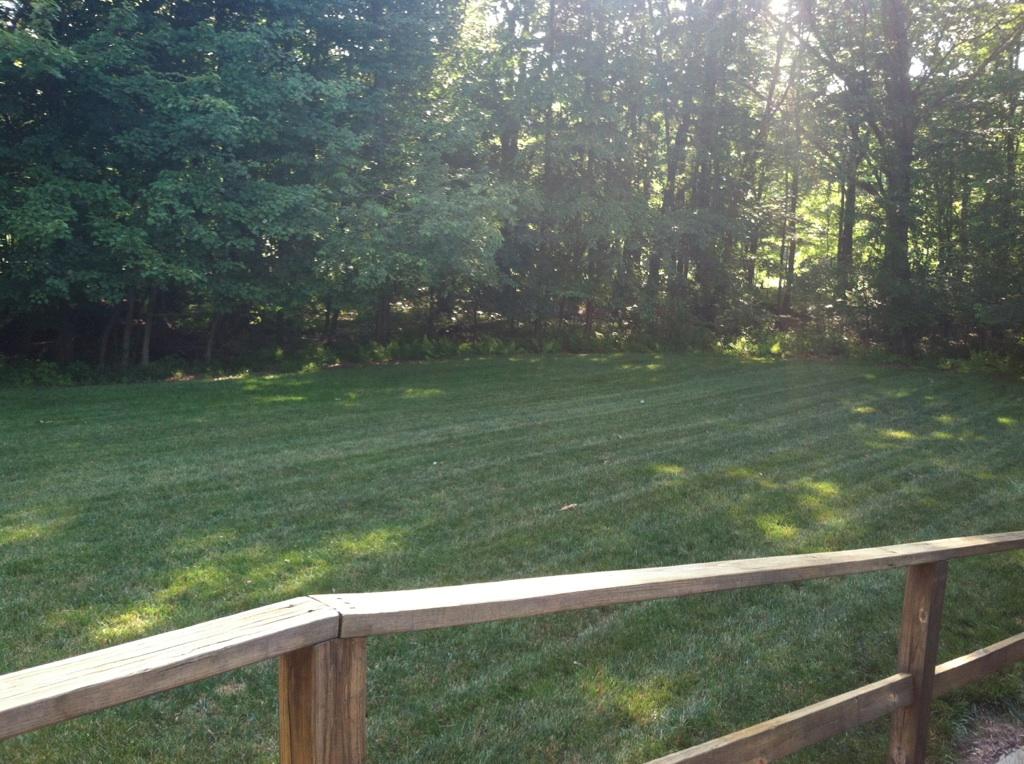
I’m sitting on my deck, roasting marshmallows this summer’s eve, my English bulldog, Rosie, sleeping on the honey-colored wood. Years ago, she would have ran off into the woods chasing critters, but now she’s eight, and would likely rather be laying on the couch in the air-conditioned house. However, this eve, it’s just her and me, so we stick together, relaxing on the deck.

“Rosie, you’ve gotten old and lazy,” I tell her, and she opens one eye, not moving a muscle, jowls flopped on the deck. “You’re no good for conversation anymore when all you do is sleep.”

I built this place twelve years ago, loving the property – close to work and town, yet rural and serene. In fact, the deck is designed so that when sitting on it, it overlooks lawn and woods and a creek, no other homes seen or traffic heard – just the nature of the Pocono region that stays lush and green throughout the summer – the grass, the trees, the native ferns.

Oddly, although I’ve always maintained my property and deck – often mowing twice per week, spraying surrounding weeds, and keeping the deck stained – I’ve never really enjoyed any of it till this year. I bought some cheap patio furniture and a not-so-cheap gas fire pit, and it’s all turned out well, soothing décor that gives me a front-row seat to nature without leaving home.

“Rosie, you’re snoring,” I pipe at the dog, wondering if I’m getting old like her, too?

Some eves I sit out here with my daughter. Some eves I sit out here and read. Some eves I sit out here and write. And, some eves I just sit here – with Rosie, the fire flickering, the lush grass, dense woods, and evening breeze surrounding me. And, I’m content. Maybe I am getting older, wiser, more relaxed?

“Rosie, in people years, you’d be fifty eight,” I tell her, and she opens her one eye again, slightly. “If you were a person, you couldn’t get away with your laziness. But, because you’re a mush-faced bulldog, it’s charming. And, maybe you’re just smarter than most – no one bothers you, and you don’t bother anyone.”

Those close to me say they’ve noticed changes in me, too. My sister said she’s observed that I only tell funny stories about our parents these days – I guess I’m letting the bad ones go. I was just down in Washington D.C., having lunch with my life-long best friend, and I think he sensed a more laid-back me. My daughter, work, the house, the dog – it’s all good, and I just don’t worry about much else. Like Rosie, I try not to bother anyone, and I don’t want anyone bothering me.

I toss Rosie a raw marshmallow, it landing directly in front of her face. She sniffs it, then scarves it down, looking to me for another.

“You’ve got it all figured out, Rosie,” I say. “Why waste time chasing the futile when, with faith and patience, life will eventually bless us with its best – and sometimes a marshmallow.”

Brawling with Books

wheelsofchange

Mark E. Smith

The prevalence of alcoholism and drug abuse of many great writers, both past and present, is unmistakable, as is their urge to travel, expatriation in some cases. From Hemingway to Boroughs to Bourdain, our best writers have all sought escape in their lives. Why is that?

As a writer, I can tell you that the answer is, fear – and escapism from it. Spaulding Gray’s monologue – turned into a 1992 film – Monster in a Box, chronicled his emotional struggles to finish his first novel. In fact, on March 7, 2004, Gray committed suicide, a bout of depression that those close to him say was triggered by his struggles in writing his latest book.

See, many don’t realize the fear that most true writers have toward writing. If you’ve been in a bad relationship, knowing that leaving would lead to success, but you couldn’t find the courage to do it, that’s what sitting down to write is like. If you’ve been dissatisfied with your job, knowing that you could do better elsewhere, but were scared to make that leap, that’s what sitting down to write is like. Or, if you’ve ever wanted to diet and exercise, but were intimidated to start because of the commitment required, that’s what sitting down to write is like. It’s simply the fear of failure that stops many in their tracks, causing them to seek diversions or escapes instead of assuming accountability and just accomplishing the task at hand.

But, not me. At the age of 23, I met with a book publisher, and he verbally tore my manuscript to shreds, calling it “amateurish,” and I thought, I’ve spent two years writing this with nothing more than a belief that I could do it, so call me what you will – but, in my mind, I’ve had the courage to do it, and that’s all the validation I need….

“But, there’s more to this story,” he continued. “You might just be among the most fearless writers I’ve ever met, so let’s see if you’ve got the balls to take this manuscript from good to great – and, if you do, I’ll publish it.”

From that day forward, fearless was my only way of writing. I may fail miserably in the attempt – and I have at times – but fear will never stop me ultimately succeeding.

And, so this past spring, when I embarked on my most ambitious book project to date, a part of me thought, How am I going to pull this off? Yet, a bigger part of me was like, Man, I’ve published over 1,000 formal pieces, with five books under my belt – I can do this….

The concept was to capture the birth, evolution, current state, and future of complex rehab – and, most importantly, tell the stories behind the story in an astoundingly compelling way. In my mind, it was like setting out writing The Social Network (the story behind Facebook) – that is, could I make what would seem a pretty mundane subject, and find the extraordinary in it? I remember one of my colleagues saying, “You’re the only one who can take this subject and make it fascinating.” Easier said than done, I thought. But, I was up to it.

With a dose of fearlessness, I went to work, tracing the roots, interviewing the individuals, and capturing the iconic moment of complex rehab, and it’s taken me on both an extraordinary professional and personal journey. At first it was intimidating and laborious, just a push to get through the first chapter. I remember saying to the woman working as my editor, I’m nine pages into this, and it isn’t getting easier. However, then I remembered that the best writing comes from fearlessness, and so I did what many in the complex rehab industry would view as a pretty bold move: I went to Ohio, rolled through the doors of Invacare, and sat one-on-one with Mal Mixon, in his office, for three hours, interviewing him about the evolution of complex rehab technology, Invacare having innovated several key technologies in the early 1980s. And, from there (with his sharing some pretty astounding never-told-before stories), I was like, Wow, these are the types of awe-inspiring first-person stories I need to write the book that I know that I can write – and, more importantly, the type of book that people won’t be able to stop reading.

From there, the writing and interviews snowballed, where I wasn’t writing from fear or pressure, but inspiration and passion. In no time this past spring, I had a book coming together that captivated me – one heck of a story unfolding. No, the manuscript won’t be done for about six more weeks at this writing, but I wake up seven days per week itching to squeeze in that day’s writing where I can.

In so many areas of life, fear dictates what we accomplish – or, don’t accomplish, as it is. However, when we put fear aside, and say, Yeah, I can do this regardless of the challenge, we will ultimately accomplish it. Replace fear and escapism with inspiration and passion, and you’ll be amazed where your goals will lead.

Upward Mobility

964849_10201126408272601_756192260_o

By Mark E. Smith

Anyone who tells you that “all men are created equal” is simply stating rhetorical idealism. The fact is, we know we’re not all born equal – some are born into lives of privilege, while others are born into far more grave circumstances.

If you weren’t born into a life of privilege – albeit, wealth, a stable home, good health, and so on – you’ve probably seen your hopes and dreams thwarted at some point. When an upper-class kid, with good-looks, athleticism, and not a stress in the world goes to college on his or parent’s dime, a lot is a given, success is almost a birth right. However, if you’re like some of us who weren’t so fortunate, you don’t stare at silver platters, but you encounter a lot of roadblocks and mountains to climb. And, that’s OK – be happy for the privileged ones, but also see the extraordinary potential in yourself and others like you, those who have to work harder, those who face greater adversity, those for whom it takes more time, but get there, no less.

See, you can’t worry about what those of privilege have, or that you got the proverbial short end of the straw. So what if she has Daddy’s money, or he got a promotion by being at the right place at the right time. Life isn’t just about luck of the draw; it’s a marathon about tenacity. You have what you have, no matter how little, and it’s your job to make the most of it, building upon it over the long term – with laser-like focus, unwavering drive, and, yes, do-or-die tenacity. You have no safety net, and that in itself will make you a better tight rope walker in the end – you won’t fall because you can’t risk falling.

And, none of it is easy – climbing mountains never is. But, it’s totally possible. At times, you may have to make extreme sacrifices – maybe you live in a hole-in-the-wall place, with no television, subsisting on Top Ramen because the little money you have covers the books for your community college courses. Or, maybe you go to work despite health issues because you wish to excel in your career regardless of any adversities. The fact is, as long as you have unyielding tenacity and focus – where you have the guts to make sacrifices that others run from – you will succeed, period. Life isn’t for the privileged; life is for the strong.

Interestingly, political beliefs aside, our most recent three presidents are a great study in privilege versus tenacity – and where the playing field is leveled. President George W. Bush certainly worked hard in his life, but was born into privilege and a family legacy that led him to President, his grandfather a U.S. Senator, and his father, of course, a President. By contrast, President Clinton’s father died three months before his birth, and his later stepfather was a gambler and alcoholic who abused his mother, with President Clinton earning his way through college on scholarships. Similarly, President Obama came from a broken home, mostly raised by his grandparents, putting himself through school. So, we have three presidents of practically speaking the same era, and one was born into privilege, while two came from very humble beginnings. The point is, tenacity can catch up with privilege in the end – but it takes work and vision and guts.

If we truly look at the backgrounds of our 42nd and 44th presidents, there’s tremendous inspiration in that. You don’t need to be of the birth right of the 43rd president – lineage of privilege and power – to be among the most successful people on Earth. Rather, you can come from the so-called bottom, never feel lower than anyone else, and chart a course of personal empowerment. No, you statistically won’t ever be the president, like Clinton or Obama, but think of what you can accomplish in the way of education, career, community, and family – there’s nothing holding you back.

And, you mustn’t let success stop with you. You must have a moral and ethical compass to help others. You don’t want to be smug and selfish, but kind and giving – a leader in action. You see ignorance on the Internet, in line at the grocery store, on cable news shows. You don’t want to be that guy. You want to have the backbone to lead others from despair, not create it. See, the ultimate form of success isn’t in just bettering your life, but bettering others, bettering the world around you as you rise.

Life is simple geography: regardless of where you start, you can go anywhere – just plot an extraordinary course and follow it unrelentingly.

The Power of Abandonment

Mark Sit Skiing 1987
Mark Sit Skiing 1988

In art and dream may you proceed with abandon. -Patti Smith

By Mark E. Smith

The only sport that my disability level ever truly allowed me to compete in was downhill sit-skiing in the 1980s, when the technology – a kayak-type device, steered with short poles and edges on the bottom – just matched my limited coordination well enough to allow me to snow ski. In fact, it taught me a lot about how having the courage to push our boundaries isn’t about risks, but rewards.

It was the 1988 Western Regionals for what then was called National Handicapped Sports and Recreation, the governing body of adaptive snow skiing. In order to qualify for Nationals, one had to time in at Regionals, and my region was especially competitive because it was home to world-class athletes like Marilyn Hamilton, Dave Kiley, and Peter Axelson. However, I was lucky in that adaptive ski technology was rapidly changing that year, and those three ultra-skiers were in a new class called “mono-skis,” a technology that my lack of balance wouldn’t allow. So, the sit-ski class that I raced in was much smaller that season; yet, ultimately no less competitive.

My foremost competition was Mike Moleski, a paraplegic who was almost twice my age and definitely twice my size. I was a skinny 17-year-old kid with cerebral palsy, and Mike was a 30-something jock with muscles galore. He was also a bit of a loose canon. He appeared every bit your stoned surfer dude, right down to bleach-blond hair, and he sit-skied like he was on fire. I don’t know why, but when everyone else moved to the newer technology mono-ski class, he stayed in the sit-ski class with me.

And, I had no hopes of beating Mike, no matter how well I skied. He was too big, too strong, too coordinated, and too daring for me to realistically compete against on the race course. And, my coach knew it. “You’ve got three possible outcomes here,” my coach told me. “You can ski your own race and finish the course, but likely not qualify for Nationals. You can ski with abandonment and risk blowing out of the course, getting disqualified. Or, you can ski with abandonment and at least have a shot at keeping up with Mike and qualifying for Nationals.”

Of the three choices, only the two made sense to me: Ski with abandonment. Taking the safe way would get me down the course, but likely not with the time that I needed, so why even race? However, while skiing with abandonment would risk a disqualification if I got out of control and missed a gate, blowing the course, I still had an equal chance of ranking a leading time if by some miracle I could pull it off. I figured out of the three choices, only skiing with abandonment – and pulling it off – gave me a shot at qualifying for nationals.

The mono-ski class raced first, and the course was so steep and fast that they decided to start us sit-skiers off lower on the course. Mono-skis are a seat frame mounted to a single ski, with exceptional turning and edge control, so they handle high speeds and steep terrain better. Sit-skis are more of a sled, so they drift and speed can quickly become difficult to control. So, when I saw the steepness and speed of the course – even at half way – I was scared. I was no longer worried about blowing out of the course, but actually getting hurt.

Mike went first, and I saw his ski drifting as he flew down the hard-packed course, barely making each gate. If he was having trouble holding turns at speed, I was really in trouble. But, he finished the course, with a time I knew I couldn’t match – unless I skied with abandonment.

As the buzzer went off, I thrust myself out of the starting gate, and was immediately accelerated by gravity. Mike was smart in that he tried to stay in the trough carved by earlier racers, using it like a bobsled shoot to help steer his course. But, it likewise seemed to slow him down, so just past the first gate, I jumped out of the trough and opted a straighter, faster, more dangerous line, struggling to stay center course, hitting speeds that made it seem like the gates were much closer than they were. But, I soon figured that I really needed no technique, just abandonment. I applied no speed control whatsoever, and just used all of my strength to center the sled on each gate. And, as I hit the finish line, I had no hopes of stopping but to throw the sit-ski on its side, skidding to a stop in front of the crowd. Everyone cheered, including Mike – my time within a second of his – with my coach picking me up, sit-ski and all.

Sometimes in life – no matter sports, love, career, or disability, to name a few – the safest way isn’t always the surest or most rewarding way to accomplish what you wish. Sometimes you have to take calculated risks, and say, I don’t know how this is going to turn out. But, I’m going to put it all in my own hands, and give it a shot….

Heavy Sky

window

Now I’m a grown man, with a child of my own, and I swear I’m not going to let her know all of the pain that I’ve known. -Art Alexakis

By Mark E. Smith

When I was 17, I spent a lot of that summer camping in Yosemite’s White Wolfe region. It was part independence building, part adventure, part escape. I attended forestry seminars that summer, and learned that wild fires can prove good for the environment. Dense forests fill up with debris, and stifle new growth; however, a wild fire clears out the old, and allows new plants and trees to grow. What initially seems like destruction, actually builds a new, stronger habitat.

At that time, I wasn’t in touch with my father. He’d walked out on my brother and me many years earlier. We were little, maybe five and six, or a bit older – it’s hard to date such things, probably because it’s too painful to remember exactly when your father left. But, I remember.

Regardless of dates or circumstances, when your father drives away for the last time, it creates a void in you that many say never goes away – it’s just a heavy sky that’s left over you. And, as the seasons pass, you learn that other people, who you love, leave and don’t come back, either. It’s emotional dominoes set into motion by the man who’s supposed to be a boy’s hero, and you learn to just fall with them, relationship after relationship, where the fear of abandonment becomes the security of being alone.

Yet, you grow strong in ways, where you never distrust because there’s always a chance that someone might stay. You’re forever a seven-year-old starring out of the living room window, with the possibility that Dad might pull up in his pick-up truck, boozed up but playful. And, so you learn to trust in a counter-intuitive way – it’s the dream that’s the only comfort to hold onto.

And, you likewise learn to never leave anyone because you don’t want her or him to know the pain that you’ve known. Yes, everyone’s going to promise to be by you till the end, but who dare live up to it? You will live up to it because you won’t be like him.

And, then there is her, your own child, and as a broken man, there’s something remarkably whole about you in that single role, where your pieces come back together, and you see everyone around you in the sunlight of spring. It’s inexplicable that where only destruction has been, beauty emerges – a single flower among ravaged woods. And, you realize that the injustice of not having a father is corrected by being a father – the better man, you are for it all.

It Gets Better

morgan
Morgan Duffy & Crew, Stanford Class of 2013

By Mark E. Smith

Author’s Note: There’s a disturbing undercurrent that, in this modern day, some teens with physical disabilities still feel isolated, depressed, even suicidal. So, let us talk about being a teen with a disability, and how life gets better….

As a teenager struggling with having a disability, you need to know only one truth: Life gets better – remarkably better.

I remember being a teenager with cerebral palsy and, like you, I remember struggling with it all – feeling different, but wanting to fit in; being treated different, but wanting to fit in, or, at times, feeling completely “normal,” but not being accepted as such. No, high school for me wasn’t all terrible – there were some good friends and good times, as I hope there are for you. We should all see good where there’s good. But, it wasn’t easy for me being different. But, it did get better. And, I know it may not be easy for you right now, but it will get better – remarkably better.

See, high school is tough for everyone, typically a confusing time, and everyone just wants to fit in. I have a 16-year-old daughter who “fits the mold,” and it’s even tough for her and her friends at times. Like you and my daughter and her friends, I just wanted to fit in, too – to have the right friends, have the right persona, and get invited to the right parties. And, for me, maybe like you, sometimes it worked, and sometimes it didn’t. Well, a lot of times it didn’t work. And, when it didn’t work – the occasional bully calling me “retard,” or not getting invited to different events and such – it really, really hurt. At points, I, too, just wanted to give up and die. And, before it gets better, sometimes it gets worse.

I remember at among the lowest points in my teen years, I had a girlfriend who I thought truly accepted me, but when it came time to dance at the prom, she wouldn’t dance with me because I used a wheelchair. I remember thinking that my disability was the blame, that if I wasn’t plagued by cerebral palsy, I’d have all of the friends, girlfriends, and coolness in the world. However, I would never be accepted or successful because of my disability.

But, I was wrong. High school and my peers had no impact on my ultimately living a happy, successful life. The day that I graduated, virtually everything got better for me. I went from bullies calling me “retard,” to being a writer, speaker, and academic. I was soon invited to real parties, with amazing people, even getting to meet the President of the United States. And, while no relationship is perfect, I had my ultimate dances with amazing women since – loving, accepting, sincere. It all got better – remarkably better.

My daughter and I were planting Marigolds this spring in a flower bed in front of our home. It was a 70-degree sunny day, where our English bulldog lay on the ultra-green grass. And, although my life, again, isn’t perfect, I was reminded of all I’ve been blessed with – my daughter, a career that helps others, a nice home, the respect of those in my community – and I thought back to my days in high school, wondering where those who treated me poorly are today? Oddly, when I was on Capitol Hill recently, none were there. I don’t see any of them in magazines that I write for, or any with Internet followings. And, I have to wonder with a smile, is their grass as green as mine?

The fact is, while those who hurt you today in school may seem so powerful, they’ll soon enough get lost in the world. But, you. You were born into the extraordinary, with capacities toward life success that they’ll likely never realize. Let’s wish them well, but they don’t have what you have – that is, potential waiting to explode. And, it will, where your life is going to get better – remarkably better. You’re a survivor and a thriver, and that which seems to work against you now, will work for you soon. You’ve been given the gifts of tenacity, perseverance, and empathy – traits that are rocket fuel for life, just waiting to ignite your life in the most rewarding of ways.

My young friend, Morgan Duffy, graduates from Stanford University in a few weeks at this writing. She’s a Dalai Lama Fellow; she’s done an internship on Capitol Hill; and, she’s studied abroad. And, get this, she’s accepted a job with Genentech – without even applying (the recruiters found her based on her accomplishments). But, I’ll let Morgan’s own words explain the rest of her story:

So I’d like to tell you that I am your average 21 year old, living life and learning through mistakes and experiences. Most of my experiences, however, are less than average. Three years ago, I packed up my life and moved from the small city of Scranton, PA to begin my college education at Stanford University. I am a Cross Cultural Health and Intervention major with interests in disability, health policy, social justice, women’s health and choice. Like most, my interests are based in experience. I am a woman with a physical disability, who navigates the world in a wheelchair. And I like to feel the world beneath me in that way, taking each bump and knock consistently and steadily. My mother is a nurse, and through my years listening to her complain of the inefficiencies and inequities of modern US health, I have been motivated to learn how to change this. Social justice was the foundation of my high school career at Scranton Prep, and I have vowed to never forget.

Morgan isn’t an exception, she’s the rule – just as you are. You, too, will leave your town and “feel the world beneath you,” as Morgan puts it, going on to successes that won’t just change you, but will change the world.

It may all seem tough today, but the strength to hold on was born into you – there’s a purpose for who we each are, and yours is extraordinary. Tough out the tough times, as it all gets better, remarkably better. And, yes, the grass will be greener on the other side. I’ll see you there.