Opening Our Closets

1424552_3497001679378_1609463705_n

Soul is about authenticity. Soul is about finding the things in your life that are real and pure. -John Legend

By Mark E. Smith

With the holidays approaching, and special friends visiting my home for an extended stay, my daughter and I started making a list of what we needed to do in order to make our house as perfect as possible.

See, for my daughter and me, our home is about love, laughter, understanding, and tranquility, so we haven’t cared that we have a sheet hung across the family room window because Rosie the English bulldog attacked the custom blinds, nor have we cared that the dishwasher has been broken for years (it’s just the two of us, so we don’t need a dishwasher!). We’re blessed with a very nice home, that’s neat and clean, and we don’t sweat the small stuff. We’re happy as-is.

However, with company coming, the list got longer and longer of ways to spruce up our 12-year-old home, all to impress our house guests. And, then I realized how unauthentic I was being, how I was putting priority on a shell of a house instead of the depth of my character and heart. My daughter and I want to spend time with those close to us, and replacing blinds and a dishwasher has nothing to do with it. The quality of one’s character is far more important than the quality of one’s house.

How many of us live such a facade in many aspects of our lives, where we present an image instead of just being ourselves – namely, because we don’t think others will embrace us if they see who we truly are?

The answer is, most of us. However, here’s the issue: if we hide or disguise ourselves, others don’t truly know us, and it creates a barrier for letting other people in. We live with secrets, isolation and in the worst cases, shame. Any aspect that we falsely polish or hide from others is like placing a wall between us and others. If we want the truest connections, we must be open and authentic to an extraordinary degree. Here’s the real me – take it or leave it, but at least I’m authentic. Life isn’t Facebook, where everyone’s life is a happy two-dimensional facade on a screen. To be authentic is to be real in every sense.

And, I think all of us have been unauthentic at times, both with ourselves and others. The solution, though, to both resolving it and avoiding it is to be totally authentic. Yes, some will reject us in the process, but most will embrace us.

In my own life, I strive to only be authentic. However, it’s not always easy, and I haven’t always succeeded. I’ve struggled this year with a very weighty subject in my life: my daughter will be heading off to college in the blink of an eye. Those around me have asked whether I’m prepared for that emotionally, especially since it’s just been the two of us for years, our lives so intertwined?

I give a very enthusiastic answer, that my daughter’s worked extremely hard toward college, that I can’t wait for her to flourish on her own. After all, it will be another amazing stage to witness as a parent. Yet, if I’m to be authentic, it’s truly only telling others half of my feelings – I’m not being honest.

The fact is, my daughter has been my foremost focus since the day she was born. Then, in being a full-time single father, she’s the better half of our dynamic duo, always a life force in our home. Girlfriends have come and gone, but it’s always been Shorty and me. No, I don’t know how I’m going to handle having my little girl, housemate and, really, best friend no longer around on a daily basis. I can picture Rosie the English bulldog and me just staring at each other on a Wednesday night, saying, What do we do now? Even if I’m living with a woman, I don’t see the transition being any less heartfelt. Yes, the thought of my daughter going off to college is unquestionably what I want and will be among my proudest moments. But, it’s also painful, scary and sad.

However, as I’ve opened up with friends about my complete feelings about my daughter eventually heading off to college, they’ve been extremely supportive and full of wisdom. Again, if we are going to live with authenticity, we must share our whole self, as-is, honestly, and people do reciprocate on such a genuine basis. In this way, opening myself up to others is like having guests in my home: I’d rather choose the imperfection of openness and joy over the tidiness of isolation and despair.

Of course, authenticity is ultimately about accountability, and that can be a struggle in itself. A great tool in that area is to surround yourself with people who will out of love call you on your behavior when you’re not being authentic. Both my sister and my best friend have called me on my behavior over the years – and rightfully so, as I’ve done some freakin’ stupid stuff. I remember being on the West Coast, feeling a lot of sadness over the ending of a serious relationship, and rather than being authentic and telling my friends that I was in a lot of pain, I went the rock star route, numbing myself with everything I could find as the life of the party. And, to his credit, without his being judgmental, my best friend soon pulled me aside and said, “I suspect there’s a lot going on in your life and it’s getting to you in unhealthy ways. It’s not the Mark I know.”

And, he was right. I wasn’t being authentic. Rather, I was being an emotional coward and dishonest. Fortunately, I was able to get myself back on track – arguably with greater clarity – all thanks to a true friend who believed in me and wasn’t afraid to call me on my falling off of the authenticity wagon.

None of us are perfect or immune to real emotions that tempt us toward going astray. I’ve been there and I still go there. However, recognizing the power of living to a higher standard – authenticity – and working at it in even the most challenging situations makes living as who you are a lot more rewarding.

My house isn’t perfect and neither am I. I need new blinds and a dishwasher, and Lord knows I’ve got my emotional issues. But, my home and heart are open, as-is, so come on in.
The Equation of Self

photo (20)

By Mark E. Smith

Here are five facts about me: I have severe cerebral palsy. I’m a middle-aged, full-time single father. I come from a deeply troubled background. I’m among the least successful people I know. And, many see me as a despicable character.

Every aspect above is literally true. If you were a woman, would you date me? Not a chance, as I’m a rolling wreck.

However, here’s the flaw in my rolling wreck of a self-description: it doesn’t reflect anywhere near the entirety of who I am. Rather, it leaves out the amazing parts of who I am, and fabricates a negative self-image from an inappropriately critical perspective. It’s like taking a beautiful diamond, and placing it under a microscope, finding the flaws, then discarding the entirety of its stunning brilliance. How many of us do that to ourselves every day? While the rest of the world sees our beauty and brilliance – like a two carat diamond – we find flaws that no one else sees. How is it that when we’re each so amazingly unique – one in four-hundred trillion, genetically, according to science – some of us can place a microscope on ourselves and only see flaws?

I recently heard a top collegiate soccer coach explain what he looks for when recruiting players. He doesn’t seek great runners or kickers – they’re easy to find, he said. In fact, he overlooks soccer skills altogether since everyone has them who applies to his program. What he looks for is the most empowering trait that an individual can have: self-confidence.

See, self-confidence isn’t about ego or narcissism, but about recognizing our own value, viewing ourselves as the rest of the world views us. And, when we have it, we don’t just perform better, we feel better. So, why don’t more of us have self-confidence, why don’t we see the beauty in who we are that others see, so unique that we’re one in 400 trillion?

The answer, as I’ve concluded, is that we’re really really bad at math. Allow me to explain….

When others view us, they add up the sum of our parts to create the whole value of who we are. We can look at someone and say, “Wow, what an amazing person, from the inside out,” and we’re able to do that because all of his or her traits add up to extraordinary. Yet, we’re often not skilled at doing math on ourselves – that is, except negative numbers. While the rest of the world looks at us as 2 + 4 + 4 = 10, we look at ourselves and add a negative to every positive -2 + -4 + -4 = -10.

Therefore, we need to do a much better job at understanding all of the variables that comprise us, and add the positives back in. Getting back to my five examples of why no woman should ever date me, let’s see what happens – mathematically – when I complete the missing variables to my equation:

I have severe cerebral palsy, and it’s fueled a life of independence, where I’ve seen first-hand that most limitations that we project are false, that the power of the human spirit runs deeper than any ocean, where few obstacles are insurmountable.

I’m a middle-aged, full-time single father who is in fantastic shape, and my daughter is a young woman of tremendous grace, wisdom, and empathy, whose hard work applied to education and the arts has her on an Ivy-League track.

I come from a deeply troubled background, and I’m the only one in generations of my family to be formally educated, to not live in poverty, to not be an addict.

I’m among the least successful people I know because I learned that if we wish to rise, surround ourselves with those who foster our growth, so I strive to associate with those of tremendous moral compasses, exceptional work ethics, and accomplished personal and professional lives.

And, many see me as a despicable character because I’m among the most read, public figures with a disability, where my success brings out some who resent it.

The result, then, is that I’m not a loser, but a remarkably successful individual with a lot to offer in my uniqueness.

And, the same goes for each one of us. None of us are perfect, but even our so-called flaws add up to remarkable when placed in the full context of who we are. The next time you look in the mirror, see yourself as everyone else sees you – and you’ll see an amazing person looking back.

The Right Question

Jose Perez
Jose Perez

By Mark E. Smith

I’ve been running a mobility-related message board online for around 15 years. During that time, I think I’ve seen it all – the good, the bad, and the ugly. The anonymity that some feel online knows no boundaries.

However, recently, someone posed a question to me that was a first. Admittedly taken much out of context here and paraphrased, someone asked me, “Why should you feel it morally right having a job, home, van, and ATV when so many others with disabilities do not?”

Within the context of the conversation, asking me such a question certainly seemed audacious, and even ruder paraphrased here. Nevertheless, I answered the question, simply explaining that I’ve made sacrifices and worked really hard.

However, here’s what’s interesting: If one wished to be successful, it was the wrong question to ask.

See, in my early 20s, my mentor was Dr. Wayman R. Spence. He was known as the grandfather of the anti-smoking movement starting in the 1960s, formed a health education company, went on to invent sports medicine products, and was a widely-published author and art collector. Ultimately, Dr. Spence, as we called him, sold his biggest company, Spenco Medical (going strong till this day) to Kimberly-Clark in the 1980s, making an insane amount of money. By the early 1990s, when I met Dr. Spence through my writing, his life was dedicated to supporting the arts and philanthropy. My writing was actually terrible at the time, but he insisted that if I focused on it and pursued formal education, I could build a successful career. And, I listened.

As my mentor, Dr. Spence gave me weekly assignments. His secretary called me with insane challenges like, “Dr. Spence wants you to call Norman Vincent Peale…. Here’s his number.” And, so I’d cold call all sorts of famous writers, speakers and artists who Dr. Spence knew. And, I was terrified every time.

Yet, Dr. Spence taught me a life-changing lesson that I used then and I use now: Never wonder why a person is successful. Rather, always ask how he or she became successful. Then, apply that knowledge to your own pursuits. That’s how you learn, grow, and succeed. It’s modeling positive behaviors that others prove successful over 30- or 40-year careers.

I had to call painter, Jose Perez, one day, and ask him how he became a great painter?

“I wasn’t born a painter. No one is,” he told me. “I’m a painter because I paint every day, and have done so for many years. That doesn’t make me great, it just makes me successful.”

That one conversation profoundly effected my life because simply by asking Jose how he became successful, I learned a key trait of extraordinary people: daily discipline – over decades. I could be successful at virtually any pursuit as long as I sincerely dedicated myself to it. I bet in the last 20 years, I might have missed 10 days of writing; otherwise, per Jose, I write every day, period.

Since my life lessons facilitated by Dr. Spence in the early 1990s, I’ve spent my career not just practicing what some amazing people taught me, but I’ve continued asking how? If you want to come to terms with your disability, ask others who’ve done it, how they did it? If you want to succeed in your field, ask others who are successful in the field how they’ve achieved it. If you want to have a successful relationship, ask couples who’ve been married 50 years how they’ve sustained it.

See, there’s no mystery to success. If someone has accomplished something, it can be replicated. You merely need to learn and practice those behaviors in many cases. There are always going to be extreme cases, as with Mal Mixon who, at 39, close to my present age, on a career path similar to mine, went from working a corporate job to 25 years later being a CEO and a billionaire. When I spent an afternoon interviewing him this past spring, my intent wasn’t to become a billionaire, but to understand how he’s done what he’s done, and I’ve applied many of his insights to my own career already. Namely, tenacity to a level that few dare, where no simply means, try a different approach, as was the case when he was trying to buy Invacare in 1978, then an ailing little wheelchair company owned by Johnson & Johnson, having overcome cancer, with virtually no money, and everything went wrong. Yet, his dream was to own his own company, and he flat-out refused to take no as an answer, finding ways around every road block. It’s easy to look at Mal as a billionaire now and wonder why he’s been so lucky? However, I learned one-on-one how he’s succeeded, and luck had nothing to do with it. You force your way through obstacle after obstacle, an approach I know a lot about.

Therefore, the next time you encounter someone who’s achieved what you wish, don’t ask why they have done it when others haven’t, as that voids your personal accountability, suggesting that he or she has had some magic or good fortune that no one else has. Instead, ask how the individual has accomplished it – and then you’ll be a lot closer to accomplishing it, too.

From Suitcases to Slates

slate

Holding on is believing that there’s only a past; letting go is knowing there’s a future. -Daphne Rose Kingma

By Mark E. Smith

We all know that we can’t physically be in two places at once, so what makes us think that we can do it emotionally? Or, more specifically, what makes us think that we can thrive in the present while dwelling on the past?

We can’t. Just as we can’t physically be in two places at once, emotionally we can’t dwell on our pasts and thrive in our presents. Yet, how many of us try or have tried or know those who have tried. But, in the end, we must pick one: are we going to dwell on the past or live in the present – we can’t have both, and if we try to juggle both, it will destroy us and often hurt those around us.

In my line of work and life, I see it every day. I’ve even lived it. In the disability realm, I encounter those so longing for their pre-disability pasts that they can’t see the value of all around them in the present. In relationships, I encounter those so bitter about an ex that they’re blind to the life-changing love in front of them. In the work force, I encounter those so resentful of a career lost that they won’t pursue a new career. And, I see adults so enveloped by the pain of what they experienced as children that they’re incapable of parenting their own children. Every day, I see people pretend to live in the present, but truly living in the past. And, when we live in the past, we’re not living at all. We’re simply reliving a story that will never change.

And, that’s the difference between living in our pasts versus living in our presents. When we live or dwell in our pasts – even if they were great – there’s no potential or hope. The past is frozen, never changing, and it freezes us, preventing any chance of moving our lives forward. You cannot move forward when focused on the past.

However, living in the present is the opposite – that is, it offers potential and hope, where virtually anything is possible.

Want to sabotage the rest of your life? Bring a packed suitcase of the pain from the past wherever you go. Want to live the life of your dreams? Live with an unguarded slate that’s available for all to leave loving inscriptions.

Nevertheless, living in the past can prove successful in one profound way: avoiding accountability. If you focus on how great your life was before acquiring a disability, you can find every excuse not to make the most of yourself now. If you focus on how your heart was broken in your last relationship, it gives the perfect excuse not to let love into your life now. If you focus on your long lost job, it gives the perfect excuse not to look for a new job now. And, if you focus on how dysfunctional your childhood was, it gives the perfect excuse not to be a great parent now. Living in the past is great because it makes you a forever victim, and victims aren’t held responsible. Of course, this mindset is completely self-defeating – and usually hurts those around you, too – but if you truly want to ruin your life, and accept no accountability, dwelling on your past is a dysfunctional person’s dream come true. You mean, I can ruin my life, hurt those who truly love me, and do it all with no sense of accountability – awesome!

With so many among us unsuccessfully trying to live in the past and present at once – which we know doesn’t work! – how do we go through the process, then, of moving beyond our past to relishing our present? Well, that’s just it, it’s a process, a literal movement. Just as we must physically move to go from one place to another, we must do the same with our emotions in a healthy process. And, “process” is the operative word. We must address and heal from the past, and that will bring us into the present. Let’s address what was, and move into what is. By accepting the past, and recognizing that potential and hope only are possible in the present, we go from surviving to truly thriving, achieving the levels of success, contentment, and love that we all deserve.

As my friend, W. Mitchell puts it, “Have you ever noticed that windshields are much larger than rear-view mirrors?” …There’s good reason for that in cars – and even more so in life.

Enough As-Is

Eckersberg (1841)
Eckersberg (1841)

The hardest challenge is to be yourself in a world where everyone is trying to be somebody else.
~E. E. Cummings

By Mark E. Smith

I joke with my friends that when I look in the mirror, others look back, complimenting me on my hair, but also warning me that squirrels are out to get me. As a result, I like my hair, but I’m paranoid of squirrels!

When you look in the mirror, do you like what you see? When you’re in public, are you comfortable in your own skin? Do you not get nervous speaking in front of groups? Or, even bolder, when you’re around your significant other, are you comfortable being nude, feeling beautiful or handsome or sexy?

I hope for you, the answers are all, yes. However, so many struggle with self-image. In pop-culture, the buzz word is body image, where we know how so many feel physically inadequate compared to airbrushed models in magazines or ripped movie stars. Yet, the issue is far more profound, as we know that the body, itself, is totally superficial, easily manipulated with clothes, cosmetics, plastic surgery or photo editing. Of course, the real issue comes from what others cant see: one’s self-image from deep within.

Poor self-image is the root of all self-doubt, from the physical to the mental to the emotional. And, it’s usually an inaccurate self degradation of who we truly are. In fact, it’s often the polar opposite of how the world sees us. I remember being in graduate school feeling like the least intelligent student on campus, an imposter. I worked hard, knew the material, spoke up in classes, got all A’s, won awards, and coeds flirted with me. Yet, I still felt like everyone was smarter and more talented than me – lord knows better looking than me as one with a disability. My self-image didn’t reflect what the world around me proved: I had every skill and talent to have earned my place at the top of my class, but I wasn’t convinced. My self-image didn’t match reality.

I subsequently spent many following years getting to know myself. I couldn’t change who I was from a physical perspective – there’s no cosmetics, plastic surgery or photo editing for cerebral palsy – so why not accept and ultimately embrace myself? It’s not about ego or narcissism; rather, it’s about realizing that among my flaws and foibles are talents and gifts. I am enough as-is.

And, realizing that I am enough as-is empowered my life and relationships. Confidence can be powerful but short sighted, giving you the courage to present yourself in a certain way to others in a given situation. However, knowing you are enough as-is takes every aspect of your life to a new level because any self-consciousness is removed and you live with ultimate comfort and freedom in simply who you are – from appearance to personality to intellect, you are enough as-is. You don’t need to compete or conform; rather, you can just be you.

What’s more, when you realize that you’re enough as-is, it opens you up to embracing others on the deepest levels because you know they’re enough as-is, too. And, when you realize that reciprocation – we’re all enough as-is – the world becomes an inspired, warm place. If we purely live with authenticity and vulnerability – both the truest of strengths – nothing intimidates or scares us. Life simply inspires us. When you say to the world, Here I am, take me as I am because I’m enough as-is, it frees you of all self-doubt and insecurities. There’s no room for anything but a positive, authentic self-image.

Now, the fact is, there are a lot of self-doubting, insecure people out there, and they’re not going to accept you, me or anyone as enough as-is because they refuse to accept themselves. But, that’s their tragedy, not ours. As I like to say, If you embrace me as-is, we’re going to have a great time. If you don’t embrace me as-is, as I extend equally to you, then get off of the Mark Bus because it goes to some pretty awesome places you’re not healthy enough to handle!

What’s most rewarding is that when living as enough as-is, and you meet people who on the surface seem totally superficial, you’ll be amazed at how quickly some can almost instantly drop the facade and become enough as-is, where you connect on the most genuine level. And, it’s touching to see them take a sigh of relief and let down their guard, realizing that they, too, can be enough as-is.

None of us, however, should use this as an excuse not to consistently pursue personal growth. To the contrary, recognizing ourselves enough as-is fuels personal growth. In a society where most exercise for superficial vanity reasons, I, too, workout. But, I do it to simply be the best I can be, regardless of anyone else’s ideal. Lots of guys are more muscular and stronger than me – and kudos to them. I just work out for my own enjoyment, and my body is what it is, enough as-is.

Most importantly, when you truly recognize yourself as enough as-is, it gets you out of validation mode. Think about all of the terrible situations we get ourselves in by pursuing the validation of others, from teens smoking due to peer pressure to employees compromising integrity to please a boss to those engaging in promiscuity to feel desired, and on and on. The minute that we truly recognize ourselves enough as-is, it removes the need for validation from others, creating much healthier decisions and life paths.

May the mirrors in your life reflect the amazing spirit in you, enough as-is, a person of tremendous contribution to the world around you. …As for the squirrels, you need not worry when looking in the mirror – they’re only out to get me.

Garages

garage

By Mark E. Smith

When I was seven, my mom moved my brother and me into a friend’s garage. It was no mirage. For those few days, I felt homeless and helpless, useless and restless. It’s what happens when the rent’s not paid.

It was scary. Scars that I buried. And, now the chicks wonder why I focus on career and my daughter? Priorities straight, bills never late, and as for a date, they come and go like an occasional snow – storms in the night. It works, but is it right?

In business, I’m bustling. As a writer, I’m hustling. And, as a father I just try to do what’s right. I get done what needs to get done by day, but forever toss and turn at night. See, when we think all heals, again spin the wheels, reminding us of our original plight. Have you known such inner fight?

Work may seem an addiction, but paranoia is the affliction, getting as far from that garage as I can.

But, now I own my own, attached to a house. Dinner on the table, life turned into a fable, and my daughter sleeps soundly at night. I’ve penned books that tell stories, take stages in the glory, and look forward more than back. That’s right.

With a garage as home in your past, it’s always going to linger and always last. But, at some point I realize my past is so far. And, a garage is a garage, just some place for my daughter to park – her car.

Not to Worry, It Gets Worse

sad-kid

By Mark E. Smith

With my new book launching at this writing, I’m already thinking of my next book. I’m envisioning a children’s book titled, Psst, Really, Really Bad Things are Going to Happen to You…. It’s inspired by my six-year-old nephew who, like virtually every adult I know, is continually shocked when bad things happen to him. Therefore, I figure why not warm up kids for the fact that beyond a skinned knee or a lost Teenage Mutant Ninja Turtle doll, life is going to get really, really bad the older they get. It’s a way of curbing denial and self-victimization. It says, Kids, your life will be filled with misery and pain and disappointment, so toughen up and get used to it! It’s an inspiring life lesson through an illustrated book that truly cognizant parents can share with their children to increase their emotional quotient (E.Q.) at an impressionable developmental stage.

My main character will be little Joey, a cute, optimistic tyke who’s in for an avalanche of problems. Daddy drinks a lot since he lost his job, and Mommy has a new “friend” that she visits when she’s supposed to be at Grandma’s house. Soon, Daddy finds text messages from Mommy’s friend, and it all leads to a nasty divorce. But, moving into public housing has its perks – a playground!

As Joey gets older, he’s occasionally bullied in school, struggles with math, but gets his first girlfriend. She smokes menthols at 16, and he’ll forever connect eroticism and cigarettes, the taste of his first kiss. But, she’s unstable – the cuts on her arms letting some of it out – and she holds his heart on puppet strings, music lyrics resonating with him:

And Baby,
Its amazing Im in this maze with you.
I just cant crack your code.
One day you screaming you love me loud,
The next day you’re so cold.
One day you here, one day you there, one day you care.
You’re so unfair. Sipping from the cup,
Till it runneth over. Holy Grail.

Alas, she dumps him after a few months, and he falls into a deep, dark depression, where the taste of menthol on her lips lingers on his as the song’s lyrics play over and over in his head, sipping from the cup of despair till it runneth over.

Yet, Joey gets a $500 Oldsmobile Delta 88 Diesel and is happy – that is, till it gets stolen, and he’s back to taking the bus to work at McDonald’s, where he hates his job and hates his boss, but has a work ethic that pulls him through each evening after school, returning home, smelling like grease.

And, Joey picks up his high school grades, gets into college, meets an amazing woman, gets a job in I.T., and has two kids and a house in the suburbs. But, since having kids, his wife has lost all interest in physical intimacy, and has taken to compulsive shopping, putting the family over $100,000 in debt. And, the lyrics come back: One day you screaming you love me loud. The next day you’re so cold.

Then there’s the divorce and custody battle, the lost job. But, hey, Joey, look at the bright side: at least you’re not living in an empty, dive apartment by the railroad tracks, windows rattling as trains go by at night as you’re plagued by anxiety-induced insomnia. Oh, wait, Joey is living in an empty, dive apartment by the railroad tracks, windows rattling as trains go by at night as he’s plagued by anxiety-induced insomnia.

However, Joey is now only 46, so there’s still time – for life to get much worse. And, it will.

…Isn’t it amazing the denial and self-victimization that our culture perpetuates. It’s instilled in us from childhood, in a uniquely American mythology, that if we do everything right, we’ll end up healthy, wealthy, and happy. But, by nature, that can’t happen. Beyond our own behavior, there’s not much we can control, so why are we shocked when bad, uncontrollable things happen? From the weather to the economy to other people, so much of it’s beyond our control, so why are we surprised when it doesn’t go our way? And, in a larger question, if the only aspect of our lives that we can control is our own behavior, why do we label ourselves victims in so many cases?

The key to addressing adversity is by accepting adversity. Bad things don’t just happen to Joey, but to all of us. Drop the self-victimization, and simply recognize that adversity is part of life. It’s not a question of fair or unfair, just or unjust; rather, it’s life. Some parts of life are good, some parts are bad, but if we accept it all, that’s where we toss away bitterness and resentment, and just value what we have at any moment. For Joey, after a life of lessons, he knows that he can handle any adversity, where empty apartments aren’t ends, but beginnings.

Stereotypes – Spoken Word Video

By Mark E. Smith

Unfortunately, we’ve all experienced stereotypes, no matter if they were placed on us, we’ve witnessed them used toward others, or, worst of all, we’ve engaged in them. In this spoken word piece, I explore the true meaning, purpose, impact, and consequence of stereotypes.

Giving Without Having

emdadart

By Mark E. Smith

I always say that I never meet more content, fulfilled people than those giving to others, albeit a parent nurturing a child or one stranger helping another through acts of kindness and charity. And what’s intriguing is that those giving aren’t typically those who you’d think would be in a position or mindset to give. A friend of mine, for example, volunteers tirelessly with the Muscular Dystrophy Association. Yet, I’ve watched his own progression of muscular dystrophy take him from walking to needing extensive care, using a very high-end power chair, having lost the use of most of his muscles. How is it that someone losing his own health can retain the spirit to support the health of others?

The Bishop, T.D. Jakes, says that if you want to find ultimate healing and fulfillment, “give what you haven’t received.” Think about that. If you want to fill a void in your life, give to others what you haven’t received.

Now, if you’re a literal person, you’re probably thinking, How can I give what I don’t have?

Quite easily and with profound effects, actually. Anyone who knows me knows that my daughter is the center of my life, with fatherhood my single most important role. There’s nothing that I won’t do for my daughter, and literally every morning for the past 16 years, I ask myself, What does my daughter need from me today, and how can I be a better father?

However, here’s the twist: My father wasn’t in my life. Beyond a stepfather, who tried but didn’t have the functional capacities to parent, I grew up not knowing what a father was. And, I remember being in my late teens and early 20s yearning for a father, but not knowing the role of a father.

And, then my daughter was born. With her birth, in an instant, much of the void was healed within me. For the first time, I knew what a father was: me.

Through giving my daughter that which I had not received – a true father – it ended a negative cycle, and the effect was profound. Through being a father, I resolved not having a father, and knowing that I could give my daughter what I didn’t have was the purest form of healing I’ve ever known.

I see the healing power of giving to others what we have not received in so many aspects of life. In disability experience, like my friend with muscular dystrophy, if our condition can’t be controlled, let us serve others in similar situations to better their lives. Maybe you didn’t have a mentor in your career, so mentor someone yourself. Maybe no one pulled you aside when you were struggling in some way in life, so be there now to pull someone aside and help. The list goes on and on, but here’s the point: you don’t need to have in order to give.

Sure, common sense says that in order to give, one must first receive. Yet, in reality, one must not receive in order to give; but, rather, one should give what one hasn’t received. And, by doing so, the circle remarkably completes itself – because we, too, receive in the process.

Why Painters Paint

spraypaint

By Mark E. Smith

At 42, I sit here with my office door shut. I’m staring at a shiny prototype power chair drive wheel that’s balanced upright on my eloquent black desk. The light reflects off of the angles machined into the polished rim like a diamond. No one knows I have it. Sure, eventually I’ll return it to my company’s R&D design group. But, for now, like stealing a great painting from the Musee du Louvre simply to possess greatness, I stare at it, awestruck by its form.

When I was eight, I loved the liberation of my power chair, but hated its wheels. They were hospital-gray mags, the first power chair drive wheel incarnation that wasn’t just a beefed-up spoke wheel. But, they were ugly, bulky, and gray – on a hospital-chrome frame, no less. I lay in bed at night, staring at that power chair, emotionally struggling between loving and loathing it. Yes, it empowered my life, propelling me through public school at a motor-growling three miles per hour. Yet, there was nothing cool about it – not the gray and chrome power chair, not the other kids staring at me as I growled by. It was ugly. All of it was ugly.

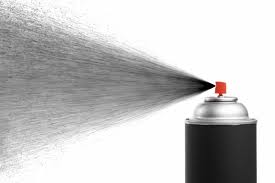
So, I scrounged up a few bucks, went and bought two cans of black spray paint, and wasn’t going to live with the ugliness anymore. Sometimes beauty does come from the outside, in.

With no one home, I slid out of my power chair onto the back yard grass – no way of getting back into my chair – and I opened a can of paint the best I could. I shook the can, just wanting to paint the rims, just wanting to get rid of the ugliness, from the outside, in. And, as I tried to spray, paint went every where until, with tenacity and patience, all was black – the wheels, the tires, the frame, my face, the dog – it was an explosion of black. And, it was the coolest thing I’d accomplished to date. The greats weren’t great because they could paint, but because they dared to paint.

My mom came home, finding me sprawled on the grass, surrounded by blackness, and simply said, “You know, you have to live with that chair that way.”

And, I thought, “That’s right. Just the way I want it, beautiful from the outside, in.”