Pursuing the Ultimate in Failure

emilyted

By Mark E. Smith

I don’t know if having my physical disability created my thirst for that which is difficult, or if it’s uncanny luck that as one who thrives off of that which is difficult, I was bestowed disability? Regardless, the two have formed an incredible synergy that’s fueled my life since I was a young child.

A big part of it is that, as a result, failure is innate to me. By physical nature of my disability, I fail a lot – sometimes as simple as tying my shoes or transferring from my wheelchair to the commode. Yet, what it’s taught me is that when we fail a lot, we counter-intuitively gain a confidence toward trying. If I do this, what’s the worst that can happen? I’ll fail. So what – I fail every day. But, I also have the chance to succeed. In this way, if we’re not afraid to fail, we’ll try anything, and when we’re that bold, it’s bound to lead to successes.

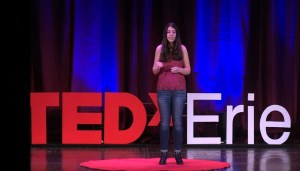
I witnessed this in action with my 19-year-old daughter recently. She took the bold step of doing a TED talk. Once you are selected, it takes months of work to prepare for the talk on stage. Then, when you’re up there in front of a live audience, with a huge production crew filming you, really it’s a chance for failure on the grandest scale. Some people try to cheat the risk of failure, wanting the glory without the guts. For example, at my daughter’s TED event, some other speakers used notes. However, you can’t fake risking failure, and when we do, we cheat ourselves in the end by not giving our all.

To the contrary, my daughter got up on stage with nothing but a microphone and the willingness to fail. She knew the obligation she had to herself and the audience to be authentic in every word that came not from shaky notes but the depth of her sincere heart. She was willing to risk failure in a shot at positively impacting the lives of countless others. And, that she did, arguably delivering the best performance at the event.

See, what I’ve learned is that the risk of failure shouldn’t deter, but inspire. As the adage goes, we shouldn’t dare to be great; rather, we’re great because we dare. As long as we try with absolute authenticity, we will risk failure while simultaneously setting ourselves up for success. It’s in that process of having the courage to put it all on the line – no matter transferring from a wheelchair to a commode or giving a TED talk – that our character is shown. Let us fail big and succeed even bigger because there’s nothing to gain from the safety of mediocrity….
The Greatest Election

winnie

By Mark E. Smith

I want to share with you one of the most influential, but least known, political races of all time.

The year was 1982, and it was a mid-term election amidst the first term of President Reagan. Two years earlier, in 1980, Reagan beat Carter in a landslide, 489 electoral votes to 49. There was, however, a bigger loser in that race – John B. Anderson, an Independent who garnered zero electoral votes. And, as history now shows, an even larger defeat was to come in two years, one that might even surpass Anderson’s.

By the 1982 mid-term election, a lot was at stake. The Dems needed to gain 27 seats or so to secure a majority in the House. However, down-ballot, there was a far more consequential election occurring, one that would alter my life forever: the Valley View Intermediate school elections.

See, I was on the ballot in the sixth grade, running for Vice President of School Spirit. After all, who was more fitting than me, the ever-chipper kid with cerebral palsy to represent school spirit?

Actually, Winnie, to be exact. Her name wasn’t really Winnie, but it should have been, as she was every bit as adorable and popular as Winnie from the television show, The Wonder Years. And, she was my competition.

Still, I wasn’t deterred. Like among the biggest losers of all time, John B. Anderson, I campaigned hard. I plastered the school with posters and even put a billboard on the back of my power wheelchair. I had a fighting chance, and I was going for it!

On the day of elections, I was more scared than I’d ever been. All office candidates had to give a stump speech in front of the whole school in the auditorium. As I sat on stage awaiting my turn, everything was a blur of sights and sounds drowned out by my pounding heartbeat – except for the unbelievable cheers and applause Winnie received after her speech. Then it was my turn.
I rolled up to the microphone and gave my speech – with courage and conviction – and as I finished, I realized I had no idea what I’d just said. Apparently, neither did anyone else, as they just stared, silent.

After votes were counted, I listened anxiously as the principal read the winners over the intercom system. Then, it happened – Winnie’s name was announced. No, they didn’t share the vote count – that is, how badly I lost – but some things are better left unknown.

I never ran for office again, but I say that having the courage to do so and learning humility through loss at such a young age was among my greatest victories. We can only hope that the conceding candidates in this election cycle possess the innate dignity and grace of a sixth grader.

Don’t Give Up The Ship!

dontgiveup_2

By Mark E. Smith

At this writing, my daughter is at rehersal with seven other speakers as they prepare for the next TED event in exactly one week. TED events gather the world’s best speakers throughout the year, filmed in front of a live audience, then they put the talks on TED.com where each talk reaches a global audience – typically in the millions of views. At 19, my daughter is among the youngest speakers TED has ever had. No, she’s not a PhD or a leading professional in any field. So, how is it she’s been chosen to not just speak at TED, but be the opening speaker, setting the tone for the event?

The answer is, she knows the subject. The theme of the event is don’t give up the ship – and she knows that well. In fact, it’s that very philosophy toward facing adversity that has gotten her not only to remarkable paths in life, but also to the literal stage of TED.

See, while it’s historically a maritime battle cry, what don’t give up the ship is really about for all of us, just as with my daughter, is how adversity is a solidifying force in our lives, teaching us to weather storms with strength and grace. So many who have never faced adversity understandably assume it a destabilizing force – and it initially is when we first face it. However, once we face adversity, we recognize it as an equalizing force. From that point on, it’s our ballast that adds remarkable stability to all aspects of our lives. Life occurrences that might throw others into a tailspin suddenly seem manageable, if not minuscule, because our understanding of adversity intrinsically gives us clarity and perspective to handle the really tough stuff.

In these ways, experiencing adversity adds ballast to our lives that allows us to weather storms with amazing strength. And, when it comes to not giving up the ship, having previous experience in adversity is our best skill set at the helm. Let adversity not be our deterrent, but our guide, and never give up the ship!

The Ultimate Equation

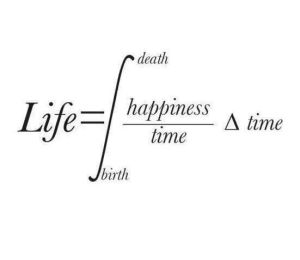
equation

By Mark E. Smith

I’ve known and heard the most inspirational speakers in the world – from Nick Vujicic to W. Mitchell. However, when I heard one of my colleagues recently speak to a group of teens, it stopped me in my tracks and gave me goosebumps. How was it that I’d never heard such profound words come from the world’s best speakers?

“Some call what I have a disability,” he said to the students, noting his going totally blind in his 20s, but now in his 50s. ”However, I just call it a ‘problem,’ because problems have solutions.”

If we expand his philosophy beyond visual impairment or disability, think how liberating that is. So many of us see any form of adversity as a roadblock, end-of-the-line, full stop. I can’t do that because of… fill in the blank. We allow adversity to stop us because we don’t allow ourselves any alternatives.

Yet, what if we follow my colleague’s astounding wisdom, where adversity isn’t a full stop, but simply a problem that needs solving? OK, here I am – how do I solve this?

That single question changes everything, doesn’t it? It takes a situation that’s seemingly out of our control and puts us completely in control. It allows us to turn pessimism into perseverance. Most importantly, it allows us to turn adversity into opportunity.

As I learned in hearing my colleague speak to the teens that day, adversity is a great problem to have – because problems always have solutions.

Pump Up The Hate!

Steve Aoki
Steve Aoki

By Mark E. Smith

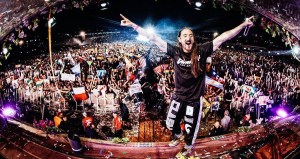
Steve Aoki is among the most hated people in the world of social media. Every day there are tens of thousands of comments by his haters. Who’s Steve Aoki and why is he the object of such widespread vicious attacks?

He’s a music DJ and producer. In fact, he’s among the top musicians in the world, performing over 300 shows per year, headlining music festivals around the globe, where Guinness declared him the most traveled entertainer in the world. By all accounts, his work ethic is relentless. He doesn’t drink or smoke. He has a charitable foundation. He produces the top musical acts of our time. And, he brings joy to millions of his fans, a true superstar on stage at global venues. And, this remarkable success is why so many hate Steve Aoki.

Researchers have discovered that there’s a direct correlation between success and haters. The more successful one is, the more haters he or she will have. There’s some basic logic to it. In order to be hated, you must have merit, and the more merit you have, the more haters. On a Sunday at noon, millions are hating NFL quarterback, Ben Roethlisberger – and, it makes sense based on his success.

So, if success breeds haters, what is it about witnessing success that makes them hate? Firstly, psychologists have found that healthy, happy, successful people simply aren’t haters. If you’re satisfied with your life, you’re simply not preoccupied with others’. Rather, what they’ve found is that those who are dissatisfied with their own lives are exponentially more likely to hate those who are successful. As has been clinically put, hating the success of others is one’s own self-defined inadequacies manifesting themselves. Steve Aoki makes $23 million per year, jet-setting around the globe, filling arenas with adoring fans. That seems awesome if we’re content within ourselves. However, if we don’t feel we have the talent or drive to live a life of success, Steve Aoki proves a harsh mirror, where psychologists say that such expressed outer hatred is, in fact, self-hatred.

What’s more, many haters exhibit a defense mechanism – like an “armchair quarterback” – where they convince themselves that they know better than those who are successful, but never accomplish anything. Lots of passengers criticize a pilot, but none have invested what it takes to fly a plane. As Entrepreneur magazine put it, “…Hate is often a sign of weakness, envy and fear. Haters hate on you because you’re doing what they cannot, will not or are too afraid to attempt.”

In these ways, we know we’re rockin’ the world like Steve Aoki when we have two facets to our lives. Firstly, we feel content, passionate, and successful in our own lives. And, secondly, we observe the amount of haters growing in direct correlation with our success!

The Power of Voice

voice

By Mark E. Smith

What is the difference between speech and voice? Speech is the articulation of sound, and when those sounds are put together in a normative way, the ability to communicate audibly with others occurs.

However, speech in our lives is very different than voice. Speech is descriptive, whereas voice is emotive. Speech says what’s obvious, voice expresses what’s not. Speech says, My parents passed away when I was in my 30s. Voice says, Although my relationship with both my parents was never healthy, and I long ago came to terms with that, it remains a surreal thought over a decade later that they’re not on this Earth any more – the phone will never ring with a long-overdue call from either of them. Indeed, it’s voice that gives us the ability to express ourselves far beyond the basics of speech.

Interestingly, in knowing peers with progressive conditions – ALS, MS, and such – who “lose their speech,” they’ve often shared after moving to a communication device that it wasn’t the literal loss of speech that was so devastating, but the loss of voice – that is, the loss of communicating emotion to others. It’s one level to lose the ability to ask for a glass of water; however, it’s a profoundly deeper level to lose the ability to spontaneously say I love you to a spouse, or tell a daughter how proud of her you are. That’s voice.

Regardless of our situations, using our voice can likewise be a struggle. The foremost reason we squelch our voice – albeit in the intimacy of a relationship or the public venue of a stage – is out of fear of rejection. Why don’t we tell our partners how we’re really feeling? Why don’t we speak up in that class, meeting or crowd? Why do we prevent ourselves from expressing our voice – what we really want to say – in any circumstance?

The answer is, we fear the rejection that may come with using our voice. However, here’s what’s amazing: we’re never rejected in the end when it comes to using our voice. It may take initial courage to use our voice – sometimes stomach-wrenching courage – but the result is empowerment.

Now, using our voice can seem dangerous. Do I really want to tell my spouse I’m unhappy in our relationship? However, nothing can change unless we change it, and our voice is the ultimate tool for that. Situations may be difficult, but squelching our voice hurts us more. There’s nothing more empowering and liberating in the end than expressing our voice.

The other miraculous effect of voice is that it unites. Shame, guilt, embarrassment, sadness can all squelch our voice. Yet, using our voice to openly share the origins of such emotions can not only, again, liberate us, but can help others. We all have a common humanity, and we’re not alone in our experiences – but we can feel alone. Voice can be the bridge that not only connects us through shared adversity, but leads us through it. Voice allows us to hear someone else’s story and realize that it’s our story, too – we’re not alone.

Voice is among the most powerful tools that we have. Like all powerful tools, voice can seem scary to use. Yet, when we have the courage to use our voice in sincere, constructive ways, it’s life-changing – both for us and others. After all, when we share our voice, we share our common humanity.

Why I Stopped Jumping Power Chairs

(Click image to enlarge)

By Mark E. Smith

In my 20s, I achieved notoriety for jumping power wheelchairs off of ramps. To see a guy with cerebral palsy rev up a power wheelchair and jump it off of a ramp, a few feet in the air, was quite the spectacle. For me, it was a mix of misguided bravado, showmanship and stupidity. Unfortunately, though, it worked.

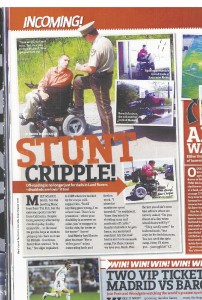
See, although I had overcome and was accomplishing a lot – I was a formal academic and writer at the time – people seemed mildly interested in any of that. But, the power wheelchair jumping, which I cringe to think now as a bit of a freak show, was an attention magnet. Before I knew it, I was featured in big-time magazines, and due to the advent of the Internet, I became widely known as “the guy who jumped power wheelchairs.” Soon, my reputation was bigger than I ever imagined, labeled by one men’s magazine as the “Stunt Cripple” – and my identity fractured.

There was no talent or point in jumping power wheelchairs. It, again, was a shameless spectacle. And, it surely wasn’t who I was. There was so much more to my life and accomplishments. Yet, a single aspect was defining me by reputation. I began to feel boxed in – and I wanted to be who I really was, instead of a one-dimensional caricature.

Many of us have found ourselves in such an identity crisis, haven’t we? We find ourselves in the situation of who others project us as isn’t who we are. In my case, it was admittedly of my own doing, but so often misconceptions, projections or circumstances by others can leave us feeling boxed in. No one should be defined by one dimension; rather, we should be seen in our entirety.

Now, my example of falling into an identity trap is a unique, ridiculous one – stupidity reigned – but it wasn’t the end of the world for my life and career. In far more serious examples, some of us have been boxed in to identities who we’re really not – and it’s been painful and extremely detrimental. How many of us have been in relationships where we felt obligated to act as someone we’re not? How many of us have been stereotyped based on our ethnicity, religion, sexual orientation, disability, and so on? How many of us have been labeled based on where we live, what we do for a living, or even how we dress? Indeed, most of us at some point have felt our entirety stripped down to a single trait that doesn’t just make us seem one-dimensional, but may not reflect us at all. The vital question is, how do we avoid that trap?

In some cases, we can’t. We may inevitably encounter stereotypes and ignorance that we can’t control. However, we can control our own behavior and teach people how to treat us. I recently did a big press conference in the New York City metro area. With a podium full of microphones, a row of TV cameras and a crowd of people, I don’t think a person in the room expected me to take the podium. After all, when’s the last time you saw a guy with severe cerebral palsy and a speech impairment command a press conference? But, I wasn’t going to let others’ perceptions or my disability define me. I made it clear that I’d take the podium – and I ended up on the NYC ABC affiliate’s 6 o’clock news that night holding the press conference.

We don’t have to be boxed in by ourselves or anyone else. With a little courage and a lot of introspection, we can most often avoid one-dimensional identities we misguidedly create or are thrust upon us by others. People call me a lot of titles nowadays – General Manager, writer, advocate, humanitarian, intellectual – but there’s one title that taking control of my own actions and identity buried a long time ago: Stunt Cripple.

Faith, Not Sight

fath

By Mark E. Smith

I don’t know how it will all workout out. But, I know that it will.

See, what I’ve learned from living through adversity is that it shouldn’t be feared, but trusted. We may not see or understand it in the beginning, but there’s purpose and reason to it. Adversity enters our lives not to defeat, but to empower.

Now, adversity doesn’t work on its own. We must contribute perseverance, tenacity, optimism, introspection, and good ol’ sweat to reap its benefits. However, adversity particularly requires one attribute that we must contribute in order to allow it to elevate us: faith.

Adversity demands that in order to rise with it, we must place faith in it. We must know without a doubt that all happens for a reason. We must believe in a larger purpose. We must trust in ultimate outcomes, even when unknown or unseen. We must have faith in the awe-inspiring power of adversity to serve us, to uplift us, to empower us, to take our lives to heights we never dreamed.

I don’t know where you are in your life. But, from my experience in living through adversity, when you face adversity – and you will, as we all do – it has the power to enrich your life beyond your ultimate wishes. You just have to deliver what it requires – perseverance, tenacity, optimism, introspection, and good ol’ sweat – and a healthy dose of faith that ties it all together. To have faith in adversity is the power to not just survive, but to thrive.

Voice of Courage

13731631_10210078069973105_6856083489733044810_n

By Mark E. Smith

What’s the origin of courage? Is it a conscious decision or an innate response? And, how does it make us rise at just the right moment when needed most?

My soon-to-be 8-year-old daughter has spina bifida and autism. While I didn’t have the privilege of being in her early life – she’s legally my step-daughter – I’ve had the blessing of having her in my life in recent years, where she’s my daughter. And, while our relationship isn’t typical – autism never is – the love and understanding is, just as with my 19-year-old.

My little one has a lot going on medically between her two disabilities, but that all just makes her unique like any child. Due to spina bifida, she’s paralyzed from the tummy, down, and uses a wheelchair. Due to her autism, she has an astonishing vocabulary, but finds it difficult to use it in context and isn’t conversational. In simple terms, she makes us smile nonstop with her constant chatter – Please to meet ya, prairie dogs!, she recently exclaimed in the middle of dinner at a restaurant – but she profoundly struggles expressing what she wants or needs.

She’s also a fearless daredevil, where she doesn’t demonstrate self-protection mechanisms. However, this makes her love motion, including amusement rides. And, so when we recently had the opportunity to take her adaptive horseback riding, we knew she’d love it.

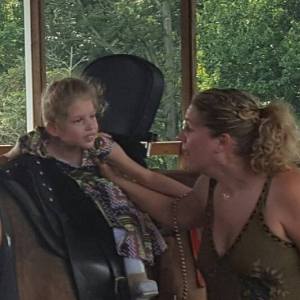
Inexplicably, my wife and I were wrong. As a team surrounded the therapy horse, and my wife tried to place our little one on the saddle, our little one was terrified. In fact, I’d never seen our daughter express fear, but as she clung to my wife, the fear was palpable. Yet, we knew if she could get past that fear, sit in the saddle and ride, she would love it. However, as I watched from the fence feet away, I knew that this had to be our little one’s decision. Yes, she was scared. No, you can’t force courage. But, could our little one find the inner-strength to ride the horse?

After many failed attempts, to the point of all of us adults about to give up, in one last try, our little one saddled up, clutching her mother. As the horse rounded the ring, the unimaginable happened. Our little one exclaimed, I am not afraid!

Was it self-reassurance? Was it a declaration to our group? Was it an affirmation of her life that we never thought she could express?

It was all of those. No, I don’t have the answers for the questions for which I began this story. However, I can tell you most profoundly, though, that all of us there that afternoon heard what few ever hear: the true, literal voice of courage.