Getting Framed

By Mark E. Smith

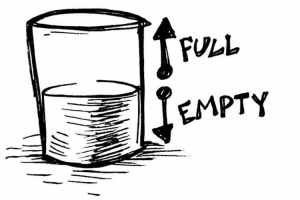
Is the glass half full or half empty? …There’re two sides to every coin. …Or, would you rather a steak that’s 80% lean or 20% fat?

All of those statements are utter clichés, but they tie into a psychological principle that dictates the way we see each situation: framing.

Framing is the psychological process that applies to whether we see a situation as negative or positive. The fact is, in even the worst of situations, we have the choice on how to frame them – that is, to see negatives, positives, or both – and the way we frame them dictates our success in addressing them, literally and emotionally.

I’m a firm believer in framing adversity as a tool for opportunity. No matter what happens, I believe in recognizing the opportunity in it. I once had a home severely flood, and as I evacuated, I told everyone, “It looks like I finally get to remodel….” And, I did get to remodel as a result of the unfortunate circumstance, where the house was far nicer than before it flooded.

So many aspects of our lives are like that: As the flood waters rush in, it’s difficult to see beyond the seeming disaster. However, if we frame life’s adversities so that we can draw positive aspects from them in the immediate and long term, it lessens the impact on us and allows us to move forward.

On top of using positive framing as a tool of coping, it’s invaluable as a tool for learning and growth. If we only see a situation as bad, we’re simply in victim mode – adversity only harms us – and we can’t move forward. However, if we frame adverse situations with at least some positives, we not only take control of the situation, but we learn and grow. Imagine if every time a professional sports team lost a game, they just went back to the locker room and sulked about how unfair the game was. They’d be the worst team in history. No team does that. Rather, they watch replays of the game to determine how mistakes were made, then they strive to improve in those areas. We lost that game, let’s learn from it to win the next.

If you’re not in the habit of framing adversity toward the positive, I know it’s hard. None of us want adversity in our life, and it can weigh us down. Yet, adversity enters our lives at times no matter what – which is why it’s so important to develop the habit of seeing positives. If we only see negatives, it tends to freeze us in place. However, if we can see a positive – even in the bleakest of situations – it allows us to begin moving forward. Most of us have had our hearts broken by an ended romance. Then, a well-meaning friend tells us, Don’t worry, there are other fish in the sea. While that cheesy saying lacks empathy in the moment, the painful end of one relationship most often does lead to a new, joyous chapter of love. In this way, even an ending in our life can eventually frame a wonderful beginning if we allow it.

If we can get to a place in our lives where we can frame adversities in the positive, we can then move forward, learn, and grow. That’s a great frame to be in.

Fear Strengthens My Grip

By Mark E. Smith

Every Monday, I meet our company’s new employees. It’s my role to share with them not what we do, but why we do what we do. We make mobility products and that’s a noble endeavor. I know that because my life depends on the products we make. And, I tell them about that. But, as a General Manager, in my slacks and button-down dress shirt, here’s what I don’t tell them or most people these days:

I’m nobody from nowhere. That truth drives me to push and pull and continue dragging myself up a mountain that I could easily fall from at any moment. Fear of falling has been my purest motivator.

Others have talent, education, abilities. I wasn’t born into any of it. If it wasn’t for my cerebral palsy, I’d likely be mowing lawns or asking at 46, Do you want fries with that? Now, there’s nothing wrong with jobs like that – it’s in my gene pool. But, that doesn’t work with cerebral palsy, so I had to go a different route: one that’s been a third luck, a third showing up, and a third blistering hard work.

Do you want to try a power wheelchair? Sure.

Do you want to take a swing at public school? Absolutely.

College? Let’s go.

So, I’ve moved through life knowing that guys like me don’t get a lot of breaks. So, when I do, I show up, shut up, and do what the task takes.

Along the way, my failure has been predicted by many. I’ve been OK with that. Although, I admit that the further I get up the mountain, the more I look down on them. Don’t tell me I can’t climb when you’re unwilling to climb with me – because I’m going for it, not out of spite, but opportunity.

The fact is, my only option in life is climbing a mountain. I know that with a single wrong move I can lose everything, I take nothing for granted. I am simply thankful for the next obstacle that comes my way – and fear strengthens my grip.

The Bitter Tastes of Bitterness

By Mark E. Smith

Have you ever truly thought about bitterness and its toll on an individual? Hurt and anger are common emotions we all experience when a person or circumstance causes us emotional pain. However, bitterness exponentially ups the stakes, taking us to a place where our life and mental health are consumed by it. Bitterness is among our most self-defeating emotions and mindsets – and difficult to overcome once in its grips.

Dr. Stephen A. Diamond puts it well when he writes, “Bitterness, which I define as a chronic and pervasive state of smoldering resentment, is one of the most destructive and toxic of human emotions. Bitterness is a kind of morbid characterological hostility toward someone, something or toward life itself…. Bitterness is a prolonged, resentful feeling of disempowered and devalued victimization.”

Beyond those disturbing characteristics that can consume our life, bitterness is unique in that it’s an emotional state and mindset that we place upon ourselves – at least in the beginning, that is. Others or circumstances, of course, can make us angry or cause us hurt – we can’t control that in the immediate. However, bitterness, in fact, is of our own creation based on our not letting go of then pain or resentment. Then, if left to fester, bitterness can take over our life, becoming a diagnosable mental health issue (known as Post-Traumatic Embitterment Disorder [note the root word of “bitter” in that diagnosis]). Therefore, bitterness is like getting stuck on an ever-revolving hamster wheel, trapping us in an addictive cycle of …well …bitterness.

I recently spent time with an acquaintance who frequently brought up an ex-partner in our routine conversation. The pain and anger were tangible each time the ex was interjected, so I assumed the breakup was within the past weeks or months. I finally asked how long they’d been apart? The startling answer: six years. Firstly, I felt empathy for the hurt this person was feeling, as it was palpable, and I couldn’t fathom anyone living in such pain for six years. But, I also thought to myself, holding on to this bitterness will prevent you from ever welcoming a new, loving relationship into your life.

I’ve likewise witnessed life-defeating bitterness evolve from anger toward circumstances. Living and working in the disability community, I encounter individuals from time to time who’ve held on so tightly to the negative emotions surrounding disability that they blame it for everything wrong in their lives. Disability experience can be frustrating, but it need not fester to the point of bitterness and constant self-victimization. When it reaches such a catastrophic point as bitterness, joy is drained from life, where one is stuck in the destructive mode of resenting life itself.

Bitterness is so dangerous because we often don’t know we’re in that space – that’s how consuming it can be. When embedded in bitterness, we have our lives focused on a target, upon which we thrust blame for virtually everything, and don’t realize how it slowly destroys us.

I found myself in the grips of bitterness in my late teens, and looking back, it was such a harrowing experience. I was on the verge of graduating high school and my resentment toward my biological father was simmering into bitterness because he wasn’t in my life. While I tried to focus on what otherwise should have been an exciting time in my life, my bitterness toward my father consumed much of my thoughts. Fortunately, through counseling and introspection, I was able to realize that my father wasn’t hurting me – he wasn’t even in my life – rather, I was hurting myself with smoldering resentment. Looking back, I was fortunate to break that self-destructive mindset of bitterness, but it wasn’t easy and ultimately took years of processing to get to an accountable, peaceful place in my life regarding the emotions surrounding my father.

While I broke a cycle of bitterness early in my life, and learned the importance of avoiding such dangerous emotional paths, the question remains: how do we universally break a state of bitterness?

The first answer is, we need to recognize that we are bitter. If we’re hyper-focused on how someone or a circumstance has wronged us, and still seething years later, to the point that it taints our thoughts and world view, there’s a problem. It’s at this point where we merely self-victimize. What happened, happened, and we need to let go of it.

Now, a lot of literature on the subject of bitterness, both secular and nonsecular, speaks of forgiveness as the ultimate salvation. The psychology world defines forgiveness as, “mustering up genuine compassion for those who have wronged us.” While this is great for some, modern psychology doesn’t believe it’s universally required – nor should it be in certain circumstances – in order to live without bitterness. There’s tremendous power in simply allowing the past to be the past, and living with gratitude for what today offers. We’ve all been wronged at points in life in ways we can’t change, but why hold onto that when we can release it? Again, this doesn’t mean we must outright forgive in order to find peace. If someone or a circumstance harmed us, we have every right to forever acknowledge the wrong. For instance, as a father myself, I see my father’s behavior as totally inexcusable till this day; however, he’s long deceased and I focus on being the best father I can to my children rather than dwelling on my father. My point is, we can let go of pain without forgiving someone’s wrong or a circumstance. A friend of mine, who experienced a spinal cord injury at the fault of a drunk driver, once said, “I can never forgive the drunk who hit me, but why would I focus on what that accident took from me when I can focus on all I still have?”

Emotional pain and hurt inevitably enter our lives at points. Bitterness doesn’t have to. Let us not necessarily “forgive” or “forget,” but move on in the present, where we remove the power from others and circumstances – bitterness! – and confidently control our own lives with grace and happiness.

In the Weeds of Life

By Mark E. Smith

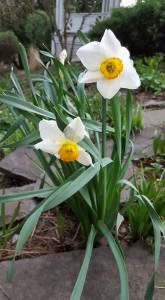
Spring. It’s a fascinating juxtaposition, isn’t it? On the one hand, beautiful perennial flowers sprout and bloom with more vibrant colors than could ever be painted. On the other hand, weeds simultaneously grow, and if left without intervention, soon overtake the flowers. It can become tougher and tougher to see the beauty of spring among the chaos it also brings.

This process isn’t unique to spring and nature. In fact, many of us can identify a similar process within ourselves. That is, we can find our intrinsic beauty overtaken in our own negative self-perception. How often do we look in the mirror and only see seeming physical flaws? How often do we think of ourselves and only recall our seeming shortcomings? How often do we look at the scope of our lives and only think of our seeming failures? I’ve been there, and still go there from time to time, and it’s a tough way to live – in the weeds of life, you might say.

At some point, though, we have to remind ourselves that no matter how thick the weeds of life are, our intrinsic beauty and value is there. We need to clear our flower beds – read that, ourselves – of the weeds obscuring the beauty of it all. This isn’t to say we don’t each have our own weeds – I’m a rolling fiasco with cerebral palsy, and that’s never going to change. However, it is possible to clear our beds and look past the imperfection of sporadic weeds to our intrinsic beauty. I know that’s a tough perspective to have when the weeds of life have grown thick because, yes, what adversely happens to us in life deeply affects our sense of self. Yet, it is possible and vital to regain the self-truth of our buried beauty. So, how do we clear the weeds to reveal our beauty, namely to ourselves?

Speaking from my own experience, I’ve found several ways to “de-weed” my inner flower bed when needed. Firstly, let us acknowledge and try not to take our imperfections too seriously. Having cerebral palsy has its challenges, but I find genuine humor in some of the ridiculous aspects of my condition. My wife and I have a never-ending joke that when I’m in bed, and my legs spasm, I look like a happy baby kicking in his crib. There’s nothing suave about a man’s legs kicking the blankets – but it is hilarious to see!

Next, I strive to accept only the truths in my life. People can say or think what they wish about us, but it’s the truth in our lives that counts. You know who you are and what you do, so try not to let the uninformed, poor intentions others distract you from the truths in your life.

Thirdly, I don’t believe we must develop a thick skin to survive. Rather, we need to merely surround ourselves with trustworthy people. Surrounding ourselves with reciprocating, healthy people is a great way to keep the weeds out.

Lastly, let’s try not to let circumstances or experiences define us, but learn from them, chalking them up as part of life’s journey, and move on. Making a mistake, then allowing that isolated circumstance to define us, is a terrible trap to fall into. We all make mistakes; let us have the self-forgiveness to move on.

Of course, there is one final way to remove the weeds in our lives, exposing our intrinsic beauty, and that is to acknowledge the beauty in others. The world is a mirror, and what we see often both reflects us and reflects upon us. If we acknowledge the beauty in others, we’re far more likely to see the beauty in ourselves, as well.

I wish clearing the metaphorical weeds of life was as easy as weeding a literal flower bed. It’s not. However, we deserve not to be self-mired in weeds, but to see our amazingly unique vibrancies that we contribute to the world. Flourish, no matter the weeds!

When Life Becomes a Squeezed Balloon

By Mark E. Smith

You’ll likely find yourself at that crossroad. Maybe, as with many of us, you already have. So, what do you do?

It all starts out with the best of intentions. It always does, we always do. But then months, years, decades go by and it all goes in a different direction than we expected. And, that’s the tough part, isn’t it? Changes sneak up on us – then they’re just there. Literal changes, conflicting emotions, sometimes regret. And, we try to make sense of how bright sunshine turned into a heavy rain, and at its worst, a secret pain. How do we resolve it all?

These crossroads of life we find ourselves at – a struggling relationship, a defeating career path, a lost sense of identity – point to what once was an ideal, but is now just agony. How do we correct a yearning when the mere mention scares us? How do we tell ourselves, let alone others, that the train for us has run off of the tracks?

Unflinching honesty with ourselves and those involved, that’s how. We’re ultimately accountable for our happiness, and that means. ..well …being accountable. If some aspect of our lives is tearing at us emotionally, let’s address it, let’s put it out there for resolution. Stuffing it down, like squeezing a balloon, only increases the tension.

No one ever wants to do any of it – admit it, speak of it – because it’s scary. No one wants to jeopardize a relationship or a job or family ties or friends or, or, or…. However, we also don’t want to jeopardize ourselves in aspects of life that are preventing fulfillment and happiness. The conflict doesn’t need to be, as long as we’re willing to simply be ourselves.

See, no matter what life predicament we’re in, there’s always the choice of candor, which opens the gate to free ourselves. However, the deciding factor is, do we have the courage to just let it all out and be – ourselves?

The Wonder of Suffering


By Mark E. Smith

Why do we suffer? If you’re like most of humanity, you’ve probably asked that question based on your own pain or in witnessing the pain of others. Even if you’re among the most optimistic, you’ve likely wondered, why does such a cruel aspect of life as suffering exist?

Now, we have to preface this conversation with the fact that not all suffering is equal. Even when some are more adept at enduring suffering than others, we know that not all plights are equal. Although one may be suffering due to, say, a job loss, it can’t be equated with third-degree burns over 90% of one’s body.

Yet, on a more universal scale, we all encounter some sort of suffering at points in our lives, albeit physical, emotional or mental – or all three. With this fact, though, a fundamental question remains: is there a purpose for suffering, and if so, what is it?

Psychologists Richard Tedeschi and Lawrence Colhoun studied individuals who experienced tremendous suffering, from having a serious illness, to experiencing the death of a loved one, to serving in combat, to living as a refugee. Regardless of the causation of suffering, the researchers found striking patterns in the ultimate affect that suffering had on the individuals: “positive life changes.”

Specifically, the researchers discovered that those who suffered experienced personal growth. The individuals discovered strengths and abilities they didn’t know they had; they found deeper meaning in relationships; they took far less for granted than others; and, they had a more philosophical sense of awareness, including greater empathy for others.

Along these lines, other research also shows benefits from suffering, but getting to those benefits isn’t an easy plight. Psychologist, Judith Neal, researched those who’ve suffered to notable degrees, finding a harrowing path that can lead us from suffering to personal growth. Neal, in fact, identified a sort of road map that we commonly follow. In the process of suffering, proposes Neal, we begin in a dark state. Then we enter a phase of trying to find sense in it all. Next, we discover new perspectives and values. It’s at this point that we discover new meaning and purpose in life. The key is not to get stuck in the dark state, but to move through what researchers assert is a natural, instinctive survival model that results in growth.

Anecdotally, based on my career and the population I’m part of due to my having a disability, I’ve witnessed thousands of individual ”suffering” by both medical and empathetic definition. I’ve watched very close friends die slowly from such progressive diseases as muscular dystrophy, multiple sclerosis, and ALS. Yet, more poignantly, I’ve seen most ultimately thrive in the midst of it all, sharing with me the positive life transformations they’ve gained through suffering. No, not everyone navigates this process – I’ve likewise had friends commit suicide over suffering – and we shouldn’t expect suffering to be rosy or welcome it or seek it out. However, from formal research to my own life experience, I do believe that there is a purpose within suffering: it’s a catalyst for growth. In our darkest times, let us trust in that purpose.

No Bikes for the Lazy

By Mark E. Smith

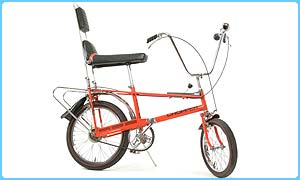
When I was six, my great-grandmother told me that if I stopped being lazy and simply walked like my brother, she’d buy me a bike. She wholeheartedly believed until the day she died that my cerebral palsy was a farce – I was merely the laziest person she’d ever known. I was a lifelong disappointment to her.

Over four decades later, I have empathy for my great-grandmother, knowing that her outlook was likely a defense mechanism toward dealing with my having a severe disability, a painful reality for most family members in such situations. However, throughout my childhood, she took every opportunity to tell me how my lazy behavior of having cerebral palsy disappointed her.

Growing up, I saw my great-grandmother as a crazy old lady who was on her own when it came to her outlandish opinion of my cerebral palsy as pure laziness on my part. I, in fact, knew that I was making the most out of what I had – and I was fine with the reality that I disappointed her. She had her opinion; I knew my reality; and, I was fine with it all.

What I didn’t realize till in my adulthood was that she simultaniously taught me a great lesson while instilling in me a value that would fuel much of my positive outlook in life: as long as I do my best, others can love or hate me, but the outcome doesn’t change. My job is not to worry about what others think, but to be the best me – and let the chips fall where they may.

Interestingly, it’s proved true in my professional life. Some value what I do – right down to this very essay – while others despise it and me. Both views of me are great – and have no affect on what I do (even if you offer to buy me a bike!).

My great-grandmother taught me an even larger lesson, though: it’s likewise no one’s job to try to please me; rather, my only role is to support others in who they are. I’ve found this invaluable as a father, husband, friend, and colleague. As long as those around me are happy and healthy, living to whatever their personal bests are, I’m thrilled for them. My role is to support, embrace, and love, not judge.

In these ways, just as our job isn’t to please everyone – because that’s impossibe – it’s not our place to want others to please us. By living to this reciprocating standard, we find ourselves in life-inspiring, mutually-embracing relationships of ultimate acceptance. The downside is, no one buys us a bike….

The Seasons of Life

By Mark E. Smith

Wouldn’t it be nice if our life paths were linear, evolving via steady forms of growth? Just imagine how easy life would be if, from health to relationships to finances and on and on, our lives simply got better and better, with no adversity or rough times in-between.

Now, we all know that life doesn’t work that way – life isn’t linear for anyone. However, what happens if we accept the way life really works? What happens then?

I’ve watched the trees, shrubs, and flowers on my property this past fall, winter, and now spring. And, nature’s reminded me of the course of our lives: often growth occurs from loss and regrowth – phases I’ve experienced in my own lifetime, where I’ve always come back stronger, with a more vibrant perspective.

When we experience disheartening change or loss, it’s understandable to feel like all good things have come to an end. It’s like watching my flowers die in the fall. Then, all often seems hopeless for a bit – I’m never getting that part of my life back. It’s like looking at a mountain of trees without leaves in winter, where all looks eternally bleak. However, soon spring arrives and growth returns, where the trees, shrubs, and flowers have a tremendous growth spurt and colors abound. Nature is magical in its seasons – and so are our lives.

Not unlike nature, our growth isn’t linear. Rather, there are pauses and breaks to it. Our health fluctuates, relationships ebb, and we have financial down times. Yet, if we have faith, knowing that life isn’t linear, but that change and loss soon enough welcome new growth, we can have a life that’s one of anew and success, where the past is stepping stones to an ever brighter future. Indeed, these are the seasons of life.

It must be noted that nature has one up on us in that once the right weather hits, spring comes on strong and growth abounds. The springs in our lives can be a little more tricky in that we must invite them with positive actions and thoughts. If we’re in the dumps emotionally – without hope – winter can last a long time. Therefore, it’s often up to us to be the weather changer – again, a little faith and optimism that spring is possible goes a long way.

Life isn’t linear, and we do find ourselves in dormant seasons. However, when we do, let us know that all seasons are temporary, so thrive in the sun and have faith that in even the most wintry of times, spring will return.

The Beard Effect

By Mark E. Smith

My entire adult life, I’ve tried to grow a full beard – alas, to no avail. I was of the ‘80s generation, where George Michael rocked that close-cropped beard, and nothing was more masculine than that, right? Yet, every time I tried to grow a full beard to trim George Michael style, it always came in thin, and after two weeks, I gave up and shaved. I just couldn’t grow a beard.

However, several weeks ago, at this writing, I found a video by chance on YouTube regarding growing beards, and that piqued my interest. After doing further research, I learned that there’s literal anatomical science to growing a beard. While some men have thicker or darker facial hair than others, the universal fact is, all of our facial hair grows at approximately the same rate – 0.011” per day – and it takes one month to grow a beard. Therefore, I’ve learned, it’s not my genetics that has prevented my growing a full beard, but my lack of patience.

Not unlike my previous beard-growing mindset, I recently heard a great saying: we overestimate what we can do in two weeks, and underestimate what we can do in two years. And, on both fronts, patience and effort play a role.

How many of us have wanted to snap our fingers and somehow magically change an aspect of our life? We don’t want to spend a year getting in shape, two years getting finances in order, three years building a relationship, or four years going back to school to advance our careers. Heck, I don’t want to wait a month to grow a beard! Rather, we just want change now!

Yet, change doesn’t happen at the snap of our fingers. Rather, it takes patience, effort, and time. We don’t get into shape overnight; it takes consistent exercise and training. We don’t get our finances in order based on one paycheck; it takes long-term discipline and budgeting. We don’t build or repair a relationship in an eve; it takes constant introspection, understanding, and communication. And, we don’t elevate our careers in a day; it takes an ongoing practice of professional growth.

However, when we have patience and apply the effort needed, not over two weeks, but, say, two years, we accomplish extraordinary growth and changes in our lives. I wish there was a magic pill that allowed change to occur overnight. However, there’s not. We are fortunate, though, to have a formula that gets us to our goals, aspirations, and dreams: patience + effort + time = success.

I’ve applied this principle to many aspects throughout my life, and it’s never failed. Some successes take longer than planned – I recall spending every day for close to a decade learning to tie my shoes based on my disability – but patience, effort and time always pay off.

Along the way, especially when we don’t see immediate results, we’re bound to get discouraged – and that’s a great sign. We only feel discouraged when we’re truly trying, so recognizing it as a hallmark that we’re making progress is vital to growth. Discouragement doesn’t need to be a roadblock, but a sign that we’re heading in the right direction. Let it lead us past!

Surely, growing a beard is trivial compared to the many profound areas that we struggle with in moving our lives forward. Yet, the core principles are the same. Let us have the strength to invest patience, effort and time into what we desire – and it is then that our dreams and goals become reality.

House on the Hill

By Mark E. Smith

Profound life change can be hard and scary. However, do you know what’s even harder and scarier? Acknowledging it to ourselves and others. Yet, when we do, that’s when the most rewarding change occurs.

My wife and I were very fortunate to buy our “forever house.” We’d financially striven toward it, and finding it was a two-year process unto itself. It had to be the right house, at the right location, at the right price – and we nailed it. Then, due to my wheelchair use, we did some remodeling, and my wife made our beautiful home even more beautiful with her design skills. People were kind, and the compliments on our home flowed. By all accounts, we were blessed, and as one who didn’t come from much, I never took a moment of it for granted – I was privileged to own the big yellow house on the hill.

Based on renovations and moving, it was a long process getting into our new home. I was satisfied with the accessibility renovations – although slightly different from my previous home of 15 years – and was eager to move in. As moving day approached, I was as excited as anyone.
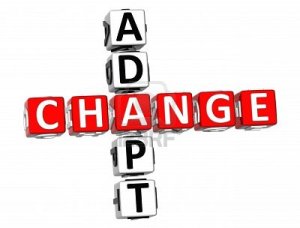
Once moved in, however, little felt right to me. Although I’d made accessibility renovations, aspects like using the bathroom was physically different and difficult. I had to learn new ways of doing necessities like using the commode and showering. I found myself working hard to learn and adapt to new ways of doing everyday tasks, and it was physically and emotionally taxing.

My wife was phenomenally supportive toward my physical struggles, but I wasn’t being open about my emotional ones. Even I wasn’t clear on what I was feeling because, on the one hand, I wasn’t longing for my previous house, but I was wondering if this struggle was necessary just to have our dream home? I wasn’t to the point of resentment, but close to it. Every time someone complimented our home, I’d smile and think to myself, This house may look beautiful to you, but it’s wearing on me…. It’s an isolating experience pretending all is perfect when it’s not.

Yet, my wife knew all was not perfect. One night as we got ready for bed, she asked if I thought the house was a mistake based on my struggles? I was open with her and explained that I didn’t think about going backward – that is, I didn’t miss the old house – but I was struggling to move forward. Physically and emotionally, I was struggling with all of the changes in my daily routines. The house and all was great, but I was battling through the process of a profound life change, as with the process of battling to relearn my physical independence in this new environment.

That realization – where I wasn’t struggling with the house, but the process of a profound life change, itself – was a wake-up call. I didn’t need to give the house time; rather, I needed to give myself time. See, that’s a key to a profound life change: we need to allow ourselves to admit that we’re struggling with it, and give ourselves leeway to move through the process. It’s too easy to blame something, or run away, giving up on a situation. Real fortitude comes when we admit we’re struggling with change, and give ourselves time to move through it, succeeding on the other side.

I’m not there yet – the commode transfers are still difficult and intimidating, to name one aspect – but adjusting to profound life changes take time. However, I’ve been through this process before and I’m ultimately comfortable with the intrinsic discomfort. I’m tackling the changes and related emotions as they come, and I’m so looking forward to the last part of this period of change in my life: Summer evenings on the porch, enjoying the breeze passing through the century-old evergreens….