The Kind of World we Live In

freehug

By Mark E. Smith

Every night at 10:00 pm, I flip through the cable news channels. With redundant sound bites and flashing scenes – not to mention partisan political rhetoric – I’m told what a terrible world I live in. If I am to believe them, my life in every fathomable way is on the brink of disaster – and so is yours. If texting drivers and terrorists don’t kill us, our jobs will be downsized and exported, and our children will end up on heroin. But, then they go on to note that if we make one wrong vote, we will lose civil liberties and nuclear proliferation will usher in World War III. However, none of this matters because whatever the latest virus is, it’s likely to kill us before all else.

This is how the news media portrays our world night after night. Yet, day after day, my life – the world we share – couldn’t be more different. As one with a severe physical disability, the world of intolerance portrayed by the media that we live in should place me drowning in the bottom of a cruel socio-economic barrel. Yet, I’m not – and, in fact, my world, your world, our world couldn’t be more different than the distorted, sensationalism hyperbole spewed by make-up-strewn talking heads on cable news.

What 45 years of disability experience has proved to me is the truth of humanity. People are kind, accepting, embracing and tolerant. We know that we’re all in this together, and while my adversity is an obvious physical one, we all have known adversity, and it’s among the bonds that unites us. We all want to love and be loved, and as my career has taken me to countless cities and towns across this country, every where I’ve been has demonstrated one universal trait: kindness.

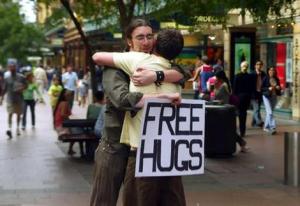
As one with a severe disability, who speaks and looks differently than others, who must turn to strangers for assistance in situations, who flies on planes and lands in cities, I see none of the harsh, cruel world portrayed by the media. I see the flight attendant offer to walk with me through the airport to ensure I find my shuttle van. I see the shuttle van driver insist on tying my shoe. I see hotel clerks ensure all I need is taken care of. I see waitresses intuitively move everything where I can reach it. I see individuals homeless say words of blessing to me. I see strangers in stores, restaurants, everywhere, share the kindest words and hug me.

I don’t know where the media gets its soundbites and images of the bleak world it portrays. But, if they followed me for an hour, in any city in this great country, they’d see the truth: the kindness of the world around us is awe-inspiring. Turn off the TV and get out into it.
To Be Unheard

unheard

By Mark E. Smith

It wasn’t her sharing being diagnosed at just 19 with multiple sclerosis that surprised me, nor was I surprised that now 20 years later, she’s effectively paralyzed from the neck, down. After all, I work in the wheelchair industry, and these are the stories I hear every day. No, I never get used to them, but such stories are the reality of those I serve.

However, what she said at the end of our conversation made my world stop: “Thank you for hearing me,” she said. “It’s been so long since I’ve felt heard.”

My heart paused to comprehend the profoundness of her words. With her disease progressed to the point of full body paralysis, having undergone so many life changes along the way, her biggest concern wasn’t any of that – it was simply wanting to be heard.

How many of us have felt that way – unheard? I have, and what I learned is that to be heard is to be acknowledged as a person, and when we’re not, it hurts. To not be heard is to not get our fundamental needs met. To not be heard is to not have our feelings validated. To not be heard is to not be valued. To not be heard is to not be seen. The pain behind being unheard haunts us to our core. When we don’t feel heard by our partners, by our families, by our communities, it’s really easy to feel as if we don’t exist.

Yet, we do exist – fully, completely, rightfully. And, it’s not that we’re unheard; rather it’s that others – wrongfully – aren’t listening. See, no one truly goes unheard. A heart beating makes the ultimate sound. Yet, many of us don’t listen, where insensitivity or ignorance or prejudice can make us deaf to those around us. The hearts of others are beating; we simply don’t listen to their breathtaking cadence.

When that woman expressed to me her gratitude toward my hearing her, it reminded me of an ultimate truth: To know what it’s like to be unheard teaches us what it’s like to truly listen.

An Unlikely Pair

dupont

By Mark E. Smith

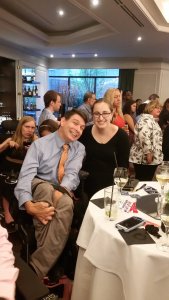
At a recent dinner celebrating this year’s anniversary of the Americans with Disabilities Act at the DuPont Circle Hotel in Washington D.C., I sat next to an 18-year-old intern for the National Disability Institute. She was amazingly well versed on the issues currently facing our community, not to mention refreshingly mature for her age. She’s what both the disability community and world need from her generation.

However, as we spoke throughout the eve, an aspect intrigued me: not only didn’t she have a disability, but she had no connection to disability. As a freshman political science major from New Hampshire, this internship popped up, she applied, and got the two-month summer gig in D.C. Yet, how does such a happenstance situation as her internship lead to such understanding and passion toward the issues facing those of us with disabilities. I suspected there was more to her story.

As I asked about her family, it all began adding up. Her mother, a successful C.O.O. for a company you’d recognize, died of cancer three years ago. Imagine the adversity of losing your mother to cancer as you’re in high school. It’s well… unimaginable.

And, there within resided the young lady’s understanding of disability experience. No, not literally – we can’t compare dismal employment rates of those with disabilities to dying of cancer. However, what connected her to us, and me to her, was an understanding of what it’s like to live through adversity.

See, there’s a universality to adversity. It’s not person- or situation-specific. No matter the origin or circumstance, when we’ve known adversity, we innately share that empathy with all who’ve experienced it. If we recognize that there’s no form of adversity any more or less significant than another, then we relate with all of adversity. Adversity becomes part of our shared humanity.

And, so as we sat at the event that eve – she an 18-year-old college student, I a 45-year-old with cerebral palsy – of course we clicked: we’ve both been shaped by the universal nature of adversity.

Camp Gratitude

20160705_131714 (1)

By Mark E. Smith

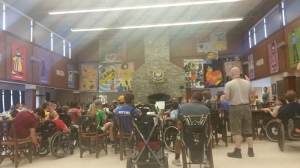
At this writing, I’ve just spent a week at a summer camp full of kids between the ages of eight and seventeen. It had all you’d expect at summer camp – swimming, fishing, boating, arts-and-crafts, horseback riding, and on and on.

However, what was different than any camp I’ve experienced was what occurred at one o’clock every afternoon. The campers – who happen to have a myriad of physical disabilities – gathered in the lodge after lunch for “Pat-on-the-Back Time.” It really should be called “Gratitude Time” because for one-half hour, kids raise their hands and express their gratitude for their peers and counselors at camp, as well as their experiences.

As you might imagine, for us adults, it was a profoundly moving experience each afternoon. To witness children with severe disabilities – many of whom having undergone countless surgeries, many using wheelchairs, all facing exceptional daily adversities – express gratitude from the heart was breathtaking. After all, such children have been through a lot, and face exceptional challenges every day; yet, their expressions of gratitude are unyielding.

Now, you may find those sentiments extraordinary, that children facing such adversities can express such unyielding gratitude toward even the smallest of deed done by another or the most typical of activity – an eight-year-old thanking her counselor for holding her hand in the swimming pool. However, as I sat and listened to their outpouring of gratitude each day, I found the children teaching me more than I ever expected.

See, their gratitude, while clearly an exception in our society, should be the rule. How many times in our careers do we hear colleagues diminishing each other instead of praising? How many times do our children have an accomplishment, and we don’t acknowledge it? How often do we go for days, months, years without complimenting our spouse? How often do we walk away from a cashier or waiter or bus driver without saying thank you? How often do we spend our time wanting instead of appreciating? How often do we dwell on negatives instead of embracing positives? The answer for most is, more often than not. It’s the society we live in – just look around – and it pulls us all down.

The fact is, there’s something really wrong when we, as adults, have to go to summer camp and learn from children how to be more heartfelt individuals of gratitude. And, yet, there’s hope in it all. If children of such adversities can express such appreciation, gratitude and love… we all can.

Forgiving – Ourselves

forgive

By Mark E. Smith

Among the hardest endeavors of the heart we ever make is to forgive – ourselves.

Although we live with the best of intentions, with tremendous purpose, we’re bound to make mistakes. When we’re on top of our game, the mistakes are small – maybe no one notices but us. However, when we’re not so mindful of how our actions effect ourselves and others, the mistakes can be life-altering, not just for us, but for those we love. In both cases, making mistakes can weigh on us like an anchor, keeping us submerged in shame, guilt, and self-doubt. In a way, we lose trust in ourselves, just as we imagine others lose trust in us.

However, the fact is, while those who care about us and love us are typically very forgiving, the person who most often takes the longest to forgive our mistakes is oneself. Shame and guilt are powerful emotions, not easily shaken. Yet, if we are to move beyond our mistakes, we must truly forgive ourselves. It’s not just the ultimate in humility, but also accountability.

See, when we refrain from self-forgiveness, we’re holding on to our mistake, like carrying a boulder everywhere we go. But, there’s no corrective action involved, just self-punishment. In contrast, in order to forgive ourselves, we have to deeply acknowledge our mistake and grow to trust in ourselves that we won’t make that mistake again. We must allow ourselves to give into ultimate humility. We must allow ourselves to accept ultimate accountability. Those acts of honesty and courage are the cornerstones of self-forgiveness.

Author Stephan Richards writes about self-forgiveness, “When you initially forgive, it is like letting go of a hot iron. There is initial pain and the scars will show, but you can start living again.”

In this way, the ultimate mistake we can make in life is not to offer forgiveness – to ourselves.

[Speed = Distance / Time]

lamark

By Mark E. Smith

Among my routine rituals is running my power wheelchair through my company’s test lab “speed trap.” I’ve perfected aspects like tire air pressure, straight-line tracking, and battery type to get my production chair just a scant faster than it’s built to run. In this process over the years, I’ve learned a bit about life, too.

The mathematical equation for speed is [Speed = Distance / Time]. Put simply, how long it takes you to cover an amount of distance is how fast you’re going. As I’ve run my straight-line speed trap hundreds of times – a computer system measuring my distance over time to calculate my speed – I’ve realized it’s a metaphor for life. Our successes and failures are dictated by the same equation, how much or little progress we make over an amount of time impacts our lives.

See, if in our lives, we cover little distance over time, we’re not progressing. Think about our relationships, careers, finances, you name it – if it’s all where it was five years ago, with no progress, our distance over time is dismal. Our lives are stalled or even destructing.

To the contrary, when we make quick, rash, hasty decisions, jumping from one life path to the next, we’re moving so fast that we’re bound to make mistakes. Racing through life impulsively, without considering consequences always results in disasters.

The key, then, is to look at our lives as [Speed = Distance / Time] and find that optimal balance, where we’re making great progress, without making poor decisions or mistakes.

What I’ve learned in the speed trap – and life – is that the right speed is  prudent in practice, but still a little faster than average.

I’ll Take Love Over Art

NM_iLevelMark_July16.indd

By Mark E. Smith

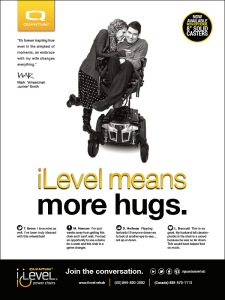
My wife and I have slowly become a poster couple – literally. And, we’ve been blessed that so many have found inspiration not just in the one iconic image, but the life we lead, commonly shared on social media, as is the way of the world nowadays.

However, we’re truly not a poster couple. No couple is. Who we are, are two unique individuals who love each other deeply, but face the challenges that every married couple faces. I note this because being the poster image of anything can be a trap all the way around.

I look at our life in ads or online, and realize that we’re doing well. And, it’s all true. However, what’s not reflected is the rest of the story – life is messy sometimes. We have a 19-year-old in college, a 7-year-old with special needs, a dog, and a house. The tuition bills for the 19-year-old never end, the 7-year-old struggles to sleep through the night, and the dog likes to eat grass and vomit on the new carpet. To top it off, our house doesn’t clean itself. Your life may not look a lot like ours publicly, but if you step in our house, chances are that our life is a lot like yours – from balancing finances, to caring for kids, to stressing over laundry, to trying not to lose your cool because the dog ate food off of the table again. And, it’s really hard to be romantic when the day has worn you down.

No, life isn’t a poster image. Rather, life is a mirror image – and there’s beauty in that. Some mornings, as my wife and I are scrambling to get ready, usually running late with all of the chaos, we’ll look in the big dresser mirror together – half dressed, hair uncombed, morning wrinkles emphasized by the sunlight – and we just laugh at what a mess we are.

See, what I’ve learned is that perfection – or the illusion thereof – doesn’t make a true marriage. What makes a true marriage is when you acknowledge how messy it all really is – and still smile at it.

Unspoken Alone

tunnel

By Mark E. Smith

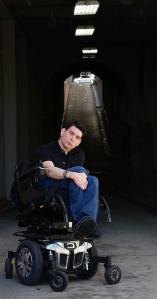
Alone. We’ve all felt it. And that, in itself, is why we’re truly not.

Based on my career in working among a population where trauma is common, I often hear how alone others feel in their challenges and struggles. However, as an ordinary person, I also hear how alone many feel in challenges of all types in everyday life. Yet, I’ve never encountered a situation where someone’s struggles transcended common humanity, where others hadn’t experienced a similar situation, of similar emotions.

In this way, the uniqueness of feeling alone in our struggles isn’t unique at all. In fact, it’s among the most common emotions we all share. It is intriguing, though, that such a commonly shared emotion can be… well… generally unshared.

See, unlike other cultures in the world, we in North America are prone to keeping our struggles to ourselves. The result is, we feel alone. And, so we live in a culture that exacerbates feeling alone in times of struggle, when we’re actually not alone at all in our experiences.

If you’re like most of us, you’ve unquestionably known unfortunate experiences like relationship issues, career issues, financial issues, health issues, and on and on. And, if you’re like most of us, you’ve felt alone during these struggles, as if you’re the only one who’s ever experienced them – especially in the moment. However, most of us have experienced them, too, so why are we all feeling so alone in the process?

The answer is simple: we don’t reach out when we should. As those struggling, we don’t reach out, and when we have a hint that someone else is struggling, we don’t reach out. Why do we behave this way? Well, self-doubt and fear on both sides, that’s why.

When we’re feeling alone in our struggles, we default to these internal scripts, don’t we?

No one understands what I’m going through.

They’ll judge or ridicule me.

I don’t want to be seen as weak.

I’m just ashamed of this mess I’m in.

I don’t want to rock the boat.

Or, for that which prevents us from reaching out to those we see struggling:

It’s none of my business.

I don’t want to embarrass them.

I won’t know what to say.

Based on our culture, these are totally valid feelings. But, there’s one problem with following them – they leave us feeling alone in our struggles, isolated. And, it simply makes any struggle worse and last longer. The antidote, however, is brilliantly simple: share.

Now, sharing can be scary and tough, requiring a lot of courage and vulnerability. But, the rewards of not being alone in our struggles outweigh all of those seeming risks. If you’re struggling alone – and we all do at times in our lives – share it with someone you trust. Interestingly, trust, in itself, can be a far more liberal definition than most might think in times of struggle. Some of the most healing, profound conversations I’ve ever had have been with virtual strangers, those recently met. What’s important is that we reach out, and it’s astounding how the sharing or inquiring of just a hint of ourselves exposes the common humanity of us all, realizing we’re not alone.

I don’t know what you’re struggling with our will be struggling with. But, I know that none of us are exempt from struggles, and none of us need to be alone in our struggles. In your tough times, I encourage you to reach out, where the hand that you grasp will feel comfortingly a lot like your own.

Turning Off Autopilot

autop

By Mark E. Smith

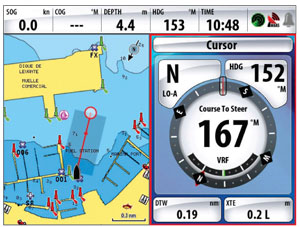
I’ve spent a lot of my life around two areas – boats and dysfunction – and what I’ve learned is that in either case, if we’re not careful, “autopilot” will fail us.

See, living in dysfunction is a lot like being aboard a boat running on autopilot – we’re not questioning or changing, but continuing on a haphazardly set course. And, as waters worsen or dangers approach, if we don’t take control, our boats – read that, our lives – will collide with them in the most harrowing ways.

For me, taking life off of autopilot has been a very personal process. As one raised in a dysfunctional family, I only knew what I knew, and my emotions were on autopilot for a long time. Turning off that autopilot proved harder in some ways than others.

Alcoholism, addiction, poverty, and a lack of education were all fairly easy for me to avoid because my awareness was so blatant. When I had welfare Christmases, parents with ninth-grade educations, and an unbroken family lineage of alcoholism and addiction, it was fairly obvious that our family’s autopilot was a disaster in full swing, cruising in the Oblivion Sea.

For me, turning off autopilot started as young as 10, but really by my teens I saw my life set on a course for collision and I took control of the helm. I saw everyone around me literally dying from living on autopilot, and I knew I had to turn that monster off for myself. Once aware and assuming conscious control of my life, I steered around the many dangers my family collided with. However, I was fortunate in that aspect – that I somehow had the understanding to do so – where I empathize with how difficult it becomes for many to turn off autopilot the longer we’ve unwittingly been on it, often from birth. It’s simply not as easy as my words read to break cycles of dysfunction, to turn off autopilot.

And, emotionally, I absolutely remained on autopilot for quite some years. Again, for me, getting off of autopilot has proved harder in some ways than others. I grew up knowing that those who loved me also hurt me, so love and hurt were intertwined. My head was off of autopilot – sober and successful – but my heart was still running its course. And, so I found myself in relationships of all sorts – from marital to sibling to friendship – that hurt, that as the psychobabble calls it, were toxic. It’s what I knew, what I grew up in, and continued living. That’s the sinister beauty of autopilot – once you’re on it, it continues on a course without any effort by you.

Awareness, though, once again proved my switch to turning off autopilot. Once I was aware that my heart was on autopilot, steering me into collision after collision, all my relationships changed. Some I just cut off; some I set healthy boundaries; and some I started anew with healthy individuals.

I’m still not perfect at any of this, and never will be, but every once in a while, when the autopilot that I grew up in intrinsically kicks in, my awareness takes the helm in a reflex type action, where I’m able to quickly correct and stay on a healthy course.

Through what I’ve lived and learned, I see among the greatest gifts that we can give others is the truth that they can break cycles of dysfunction, turning off autopilot. There’s a big difference between preaching from the mouth and speaking from the heart. I believe in speaking from the heart, and when a young person at risk in my circle was recently running on autopilot – it’s what they grew up in, escaped, then were thrust back into it based on a traumatic chain of events – I took the time to remind them of how far they’d come, to be aware that although understandably they’d temporarily returned to autopilot, awareness was what would keep them emotionally safe – that is, regrasping the helm and steering a healthy course.

Now, it’s not possible for everyone to just turn off autopilot and get their lives moving in healthy directions. We know of the medical effects that alcoholism, addiction, and mental illness have on those immersed in those conditions. These aren’t autopilots that just turn off. But, for the rest of us – and especially youth in our families and communities at risk – the ultimate intervention isn’t once there’s no turning off autopilot, but acknowledging our vulnerabilities to it early on, and elevating our awareness to the point that we turn it off and truly take control of our lives in healthy ways before life is spiraling beyond our control.

The fact is, we have no choice in how the dysfunction of autopilot gets turned on in our lives – typically, we’re born into it or trauma ushers it in. However, when we’re aware that it’s been turned on and we are running on it or at risk of running on it, that’s the time to turn it off. See, turning off autopilot removes continuing living the pain of our pasts, and allows taking the healthy helms of our futures. May you and I chart the healthy course our lives are meant for.

Meals or Feasts?

Gratitude rock

By Mark E. Smith

My life has been somewhat extraordinary in that I’ve known both sides of human experience – that is, what it’s like to live with exceptional adversity versus what it’s like to experience great fortune.

However, while my own life has made me acutely aware of extremes, it’s the individuals I encounter that have raised a profound question for me. In parts of my life, I interact with those facing tremendous adversity, while in others, I interact with those of great fortune. Overall, I’ve witnessed that people are people, and no matter how different two individuals’ life paths are, there’s a uniting humanity – people are people.

Yet, I’ve also witnessed a juxtaposition that’s intrigued me. If I shared that I knew a 40-year-old mother with progressing ALS who was bitter at the world because she would not live to see her children graduate high school, we all could empathize with her. On the other hand, if I shared that I knew a 40-year-old mother of great health and wealth who was dedicated to serving her community, we could empathize with her, as well. In both these scenarios, we could say that both women are doing the best that they can. And, indeed, in some form, I’ve known these women – and likewise men in the same situations – many times over.

But, here’s where the intriguing juxtaposition comes in. I similarly meet those facing tremendous adversity – literally that 40-year-old mother dying of ALS – who approaches every day with grace and joy, appreciative regardless of the devastating blow life has dealt. Meanwhile, I encounter those who are extremely fortunate – with health and wealth and thriving lives – who are bitter, jaded, living with a miserable sense of entitlement, as if the world owes them. How is it, then, that someone facing unimaginable adversity in life can live with such grace, while by contrast, I’ve more than once witnessed someone of great health and wealth throw a tantrum over the smallest, most trivial circumstance? How can this juxtaposition logically occur?

The answer is, gratitude. See, gratitude is the great equalizer – and you have it or you don’t. If you have it, it’s irrelevant what your situation is in life, as you’re grateful regardless of any circumstance. However, if you don’t have gratitude, you’ll conversely be bitter and jaded no matter how fortunate your plight. In this way, what life deals us has no bearing on our outlook – unimaginable adversity or great fortune are of no matter. What dictates our perspectives is whether we have… gratitude.

Author Melody Beattie writes, “Gratitude unlocks the fullness of life. It turns what we have into enough, and more. It turns denial into acceptance, chaos to order, confusion to clarity. It can turn a meal into a feast, a house into a home, a stranger into a friend….”

Therefore, if we are to understand the true origins of fulfillment in our lives and whether we find true contentment, we don’t need to weigh the scales of adversity versus good fortune. Rather, to understand fulfillment and contentment in our lives, we merely need to consider the levels of sincere gratitude we possess.