Living as Josh Does

By Mark E. Smith

Twenty-one-year-old Josh has been an increasingly remarkable spirit in my life since I met him four years ago. I’ve never known a young person with such wisdom and insight, making our recent conversation par for the course based on Josh’s amazing character.

Josh was diagnosed in his adolescence with a very progressive form of muscular dystrophy. However, unlike many others with his prognosis, the disease didn’t progress as rapidly as usual – that is until approximately two years ago. In fact, when I first met Josh, he was still walking, using a mobility scooter for longer distances. Yet, in the last two years, the disease caught up with him, dramatically diminishing muscle tone. I’ve seen Josh go from drinking from a soda can normally, to struggling to lift it with two hands; and, I’ve seen Josh go from walking to not being able to transfer himself from a power wheelchair.

Make no mistake, the physical realities of Josh’s condition are disheartening. But, the lessons learned and the personal growth that’s resulted from his challenges have been inspiring, teaching us both invaluable lessons along the way.

Josh and I have traveled a lot together, working trade shows, summer camps, and advocacy events. We’ve lobbied the halls of Capitol Hill, and rock-starred it in Los Angeles. However, the heart of our friendship has been formed from our weekly phone calls, where every Thursday, Josh and I talk on the phone, tossing around subjects ranging from relationships to dealing with disability to music. My role is supposed to be that of mentor, but Josh has so much wisdom and is so reflective of the struggles and victories that we all face, that I often think I learn more from him than he does from me.

One of Josh’s recent victories – and a process that we talked about for many months – was his driving independently via an accessible van. After a year and a $120,000 in technology, Josh now independently drives a van with ultra-high-end hand controls that are closer to resembling those that control an airplane more so than a car. And, for his first long-distance drive this summer, he drove 3-1/2 hours to vacation at a lake where he vacationed often as a child.

When we spoke the week after his vacation, he explained to me that the trip was ultimately a realization for him: Most of the activities that he could do as a teen – boating, fishing, and so on – were no longer feasible or easily accomplished, that he realized in very real terms the progression of his condition.

I, of course, asked how he felt about his sudden realization of the progression of his condition? And, his answer was a lesson for all of us. Josh explained that what realizing how much his condition has progressed made him intimately understand is the importance of making the most of today because we don’t know what tomorrow brings.

I couldn’t have been prouder of Josh’s insight because it demonstrated a perspective that we should all live by: Being bitter or regretful of our pasts – or of what’s seemingly been lost – is pointless. Valuing our present – no matter the circumstances – is truly what it’s about.

Moving well beyond disability, think about how many of us dwell on past relationships, childhood trauma, lost jobs – you name it – where rather than accepting, healing, and evolving to live fully in the present, we just get stuck in the past. Josh could have likewise gotten caught in the past, returning home bitter as to what his condition has done. Instead, he recognized the past as just that – gone, done, over – and was even more inspired to appreciate whatever abilities that he has today. It’s kind of like rather than dwelling on how bad your past relationship was, you focus on how great the current one is – that’s how you move forward.

And, if there’s a single lesson that Josh teaches us, it’s to live in the present, simply appreciating all that we have today.

Rock-Starring Into Oblivion

By Mark E. Smith

Indeed, I am on the cover of the July 2012 issue of New Mobility, as the author of the magazine’s feature story, which is an all-night, true-life tale of me in Vegas (and, yes, it involves booze, chicks, and a bowling shirt – that is, the cerebral palsy version of Charlie Sheen, minus bi-polar disorder and cocain).

For me, making the cover of New Mobility as just … well …me, is among the coolest accomplishment in my career – and very humbling. Appearing in mainstream magazines – usually skewed toward a heroic, inspirational persona – isn’t my gig. Who I really am is lost in that. But, to make the cover of New Mobility not because I’m an inspirational figure or because I’m interviewed or because I’m representing anything, but because I’m just me on a tangent in Vegas is pretty darn cool, the ultimate compliment from those who truly matter to me – my peers and readership. (And, it’s an impressive feat for a man of such indiscernible skill and as void of charm as me, where somehow my just hanging out in Vegas and writing about it qualifies as a partial way to make a living – I’m like the Kardashians, but with even less talent, if that’s possible.)

However, while the cover is already framed and hung with pride on a wall among other such achievements in my home, it ultimately represents a larger truth: Beyond the lasting positive impacts we’ve had on others, what we accomplished yesterday does not dictate our potential for today. There’s no riding what we did yesterday. A magazine cover is great, but it’s yesterday’s news – my sleeves remain rolled-up and working, making the most of today. After all, today is all we really have to work with. Life’s like peddling a bike – the minute you stop putting effort into it, you stop.

Think about how that concept applies to every part of our lives. So many people get caught up in yesterday that they completely waste today, using excuses from the past not to make the most of the present. I hit my sales target for the month, so I can coast for a bit. My relationship has been good, so I don’t need to do that little something extra for my partner. I accomplished that awesome feat, so surely I’ll forever command respect.

No, yesterday is gone, and our only true merit is based on what we are accomplishing today. Just because you hit your sales target doesn’t mean you stop there. Just because your relationship has been good doesn’t mean that you shouldn’t make things even better today. Just because you had major accomplishments doesn’t mean that you should quit striving.

If we’re going to be successful, we can’t look at life as riding waves, where we just try to coast from one periodic success to another. Rather, if we’re going to be successful, we must look at life as a never-ending mountain to climb, a daily work ethic toward new growth in all areas.

Sure, it’s nice to hang a new memento of my success on the wall – rock-starring it on the cover of New Mobility, looking every bit the absurd part – but it’s all just memories and decoration in the end. My only value is in my current project, whatever it may be, where I’m hopefully making a difference in the lives of others.

As you read the piece, I hope you’ll recognize that any sort of celebrity is really an illusion, where such stints as the glitz and glam of me rock-starring is cool, but it’s not where the true value in life is. Rather, the real message in the piece – as in life – is that it isn’t who we are or what we have accomplished that adds value to our lives, but it’s our capacity to embrace others, from all backgrounds, that truly makes us each a superstar from the inside out, everyone equally deserving of gracing a magazine cover.

Read “Freewheeling in Vegas” online here.

It’s What We Ask For

By Mark E. Smith

I’m very mindful of progressing week by week, month by month, year by year in my workout routine, regularly increasing the amount of weight on various excersises, constantly pushing myself to lift heavier and heavier weights, per each exercise on my universal gym.

However, I recently made a seemingly grievous error. In bopping out to my iPod and switching excercises, I forgot to change the weight on my machine. Instead of dropping the weight down from lat pulls to chest flies, I accidentally left the amount of weight far above the maximum weight with which I can do 20 reps of chest flies.

Not knowing that the weight was set too high, and mindlessly bopping to my music, I cranked out my 20 reps of chest flies. Sure, in the moment, each rep seemed a little harder, but I didn’t think anything of it, completing my set.

When I realized my error, I also realized a fact far more profound: My limitations weren’t where I thought they were. While in my mind I thought that I could only lift so much – which is where I set my limit – the reality was that, by mistake, I proved that I could physically lift much more. My body wasn’t holding me back, my self-expectations were.

My workout that day reminded me of how, in many aspects of our lives, we’re not limited by reality, but by our own self-imposed limitations, where our potentials are vastly greater than we recognize. I’m not looking for a better job because this is as good as I can get. I’m staying in this unsatisfying relationship because I’ll never find anyone who is a better match. I’m always broke, so I can’t save money. My relationship with my family will never get better – it is what it is. I’m 40, I can’t get back in shape. …Our self-imposed limitations go on and on, even though they’re not based on reality but limits we project upon ourselves – that is, low self-expectations.

Yet, when we take accountability – pushing ourselves beyond our self-imposed limitations – our lives expand to deliver what we ask of them. That is, our expectations for ourselves define the quality of our lives, so set them higher than you or anyone would expect. Believe that you’re qualified for that better job. Assert that you deserve the most fulfilling relationship. Have faith in your ability to save money. Expect your family to respect you. And, know that you can get in the best shape of your life. Again, the list goes on and on, but the fact is this: Where you set your limitations is what you’ll achieve, so set them high!

I heard a great parable. A man was walking down the street, when a homeless man asked him for a quarter.

“All you want is a quarter?” the man asked.

“Yep, just a quarter,” the homeless man replied.

The man pulled out a money clip filled with $100 bills, then he pulled out a shiny quarter, placing it in the homeless man’s hand. “Next time ask for more,” he said, holding up his money clip. “Life pays however much you ask.”

Too many of us sell ourselves short, setting limitations not based on our true potential, but based on low expectations that we place upon ourselves (or, worse yet, having been degraded by others, and believing it). The question is, however, why do so many set their expectations so low in many aspects of life?

The answer is, much of it is trauma-based conditioning that we don’t even realize (the clinical term is compulsive re-enactment). The easiest example that most of us can relate to is how amazing people consistently get caught-up in bad relationships – that is, where they base relationship decisions on devastatingly low expectations stemming from past experiences (usually trauma-based). What we know is that “conditioning,” from childhood on, creates our expectations, and as we live to those expectations, they get cemented within us, where we have an uncanny subconscious drive to seek those patterns – including painful, harmful ones – throughout adulthood. Studies show that if you grew up in a dysfunctional home, you will go on to pursue dysfunctional relationships. In fact, psychology shows that we’re the only creature that keeps pursuing patterns of trauma – no animal will keep pursuing that which has harmed it, but humans do, simply repeating self-defeating patterns over and over again. What makes this especially tragic, is that when healthy relationships or opportunities arise, our conditioned low expectations cause us to either avoid them or self-sabotage them – and it’s created a culture where, statistically, half of us can’t sustain marriages, let alone get through one day without self-doubt toward many aspects of our lives.

Now, when it comes to compulsive re-enactment – that is, consistently pursuing living to a lower standard than we deserve or are capable of achieving – I am simplifying a profoundly complex emotional condition. However, it ties into an easily understood goal: Let us raise our self-expectations, no longer relying on dysfunctional comfort zones or self-defeating patterns, but have the courage – because we’re all capable! – to push beyond them, raising our expectations. When you find a healthy relationship, but don’t feel unworthy or are scared, raise your expectations, and take a chance on it, truly investing yourself in new ways that you’ve never known. When you don’t feel qualified to pursue a better job, raise your expectations, and know that you are equipped. And, when anyone questions your stature in any way, raise your expectations, sticking up for yourself, empowered. In short, if any aspect of your life isn’t going your way – truly toward your healthy interests – you owe it to yourself to ask, Do I just keep settling for as-is, or do I evoke the courage to raise my expectations, inviting positive change?

The correct answer is, of course, you raise your expectations, no matter how much courage it takes. By raising your self-expectations – and following through with the work needed to live up to them (which can be unfamiliar and scary), you’ll be surprised at how the quarters in your life turn into $100 bills. It can’t be said enough: Life pays what you ask of it. Ask for a lot – you deserve it.

There’s No Problem

By Mark E. Smith

Authors of online “blogs” are always tracking the statistics of their readerships. And, here’s a statistic of my readership that horrifies me: 25% of you will die of a drug-related death. No, I’m not talking heroin or cocaine or any illicit drug. Rather, it’s the prescribed medications – the benzos, the oxys, the hydros – that, statistically 50% of you are addicted to, will kill half of you. It’s a catch phrase known as “accidental overdose,” or more discretely, such conditions known as “heart arrhythmia.”

See, according to government statistics, those with disabilities are four times as likely to be substance abusers than the general population, and 50% of those with spinal cord injuries, for example, are addicts. Think about that: If you go to a disability event, every other person who you meet is addicted to prescription drugs – and half of them will die from it. As a population, we’re not WheelchairJunkies; we are just junkies.

Interestingly, there’s a scientific basis why those of us with disabilities are so prone to addiction. Modern research into addiction causation shows a direct link to emotional trauma – where we abuse substances to both mask and maintain trauma. On the one hand, substance abuse can be an escape, but it often also ties in to a deep-level psychology where we’re the only creature known that actually strives to “re-inflict” trauma unto ourselves, “maintaining” it throughout our lives (a simple – but tragic – example is that 76% of women abused by a spouse were abused as children, unwittingly “maintaining” the trauma throughout their lives by being drawn toward unhealthy relationships). Disability often has any number of emotional impacts attached, resulting in trauma, so it’s the prevalence of trauma surrounding disability that dramatically escalates the risk of substance abuse.

And, make no mistake, our culture and the medical community supports the abuse of drugs to address disability. If a crack-head walks into a doctor’s office, they call the police. But, roll in to that same doctor’s office in a wheelchair, with a spinal cord injury, multiple sclerosis, or cerebral palsy, and the prescription pad comes out. What would you like? Klonopin, Baclofen, Oxycontin, Soma? No problem. What – you want to up your dosage? No problem. And, no one questions you – not the doctor, not the pharmacist, not your family. Why? Because no one wants to doubt your physical struggles, and everyone wants you pain-free. But, they don’t know that you’re blazed out of your mind, that the drugs have bonded with your dopamine and endorphin levels, where the prefrontal cortex of your brain just drives you toward more drugs, more drugs, more drugs – and you are metabolically a full-blown addict.

But, what’s even more awesome is that you don’t think you’re an addict. From rationalizing in your own mind that your disability necessitates medication, to the legitimization of it all from the medical community, you’re right on course – there’s no problem. What’s more, we know that addicts lose the capacity to truly know that they’re addicts – the drugs literally crank up the denial chemistry in the brain. At best, addicts can dish-out victim mentality, “I’m fucked up.” And, in ways, they’re right. For decades, we’ve heard that the first step to recovery is admitting that there’s a problem. However, we know now, through modern addiction studies, that while addicts may occasionally voice that they have a problem, that they’re fucked up, they truly don’t have the capacity to recognize that they have a literal disease that’s killing them (and, it is a disease in that it alters your biology beyond your control) – it’s usually only after intervention, detox, and months of focused recovery that one truly realizes one’s addiction. So often a lack of willpower is socially equated with addiction (and it can be argued still that a lack of handling stresses in life, along with a genetic predisposition toward addiction can begin the process, itself). However, recent studies show that once addicted, the most instinctive drives of the brain are effected, and conscious volitional control is lost – that’s a disease.

And, so if you’re reading this, taking prescribed pills right on schedule, with them in neat rows, lined up on the kitchen counter, don’t worry, you’re not an addict. There’s no problem. The drugs are there just to help you function normally, as directed.

And, if you’re the loved one of someone whose medication has him or her agitated, nodding off, eyes glazed over, don’t worry, he or she is totally fine – just keep telling yourself that, due to disability, he or she needs the prescribed medication. It’s OK – it’s all normal, there’s no problem.

Yet, there’s nothing normal about any of it, and it’s a life-threatening health issue that kills – and, to top it off, there’s virtually no treatment. Tragically, even if, as an addict, you expressed your problem to most addiction specialists (which you would never really do because, again, addicts lie to everyone, especially themselves), even the specialists wouldn’t believe you. You’re a person with a disability taking prescribed drugs – there’s no problem. So, even if you or your loved ones strive to get you help with addiction, the medical community isn’t trained to offer it to you as one with a disability. In fact, even the U.S. Department of Health and Human Services publicly states, “Substance abuse prevention, intervention and treatment services are not physically, attitudinally, cognitively, or financially accessible, to persons with disabilities for many reasons.”

And, so the question becomes, as those with disabilities, when we start off with a lack of accountability by turning to medication, then use the medical system to become drug addicts, and the medical community legitimizes it, with no ability to treat it once it becomes a disease, what happens? Well… we die.

However, there are a few ancillary solutions. Firstly, toward those with disabilities, as a community – and especially within the medical community – we must all be aware of this health crisis, where the acceptance of use and prescription process must be dramatically curbed. We have to acknowledge the problem and stop it before the pen hits the prescription pad.

Secondly, if you’re the loved one of an addict with a disability, and your loved one’s addiction has become your family’s problem – and it always does – get help for yourself and your family, where you’re not a codependent to the addict. Addicts have a clinical narcissism where they lose the capacity to care about anyone but themselves and their addiction, and they will gladly emotionally, mentally, and financially destroy their families without an inkling of conscience. Addicts slowly consume relationships, and you have to break-free of that cycle, no matter how much you love that person (or, more aptly, how much you loved that person before he or she became an addict, as again, the brain changes so much under addiction that the original person no longer exists).

Therefore, as individuals and a community, let us stop addiction before it starts. If we have a loved one who’s an addict, let us have the strength to prioritize ourselves and our families to distance ourselves from the addict. And, if you’re already an addict – which you’re truly incapable of knowing – there’s statistically no U-turn for you: You’re simply buying time among the living dead.

Listening, Loving – Present

By Mark E. Smith

It can be argued that there’s no song more emblematic of the late 1960’s counter culture of flower-power, psychedelic drugs, and free love than “Purple Haze” by Jimi Hendrix.

However, contrary to the logical presumption that Purple Haze is about drug use, the late Hendrix swore it is a love song, a lament about a girl. And, he pointed to the lyrics, Whatever it is, that girl put a spell on me.

Of course, the lyrics that most of us know from Purple Haze are, Excuse me while I kiss the sky. But, what really puts it all into context is the preceding verse, Actin’ funny, but I don’t know why? And, so you have an amazing, iconic song about a love-sick guy, not knowing how to get himself out of a bad place, questioning, Is it tomorrow or just the end of time?

Fast forward 40-something years, and in today’s culture, the love-sick soul in Hendrix’ masterpiece becomes seen in a vastly different context, pathologized – that is, someone who needs help, some sort of intervention. Hendrix’ lyrics could easily be, Excuse me while I fix this guy.

See, we now live in a culture where it’s not OK to sometimes not be OK – and sometimes we’re just not OK, and it’s OK! Truly, we live in a society where everyone wants to fix everyone – if you have a problem, there’s no shortage of friends, family, TV personalities, doctors, and prescription drugs ready to fix you. And, yes, sometimes we need help – clinical mental health issues and various dependencies require medical intervention.

Yet, a lot of times, when we’re seemingly not OK, it’s OK. In my roles, I hear from a lot of families who want to help their loved ones who have disabilities. And, what I’ve come to understand is that a lot of times, the best help is no help – simply listen, love, and be “present” – and let the person work through his or her emotions and problems in his or her own time and way. For the most part (again, with the exception of clinical issues), we have an innate way of finding our way through the proverbial dark spots in life, back to the sunlight, where all we really need is time, space, and someone to just listen and be present with us during trying times, without judging or preaching. As Wayne Dyer puts it, “Love is the ability and willingness to allow those that you care for to be what they choose for themselves without any insistence that they satisfy you.”

As a full-time single dad raising a teen daughter, I’ve been practicing what I’ve coined the “listen-love-present approach” – and it’s challenging! I mean, I have all kinds of advice just waiting to be blurted out, but that’s not what my daughter – or most people! – need or want. Rather, what my daughter needs and wants is for me to listen, love, and be present – not dish-out advice. Sure, there are places and times for advice – including with my daughter – but, there are far more moments where the listen-love-present approach is the most sincerest form of support that we can give others.

I have an oversized, over-stuffed chair with pillows in my master bedroom. And, some evenings, my daughter will come in when I’m in bed watching TV, and she’ll curl up in that chair, and start talking. Recently, in that comfy chair, she shared with me that she’d just been dumped by her date for the Semi-Formal school dance – that is, it wasn’t just her first real school dance and “date,” but her first time being dumped. As a father, I could have given her tons of immediate advice and opinions: You’re beautiful, and he’s an idiot. I’m sure you’ll have new date in no time. We all get dumped. You won’t remember his name in 10 years. Look at how many times I’ve been dumped, and I’m fine. Everyone gets dumped – it’s just part of life. But, I didn’t tell her any of it because it would have no effect. If I did, it would really be a dismissal, wouldn’t it? Yeah, yeah – you’re 15. Trust me, you’ll get over it! That’s no way to treat anyone in real pain, who, as Hendrix noted, is questioning in a way, Is it tomorrow or just the end of time?

Rather, I asked her some listen-love-present questions: How’s this situation make you feel? …What do you think about the guy who bailed on you? …What are you going to do about the dance? And, she found the answers within herself, not just that evening, but in the coming days. (And, she gave me permission to share this story with you, as I would never betray her confidence.)

The fact is, as her father, my role is to facilitate her growth, not dictate it – and, as a father, there’s nothing more rewarding than seeing your child overcome life’s hurdles in healthy ways on his or her own, where he or she needs love, not fixing. However, this really applies to all our relationships, where often the best way to support someone isn’t with advice, but just loving, listening, and being present.

See, the truest lessons are often learned not through advice or preaching from others, but by thinking and feeling on our own – with someone who’s listening, loving, and present along the way, when we’re fortunate. As for my daughter, of course another boy asked her to the dance. And, as one might presume from Purple Haze, being broken hearted – for any number of reasons in life! – certainly shouldn’t be equated with being broken. We all need someone to listen to us from time to time, but rarely do we need fixing.

Words for Robert

By Mark E. Smith

Words.

People too often underestimate the power of words – the absurd, the reverbs. Words really can define the direction of one’s life, changing it from dark to light, from day to night, from blind to sight.

Words.

A few words can inspire, liberate, desire to be one’s best. However, to the contrary, words can also defeat, destroy, debilitate, make one’s life a mess. I mean, what we’re told by others, we often believe – heart on a sleeve – sometimes we’re left to flourish, sometimes we’re left to bleed. And, it’s for these reasons why we must choose every word carefully, deliberately, thoughtfully, where our words positively impact, not negatively detract.

Words.

I recently read a charitable letter – words striving for the better – about someone we’ll call “Robert,” and it sang a tune straight to the heart, that wasn’t an end, but a kick-start:

Though the doctors said there was little chance that he would walk again, our family refused to accept this devastating prognosis. We began doing research, determined to move Heaven and Earth to make Robert whole again.

Words.

In those two sentences are words that made me realize something that I’d never had the courage to admit to myself before: I’m not a whole person, just a partial equip. See, the fact that I’ve never walked makes me incomplete, a lesser person, someone not whole, my existence a burden. And, after fully realizing those few words in that eloquent, poignant charity letter, I understood how worthless I am, how meaningless of life I live – I am useless, a never-do-better. And, it’s devastating to my core, a struggle to live with myself like this – a fragment of a man, deserving dismiss. I mean, can you imagine the pain that my daughter has endured, being raised by me, an incomplete father, a lesser person, someone not whole, to be abhorred? How could I let my disability do this to her? And, how much suffering have I caused my family, friends, colleagues, and community? And, as for the women in my life who have come and gone, who can blame them – they deserve better than half of a man, me.

As one who cannot walk, who’s not whole – whose incompleteness has let everyone down – I have one thing to say from the depths of my heart, to write down: I am sorry for who I am, I regret who I am, and forgive me, Father, for what I’m not, not living to what life expects. Words can never express all of my regrets.

Words.

And, yet, those words, you see, aren’t me – I am whole, complete, and worthy, regardless of disability. However, here’s the question that truly terrifies me: If Robert is hearing such words from his family – Unless you walk, you’re not whole, you are not worthy – does he believe them?

Step Back From That Ledge, My Friend

By Mark E. Smith

In 1995, I opened a book preface with the line, “There’s no challenge more or less significant than another; merely different.” And, in the many years since, that line has remained with me, with my understanding that empathy and compassion are two of the most sincere traits that we can possess. See, what I’ve learned through my own challenges and struggles is that while no two people or struggles are the same, challenges and struggles effect most individuals at some point in life – often at several points in life – and although the origins of challenges and struggles vary greatly, their impact is universal, requiring all of us in moments of desperation to find an inner-strength to step back from the ledges we find ourselves on. And, when we’ve stood on the ledges of life – on the verge of slipping off, falling off, jumping off – we know how tough it is for others in those situations, where we naturally reach out to them in their moments of harrowing need. Through our own vying, we recognize first-hand that no one should have to climb the mountains of life alone, but that everyone deserves a patient guide to support them along the way, to reassuringly say, Step back from that ledge, my friend – you’ll get through this.

When you live successfully with disability – and, dare I say, honestly, where you don’t portray life as perfect, but as simply survivable, regardless of challenge or struggle – it is inevitably clear to others that you’ve been to the ledge and back, gaining wisdom along to way. After all, if one is struggling, one can relate with someone who’s obviously struggled, too – and there’s a sort of reassurance in seeing that another has somehow made it through the tougher times in life, mountains climbed, scars earned, wisdom gained, and ledges safely passed.

When you put these perspectives together – those who are facing life’s challenges and struggles, with those who have struggled and survived – an amazing bond can occur, where it’s two people communicating and sharing on the most genuine levels, climbing the mountains of life together. And, such shared emotional ascents are among life’s most magical interpersonal experiences, the best of friendships.

The fact is, many are too often alone in facing their challenges and struggles – and it is scary, isolating, and debilitating. What’s even worse is when one discusses one’s challenges and struggles with someone who hasn’t “been there,” and ends up being judged, lectured, and ridiculed – harmful feedback that can only make one feel more defeated, pushing one farther out on the ledge. But, when there’s a true mutual understanding between two people – I’ve been through the ringer of life, and know what it’s like, so let me be here for you now in your time of need – real support and solutions occur. We share, we listen, and we build trust – that is, we create the foundations of truly the most meaningful, supportive, healing relationships in our lifetimes.

And, when we’re in need, with such an empathetic, compassionate friend in our midst, the outcomes are life-changing: We can exhale our true feelings, we can open ourselves up in a safe place, we can explore our emotions, we can express true wishes, and we can just be – yes, at last, just be. When it all comes together, it’s not just a friendship that’s life-sustaining, but can actually be life-saving – conversations that allow us to restart living.

Providing such genuine support to another should be a given by any of us who have faced challenges and struggles, knowing how others could – or did – make a difference when we were standing on the ledge, about to slip off, to fall off, to jump off. However, both friends must realize that these times are intensely interpersonal. And, when such friendships are in true effect, there’s a mutual exchange of gratitude, where both individuals truly embrace each other, hands stretched out to each other, clinging. Of course, one of the individuals may obviously be in far more emotional need in the moment than the other – standing on the ledge looking down – but this doesn’t preclude a demonstrated deep appreciation and mutual respect for the supporting member, as well. If someone’s truly there for us – when one extends one’s hand at those moments in life and says, Step back from that ledge, my friend – that’s such an amazing gesture, and let us be faithful enough to directly acknowledge the remarkable value in that type of genuine friendship.

As those who have faced life’s challenges and struggles, we know how tough they can be to overcome, especially alone. Yet, when we overcome them, we have an evolved empathy and compassion for others of such kindred spirits. Let us be there for others – without judgment, as unconditionally as possible. And, if we’re fortunate enough to have someone who’s there for us unconditionally – offering an open hand, drawing us back when we’re standing on a ledge – let us cherish that friendship and reciprocate. See, the goal in the best friendships is to not just top the mountains of life, but to top the mountains of life together, hand-in-hand.

When Life Isn’t Fair

By Mark E. Smith

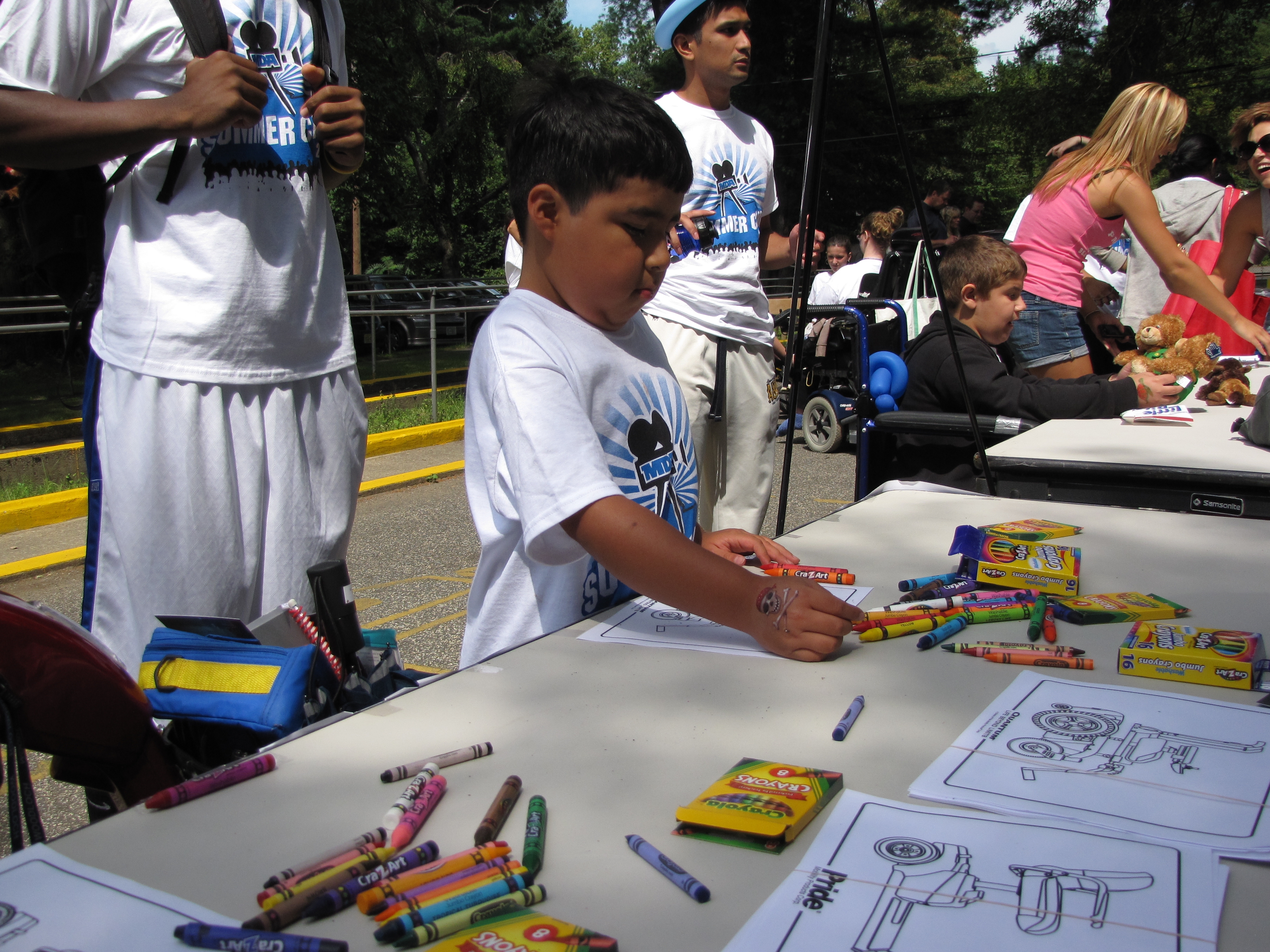
I had the absolute privilege of visiting a summer camp for children and teens with various forms of muscular dystrophy. It was among the most fun I’ve had, as the campers were so awesome, such spirited personalities, as children are. However, as much fun as MDA camp is for everyone involved, there’s still a looming reality: Most of the campers will pass away by their mid twenties.

There’s truly an injustice to it all, one that, for me, is impossible to explain – that is, the universal “unfairness” that within 10 years or so, many of the campers whom I met will no longer be with us, that not only will their lives have been lost, but with them, we all will have been robbed of their amazing life-long potentials. I mean, their time on this Earth is impacting – I know, they profoundly impacted me – but to think of what these amazing individuals could accomplish over sixty or seventy years – not just twenty – is limitless. Yet, we’ll never have the chance to know because of the inexplicable injustice of a life-robbing disease.

I remember leaving the camp thinking, Cash my chips in now, God, and give my lifespan to anyone of those kids – I’ve had my shot at life, and I’d gladly pass my years left on to any one of those children….

Although visiting the MDA camp was a reminder to me of the seeming inexplicable injustice in the world, the question of universal unfairness is one that I encounter almost every day – that is, why do such terrible circumstances happen to such good people? In the wheelchair world, consumers often share with me that they’ll never understand why they received their injury, illness, or disease, that they wrestle with the injustice of it all. And, I never have a direct answer. But, I do have at least one perspective that touches upon the subject of life’s “unfairness” – and the MDA campers hit home the point for me.

Of course, we know that there are direct attempts to answer why bad occurrences happen to good people. Religion has its answers that run the gamut, from it’s God’s master plan, to it’s bad karma from a previous life. And, science, too, has its direct answers, from cancer being gene mutations, to paralysis being an injury to the spinal cord. These answers, however, still leave intellectual loopholes, where we can look at examples like Dr. Wayman R. Spence, an original anti-smoking crusader, who himself ultimately died of cancer after 50 years of treating others, and it’s truly impossible to see any justice in such an uncanny circumstance – it’s haunting, really.

Still while maybe we will never be able to intellectually answer life’s injustices beyond, Life isn’t fair, we can use coping mechanisms to address them. See, we universally approach life from three perspectives: What is; what can be; and, what should be. And, by understanding the roles that each of the three perspectives play in our own lives, we can better cope with seeming injustices.

What is, is truly the givens, the realities of any situation as known in the present. It’s the, my father has cancer, my husband is an adulterer, my daughter is an alcoholic, I have multiple sclerosis.

What can be, is what we logically can do to address a situation moving forward. It’s the, my father has cancer, but treatment will extend his life; my husband is an adulterer, but I need to get a divorce and find a loyal guy; my daughter is an alcoholic, but getting her into a rehabilitation program is a wise step; I have multiple sclerosis, but medication and therapy may slow its progression.

What should be, is truly wishful thinking, not based in reality, but dwelling in questions of fairness. It’s the, my father shouldn’t have cancer; my husband shouldn’t be a cheater, my daughter shouldn’t be an alcoholic; I shouldn’t have multiple sclerosis.

What’s fascinating is that when we look at the three perspectives – what is, what can be, and what should be – only two are relevant, having any impact or meaning in our lives. The third simply leaves us empty, without the ability to do anything, trapped in despair. Can you guess which two are empowering, and which one is debilitating?

Of course, what is and what can be are very empowering – that is, we can act upon them. However, dwelling on what should be is truly debilitating because there’s nothing we can do but wish upon a seeming impossible, asking ourselves, Why?, silently screaming, It’s not fair! Nothing good comes out of stewing over what should be.

And, that’s what I ultimately took away from my visit to the MDA summer camp. As adults, we’re so caught up in the what should be’s of life – how life is unfair – that we overlook the intrinsic value of what is and what can be. For example, rather than celebrating the current life of our loved ones who have cancer, we dwell upon the unfairness of their pending passing. Rather than moving forward from bad relationships, we stew over how we were wronged. Rather than appreciating our jobs, we focus on any negatives. And, rather than accepting those around us for who they are, we want to change them. That is, we go through life lamenting – often to the point of depression – about how things should be, not recognizing what is or realistically what can be.

Yet, the kid’s attitude at the MDA summer camp was just the opposite – it was totally about what is and what can be, and it was contagious. I only saw life, love, and laughter. It was the most positive place on Earth, making Disney World seem glib. It was a true celebration of living in the moment, where no one questioned what should be, but reveled in what is and what could be. Even we adults ended up with our faces painted, coloring with the kids, and eating watermelon!

Yes, bad things happen to the best people, the weight of the worst can land on our shoulders – and none of it’s fair, justified, or explainable. Yet, we don’t live in a world of equitable should be’s; rather, we live in a world of what is and what can be. And, let us make the most of those, where our days aren’t filled with longing or self-pity, but are celebrated with appreciation and joy for what’s within our immediate presence: The beauty of what life is and can be.

It’s The One’s We Reach

By Mark E. Smith

No reputable drug and alcohol recovery program will publish its success rate, namely because industry wide, success rates are disturbingly low – in the 5% range. That is, approximately 95% of in-patients eventually relapse.

With such a low success rate, one might conclude that recovery programs don’t work. But, they do – for those who make an effort to change their own lives. Recovery programs are a tool for those who are dedicated to the process, where people who help themselves will succeed, and those who continue poor behaviors, fail.

One has to admire recovery counselors. I mean, imagine investing your heart and soul in striving to help many, where 95% of your efforts fail. At what point do you simply give up, noting that if people won’t help themselves, why should you strive to help them?

The answer is simple – if you can positively change the lives of only 5% of those you interact with, that’s a profound impact on others. However, accepting the realization that 95% of your efforts won’t succeed takes some understanding, the understanding that you can’t help everyone, but you can make an admirable attempt and help some. Your true success is in your making the effort, regardless of the outcome.

Most of us have friends, acquaintances, and family members who are living troubled lives on some level, where a simple change in behavior could dramatically improve their lives. And, when we’re at our best, we step in, striving to offer words of wisdom and encouragement. No, we don’t preach or lecture, but simply share that life doesn’t have to be so hard.

I had the privilege of sitting down with a young woman in her 20s, whose life is a mess – severe abandonment issues from a troubled family, engaging in promiscuity, alcoholic, and an overall emotional train wreck. But, as I explained to her, none of it has to be. By investing in herself, as with entering counseling and truly putting effort into addressing the negatives in her life, she could see real changes in real time.

I asked her if anyone had ever had such a conversation with her, and she said, no. And, I explained to her that I’ve overcome challenges in my own life, many with the help of others, and I’d be willing to assist in her getting her life on track if she felt that I could help in some way.

Unfortunately, not only didn’t she take me up on my offer to support her move toward positive efforts, but her life continues escalating in very troubling directions. She has every capacity to change – with effort, of course – but no seeming will to do so. In all fairness, though, when all one’s ever known is dysfunctional behavior, getting off of that path takes a monumental shift in mindset, often with a Herculean effort behind it. Yet, it is possible – and vital if one’s going to redirect one’s life.

In my several-hour conversation with her, I believe that she was extremely candid with me, but has no wish to get out of the rough waters she’s in – it’s the behavior she knows, her strikingly uncomfortable “comfort zone,” and she’s not changing it. So, considering her outlook, did I waste my time in reaching out to her?

Not at all. Again, when we strive to help others, our success is in the effort, not the outcome. We can be voices of reason and make sincere attempts to connect with others, but if they’re not receptive or willing to help themselves, at least we made the attempt.

In the disability realm, this subject constantly comes up, where family members ask, How can I help my loved one not be defeated by disability?

The fact is, some are defeated by disability, giving up on life, where their families want to help. Still, the process goes back to the adage that you can only help one who wishes to help oneself. You can offer all of the support in the world, but if one refuses change, there’s nothing you can do. This doesn’t mean that you shouldn’t make an attempt to help, but don’t feel like you’ve failed if the individual doesn’t respond. You can wish with all your might that your loved one with a disability gets his or her life on track; however, if he or she refuses to take the lead in the process, you should have a clear conscience, where your effort was commendable regardless of the outcome. If you want to enroll in community college, we’ll gladly pay the tuition. However, if you chose to spend the rest of your life uneducated, unemployed, and living in public housing, with a victim mentality toward your disability, we’ll be greatly disappointed, but your failure won’t be our responsibility in any way. …It’s this matter-of-fact approach that families must take.

Of course, reaching out to others is a risk, where the outcome most often isn’t what we wish – few people are willing to leave their comfort zones (again, as inherently dysfunctional as their “comfort zones” can be), and move their lives in healthier directions. And, for those of us who have striven to face challenges, and see the amazing potential in each individual’s life, it can be heart wrenching when we reach out to others in support, only to have them reject their own potentials. There’s a sense of loss when we know someone who could transform his or her life in a seeming instant – and is presented with the opportunity! – but he or she chooses to stay on a bleak course.

Still, we must recognize the 5% rule, that even if 95% of our efforts inspire no change in others, our consistent efforts to put ourselves on the line by reaching out to others will impact someone, somewhere, sometime – and that’s where the value resides in our efforts. Let us strive to reach out to everyone, don’t be discouraged when our efforts aren’t valued by others, and let us feel privileged to witness the positive changes and growth in the 5% of of sincere individuals bettering themselves.