When We’re De-Elevated

1422565061579

Ny Mark E. Smith

It happened in an instant. In fact, as one who doesn’t experience anxiety and is pretty calm in virtually any situation, I began to panic. There’s a horrifyingly surreal quality to suddenly becoming invisible.

My family and I went to see the famed Rockefeller Christmas tree, and it was more crowded than anywhere I’ve ever been. However, because my power wheelchair has an elevating seat that places me at 5’7” tall, I worked my way through the crowd slowly but surely, eye-to-eye with those moving about, where people smiled at me, gingerly moving aside as needed for my 24”-wide power wheelchair to pass.

As we got closer to the tree, the crowd became so dense that I couldn’t see the ground, merely following the heads in front of me. Then, suddenly, my power wheelchair dropped down a medium-height curb leading to the tree. Although the unexpected curb startled me, all was fine and we continued to the tree, shoulder-to-shoulder in the crowd, finishing with a classic family photo of the tree behind us.

We worked our way back through the crowd, and I watched carefully for the curb, knowing that while I couldn’t climb it while elevated, I could lower my seat to standard wheelchair height and safely drive up it. As I reached the curb, the crowd continued flowing around me – that is, until I lowered my seat. Suddenly, at typical wheelchair height, my world changed. It was literally darker, more confined and, most shocking to me, I became invisible. While the crowd was moments earlier around me at standing height, now people were slamming into me, falling on me, oblivious to the fact that I was “down there.” I’d gone from a person in the crowd to suddenly invisible and of no stature simply by lowering my seat.

I yelled to my fiancee for some sort of help and in a panic, I charged the curb, clipping people along the way. For me, in among the rarest moments I’ve experienced, it felt like it was life or death – I was both fighting and fleeing.

Once up the curb, I quickly elevated my seat, and as people immediately began safely flowing back around me, I took a deep breath, composed myself, and realized a universal truth: Being invisible to society is terrifying.

For me, that was an experience I’ve culturally known in other ways as a man with a disability. Beyond the change in physical stature I described with my elevating seat, I’ve more readily been de-elevated in social stature at times. However, the de-elevation of who we are – where we become invisible in an instant based on ignorance, stereotyping and discrimination – is a disturbingly universal one.

Imagine how it feels as an African-American trying to hail a cab in a big city, and empty cabs pass you by. Imagine being gay at a dinner party where rhetoric arises, condemning homosexuality. Imagine being a woman shopping for a car, and the salesman only speaks to your husband. Imagine walking into a clothing store as one of a plus size, and the sales people ignore you. Imagine being in bed with your spouse, and he or she turns his or her back to you as you’re trying to communicate. Or, imagine being homeless on a Los Angeles sidewalk, and no one even looks at you as they pass. So many of us can relate with being de-elevated to invisible.

Yes, I was fortunate amidst the crowd at Rockefeller Center that eve because, at the touch of a button, I elevated back to being seen. However, life for many – including me as one with a disability – often isn’t so easily resolved. When we’re dismissed by others and made to feel invisible, there is no button to push. Rather, the experience of being made invisible based not on our character, but based on the ignorance, stereotyping and discrimination of others… well… just hurts.
Grinnin’ In Your Face

Son House
Son House

By Mark E. Smith

When I attended San Francisco State University’s creative writing program, we were allowed to focus on the genre of our choice. My peers mostly focused on poetry, fiction or full-length feature writing. I was the only one in my class, however, who focused almost exclusively on the short-short story, a genre others found too difficult because of its inherent limitations. Whether writing autobiography or fiction, I loved the constraint of having to tell a story – convey a profound message – in 1,000 words or less (that’s no more than two typed pages). The constraints of the short-short form, I found, made me maximize what I had, it made me more creative because I had to learn ways to do more with less.

Of course, looking back, I simply grabbed onto what I knew based on growing up with disability – that is, I was really good at taking limitations and using them to utmost potentials. Constraints, you see, don’t box us in; rather, they challenge us to find innovative solutions to work with what we have. I’ve never found that ease or excess bring out our full potential. However, constraints and limitations do. I know that it sounds counter-intuitive, but if you want to grow, work within limitations.

The way I learned really quickly how to manage money was by being broke. Again, I know that sounds counter-intuitive – how do you manage money that you don’t have? – but what being broke is really about is expertly managing the money that you do have. It goes right back to disability experience, doesn’t it? I focus on what I have, not what I lack.

I was grocery shopping with my daughter recently and we encountered a sort of mirror image of us at the grocery store – a presumed single father and two daughters. In his hand, he had a grocery list and a calculator, adding up the cost of items as he went. It was a familiar sight because I’ve done that. When you have financial constraints, you find ways to do more with less. In that moment, that gentleman was a financial wizard compared to many with far more money because each of his dollars was wisely watched and allocated. Attentiveness and creativity filled his cart beyond financial limitations. Again, limitations bring out the best in us.

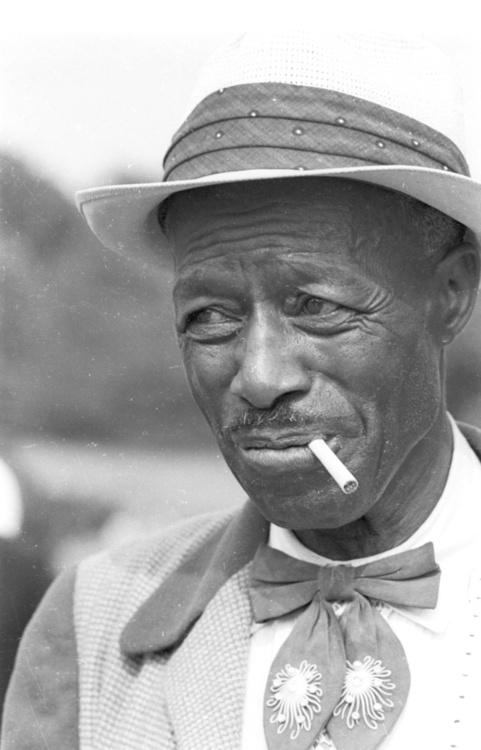
One of the greatest blues songs of all time is the mid 20th-century, “Grinnin’ in Your Face,” by Son House. In conceiving and performing the song, House had the ultimate constraints: no instruments and no formal musical training. How do you make an iconic song with none of that? Yet, by working around those constraints, he created a soul-penetrating song using just his voice and clapping, setting time to what sounded great to him. House found the ultimate instrument within the ultimate limitation: he used his voice and hands. Contemporary musician, Jack White, noted about House’s classic piece, “I didn’t know you could do that, just singing and clapping. It said everything about rock ‘n’ roll, expression, creativity, art – one man against the world.”

If we look at ourselves as writers, single parents, musicians, those with disabilities, and on and on, it’s amazing what we can do within constraints grinnin’ in our face. What’s fascinating is that constraints don’t limit us; rather, they inspire creativity, help us find better ways, and ultimately foster personal growth. However, what living with limitations truly does is empower us to realize that we don’t have limitations after all.

Gala of the Messy and Miserable

20141118_175743-2

By Mark E. Smith

Facebook and disability – they’re both masters of illusion, where publicly you never see the whole picture of a person, just the best parts possible. But, what happens when you remove that curtain, where life isn’t glamorous postings or a guy in a power wheelchair, wearing a suit and tie, whizzing by you at work?

We really do live in a kaleidoscope culture, where people only want to see and present the pretty parts of life. The real and gritty parts are scary and painful – and yet all so real. None of our lives are pretty and perfect all of the time. In fact, they can often be messy and miserable. And, what I’ve learned is that the pretty and perfect parts don’t unite us; it’s the messy and the miserable that do – because they’re heartwrenchingly real. We can only relate to the pretty and the perfect to a limited degree. However, the messy and the miserable is often where life lands us – and we all can relate to that. In this way, there’s a reason in all of our lives to shatter the illusion and get real, where we have the courage to expose the messy and the miserable, and that’s when we truly connect with others.

My own Facebook and disability form an illusion. No, not intentionally, but by the nature of it all. My colleagues see me poised and polished in my career – perfect hair, whizzing by in a power wheelchair – and my Facebook shows an amazing life. So, if that’s the pretty and the perfect, where’s the messy and the miserable come in?

All over the place! I attended a gala recently and, if I say so myself, I looked GQ-hot rolling in. But, what no one saw was what it took me to get to that point. I’m no GQ model. Rather, I’m a guy with severe cerebral palsy whose life can be messy and miserable. Like many with complex disabilities, I had to build in my “bathroom regimen” in the process of getting ready, which takes time and is physically taxing. Then, the reason why I was polished and on time at the event was because my daughter and fiancee helped me get dressed. I can do it on my own, but it takes hours, so the more practical of the two options was accepting the gracious help of my daughter and fiancee to get me ready.

But, we never have these conversations, right? It’s not like someone says to me at a gala, “Mark, you look so handsome tonight.”

And, I reply, “Thanks. I struggled through a bathroom regimen this afternoon, then my fiancee buttoned my pants, tied my shoes and styled my hair….”

Yet, that’s the reality, and when I think about that gala, I know that many people there had messy, miserable aspects to their lives, too. After all, life isn’t easy for any of us. Maybe there were couples who argued like mad on the way, but walked in with smiles. Maybe they were couples who drove there in a car with the gas light on because they’re broke, but walked in like a million bucks. Maybe someone recently lost a family member and it took all of his or her strength to get dressed up and attend such a chipper gala. And, how many individuals there had disabilities or conditions unseen, from depression to epilepsy? I know that the beautiful lady on my arm – my fiancee, the one who helped me face my challenges to get to the gala – had her own challenges that eve, ones that no one knew, as she continues recovering from a recent cancer-related surgery.

The fact is, everyone’s life can look pretty and perfect on the outside. But, how many of our lives truly are? Life is often messy and miserable – and, as a result, absolutely beautiful. See, when we let down our facades, and with grace and dignity discuss the messy and the miserable in our lives, it makes those around us let down their guards, and that’s when we truly connect with others. And, when we connect, we’re not alone in the messy and miserable, and it makes all in our life – the messy and the miserable – dramatically easier to cope with.

And, so at that gala, I made my own silent toast to the messy and the miserable hidden beneath the facade of the pretty and the perfect – because we’re all in the trials of life together.

Gravitational Pulls of the Soul

past

By Mark E. Smith

Bishop T.D. Jakes says, “When you hold on to your history, you do so at the expense of your destiny.”

Have you ever lived those words or known someone who has? Many of us have seen the impact of such an emotional and mental paralysis that comes from holding on to a painful past – and some of us have lived it.

My history, which I’ve talked and written about extensively with the hopes that sharing my story will help others, is a bleak one. And, I literally had to let go of my history to get to my destiny, which has included sharing my story. However, it wasn’t easy, and when I spend time with those who are struggling to let go of their histories – those with acquired disabilities still longing for the ability to walk, those who were abused as children still harboring shame and self-doubt, those who’ve had their hearts broken, pining for that lost love – I know how hard it is to let go of that history to move on to one’s destiny. To make it even tougher, our histories sometimes have a way of holding on to us, where we continue encountering reminders of that which has caused us so much pain. So, how do we let go of our histories and move on to our destinies?

For me, it was a long process that allowed me to break free. It’s not like I don’t have memories or emotional scars. Those never go away. But, the pain of my past ceased effecting my daily life and allowed me to truly live my destiny when I found myself finally free of my painful history, where I had solitude within and could simply enjoy the life I’d striven to build. I’d liken it to the gravitational pull of the Earth from space – the force will always be there, but the farther we get from it, the less effect it has on us.

I remember being in the throws of my dysfunctional family in high school, knowing that simply graduating would move me a single step forward from my family history of a lack of education. Then, I knew that graduating college would move me a next step, the one from my family history of poverty. Then, I didn’t have a drink of alcohol until I was 33, knowing that I was healthy enough in my behavior to move beyond my family’s history of addiction. Yet, history can sneak up on us, and when I realized I was married to an addict and I didn’t want my daughter to have that history burden her – though it certainly did, has and will – I had the courage to end that marriage to again pull myself and my daughter farther from my history. At one point, I physically moved across the country, both for my career and to get farther away from my history – so I could live my destiny.

See, moving from our histories to our destinies is a lot of work – it’s being entrenched and digging our way out. It takes awareness, desire and patience. It takes knowing that where we were, isn’t where we belong. But, more than any other factor, it takes knowing that we have the power to move our lives wherever we wish, including far, far away from the gravitational pull of painful histories holding us back. We may not have controlled where we were, but we can control where we’re going. No, it’s not an immediate change, but through many individual, conscious decisions day-by-day, over months, years and even decades, we can let go of our painful histories and shift the tide, where our destinies become the gravitational force in our life.

As you read this, I don’t know what you’ve been through. Yet, I know that you are more than your history. We all are. You may long for the ability to walk again, but you have the power to set that pain aside and literally roll a wheelchair toward the life of your dreams. You may have had a horrific childhood, but you have the power to claim a life of solace surrounded by safety and love. You may have had your heart broken, but you have the power to entrust it with that special someone who proves as your true soul mate. You have the power to release your history – step by step, let it go! – and live to your destiny. None of it’s easy. However, destiny calls each of us to let go of our painful pasts and embrace our dreams. Once you allow yourself to be pulled by the gravitational force of your destiny… well… you’ll experience joys in life you never imagined.

The Most Human Experience

empathy

By Mark E. Smith

Much of my life is spent around those like myself who have physical disabilities. And, because I have faced adversity in my life, many have turned to me for understanding, reassurance and comfort. After all, if you look at me – body twisted, spastic in my power wheelchair – I personify adversity.

Yet, while I know of my adversities – and, yes, some components of adversity are universal – I can never fully understand someone else’s adversities. While two individuals may even have the exact same disability, condition or other life circumstance, what I’ve learned over decades of sharing stories of adversity with others is that no two experiences are the same.

This raises several intriguing questions. Firstly, if no two experiences are the same, how do we meet the innate need for connection with others in the face of adversity? And, secondly, how do we support others in their times of adversity when we haven’t had the exact same experience?

The answer to both these questions is a singular one: empathy. Empathy is an amazing human capacity because it allows us to connect with others on the most genuine levels, where it’s not about relating to an exact circumstance, but truly relating to the person who’s experiencing that circumstance in his or her own way. So, you may wonder, how have I done that in my own life? After all, I was born with cerebral palsy, so how can I relate with a mother who was able-bodied till age 36, then paralyzed from the chest, down? Yes, they’re both disability experiences – but vastly different.

The first interpersonal connection I make is to try to best understand the other individual’s perspective. I mean, can you imagine what it emotionally and psychologically feels like to be the nurturer and caregiver to your children and spouse, and now you’re physically unable to fulfill those roles in many ways? I know, we want to swoop in and rescue and say, “As a mother and spouse, you’re more than your body, and everyone views and loves you just the same.” And, it’s true – but that’s not empathizing with the person’s real, valid emotions. I’ve said in this exact situation, “I can imagine how difficult it is to have gone from the caregiver to needing caregivers. That’s a harrowing life transition. How are you dealing with that?” When we approach others’ adversities by letting them know we’re striving to see their situations from their perspectives, it creates true connection and validation – invaluable aspects of empathy.

This leads to the other aspect of empathy: being truly present in the other person’s time of adversity. No, I don’t know what that recently-paralyzed 36-year-old mother is literally going through – I’ve never experienced it and no one has ever been in her exact circumstance, either. However, I’ve made it through harrowing times in my life and there’s common humanity in that. And, so there’s the remarkable ability to quietly relate with someone, not on a circumstance level, but a human level. This is a scary place. I know scary places, so I’m just going to hold your hand as you move through it.

In these ways, through my decades around disability – both in my profession and in my personal life – I’ve learned a lot about being there for others. Empathy isn’t about having gone through an exact experience. Rather, empathy is about striving to understand another’s perspective and embracing him or her as-is, wherever he or she is in the midst of adversity. If we do that, we navigate toward the most uniting experience of them all: shared human experience.

Dust and Sweat and Blood

critics

By Mark E. Smith

Someone asked me what the hardest part of my career has been? I didn’t have to think twice: Learning to embrace criticism.

Whenever we put ourselves in the public eye, even on a small scale, criticism flies at us. I once read a scathing criticism about Mother Teresa. Why would anyone ever criticize Mother Teresa?

I would have never imagined 25 years ago when I published my first piece in Sports ‘N’ Spokes magazine about racing wheelchair technology that readers would send letters to the editor criticizing me. But, they did. I remember the next month’s issue where a Canadian racer lunched a personal attack on me in the Letters to the Editor section. It hurt and made me second guess myself, not as a writer, but as a person. Then I wrote a piece in New Mobility about the goal of equal rights for those with disabilities, and I again was shocked by the hate mail. By 1995, when my childhood autobiography was published – as wholesome as writing gets – I wasn’t surprised but disappointed at the strangers who didn’t attack the book, but me personally.

With my work becoming so visible online since the late 1990s, and my career and public persona growing exponentially ever since, public ridicule and criticism is something I’ve faced on a daily basis for two decades now. It’s weird turning on your computer each day, seeing complete strangers hating you. But, it goes with the territory of being in the public light.

What’s intriguing about criticism, however, is that it’s by no means limited to those of us in public roles. In fact, among the most painful forms of criticism can come from those closest to us, those who profess to care about us – spouses, parents, siblings. I know because I’ve been there, too.

I recently received an unsettling phone call from a 22-year-old college student with cerebral palsy. He’s striving to graduate college and build a life for himself, but his dad gives him no support, just criticism. I could relate on an eerie level because I was in almost his exact situation, where my estranged father went out of his way several times to lash out at me, mocking me for pursuing my education, criticizing me for “thinking I was better than everybody else because I was going to college.” Sure, it stung, but by that point I couldn’t put any credence in my father whose track record was a tenth-grade education, a walk-away father and an unemployed, life-long alcoholic.

And, that’s the pattern of critics: typically they’re the last people who should criticize anyone. From my public career to my personal life, I’ve never had anyone doing what I do criticize me. It’s always those not doing who criticize. Among the best quotes on this topic is President Theodore Roosevelt’s excerpt from a 1910 speech:

It is not the critic who counts; not the man who points out how the strong man stumbles, or where the doer of deeds could have done them better. The credit belongs to the man who is actually in the arena, whose face is marred by dust and sweat and blood; who strives valiantly; who errs, who comes short again and again, because there is no effort without error and shortcoming; but who does actually strive to do the deeds; who knows great enthusiasms, the great devotions; who spends himself in a worthy cause; who at the best knows in the end the triumph of high achievement, and who at the worst, if he fails, at least fails while daring greatly, so that his place shall never be with those cold and timid souls who neither know victory nor defeat.

Researcher and lecturer, Brene Brown, expands upon this, noting, “If you place yourself in the arena, you’re going to get your ass kicked. But, those not in the arena, who aren’t getting their asses kicked with us, have no right to judge. …Take your seats and be quiet.”

From Roosevelt to Brown, I wholeheartedly agree. We can’t put credence in armchair quarterbacks. If you’re on the field with me, taking blows, marred by dust and sweat and blood, I’ll give you due credibility. However, I can’t take beer-belly, armchair quarterbacks seriously – they invest nothing of themselves. If you criticize me, I will hear you out of decency, but I’ve learned that if I truly believe in what I’m doing – and I do – criticism may still feel lousy, but it doesn’t change my inspired path. Some are satisfied by watching and criticizing, but I’m busy doing.

Let us live boldly in the arena, and as the seated critics shout – too cowardly to be in the arena taking blows with us – use it as validation that we’re doing everything right and getting stronger all the time, thriving on being marred in dust and sweat and blood. It takes nothing to be a critic; it takes everything to strive to make a difference. See, the ultimate strength isn’t in ignoring your critics; rather, the ultimate strength is in having the courage to continue moving your life and career forward regardless of what they say.

Me Being Me

1412359724784

By Mark E. Smith

At 43, I’ve had my challenges in life, but with a mix of hard work, the support of others and luck, I’ve been privileged to have accomplished a bit, from fatherhood to a pretty cool career. Nevertheless, someone asked me what my ultimate dream is from here? My answer could have been related to a next career challenge or maybe a materialistic goal like a lake house. However, none of that’s the case – its all too easy, too meaningless in ways. My answer from the depths of my heart was, “I just want to be me.”

Assuming that we’re healthy, productive, loving individuals, isn’t that our ultimate dream: to not only be free within to be ourselves, but to be truly embraced for who we are by others? How many of us have felt at times that for any number of reasons – a work environment, a relationship, family expectations – we couldn’t just be ourselves? Maybe it’s a seemingly huge issue like if your family knew you were gay, they’d disown you. Or maybe it’s a seemingly small issue like someone correcting your grammar. Or, somewhere in the middle, where your love interest wants to change something about you. All of these and countless other examples prevent you from being you, and it’s painful and it’s isolating – and I’ve been there.

I had a cute conversation with a buddy of mine. He shared with me that if he could find a woman who loved comic books as much as he does, she would be his soul mate. See, he’s had girlfriends in the past who’ve ridiculed him for collecting comics, so finding a woman who loves comics would be a dream come true. Yet, that’s not truly what he needs, is it? He doesn’t need a woman who loves comics; rather, he simply needs a woman who loves him for him, comics and all. It’s what we all want and deserve: to be loved as-is.

And, that is an epic battle of the heart for many of us, where we just want to be rightfully loved as-is, where we’re perfectly imperfect and nothing about us needs to change to fit in or be loved. We just need to be us and be loved on that merit alone.

Unfortunately, others may not get that concept and so it’s up to us to set the standard and set the boundaries. I genuinely love people, and there’s nothing I enjoy more than a great conversation. I don’t care who you are, what you look like, or how you live. Assuming you’re doing right by others, I don’t want to change anything about you. I just want to know the real you.

It’s this way of embracing others that I more and more expect in my own life. Regardless of the situation, I’m just going to be me as authentically as possible. I don’t need to prove anything or be anything – I just need to be me. And, when I’m not good enough for someone or criticized for just being me, I’ve developed the strength to put the onus back where it belongs – on the person doing the pointing.

I am me, you are you, and for anyone who wants to see flaws in us or seek to change us, well, we need to hand him or her a mirror and go about being just who we are: perfectly imperfect, as-is.

Pink Undies in the O.R.

photo (24)

By Mark E. Smith

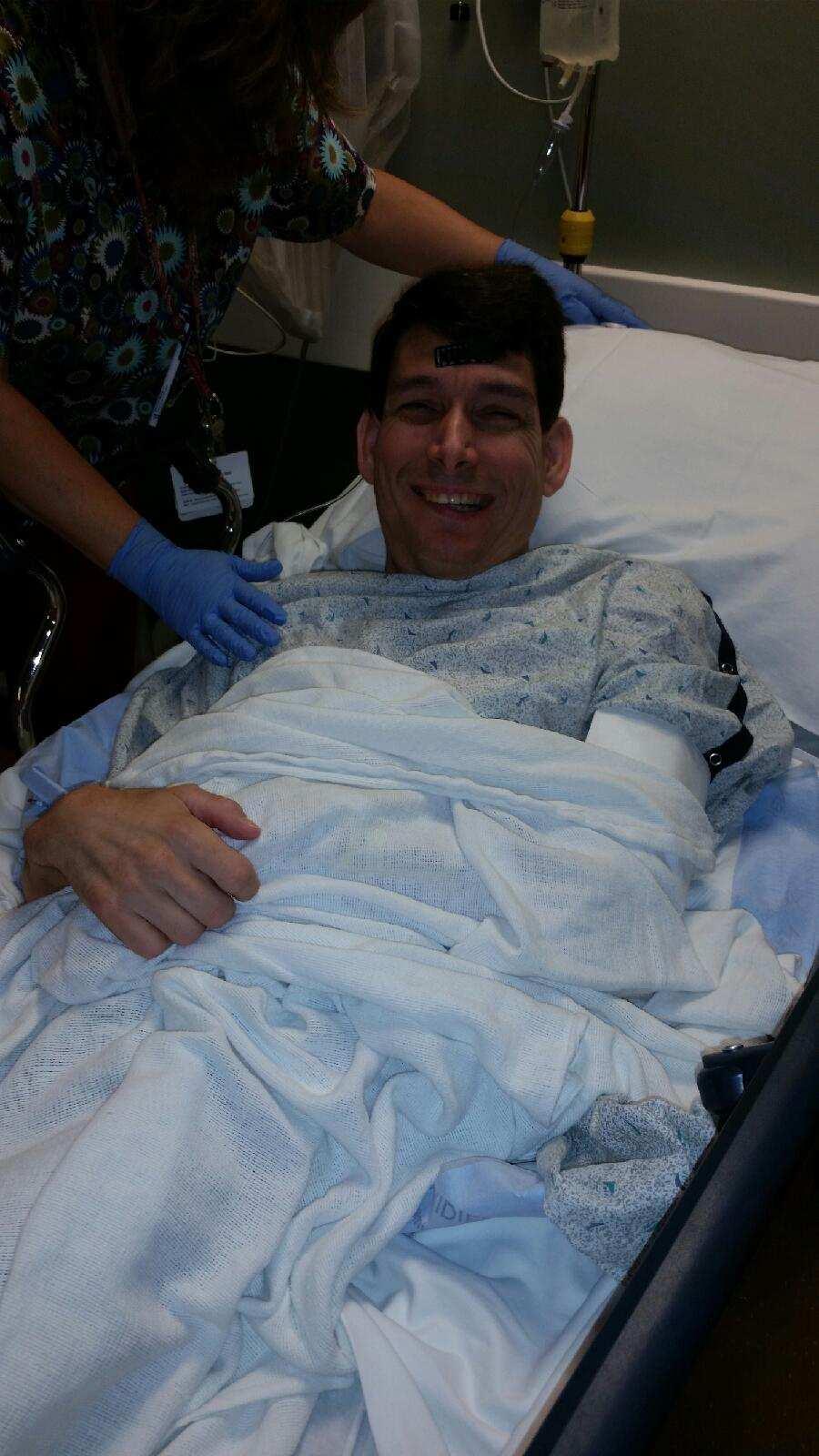
So, I’m laying stretched out on the surgical hospital bed in my neon-pink underwear and nothing else. And, I’m great with it. Muscular, with my trademark tattoo of the universal wheelchair symbol on my shoulder, I feel like a superhero. Cerebral Palsy Man here to save the day! But, the medical staff is here to save me – or at least figure out how to fix me up so they don’t have to literally save me. This is pre-surgery surgery, or as I like to call it, surgery.

My sister is with me because she’s had the worst luck of anyone I know – cancer, a critical automobile accident, over 20 surgeries. She knows the practice of medicine so well that I often have medical professionals ask if she’s one, herself. In this way, my sister is a double-edged sword: she’s great to have in the room as a medical advocate, but I don’t want her touching me out of fear her bad luck will rub off.

The nurse loves my pink undies, and I think she’s a bit charmed by my sense of humor around it all – my pink undies, flaunting my body regardless of disability, and my optimism toward the procedure itself.

Yet, I’m genuinely scared. I’m so scared that I’ve waited to do this far longer than I should have. It was my physician and friend who finally convinced me, knowing how potentially serious this could all be if I kept putting off surgery and treatment of anything else found in the process. Then once the specialists told me of the extreme risk my health was under, I knew I had to take responsibility, not just for myself, but for the sake of those who love me. And, I still have a lot of lovin’ to do.

The nurse asks me to put on the hospital gown, and I want to wear it as a cape. But, she insists I wear it the right way. My sister helps me put it on as I pout like her four-year-old. But, I want to wear it like a cape!

The anesthesiologist comes in and notes my “chronic” cerebral palsy. Is there non-chronic cerebral palsy, where you only have it on, say, Thursdays? She then stands at a computer and asks me questions from the screen, including, do I get short of breath walking up stairs?

My sister bursts out laughing and I point to my power chair parked against the wall, saying with absolute seriousness, “Only when I’m carrying that up stairs.”

Finally, the surgeon comes in to give me the rundown before we go into the O.R. He’s wearing the exact model watch I own and love, and for a moment I wonder if a man of such impeccable taste is wearing pink undies, too?

Now I’m getting even more scared, and the anesthesiologist isn’t helping. The initial shot that was supposed to put me in La-La Land still allows me to recite the first page of Chaucer’s Canterbury Tales – from the tenth grade. Still alert, I watch out of my peripheral vision as they roll me into the O.R. And, I see the size of the camera they’re going to slide down my esophagus and the table of tools they’ll ultimately use to take three biopsies. And, I watch as the anesthesiologist injects a new drug into my I.V.

Next thing I know, I awake. I think I’m still in the O.R., but as I open my eyes, a nurse tells me I’m in recovery. I’m still on my back, with the gown on, but I’m oddly now wearing pants, socks and shoes, with no recollection of the procedure or getting dressed.

“How are you feeling?” the nurse asks.

“…Like the morning after an awesome night in Vegas,” I reply. “How’d I end up here, and where’s my shirt?”

One Morning in the Bathroom

bathrooom

By Mark E. Smith

Sometimes, vanity and modesty are voided by the realities of everyday life beyond our control, albeit disability, age or illness, and in those harrowing moments – wanting to stop time so that no one knows what we’re trying to hide from all others – we are forced out from our facades and have to ask for help, where our deepest vulnerability suddenly becomes our ultimate strength.


The Tortoise Mindset

hare-and-tortoise-694263

By Mark E. Smith

No matter how many times I’ve read Aesop’s fable, The Tortoise and the Hare, the tortoise always wins. Logically, at some point shouldn’t the hare win? After all, the hare is physically faster.

The answer is, no – not in the fable and not in life. Aesop, a slave in ancient Greece in the 5th century BC, was onto something: Dedication and perseverance always pay off in the end. Think about every aspect of your life, from health to career to relationships to finances – does taking the easy way ever work in the long run?

Never. The University of Wisconsin did a study (one example of many) on how long it takes to get in true physical shape. After six weeks of rigorous training, there were no results seen in the sample group; three months showed progress; but, it wasn’t till one year, then four years that there were significant physiological changes. Everyone wants a quick fix to shed those pounds and have six-pack abs, but there’s no such thing. However, you can absolutely do it if you have a tortoise mentality, where dedication and perseverance will pay off over years.

Want to be a millionaire? Maybe winning the lottery, flipping houses or playing the stock market is the ticket. No, the hare loses again. In the U.S., tortoises get rich. The average millionaire is 57, works over 50 hours per week, has a graduate degree, and is first-generation wealthy. What’s been their number one wealth-building tool? Saving 20% of their monthly take home pay over their career. Put simply, you get rich over decades, not overnight.

Of course, in relationships, the hare must win, right? Love at first sight rules all. Statistically, not so. See, your odds of staying married increase if you date for at least a year before tying the knot, and those who get married around age 30 are much more likely to stay married than those who get married younger. Want the healthiest marriage? Be a tortoise and take things slow and steady.

I live and work in the world of disability experience, where challenges abound for many of us. And, what I’ve learned is that rehabilitation doesn’t stop when released from the hospital; rather, it’s truly just beginning. There are no quick fixes, and some skill sets – from the physical to the emotional to the mental – can take decades to master. Heck, every morning I still work on the coordination needed to tie my shoes and button my pants– after over 30 years of trying. Yet, it’s the tortoise mindset that keeps us striving. If we simply stay dedicated and persevere, we will succeed in one way or form. It can take 20 or 30 years, but success will come.

The examples go on and on, but here’s the point: there’s literally no secret to success. Success isn’t luck of the draw or magic. We need only to look to Aesop’s fable of the tortoise and the hare – a slave’s philosophy from ancient Greece – to know that success is a marathon, not a sprint.