Flipping Coins

Image

By Mark E. Smith

They say that there are two sides to every coin – and that’s so true in life. The fact is that adversity happens to all of us, but so can success, often all in the same circumstance. Often turning a vying into a victory, you might say, comes down to simply flipping the coin to the other side. On a deeper level, it’s a principle that I call, Making that which seems against you, actually work for you. It’s about taking the bad tosses of life, and flipping the coin over so that they become blessings, successes, better than where you started.

A friend of mine loved her job, having worked it for 10 years, making close to $100,000 per year. She admired her co-workers, was immensely talented, and was loyal to her employer. She told me that she hoped to run the whole division she was in some day. She was inspired, accomplished, and on the fast track. So, imagine how devastated she was when she was abruptly let go, her job gone.

I worried about her tremendously, wondering where she would go, what she would do? To make matters more concerning, she was the bread-winner in her household, supporting two children and a mortgage. What good could possibly come out of that situation, one that countless Americans currently face? Indeed, it was a terrible toss of the coin, the losing side of life flipped up.

However, my friend did something amazing: She did what it took to turn the coin right-side-up. Within two weeks, she had a new job several states away, bold enough to make that move. And, after a year at that job, doing very well, she was hired at one of her old employer’s competitors for more money, in a more prestigious position. That which originally seemed to work against her, ultimately worked for her. She didn’t just come out of adversity, she came out on top.

Think about how many aspects of our lives that seem against us, actually work for us. An ended bad relationship leads to a healthy new one; a job loss leads to a better one; addiction-recovery leads to healthier living. The list goes on and on. However, the truth comes down to this: Just when you think life’s dealt you a blow with the bad side of a coin, remember that there’s always another side. Flip it over, and make that which seems against you, actually work for you.

I recently saw the movie, The Sessions, based on the true story of writer, Mark O’Brien. Struck with polio as a young boy, he spent his life completely paralyzed, most of the time living in an iron lung. Yet, he used among his only capabilities – the ability to move his head – to control a mouth stick, meticulously typing one letter at a time, ultimately publishing countless articles and poetry on subjects ranging from disability commentary to baseball to interviewing Dr. Stephen Hawking. O’Brien took among the toughest plights – imagine all that was against him – and made it work for him.

Life is going to give us all bad tosses of the coin. Heck, I sometimes think I’ve had so many bad tosses of coins that my adversities keep the Federal Reserve’s mint in business! Yet, I always know exactly what to do when bad tosses of the coin come my way: flip it over, making that which seems against me, actually work for me. I was raised by alcoholic-addicts, so I’ve lived a very sober life. Being a full-time single dad has made me a better dad, bring more joy to my life as a father than I could have ever imagined. Having cerebral palsy has allowed me among the most rewarding careers. I could have easily gone down terrible paths with each adversity in my life. However, before the coin even hits the ground, I’m usually snatching it mid-air, ensuring I’m righting it as quick as I can toward favor and blessing.

Bad tosses of the coin are going to come your way – that’s a fact. However, it’s up to you to leave it as-is, working against you, or strive to flip that coin over, making it work for you. I say, always strive to find the shiny side to any coin – read that, situation – as that’s the only one that will add value to your life, taking you to levels of success that others may not have foreseen. 
It Happens for Us

By Mark E. Smith

I’m always intrigued when I hear people say, “Life isn’t fair.” It intrigues me because it’s simply never proves true in the long run. See, I’ve learned that while in the short term, bad occurrences – disability, divorce, job loss, addiction, you name it – can seem like they happen to us, they really ultimately happen for us – unexpected blessings that only come from adversity.

I remember in the mid 1990s, just such an example, where a terrible situation that initially happened to me, ultimately proved to happen for me, bettering my quality of life. I was in college and working, not making a lot of money, but enough to own my little 1,100-square-foot home in a borderline part of town. I felt blessed to own the home, but it was in no way ideal – it wasn’t fully accessible, and it needed a lot of expensive repairs. I couldn’t afford to replace the leaking roof, let alone renovate my bathroom to make it fully accessible.

To make matters worse, a big storm hit us, and although I lived on a hill, my side patio flooded, water pouring through the patio doors, filling my entire house with 6” of water. I remember the feeling of helplessness as I watched the water flow throughout my entire house within moments, destroying what little I had.

Soon, the water receded, and I was left with a horrendous muddy, soggy mess. The wall-to-wall carpeting was destroyed; the wall furnaces were destroyed; the sheet rock wicked moisture, needing dramatic repair; and, everything that was on the floor was soaked, from my wheelchair’s battery charger to my couch. I wasn’t sure how I could ever afford to repair my home, not having flood insurance.

However, while neighbors tore out my water-logged carpet and piled all of my destroyed goods on the lawn – my having no way to replace any of it – a FEMA claims inspector came along within a day or two. He assessed my property, and wrote me a several-thousand-dollar check on the spot. Within a week, I received another FEMA check, and with the help of my city’s building department, I was able to get a reputable contractor to start repairing my home.

But, here’s what’s amazing. As the city’s building inspector checked on my home’s progress one day, he noted my accessibility needs. And, within days, he had grant money for me to not only make my bathroom accessible, but to replace the roof and make other improvements. My home was ultimately in far better shape after the flood than before.

My point is, while the flood initially happened to me, it ultimately happened for me. A terrible occurrence was the catalyst for ultimate blessing.

If you truly look at the floods in your life – that is, the adversities that happen to you – you’ll clearly see that they are really happening for you in the end – winter always ushers in spring. I know, you may be thinking, Mark, bad thing after bad thing just keeps happening to me, there is nothing happening for me.

You need to look a little closer, that’s all – and you’ll see how turmoil always leads to triumph. Closed doors always become open doors. My dysfunctional upbringing didn’t happen to me, it happened for me, making me constantly strive to be a better father to my daughter. My ended marriage didn’t happen to me, it happened for me, placing me on a much healthier emotional path that’s brought greater levels of love, laughter, and contentment into my life. My cerebral palsy didn’t happen to me, it happened for me, instilling countless lessons within me as to the extraordinary potentials within all of us.

Really, we should each possess a bring-it-on! attitude, where we know that life plays its roles in magnificently mysterious ways, where vying always leads to victory, where turbulent times are merely life’s good graces getting ready to come our way. The next adversity that you face, remind yourself that nothing happens to you, but for you, where closed doors open, and a flood of prosperity and success are coming your way. Have faith and patience, and you’ll be amazed at how the tides in your life turn.

Play In Pain

By Mark E. Smith

At this writing, hurricane Sandy is bearing down on us, and it looks like I have to ride home in my power wheelchair in rain and 40mph winds. And, I’m totally fine with that – no big deal. Now, I have other options, but they seem illogical to me. I have over 400 hours of accumulated time off, so I could have stayed home, or even worked from home. Or, I could call someone to bring my van and pick me up. But, why would I do either of those? Schools are closed, and people are hunkering down with storm supplies, but a little discomfort – or, a lot – never persuaded me to stop from doing what’s best for me and those who count on me, like my going to work like any other day, regardless of a supposed looming hurricane.

We live in culture where too many people seem to resist “playing in pain,” sidelining themselves from the game of life, albeit due to emotional, physical, or mental challenges. It’s as if why try when you can just give up? There’s a storm brewing, so let’s cancel school. I’m sick, so I’m not going to work. My boyfriend broke up with me, so I’m going to sleep all weekend. I lost my job, so I’m just going to sit around the house….

No, just because bad things happen doesn’t mean that we throw in the towel, give up on ourselves, make excuses, or stop our lives. Rather, in times of adversity, we should pick up the pace. They make rain gear to weather storms, and when storms hit our own lives, you might say that rather than run and hide, we should don our rain gear – that is, our inner-strength – and head into the storm, head on. After all, weathering storms is how we grow and become stronger.

The next time you find yourself with the two options of adversity – to play in pain with pride, or seat yourself on the sidelines of life with pity – don your rain gear and head into the storm, with courage and tenacity. Choose to “play in pain,” and you will come out stronger.

The Disability-Technology Continuum

By Mark E. Smith

From my CEO to my life-long best friend, a conversation keeps popping up that’s quite fascinating. It’s what I’ve coined “The Disability-Technology Continuum.”

The disability-technology continuum, as I’ve defined it, is an extremely simple yet profound concept. It’s the fact that technology literally makes us less disabled – that is, it improves upon virtually every aspect of our lives, that when we have appropriate technology, our abilities and quality of life expand.

I can use the disability-technology continuum as a prime example in my own life toward how it works and its ultimate results. Imagine there’s a scale from 0 to 100. Zero is totally disabled, as in bed-ridden, and 100 is totally independent. Without a mobility device, I’m at 0 because, based on my disability, I’d be bed-ridden. However, if I have a manual wheelchair, my functionality increases to, say, 30 on the continuum. Yet, with a power chair, now I may be at, say, 60, and with an elevating seat added, I’m bumped up to 65. You get the idea: appropriate technology increases independence, lessening the impact of disability.

Of course, many aspects move one along the disability-technology continuum. Mobility equipment, computer technology, adaptive transportation, and accessible housing, to name a few, all play key roles in moving us from the bottom end of the continuum toward the upper end – and it’s near the upper end where aspects like education, employment, and community involvement skyrocket. And, as we move up the continuum, we don’t just win, everyone wins, as our independence benefits many, where we simply can contribute more toward society.

All of this, however, requires exactly that – societal support, where, culturally all understand the importance of supporting moving others up the disability-technology continuum. See, technology can only get those with disabilities so far. It’s societal support and acceptance that both allow and complete the disability-technology continuum. Technology can physically liberate those of us with severe disabilities, but, make no mistake, we need a society that fosters that process.

Five-by-Seven

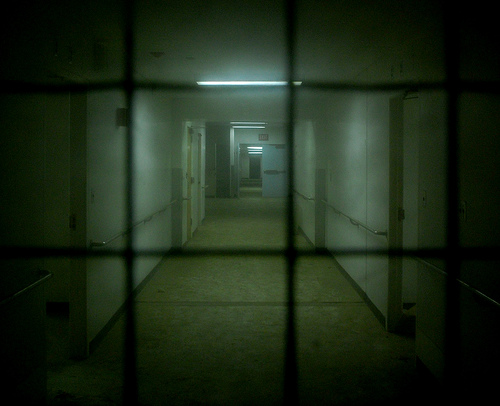
The smell doesn’t change – it hasn’t for over 100 years. It’s the smell of urine, feces, body odor, musty hair. And it fills the halls, where it permeates everything within its path – it’s the smell of despair, stripped humanity, the ever-slowly-wasting-away of souls. It’s where some of us visit, some of us live, and too many of us die.

I am, of course, describing residential care facilities for those with physical disabilities – or, more aptly, institutions. Over the 100 years, the common verbiage has changed from asylum, to home for incurables, to institution, to residential care facility. Yet, beyond a name, fundamentally, nothing has changed – not the facilities, not our cultural practices, not even the smells. Those with disabilities still line the halls, locked away from society in literal five-by-seven-foot rooms that have fewer amenities than a prison cell – not even a commode of their own. What you’ll see is a twin bed pressed against the wall, a dresser, a TV, and a common cardboard box with one’s worldly possessions. Nine years, a woman with multiple sclerosis told me she’d been in her room – and I looked at the windowless walls of degraded paint, and thought to myself, Nine years of starring at blank walls absorbing her dignity, humanity, sanity. Nine years dying an emotional death, where she’s treated with less dignity than a convicted murderer on death row.

Now, it’s easy to point fingers and blame the mainstream for still accepting institutionalized care, still locking those with physical disabilities behind stone facades while the rest of the community drives by in luxury cars, never giving a thought to who’s hidden away in that “historic” building. And, it’s easy for families to convince themselves that it’s what’s best for their Billy or Diane, those who have severe physical disabilities, whose families know not else what to do.

However, I hold myself to a much tougher standard, knowing that I, too, am to blame. See, with a flip of a coin, I could have spent my life in a five-by-seven-foot room, where my humanity was stripped, and I wasted away, never to be known. As I tour institutions today, I see not those who should be there, but those just like me if a simple call had been made or the right question asked, where my severe disability and ultimately neglectful parents should have landed me in an institution. But, like missing a flight by moments, later to learn that it crashed, I didn’t end up in an institution. Instead, I went on to college, career, and family – a normality I could have easily never known. And, for those of us with disabilities living independent, upper-middle-class lives, we’d like to think that it’s due to our hard work or perseverance. But, it’s not. It’s just happenstance and luck, where the only difference between us and them was a cosmic coin toss, a stroke of luck that flung us down one path instead of the other, saving our lives while those just as worthy as us – our exact image – weren’t so fortunate.

And, with that reality – that the only factor that prevented me from being institutionalized due to disability was a random, cosmic coin toss – I struggle to live with the guilt and shame that consumes me: What have I done to help any of my peers who remain locked away? Who am I to sleep soundly at night in my custom home, on Egyptian cotton sheets, while my peers lay in a degraded five-by-seven-foot room, on soiled bedding, starring at windowless walls, their lives absorbed by the stench of it all? Who the hell am I to have escaped the death sentence of an institution, and not have had the presence of mind to go back and carry even one of my peers out on my shoulders?

Where Love Grows

By Mark E. Smith

The Hayes stop by my company once per year, either on their way to Maine in May, or on their way back to North Carolina in September. Snowbirds, they are.

I have no idea exactly how long they’ve been married, but I’d guess 45 years, based their age, as well as having three grown grandchildren. And, they’re madly in love – and it’s contagious to everyone around them.

And, so, it’s no surprise that when Mrs. Hayes was diagnosed with multiple sclerosis years ago, Mr. Hayes took an early retirement, and dedicated himself not just to his wife’s eventual full-time care, but also toward doing an astounding job of continuing with their dream retirement, going between North Carolina and Maine.

I’ve been in a unique position in that I’ve seen snapshots of Mrs. Hayes’ progression, yearly glimpses into her loss of function, to the point this September that she can only move her head a bit. Yet, what would seem like bittersweet annual visits are actually uplifting, a true lesson in life – and love.

See, despite the progression of multiple sclerosis, the Hayes simply seem happier every time I visit with them – projecting a contentment, zest, and love for life we should all be blessed with. And, it’s intrigued me to the point that I’ve striven to define what they intrinsically know that many others don’t, how they simply get happier the tougher life gets?

What I’ve determined is a profound truth: They continually inspire each other.

Think about how many couples we know with everything to be thankful for – health and wealth – but all they do is bicker and disrespect each other. There’s no admiration or inspiration seen in each other – just two unappreciative people, living a devalued life.

However, the Hayes are different. They know that the other is putting 100% into life, the marriage, and everyone around them – and are so inspired by each other that they each give more and more. The result is a cumulative effect, where it’s like inspiration squared, admiration compounded, love volleyed back and forth that just grows and grows and grows.

And, so there are two questions that the Hayes teach us to ask in our own relationships: Does our partner inspire us, and are we inspiring our partner?

If the answer is, yes, then we are doing everything right, living an ultimately-fulfilled life of truly reciprocating love – a love that just grows and grows and grows.

However, if we’re in a relationship where we’re not mutually inspired with our partners, then we need to make changes for the better – starting with ourselves, allowing ourselves to inspire and love fully.

Yet, the ultimate lesson that the Hayes teach us is that we don’t have a limited reservoir for inspiration and love. Rather, we have the unique capacity for boundless inspiration, where love doesn’t merely exist, but can constantly grow.

Raising Expectations

By Mark E. Smith

At this writing, my daughter is in her first week of the 10th grade. It’s unquestionably the most pivotal point in her academic career – and, make no mistake, the expectations are set high.

See, the 10th grade is where colleges begin looking at grade-point averages, curriculum, and extra-curricular activities toward college admissions – and, again, make no mistake, their expectations are set high, where they want the best of the best.

However, it’s really not the universities’ expectations that matter; rather, it’s my daughter’s expectations that matter. My daughter’s self-expectations will determine how well her school year – and ultimately all of high school – goes toward college admissions. So, wisely, she has set her expectations high, too. Her grade-point average can’t be below 3.8 and, ideally, should be a perfect 4.0 or higher (honors classes can increase it). Her expectations aren’t to cruise through high school with no forethought, but to expect nothing less than to remain at the top of her class.

Yet, here’s what’s interesting about my daughter: She’s not an intellectual genius or such – just a regular 15-year-old who happens to know that whatever expectations she sets create her success.

It’s truly a lesson for all of us: What we expect is typically what we achieve. Set low expectations for yourself, and you’ll receive dismal results. Set high expectations for yourself and you’ll achieve amazing results. My great-grandmother always said, “It’s just as easy to love a good man as it is a bad man, so why not love a good man?” Really, she was hitting at the heart of self-expectation – what you pursue is what you get, so pursue the best.

In the disability realm, I can tell you for a fact that self-expectations play the single largest role toward successful living. I’ve known those with the severest of disabilities, and those with minor disabilities – and while physicality should dictate that those with more severe disabilities should have a tougher plight, that those with minor disabilities should be more successful, it simply doesn’t prove true. We see some with minor disabilities wallowing in life, while those with sever disabilities achieve amazing success. It becomes evident, then, that the single key factor between success and failure is self-expectation. If one with a minor disability believes one’s life is over, it is – low self-expectation achieve low results. However, if one with high self-expectations believes one can accomplish anything, one can – again, high self-expectations accomplish high results.

The key, then, is for all of us to look at each aspect of our lives, and ask ourselves the vital question of, Am I setting my expectations high enough? I mean, Am I pursuing the career I’m capable of; am I pursuing the relationships I’m worth of; am I being the best parent that I can be? Most importantly, Am I setting my expectations high enough in all aspects of my life to achieve the high results I’m worthy of and that those around me deserve?

Of course, increasing our self-expectations can be scary at first. If we expect little, then there’s no risk of disappointment, right? Going back to my daughter, if she had low expectations toward her grades, a D wouldn’t matter. However, because her expectations are to achieve a 3.8 grade-point average or better, a D would be devastating. But, setting low expectations to avoid feelings of failure is flawed logic. Sure, if you have low expectations, you’re less likely to be disappointed by any failure; yet, that’s only because you’re setting yourself up for failure! Setting high self-expectations may seem like a risk for failure – and it sometimes can be in the short term – but in the long term, it’s the only true guarantee for success. Again, what we expect plays a key role in what we achieve, so simply raising our self-expectations – and putting effort toward it, of course – will bring success. Put simply, there’s nothing but risk in low expectations, as we will fail; however, there’s virtually no risk in high expectations because it ensures success at some level.

Let us each raise our self-expectations in all aspects of our lives, and live to those standards. Why? Because we’re each worth it.

No Moments Slip By

By Mark E. Smith

John Sparicino was my first banker. He was in his seventies, and I was 18, having just graduated high school. I was emptying my bank account to go knock around Portugal and Spain for a few weeks, with little idea what I’d do when I got back – maybe line-up some speaking gigs, freelance write, enroll in college, or all of the above. All I really new was that I had read Hemingway, and going off on a foreign adventure seemed like a great idea.

When John asked why I was cashing in my savings for traveler’s checks, I told him of my half-thought plan to go cross Portugal and Spain in my manual wheelchair for a few weeks – and to my surprise, he told me it was the best idea he’d heard in years. “All we have at the end of our lives are memories and the people we shared them with – make lot’s of them,” he told me.

In my roles within the disability world, I deal with mortality on a daily basis – those who are in the process of dying, and those who have died. And, that old banker, John Sparicono’s, words have proved among the most profound wisdom I’ve ever leaned. See, over and over, when I’m friends with those who are terminally ill, money, status, or careers are never a priority. Rather, what they reflect upon are the memories and relationships that truly made their lives worthy and memorable. All the money in the world means nothing when we’re dying – it’s who’s by our side that’s all that counts.

And, what I’ve learned is that the same holds true in life: The relationships we form and the fond memories we make are what truly matters. And, when we move beyond living to impress others with our careers or material possessions, we move closer to lives of true merit, of true meaning, of true connections, where our true net worth is based on who we love and how deeply we love.

There’s someone special in my life these days, and while we both work hard and have the ability to materialistically do some neat things in life, we share the understanding that it’s the seemingly smallest sentiments in life that actually mean the most. We live about two hours apart, so weekends are our time together. Yet, on a Monday, after we’d spent the weekend together, she drove the two hours to surprise me on my lunch break. All the shared gifts and nights on the town have meant a lot, but for her to surprise me with her presence on my lunch break “just because,” meant the world to me – something I’ll never forget because of the genuine sentiments behind it.

Again, what really completes our lives are the true connections that we make with each other. And, it takes an openness and courage to make those connections. It takes a lot to be the first I say I love you. It takes a lot to express true concern for others. It takes a lot to say you’re sorry and make things right. But, when we’re emotionally expressive at that sincere level, we’re building a life of real connections, where at the end of it all, it’s not just a life of disposable goods, but one of everlasting adoration, love, and respect.

Let us not wait till our dying days to realize the ultimate purpose of life: To connect, express, and love others. After, all, we’re all living on borrowed time – don’t let a moment of creating cherished memories slip by, especially with those you love.

Consider the Source

By Mark E. Smith

Have you ever noticed how quick others are to make negative, diminishing comments as to your value as a person, from little snipes to direct put-downs? Often those closest to us are the worst offenders, using words to painfully try to degrade us. I remember as a very young child, my father constantly implying that I would never amount to anything due to my disability, and as much as the sting of that stays with me till this day, from as young as I can recall, I somehow had the insight to know that he was among the least qualified men on Earth to assess my “value.” The reality was, he was an unemployed alcoholic, who went on to be the poster boy for deadbeat dads – not exactly someone who should have been throwing stones in his glass house. If I could have expressed it at that young age, I would have gladly said, Remind me again how that beer can in your hand qualifies you as ultimate judge of my potential? You might say that I learned to “consider the source” at a very young age as to others’ assessments of me.

Of course, my father was no exception. It’s downright alarming how quick many are to strive to diminish others’ “value,” and it’s even more alarming how readily many take it to heart, feeling lesser because of what others have said. …Don’t be silly, you’ll never accomplish that. …Why would anyone ever love someone like you? …You’ll never amount to anything… I mean, I’m keeping my examples here tame compared to how vicious some can be – words from others that sting, scar, and damage. Think about how many children have had their dreams crushed, or how many spouses have had their self-worth shattered, by so-called loved ones diminishing their value with spiteful, hurtful, abusive words. Maybe you, too, have been there?

However, here’s what’s ironic about those who strive to diminish your value: They are not just morally wrong, they’re factually wrong. Assuming you’re living an integrity-based life, no one ever has a right to assess your value as a person – not your parents, not your significant other, not your friends, no one. While none of us are perfect – we all can always grow and improve – you are intrinsically “enough,” where you deserve to be embraced, wholly, as-is. No one gets a vote as to your intrinsic value – ever. You – and your higher power, if you practice such – are the sole deciding factor toward who you are, and what you can achieve, point blank.

What’s even more telling is when we consider the source of such verbal attacks. It’s never anyone of real merit. The Dali Lama or President never call to tell us how worthless we are. Rather, it’s always a bitter, deeply-troubled person – an alcoholic parent, spiteful spouse, or teen bully – who has no right to judge anyone. We know that anyone who’s compelled to belittle others to make oneself feel better is really projecting one’s own horrendous self image onto others.

I live my life very simply. I set my value high, where I know that I bring a vast offering to the table of life. Cerebral palsy is part of who I am, but not all of who I am. Yet, if someone is to be in my life at a sincere level, he or she must truly love and accept me wholly, as-is – no exceptions. In return, I love and accept others wholly, as-is. It’s these reciprocated, unconditional relationships that elevate our lives to levels of love, trust, and safety that are greater than many have ever known.

The next time someone takes a verbal swing at your value – not accepting you wholly, as-is – consider the source and don’t give such ignorant words credit. Little people say belittling things. Know that you are a giant in comparison, where you have unlimited potential to not just rise above all, but to truly soar.

Rock-Starring Into Oblivion

By Mark E. Smith

Indeed, I am on the cover of the July 2012 issue of New Mobility, as the author of the magazine’s feature story, which is an all-night, true-life tale of me in Vegas (and, yes, it involves booze, chicks, and a bowling shirt – that is, the cerebral palsy version of Charlie Sheen, minus bi-polar disorder and cocain).

For me, making the cover of New Mobility as just … well …me, is among the coolest accomplishment in my career – and very humbling. Appearing in mainstream magazines – usually skewed toward a heroic, inspirational persona – isn’t my gig. Who I really am is lost in that. But, to make the cover of New Mobility not because I’m an inspirational figure or because I’m interviewed or because I’m representing anything, but because I’m just me on a tangent in Vegas is pretty darn cool, the ultimate compliment from those who truly matter to me – my peers and readership. (And, it’s an impressive feat for a man of such indiscernible skill and as void of charm as me, where somehow my just hanging out in Vegas and writing about it qualifies as a partial way to make a living – I’m like the Kardashians, but with even less talent, if that’s possible.)

However, while the cover is already framed and hung with pride on a wall among other such achievements in my home, it ultimately represents a larger truth: Beyond the lasting positive impacts we’ve had on others, what we accomplished yesterday does not dictate our potential for today. There’s no riding what we did yesterday. A magazine cover is great, but it’s yesterday’s news – my sleeves remain rolled-up and working, making the most of today. After all, today is all we really have to work with. Life’s like peddling a bike – the minute you stop putting effort into it, you stop.

Think about how that concept applies to every part of our lives. So many people get caught up in yesterday that they completely waste today, using excuses from the past not to make the most of the present. I hit my sales target for the month, so I can coast for a bit. My relationship has been good, so I don’t need to do that little something extra for my partner. I accomplished that awesome feat, so surely I’ll forever command respect.

No, yesterday is gone, and our only true merit is based on what we are accomplishing today. Just because you hit your sales target doesn’t mean you stop there. Just because your relationship has been good doesn’t mean that you shouldn’t make things even better today. Just because you had major accomplishments doesn’t mean that you should quit striving.

If we’re going to be successful, we can’t look at life as riding waves, where we just try to coast from one periodic success to another. Rather, if we’re going to be successful, we must look at life as a never-ending mountain to climb, a daily work ethic toward new growth in all areas.

Sure, it’s nice to hang a new memento of my success on the wall – rock-starring it on the cover of New Mobility, looking every bit the absurd part – but it’s all just memories and decoration in the end. My only value is in my current project, whatever it may be, where I’m hopefully making a difference in the lives of others.

As you read the piece, I hope you’ll recognize that any sort of celebrity is really an illusion, where such stints as the glitz and glam of me rock-starring is cool, but it’s not where the true value in life is. Rather, the real message in the piece – as in life – is that it isn’t who we are or what we have accomplished that adds value to our lives, but it’s our capacity to embrace others, from all backgrounds, that truly makes us each a superstar from the inside out, everyone equally deserving of gracing a magazine cover.

Read “Freewheeling in Vegas” online here.