That Thing Called Integrity

By Mark E. Smith

I did an interview recently, and both the interviewer and my public relations manager both expressed that if any of the questions were too personal, I should feel free to not answer them. And, so I tried to figure out what would be too personal for me to publicly address?

And, I couldn’t come up with what would be too personal for me to publicly answer, especially because the interview was for a mobility industry publication. I mean, it’s not like they’d ever ask if I’ve had sex in my wheelchair, right? But, if they did, I’d pull a Bill Clinton, and ask for a clarification of terms – and then reply with a resounding, Yes, and then share every sordid detail of each encounter that I could squeeze in before my publicist wisely censored me. …So, I was 20, and in the all-girls dorm at Santa Clara University one night, dating this really hot Psych major….

But, alas, to me at least, the questions were strikingly normal – just questions about growing up with my disability. And, then it hit me: I suppose some people do view speaking of their disabilities as too personal to discuss in public. But, not me, and as I got into the interview questions, I had no qualms about answering them, to an as-honestly-personal level as I could.

See, I know that everyone has differing levels of comfort and privacy. But, if you’re going to put yourself out there, don’t hold back. And, I believe that if someone – or, a readership – is candid enough to ask you a question, you owe it to them and yourself to give a completely candid answer, even when a lump develops in your throat and you have to say what you’re going to say in one breath or the tears will start flowing. After all, if you’re not going to expose yourself completely – your heart and soul, fear and shame – you’re lying to everyone, including yourself. It all comes down to a greatly underestimated trait called integrity.

So, I worked my way through the questions with what I learned about Gandhi. He never planned a speech. What he said, felt, and did were so congruent that he spoke solely from intuition and heart. To each question, I just strove to give an authentic answer.

The interview went great, and not thinking much about it, I left the transcript on my kitchen table. My daughter and sister were hanging out that eve, and began reading through it, par for the course, till they got to one specific question and answer:

What do you know now that you wish you knew then?
That I am worthy of love. I mean, I still struggle with it, but not nearly as much as I did in my teens and twenties. My father, till the day he died, expressed shame toward my disability, and my mother always blamed my disability for their divorce (which occurred when I was a toddler). My mother was also a life-long substance abuser and experienced mental illness, so I took the brunt of that chaos, much of which she blamed on my having a disability, as well. So, when you add that into the normal teen equation of wanting to fit in – but not fitting in due to disability – it was hard for me to look at myself in the mirror at, say, 17. Based on a lot of work on personal growth, and raising my daughter, I’ve come a long way toward truly feeling worthy of love – but, admittedly, I still struggle with it at times.

“Wow, that’s really brave of you to publicly share,” my sister said.

“It’s not brave at all,” I said. “It’s just being honest.”

It’s What We Ask For

By Mark E. Smith

I’m very mindful of progressing week by week, month by month, year by year in my workout routine, regularly increasing the amount of weight on various excersises, constantly pushing myself to lift heavier and heavier weights, per each exercise on my universal gym.

However, I recently made a seemingly grievous error. In bopping out to my iPod and switching excercises, I forgot to change the weight on my machine. Instead of dropping the weight down from lat pulls to chest flies, I accidentally left the amount of weight far above the maximum weight with which I can do 20 reps of chest flies.

Not knowing that the weight was set too high, and mindlessly bopping to my music, I cranked out my 20 reps of chest flies. Sure, in the moment, each rep seemed a little harder, but I didn’t think anything of it, completing my set.

When I realized my error, I also realized a fact far more profound: My limitations weren’t where I thought they were. While in my mind I thought that I could only lift so much – which is where I set my limit – the reality was that, by mistake, I proved that I could physically lift much more. My body wasn’t holding me back, my self-expectations were.

My workout that day reminded me of how, in many aspects of our lives, we’re not limited by reality, but by our own self-imposed limitations, where our potentials are vastly greater than we recognize. I’m not looking for a better job because this is as good as I can get. I’m staying in this unsatisfying relationship because I’ll never find anyone who is a better match. I’m always broke, so I can’t save money. My relationship with my family will never get better – it is what it is. I’m 40, I can’t get back in shape. …Our self-imposed limitations go on and on, even though they’re not based on reality but limits we project upon ourselves – that is, low self-expectations.

Yet, when we take accountability – pushing ourselves beyond our self-imposed limitations – our lives expand to deliver what we ask of them. That is, our expectations for ourselves define the quality of our lives, so set them higher than you or anyone would expect. Believe that you’re qualified for that better job. Assert that you deserve the most fulfilling relationship. Have faith in your ability to save money. Expect your family to respect you. And, know that you can get in the best shape of your life. Again, the list goes on and on, but the fact is this: Where you set your limitations is what you’ll achieve, so set them high!

I heard a great parable. A man was walking down the street, when a homeless man asked him for a quarter.

“All you want is a quarter?” the man asked.

“Yep, just a quarter,” the homeless man replied.

The man pulled out a money clip filled with $100 bills, then he pulled out a shiny quarter, placing it in the homeless man’s hand. “Next time ask for more,” he said, holding up his money clip. “Life pays however much you ask.”

Too many of us sell ourselves short, setting limitations not based on our true potential, but based on low expectations that we place upon ourselves (or, worse yet, having been degraded by others, and believing it). The question is, however, why do so many set their expectations so low in many aspects of life?

The answer is, much of it is trauma-based conditioning that we don’t even realize (the clinical term is compulsive re-enactment). The easiest example that most of us can relate to is how amazing people consistently get caught-up in bad relationships – that is, where they base relationship decisions on devastatingly low expectations stemming from past experiences (usually trauma-based). What we know is that “conditioning,” from childhood on, creates our expectations, and as we live to those expectations, they get cemented within us, where we have an uncanny subconscious drive to seek those patterns – including painful, harmful ones – throughout adulthood. Studies show that if you grew up in a dysfunctional home, you will go on to pursue dysfunctional relationships. In fact, psychology shows that we’re the only creature that keeps pursuing patterns of trauma – no animal will keep pursuing that which has harmed it, but humans do, simply repeating self-defeating patterns over and over again. What makes this especially tragic, is that when healthy relationships or opportunities arise, our conditioned low expectations cause us to either avoid them or self-sabotage them – and it’s created a culture where, statistically, half of us can’t sustain marriages, let alone get through one day without self-doubt toward many aspects of our lives.

Now, when it comes to compulsive re-enactment – that is, consistently pursuing living to a lower standard than we deserve or are capable of achieving – I am simplifying a profoundly complex emotional condition. However, it ties into an easily understood goal: Let us raise our self-expectations, no longer relying on dysfunctional comfort zones or self-defeating patterns, but have the courage – because we’re all capable! – to push beyond them, raising our expectations. When you find a healthy relationship, but don’t feel unworthy or are scared, raise your expectations, and take a chance on it, truly investing yourself in new ways that you’ve never known. When you don’t feel qualified to pursue a better job, raise your expectations, and know that you are equipped. And, when anyone questions your stature in any way, raise your expectations, sticking up for yourself, empowered. In short, if any aspect of your life isn’t going your way – truly toward your healthy interests – you owe it to yourself to ask, Do I just keep settling for as-is, or do I evoke the courage to raise my expectations, inviting positive change?

The correct answer is, of course, you raise your expectations, no matter how much courage it takes. By raising your self-expectations – and following through with the work needed to live up to them (which can be unfamiliar and scary), you’ll be surprised at how the quarters in your life turn into $100 bills. It can’t be said enough: Life pays what you ask of it. Ask for a lot – you deserve it.

What The Real Question Is

By Mark E. Smith

My friend was recently interviewed on a television show. And, based on my friend being a triple amputee, the subject of sex came up, and the interviewer was bold enough to ask, “Can you?”

My friend answered, “Yes, I do well,” and both he and the interviewer chuckled.

However, I sat on the edge of my seat waiting for the real question to be asked relating to the subject: “What about true trust and emotional intimacy – are you capable of having that?”

But, the question was never asked, keeping on par with how skewed both our personal and cultural perspectives on sexuality are.

I mean, many question whether those with disabilities can have sex, and it’s an assumed that those who are able-bodied can have sex. Yet, few ever ask anyone or ourselves, Are you truly capable of exceptional trust and emotional intimacy? – which is a far bigger part of sexuality than the physicality of jumping in bed (which is absurdly easy). In fact, the physicality of sex is often a mask or mechanism to avoid true intimacy. For many, physically engaging in sex is far easier than engaging in emotional intimacy – there’s less vulnerability involved. Physically acting is easy; opening ourselves up to be emotionally vulnerable is a much tougher, scary process. I read a wonderful quote that said, “Truly making love means allowing ourselves to be emotionally vulnerable and finding security and pleasure in it.”

I see many of my peers – regardless of disability – who use sex as a way to avoid real feelings, or confuse it for feelings. If we have esteem issues, body image issues, vulnerability issues, having sex is a quick, validating fix. I must be a real man because she’s having sex with me – see I am worthy! But, such superficial validation is never lasting (and often merely has negative results on our emotional issues in the long run – the validation leaves with the sex). Sure, feeling desired in the moment can chase away all kinds of insecurities. But, once the moment passes, all of our emotional struggles are still there, only magnified for the worse. Put simply, physical sex for the wrong motives can often drive us farther apart from real intimacy with others, and emotionally isolate us further.

In this way, we often have the process backward: Sex doesn’t lead to true trust and intimacy; rather, true trust and intimacy leads to great, healthy relationships – and all of that leads to truly healthy sexual experiences that then encompass the mind, body, and soul (it’s the difference between staring at the ceiling versus making the Earth stop in its rotation, time standing still).

Therefore, forget the question of, Can you have sex? It’s an absurd, moot point. And, start asking the question of, Are you capable of true trust and emotional intimacy? It’s only then that we’re on our way to deep, loving, lasting relationships.

The Jackass Chronicle

By Mark E. Smith

The first and only time that I met Jacki, I ate a cigarette. Everyone else in the group knew me, but Jacki and I didn’t know each other, and I immediately recognized that the impression that I made upon her was the wrong one. See, I performed a vaudeville trick, where if the weather is just the right temperature, you can eat a cigarette, take a deep, warm breath, and blow smoke. But, of course, it’s not really smoke, just breathing “frost.” Everyone who knew me understood that it was me goofing off, that there are mostly serious sides to my life, depth to my character, but I can be hilariously over-the-top when appropriate. However, not discounting Jacki’s own gracious character, I got the impression that she only saw me as a cigarette-eating jackass – which in the moment, I was. And, that soon troubled me.

Firstly, for me, “legacy” is a life-driver, where if I can have even a small, positive impact on a stranger’s life, it’s really important to me. And, every time I thought about Jacki for months, I cringed, realizing that I was nothing more than the jackass who ate the cigarette – not very impacting.

And, secondly, I was admittedly smitten with Jacki, where her eloquence struck me – the way she carried herself, you might say. Have you ever met someone in passing, and just thought, wow. Well, that was my moment seeing Jacki – only I was eating a cigarette like a total jackass.

So, for some time, when it came to my one and only encounter with Jacki, I saw myself as the underdog in every teen movie: I was the goofy guy who the really attractive, popular girl only saw as a dork. But, life went on, and I reckoned that, at least to Jacki, I’d forever just be a jackass.

However, I recently ran into Jacki again while working a trade show, and I immediately had to ask her out to dinner with friends. In fact, I openly prefaced the whole conversation with the fact that I wasn’t the jackass who I may have seemed before, that I was a far more serious guy. It wasn’t that I had anything to prove, per se, but I just wanted the chance to be me – the real me, not some jackass eating a cigarette – and I wanted the chance to likewise get to know her on a genuine level. I mean, maybe after spending an evening with me and friends, she’d still see me as a jackass, but at least she’d see the real jackass in me.

Now that you know the back story, let’s fast forward into present tense….

So, we meet for dinner in Los Angeles, and become fast friends, chatting each other up with a lot in common. And, Jacki is an amazing woman – smart, funny, successful, compassionate, and beautiful – and, at some point, it comes out that she has a boyfriend. But, I’m OK that she has a boyfriend because I’m a grown-up, and I’m pleased to be getting to know an amazing person on a totally sincere level. We have a great seafood dinner, and Jacki is kind enough to feed me raw oysters, which are forever challenging to balance on a fork. We learn a ton about each other – admittedly ignoring our friends to some degree throughout the eve – and end the evening with a hug. And, I, the once-jackass, feel like I was able to be my true self, not a seeming jackass after all. And, Jacki was, of course, a remarkable person to get to know.

As I fall asleep in my white-comforter, king-size hotel room bed, I feel like I’ve done right by all, and slip off into a sound sleep.

However, around 1:30am, I awake with my stomach boiling over – and it’s too late. Even if I was the world’s fastest sprinter, I couldn’t have made it to the bathroom. In the pitch black, I vomit toward the side of the bed – and it just keeps coming. I’m praying that I’m targeting the dirty clothes between the nightstand and my wheelchair, that I’m not hitting the bed, the nightstand, or my wheelchair – but likewise knowing that I’m probably nailing all three at once.

Finally, through the dry heaves, I turn on the lamp, scared to see what I find. I glance at the night stand: clean. I glance at my wheelchair: clean. I glance at side of the bed: covered in vomit. Damn, I missed everything but the all-white bed!

Now, I’m kind of panicked because I’ve vomited seafood all over a white hotel bed, and it’s a horrible situation. I begin racing through solutions on cleaning this up: a wash rag and soap; I’ll strip the bed and take the sheets and comforter to the cleaners down the street; or, I’ll just live with it till check-out another day, and skip-out of town. But, none of these strike me as valid solutions.

However, I have being a bachelor on my side. See, if a woman was with me, it would require immediate action. I’d have to act embarrassed, strip the bed, brush my teeth, and fawn being sicker than I was. But, I’m alone, where the only action required is scooting across the bed, to the clean side, and promptly going back to sleep. This is where being single on the road totally rocks. No, I’m not getting drunk or laid, but the fact that I can vomit on my hotel bed in the middle of the night, and do nothing about it till morning, going right back to sleep, makes being single the best lifestyle ever. And, so, I just go back to sleep – winning.

In the morning, I shower and dress – and know that I have to do the inevitable. I have to march up to the front desk and declare, “I’m Mark E. Smith, in room 318, and I’ve vomited on my bed….”

However, I realize that I’m only partly to blame. See, Jacki has to have some responsibility in all of this. And, so with little more than shame, I roll up to April, the woman at the front desk, and spill out my heart:

So, last year, I ate a cigarette as a prank, and made myself look like a jackass in front of this amazing woman. And, so to show her that I’m not a jackass, I took her and friends out for seafood last night. And, the woman is totally smart, funny, and caring – but, she has a boyfriend, and I respect that. So, long story, short, I made a new platonic friend, but the seafood, not so much, and I vomited all over my bed. …I mean, all over – the comforter the sheets, running down the sides….

“Oh, don’t worry about that, Mr. Smith – we’ll get that changed for you,” the desk clerk said. “At least you were sleeping alone last night, from what it sounds like.”

“Trust me, April, when it comes to women and me these days, I’m glad to be sleeping alone every night,” I replied, and headed off to start my day.

The Wild Thing

Author’s Note: If your mind leads you down the path of twisting tasteful innuendos and a dose of cleaver sophomoric humor – all with a relevant message! – into your own biased views of “inappropriateness,” skip this piece, as it requires maturity (and a semblance of empathetic humor), to read.

By Mark E. Smith

In my 41 years, I don’t recall anyone asking me that question. I mean, people have asked me a lot of blunt questions, but I don’t recall anyone asking me that. Maybe someone did along the way, and I’ve long forgot. However, I think I’d recall such a blunt question, especially about that.

I’ve had friends with disabilities tell me that they’ve been asked that question, but in my experience, my relationships always unfolded naturally, where when a woman truly got to know me, any questions or apprehension that she may have had toward that was put to rest, unsaid. And, I suppose that, logically, the fact that I have a teenage, biological daughter these days says it all.

But, this time seemed a first. Right in the middle of a bustling restaurant, over appetizers, stone sober, she just blurted it out while dipping cocktail shrimp in sauce: “So, can you have…?”

Without missing a beat, I leaned over mischievously, and said, “You mean right now, here?”

Surely, anyone who knows me knows that in acknowledging the seriousness of her question, I’m going to playfully address it with some humor and charm – and a gigantic dash of complete inappropriateness. At 19, I would have been embarrassed or offended by the question – my insecurities at that age would have certainly warranted a serious reaction. However, at 41, after – let me do the math – 23 years of doing that, the question was among the most hilarious that I could be asked. As a gentlemen, I would never dismiss or mock the woman for asking it – ask away! – but if one asks me such a question, you can bet that I will push the subject as far as my wit allows, admittedly for the sophomoric entertainment value.

“Maybe we should at least sneak into the bathroom,” I had to add, purposely going way too far, 0 to 100 in an instant, just to see her reaction.

“No, really, can you have…?” she asked again, leaning into me with an intent look that was …well …more creepy than flirtatious.

“Why do you want to know?” I asked, taking a sip of Coke. ”Are you testing the waters?”

“It’s just something I’ve been thinking about,” she said, dipping a shrimp in sauce, and feeding it to me. “These are good, aren’t they?”

Damn, she had me – I hate ambiguity! Was she thinking about that out of creepy curiosity, or was she thinking about that with me, specifically? Was she a creepy chick, or was she just into me? Wait! There was a third possibility: Was she a creepy chick who was into me? I’ve had enough creepy chicks into me – I want possibility number two, a chick who’s just into me!

“Do you remember Tone Loc, the rapper from back in the day?” I asked.

“Of course,” she replied, taking a sip of her water.

“Well, Baby, if you’ll be my queen, I’ll show you what I mean, doing the wild thing,” I said, destroying the lyrics to the song as I tried to rap them.

“You’re ridiculous,” she said, laughing.

“OK, let’s seriously think about this,” I said. “I have a 15-year-old daughter. I think that pretty much answers the question.”

“Really I wasn’t sure about it all,” she said, wiping her hands on her napkin.

“Heck, I can even show you how it works some time – it’s really not complicated,” I said, and she laughed, hitting me with her napkin. “If you’ve ever done it, you know it’s not rocket science. I saw on MTV that even teenage drop-outs do it – and have babies. Those silly teen moms….”

“I was just wondering, Jerk,” she said with a smile, going back to her shrimp.

We finished dinner, went to a dance club, and danced till 2:00am, and had a fantastic time. And, what I later learned was that her blunt question was based in very practical experience. She’d known of a married couple, where the husband was paralyzed to an extent that he could no longer naturally father children, so my friend attributed that to ruling out all possibilities. And, in a way, I think that her asking me the question so directly spoke a lot to her character, where even at such an early stage of our friendship, her honesty – and trust in me not to get offended – were really positive traits. (…Or, she’s just creepy, and my poor judgment in women continues!)

We went back to my house, and knowing that my daughter was at my sister’s house, I had every guy’s dilemma as we pulled into my garage: Should I call it a night, or use the sleaziest line ever, So, do you want to come in?

Nope, not my gig – I, of course, opted to call it a night. One, despite poor humor, I’m always going to honor my integrity after such a night, and keep all above board. And, secondly, why ruin the mystery for her? After all, as far as I know, she’s probably still trying to figure out exactly how that works – the wild thing.

Tennis, Anyone?

By Mark E. Smith

Indeed, the winter holidays are among the most romantic times of the year, lovers snuggled by the fireplace, exchanging precious, heartfelt gifts, a season that will carry their love for decades to come.

Unless, of course, you’re single, curled up in a fetal position on the couch, sobbing to Titanic, wearing a stained T-shirt and sweat pants, longing for that special someone who you know is never going to come along – your dreams slowly sinking like a ship into the abyss that is your life.

While such perspectives surrounding romance around the holidays are exaggerated – for the better and the worst – it can be tough for singles, where parties and celebrations abound with couples, where it can feel isolating to not have someone to kiss when the ball drops on New Year’s Eve. However, the holidays really don’t exemplify single-hood, but merely call attention to it in distinctly seasonal ways.

My single friends have been asking me how I’m handling the holidays as a single guy, a question that I think they ask in hopes that I’ll answer, terribly, as misery loves company. But, instead, I’ve been surprising them with my answer: “I’m still perfecting my individual tennis game,” I say. “I’ve got great coaches, I’m in better shape all of the time, and my serve is getting blistering fast.”

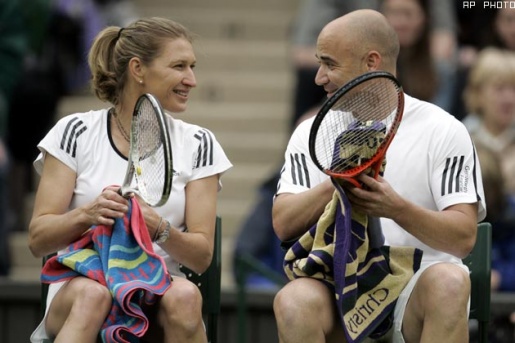
My friends look at me like I’m insane. But, what they are slow to catch onto is that a romantic partnership at its highest level – soul mates – has a lot in common with tennis. See, a successful doubles tennis team isn’t made up of two inexperienced, below-average tennis players who pair together. Rather, a successful double tennis team is comprised of two remarkable individual players, and when two such distinct individuals are paired, they surely form a winning team. Put simply, a team doesn’t create winning players; rather, winning players create a winning team – and it’s my obligation to evolve in the present toward creating the healthiest personal foundations possible for me to be in a life-inspiring relationship in the future.

But, too many people skip the “singles” step. You might say, rather than becoming an excellent individual tennis player, then partnering with someone of the same high skills, they think that simply partnering with anyone will make a winning team. And, it never works – not in tennis, and certainly not in love. As individuals, we must have established our own healthy identities in order for a partnership to work in the long term. I know, we like to think that “love conquers all” and “opposites attract,” but this rarely proves true over time. Instead, mutual respect and common understanding – where core values align, and we inspire each other, not overshadow each other – is where genuine compatibility occurs.

In real world practice, working on ourselves when single – or even when in a relationship! – is the surest way to lasting love, to truly connecting with a soul mate. If I strive to be the best individual that I can be – focused on evolving my emotional health, my skills as a parent, my career, my roles as friend, my place in the community, my spirituality – it sets me up to not just be a better person, but to be a great partner, a soul mate. Again, professional tennis players aren’t looking to partner with amateurs, so if we want to find true success in partnerships, we must first develop ourselves.

Interestingly, few people take this approach to finding love – that is, evolving as an individual before entering a serious relationship. I see it all the time with friends who aren’t focused on their own characters, but who just want “love” – a desperation as haphazard as grabbing a stranger’s hand and running onto the court at Wimbledon, and thinking that the fact that they’re “partnered” means success. Yet, it never does. Sure, they’ll fumble around for a while trying to make it work, but eventually they fail – and just like watching two people who can’t play tennis struggle and fail, it’s equally as obvious when watching two people “in love” struggle and fail. Sure, you can meet someone in a bar or other superficial means and try to make it work, but the odds of finding your true soul mate under such shallow pretense – such a lack of life-inspiring connection – is about as likely as finding a literal professional doubles tennis partner at your local honky-tonk joint.

So, here’s the real question: How do we grow in ways when single that will not only improve our lives and strengthen our characters, but attract those truly suitable to date, ideally finding not just love, but a soul mate?

The answer is, we live the life we wish, ideally to the highest standard. If we live the life we wish, we’re more than half-way on the road to finding a true soul mate. If we’re living to the standards we wish, that’s who we’re going to attract – and, even if we never meet that someone special, we’re more importantly living a truly fulfilling life. I love attending my daughter’s drama events; I love boating; I love traveling; I love Broadway shows; I love reading and writing; and I love charity events. Rather than sit home pining about how I wish I had someone with whom to share all of these interests, I’m out pursuing these interests by myself – and thereby increasing my odds of meeting someone with my same interests because we’re at the same places enjoying the same activities. If you want to meet someone who plays tennis, go to a tennis court! But, again, even if I never meet my soul mate – though, trusting that I might is an important part of the process – I’m still living a content, rewarding life. Living life to the fullest as an individual is the goal, and if love is found with another in the process, then it’s a double blessing.

In these ways, the single life fosters remarkable potential for us in both the present and future. It’s the chance to better ourselves through personal growth, allowing every opportunity to pursue the life we’ve dreamed, where we’re not hinging our ultimate self-fulfillment on a “relationship,” but on living life to the fullest of our individual capacities. And, what’s fascinating is that focusing on ourselves as individuals actually makes us better future partners, placing us in the amazing position to not fall into a relationship that we’ve “settled for,” but to actually discover the one that we’re “meant for.” See, when we’re emotionally healthy and embracing all that life has to offer, love doesn’t stop when we’re single – it begins.

This Dad’s Life

By Mark E. Smith

So, I continue on among the most remarkable paths of my life, a single, full-time father – or, as I like to put it, “I’m a 40-year-old single, full-time father with cerebral palsy, raising my 14-year-old daughter….” I love phrasing my life that way because it’s so absurdly over-dramatic, and what’s even better is that it pretty much sums me up as the last guy on Earth any woman would ever date. I mean, if you pull any part of that description out, it plays as a run-the-other-way alarm to any rational woman: A 40-year-old guy – strike one! A single, full-time father – strike two! A 14-year-old daughter (though, she is the best kid ever) – strike three! And, then add cerebral palsy – I’m out! Really, I’m the personal ad from Hell.

However, as over-dramatic as adjectives can make my life sound, the truth is, it’s anything but dramatic these days. See, much like my cerebral palsy isn’t the toughest of roads, neither is being a single, full-time dad. In fact, like my disability, being a single, full-time dad has directed my life in wonderfully grounded, content ways, where there’s a peace and joy in my life that I’m not sure I ever knew – and others may not expect.

The process of divorce, becoming a single, full-time dad, and all of the emotions surrounding it started out as little more than controlled chaos, where there was an initial physical shock to my life. While my marriage was disintegrating for years, my ex-wife still did everyday tasks like laundry and grocery shopping. So, upon her leaving, I was literally left with a pile of dirty clothes and an empty refrigerator, looking at my daughter, thinking to myself, OK, where do we go from here, kid? It’s just you, me, and one heck of a mess!

But, like any time when we’re on the ropes in life – scared, stressed, chaotic – the old standby to Just do something! came in handy. And, that’s what I did. I determined that the priority was to get our house in shape – clean clothes, and food in the refrigerator! – and go from there.

In the process, I learned that we can’t control everything (actually, I learned that a long time ago, per life!), so start small by controlling something. And, in such situations when we’re scared and life feels chaotic, simply finding control over one small aspect in our lives truly gets us moving in healthy directions.

For me, I started by spending a weekend cleaning my master suite while my daughter was at a friend’s slumber party. From there, I got a new bed, redecorated a bit, and got at least my “area” to my liking. I then had momentum to keep going through not just the house, getting all in order, but also addressing all of the emotions and realities that go with being a single dad.

And, it was insanely challenging, more so than most around me knew at the time (few knew the extent of the personal challenges that I was facing because, one, I keep my career and public life on track no matter what, and, two, because I just really felt the need to get my home life on track on my own, with utmost personal accountability). My mindset was, I don’t care what’s happened – it’s my sole responsibility to get things on track for my daughter and me, where I’m willing to tackle whatever it requires. (And, there had to be accountability on my part for the downslide of the marriage, as well — no, I don’t think I was the cause, but even in the best intentions, my codependancy and denial played ultimately destructive roles.) What occurred to me was that I wasn’t at an end, but a beginning – the opportunity to make things right, to get healthy in every way. I realized that when we’re in a bad relationship, we really don’t have much to lose – we’re already living in dysfunction, running on empty. However, once single – especially as a parent – we have everything to lose if we don’t get it right, as it’s truly our chance to live up to be all that we’re capable of being. (This realization especially hit home when I found myself at one point in my process of getting my personal life back on track, where I caught myself developing a relationship with a woman that clearly wasn’t in the best interests of my daughter and me [vulnerability, falling back into dysfunctional patterns, and ego can get the best of us at times!] – and I quickly recognized my poor judgement, hit the brakes, and put an end to it in real time.) Therefore, I wasn’t about to let any aspect of my life slip or any opportunity for improvement pass. I had to be accountable for the past, present, and future.

Every day, I got up long before dawn to get all of the morning chores done, dropping my daughter off at school, being at work by 7:30am. Then, I raced home after work to clean, do chores, grocery shop, run my daughter to her activities, and keep up on my writing, email, and after-hours work, getting to bed by midnight. And, for several months, I just kept going – 20-hour days – feeling like getting the house and our lives on track was a stress-filled, never-ending process. It was like the movie, Groundhog Day, where I went to bed every night hoping for some relief, only to wake up in the seeming blink of an eye the next morning, having to do it all over again.

Yet, I also knew from life experiences that when times are tough, short-term pain is a small price for long-term gain, that when you’re exhausted, you can’t slow down, but must actually speed up, even when you feel like giving up – and there was too much to lose to let even the smallest detail slip. Fortunately, as I had hoped, eventually each day got easier and easier, with the house – and our life together – dramatically in order. And, I could breathe. Finally.

What was poignant during the whole process was that my daughter and I weren’t just rebuilding our life; rather, we were rebuilding our life together. And, through nightly talks – which we call “check-ins” – we set-out to further define our life together, complete with our own mission statement: To share the joys of life, mutually respecting and inspiring each other as we go.

And, it’s worked – it’s all fallen into place. The scariness, stress, and chaos has been replaced with happiness, calmness, and tranquility. Weeknight evenings are no longer about surviving, but thriving, revolving around my daughter’s activities – singing lessons, drama rehearsals, and high-school football. And, I’ve mastered being Mr. Mom, balancing house chores with everything else that I need to do, keeping all on a schedule that allows comforting predictability and normality in our home life.

Every night, my daughter and I make dinner together – getting better at our cooking skills all of the time! – and we do the whole homework thing, keeping my daughter excelling in honors classes. Then, we always have some fun activity to share, from playing board games, to baking cookies, to listening to music, to editing each other’s writing. On the weekends, we’re off somewhere, doing something, enjoying life, the two of us, where the possibilities and adventures seem limitless.

As I’ve shared with my daughter, life isn’t fair, and there is a tragedy in the fact that her mother isn’t in her life. However, we always can make the best out of a bad situation, where at points in our lives we must choose to not crumble, but rise as the Phoenix from the ashes. And, we, together, have proven the title of the Hemingway novel on my bookshelf: The sun also rises.

Indeed, as a “40-year-old single, full-time father with cerebral palsy, raising my 14-year-old daughter,” I may seem every woman’s nightmare of a guy. However, when my daughter and I are curled up on the couch with our two dogs on Saturday nights, drinking homemade smoothies and watching the cheesy ’80s teen movies that we both love, I wouldn’t change a thing. It’s been a bit of an emotional trek getting here, but the journey has been well worth any trials, as for me, just being Dad continues proving the truest blessing of my life.

Alioto’s By The Bay

By Mark E. Smith

I just made my way back from the City by the Bay, San Francisco, where my whole family was born, where I went to college, where my daughter was born. And, my daughter was with me, 14 years old now, and I wanted her to see where it all began, especially following my mother’s recent passing. One might conclude that it was like going home; but, it wasn’t. Everything’s different now – Pennsylvania’s home, I’m a single father, my only roots left in the city are the train tracks upon which I used to ride to college.

But, one night at Alioto’s, a well-known restaurant on the water front, I ran into a couple, the only one’s at the bar – and they were clearly in love, sneaking kisses, rubbing noses. My friend and I were bold enough to ask their story, what brought them together? We learned she was 50, and he, 60. She was slender, blonde, professional – a business woman, I presumed. He, well, reminded us of Shrek – big belly and ears, exaggerated features. And, man, they were in love.

The couple told us of how they met at a conference, and she blew him off; but, then they met again, by chance, at a bar, and they’ve been together ever since. In love.

I asked what advice he had for the rest of us – their being so lucky in love – and he laid it out. “Look, life isn’t a trial run,” he said. “When you find something amazing like this, don’t hesitate, don’t let a person pass without loving to the fullest. There’s no time for fear or regrets.”

Life isn’t a trial run. It’s so simple but yet so many of us miss that part. In life, love, disability, whatever – grab on to what’s in front of you like there’s no tomorrow because there may not be a second chance. And, they – the couple at the bar – were holding on to each other, no trial run for them.

Sorry, Disability Ain’t the Issue

By Mark E. Smith

I was listening to the BBC disability-related talk show, OUCH!, a while back and they raised an interesting question: How often do you automatically attribute poor outcomes in your life to disability? For example, if you’ve ever been turned down for a date, did you automatically blame it on your disability?

Now, the OUCH! hosts, Liz and Matt, didn’t really explore the subject, but raised the question and moved on, per their fast-paced show. However, the subject remained with me because such thinking – …it was because of my disability – has been expressed to me by so many of my peers with disabilities when something doesn’t turn out the way they wish, and it’s always seemed like such an easy cop-out, hinged upon self-pity and shunning accountability.

An acquaintance with a disability recently requested my advice toward her job search. She was applying for jobs in a field requiring a minimum of a bachelor’s degree, with additional career certifications. She came to me frustrated that time after time, able-bodied individuals got the job, or she wasn’t called in for an interview at all – and she was convinced that it was all based on her having a disability, that she was being discriminated against by all. So, I asked to see her resume, as her story was quite compelling. To my surprise – based on how valid she expressed her concerns of discrimination – her resume told a totally different tale: She had an absolute lack of qualifications. She had no college education or certifications for the jobs she applied for, where if her resume came from anyone else, the human resources manager would just as quickly dismiss it. She blamed her inability to get a job on her disability, but the real problem was her resume – she was simply unqualified.

While injustice can occur based on disability, too often we use disability as a scapegoat in our lives, an easy pawn to shun accountability. Many of us know more than one guy who will swear that his wife or girlfriend left him because of his disability. In fact, if you ever run into a guy who uses a wheelchair who’s drinking alone in a bar, you’re almost guaranteed to hear such a sob story. And, in knowing couples who’ve gone through the process of disability, then divorce, such tales are true – the wife walked out on her husband with a disability (and, yes, men likewise leave women who become disabled). Yet, when you, as a third person, get a true glimpse into such failed relationships, virtually none failed directly due to disability, but due to extreme dysfunctions like addiction, emotional abuse, and a generally self-defeating attitude on the part of the person with a disability. In fact, a lot of times the disability factor causes the departing spouse to stick it out longer than she or he should have, not wanting to seemingly abandon the spouse “in a time of need,” whereas he or she would have left sooner if it was a non-disabled spouse who was such a mess. Yet, the person with the disability virtually never takes accountability, blaming it all on the disability, practically saying, Sure, I’m a pill-popping alcoholic, with no motivation, who hates the world, but she had no right to leave me just because I became paralyzed! Again, just asked the guy at the bar, he’ll tell you.

Of course, those who are single with disabilities can prove masters at blaming their disabilities for not finding love, conveniently overlooking every dysfunction in their lives. I have a buddy who I’ve known for ten years, and he calls me every few months with the same question: Why can’t women overlook my disability and love me for me?

And, on the surface it’s such a poignant, heartfelt question – but, my answer, not so much: You’re a 42-year-old, who’s never had a job, lives with your mom, plays video games all night, are 100 lbs. overweight, and your wardrobe consists of Twilight T-shirts and sweatpants. Disability maybe an issue for some women, but your overall lack of ambition is a problem for all women. If you have ten issues in your life and disability is one of them, address the other nine, and you’ll be 90% ahead of the game!

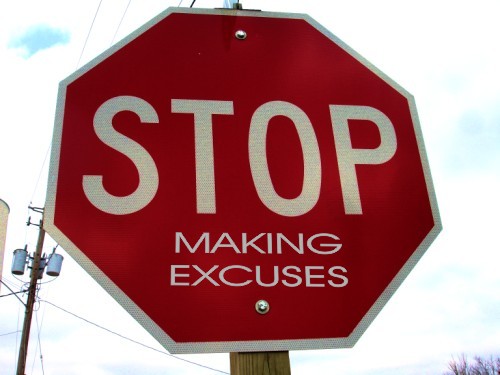
We know that discrimination occurs toward those with disabilities, and we likewise know that some are so uncomfortable around those with disabilities that they won’t accept us. However, those instances are few and far in-between. When we run into situations that don’t go the way we wish, we mustn’t blame disability by default, but analyze other areas of our lives with a possibly painful reality check. If I’m not getting jobs, is it because I’m not qualified? Did my spouse leave me because of my terrible behavior? Am I striking out in love because I have virtually nothing to offer someone? Then, when we answer such questions honestly, we know exactly what to work on to improve our lives and become better individuals. In many ways, taking disability out of the equation forces us to take responsibility – and that’s a life-bettering tool.

As for me, a harmless flirt, I get seemingly ignored by women all of the time. I suppose some could blame such rejection on my having cerebral palsy. However, in full accountability, I know the real answer: I’m just a creep. I need not worry about having cerebral palsy, but the creep in me certainly needs addressing. I really should work on that.

Peacock Feathers

By Mark E. Smith

The kid tells me that, at age 23, he’s bummed that he’s not scoring with chicks, that he thinks his disability is the hindrance. And, I tell him that, for the most part, he’s right. It’s evolutionary psychology, I add. Most people in their 20s are all about the superficial – peacock feathers attracting each other in the most primitive ways. But, you, my friend, have to be in it for the long haul, where you’re patient enough for the Scales of Justice to tip your way – and they will. Right now, these chicks are running scared on instinct, they’re looking for the stereotypical suitable ones – and that’s OK for the time being. They’ll find an average guy who’s attracted to them, and they’ll call him the one. Maybe he’ll have a high-school diploma or a bachelor’s degree, and he’ll have a secure but routine job, pulling in $30,000 or $40,000 per year. But, it won’t be perfect – not the guy, or his job, or any of it, the relationship. But, they won’t see that for a while – they rarely do at that age. However, at some point, the bills pile up on the kitchen counter, babies are born, and it’s hard to get ahead, even though she works, too. By 30, it’s all one big, daily reality check, dreams not fully realized but painfully dashed when contemplated. And, all over what? Peacock feathers when they were 23. But, you – you’re different. You’re not about peacock feathers or mediocrity in your 20s. You’re going to use this time to build your character, nail a Master’s degree on the wall, build an esteemed career, become a man of the world, where you’ll read Kafka, shave to Rachmaninoff, and visit Madrid, Paris, maybe Rome. And, when you’re 35 or 40, the Scales of Justice will absolutely tip your way. Women – not chicks – will admire you for your brilliance, and they’ll want to listen to you because you truly listen to them. They’ll be turned on by your ability to command a presence in a room, how others respect you, how you’re the kind of role model that a father should be – where it’s no longer about peacock feathers and disability, but that you can offer what few other guys can: A fascinating view of the world that she’s never seen.