
Learning to Love to Capacity

love

By Mark E. Smith

Currently, with tremendous strain, I can bench press 210 lbs. one rep. But, I don’t. Instead, three days per week, I bench press 120 lbs. 20 reps, then I drop to 100 lbs. and bench press another 20 reps. Guys all boast how much they can bench press one rep because it sounds impressive. However, it’s truly a specious exercise – they’re not building endurance or true fitness because they’re only doing it once, lifting beyond their real capacity. Me, I choose to lift less weight at higher reps because I want to build meaningful fitness to my genuine capacity.

It’s a lesson from the gym that’s even more important in our relationships. We should only represent ourselves to our truest capacities, as well as recognize the true capacities in our partners. Otherwise, relationships fail and people get hurt.

All of us mean well going into relationships. We put our best self forward and we see only the best in our love interest. Yet, it’s so easy to get caught up in that which we’re not. We want to be what the other person seeks, and we want him or her to be what we seek. And, it all works perfectly – that is, till we realize one or both of us are beyond our capacities. It’s like my bench pressing 210 lbs. I can do it once to impress, but I can’t sustain that level. If you want the real me, I bench press 120 lbs. really well.

In relationships it’s vital that we know our true capacities from the start, adhere to them, and truly recognize our love interest’s capacities. It’s just being honest, and when we do this, it dramatically reduces the odds of someone getting hurt.

Yet, it’s tough to do. It’s so hard because ideals don’t always align with reality. What we want in a relationship can be the antithesis of what we’re capable of. There are classic examples we all can relate with. Someone wants a relationship, but makes no time for it. Someone wants a relationship, but is emotionally still buried in a past one. Someone wants a relationship, but doesn’t have the emotional health to cultivate it. We’ve all done this, experienced this or witnessed this – and it only results in pain.

Bishop T.D. Jakes talks about the importance of realizing our capacities for love and how they vary based on who we are and what we’ve been through. He uses the metaphor that if we’re 10-gallon people looking to be filled with love, we’re never going to be filled by someone who only has an ounce to offer. By the same token, if we only have an ounce to offer, that’s fine, but let’s know that we can’t promise to give more than we have. There’s no right answer, just an honest one.

In this way, we must approach a relationship with accountability on our part, and clarity toward our partner’s capacities. We may want a certain type of relationship, but are we capable of it, and are we being honest and fair to our partner? And, are we able to view our partner with clarity, ensuring he or she is capable of the relationship?

The key to this is utter honesty and following our instincts. If we overextend our capacities in any way, it never feels right, and we have an obligation to stop it or, ideally, be authentic enough not to do it in the first place. Similarly, if our partner’s words are contradicted by actions or circumstances, don’t overlook that. Recognize each other’s true capacities and respect them because if you don’t, someone will get hurt.

Now, this isn’t psycho babble or new-age psychology, but common-sense life experience. I’ve been on both sides, as many of us have. I’ve tried to be someone who I wasn’t, and it didn’t work. And, I’ve overlooked signs in others that I shouldn’t have. There was no ill will in any of it, just intentions wishful beyond our capacities. What I learned in the process, though, is that there’s ultimate joy in being authentic in acknowledging both our own true capacities. Maybe the relationship will reveal itself as soul mates or prove unrealistic. It’s the variables of love. But, the beauty in being authentic in our capacities is that we have the honesty, authenticity and courage to just be us.
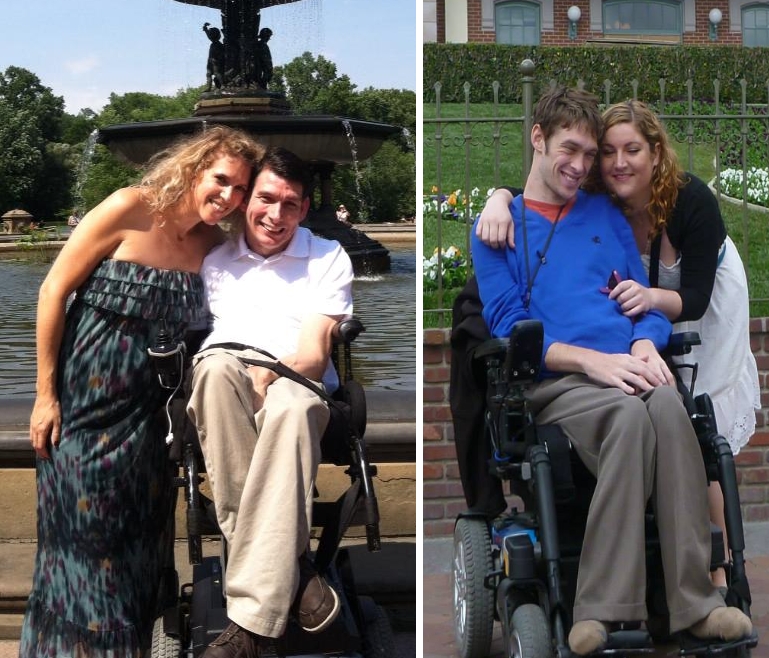
Zach And I Are In Love

Holly & Mark / Gillian & Zach

By Mark E. Smith

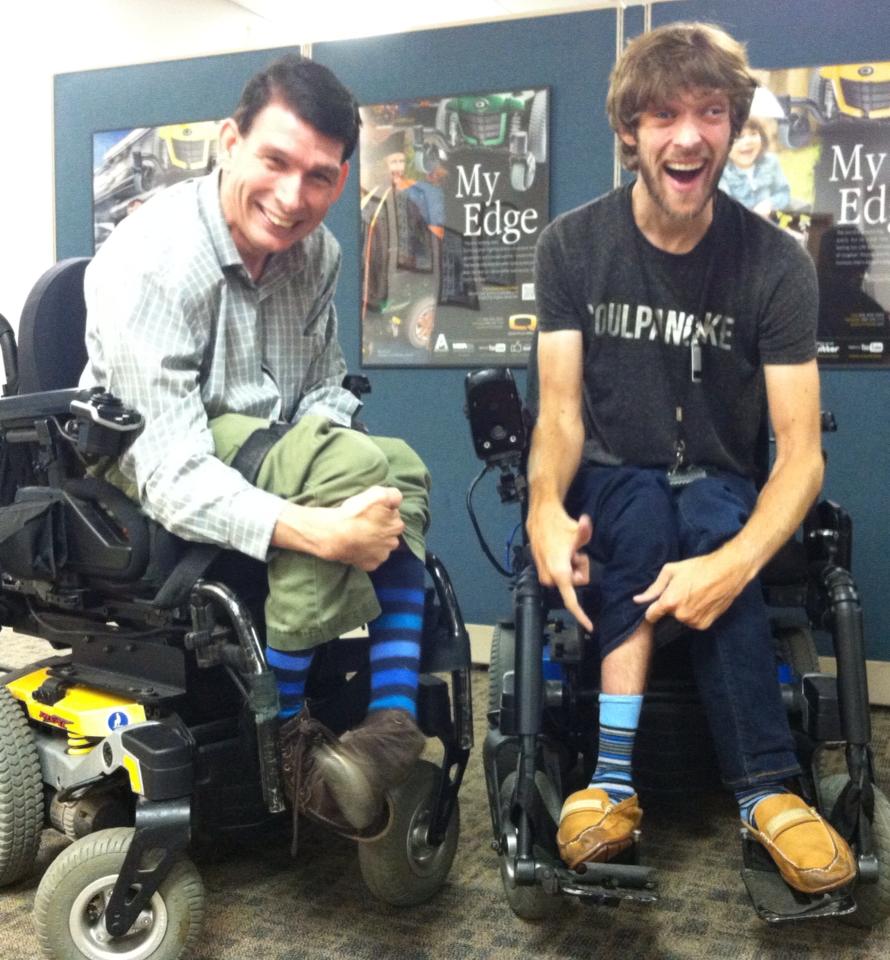
It’s official: Zach Anner and I – the two most eligible men with cerebral palsy in America – are in love.

Now, when I say that Zach and I have been the two most eligible men with cerebral palsy in America, what I really mean is, we couldn’t get dates if our lives depended on it. And, while we were tempted to date each other out of pure complacency, it turned out that waiting for the two most beautiful women in the world to sweep us off of our feet (which, let’s be honest, isn’t hard to do when we’re not on our feet to begin with), turned out to be a better idea. I should clarify that we weren’t both waiting for the two most beautiful women each, which would equal four women in total and would be really weird and a TLC reality show, but one amazing woman each. And, we scored!

In an uncanny twist, about 10 months ago, Zach and I started falling in love – with two separate women, not each other! – in Southern California. And, amazing women they were (they, of course, still are amazing, even more so, but I’m trying to keep my tense straight). Zach’s beloved Gillian is an internationally-known singer-song writer, and my beloved Holly is an artist. Both women are creative, witty, caring souls, who’s personalities truly radiate at a tangible level. Their depths of character range from funny to empathetic to being up for all that life has to offer. So, how did Zach and I ultimately get so blessed with such amazing women?

Cerebral Palsy. Fellas, trust me on this one. Forget the cheesy pick-up lines, fancy cars and medical degrees. All you need to attract a woman is cerebral palsy. Even if you don’t have cerebral palsy, say that you do. You can have a Ferrari and medical degree, but unless you tack cerebral palsy on the end, you don’t have a chance. Why? Because every woman knows cerebral palsy is where it’s at.

Of course, cerebral palsy has nothing to do with Zach and my finding love. The truth be told, we know the real secret to our finding the two most amazing women in the world: We’re just ourselves. What makes Zach and me who we are is just that – we’re happy as we are, cerebral palsy, poor posture, twisted senses of humor and all. And, with self-acceptance comes a confidence and comfort, where we have the ability to laugh and love and embrace life with an enthusiasm that’s contagious. We’re easy to love, but we equally love easily, where we know that vulnerability is a strength, empathy is a gift, and a true lover is also a best friend.

If you want to be loved for you… well… just be you.

Awesome socks don't hurt, either!
Awesome socks don’t hurt, either!

Times of Need

timesofneed

By Mark E. Smith

For most of us, we’re far more comfortable giving than receiving. Yet, giving and receiving must be equally embraced if we are to truly have healthy, reciprocating relationships. Just as we strive to love and support others in their times of need, we must welcome their love and support in our times of need.

Now, I know it can be hard, where pride and ego can make it very emotionally difficult to receive in times of need. If you’ve been the bread-winner in your family, and your in-laws want to pay your mortgage because you’ve been out of work, that may be a difficult gift to receive. If you have a disability and your spouse wants to help with your daily care, that can be a difficult gift to receive. Or, if you’re a single parent and friends wish to watch your children to give you a break, that can be a difficult gift to receive. The examples go on and on, and I’m sure that you can think of examples from your own life where you’ve emotionally struggled with receiving from others on some level. However, here’s the heartfelt truth: when others offer to support us in our times of need, they do so out of love, and if we – again, out of falsities of pride, ego or embarrassment – reject their support, it will almost always be interpreted as some sort of rejection of their love. What’s more, in an intimate relationship, if we are always striving to be there for our partners, but won’t allow them to be there for us, it can be like slamming an emotional door in their face – and the inequity created will destroy the relationship. The fact is, love isn’t just about giving, but receiving.

One aspect of my life is that I can aspirate in my sleep, a very dangerous condition. Fortunately, due to preventative measures, I keep it under control, and when I do awake aspirating, I’m able to roll over and sit up, literally saving my life at times. Unfortunately, because my lungs fill with fluid, I become extraordinarily ill for 10 to 12 hours, with a 102-degree fever, till my lungs clear. As you might imagine, this can be really scary for my partner. Therefore, in wanting to protect her, I wouldn’t wake her up when it happened. In the morning, however, she’d become upset with me, knowing that I aspirated but didn’t wake her up. However, she wasn’t upset out of anger but love. When our partner is sick, we want to be there for him or her, and through my stubbornness, I wasn’t allowing her to be there for me. Not only was I wrong by robbing her of peace of mind – as she wanted to be immediately aware of the situation so she could help – but I also wasn’t fostering a reciprocating relationship. I wanted to give, give, give to her, but indirectly, I wasn’t fully allowing her to give back in among my times of need. That was painful for her to experience, and lousy on my part by thwarting reciprocation in our relationship. As a result, I became much more respectful of her concern for me, letting her know when I aspirated, allowing her to care for me. If we are to truly love someone, we must let him or her truly love us in our times of need, as well.

See, in loving, the one aspect we wish most is peace of mind. We want to know that those we love are healthy, safe and secure. The same goes for those who love us – that is, they want to know we’re healthy, safe and secure. And when we don’t allow others in, it causes them stress, anxiety and heartache. Letting others be there for us, as we wish to be there for them, offers peace of mind to those we love – and that’s one of the most humble yet powerful gifts we can give.

I discussed this overall subject with my sister, and she replied that it takes tremendous humility to allow others to be there for us in our most vulnerable times of need. And, she was right. We must let down our guard and inherently trust that those wishing to be there for us do so out of unconditional love and respect, and we should never interject insecurities into the dynamic. If someone wishes to assist you out of love and respect, allow him or her, as it’s a testament to your character, too.

Ultimately, no one gets through life alone. When we’re fortunate, we have the opportunity to love and support others in their times of need. However, let us not forget that love is reciprocation, and we must allow others to likewise love and support us if we are to have truly healthy relationships. Therefore, sometimes the greatest gift that we can give someone we love is the sincere opportunity for him or her to love and support us in return – especially in our times of need.

Learning to Hold Hands

holding-hands

By Mark E. Smith

We’ve all known the phrase, It’s better to give than to receive. And, I can tell you that there’s a lot of merit to it. I know that for me, realizing that I’ve made a difference in someone’s life is exceptionally rewarding. I do right because it’s right, and I certainly don’t expect anything in return. But, it feels really good to know that I’ve supported someone’s efforts in a situation that I can relate to, assisting out of respect and appreciation for him or her.

Yet, there’s tremendous merit to receiving, too – and, as a culture and individuals, we do a horrible job at it. Nod your head if you’ve ever felt awkward, undeserving or guilty upon receiving. I’m nodding my head with you! Maybe it’s been something as simple as allowing a friend to treat us to lunch, or as profound as receiving love from our partner. No matter, we can struggle far more with receiving than giving – and we need to resolve that in each of our lives before it takes its toll. The fact is, a sure way to self-sabotage ourselves in ways ranging from subtle guilt to destroying important relationships is to not feel comfortable or worthy of receiving from those who care about us.

As a child of alcoholics, I wasn’t raised to receive. If you’ve ever been around any sort of addict, you know that the nature of addiction is that it’s fed, including by family members, where you’re on the hook, so to speak, to give, give and give, to a disturbingly unhealthy degree. And, in that process, you either never learn to receive or you lose your ability to feel comfortable receiving – and that happened to me. I never truly learned to receive graciousness, care and concern from others. And, it led me to feel unsettled later in life when others, with absolutely pure intentions, strove to give to me, where my emotions ranged from uncomfortable to guilt and shame. One area of contention in my life that I take ownership of is that in the past, I struggled to allow others in my life to physically assist me in my daily needs due to my disability. And, it frustrated and hurt some around me. At times, those close to me wanted to assist me with certain aspects of my everyday routines out of love and appreciation, and I didn’t know how to receive that. I knew how to give, give and give, but I didn’t know how to let others support me, I didn’t know how to receive. And, so rather than receive, I chose to struggle physically and emotionally, sometimes self-defeatingly pushing people away.

However, it was my daughter and my ultimately being a father that taught me to receive. I mean, when your 4-year-old makes you an “I Love You, Daddy” card, how can you not soak that in to the depths of your heart and receive such an unconditional act of love? As a result, I’ve had the blessing over the last 17 years – and, it’s been a learning process! – of knowing the joy of receiving in so many amazing ways, including unconditional love.

Of course, in the process of raising my daughter, I’ve done a tremendous amount of giving. After all, that’s what we do as parents – that is, we give to our children in the purest ways possible, putting them before ourselves, period. Yet, that form of giving has also been a life-changing experience for me because it’s stemmed from the healthiest of places – the heart – a complete contrast to where I gave to addicts as an adolescent out of a skewed sense of obligation, guilt and inappropriate placements of responsibility upon me.

All of this has led me to among the most profound life lessons that any of us can carry. Relating with those close to us isn’t about giving or receiving, after all. Rather, relating with others around us is truly about reciprocation. See, if we’re going to have the healthiest relationships, we must give and receive. What’s wonderful is that this doesn’t mean we give and receive in the same ways, but that when we do for others, we’re comfortable with them doing for us in different but no less meaningful ways. See, reciprocation is about the sincerity of the emotion itself, not its product. I’m 43 and my daughter is 17, so obviously we have very different needs and different abilities to offer. Yet, while I make every attempt to meet her needs, she equally strives to support mine. I may surprise her with a gift that she’s really wanted, as I have the ability to buy it; whereas, she may surprise me with a home-cooked meal. We have a constant volley, where we both intuitively support each other, reciprocating in different but sincere ways. This principle applies not just to parent-child relationships, but all relationships. If, with our romantic partners, we let down our guard and truly know that we’re worthy of not just giving, but receiving, as well, our relationships – and our hearts! – will flourish because nothing is holding us back from loving and being loving.

Giving to others in the most unconditional spirit truly is rewarding. However, it’s heartwarming and soothing to the soul to likewise receive from others. Let us give, and let us receive. Most of all, let us reciprocate, where, together with those we care about, hands hold hands.