No More Second Chances

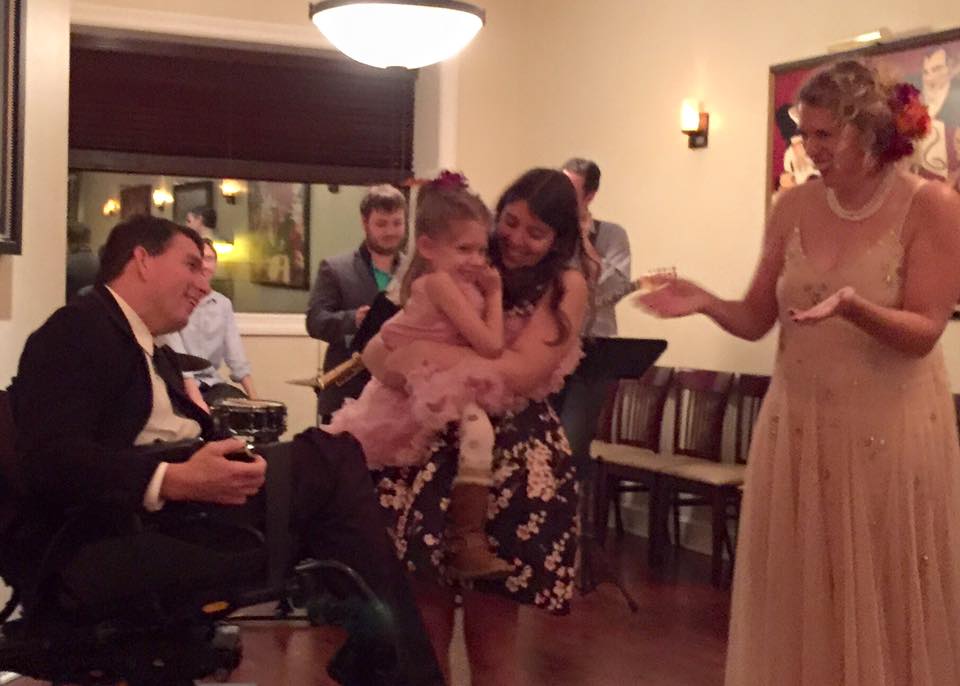
Smith Wedding Reception, October 10, 2015

By Mark E. Smith

On the surface, my life is one of second chances. In fact, from the moment of my birth, not breathing, resuscitated, then given only hours to live, my life started with a second chance.

As my life went on, second chance after second chance all but saved me from countless perils that could have stopped my life in its tracks. I went from lying on therapy mats in a special school to being mainstreamed in public school; I went from virtually no mobility to having a power chair; I went from moving into a garage to moving into my stepfather’s home; and, I ultimately went from not having a father to being among the most dedicated fathers myself. Indeed, if it wasn’t for second chances, my life would have derailed at so many points.

However, now at mid-life, my experiences and insights have allowed me to realize that second chances don’t truly exist beyond cultural mythology. Life doesn’t offer second chances. We can’t erase where we’ve been, we can’t change what’s happened, and we certainly don’t get do-overs. No, life is a journey, a linier equation, where all that we’ve experienced shapes who we are, where we are – the painful times, the prosperous times, the losses and gains, the tragedies and triumphs all serve a masterful purpose.

The notion of second chances suggests that the firsts were an error, not meant to be. Yet, without whatever came first – the tragedies, the mistakes, the failures, as commonly labeled – we could never have what came next, we could never continue on the journey that makes our lives… well… our lives. And, when we remove the notion of second chances from our beliefs, and value all aspects of our life as a linier journey, it gives meaning to all, turning even the most painful parts of our lives into purposeful, into having reason, into healing and success.

See, if we don’t look at life as second chances, but rather as what’s meant to take time to unfold and come to fruition, it’s impossible to be bitter, resentful or regretful of the past. Instead, we become intrinsically thankful not just of where we are, but likewise where we’ve been. Sometimes life’s journey is not to be questioned, but lived.
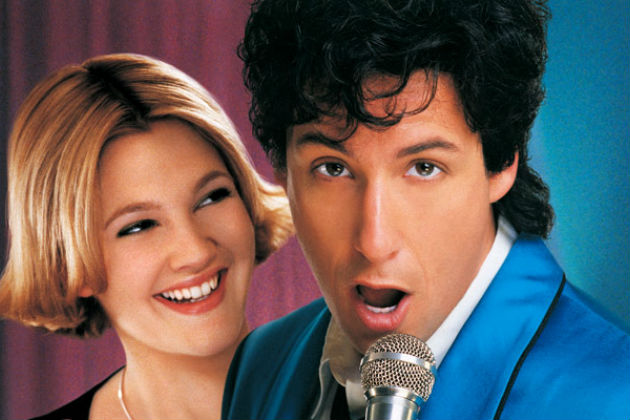
Now That’s Sexy

The-Wedding-Singer

By Mark E. Smith

Let’s talk about sexy! This conversation started for me about a year ago when I asked my lifelong best friend – both of us wheelchair users – about whether he was observing what I was: there seemed a sudden shift where many of our peers with disabilities were now in amazing relationships. “When did disability become the new sexy?” I asked.

There have always been cultural stigmas around disability and sexuality – the most historic and inaccurate being that those with disabilities are asexual, that sexuality doesn’t exist within the disability realm. Further adding to this is the totally inaccurate message in society at large that physical perfection directly correlates with sex appeal – that is, the better looking you are, the more sexually desirable you are.  Now, we know in our progressive culture that neither of these are true. However, here’s the question: if we know that imperfect physicality doesn’t deter sex appeal, what then actually drives sex appeal?

The science is in, and the results are encouraging for the 99% of us who aren’t supermodels. While most might say a big bosom or bulging biceps are what people find sexy, the true factors are far more complex and equalizing according to researchers.

Firstly, people find integrity sexually appealing – which makes sense because healthy people aren’t attracted to those who aren’t forthright. The deeper the trust, the purer the attraction.

Secondly, people find a smile and eye contact totally sexually appealing. Admit it, when you’re checking out at the grocery store and the checker glances up at you with eye contact and a smile as he or she runs your V8 juice across the scanner, you’re like, “Was that a flirt?” and it feels awesome. So, imagine when someone at a cocktail party smiles and makes eye contact from across the room – that’s hot! And, if you’re the one doing it, you’re hot! And, if two of you are doing it with each other, it might be time to find a closet – the coat closet, that is, where you can exit the party and go have great conversation over coffee (what did you think I was implying?)

Thirdly, wit and humor are huge turn-ons. Wit and humor make us fun, engaging, grounded, disarming, comfortable and charming. Seriousness is like rain: it’s great as needed, but you don’t want to live with it every day. Wit and humor is the warmth and sunshine that draws others to us.

Fourthly, intelligence is seen as very sexually appealing. Intelligent people both make us feel more secure and stimulate us mentally and emotionally – and that’s sexy. People who demonstrate poor judgement aren’t those who attract others. Act with intelligence; be sexy!

Fifthly, compassion is exceptionally sexually appealing – it ties into deep biological reproductive drivers, where we’re compelled toward people who nurture. It’s a huge turn-on when your partner recognizes and addresses your needs, and you, his or hers.

Last, but not least, people find confidence ultra sexy – bring in the alpha! Now, arrogance shouldn’t be confused with confidence. There’s nothing sexy about a narcissist. However, confident people are cool, calm, collected, in control, comfortable in their skin – and who isn’t attracted to someone with such composure? Just be you; that’s confident and that’s sexy.

Now, the fact is, I haven’t shared anything that you don’t know – and researchers on this subject aren’t rocket scientists. Yet, it proves a powerful point for all of us: sex appeal ultimately doesn’t stem from the body, but the brain. And, if your brain demonstrates integrity, knows how to flash a smile, can make someone laugh, demonstrates intelligence and compassion, and is absolutely comfortable in who you are, well then you are exuding sex appeal wherever you go, a love magnet!

Did I just catch you smiling at me?

Three Words

Here_I_Am

By Mark E. Smith

The ultimate liberation of the spirit comes when you look into the mirror, realizing that you can’t change who you are – based on any number of factors totally beyond your control – and you just say to the world with pride and contentment: Here I am….

Sunsets and Rooftops

perch

By Mark E. Smith

Sometimes our pasts, presents and futures collide all at once – and for a moment we see how it all makes sense.

I’m at Perch, an insanely hidden but outrageously hip rooftop patio bar and restaurant atop a skyscraper, with a 360-degree view of Los Angeles. It’s like walking onto a terrace party on Manhattan’s upper east side, only I don’t know anyone. But, they all are fashionable and laid back, sitting in upscale patio chairs around fire pits – 65 degrees in L.A. is cold, even for me, an east-coaster.

I’m with my fiancee, my soon-to-be step daughter, and my fiancee’s high-school friend, Deb. Deb is so down to earth and grounded that you’d never know she’s an exec with AE Sports, the video game giant, and her husband is some sort of brand manager for Aston Martin in Beverly Hills. I ask Deb if she knows of Magnus Walker, but she doesn’t, so I just tell her he’s a crazy Porsche guy in L.A.

The L.A. skyline at sunset is stunning. As spectacular as the ridges of the Grand Canyon, the surrounding skyscrapers create reflections and shadows that make it all appear beyond man-made. I just take it all in, and wonder amidst the beauty of it all – the rooftop, the sunset, the view, L.A., my fiancee – how’d a guy like me ends up here, at this place, this moment, this point in life where I feel blessed in so many ways?

Earlier today, I worked a big consumer trade show. While returning from lunch, I ran into my ex-girlfriend who I hadn’t seen in 24 years. We were so young when we dated, and when we broke up, I was crushed. There’s fragility to a young heart, and I just couldn’t make sense of the breakup. But, then I met who would become my wife, then we had my daughter, grew my career, moved cross country, built a very prosperous life, got divorced, raised my daughter on my own and just strove to live right by all. That first breakup turned into just good memories from my youth.

As I chatted with my ex-girlfriend, it was a very touching moment, no weirdness or awkwardness. Through the wonders of Facebook, we’d both known where each had traveled in life, and we both were genuinely happy for each other. It was sort of like just smiling at how far we’d both come. And, after a hug and a picture, we parted ways, she going to catch a flight home to her husband and daughter, and me, back to my company’s booth.

And, so as I sit on this L.A. rooftop, I look out at the sunset over the Pacific and flash back over those 24 years – my beloved daughter having turned 18 just a few days ago – and the question of how I ended up in this breathtaking spot, at this exact time, answers itself: despite the twists and turns, life always leads us to where we’re supposed to be.

The Ten-Percenters

marriage

By Mark E. Smith

Whenever I meet couples who’ve been married for several decades, I always ask them what’s their secret to a successful marriage?

“You need to weather the storms, the peaks and valleys,” they all essentially note. “You need to compromise and be willing to stick out the tough times. Love will pull you through.”

Interestingly, people always elude to how difficult marriage is, that to make it work, you have to be “too stubborn to quit,” as a gentleman told my fiancee and me on Valentine’s day.

However, while toughing out the bad times and being too stubborn to quit will keep any couple together, is that what anyone really wants in a marriage?

Out of every couple I’ve spoken with over the years, not one has ever told me that the success of their marriage has been due to mutual respect, unwavering trust, and sustained passion. No one’s ever said, “We constantly inspire each other….”

Respect, trust, passion, inspiration — why aren’t these the tenants of decades of a successful marriage? Why are couples accepting “toughing it out” as the key to marriage?

We live in a society with a fifty-one-percent divorce rate, and those who remain married are deemed successful. But, if your marriage is lacking respect, trust, passion, and inspiration, that’s not a success by any stretch.

Interestingly, if you look at the top reasons for divorce – communication breakdowns, infidelity, substance abuse, financial woes, lack of physical intimacy – they all go back to couples violating the four core values I note: respect, trust, passion and inspiration.

All of this leads me to a provocative question: where is accountability in relationships and marriages? There’s no magic to what makes a marriage a dream, a nightmare or a form of merely co-existing in-between: the two individuals’ behavior. Disrespect, infidelity or substance abuse don’t just randomly appear – pathology or not, someone makes the decision at some point to go down such paths. Again, marriages don’t mysteriously self-destruct – one or both partners pulls the pin, so to speak.

However, If you maintain respect, earn trust, fuel passion and foster inspiration, you’re guaranteed to live the most fulfilling life together. On the other hand, if you’re disrespectful, violate trust, defeat passion and uninspire each other, you’re doomed – either to a dissatisfying marriage or divorce. Go ahead and justify being in an unsatisfying marriage all one wishes – kids, money, being too stubborn to quit – but the goal should be living as a truly happy and passionate couple, not simply avoiding divorce. Again, there’s accountability where, as a couple from day one, over decades, you don’t justify or settle for poor behavior, but are dedicated to a lifetime of unwavering respect, trust, passion and inspiration.

Now, I may sound like an idealist, one who doesn’t know the challenges of marriage. To the contrary. I’ve known not only the challenges of marriage, but more so the opportunity within marriage to live to a higher standard. No, I haven’t been willing to accept disrespect, distrust, a lack of passion or inspiration. I’d rather be healthy and happy than in a dysfunctional, relationship. Yet, even more so, I’d rather share a life of respect, trust, passion and inspiration with my soul mate.

I know that some may see my relationship aspirations as unrealistic. I see them as accountable – and unquestionably possible. Of course, if everyone took my hard line toward love, that we shouldn’t compromise core healthy behavior and stay in dysfunctional relationships, the divorce rate might push 90%. But, the 10% of sustained marriages would be blissfully happy, living and loving with unwavering passion and ultimate security. I say, don’t settle, don’t compromise your marital happiness – and find yourself in the right relationship as a ten-percenter.

Gravitational Pulls of the Soul

past

By Mark E. Smith

Bishop T.D. Jakes says, “When you hold on to your history, you do so at the expense of your destiny.”

Have you ever lived those words or known someone who has? Many of us have seen the impact of such an emotional and mental paralysis that comes from holding on to a painful past – and some of us have lived it.

My history, which I’ve talked and written about extensively with the hopes that sharing my story will help others, is a bleak one. And, I literally had to let go of my history to get to my destiny, which has included sharing my story. However, it wasn’t easy, and when I spend time with those who are struggling to let go of their histories – those with acquired disabilities still longing for the ability to walk, those who were abused as children still harboring shame and self-doubt, those who’ve had their hearts broken, pining for that lost love – I know how hard it is to let go of that history to move on to one’s destiny. To make it even tougher, our histories sometimes have a way of holding on to us, where we continue encountering reminders of that which has caused us so much pain. So, how do we let go of our histories and move on to our destinies?

For me, it was a long process that allowed me to break free. It’s not like I don’t have memories or emotional scars. Those never go away. But, the pain of my past ceased effecting my daily life and allowed me to truly live my destiny when I found myself finally free of my painful history, where I had solitude within and could simply enjoy the life I’d striven to build. I’d liken it to the gravitational pull of the Earth from space – the force will always be there, but the farther we get from it, the less effect it has on us.

I remember being in the throws of my dysfunctional family in high school, knowing that simply graduating would move me a single step forward from my family history of a lack of education. Then, I knew that graduating college would move me a next step, the one from my family history of poverty. Then, I didn’t have a drink of alcohol until I was 33, knowing that I was healthy enough in my behavior to move beyond my family’s history of addiction. Yet, history can sneak up on us, and when I realized I was married to an addict and I didn’t want my daughter to have that history burden her – though it certainly did, has and will – I had the courage to end that marriage to again pull myself and my daughter farther from my history. At one point, I physically moved across the country, both for my career and to get farther away from my history – so I could live my destiny.

See, moving from our histories to our destinies is a lot of work – it’s being entrenched and digging our way out. It takes awareness, desire and patience. It takes knowing that where we were, isn’t where we belong. But, more than any other factor, it takes knowing that we have the power to move our lives wherever we wish, including far, far away from the gravitational pull of painful histories holding us back. We may not have controlled where we were, but we can control where we’re going. No, it’s not an immediate change, but through many individual, conscious decisions day-by-day, over months, years and even decades, we can let go of our painful histories and shift the tide, where our destinies become the gravitational force in our life.

As you read this, I don’t know what you’ve been through. Yet, I know that you are more than your history. We all are. You may long for the ability to walk again, but you have the power to set that pain aside and literally roll a wheelchair toward the life of your dreams. You may have had a horrific childhood, but you have the power to claim a life of solace surrounded by safety and love. You may have had your heart broken, but you have the power to entrust it with that special someone who proves as your true soul mate. You have the power to release your history – step by step, let it go! – and live to your destiny. None of it’s easy. However, destiny calls each of us to let go of our painful pasts and embrace our dreams. Once you allow yourself to be pulled by the gravitational force of your destiny… well… you’ll experience joys in life you never imagined.

The Most Human Experience

empathy

By Mark E. Smith

Much of my life is spent around those like myself who have physical disabilities. And, because I have faced adversity in my life, many have turned to me for understanding, reassurance and comfort. After all, if you look at me – body twisted, spastic in my power wheelchair – I personify adversity.

Yet, while I know of my adversities – and, yes, some components of adversity are universal – I can never fully understand someone else’s adversities. While two individuals may even have the exact same disability, condition or other life circumstance, what I’ve learned over decades of sharing stories of adversity with others is that no two experiences are the same.

This raises several intriguing questions. Firstly, if no two experiences are the same, how do we meet the innate need for connection with others in the face of adversity? And, secondly, how do we support others in their times of adversity when we haven’t had the exact same experience?

The answer to both these questions is a singular one: empathy. Empathy is an amazing human capacity because it allows us to connect with others on the most genuine levels, where it’s not about relating to an exact circumstance, but truly relating to the person who’s experiencing that circumstance in his or her own way. So, you may wonder, how have I done that in my own life? After all, I was born with cerebral palsy, so how can I relate with a mother who was able-bodied till age 36, then paralyzed from the chest, down? Yes, they’re both disability experiences – but vastly different.

The first interpersonal connection I make is to try to best understand the other individual’s perspective. I mean, can you imagine what it emotionally and psychologically feels like to be the nurturer and caregiver to your children and spouse, and now you’re physically unable to fulfill those roles in many ways? I know, we want to swoop in and rescue and say, “As a mother and spouse, you’re more than your body, and everyone views and loves you just the same.” And, it’s true – but that’s not empathizing with the person’s real, valid emotions. I’ve said in this exact situation, “I can imagine how difficult it is to have gone from the caregiver to needing caregivers. That’s a harrowing life transition. How are you dealing with that?” When we approach others’ adversities by letting them know we’re striving to see their situations from their perspectives, it creates true connection and validation – invaluable aspects of empathy.

This leads to the other aspect of empathy: being truly present in the other person’s time of adversity. No, I don’t know what that recently-paralyzed 36-year-old mother is literally going through – I’ve never experienced it and no one has ever been in her exact circumstance, either. However, I’ve made it through harrowing times in my life and there’s common humanity in that. And, so there’s the remarkable ability to quietly relate with someone, not on a circumstance level, but a human level. This is a scary place. I know scary places, so I’m just going to hold your hand as you move through it.

In these ways, through my decades around disability – both in my profession and in my personal life – I’ve learned a lot about being there for others. Empathy isn’t about having gone through an exact experience. Rather, empathy is about striving to understand another’s perspective and embracing him or her as-is, wherever he or she is in the midst of adversity. If we do that, we navigate toward the most uniting experience of them all: shared human experience.

Kevin

2014100395201914

By Mark E. Smith

As he spun on the salon chair, his joy was contagious. No one else his age, 20s, would dare spin on the chair, hands thrust in the air, yelling, “Woohoo!” but he did. Most of us would be too self conscious, too restricted by social norms. But, his authenticity allowed him to do what we’d all love to do – that is, follow our unbridled enthusiasm. Yes, he was different from the rest of us, and we were all a little jealous.

He stopped spinning for a moment, looked at my 17-year-old daughter and waived, flashing a big grin.

“I’m Kevin,” he said.

“Hi, Kevin,” my daughter replied from her seat along the front window. “I’m Emily.”

“Emily, watch…,” he replied, spinning some more, hands in the air.

He spun, and he spun, and he spun until his mother and father pulled him from the chair.

“Bye, Emily – I’ll call you,” he said, putting his hand to his ear in a telephone gesture, and we all giggled at how adorably unabashed he was, moving toward the door.

As he left, I glanced at my daughter and soon there was a knock on the window behind us. We looked, and Keven blew Emily a big kiss, promptly dragged away, smiling, by his mom.

I was immediately struck with the thought that whoever defines intellectual disabilities has it all wrong. I realized that there were a lot of us with intellectual disabilities in the salon that eve, but Kevin wasn’t one. He followed his enthusiasm, lived with an uninhibited heart and wasn’t afraid to extend love to others. Few of us could say the same.

Me Being Me

1412359724784

By Mark E. Smith

At 43, I’ve had my challenges in life, but with a mix of hard work, the support of others and luck, I’ve been privileged to have accomplished a bit, from fatherhood to a pretty cool career. Nevertheless, someone asked me what my ultimate dream is from here? My answer could have been related to a next career challenge or maybe a materialistic goal like a lake house. However, none of that’s the case – its all too easy, too meaningless in ways. My answer from the depths of my heart was, “I just want to be me.”

Assuming that we’re healthy, productive, loving individuals, isn’t that our ultimate dream: to not only be free within to be ourselves, but to be truly embraced for who we are by others? How many of us have felt at times that for any number of reasons – a work environment, a relationship, family expectations – we couldn’t just be ourselves? Maybe it’s a seemingly huge issue like if your family knew you were gay, they’d disown you. Or maybe it’s a seemingly small issue like someone correcting your grammar. Or, somewhere in the middle, where your love interest wants to change something about you. All of these and countless other examples prevent you from being you, and it’s painful and it’s isolating – and I’ve been there.

I had a cute conversation with a buddy of mine. He shared with me that if he could find a woman who loved comic books as much as he does, she would be his soul mate. See, he’s had girlfriends in the past who’ve ridiculed him for collecting comics, so finding a woman who loves comics would be a dream come true. Yet, that’s not truly what he needs, is it? He doesn’t need a woman who loves comics; rather, he simply needs a woman who loves him for him, comics and all. It’s what we all want and deserve: to be loved as-is.

And, that is an epic battle of the heart for many of us, where we just want to be rightfully loved as-is, where we’re perfectly imperfect and nothing about us needs to change to fit in or be loved. We just need to be us and be loved on that merit alone.

Unfortunately, others may not get that concept and so it’s up to us to set the standard and set the boundaries. I genuinely love people, and there’s nothing I enjoy more than a great conversation. I don’t care who you are, what you look like, or how you live. Assuming you’re doing right by others, I don’t want to change anything about you. I just want to know the real you.

It’s this way of embracing others that I more and more expect in my own life. Regardless of the situation, I’m just going to be me as authentically as possible. I don’t need to prove anything or be anything – I just need to be me. And, when I’m not good enough for someone or criticized for just being me, I’ve developed the strength to put the onus back where it belongs – on the person doing the pointing.

I am me, you are you, and for anyone who wants to see flaws in us or seek to change us, well, we need to hand him or her a mirror and go about being just who we are: perfectly imperfect, as-is.

Really Skilled at Sucking

nike

By Mark E. Smith

Imagine spending years running alone. Per your pace, you’ve gone from a 30-minute walk of a mile to running a 15-minute mile. That’s quite an accomplishment.

But, then, you get a running partner, and that running partner runs a 6-minute mile. What would you realize in this process?

For me, I’ve realized that this is my life and I’m really good at being really bad at much of what I do. I suck, and I’m proud of that fact. You can’t suck at as much as me without a lot of hard work and determination.

See, for years now, it’s been just my daughter and me in our home, where I live as independently as possible with cerebral palsy – and I’m pretty good at it, moving along at my own pace. A lot of it takes time and tenacity, but so be it. I’ve always looked at my independent living skills as the result, not the effort. I don’t care what I have to do as long as I can accomplish the task.

However, now I have a running superstar by my side – my beautiful fiancee – and it’s made me realize that I’m really good at being really bad. A task that takes me, say, 10 minutes on my own, takes one minute with her helping. And, for the most part, I’m secure and appreciative of her helping because I equally contribute to her needs in other ways.

Nevertheless, we’ve had an ongoing dialogue about how beyond my neanderthal stubbornness, she’s raised good points that just because I can accomplish a task doesn’t mean I do it the easiest way, that I often make things harder than needed, that just because I’ve used a haphazard technique for 20 years doesn’t make it necessarily the best approach.

Beyond me, her point is one that’s strikingly universal: Questioning how we do what we do can help us find better solutions, from our careers to parenting to everyday life. But, I have my point, too: It’s taken me a lot of years to get this good at doing independent living tasks really badly – that’s hard to give up when you’re so talented at sucking as I am!