Inadequacy

By Mark E. Smith

Often, those in-the-know in the wheelchair industry – clinicians and such – ignore my entirety, and hyper-focus on the shaft of my joystick, transfixed by its abnormalities. They’re bold enough to ask me why it’s so short, without a big knob? They stare at it, sometimes pinch it between their fingers, roll it around, and it makes me uncomfortable – violated. I tell them that it’s been that way since I was a child, that it’s easy for me to grasp, that due to my cerebral palsy, a big knob would be too cumbersome. But, they never seem to agree, all but mocking my physicality, insisting that I should have a big knob above all else. Apparently, somehow, if I just had a big knob, it would make them feel better – inside.

Capturing Frida Kahlo

By Mark E. Smith

When a well-known disability figure died a while back of “cardiac arrest,” it seemed a shock to many outside of his circle. After all, he seemed the portrait of health and an inspiration to many. However, upon his sudden death, most who knew him on a more personal level understood that cocaine and methamphetamine ultimately contributed to – or caused in the immediate – his death, that his passing wasn’t truly a surprise or a mystery. See, his foremost coping mechanism for some 30 years was hardcore drugs – and a lot of us witnessed it first-hand at times. Yet, the headlines both in and out of the disability community never mentioned the lifetime of drug addiction or almost certain overdose. Rather, the headlines read, “Disabled Icon Passes Away…,” going to note the heroic, awe-inspiring nature of his life. It’s as if the three dimensions of his life – the good, the bad, and the ugly – were selectively erased by death, where only sainthood remained in print.

In death, just as within life, others projecting sainthood upon those of us with disabilities truly ties into stereotypes, where the general public sanitizes our lives to make themselves feel better. After all, disability can be painful for outsiders to witness, where they want to avoid its realities – and there’s no better way for a outsiders to avoid the realities of disability than by convincing themselves that people with disabilities are doing fantastic, even when some aren’t.

Artist, Frida Kahlo, is arguable the best example of how the mainstream takes the depth of disability and human experience, and gentrifies it to an inspiring story fit for iconic status and the silver screen – even when it isn’t – simply to make all feel better.

Frida Kahlo, born in 1907, outside of Mexico City, is the most celebrated female painter of all time, with her work now fetching $10-million per painting. At the age of 6, Kahlo contracted polio, recovering with a limp. While studying pre-med at age 15, Kahlo was in a terrible bus accident, where a metal rod pierced through her abdominal region. Kahlo spent a year in bed, her body encapsulated in a cast – and it was at that point that she began to oil paint.

Kahlo’s painting were of self-portraits and still-life, primarily painted on tin, in a votive technique practiced by Mexican street artists. And, it was painting that brought her and renown muralist, Diego Rivera, together, married in 1929, with Rivera 20 years her senior.

At the time, Kahlo was mostly known as Rivera’s wife, with little recognition toward her artwork. Rivera, on the other hand, was an internationally known painter, political activist – and womanizer. And, Kahlo was loyal to Rivera till no end, following him wherever his career took him, sharing his political beliefs, and even forgiving his adulterous affairs, right down to the one with her own sister. Meanwhile, Kahlo underwent over 30 surgeries, and even had a lower leg amputated. Yet, through all of this, Kahlo painted 143 paintings, many depicting pain, and 55 were self-portraits, including reflections of her disability and chronic suffering. Kahlo wrote, “I never painted dreams. I painted my own reality.”

Kahlo died on July 13, 1954, formally reported as due to health complications. Internationally, not much was known about Kahlo till the 1970s, when Mexican-American painters discovered her work as inspiration, and in the early 1980s, the media latched on to the story of “Frida Kahlo, the heroic female painter who overcame so much to pursue her art despite disability and male oppression.” Magazine and newspaper articles were written, as were biographies. Then, in the 1990s, exhibitions were held, paintings sold to celebrities like Madonna for $1-million, and by the early 2000s, movies were made. Today, Kahlo is among the most revered painters of all time, where her paintings are now priced with Picasso’s, and countless merchandise – from screen-printed T-shirts to children’s books – portray her as among the greatest heroines, a saint in the minds of many.

However, where Kahlo’s public persona stops today isn’t where the real Frida Kahlo’s entirety stopped during her lifetime. Filtered from the popular articles, biographies, and children’s books is a three-dimensional Kahlo, one where far more human flaws flourished well beyond disability, where her now-described heroic life was anything but heroic.

By all accounts, Kahlo was obsessed with Diego Rivera, where despite his attempts to leave her, she used every means to keep him. Kahlo’s close friend, Dr. Leo Eloesser, stated that of the over 30 surgeries that Kahlo endured, many were unnecessary, merely ploys to retain Rivera through sympathy, where Rivera was actually astoundingly loyal when Kahlo seemed in need. Kahlo was also a lifelong alcoholic and drug addict, fueled with constant rage, attempting suicide several times. And, as a proclaimed communist, Kahlo supported and admired Stalin and his regime at the time when Stalin was killing millions (she was so enamored with Stalin that she painted “Stalin and I,” a self-portrait of herself and Stalin). What’s more, when Leo Trotsky, second in line to Stalin, was expelled from the Communist Party and deported from Russia, Diego Rivera provided him exile in the Kahlo family home, where Kahlo began an affair with Trotsky. Yet, she then turned upon Trotsky due to his opposition to Stalin, and upon Trotsky’s assassination, Kahlo publicly denounced her lover (who was just one of many of Kahlo’s affairs, including a bisexual affair with entertainer, Josephine Baker). Lastly, even Kahlo’s death in 1954 has been sanitized in popular culture, where it’s rarely mentioned that she committed suicide after years of being bedridden due to drug abuse.

Indeed, Frida Kahlo seems a tale of two people when we know the facts: A heroic overcomer of disability who created great art while in the shadows of a philandering husband, or a drug-addicted manipulator, whose inability to cope led to her suicide. Yet, it’s only the first portrayal – inspiring heroine – that people want to know. Why is that?

Again, because it makes them feel better, that’s why. As a culture, we want disabled heroes and heroines, and we’re willing to omit those character traits that don’t fit the mold – and in Khalo’s case, there were many. In the public process, however, of sanitizing disability experience, the entirety of the individual is removed. Much like many other great artists, Khalo was both a saint and a sinner, and just so happened to have a disability. Nevertheless, if we are to celebrate the disability, then the public dictates that there’s no room for the sinner on the page – just sainthood.

No, I don’t know how my acquaintance or Kahlo wished to be remembered, but I trust that they lived all parts of their lives – including the terrible – with some reason and purpose. And, the biggest tragedy in their lives may not have been their deaths, but the loss of valuable lessons that could have been learned from the troubled parts of their lives that most will never know – the selectively forgotten.

From Humble to the Humbling

By Mark E. Smith

Humble is an intriguing word, one that many can’t literally define, and when they do, “not arrogant” is a definition that often comes up. If you read corporate mantras these days, virtually all companies state wanting “humble” employees, ones who presumably aren’t arrogant, and recognize that they always have room for improvement – admirable traits, of course.

For those of us with disabilities, while being humble is a great trait to have, we have no choice but to endure the “humbling” – and there are profound differences in shifting from the adjective form, humble, to the verb, humbling, truly unveiling disability experience at a level that others rarely see.

In our public persona, whether we’re at work, on a date, or wherever, we, as those with disabilities, have the ability to appear just as humble or arrogant as anyone else. Yet, we are distinct from most others in a very striking way: We can’t escape living truly humbling lives, regardless of our persona.

What many don’t realize is that while the definition of humble is, “modest, or not arrogant,” the definition of humbling is, “to lower in condition, importance, or dignity.” And, as those living with severe disabilities, virtually all of us have struggled with the intrinsically humbling nature of disability experience at times, if not much of the time – that is, disability can make us feel very undignified and lesser than others at certain moments, no matter our acceptance or successes.

Grand Rapids-based author and speaker, Johnnie Tuitel, has flown over one-half million miles – all while having cerebral palsy and using a power wheelchair. Tuitel, poised and polished, was recently on his way from West Palm Beach to Kansas City, to speak at the National Self Advocacy Conference, and all was on schedule as he was transferred into his airline seat by U.S. Airways attendants. By all appearances, Tuitel was a successful businessman, on a typical business trip, where disability wasn’t an issue. However, all of that was about to change.

Soon, a U.S. Airways gate manager and flight attendant approached Tuitel, explaining to him that he would be removed from the plane immediately because he was “too disabled to fly alone.” According to U.S. Airway’s policy – and arguably in violation of the Americans with Disabilities Act – they do not allow those with severe disabilities to fly alone. And, the gate manager flagged Tuitel as too disabled to fly alone.

Imagine for a moment the reality of Tuitel’s situation, and how humbling it was to him, as it would be to any of us. Due solely to Tuitel’s disability, he was transposed in an instant by U.S. Airways from a man of common humanity, on the level of every other passenger, to being deemed a lesser human being, unfit to fly. In the immediate, it must have been shocking, angering, and humiliating to Tuitel; but, ultimately, it was humbling, where per the very definition, Tuitel was unjustly made of lower importance than others, with his dignity removed – simply a consequence beyond his control of living with a disability.

Indeed, many of us can relate with Tuitel’s experience of how humbling it can be dealing with the public when we have a disability, where common aspects like a waitress speaking to our companions instead of us, directly – as if our physical conditions effect our intelligence – can adversely effect our dignity. Tuitel’s experience may be shocking to some; however, for many of us with disabilities, it’s recognized as more common than we’d ever wish, where we know such humbling experiences all too well – and how they often appear out of nowhere, beyond our control, simply a consequence of living with a disability.

Of course, the humbling nature of disability isn’t only faced in public, but actually far more commonly in our personal, daily lives. As well as we cope, it’s still humbling to share the intimate details of living with disability with even those close to us. In fact, the first time that I had a girlfriend spend the night at my place was one of those times that stands out in my mind – humbling, to say the least. See, I wasn’t nervous about having intimacy with her. To the contrary, I was fired-up about that part, as most young men are. However, I was deeply self-conscious about the realities of having a woman literally spend the night in my bed with me, and to share some of the everyday realities surrounding my cerebral palsy.

Based on the fact that I couldn’t easily transfer out of bed in the middle of the night to use the restroom, I had to rely on using a urinal – in bed. So, there I was, wanting to be a handsome, romantic lover, but constrained by the realities that I was still a guy with cerebral palsy, who had to share among the most seemingly undignified parts of my life with my girlfriend if I was to take my relationship to the next level. The thought of using my urinal while sleeping in the same bed as my girlfriend mortified me, but I also recognized that it was a reality that I couldn’t avoid.

For several days before we were to spend the night together, I played the scenario in my mind: I was going to have the most romantic night ever, with me as the cerebral palsy version of Richard Gere. Yet, the reality was that I would be in bed with a beautiful young women, all cuddled up one moment, then likely having her see me use a urinal the next minute – that was a daunting, humbling realization to face.

I put off having to use my urinal as long as I could that night, till I couldn’t any longer. It must have been three- or four o’clock in the morning. And, I finally took my urinal from its hiding place in the nightstand drawer, held my breath out of mortification, and did what I needed to do to use it. As quietly as possible, I put it back in the night stand, and I lay back down, seeing her glance at me in the dawn light. She pulled the covers up, put her arm around me, and all without a mention. Somehow I had the courage to get past my extreme self-consciousness that night – but not without it being a very humbling experience, where my vulnerabilities where readily exposed.

As those with disabilities, we all go through exceptionally humbling experiences, some of which are public, and many of which we keep to ourselves, where only those closest to us know the true daily struggles that we face. Some humbling experiences are initially defeating, like Johnnie Tuitel being removed from the U.S. Airways flight. Other humbling experiences are inspiring, like my girlfriend being totally gracious and accepting of the realities of my disability upon our first night together. And, for most of our humbling experiences that we face due to disability, we eventually reach a point where we merely do what we must to get through each day, where the humbling is our commonplace, one that many never see or know of, but that we simply live – with a striking dignity to it all.

Protesting Oneself

By Mark E. Smith

It’s intriguing – and bizarre – how some within the disability community are appalled by the concept of “disability awareness programs,” going as far as to belittle their peers with disabilities striving to raise the public’s understanding toward living with disability. There are even groups with disabilities who literally protest others with disabilities for engaging in disability awareness programs.

Now, you may be logically wondering why some with disabilities would criticize and protest others with disabilities for striving to raise awareness? After all, doesn’t disability awareness benefit everyone, including both those with and without disabilities?

Of course it does; but, let me explain the critics’ argument because their position has some merit – that is, until we analyze the entire picture.

I agree whole heartedly with the critics that I cannot teach anyone what it’s like to be me – that is, one with a severe disability. Through the various disability awareness programs that I’m involved in, I can express to non-disabled individuals a bit of what it’s like to have a severe disability, but they can’t possibly understand the true day-in, day-out physical, emotional, mental, and social impacts that living with a disability entails. And, this fact holds true for any of our understandings of other groups beyond which we belong. For example, I know of the struggles that many who are gay can face because I’ve been made aware of the issues through reading, hearing, and meeting those educating others and raising awareness on the topic. However, as a straight man, I truly have no idea what it’s like to be gay in America, as everyone has always supported the fact that I’m heterosexual – that is, I know of the struggles that one can face being gay, but I can never really know what it’s like to literally be gay since I’m straight, and my sexual preference has never been questioned or condemned by anyone.

It’s this issue – that we can’t literally teach others what it’s like to be us – that the critics argue makes disability awareness programs unsuccessful. However, the critics take it one notch further – they actually think that disability awareness programs diminish others’ views of living with disability, making our lives appear as frivolous. After all, they argue, if you place an able-bodied kid in a wheelchair, they turn it into fun – and there’s nothing fun about living with a disability. According to the critics, then, disability awareness programs are nothing more than a mockery of disability experience, a modern-day freak show for others’ entertainment.

However, where the critics wholly miss the target is that disability awareness programs aren’t about making strangers “disabled”; rather, disability awareness programs are simply about increasing awareness. The fact is, as disability educators, we can’t literally make able-bodied people disabled, and, therefore, of course they’ll never understand the whole experience. However, what we can do is raise their awareness of disability in general, in engaging ways, through exposure to those with disabilities – and that, in itself, is of vital importance. See, as humans, we fear the unknown, and when it comes to understanding others who are diverse from us, the unknown breeds apprehension, ignorance, and stereotyping – none of which we wish directed at those of us with disabilities. The only way to overcome this is through making others aware, even in the smallest of ways, that people with disabilities are simply people, too. And, it works, where an able-bodied person’s positive experience in learning about disability almost always remains with them as they go out into the world. Sure, having able-bodied kids play wheelchair basketball as a disability awareness lesson seems frivolous compared to our actually living with disability; however, the process allows the children to intrinsically build a better comfort level, seeing a wheelchair not as an unfamiliar, frightening device, but just as a wheelchair – and, as a result, they’re more likely to see people who use wheelchairs in a more accepting light. It’s just common sense: Awareness helps create understanding.

All of this brings us back to the original, logical question of, why would some with disabilities criticize others’ efforts to increase disability awareness, especially since it serves everyone in such positive ways?

Because, in many ways, such anti-awareness individuals misguide themselves toward self-defeating hypocricy. They claim to want social equality, but they refuse to interact in positive lights with others or make any effort to improve societal views for the better – instead, their irrational protesting of awareness programs makes them look as detached extremests, actually harming how others’ view of those with disabilities. And, we have to ask, what does such divisive behavior gain for any of us?

The answer is, nothing. In fact, it sets us back. If a city holds a disability awareness day, and individuals with disabilities protest it, the average person watching this play out on the evening news rightly asks, What the heck is wrong with these people – they’re protesting themselves? When you break down the subject of people with disabilities protesting disability awareness efforts at any level, it’s strikingly irrational – hypothetically like cancer survivors protesting cancer awareness efforts.

Of course, I realize that we can’t change the opinion of someone with a disability who’s extreme enough in his or her views that he or she criticizes or protests disability awareness. However, it is regretful that such individuals strive to defeat others’ good efforts, especially since we know that disability awareness programs work. In my own case, I’ve seen the positive effects first-hand that disability awareness programs bring in my working with thousands of Boy Scouts this past summer. Among the most touching results that I’ve witnessed is that I’m currently involved with several Eagle Scout candidates around the country who, based on going through the disability awareness program, switched their Eagle Scout projects toward efforts that serve the disability community – that’s a very real impact. Indeed, as I’ve witnessed time after time, it’s through disability awareness that individuals see less of a disability and more of a person in the end – and such powerful results should be fostered and pursued, not criticized and protested.

Come to think of it, maybe the critics with disabilities who don’t understand the importance of disability awareness programs need to attend a sort of disability awareness program of their own, where they learn that it’s not the wisest effort to protest oneself.

When It Happens, It Happens

By Mark E. Smith

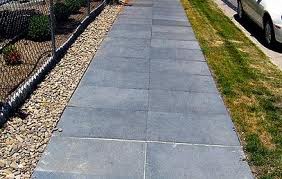
The concrete of the sidewalk feeds under my power wheelchair like a conveyor belt of cold gray slab at eight miles per hour – but, it seems much faster. It is much faster. Everything is scaled down – my wheelchair, the narrow path, me. Buildings and homes loom large – gigantic, leaning creatures, casting intimidating shadows. But, I know by the ever-increasing cadence of the sidewalk expansion joints clicking against my wheels that I’m going faster, and faster, and faster, where the shadows can’t hold on to me for long. The clicks from my wheels go from countable to one loud vibration, and all that lines the sidewalk becomes a blur, the colors of buildings and homes streaking along my periphery like paint on an abstract canvas. It’s all noise and color, color and noise, noise and color, color and noise. And, it’s at that moment – always at that moment! – that my wheels leave the ground, and I rocket into the sky, headed into the scattering of clouds, and the rest… well… it just stops.

Wanna Watch Me Get Dressed?

By Mark E. Smith

Come on, someone’s said it to you. Maybe it was a friend, a colleague, or a love interest. And, admit it, you took it as a compliment.

Me, not so much. See, whenever anyone’s said it to me, I’ve struggled not to laugh, finding the sentiment genuinely funny, no matter how sincere the person has been when saying it: You know, Mark, I really don’t see you as disabled….

“Really, what part of this equation don’t you get?” I always want to retort, looking down at my body. ”…Never play the board game Clue because you’re the worst detective, ever!”

I’m a guy, with spastic cerebral palsy, who uses a power wheelchair – and, somehow one doesn’t see me as disabled. Really? It would be like me, at a “gentleman’s club,” saying to the dancer, You know, I really don’t see you as a stripper. …I mean, sure, you’re on stage, nude, accepting money from strange men; but, really, I don’t see you as a stripper – more like, say, a school teacher or an anthropologist.

Really, people don’t see me as disabled?

Look, I get the sentiment behind the statement – that the individual sees me as more than my exterior – but if that’s true, it should be self-evident in our interaction, not needing to be said. And, when someone says, You know, I really don’t see you as disabled, isn’t that really a paradoxical statement that says that they do see us as disabled? After all if one truly doesn’t see one’s disability, then the statement would never be made in the first place because the disability wouldn’t exist within one’s perception (call it a philosophical predication, if you wish).

Of course, I always want to turn the tables on the statement. Imagine if I was alone with a buddy, watching football on television, and I turned, looked my buddy in the eyes, and I said with a soft, sincere voice, You know, Frank, I really don’t see you as a man…. How long do you suppose it would take Frank to jump up from the sofa?

Or, how well do you suppose returning the sentiment to a love interest would fly? We’re cuddled up in bed, her supple hand on my cheek, and she whispers, “There’s something that I really want you to know – I really don’t see you as disabled….”

And, I begin kissing her neck passionately, and I reply in an breath-heavy voice, “And, there’s something that I really need you to know, I truly don’t see you as female….”

A lot of these Inspector Clouseaus are similarly – and, yet, completely contradictory – clueless as to how those of us with disabilities accomplish everyday tasks, as if it’s the Eighth Wonder of the World. Someone (who doesn’t really see me as disabled, of course), asked me how does one without arms or legs eat?

“With his or her mouth,” I answered.

“No, like how does he or she get the food to his or her mouth?” my friend asked.

“Levitation-based mind control,” I replied without blinking. “Floating freakin’ burritos – that’s what one eats when one has no arms or legs!”

Again, really? As adults, we’re somehow not smart enough to figure out that those who are quadruple amputees devise ways to eat – really? And, what gets me to no end is when those with disabilities, themselves, are the ones asking the most absurd questions. Logic tells me that because I’ve figured out how to live independently with a disability, so have many others with disabilities – therefore, there’s no mystery whatsoever in my mind how people get by in life, no matter one’s condition.

Yet, some with disabilities can’t seem to catch on to the concept that we all adapt and create pretty darn basic everyday living skills. One of the most common questions that I get asked by others with disabilities is, How do you get dressed? Really? Out of all of one’s problem solving skills, the one equation that’s unsolvable is how do I get dressed? …I always want to answer the question by asking, Well, how do you get dressed? Then, when they tell me the obvious – that they get dressed like everyone else! – I want to blow their minds with how I get dressed:

I had to rule out getting dressed standing up because I can’t stand up. So, because I can’t stand up in order to get dressed, I alternate between using high-class call girls (whom are strikingly reliable), and little people. Now, I know that using little people to get dressed may conjure up Santa’s elves stereotypes, but as long as I’m in a committed relationship with a woman of short stature – who so happens to be extremely attractive – it’s totally OK. However, when I can’t afford high-class call girls, or I’m not in a relationship with an extremely attractive woman of short stature, I have to opt for my last resort: I put on my pants, socks, and shoes while I’m on my bed, then I transfer into my wheelchair and put on my shirt. Does that answer your question, Detective Colombo?

OK, so maybe I’d better keep my retorts to myself. As absurd as the comments and questions are – You know, I really don’t see you as disabled or How does one with no arms or legs eat? – those uttering such words ultimately mean well. And, my giving any response besides, Thank you – that means a lot to me, or my seriously explaining how those of us with disabilities live independently, would almost certainly turn a well-intended moment into a creepy one really fast, sort of like sitting on the porch of a house in the country, on a warm moonlit night, and saying, You know, Malissa, I really don’t really see you as my cousin – wanna watch me get dressed?

Swallowing Swords: A Death-Defying Monologue

By Mark E. Smith

During my eighth-grade daughter’s summer vacation, she learned how to swallow a 20-inch stainless-steel sword. Now, that may sound a bit disturbing to you; but, don’t worry, she learned from two of the best sword swallowers around: Donny Vomit and Heather Holiday, headliners at Coney Island’s historical Circus Sideshow, where Mat Fraser, a noted international performer with a disability, also serves as Sealo the Sealboy each summer. And, in case you’re wondering, despite her pushed-up bosom, bull-ring nose piercing, tattoos, and sword swallowing, Heather Holiday is the type of sweet young woman who you could take home to meet Mother – if your mother is OK with sideshow performers, that is.

The story behind the story is that I took my daughter to the Sideshow, in fact, to see Mat Fraser – who has self-described flipper-like arms due to a birth defect – but we found studying sword swallowing via Donny Vomit and Heather Holiday to be a lot more interesting (those with disabilities are really just a dime a dozen these days, slowing down public transit and such as we make others wait for us to awkwardly maneuver our wheelchairs, as if we never get better at driving these things).

As it turned out, witnessing sword swallowing was a lesson that might serve my daughter well in life in more ways than simply working as a sideshow act – which, in my accountant’s opinion, would prove as a fiscally beneficial alternative to college, freeing up hundreds of thousands of dollars for me that I could then spend on a yacht or a 23-year-old girlfriend, or ideally both. See, as my daughter and I learned, there’s truly no trickery to sword swallowing. By tilting one’s head back, it creates a straight line from the throat, down the esophagus, right to the stomach – a nice human sheath for a sword to slip into. Of course, along the way, one has to be aware of the ever-so-minor detail of not tearing one’s heart or other vital organs by which the sword passes (27 sword swallowers have died in recent years by breaking this simple rule), but once the organs are cleared, it’s a straight shot down the hatch.

However, where the real challenge to sword swallowing comes in is in one’s mental capacity to block out one’s natural gag reflex, and then ignore the extreme discomfort of sliding a 20-inch sword down one’s esophagus – and make it appear pleasant and easy on stage. Sword swallowing, therefore, is less a physical skill, and more mind over matter.

Of course, my daughter never actually swallowed a sword, and expresses no interest in doing so – at least not until she’s 18 or when I’m not home. Yet, we both learned a valuable lesson toward mind over matter – that is, how we control our instinctive reflexes makes all of the difference when facing challenges in life.

I know all too well that in living life, not unlike sword swallowing, we need to move ourselves past any discomfort, and have the willpower to simply push through to the accomplishment, sometimes with a die-trying, sword-swallowing attitude. We need to be willing to go where others wouldn’t dare, where we’re willing to swallow our own metaphorical swords in pursuit of living to our fullest. Avoiding a challenge, giving up, or stopping short can’t be an option. It’s how we transcend from merely surviving to truly thriving. It’s how the sword goes from the tip of one’s tongue, to the pit of one’s stomach.

I’m celebrating my one-year anniversary of maintaining a rigorous diet and workout routine – a shift in lifestyle, really, from Twinkies and Southern Comfort, to nutrient bars and protein shakes. Despite my compulsions toward gluttony and binge drinking, I embarked on this path toward higher levels of physical fitness not because I was strikingly unhealthy or out of shape, but because I wanted to simply be a better me (though, I’ve long been remarkably stunning, as you may have noted by my perfectly deformed appearance), pushing myself physically and mentally farther, tackling swallowing yet another sword – and doing so without clipping an organ in the process, per se.

My biggest challenge – or should I say, nemesis? – has been my left arm. You’ll note that I do virtually everything with my right arm – no slight-of-hand or trickery involved – and I keep my left arm on my lap, hand between my knees, namely due to the effects of my cerebral palsy, but also because it’s cozy and warm. See, cerebral palsy is random in its physiological distribution – you might say, it has its own sick sense of humor – so it effects my left arm more than my right, limiting coordination. Fortunately, I’ve developed the larger motor skills in my left arm and hand over the decades for many independent living skills (except for that one favorite “skill” of us gentleman, if you know what I mean); but, overall, Lefty is an unwieldy fellow with a mind of his own.

In my workouts, however, I don’t allow my left arm any slack. If I do given sets and amounts of weight with my right arm, I hold my left arm to the exact same standard – Lefty has to literally pull his own weight, just like Righty. And, it proves little short of torturous much of the time, but, other times, just mocking. Ha ha, I’m Lefty, and you can’t control me – neener, neener, neener!

While my right arm has the coordination to blow through sets on my workout machine, it can be a workout in itself just trying to get my left hand to grip the darn bar (which is also why Lefty is of such little use for that gentlemanly compulsion, if you know what I mean), then I need to muster the coordination for my left arm to move through the workout rep as it spasms and contracts beyond my control. Then, once I fight through one rep, I have to do it all 49 more times, or however many more reps based on a given exercise. Inevitably, a set that takes three minutes with my right arm takes 15 minutes with my left arm – and it’s among the most frustrating, miserable processes ever. I crank up my iPod, shut my eyes, grit my teeth, and just fight through every spasm and contraction, pushing through the reps, no matter how agonizing – with a dose of angst toward Lefty that motivates me, of course. I refuse to let Lefty’s defiant behavior win, ever.

What’s intriguing, though, is a simple question: Why indefinitely torture myself with such a workout? Why not scale it back on my left arm? Or, why not just stop when my left arm seems impossible to control at times? After all, nothing in my life literally depends upon whether I do 30 reps or the full 60 with my left arm. No one’s watching, and there’s no consequence on my career, family, or health if I simply let my left arm have a little leeway. So, why not just do what’s reasonable and practical, and give myself some slack based on the very real limitations imposed by my cerebral palsy?

The answer is, reasonable and practical doesn’t get us ahead in life – a die-trying attitude does, where we’re not willing to give up, where we’re willing to ignore our gag reflex, and ease the sword down our throats, regardless of the discomfort. See, I figured out that my workouts serve as both a metaphor and precedent for other aspects of my life, that working out allows me to reinforce that I don’t care how difficult a challenge may be – I’m not quiting until I’m satisfied that I’ve met the goal, or die trying. It may be uncomfortable as the tip of the sword slides past my tongue, triggering my gag reflex, but I will move past it, till the sword’s tip touches my stomach, the handle against my lips, and my mind has won over matter.

Indeed, what I’ve learned from the principles of sword swallowing is that it’s not a physiological gag reflex that prevents 99.99% of people from swallowing swords, but our mental excuse reflex. Sword swallowers are simply willing to push themselves physically and mentally farther than others – they eliminate their excuse reflex, and just accomplish their goal, where they’re willing to die trying, so to speak.

No, I don’t suggest that anyone attempt sword swallowing – especially my daughter, and if she does attempt it, please don’t tell me (denial as a parenting skill works wonders). However, the mental techniques that sword swallowers use are ones that we should all apply to our lives, where we know that gag reflexes are really excuse reflexes, where we’re dedicated and bold enough to push beyond any hardships to reach the extremes of our potential, swallowing the swords of life, no matter how daunting they appear.

The Hidden Nature of Icebergs

By Mark E. Smith

The average iceberg is 90% under water – that is, only 10% of it is visible above the surface. When we know this fact, it becomes obvious why icebergs are so dangerous to ships: What’s unseen below the surface causes catastrophes like that of the Titanic.

Most people are a lot like icebergs, where we only see a very small glimpse of who they really are, where we never know what’s truly going on in their lives beneath the surface. Maybe they’re strangers among us in line at the grocery store, colleagues who we pass in the hall at work, or even friends and family members. Sure, we see their outer appearances, smiling and cordial, but we truly don’t know much past that superficial persona.

Interestingly, some of the most harrowing stories that I’ve ever encountered involved among the most poised people, where at a glance, their smiles and demeanor would never hint at the challenges that they faced. People have said to me, Wouldn’t it be great to have his or her life? And, I’ve thought, If you only knew the struggles that he or she faces beneath the surface….

I met one young lady in her early 20s who appeared to not have a care in the world – stunningly attractive and on the fast-track in her career – and everyone was envious of her at a glance. Yet, as she was gracious enough to share with me, her home life as a child was an abuse-filled nightmare, and now in her 20s, she’s raising her two little sisters because her step-father shot her mother, then shot himself. And, she lives with that reality 90% below the surface every day, moving forward the best that she can, with poise and a smile. How that 90% hasn’t pulled her under in life defies logic, and as I spoke with her, the best advice that I could offer was that I hoped that she’d slowly bring her 90% to the surface, where the appropriate people close to her could know of her struggles and thereby help, where she realizes that she’s not alone in facing life’s challenges.

In ways, we’re fortunate when among our foremost challenges is a physical disability, where it’s so in the open that we can’t hide it – an iceberg well above the surface for all to see. Of course, many with physical disabilities would gladly hide their disabilities if they could, but what’s not realized is that, again, it’s usually burdening when we hide much of ourselves from others. Truly, we’re fortunate that physical disability requires us to live bold lives, where as long as we’re interacting with others, they at least know part of our struggles in life – and there’s a refreshing candor and honesty to that, one to which many can relate. When others see our obvious struggles, it can often let them know that they’re not alone in facing life’s challenges, whatever they may be.

I’ve also witnessed how disability can put us more in tune with others, where we can often sense others’ struggles, where while we may only literally see 10% of the iceberg like everyone else, we still intuitively recognize something much deeper beneath the surface that needs embracing – a kinship of sorts.

I was in a tiny restaurant in rural Virginia, having dinner late one night with several volunteers who were working the disability awareness program with me at the National Boy Scout Jamboree. We had a lot to talk about, so it was a long dinner. Throughout the evening, the waitress who served us was polite and courteous, but I learned nothing about her except for her name, Tiffany. Yet, there was something about Tiffany that made an impression on me, something that I couldn’t define.

By the time we were ready to leave the restaurant, my group was the only one left, and my colleagues finally made their way out the door, leaving me behind fiddling with my wallet and phone, finishing my soda. As I spun my wheelchair around to head out of the door to catch up with my group, Tiffany came up to thank me for being a customer, and she put out her hand to shake mine.

“Everyone hugs Mark,” I said, smiling, a line that I always use, opening myself up for a hug.

Tiffany, without hesitation, stepped forward and hugged me. And, what caught my attention was that she didn’t just hug me and step back; rather, she hugged me for several moments, and when she finally stepped back, she was sobbing to the point that she grabbed a napkin off of the table, and wiped her eyes.

“I’m sorry,” she said with an awkward laugh. “…Typical woman.”

“Don’t be,” I said, putting my hand on her forearm. “If I told you everything is going to be OK, would you believe me?”

“I know,” she said, wiping her tears. “You know, it’s just hard sometimes.”

“And, we get through it,” I said. “Been there, done that – we get through it.”

I backed my wheelchair into the door, and pushed it open, rolling in reverse. “You’re going to get through this, Tiffany, I know you will! …We all do,” I said, rolling out the door as she just smiled and waved, watching me leave.

I had no idea who Tiffany was beyond her waitress role, or what issues she was facing in her life. However, clearly there was some sort of vying in her life, and what touched me was that, for a brief moment, we both acknowledged that challenges that are intrinsic to all of our lives – the icebergs just below the surface. Was it my disability, or my offering a hug that suddenly brought her iceberg to the surface? Probably a little of both, along with her presumably having a really bad day, where, again, for reasons I’ll never know, she was particularly emotional. No matter, I’m thankful that I extended a hug at the right place, at the right time, and made a very authentic connection, letting a seeming total stranger know that she wasn’t alone, as it likewise reminded me that I’m not alone in my struggles.

People are so darn scared to be authentic, to show any more than 10% of themselves. Likewise, we’re scared to look beyond the 10% of others, where when we say, Hi, how are you?, to colleagues in the hall, we truly aren’t seeking a sincere answer – but, we should be. Now, I’m not saying pour your heart out to your boss or to strangers in line at Wal-Mart – there’s a right and wrong time for everything. However, at some point, on a larger scale, we need to be willing to open up ourselves more to those around us, where we’re not afraid to expose or recognize more than 10% in each other. In hip talk, take chances and be real with others – you’ll be amazed at the way it changes your interactions for the better.

During your day, you likely cross paths with a lot of people, where your only initial glimpse of them is of that superficial 10%. Make an effort to look a little deeper – in others and yourself – to where you’re bold and brave enough to truly connect with others, where you’re reminded that we’re all in this often cold sea of life together. Indeed, when we’re open enough to share the 90% of each other that really counts, our perceptions of each other most often change for the better, not unlike witnessing the stunning depth and beauty of icebergs hidden beneath the surface. All you have to do is look for them – they’re there.

I’m Going to Eat Your Heart

By Mark E. Smith

One couldn’t say that I have an anger management problem by any stretch. In fact, I’m among the easiest-going, happy-go-lucky guys around – very little ruffles my feathers. But, that doesn’t mean that I’m not fearless – arguably to an absurd point – where I won’t grab a guy by the shirt who’s being a jerk in public, welcoming a little scrap with another dude when called for.

I’m sure that my brother helped instill fearless bravado in me when we were growing up. After all, it makes no intrinsic sense for me, as a guy with cerebral palsy, using a power wheelchair, to be the one guy in a scene to grab a jerk by the collar, pull him into my spit-firing, vein-bulging face, and tell him in words that I can’t use here that if he doesn’t settle down, I’m going to rip off his limbs and eat his heart while it’s still beating. See, my brother and I are six days less than a year apart, and we were raised very much like twins, right down to always having the same clothes and toys. In a psychoanalytic way looking back, I think that we were both always trying to distinguish ourselves from each other – and that included via never-ending brotherly brawls.

For better or for worse, it never seemed to matter that I had cerebral palsy and my brother didn’t – when we fought, we really fought. In no mixing terms, we beat the heck out of each other, both playing on our strengths, as well as the other’s vulnerabilities. He knew that he could punch me and run, and as long as I couldn’t catch him, he would win, leaving me with a black eye, busted lip, or such. Yet, I knew that if I got my hands on him, he wasn’t getting away – I’d throw my good, strong right arm around his neck, and try to choke the life out of him. I know that child psychologists frown upon sibling rivalries nowadays – and I don’t tolerate such violence among the kids in my own family, where I’m always reprimanding my two nephews for antagonizing each other – but, when my brother and I were kids, duking it out seemed par for the course.

As adults, my brother and I laugh about it all now, and joke about how inherently bold it made both of us. After all, in my brother’s case, if he’s beat-up a kid with cerebral palsy, that’s probably not a guy scared of punching just about anyone. And, in my case, as a kid with cerebral palsy raised to give and take punches, an absurd fearless toward fist-to-cuffs has stuck with me, as well. In fact, my buddy, Jeff, and I inadvertently ended up in the front row of a concert not too long ago, and when the drunk idiots around us started going nuts, bumping into me, I started swinging. Jeff seemed a bit concerned at first, but once I grabbed and punched a few people – and the crowd figured out to stay away from this guy in a power wheelchair – Jeff seemed a bit reassured that I wasn’t going to get us killed. I suppose people figured that if I was crazy enough to be in a mosh pit in a wheelchair, swinging on people, they should probably just stay away from me.

Now, my brother and I are both successful in our careers, with kids of our own – living as wholesome, law-abiding, God-fearing citizens – and neither one of us are the types hanging out at country-n-western bars looking for fist fights (beyond my inadvertently ending up in a mosh pit, that is). However, my one short fuse relates to jerks in public, especially those disrespecting women – and I’ve become bolder in my reactions since raising my daughter. I have zero tolerance for guys disrespecting women in public – guys gawking, making inappropriate comments, or such – and I have no qualms about straightening out the situation in real time.

Word must have gotten around about my short fuse because I was out with a female friend, and she commented to me that a creepy guy was staring her down. However, before I could turn around and see who it was – and impulsively roll over and pick him up by his shirt – she asked me not to do anything, not wanting a scene. I did as she wished, didn’t move, and continued with our conversation. However, I wondered how she knew that I was the kind of guy who would create such an over-the-top scene, that I wouldn’t have any hesitation about grabbing a guy by the shirt and explaining to him in four-letter words how to act around ladies in public?

A few days later, I asked my friend how she knew that I was immediately ready to roll over and grab the guy by his shirt? She said that she recognized me as the protective type, and when she saw me intuitively go for my power wheelchair’s joystick, ready to spring into action, she knew to talk me down quickly.

I’ve always wondered what has gone through the minds of those few individuals over the years who I’ve confronted regarding their poor behavior? When a well-dressed guy with cerebral palsy, using a power wheelchair, rolls up to you, and says things into your ear that could never be said in a PG-rated movie – adding up to, If you don’t leave right now, I’m going to rip your heart out and eat it as an appetizer – what really goes through your mind? Or, on the few occasions when my words weren’t convincing enough, when I’ve literally picked them up by their shirts, what were they thinking as the weight came off of their feet, as I pulled them over my armrest, into my contorting face?

The real question is, how have I not been beat-up by now? (Heck, I would have beaten myself up by now!) I reckon that the answer is a combination of factors. Firstly, every guy I’ve dealt with was either really drunk, or a slender creep – both of which have been surprisingly easily manhandled. Secondly, I think there’s some shock to having a cartoon-looking guy in a power wheelchair, with cerebral palsy, grab you by your shirt and threaten to eat your heart – why take the chance of second-guessing a guy like me who’s seemingly crazy enough to confront you? Thirdly, my strength and appearance has to freak them out, where I’m strong to begin with, and when I spasm, it’s then unbridled strength (I broke the arm off of a 250 lb. chest press machine, when the weights were maxed-out, simply by spasming), so it has to be unsettling to be tossed around, seemingly uncontrollably, by a guy in a wheelchair going spastic with such force, where I’m breathing like an angry bull, trying to control the both of us. (As cerebral palsy comedian, Josh Blue, puts it, if a guy with cerebral palsy gets mad, someone’s going to get hurt by the palsy punch, and no one’s sure where it comes from or where it’s going, especially the guy with cerebral palsy!)

Nevertheless, there’s always a chance that a guy could start swinging on me – and I’d be fine with that. In my adult life with cerebral palsy, I’ve taken some hard falls, with bell-ringers to the head, so I don’t doubt that I could withstand a close-quarters punch to the head or two. I might even be flattered by the equality of it – at least until the third punch sent me snoozing into Lala Land. But, the goal, much like with my brother when I was a kid, has to be for me to never let it get to the third punch. Again, in theory, like a boxer holding his opponent close, as long as I’ve got my hands on him he’s not going anywhere. And, if he wanted to take me to the ground, a 400 lb. power wheelchair is going with us, and since I’m strapped in, I’m likely not the one it would land on.

Ultimately, though, my absurd, in-your-face antics toward jerks in public are arguably foolproof: No matter how jaded our society, if people see an able-bodied guy trying to fight a guy in a wheelchair in public, some bigger dude is going to knock his lights out for picking on a guy in a wheelchair – there’s still that stigma that you shouldn’t punch a guy in a wheelchair. So, no matter what creeps do in public to tick me off, they’re going to have a tough time winning in the end – which is why I’m always courteous enough to offer them the opportunity to leave before I tear their pulsating, blood-dripping hearts from their chests and eat them (or before they’re torn apart by an angry mob for beating the daylights out of me, a poor, defenseless guy in a wheelchair).

When Flirtation is a False Alarm

By Mark E. Smith

I was flipping through the television channels late one night, and came across an episode of the cartoon for grown-ups, Family Guy. What caught my attention was that there were two characters using wheelchairs in a night club, and the one character said to the other, “Get out there and dance with the ladies…. They love us guys in wheelchairs because we’re nonthreatening.”

There was a lot of truth to the character’s statement – but it also ties into an underlying mythology that surrounds those with disabilities in such mainstream dating scenes, that we’re flirtation magnets.

It’s interesting how often I hear those who are able-bodied note that those with disabilities attract all of the attention at bars and clubs from the opposite sex. And, it can prove strikingly true. In fact, you may have witnessed or experienced this phenomenon for yourself, where those with disabilities who possess outgoing, self-confident personalities have no problem getting others to seemingly flirt with them. And, if one with a disability is so inclined, one can often have a “hot one” dancing with him or her in no time, with some seemingly romantic advances involved. And, it, indeed, all ties back into what the character on Family Guy noted: Those with disabilities can come across so nonthreatening that strangers of the opposite sex in bars and clubs are quick to warm up to them in ways that they might not warm up to other strangers, where those with disabilities can seemingly get a lot of action, as the hip kids say.

Yet, what many observers don’t realize is that the dynamic that’s occurring is almost always an illusion, that the individual with the disability truly isn’t getting any sustainable action at all. Rather, individuals often simply act overtly friendly, sometimes flirtatious, but with very innocent motives, toward those with disabilities. Indeed, a woman in a bar might sit on a gentleman’s lap who uses a wheelchair, but she usually does so simply because she’s so comfortable and trusting of him – a striking contrast of intentions compared to if an able-bodied woman were to cozy up to an able-bodied man in such a way, where both may interpret it as a true physical advance. And, this is where the social confusion of mixed messages comes in for casual observers, as well as those with disabilities: The rules, in general, apply differently in such scenes for those with disabilities versus those without.

See, when two able-bodied individuals are flirting with each other in a bar all evening, it’s safe to assume that there’s a real mutual, romantic attraction, and they very well may end up “going home together.” Such a scenario is a sure sign of the courting rituals in our modern culture – or, more aptly, “hook-up culture” – that most people easily identify. Therefore, when most observe an individual flirting with someone with a disability, they apply this same “mainstream” standard, and assume that it’s the same courting ritual that they’ve experienced – that is, if someone appears overtly flirtatious toward one with a disability, they’re looking for more than a friendship, and romance and physical intimacy could likely occur.

Where misinterpretation comes in is that many people don’t realize that the “flirting dynamic” toward those with disabilities by those who are able-bodied is typically much different in such social settings than flirtation between those who are both able-bodied. Again, the reason why many are drawn to those with disabilities in a “pick-up scene” is because of the perceived nonthreatening nature of the individual with the disability. For example, if a woman is seeking a nonthreatening experience, she’ll often choose to give her attention to a man with a disability over able-bodied guys cruising a bar or club. This reality is based on the fact that, for better and for worse, men with disabilities in our culture simply aren’t perceived as sexually-aggressive, and many women in social scenes can find them as a sort of unintentional safety net, where women can seemingly flirt and have a great time without fearing the sexual expectations that they presume that able-bodied men have. (Of course, men with disabilities are just as sexual as most men – and not all able-bodied men are sexually aggressive, either! – but social stigmas and stereotypes prevent some from recognizing these facts.) This dynamic applies equally to women with disabilities, as well, where a man may act more chivalrous toward her out of kindness – or, dare I say, to appear sweeter to his real love interest – which can be misinterpreted by one with a disability as true flirtation.

And, it’s in the realm of nonthreatening interactions and mixed messages where disability-related mythology comes in. To the uninformed observer, an able-bodied person engaging with someone who has a disability in a club or bar – as with a woman sitting on a gentleman’s lap who uses a wheelchair –can unquestionably appear to be involved in a courting ritual. However, such appearances are usually deceiving. Based on remaining stereotypes and stigmas in our culture, it’s a monumental leap for most able-bodied individuals to go from being overtly friendly with a stranger who has a disability in a bar or club to having actual physical intimacy with him or her in one night. There are typically far too many implied unknowns for an able-bodied individual to engage in any sort of physical intimacy with one who has a disability after simply meeting him or her at a bar or club. Again, a woman, for example, who’s seeking nonthreatening company – or, possibly, simply to feel better about herself – in a bar or a club isn’t looking to go home with the guy with the disability who she’s socialized with for a few hours. Based societal views toward disability, it’s typically too big of intellectual leap for her to make in such a short amount of time – from the bar to the bedroom with one who has a disability – and, in most cases, actual physical intimacy isn’t even in her mind, where if questioned on her intentions, she’d sincerely tell you that she was simply being nice and having fun. In this way, observers – and those with disabilities, themselves – often confuse such scenarios as courting rituals, when they’re truly nothing more than one person being dramatically friendly and playful with another.

Whenever I encounter this dynamic, where a woman has seemingly flirted with me, and my friends are like, Dude, that chick was all over you!, I’m quick to honestly explain that, no, she wasn’t all over me, that she was simply was being friendly and playful – a very different experience than most of my able-bodied pals have known when women flirt with them, where the intentions are totally different. More so, as I’ve matured, I’ve become honest with myself, recognizing the profound difference between a woman simply being nice and playful – or, patronizing with her flirtation – and those who are truly interested in getting to know me as a person. And, I’ve developed very little tolerance for such antics as patronizing flirtation – I can read it for what it is, nonsense. I’d rather have a meaningful, quiet conversation with a woman as friends than have an intoxicated, overtly flirtatious woman put her hands on me for show in a bar (though, I’ve certainly done it in the past – out of bravado, insecurity, and immaturity).

Yet, I have friends with disabilities who buy into the whole illusion, using such skewed dynamics in bars and clubs to bolster their own egos – and, as I tell them, it’s pathetic and degrading to both people. If the able-bodied person tries to use one with a disability as a sort of safety net or patronized flirtation to make themselves feel better, and the person with the disability plays along to get whatever he or she can get, both people are playing each other – and someone is bound to lose in the end (usually the one with the disability who’s hoping to score, but ends up going home alone, without so much as a phone number!).

Now, I’m not saying that those with and without disabilities can’t fall in love or just “hook up” with each other – it happens all of the time. However, it’s vital to recognize that the courting rituals at the shallow end of the dating pool are different for those with and without disabilities – and we owe it to ourselves, as those with disabilities, not to misinterpret friendliness and misguided flirtation as a greater interest than it usually is. Be aware that the rules are different in such superficial social scenes for those with disabilities versus those without, know the dynamics, and don’t let anyone be fooled by them – especially yourself.

As I tell my buddies with disabilities, You have a terrific chance toward dating women who you interact with every day, where there’s a real understanding and connection. However, when it comes to “getting lucky” via random, overly-flirtatious chicks sitting on your lap in bars and clubs, not so much!