What The Real Question Is

By Mark E. Smith

My friend was recently interviewed on a television show. And, based on my friend being a triple amputee, the subject of sex came up, and the interviewer was bold enough to ask, “Can you?”

My friend answered, “Yes, I do well,” and both he and the interviewer chuckled.

However, I sat on the edge of my seat waiting for the real question to be asked relating to the subject: “What about true trust and emotional intimacy – are you capable of having that?”

But, the question was never asked, keeping on par with how skewed both our personal and cultural perspectives on sexuality are.

I mean, many question whether those with disabilities can have sex, and it’s an assumed that those who are able-bodied can have sex. Yet, few ever ask anyone or ourselves, Are you truly capable of exceptional trust and emotional intimacy? – which is a far bigger part of sexuality than the physicality of jumping in bed (which is absurdly easy). In fact, the physicality of sex is often a mask or mechanism to avoid true intimacy. For many, physically engaging in sex is far easier than engaging in emotional intimacy – there’s less vulnerability involved. Physically acting is easy; opening ourselves up to be emotionally vulnerable is a much tougher, scary process. I read a wonderful quote that said, “Truly making love means allowing ourselves to be emotionally vulnerable and finding security and pleasure in it.”

I see many of my peers – regardless of disability – who use sex as a way to avoid real feelings, or confuse it for feelings. If we have esteem issues, body image issues, vulnerability issues, having sex is a quick, validating fix. I must be a real man because she’s having sex with me – see I am worthy! But, such superficial validation is never lasting (and often merely has negative results on our emotional issues in the long run – the validation leaves with the sex). Sure, feeling desired in the moment can chase away all kinds of insecurities. But, once the moment passes, all of our emotional struggles are still there, only magnified for the worse. Put simply, physical sex for the wrong motives can often drive us farther apart from real intimacy with others, and emotionally isolate us further.

In this way, we often have the process backward: Sex doesn’t lead to true trust and intimacy; rather, true trust and intimacy leads to great, healthy relationships – and all of that leads to truly healthy sexual experiences that then encompass the mind, body, and soul (it’s the difference between staring at the ceiling versus making the Earth stop in its rotation, time standing still).

Therefore, forget the question of, Can you have sex? It’s an absurd, moot point. And, start asking the question of, Are you capable of true trust and emotional intimacy? It’s only then that we’re on our way to deep, loving, lasting relationships.

Chased By It

By Mark E. Smith

Among the incidents in my life that has haunted me most is the suicide of singer and quadriplegic, Vic Chestnut. Some things just hit too close to home for comfort.

As I’ve written and spoken extensively about – although Vic’s suicide was a combination of factors – arguably the largest factor was an overwhelming sense of isolation and loneliness. And, as I’ve processed Vic’s final act over several years now – an act made as much out of heightened self-awareness as depression – I’ve never been able to answer the question of, did Vic simply kill himself, or did the world around him indirectly take his life?

In the realm of psychology, there’s a term, “parentified-child,” which applies to children who, based on extremely dysfunctional parents – addicts, mentally ill, physically ill, emotionally inept – must assume adult-like roles, literally parenting their parents. At a time when a child should be nurtured, he or she is thrust into the role of nurturer. As a result, the child learns that his or her feelings and needs are second – or, non-existent, really – to everyone else’s, and identity and self-worth are sacrificed. Such children grow up being drawn toward very unhealthy, unbalanced relationships and lifestyles, rarely capable of truly looking out for their own interests. And, the internal isolation that ultimately exists – where he or she struggles to let people in, to be nurtured – often leads to self-destructive behavior. You might say that such individuals implode rather than explode from emotions.

As adults, we can find ourselves in similar situations due to any number of circumstances, where we’re always the nurturer, never to be nurtured – and, again, it implodes the soul. Vic lived this, where he absorbed too much of the pain from others and the world around him, with little space to express his own, that it literally killed him. Going from “fame” on stage where you give yourself to others so completely, then being alone in a hotel room with not a single person in the world with you – or who you feel emotionally safe enough to call – is a harrowing experience. It helped kill Vic, and it’s chased me a few nights.

I was born a “parentified-child.” I learned early in life that loving someone meant saving him or her at your own expense – but that’s not how love should work, does work, or can work. My mother was as dysfunctional as one can be – substance abuse, mental illness, divorces – and from as young as I can recall, I just wanted to make her feel better, where her emotions were far more important to me than my own. And, it’s not a bad trait as a son or a person to want to save someone who you dearly love. However, there has to be a line we draw between being forced into that role as a child, versus choosing that role as an adult in relationships. And, I’ve chosen that role for too long, where loving has always been easy for me, but being loved, not so much. And, so my comfort zone has always been giving as much as I can to others, and using it as a smoke screen to avoid my own feelings of vulnerability. And, it works really well.

Until it doesn’t. And, ultimately, like Vic, I’m alone in a hotel room, staring at a cell phone, unable to call anyone. But, it’s not that there’s no one to call. I just can’t. They have spouses and children and jobs – and who am I to interrupt their lives with my desperate moment of all-consuming isolation and loneliness, where I’ve gone from the soaring affirmation of a public event, to an emotional crash landing, alone.

But, I’m cognizant of it all. On a recent trip, my friends bought me a rock-star-size bottle of Southern Comfort, all in good spirits. And, with it sitting on the restaurant table, not only did I know that I couldn’t drink out of fear of drinking heavily, period, but that if I took the bottle back to my hotel room, all of Hell could break loose for me. Isolated and ungrounded, with my past still not allowing me to reach out in such moments, I could easily unscrew the cap from the bottle over the bathroom sink, chug it one-fisted, toasting to Vic, the whole bottle – gone.

So, I left the bottle on the restaurant table, and split – sober and safe. And, I made it through the night, alone in my hotel room. “Mark takes care of Mark,” I said to myself while shaving in the mirror the next morning. And, I was back at it with the new day, there for everyone – and I meant it.

Then, as the day turned to eve, then to night, the bottle showed up again with my friends. “You left this at the restaurant last night,” they said.

I went along with the well-intended amusement, but, again, with Mark looking out for Mark, never to drink with Vic because I know where it could lead, I ditched the bottle somewhere – so much in a panic that I don’t recall where – and I made it through another night, isolated, lonely, but safe.

However, like the isolation and loneliness that’s come and gone much of my life, the bottle mysteriously showed up again – in my van. And, so with a friend leaving town, too, I tucked the bottle in his truck, and sent it on its way, far from me.

I got in my van, and headed a few hours home, where I couldn’t wait to see my daughter, our two dogs, and ultimately get back to the stability of my office routine. And, so just as the bottle of Southern Comfort went away, soon would the isolation and loneliness – at least for now.

There’s No Problem

By Mark E. Smith

Authors of online “blogs” are always tracking the statistics of their readerships. And, here’s a statistic of my readership that horrifies me: 25% of you will die of a drug-related death. No, I’m not talking heroin or cocaine or any illicit drug. Rather, it’s the prescribed medications – the benzos, the oxys, the hydros – that, statistically 50% of you are addicted to, will kill half of you. It’s a catch phrase known as “accidental overdose,” or more discretely, such conditions known as “heart arrhythmia.”

See, according to government statistics, those with disabilities are four times as likely to be substance abusers than the general population, and 50% of those with spinal cord injuries, for example, are addicts. Think about that: If you go to a disability event, every other person who you meet is addicted to prescription drugs – and half of them will die from it. As a population, we’re not WheelchairJunkies; we are just junkies.

Interestingly, there’s a scientific basis why those of us with disabilities are so prone to addiction. Modern research into addiction causation shows a direct link to emotional trauma – where we abuse substances to both mask and maintain trauma. On the one hand, substance abuse can be an escape, but it often also ties in to a deep-level psychology where we’re the only creature known that actually strives to “re-inflict” trauma unto ourselves, “maintaining” it throughout our lives (a simple – but tragic – example is that 76% of women abused by a spouse were abused as children, unwittingly “maintaining” the trauma throughout their lives by being drawn toward unhealthy relationships). Disability often has any number of emotional impacts attached, resulting in trauma, so it’s the prevalence of trauma surrounding disability that dramatically escalates the risk of substance abuse.

And, make no mistake, our culture and the medical community supports the abuse of drugs to address disability. If a crack-head walks into a doctor’s office, they call the police. But, roll in to that same doctor’s office in a wheelchair, with a spinal cord injury, multiple sclerosis, or cerebral palsy, and the prescription pad comes out. What would you like? Klonopin, Baclofen, Oxycontin, Soma? No problem. What – you want to up your dosage? No problem. And, no one questions you – not the doctor, not the pharmacist, not your family. Why? Because no one wants to doubt your physical struggles, and everyone wants you pain-free. But, they don’t know that you’re blazed out of your mind, that the drugs have bonded with your dopamine and endorphin levels, where the prefrontal cortex of your brain just drives you toward more drugs, more drugs, more drugs – and you are metabolically a full-blown addict.

But, what’s even more awesome is that you don’t think you’re an addict. From rationalizing in your own mind that your disability necessitates medication, to the legitimization of it all from the medical community, you’re right on course – there’s no problem. What’s more, we know that addicts lose the capacity to truly know that they’re addicts – the drugs literally crank up the denial chemistry in the brain. At best, addicts can dish-out victim mentality, “I’m fucked up.” And, in ways, they’re right. For decades, we’ve heard that the first step to recovery is admitting that there’s a problem. However, we know now, through modern addiction studies, that while addicts may occasionally voice that they have a problem, that they’re fucked up, they truly don’t have the capacity to recognize that they have a literal disease that’s killing them (and, it is a disease in that it alters your biology beyond your control) – it’s usually only after intervention, detox, and months of focused recovery that one truly realizes one’s addiction. So often a lack of willpower is socially equated with addiction (and it can be argued still that a lack of handling stresses in life, along with a genetic predisposition toward addiction can begin the process, itself). However, recent studies show that once addicted, the most instinctive drives of the brain are effected, and conscious volitional control is lost – that’s a disease.

And, so if you’re reading this, taking prescribed pills right on schedule, with them in neat rows, lined up on the kitchen counter, don’t worry, you’re not an addict. There’s no problem. The drugs are there just to help you function normally, as directed.

And, if you’re the loved one of someone whose medication has him or her agitated, nodding off, eyes glazed over, don’t worry, he or she is totally fine – just keep telling yourself that, due to disability, he or she needs the prescribed medication. It’s OK – it’s all normal, there’s no problem.

Yet, there’s nothing normal about any of it, and it’s a life-threatening health issue that kills – and, to top it off, there’s virtually no treatment. Tragically, even if, as an addict, you expressed your problem to most addiction specialists (which you would never really do because, again, addicts lie to everyone, especially themselves), even the specialists wouldn’t believe you. You’re a person with a disability taking prescribed drugs – there’s no problem. So, even if you or your loved ones strive to get you help with addiction, the medical community isn’t trained to offer it to you as one with a disability. In fact, even the U.S. Department of Health and Human Services publicly states, “Substance abuse prevention, intervention and treatment services are not physically, attitudinally, cognitively, or financially accessible, to persons with disabilities for many reasons.”

And, so the question becomes, as those with disabilities, when we start off with a lack of accountability by turning to medication, then use the medical system to become drug addicts, and the medical community legitimizes it, with no ability to treat it once it becomes a disease, what happens? Well… we die.

However, there are a few ancillary solutions. Firstly, toward those with disabilities, as a community – and especially within the medical community – we must all be aware of this health crisis, where the acceptance of use and prescription process must be dramatically curbed. We have to acknowledge the problem and stop it before the pen hits the prescription pad.

Secondly, if you’re the loved one of an addict with a disability, and your loved one’s addiction has become your family’s problem – and it always does – get help for yourself and your family, where you’re not a codependent to the addict. Addicts have a clinical narcissism where they lose the capacity to care about anyone but themselves and their addiction, and they will gladly emotionally, mentally, and financially destroy their families without an inkling of conscience. Addicts slowly consume relationships, and you have to break-free of that cycle, no matter how much you love that person (or, more aptly, how much you loved that person before he or she became an addict, as again, the brain changes so much under addiction that the original person no longer exists).

Therefore, as individuals and a community, let us stop addiction before it starts. If we have a loved one who’s an addict, let us have the strength to prioritize ourselves and our families to distance ourselves from the addict. And, if you’re already an addict – which you’re truly incapable of knowing – there’s statistically no U-turn for you: You’re simply buying time among the living dead.

The Jackass Chronicle

By Mark E. Smith

The first and only time that I met Jacki, I ate a cigarette. Everyone else in the group knew me, but Jacki and I didn’t know each other, and I immediately recognized that the impression that I made upon her was the wrong one. See, I performed a vaudeville trick, where if the weather is just the right temperature, you can eat a cigarette, take a deep, warm breath, and blow smoke. But, of course, it’s not really smoke, just breathing “frost.” Everyone who knew me understood that it was me goofing off, that there are mostly serious sides to my life, depth to my character, but I can be hilariously over-the-top when appropriate. However, not discounting Jacki’s own gracious character, I got the impression that she only saw me as a cigarette-eating jackass – which in the moment, I was. And, that soon troubled me.

Firstly, for me, “legacy” is a life-driver, where if I can have even a small, positive impact on a stranger’s life, it’s really important to me. And, every time I thought about Jacki for months, I cringed, realizing that I was nothing more than the jackass who ate the cigarette – not very impacting.

And, secondly, I was admittedly smitten with Jacki, where her eloquence struck me – the way she carried herself, you might say. Have you ever met someone in passing, and just thought, wow. Well, that was my moment seeing Jacki – only I was eating a cigarette like a total jackass.

So, for some time, when it came to my one and only encounter with Jacki, I saw myself as the underdog in every teen movie: I was the goofy guy who the really attractive, popular girl only saw as a dork. But, life went on, and I reckoned that, at least to Jacki, I’d forever just be a jackass.

However, I recently ran into Jacki again while working a trade show, and I immediately had to ask her out to dinner with friends. In fact, I openly prefaced the whole conversation with the fact that I wasn’t the jackass who I may have seemed before, that I was a far more serious guy. It wasn’t that I had anything to prove, per se, but I just wanted the chance to be me – the real me, not some jackass eating a cigarette – and I wanted the chance to likewise get to know her on a genuine level. I mean, maybe after spending an evening with me and friends, she’d still see me as a jackass, but at least she’d see the real jackass in me.

Now that you know the back story, let’s fast forward into present tense….

So, we meet for dinner in Los Angeles, and become fast friends, chatting each other up with a lot in common. And, Jacki is an amazing woman – smart, funny, successful, compassionate, and beautiful – and, at some point, it comes out that she has a boyfriend. But, I’m OK that she has a boyfriend because I’m a grown-up, and I’m pleased to be getting to know an amazing person on a totally sincere level. We have a great seafood dinner, and Jacki is kind enough to feed me raw oysters, which are forever challenging to balance on a fork. We learn a ton about each other – admittedly ignoring our friends to some degree throughout the eve – and end the evening with a hug. And, I, the once-jackass, feel like I was able to be my true self, not a seeming jackass after all. And, Jacki was, of course, a remarkable person to get to know.

As I fall asleep in my white-comforter, king-size hotel room bed, I feel like I’ve done right by all, and slip off into a sound sleep.

However, around 1:30am, I awake with my stomach boiling over – and it’s too late. Even if I was the world’s fastest sprinter, I couldn’t have made it to the bathroom. In the pitch black, I vomit toward the side of the bed – and it just keeps coming. I’m praying that I’m targeting the dirty clothes between the nightstand and my wheelchair, that I’m not hitting the bed, the nightstand, or my wheelchair – but likewise knowing that I’m probably nailing all three at once.

Finally, through the dry heaves, I turn on the lamp, scared to see what I find. I glance at the night stand: clean. I glance at my wheelchair: clean. I glance at side of the bed: covered in vomit. Damn, I missed everything but the all-white bed!

Now, I’m kind of panicked because I’ve vomited seafood all over a white hotel bed, and it’s a horrible situation. I begin racing through solutions on cleaning this up: a wash rag and soap; I’ll strip the bed and take the sheets and comforter to the cleaners down the street; or, I’ll just live with it till check-out another day, and skip-out of town. But, none of these strike me as valid solutions.

However, I have being a bachelor on my side. See, if a woman was with me, it would require immediate action. I’d have to act embarrassed, strip the bed, brush my teeth, and fawn being sicker than I was. But, I’m alone, where the only action required is scooting across the bed, to the clean side, and promptly going back to sleep. This is where being single on the road totally rocks. No, I’m not getting drunk or laid, but the fact that I can vomit on my hotel bed in the middle of the night, and do nothing about it till morning, going right back to sleep, makes being single the best lifestyle ever. And, so, I just go back to sleep – winning.

In the morning, I shower and dress – and know that I have to do the inevitable. I have to march up to the front desk and declare, “I’m Mark E. Smith, in room 318, and I’ve vomited on my bed….”

However, I realize that I’m only partly to blame. See, Jacki has to have some responsibility in all of this. And, so with little more than shame, I roll up to April, the woman at the front desk, and spill out my heart:

So, last year, I ate a cigarette as a prank, and made myself look like a jackass in front of this amazing woman. And, so to show her that I’m not a jackass, I took her and friends out for seafood last night. And, the woman is totally smart, funny, and caring – but, she has a boyfriend, and I respect that. So, long story, short, I made a new platonic friend, but the seafood, not so much, and I vomited all over my bed. …I mean, all over – the comforter the sheets, running down the sides….

“Oh, don’t worry about that, Mr. Smith – we’ll get that changed for you,” the desk clerk said. “At least you were sleeping alone last night, from what it sounds like.”

“Trust me, April, when it comes to women and me these days, I’m glad to be sleeping alone every night,” I replied, and headed off to start my day.

Listening, Loving – Present

By Mark E. Smith

It can be argued that there’s no song more emblematic of the late 1960’s counter culture of flower-power, psychedelic drugs, and free love than “Purple Haze” by Jimi Hendrix.

However, contrary to the logical presumption that Purple Haze is about drug use, the late Hendrix swore it is a love song, a lament about a girl. And, he pointed to the lyrics, Whatever it is, that girl put a spell on me.

Of course, the lyrics that most of us know from Purple Haze are, Excuse me while I kiss the sky. But, what really puts it all into context is the preceding verse, Actin’ funny, but I don’t know why? And, so you have an amazing, iconic song about a love-sick guy, not knowing how to get himself out of a bad place, questioning, Is it tomorrow or just the end of time?

Fast forward 40-something years, and in today’s culture, the love-sick soul in Hendrix’ masterpiece becomes seen in a vastly different context, pathologized – that is, someone who needs help, some sort of intervention. Hendrix’ lyrics could easily be, Excuse me while I fix this guy.

See, we now live in a culture where it’s not OK to sometimes not be OK – and sometimes we’re just not OK, and it’s OK! Truly, we live in a society where everyone wants to fix everyone – if you have a problem, there’s no shortage of friends, family, TV personalities, doctors, and prescription drugs ready to fix you. And, yes, sometimes we need help – clinical mental health issues and various dependencies require medical intervention.

Yet, a lot of times, when we’re seemingly not OK, it’s OK. In my roles, I hear from a lot of families who want to help their loved ones who have disabilities. And, what I’ve come to understand is that a lot of times, the best help is no help – simply listen, love, and be “present” – and let the person work through his or her emotions and problems in his or her own time and way. For the most part (again, with the exception of clinical issues), we have an innate way of finding our way through the proverbial dark spots in life, back to the sunlight, where all we really need is time, space, and someone to just listen and be present with us during trying times, without judging or preaching. As Wayne Dyer puts it, “Love is the ability and willingness to allow those that you care for to be what they choose for themselves without any insistence that they satisfy you.”

As a full-time single dad raising a teen daughter, I’ve been practicing what I’ve coined the “listen-love-present approach” – and it’s challenging! I mean, I have all kinds of advice just waiting to be blurted out, but that’s not what my daughter – or most people! – need or want. Rather, what my daughter needs and wants is for me to listen, love, and be present – not dish-out advice. Sure, there are places and times for advice – including with my daughter – but, there are far more moments where the listen-love-present approach is the most sincerest form of support that we can give others.

I have an oversized, over-stuffed chair with pillows in my master bedroom. And, some evenings, my daughter will come in when I’m in bed watching TV, and she’ll curl up in that chair, and start talking. Recently, in that comfy chair, she shared with me that she’d just been dumped by her date for the Semi-Formal school dance – that is, it wasn’t just her first real school dance and “date,” but her first time being dumped. As a father, I could have given her tons of immediate advice and opinions: You’re beautiful, and he’s an idiot. I’m sure you’ll have new date in no time. We all get dumped. You won’t remember his name in 10 years. Look at how many times I’ve been dumped, and I’m fine. Everyone gets dumped – it’s just part of life. But, I didn’t tell her any of it because it would have no effect. If I did, it would really be a dismissal, wouldn’t it? Yeah, yeah – you’re 15. Trust me, you’ll get over it! That’s no way to treat anyone in real pain, who, as Hendrix noted, is questioning in a way, Is it tomorrow or just the end of time?

Rather, I asked her some listen-love-present questions: How’s this situation make you feel? …What do you think about the guy who bailed on you? …What are you going to do about the dance? And, she found the answers within herself, not just that evening, but in the coming days. (And, she gave me permission to share this story with you, as I would never betray her confidence.)

The fact is, as her father, my role is to facilitate her growth, not dictate it – and, as a father, there’s nothing more rewarding than seeing your child overcome life’s hurdles in healthy ways on his or her own, where he or she needs love, not fixing. However, this really applies to all our relationships, where often the best way to support someone isn’t with advice, but just loving, listening, and being present.

See, the truest lessons are often learned not through advice or preaching from others, but by thinking and feeling on our own – with someone who’s listening, loving, and present along the way, when we’re fortunate. As for my daughter, of course another boy asked her to the dance. And, as one might presume from Purple Haze, being broken hearted – for any number of reasons in life! – certainly shouldn’t be equated with being broken. We all need someone to listen to us from time to time, but rarely do we need fixing.

The Wild Thing

Author’s Note: If your mind leads you down the path of twisting tasteful innuendos and a dose of cleaver sophomoric humor – all with a relevant message! – into your own biased views of “inappropriateness,” skip this piece, as it requires maturity (and a semblance of empathetic humor), to read.

By Mark E. Smith

In my 41 years, I don’t recall anyone asking me that question. I mean, people have asked me a lot of blunt questions, but I don’t recall anyone asking me that. Maybe someone did along the way, and I’ve long forgot. However, I think I’d recall such a blunt question, especially about that.

I’ve had friends with disabilities tell me that they’ve been asked that question, but in my experience, my relationships always unfolded naturally, where when a woman truly got to know me, any questions or apprehension that she may have had toward that was put to rest, unsaid. And, I suppose that, logically, the fact that I have a teenage, biological daughter these days says it all.

But, this time seemed a first. Right in the middle of a bustling restaurant, over appetizers, stone sober, she just blurted it out while dipping cocktail shrimp in sauce: “So, can you have…?”

Without missing a beat, I leaned over mischievously, and said, “You mean right now, here?”

Surely, anyone who knows me knows that in acknowledging the seriousness of her question, I’m going to playfully address it with some humor and charm – and a gigantic dash of complete inappropriateness. At 19, I would have been embarrassed or offended by the question – my insecurities at that age would have certainly warranted a serious reaction. However, at 41, after – let me do the math – 23 years of doing that, the question was among the most hilarious that I could be asked. As a gentlemen, I would never dismiss or mock the woman for asking it – ask away! – but if one asks me such a question, you can bet that I will push the subject as far as my wit allows, admittedly for the sophomoric entertainment value.

“Maybe we should at least sneak into the bathroom,” I had to add, purposely going way too far, 0 to 100 in an instant, just to see her reaction.

“No, really, can you have…?” she asked again, leaning into me with an intent look that was …well …more creepy than flirtatious.

“Why do you want to know?” I asked, taking a sip of Coke. ”Are you testing the waters?”

“It’s just something I’ve been thinking about,” she said, dipping a shrimp in sauce, and feeding it to me. “These are good, aren’t they?”

Damn, she had me – I hate ambiguity! Was she thinking about that out of creepy curiosity, or was she thinking about that with me, specifically? Was she a creepy chick, or was she just into me? Wait! There was a third possibility: Was she a creepy chick who was into me? I’ve had enough creepy chicks into me – I want possibility number two, a chick who’s just into me!

“Do you remember Tone Loc, the rapper from back in the day?” I asked.

“Of course,” she replied, taking a sip of her water.

“Well, Baby, if you’ll be my queen, I’ll show you what I mean, doing the wild thing,” I said, destroying the lyrics to the song as I tried to rap them.

“You’re ridiculous,” she said, laughing.

“OK, let’s seriously think about this,” I said. “I have a 15-year-old daughter. I think that pretty much answers the question.”

“Really I wasn’t sure about it all,” she said, wiping her hands on her napkin.

“Heck, I can even show you how it works some time – it’s really not complicated,” I said, and she laughed, hitting me with her napkin. “If you’ve ever done it, you know it’s not rocket science. I saw on MTV that even teenage drop-outs do it – and have babies. Those silly teen moms….”

“I was just wondering, Jerk,” she said with a smile, going back to her shrimp.

We finished dinner, went to a dance club, and danced till 2:00am, and had a fantastic time. And, what I later learned was that her blunt question was based in very practical experience. She’d known of a married couple, where the husband was paralyzed to an extent that he could no longer naturally father children, so my friend attributed that to ruling out all possibilities. And, in a way, I think that her asking me the question so directly spoke a lot to her character, where even at such an early stage of our friendship, her honesty – and trust in me not to get offended – were really positive traits. (…Or, she’s just creepy, and my poor judgment in women continues!)

We went back to my house, and knowing that my daughter was at my sister’s house, I had every guy’s dilemma as we pulled into my garage: Should I call it a night, or use the sleaziest line ever, So, do you want to come in?

Nope, not my gig – I, of course, opted to call it a night. One, despite poor humor, I’m always going to honor my integrity after such a night, and keep all above board. And, secondly, why ruin the mystery for her? After all, as far as I know, she’s probably still trying to figure out exactly how that works – the wild thing.

Words for Robert

By Mark E. Smith

Words.

People too often underestimate the power of words – the absurd, the reverbs. Words really can define the direction of one’s life, changing it from dark to light, from day to night, from blind to sight.

Words.

A few words can inspire, liberate, desire to be one’s best. However, to the contrary, words can also defeat, destroy, debilitate, make one’s life a mess. I mean, what we’re told by others, we often believe – heart on a sleeve – sometimes we’re left to flourish, sometimes we’re left to bleed. And, it’s for these reasons why we must choose every word carefully, deliberately, thoughtfully, where our words positively impact, not negatively detract.

Words.

I recently read a charitable letter – words striving for the better – about someone we’ll call “Robert,” and it sang a tune straight to the heart, that wasn’t an end, but a kick-start:

Though the doctors said there was little chance that he would walk again, our family refused to accept this devastating prognosis. We began doing research, determined to move Heaven and Earth to make Robert whole again.

Words.

In those two sentences are words that made me realize something that I’d never had the courage to admit to myself before: I’m not a whole person, just a partial equip. See, the fact that I’ve never walked makes me incomplete, a lesser person, someone not whole, my existence a burden. And, after fully realizing those few words in that eloquent, poignant charity letter, I understood how worthless I am, how meaningless of life I live – I am useless, a never-do-better. And, it’s devastating to my core, a struggle to live with myself like this – a fragment of a man, deserving dismiss. I mean, can you imagine the pain that my daughter has endured, being raised by me, an incomplete father, a lesser person, someone not whole, to be abhorred? How could I let my disability do this to her? And, how much suffering have I caused my family, friends, colleagues, and community? And, as for the women in my life who have come and gone, who can blame them – they deserve better than half of a man, me.

As one who cannot walk, who’s not whole – whose incompleteness has let everyone down – I have one thing to say from the depths of my heart, to write down: I am sorry for who I am, I regret who I am, and forgive me, Father, for what I’m not, not living to what life expects. Words can never express all of my regrets.

Words.

And, yet, those words, you see, aren’t me – I am whole, complete, and worthy, regardless of disability. However, here’s the question that truly terrifies me: If Robert is hearing such words from his family – Unless you walk, you’re not whole, you are not worthy – does he believe them?

Changing Like the Rising Sun

20120207-123313.jpg

By Mark E. Smith

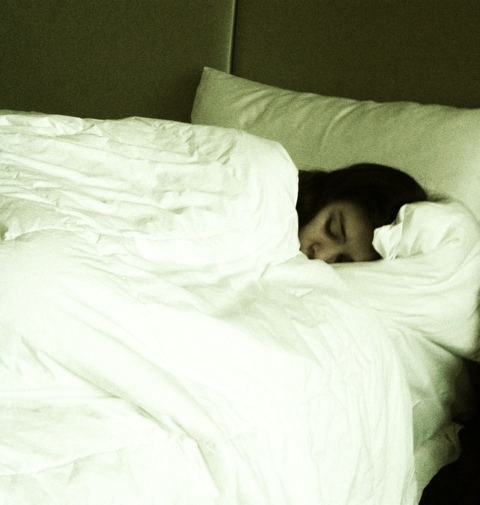
My daughter looks so cozy, curled up, under the covers on the sofa bed this morning as the sun rises over the Vegas strip, the full-wall of window glass framing her. She hated the thought of the sofa bed at first, preferring her own bedroom, but now she loves it – it is a tiny Vegas high-rise condo that she agreed after all is perfect for us, just the two of us, the way it’s been for some time. This is a week-long getaway, where I can visit my company’s western manufacturing facility and give a talk at the University of Nevada (UNLV), all while my daughter and I pursue some writing and photography in a town that’s a never-ending flow of story lines and imagery – and a sofa bed turns out to be just fine by her as a place to dream.

Glancing at my own bed, I wonder if I should make it or leave it for Housekeeping to change, but I can’t remember if it’s laundry day? I’ll wait till my daughter awakes, and discuss it with her – she knows the condo’s schedule better than I do, as she pays attention to such details. For now, I’ll sit quietly, watching the Vegas sun rise over my daughter, waiting for her to awake with a smile and a stretch, as she always does, and we’ll talk about whether to cook breakfast or walk to Starbucks or Denny’s, and she’ll tell me whether it’s laundry day.

After this quick trip to the Vegas condo, we’ll be back in Pennsylvania, on our usual schedules, celebrating our birthday that’s only three weeks away. Hers is March 3, and mine is March 2, so beyond the separation of midnight, it’s kind of a shared date, so we just call it our birthday. She’s turning 15, me, 41.

I always said that the joy of parenting is in seeing your child evolve and grow, where there’s no ideal stage, but that the entire process is awe-inspiring. However, as I sit here, I realize that I just want to stop time after all. She’s perfect the way she is – ideals, flaws, no matter – she is perfect, and I just want time to stop, freeze this moment forever, much as she does with her photography.

In three years, she’ll be off to college, and our relationship will evolve in yet more ways. Of course, I want her to move out, attend an ivy-league school, maybe in the northeast, maybe out west, but far from me – she needs to fly on her own, to soar on her own. And, I, too, will be on my own – an empty-nester at such a seemingly young age, likely lost for a while. Maybe I’ll have a live-in girlfriend, or it’ll just be me and the dogs. But, no matter what, I’ll still be lost for a while – and it will be OK. It will all be OK.

And, as I sit here watching my daughter sleep, I can’t help but already miss having her as the everyday center of my life. I was the first to hold her when she was born. As a toddler, she spent more time on my lap than walking. We moved across the country together, sitting side-by-side on the airplane when she was three. I still take her to school each morning. My weeknights and weekends are filled with her band and drama rehearsals. And, the big comfy chair that she sits in while talking to me at night in my master bedroom remains her safe place to let it all out when needed. Yet, as I sit here watching her sleep as the sun rises over Vegas, I know it’s all changing – it’s ever-changing, her, me, life, all changing like the rising sun.

I really should wake her up to talk about breakfast, laundry, and our day’s events. But, I can’t. For a moment, at least, I can just sit here, admire her perfection, and watch the sun rise. Indeed, time can stand still – if only for a precious moment.

The Ladybug Effect

By Mark E. Smith

For quite some time now, I’ve been trying to convince a dear friend of mine to get a Ladybug tattoo. It all started when, over cheesecake and coffee one night, I asked her what she’s always wanted to do but has never done, and she brought up her wish to get a Ladybug tattoo. See, as a little girl, her father nicknamed her “Ladybug,” and even though their relationship has been rocky over the years, her safe place remains reminding herself of who she will always be: Ladybug, cuddled up as a content little girl next to her father.

Of course, I was full-throttle toward the idea – Let’s go right now and get that tattoo! And, in the moment, I think she would have done it. However, we were in Small Town, U.S.A., and there were no tattoo shops open that late. Still, getting a small Ladybug tattoo on her foot or ankle has remained a topic of conversation between us. Her husband and mother are against it, and I understand respecting their opinions. But, I believe whole heartedly in the positivity of daily reminders of how special we are, and I know that, in even the toughest of times, she could glance at that little Ladybug tattoo, and it would immediately reminded her not just of how special and loved she is, but that she, too, has wings with which she can soar on her own. If there’s a tattoo to get, hers is among the most poignant.

Fortunately, we all have Ladybugs in our own lives, daily reminders that can lift our spirits when we think of them. Yet, if they aren’t right in front of us, we can often forget that they’re there. It’s so easy to get caught up in all of the negativity that surrounds us and forget who we really are, how much potential we have in our lives, how special we are. Bad days and tough times can be like wearing blinders: we see all of the negativity in front of us, and don’t realize all of the good that still surrounds us, that’s still within us.

I recently had one of my worst days in a long time. I’d been going nonstop for three weeks with work, various projects, my daughter’s extracurricular activities, and on and on – so by that Friday morning, I was exhausted. And, by 10:00am, I’d gotten word that two friends were having very serious crises in their lives, and by 11:00am, I had to address a difficult situation at work – and it was just going on and on, bad news after bad news, where I was thinking, Please make this tidal wave of a bad day stop! You know, those days when you think, There’s no way things can get any worse, but then they do!

Yet, I reminded myself that temporary negativity is just that – temporary – that while I had to address the bad stuff in front of me, I could still see the good that surrounded me. If nothing else, I would eventually go home to my own Ladybug – my daughter – and our two silly dogs, where their presence alone would remind me that all was fine, that there’s so much to be thankful for.

There’s a simple truth, that what we look for in life is ultimately what we see. And, sometimes the positives in our lives aren’t as easy to see as the negatives, especially in the heat of a moment. But, the positives are always there if we just look for them – and when we stop to truly look, they’re as clear as a Ladybug tattoo that reminds us every day of how fortunate and loved we really are.