It Happens for Us

By Mark E. Smith

I’m always intrigued when I hear people say, “Life isn’t fair.” It intrigues me because it’s simply never proves true in the long run. See, I’ve learned that while in the short term, bad occurrences – disability, divorce, job loss, addiction, you name it – can seem like they happen to us, they really ultimately happen for us – unexpected blessings that only come from adversity.

I remember in the mid 1990s, just such an example, where a terrible situation that initially happened to me, ultimately proved to happen for me, bettering my quality of life. I was in college and working, not making a lot of money, but enough to own my little 1,100-square-foot home in a borderline part of town. I felt blessed to own the home, but it was in no way ideal – it wasn’t fully accessible, and it needed a lot of expensive repairs. I couldn’t afford to replace the leaking roof, let alone renovate my bathroom to make it fully accessible.

To make matters worse, a big storm hit us, and although I lived on a hill, my side patio flooded, water pouring through the patio doors, filling my entire house with 6” of water. I remember the feeling of helplessness as I watched the water flow throughout my entire house within moments, destroying what little I had.

Soon, the water receded, and I was left with a horrendous muddy, soggy mess. The wall-to-wall carpeting was destroyed; the wall furnaces were destroyed; the sheet rock wicked moisture, needing dramatic repair; and, everything that was on the floor was soaked, from my wheelchair’s battery charger to my couch. I wasn’t sure how I could ever afford to repair my home, not having flood insurance.

However, while neighbors tore out my water-logged carpet and piled all of my destroyed goods on the lawn – my having no way to replace any of it – a FEMA claims inspector came along within a day or two. He assessed my property, and wrote me a several-thousand-dollar check on the spot. Within a week, I received another FEMA check, and with the help of my city’s building department, I was able to get a reputable contractor to start repairing my home.

But, here’s what’s amazing. As the city’s building inspector checked on my home’s progress one day, he noted my accessibility needs. And, within days, he had grant money for me to not only make my bathroom accessible, but to replace the roof and make other improvements. My home was ultimately in far better shape after the flood than before.

My point is, while the flood initially happened to me, it ultimately happened for me. A terrible occurrence was the catalyst for ultimate blessing.

If you truly look at the floods in your life – that is, the adversities that happen to you – you’ll clearly see that they are really happening for you in the end – winter always ushers in spring. I know, you may be thinking, Mark, bad thing after bad thing just keeps happening to me, there is nothing happening for me.

You need to look a little closer, that’s all – and you’ll see how turmoil always leads to triumph. Closed doors always become open doors. My dysfunctional upbringing didn’t happen to me, it happened for me, making me constantly strive to be a better father to my daughter. My ended marriage didn’t happen to me, it happened for me, placing me on a much healthier emotional path that’s brought greater levels of love, laughter, and contentment into my life. My cerebral palsy didn’t happen to me, it happened for me, instilling countless lessons within me as to the extraordinary potentials within all of us.

Really, we should each possess a bring-it-on! attitude, where we know that life plays its roles in magnificently mysterious ways, where vying always leads to victory, where turbulent times are merely life’s good graces getting ready to come our way. The next adversity that you face, remind yourself that nothing happens to you, but for you, where closed doors open, and a flood of prosperity and success are coming your way. Have faith and patience, and you’ll be amazed at how the tides in your life turn.

Flying High

By Mark E. Smith

I smiled – as always – when I rolled up to the airline ticket counter, and offered a friendly good morning to the ticket agent, placing my companion’s identification card and mine on the counter. The agent took our I.D.s, pulled up our tickets, and said, “You’re going to have to check your bag – that’ll be $25.”

“It’s a carry-on,” I replied, glancing at my bag.

“No, it’s too big to be a carry-on,” she replied. “You have to check it.”

“It’s a certified carry-on, and I’ve flown with it countless times as a carry-on, never checking it,” I explained.

“Do you want to fly today or not?” she asked. “”If so, I need that bag and $25.”

I suppose I could have asked to set the bag on the measuring board, or asked to speak to a manager, but I didn’t want to make the agent any angrier than she was, I didn’t want to add any fuel to whatever was burning her up inside that morning. So, I simply checked the bag as she insisted.

As my travel companion and I headed toward security screening, my companion was outraged, not understanding why the agent was so rude? “I don’t know why she was so rude,” I answered. “People are rude all the time. I just hope her day gets better.”

I was heading home from a successful business trip; I was blessed that $25 wasn’t an issue for me to afford; and, I was excited to be going home to my daughter. Really, I was happy to just be on my way – no worries at all.

The fact is, not everyone is going to like you or be kind to you – often for no reason at all. From your own family members to complete strangers, people are going to be rude, unkind, possibly downright mean. However, we have the choice of buying into their misery, or just letting it roll off us like water on glass – not letting it stick. If we know we are living kind, loving lives that give to others, it’s doing ourselves an injustice to let others bring us down. Be yourself – celebrated, not degraded or just tolerated.

I had a nice flight home, ultimately reaching the arms of my welcoming daughter. And, I truly hope that ticket agent’s day turned out just as well.

Play In Pain

By Mark E. Smith

At this writing, hurricane Sandy is bearing down on us, and it looks like I have to ride home in my power wheelchair in rain and 40mph winds. And, I’m totally fine with that – no big deal. Now, I have other options, but they seem illogical to me. I have over 400 hours of accumulated time off, so I could have stayed home, or even worked from home. Or, I could call someone to bring my van and pick me up. But, why would I do either of those? Schools are closed, and people are hunkering down with storm supplies, but a little discomfort – or, a lot – never persuaded me to stop from doing what’s best for me and those who count on me, like my going to work like any other day, regardless of a supposed looming hurricane.

We live in culture where too many people seem to resist “playing in pain,” sidelining themselves from the game of life, albeit due to emotional, physical, or mental challenges. It’s as if why try when you can just give up? There’s a storm brewing, so let’s cancel school. I’m sick, so I’m not going to work. My boyfriend broke up with me, so I’m going to sleep all weekend. I lost my job, so I’m just going to sit around the house….

No, just because bad things happen doesn’t mean that we throw in the towel, give up on ourselves, make excuses, or stop our lives. Rather, in times of adversity, we should pick up the pace. They make rain gear to weather storms, and when storms hit our own lives, you might say that rather than run and hide, we should don our rain gear – that is, our inner-strength – and head into the storm, head on. After all, weathering storms is how we grow and become stronger.

The next time you find yourself with the two options of adversity – to play in pain with pride, or seat yourself on the sidelines of life with pity – don your rain gear and head into the storm, with courage and tenacity. Choose to “play in pain,” and you will come out stronger.

The Disability-Technology Continuum

By Mark E. Smith

From my CEO to my life-long best friend, a conversation keeps popping up that’s quite fascinating. It’s what I’ve coined “The Disability-Technology Continuum.”

The disability-technology continuum, as I’ve defined it, is an extremely simple yet profound concept. It’s the fact that technology literally makes us less disabled – that is, it improves upon virtually every aspect of our lives, that when we have appropriate technology, our abilities and quality of life expand.

I can use the disability-technology continuum as a prime example in my own life toward how it works and its ultimate results. Imagine there’s a scale from 0 to 100. Zero is totally disabled, as in bed-ridden, and 100 is totally independent. Without a mobility device, I’m at 0 because, based on my disability, I’d be bed-ridden. However, if I have a manual wheelchair, my functionality increases to, say, 30 on the continuum. Yet, with a power chair, now I may be at, say, 60, and with an elevating seat added, I’m bumped up to 65. You get the idea: appropriate technology increases independence, lessening the impact of disability.

Of course, many aspects move one along the disability-technology continuum. Mobility equipment, computer technology, adaptive transportation, and accessible housing, to name a few, all play key roles in moving us from the bottom end of the continuum toward the upper end – and it’s near the upper end where aspects like education, employment, and community involvement skyrocket. And, as we move up the continuum, we don’t just win, everyone wins, as our independence benefits many, where we simply can contribute more toward society.

All of this, however, requires exactly that – societal support, where, culturally all understand the importance of supporting moving others up the disability-technology continuum. See, technology can only get those with disabilities so far. It’s societal support and acceptance that both allow and complete the disability-technology continuum. Technology can physically liberate those of us with severe disabilities, but, make no mistake, we need a society that fosters that process.

That Thing Called Integrity

By Mark E. Smith

I did an interview recently, and both the interviewer and my public relations manager both expressed that if any of the questions were too personal, I should feel free to not answer them. And, so I tried to figure out what would be too personal for me to publicly address?

And, I couldn’t come up with what would be too personal for me to publicly answer, especially because the interview was for a mobility industry publication. I mean, it’s not like they’d ever ask if I’ve had sex in my wheelchair, right? But, if they did, I’d pull a Bill Clinton, and ask for a clarification of terms – and then reply with a resounding, Yes, and then share every sordid detail of each encounter that I could squeeze in before my publicist wisely censored me. …So, I was 20, and in the all-girls dorm at Santa Clara University one night, dating this really hot Psych major….

But, alas, to me at least, the questions were strikingly normal – just questions about growing up with my disability. And, then it hit me: I suppose some people do view speaking of their disabilities as too personal to discuss in public. But, not me, and as I got into the interview questions, I had no qualms about answering them, to an as-honestly-personal level as I could.

See, I know that everyone has differing levels of comfort and privacy. But, if you’re going to put yourself out there, don’t hold back. And, I believe that if someone – or, a readership – is candid enough to ask you a question, you owe it to them and yourself to give a completely candid answer, even when a lump develops in your throat and you have to say what you’re going to say in one breath or the tears will start flowing. After all, if you’re not going to expose yourself completely – your heart and soul, fear and shame – you’re lying to everyone, including yourself. It all comes down to a greatly underestimated trait called integrity.

So, I worked my way through the questions with what I learned about Gandhi. He never planned a speech. What he said, felt, and did were so congruent that he spoke solely from intuition and heart. To each question, I just strove to give an authentic answer.

The interview went great, and not thinking much about it, I left the transcript on my kitchen table. My daughter and sister were hanging out that eve, and began reading through it, par for the course, till they got to one specific question and answer:

What do you know now that you wish you knew then?
That I am worthy of love. I mean, I still struggle with it, but not nearly as much as I did in my teens and twenties. My father, till the day he died, expressed shame toward my disability, and my mother always blamed my disability for their divorce (which occurred when I was a toddler). My mother was also a life-long substance abuser and experienced mental illness, so I took the brunt of that chaos, much of which she blamed on my having a disability, as well. So, when you add that into the normal teen equation of wanting to fit in – but not fitting in due to disability – it was hard for me to look at myself in the mirror at, say, 17. Based on a lot of work on personal growth, and raising my daughter, I’ve come a long way toward truly feeling worthy of love – but, admittedly, I still struggle with it at times.

“Wow, that’s really brave of you to publicly share,” my sister said.

“It’s not brave at all,” I said. “It’s just being honest.”

Wanna be a Rock Star?

By Mark E. Smith

At some point, one must get smarter about these things – I must get smarter about these things. At some point, unlike Peter Pan, we should all grow up.

I’m heading out on the road, with a jam-packed schedule – first Detroit, then Atlanta for Medtrade. They’re back-to-back trips, with one whole day home in-between, just enough to repack and catch-up with my daughter. It’s a nine-day stint in total.

After well over a decade of these types of trip, I’ve seen it all and done it all, and while it’s been a blast – and made for some great writing and tales to be told – at some point one has to put the work above all else, and dial down the after hours shenanigans for healthier pursuits like sleep. The goal isn’t to pride yourself on rock-starring it all night, then showing up for your gig on time the next day, but to prioritize your actual job at hand – and that means forgoing the whole rock-star part. It’s almost like there has to be humility to it all, where you just do your job, find something to eat, and go back to your hotel room for some reading and a full night’s sleep. No boozing, no parties, no chasing chicks – just a call home, shower, and eight hours of sleep. Is that the life of over-the-top stories and rock-star fantasies come true? No, but it’s a heck of a wise way to live if your career is a priority and you want to live by example for those around you – in my case, my teen daughter.

In Detroit, one day, I have an 8:00am corporate talk, then an 8:00pm keynote, more of a ruckus, rousing one-man show, introduced by one of Detroit’s top news anchors. I have to be up by 5:00am, knock the ball out of the park during the morning talk, then shift gears for a totally different gig that evening, where my energy level is through the roof. And, Medtrade is far more demanding yet, in that it’s a grueling schedule day after day, all week. Work like that, to the levels that I wish to perform, just can’t be done without a good night’s rest and sobriety.

I’ve written and talked about the highs and lows on the road, where the self-imposed chaos could take me from among the most glamorous scenes to the darkest of depression, the type of emotional roller-coaster that contributed to Vic Chestnut’s suicide. And, what I’ve realized is that it’s not the travel, or the work, or the scenes that cause such extremes, but the way we handle them – a loss of perspective and humility.

Sure, most want to be a rock star on the road, living clips of the lifestyle. But, the fact is, I’m no musician with throngs of fans, fueled by booze and chicks. Rather, I’m just a full-time single dad, trying to make a living while making a difference, where good work and clean living is a boring truth. My goal is to do my jobs, move on to the next city, and get home to just being Dad and cleaning my bathroom.

Five-by-Seven

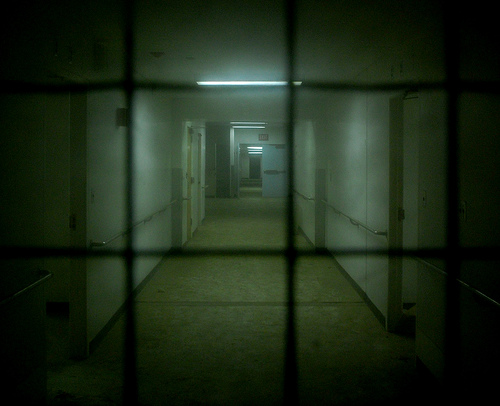
The smell doesn’t change – it hasn’t for over 100 years. It’s the smell of urine, feces, body odor, musty hair. And it fills the halls, where it permeates everything within its path – it’s the smell of despair, stripped humanity, the ever-slowly-wasting-away of souls. It’s where some of us visit, some of us live, and too many of us die.

I am, of course, describing residential care facilities for those with physical disabilities – or, more aptly, institutions. Over the 100 years, the common verbiage has changed from asylum, to home for incurables, to institution, to residential care facility. Yet, beyond a name, fundamentally, nothing has changed – not the facilities, not our cultural practices, not even the smells. Those with disabilities still line the halls, locked away from society in literal five-by-seven-foot rooms that have fewer amenities than a prison cell – not even a commode of their own. What you’ll see is a twin bed pressed against the wall, a dresser, a TV, and a common cardboard box with one’s worldly possessions. Nine years, a woman with multiple sclerosis told me she’d been in her room – and I looked at the windowless walls of degraded paint, and thought to myself, Nine years of starring at blank walls absorbing her dignity, humanity, sanity. Nine years dying an emotional death, where she’s treated with less dignity than a convicted murderer on death row.

Now, it’s easy to point fingers and blame the mainstream for still accepting institutionalized care, still locking those with physical disabilities behind stone facades while the rest of the community drives by in luxury cars, never giving a thought to who’s hidden away in that “historic” building. And, it’s easy for families to convince themselves that it’s what’s best for their Billy or Diane, those who have severe physical disabilities, whose families know not else what to do.

However, I hold myself to a much tougher standard, knowing that I, too, am to blame. See, with a flip of a coin, I could have spent my life in a five-by-seven-foot room, where my humanity was stripped, and I wasted away, never to be known. As I tour institutions today, I see not those who should be there, but those just like me if a simple call had been made or the right question asked, where my severe disability and ultimately neglectful parents should have landed me in an institution. But, like missing a flight by moments, later to learn that it crashed, I didn’t end up in an institution. Instead, I went on to college, career, and family – a normality I could have easily never known. And, for those of us with disabilities living independent, upper-middle-class lives, we’d like to think that it’s due to our hard work or perseverance. But, it’s not. It’s just happenstance and luck, where the only difference between us and them was a cosmic coin toss, a stroke of luck that flung us down one path instead of the other, saving our lives while those just as worthy as us – our exact image – weren’t so fortunate.

And, with that reality – that the only factor that prevented me from being institutionalized due to disability was a random, cosmic coin toss – I struggle to live with the guilt and shame that consumes me: What have I done to help any of my peers who remain locked away? Who am I to sleep soundly at night in my custom home, on Egyptian cotton sheets, while my peers lay in a degraded five-by-seven-foot room, on soiled bedding, starring at windowless walls, their lives absorbed by the stench of it all? Who the hell am I to have escaped the death sentence of an institution, and not have had the presence of mind to go back and carry even one of my peers out on my shoulders?

Where Love Grows

By Mark E. Smith

The Hayes stop by my company once per year, either on their way to Maine in May, or on their way back to North Carolina in September. Snowbirds, they are.

I have no idea exactly how long they’ve been married, but I’d guess 45 years, based their age, as well as having three grown grandchildren. And, they’re madly in love – and it’s contagious to everyone around them.

And, so, it’s no surprise that when Mrs. Hayes was diagnosed with multiple sclerosis years ago, Mr. Hayes took an early retirement, and dedicated himself not just to his wife’s eventual full-time care, but also toward doing an astounding job of continuing with their dream retirement, going between North Carolina and Maine.

I’ve been in a unique position in that I’ve seen snapshots of Mrs. Hayes’ progression, yearly glimpses into her loss of function, to the point this September that she can only move her head a bit. Yet, what would seem like bittersweet annual visits are actually uplifting, a true lesson in life – and love.

See, despite the progression of multiple sclerosis, the Hayes simply seem happier every time I visit with them – projecting a contentment, zest, and love for life we should all be blessed with. And, it’s intrigued me to the point that I’ve striven to define what they intrinsically know that many others don’t, how they simply get happier the tougher life gets?

What I’ve determined is a profound truth: They continually inspire each other.

Think about how many couples we know with everything to be thankful for – health and wealth – but all they do is bicker and disrespect each other. There’s no admiration or inspiration seen in each other – just two unappreciative people, living a devalued life.

However, the Hayes are different. They know that the other is putting 100% into life, the marriage, and everyone around them – and are so inspired by each other that they each give more and more. The result is a cumulative effect, where it’s like inspiration squared, admiration compounded, love volleyed back and forth that just grows and grows and grows.

And, so there are two questions that the Hayes teach us to ask in our own relationships: Does our partner inspire us, and are we inspiring our partner?

If the answer is, yes, then we are doing everything right, living an ultimately-fulfilled life of truly reciprocating love – a love that just grows and grows and grows.

However, if we’re in a relationship where we’re not mutually inspired with our partners, then we need to make changes for the better – starting with ourselves, allowing ourselves to inspire and love fully.

Yet, the ultimate lesson that the Hayes teach us is that we don’t have a limited reservoir for inspiration and love. Rather, we have the unique capacity for boundless inspiration, where love doesn’t merely exist, but can constantly grow.

Smashed-Up

By Mark E. Smith

For the third time, U.S. Airways luggage handlers have dropped my power chair from around eight feet in the air (off of the top of the conveyor belt near the cargo door). Fortunately, that particular power chair is like a Timex watch: After two years of use, travel, and being dropped from the conveyor belt three times, it takes a lickin’ and keeps on tickin’!

But, not without battle scars, of course. I mean, when a 300-something-pound power chair falls from eight feet onto the pavement, bad things happen. This time, the power chair landed with such a blow that it actually twisted – not bent, but twisted – some seriously-stout metal structures, destroying an armrest and back cane. Still, the power seating system and power base are fine, ready for more flights (and drops). And, because I’m part of my own power chair company, yes, I am a bit more fortunate than others because I can piece it back together, cover up the gashed areas with black paint, and be off to the next event in real time. Still, in the moment, I’m as stuck as anyone would be at the airport with a smashed-up power chair – not a good feeling or scene.

However, here’s what I really don’t understand: A bunch of people saw my power chair fall off of the conveyor belt – clearly smashed-up – and no one acknowledged it, pretending that it never happened. This time, someone parked it, tweaked as heck, at the gate counter (rather than bringing it to the plane door like they should), and the gate agent came down to the plane door, simply telling me that they couldn’t bring my chair down because it wasn’t working. Duh – it took an 8-foot tumble to the tarmac!

I really appreciate the hard work that the luggage handlers perform – it’s back-breaking, in weather extremes, for not a lot of pay. I also understand that they’re not trained to handle mobility devices, nor is the equipment that they use designed for loading and transporting a big, heavy object like a power chair. However, on a deeper level, how have the airlines created a culture of no responsibility? Call me naïve, but where are accident reports and such? How can a company’s employees and procedures damage customer property without any sort of personnel accountability? Sure, a damage claim can be filled, but that doesn’t resolve the systemic issue of zero accountability among employees – they literally can destroy your property, and no one cares. And, the slight cynic in me wonders if the airlines have determined that it’s more cost effective to just pay an occasional claim than to train personnel and create procedures?

A portion of my career involves flying, and the highlights of my life have been traveling with my teenage daughter the past few years. So, despite a bad track record, and undoubtedly more challenges to come, the rewards of air travel far outweigh the risks and consequences.

Yet, I’d still feel better if I could just fly somewhere without worrying if I’ll be mobile when I land?

Just Jump!

By Mark E. Smith

OK, I know what you’re thinking: Mark’s back in Vegas again? Publicly, I guess it does seem like I’m in Vegas a lot, but really it’s only a few weekends per year. …OK, so, yes, I’m in Vegas again – but I love this place! And, this time is different, namely because I’m with my girlfriend and our two daughters – sort of like the Brady Bunch, minus four kids, Alice, Sam the Butcher, and Cousin Oliver. But, really, we’re in Vegas for a three-day weekend on a much more serious note: Personal growth as individuals and as a group.

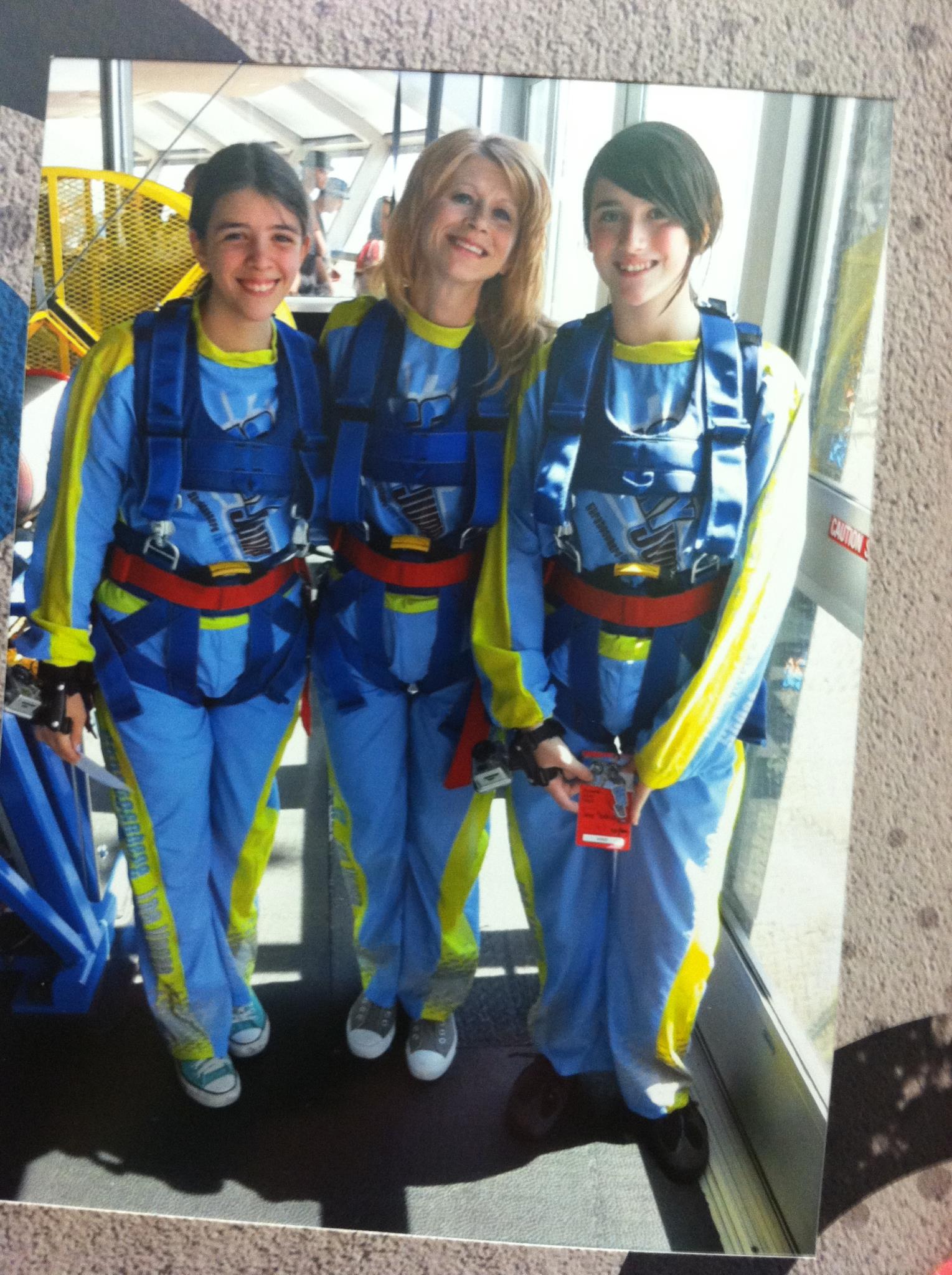
Our daughters are moving toward 14 and 16, mine being the older. It’s a pivotal time in their lives, where we want them to be empowered, to know their amazing potentials as strong, poised, confident young ladies. In this messed-up culture that sends airbrushed, cosmetically-enhanced messages that no woman is ever good enough, we say, nonsense – every woman is more than enough, perfect as-is, capable of whatever she dreams. And, this is why we’re in Vegas, encouraging our daughters to step of the 108th floor of the Stratosphere, plummeting 855 feet to the ground.

…Well, maybe I should clarify the jumping off of the building part. See, the Stratosphere, on the outreach of the Vegas strip, is a replica of Seattle’s Space Needle. The only real difference is that if you jump off the Space Needle, you die; whereas, with the Stratosphere, you’re perched on a ledge, wearing a harness, and as you leap, control cables guide you safely to the ground, slowing you to your feet at the end. Yet, despite the safety factors, stepping off of that ledge on the 108th floor, 855 feet off of the ground, and virtually free falling, takes a huge amount of courage and confidence. And, I explain this to our girls at dinner the night before:

At points in our lives, we each find ourselves perched on a ledge. If we have the courage to jump – maybe it’s a career step, or starting or ending a relationship, or any aspect of life that requires us to stretch our comfort zone – we grow. However, if we don’t have the courage to make those leaps, our lives stagnate, we go nowhere. Both of you girls are doing an amazing job in school, with huge life potential ahead of you. But, you’ll need to take leaps of courage along the way to do it. Let the literal Stratosphere SkyJump be a lesson in life, where you’ll carry it with you, knowing that you have the courage and strength to take big leaps in life whenever needed….

After the jump, I tell the girls how proud of them I am, and they share how the scariest part was preparing for the jump, that once they summoned the courage to step off of the ledge, the liberation of flying through the air was amazing.

Really, for all us, no matter our backgrounds or challenges, there’s a lesson to be learned here, isn’t there? Success in all areas of life is all but guaranteed, as long as we have the courage to take initial leaps out of our comfort zones. A lot of times challenges are easy, but stepping off of the ledge, into a seemingly new territory is the hard part. Yet, when we summon the courage to simply step off of the ledge, our lives always move to the next level. As I told the girls, just jump!