When a Smell Isn’t a Smelll

735042_10200281859839418_1804006375_n

By Mark E. Smith

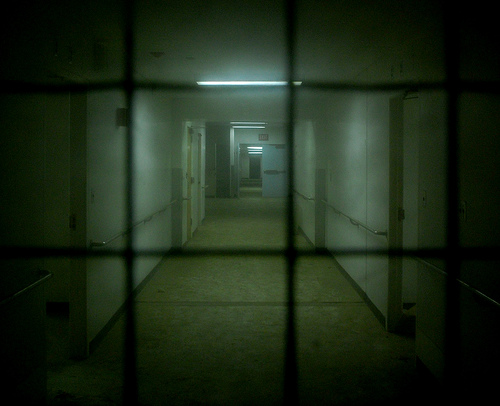
My daughter and I were talking about the horrors of care facilities, and one in particular came up that I’ve visited, where the odor was overwhelming.

“They should hire you to fix that kind of place,” she said, with a belief in me that only an adoring daughter can have in her father.

“It’s not that easy,” I said. “See, in order to make it a better place, I’d have to get rid of the bad smell, and that’s a huge task.”

“How hard could that be?” she asked. “It’s just a smell.”

“Really hard,” I said. “The smell isn’t just a smell. It represents what’s called systemic issues. The smell is caused by much larger issues.”

“Like what?” my daughter asked. “Can’t you just get rid of a smell?”

“Not in this case,” I replied. “See, the smell is caused by overall improper care, from soiled bedding to poor hygiene care of clients. In order to get rid of the smell, you’d have to change the entire infrastructure of care.”

“How would you do that?” she asked.

“Well, you’d start with the management and work your way down – leadership is where accountability for the smell starts, but not where it ends. Every employee there is ultimately accountable.” I explained. “You’d have to change the way everything is done, retrain staff, probably fire some and hire some. But, once the smell was gone by dramatically changing the way everything is done, you’d have among the best run facilities in the country.”

“So, to get rid of the smell, you have to get rid of the real problems, and that starts with the people who run the place because they’re allowing all of the problems to happen, right?” she asked.

“Exactly,” I said. “You have to find the root causes and fix them. Someday you’ll learn in life that most often a seemingly small symptom is the result of a very complex cause – from relationships to business. … A smell is never just a smell in these cases. Always look deeper.”

Talk About Mistakes

learn-from-your-mistakes

Mistakes are lessons of wisdom. The past cannot be changed. The future is yet in your power. -Hugh White

By Mark E. Smith

Have you ever made a grievous mistake, one that you immediately regretted, one that you wished you never made, one that made you think less of yourself?

I have – and a lot more than once.

Not too long ago, I made just such a mistake. I pride myself on not losing my temper, not saying anything I’ll regret, only showing respect toward others. However, not too long ago, I said something to someone close to me that I truly regretted. It wasn’t who I am, and certainly not who I wanted to be, but in a really weak, lousy moment on my part, I said something that came out of all of the wrong emotions, and it hurt the other person and violated trust.

For me, I immediately knew I wasn’t just in the wrong, but made a grievous mistake. There’s really only two things we should never do in life: One, never hurt another person’s feelings, albeit someone close or a stranger. And, two, never violate trust. And, I did both.

I called the person the next morning, took full accountability, and was prepared for the person to hang up on me. But, with I suspect some caution, my sincere apology was accepted. However, an apology didn’t resolve much for me; I still felt horrible about what I’d said the eve before. Yet, as I shared with the person, my job wasn’t to pity myself for acting so poorly; rather, my job was to take accountability, to understand what vulnerabilities, insecurities, and character flaws fueled a split-second reaction that I was truly ashamed of. I needed to understand why I did what I did, and strive to never do it again.

We all make mistakes – some more grievous than others, as I’ve done at points in my life. But, the biggest mistake that we can make is to allow a mistake to define us instead of using it as a lesson to refine us. See, when we let mistakes define us, we don’t correct the behavior, we perpetuate it. I failed that class because I’m a bad student…. She dumped me because I’m a jerk…. I lost that job because I’m an idiot…. When we allow mistakes to define us, nothing gets resolved – and there’s truly no accountability.

Yet, look what happens when mistakes don’t define us, but refine us: I failed that class, but I’m going to study harder next semester…. She dumped me, but I know that I need to treat my partner better…. I lost that job, but I’m coming in early and staying late at the next…. When we don’t allow mistakes to define us, but to refine us, it’s the ultimate accountability. Put simply, let’s not say how stupid we are, but show how smart we are by learning from our mistakes.

If we’re alive, we’re going to make mistakes – sometimes really, really bad ones. However, if we let them define us – I’m just an idiot – we’re not learning, but merely propagating the mistake, where we keep making it. Instead, when we make mistakes, let’s learn from them and strive to be refined by them, where we take accountability and grow.

As for me, there’s still refining going on – and always will be. To make mistakes is human; and, so is learning from them.

The Power of Choice

choice

By Mark E. Smith

I recently had the pleasure of speaking to a very large group of diverse professionals – executives, CEOs, managers, and small-business owners.

In a rapport-building exercise, I asked the group to be open and trusting, and by a show of hands, how many of them felt that 2012 was a great year for them? Two of us – yes, I was one of them – raised our hands.

I then asked how many people had a terrible year in 2012, and it was a sea of hands in the air, with seemingly everyone raising their hands.

Then, I asked how many people had an in-between year in 2012, and three people raised their hands.

There was a fairly round number of attendees at the conference, of diverse backgrounds and occupations, and what I realized was that, mathematically, 95% of them raised their hands that they’d had a terrible year.

I went on to do my talk about “recognizing the treasure within each of us,” and then we had a question-and-answer session. And, as is my ultimate blessing and privilege, the program went fantastic, where from the host to attendee surveys, I was noted as the highlight of the conference.

Yet, as my publicist and good friend, Haley, and I got in my van, starting it to leave, I asked, “How is it that 95% of those participants had a terrible year?” It really did trouble me, where I wanted to go back and learn each person’s story. I mean, I know all of us go through tough – sometimes, hellish – times in our lives, so there undoubtedly is more pain in the lives of those around us than we realize. I can only imagine how many people in that room experienced a painful relationship, illness in the family, financial troubles, depression, and on and on during 2012. Yet, to have 95% of a large audience tell me they’ve had a terrible year truly saddened me.

Interestingly, just prior to that conference, I’d read that 63% of Americans feel that the best is past, that only worst times are to come – a record high of discouragement in our country today. Again, I know that these are tough times for many, but the lack of hope and optimism is downright alarming.

All of this reminded me of the hellish times in my life – from the petty like riding my power wheelchair to work in horrible snow storms, to the more serious like finding my mother with her wrists slit on my 10th birthday, to my sister having cancer, to being in painful relationships, and so on – but I don’t recall having what I would label an outright bad year, not to mention a bad week (a bad day, here or there, but that’s to be expected). There’s always some blessing – yes, even during hellish times.

So, what was it that made 2012 a great year for me, as opposed to 95% of my peers that day? Gratitude and personal growth. Sure, I can make the year sound terrible, too: As a full-time single father with cerebral palsy, with the economy in the dumps, and my sister having another cancer scare, the year had its challenges. Yet, while I acknowledged each adversity, I chose not to let them define my year. Instead, I had a great year. My daughter’s doing extremely well, there’s a special lady in my life, I still live totally debt free, my sister is healthy, and I maintain rewarding work. No, my life isn’t easy on the daily basis, but in the larger picture, all is blessed. Why focus on the trying times of 2012, when there’s so much to be thankful for?

And, that’s where all of this ties together. While we can’t control many circumstances that bring adversities into our lives, we always retain the ultimate ability to address them: Are you going to choose to focus on defeat or victory, the challenges or the successes, the curses or blessings? You have the power to choose the perspectives in your life – we all do.

And, it was Haley who raised a great point that day. Maybe the 95% of people at that conference who declared having a terrible year were only thinking of the bad, not the blessings? Despite some adversities, surely there were great moments in all of their lives in 2012 – they were just choosing to focus on the negative, albeit even if just being put on the spot with my question.

For the New Year, I hope more of us employ the conscious power of choice – that is, choosing to focus on the positives. The fact is, focusing on the negative stalls us, while focusing on the positive empowers us. When we’re negative, we dwell; when we’re positive, we accomplish. …And, we know which gets results and inspires us. The power of choice isn’t rocket science.

We’re all going to face adversities in 2013, and of course we should acknowledge and address them. I’m not saying pretend that adversities don’t exist – they do, and the only way to resolve them is to address them. However, rather than hyper focusing on only the negatives in a situation – or, forbid, our whole lives – let us focus on the positives. I’ve never encountered an adversity in my life where there ultimately wasn’t opportunity or blessing. It hasn’t always been immediately evident or timely, but truly, even the worst times of pain have brought my life to higher levels of opportunity and blessing.

So, how do we shift toward the positive powers of choice? …By consciously looking at the positives, and moving our perspectives in that direction – it’s that simple.

Maybe you’re entering the New Year with a relationship on the rocks because you’re both dwelling on the negatives. Get on the same page as a couple, remind each other why you fell in love in the first place, and choose as a team to focus on those positives – don’t settle for an end when you can reignite the beginning. Choose to keep learning, growing, and loving.

Just because the economy is down, doesn’t mean you have to be down – choose to focus on the positives and opportunity – and look for them where you wouldn’t expect. A college buddy of mine was an executive at the country’s largest newspaper chain, but was laid off a year ago based on changing times. He’s been out of work ever since, but has volunteered with Habitat for Humanity, filling his time of adversities with efforts that bless others, having now helped build dozens of homes for those in need. Nevertheless, his actions weren’t always so selfless. His ultimate dream for years was simply to own a Ferrari, loving the car when he finally bought it in 2008. He called me not too long ago and said, “Mark, I have great news – I sold my Ferrari.”

I was puzzled because he loved that car, and it was a dream realized, so how was selling it great news?

“That car was a double blessing in disguise,” he told me. “When I bought it, it was my most prized possession, and when I sold it, it was a true blessing – that car just paid my daughter’s college tuition when I couldn’t have afforded it.”

My friend didn’t look at dreams lost by having to sell his beloved car based on job loss, but he saw dreams realized by using it to pay his daughter’s tuition. He chose to look at the positive in what those who were more superficial may have seen as a disappointment.

Of course, we’re not islands, and those around us have a huge impact on how we see the world and feel. Part of the power of positive choice is choosing who’s in our lives and how we deal with them. In my life, I’ve made big strides over the years to avoid those who bring negativity and drama into my life. I want reciprocating relationships of inspiration – and I’m striving to be that person, as well. If we’re around lousy people, with bleak outlooks, who are emotional and psychological vacuums, we’re going to get sucked into what Dave Ramsey calls the “language of losers,” people who are so negative that they just pull us down. Instead, we should surround ourselves with champions, those who ooze positivity and are our peers in positive outlooks. People who pump us up – who are excited about life – are who we should choose to have around us, just as we should do for others.

With 2013 right around the corner, I still have no idea what it has in store for me. I’m betting that there will be adversity – I don’t know in what form, or how severe, but it will be there. Nevertheless, I’m also betting that I’ll get through it with strides, as I always have, knowing that adversity is always lined with opportunity and blessing. Join me in choosing the power of positivity to make 2013 among our best years ever, regardless of what it brings.

Hill Holders for Life

hill

By Mark E. Smith

In the realm of manual wheelchair technology, there’s a mechanism commonly called a “hill holder.” As you push up a hill, the hill holder works as an automatic, one-direction brake – the wheelchair can’t roll backward, only forward, allowing ultimate progress pushing up the hill. In fact, even on the steepest of hills, you can push forward, let your hands off of the wheels, and the wheelchair stays right where you want it, guaranteeing constant progress.

I often think that we need hill holders in life – emotionally, mentally, financially, physically, spiritually. We need a mechanism that prevents backward slides on our momentum. You’ve heard the saying, Two steps forward, one step back… well… that’s our hill holders not working.

No, if we’re to learn, grow, and succeed, we need hill holders firmly in place, where we only go forward in life, not backward. Have you ever paid off your credit cards, only to use them again? Have you ever struggled with an addiction, only to start again? Have you ever vowed to stay out of unhealthy relationships, only to get in yet another one? Have you ever vowed to diet and workout, only to overindulge and go back to being a couch potato? In whole, have you ever tried to make positive changes, forward momentum in life, only to end up going backward, to old patterns? Most of us have, for any number of reasons – returning to negative comfort zones, being scared of progress, low self-esteem… self-sabotaging roots. I know, I’ve been there, and still find myself there at times!

But, that’s where real life hill holders come into play – when things get tough, they keep us from going backward, from losing momentum, from throwing away great progress in our life.

I met an acquaintance who had completely turned around his whole life. He went from divorced, broke, alcoholic, and spiritually bankrupt to having a soul mate, a great career, not drinking, and becoming a pastor – all in about six years. Now, six years is a long time, but to make such complete, radical changes over any period is impressive. When I asked him his secret to success, he said that it started with personal accountability – the ultimate hill holder – but then he went the extra step and only surrounded himself with people who brought out excellent in him (even if we’re not savvy enough to catch ourselves off of track, let’s at least surround ourselves with those who care enough to catch us).

My acquaintance is a great example of installing hill holders in our lives. We may be compelled to go backward toward that which is bad for us – it’s easier to roll back down the hill than to push up it! However, if we do that, our lives never improve, and we never succeed. Instead, hill holders keep our forward momentum, where despite being scared or self-sabotaging or lazy, accountability and our support network kicks in to bolster our progress.

Be brave enough to use hill holders in your life, and you”ll achieve greater vistas than you ever imagined.

Flipping Coins

Image

By Mark E. Smith

They say that there are two sides to every coin – and that’s so true in life. The fact is that adversity happens to all of us, but so can success, often all in the same circumstance. Often turning a vying into a victory, you might say, comes down to simply flipping the coin to the other side. On a deeper level, it’s a principle that I call, Making that which seems against you, actually work for you. It’s about taking the bad tosses of life, and flipping the coin over so that they become blessings, successes, better than where you started.

A friend of mine loved her job, having worked it for 10 years, making close to $100,000 per year. She admired her co-workers, was immensely talented, and was loyal to her employer. She told me that she hoped to run the whole division she was in some day. She was inspired, accomplished, and on the fast track. So, imagine how devastated she was when she was abruptly let go, her job gone.

I worried about her tremendously, wondering where she would go, what she would do? To make matters more concerning, she was the bread-winner in her household, supporting two children and a mortgage. What good could possibly come out of that situation, one that countless Americans currently face? Indeed, it was a terrible toss of the coin, the losing side of life flipped up.

However, my friend did something amazing: She did what it took to turn the coin right-side-up. Within two weeks, she had a new job several states away, bold enough to make that move. And, after a year at that job, doing very well, she was hired at one of her old employer’s competitors for more money, in a more prestigious position. That which originally seemed to work against her, ultimately worked for her. She didn’t just come out of adversity, she came out on top.

Think about how many aspects of our lives that seem against us, actually work for us. An ended bad relationship leads to a healthy new one; a job loss leads to a better one; addiction-recovery leads to healthier living. The list goes on and on. However, the truth comes down to this: Just when you think life’s dealt you a blow with the bad side of a coin, remember that there’s always another side. Flip it over, and make that which seems against you, actually work for you.

I recently saw the movie, The Sessions, based on the true story of writer, Mark O’Brien. Struck with polio as a young boy, he spent his life completely paralyzed, most of the time living in an iron lung. Yet, he used among his only capabilities – the ability to move his head – to control a mouth stick, meticulously typing one letter at a time, ultimately publishing countless articles and poetry on subjects ranging from disability commentary to baseball to interviewing Dr. Stephen Hawking. O’Brien took among the toughest plights – imagine all that was against him – and made it work for him.

Life is going to give us all bad tosses of the coin. Heck, I sometimes think I’ve had so many bad tosses of coins that my adversities keep the Federal Reserve’s mint in business! Yet, I always know exactly what to do when bad tosses of the coin come my way: flip it over, making that which seems against me, actually work for me. I was raised by alcoholic-addicts, so I’ve lived a very sober life. Being a full-time single dad has made me a better dad, bring more joy to my life as a father than I could have ever imagined. Having cerebral palsy has allowed me among the most rewarding careers. I could have easily gone down terrible paths with each adversity in my life. However, before the coin even hits the ground, I’m usually snatching it mid-air, ensuring I’m righting it as quick as I can toward favor and blessing.

Bad tosses of the coin are going to come your way – that’s a fact. However, it’s up to you to leave it as-is, working against you, or strive to flip that coin over, making it work for you. I say, always strive to find the shiny side to any coin – read that, situation – as that’s the only one that will add value to your life, taking you to levels of success that others may not have foreseen. 

It Happens for Us

By Mark E. Smith

I’m always intrigued when I hear people say, “Life isn’t fair.” It intrigues me because it’s simply never proves true in the long run. See, I’ve learned that while in the short term, bad occurrences – disability, divorce, job loss, addiction, you name it – can seem like they happen to us, they really ultimately happen for us – unexpected blessings that only come from adversity.

I remember in the mid 1990s, just such an example, where a terrible situation that initially happened to me, ultimately proved to happen for me, bettering my quality of life. I was in college and working, not making a lot of money, but enough to own my little 1,100-square-foot home in a borderline part of town. I felt blessed to own the home, but it was in no way ideal – it wasn’t fully accessible, and it needed a lot of expensive repairs. I couldn’t afford to replace the leaking roof, let alone renovate my bathroom to make it fully accessible.

To make matters worse, a big storm hit us, and although I lived on a hill, my side patio flooded, water pouring through the patio doors, filling my entire house with 6” of water. I remember the feeling of helplessness as I watched the water flow throughout my entire house within moments, destroying what little I had.

Soon, the water receded, and I was left with a horrendous muddy, soggy mess. The wall-to-wall carpeting was destroyed; the wall furnaces were destroyed; the sheet rock wicked moisture, needing dramatic repair; and, everything that was on the floor was soaked, from my wheelchair’s battery charger to my couch. I wasn’t sure how I could ever afford to repair my home, not having flood insurance.

However, while neighbors tore out my water-logged carpet and piled all of my destroyed goods on the lawn – my having no way to replace any of it – a FEMA claims inspector came along within a day or two. He assessed my property, and wrote me a several-thousand-dollar check on the spot. Within a week, I received another FEMA check, and with the help of my city’s building department, I was able to get a reputable contractor to start repairing my home.

But, here’s what’s amazing. As the city’s building inspector checked on my home’s progress one day, he noted my accessibility needs. And, within days, he had grant money for me to not only make my bathroom accessible, but to replace the roof and make other improvements. My home was ultimately in far better shape after the flood than before.

My point is, while the flood initially happened to me, it ultimately happened for me. A terrible occurrence was the catalyst for ultimate blessing.

If you truly look at the floods in your life – that is, the adversities that happen to you – you’ll clearly see that they are really happening for you in the end – winter always ushers in spring. I know, you may be thinking, Mark, bad thing after bad thing just keeps happening to me, there is nothing happening for me.

You need to look a little closer, that’s all – and you’ll see how turmoil always leads to triumph. Closed doors always become open doors. My dysfunctional upbringing didn’t happen to me, it happened for me, making me constantly strive to be a better father to my daughter. My ended marriage didn’t happen to me, it happened for me, placing me on a much healthier emotional path that’s brought greater levels of love, laughter, and contentment into my life. My cerebral palsy didn’t happen to me, it happened for me, instilling countless lessons within me as to the extraordinary potentials within all of us.

Really, we should each possess a bring-it-on! attitude, where we know that life plays its roles in magnificently mysterious ways, where vying always leads to victory, where turbulent times are merely life’s good graces getting ready to come our way. The next adversity that you face, remind yourself that nothing happens to you, but for you, where closed doors open, and a flood of prosperity and success are coming your way. Have faith and patience, and you’ll be amazed at how the tides in your life turn.

The Disability-Technology Continuum

By Mark E. Smith

From my CEO to my life-long best friend, a conversation keeps popping up that’s quite fascinating. It’s what I’ve coined “The Disability-Technology Continuum.”

The disability-technology continuum, as I’ve defined it, is an extremely simple yet profound concept. It’s the fact that technology literally makes us less disabled – that is, it improves upon virtually every aspect of our lives, that when we have appropriate technology, our abilities and quality of life expand.

I can use the disability-technology continuum as a prime example in my own life toward how it works and its ultimate results. Imagine there’s a scale from 0 to 100. Zero is totally disabled, as in bed-ridden, and 100 is totally independent. Without a mobility device, I’m at 0 because, based on my disability, I’d be bed-ridden. However, if I have a manual wheelchair, my functionality increases to, say, 30 on the continuum. Yet, with a power chair, now I may be at, say, 60, and with an elevating seat added, I’m bumped up to 65. You get the idea: appropriate technology increases independence, lessening the impact of disability.

Of course, many aspects move one along the disability-technology continuum. Mobility equipment, computer technology, adaptive transportation, and accessible housing, to name a few, all play key roles in moving us from the bottom end of the continuum toward the upper end – and it’s near the upper end where aspects like education, employment, and community involvement skyrocket. And, as we move up the continuum, we don’t just win, everyone wins, as our independence benefits many, where we simply can contribute more toward society.

All of this, however, requires exactly that – societal support, where, culturally all understand the importance of supporting moving others up the disability-technology continuum. See, technology can only get those with disabilities so far. It’s societal support and acceptance that both allow and complete the disability-technology continuum. Technology can physically liberate those of us with severe disabilities, but, make no mistake, we need a society that fosters that process.

Five-by-Seven

The smell doesn’t change – it hasn’t for over 100 years. It’s the smell of urine, feces, body odor, musty hair. And it fills the halls, where it permeates everything within its path – it’s the smell of despair, stripped humanity, the ever-slowly-wasting-away of souls. It’s where some of us visit, some of us live, and too many of us die.

I am, of course, describing residential care facilities for those with physical disabilities – or, more aptly, institutions. Over the 100 years, the common verbiage has changed from asylum, to home for incurables, to institution, to residential care facility. Yet, beyond a name, fundamentally, nothing has changed – not the facilities, not our cultural practices, not even the smells. Those with disabilities still line the halls, locked away from society in literal five-by-seven-foot rooms that have fewer amenities than a prison cell – not even a commode of their own. What you’ll see is a twin bed pressed against the wall, a dresser, a TV, and a common cardboard box with one’s worldly possessions. Nine years, a woman with multiple sclerosis told me she’d been in her room – and I looked at the windowless walls of degraded paint, and thought to myself, Nine years of starring at blank walls absorbing her dignity, humanity, sanity. Nine years dying an emotional death, where she’s treated with less dignity than a convicted murderer on death row.

Now, it’s easy to point fingers and blame the mainstream for still accepting institutionalized care, still locking those with physical disabilities behind stone facades while the rest of the community drives by in luxury cars, never giving a thought to who’s hidden away in that “historic” building. And, it’s easy for families to convince themselves that it’s what’s best for their Billy or Diane, those who have severe physical disabilities, whose families know not else what to do.

However, I hold myself to a much tougher standard, knowing that I, too, am to blame. See, with a flip of a coin, I could have spent my life in a five-by-seven-foot room, where my humanity was stripped, and I wasted away, never to be known. As I tour institutions today, I see not those who should be there, but those just like me if a simple call had been made or the right question asked, where my severe disability and ultimately neglectful parents should have landed me in an institution. But, like missing a flight by moments, later to learn that it crashed, I didn’t end up in an institution. Instead, I went on to college, career, and family – a normality I could have easily never known. And, for those of us with disabilities living independent, upper-middle-class lives, we’d like to think that it’s due to our hard work or perseverance. But, it’s not. It’s just happenstance and luck, where the only difference between us and them was a cosmic coin toss, a stroke of luck that flung us down one path instead of the other, saving our lives while those just as worthy as us – our exact image – weren’t so fortunate.

And, with that reality – that the only factor that prevented me from being institutionalized due to disability was a random, cosmic coin toss – I struggle to live with the guilt and shame that consumes me: What have I done to help any of my peers who remain locked away? Who am I to sleep soundly at night in my custom home, on Egyptian cotton sheets, while my peers lay in a degraded five-by-seven-foot room, on soiled bedding, starring at windowless walls, their lives absorbed by the stench of it all? Who the hell am I to have escaped the death sentence of an institution, and not have had the presence of mind to go back and carry even one of my peers out on my shoulders?

Where Love Grows

By Mark E. Smith

The Hayes stop by my company once per year, either on their way to Maine in May, or on their way back to North Carolina in September. Snowbirds, they are.

I have no idea exactly how long they’ve been married, but I’d guess 45 years, based their age, as well as having three grown grandchildren. And, they’re madly in love – and it’s contagious to everyone around them.

And, so, it’s no surprise that when Mrs. Hayes was diagnosed with multiple sclerosis years ago, Mr. Hayes took an early retirement, and dedicated himself not just to his wife’s eventual full-time care, but also toward doing an astounding job of continuing with their dream retirement, going between North Carolina and Maine.

I’ve been in a unique position in that I’ve seen snapshots of Mrs. Hayes’ progression, yearly glimpses into her loss of function, to the point this September that she can only move her head a bit. Yet, what would seem like bittersweet annual visits are actually uplifting, a true lesson in life – and love.

See, despite the progression of multiple sclerosis, the Hayes simply seem happier every time I visit with them – projecting a contentment, zest, and love for life we should all be blessed with. And, it’s intrigued me to the point that I’ve striven to define what they intrinsically know that many others don’t, how they simply get happier the tougher life gets?

What I’ve determined is a profound truth: They continually inspire each other.

Think about how many couples we know with everything to be thankful for – health and wealth – but all they do is bicker and disrespect each other. There’s no admiration or inspiration seen in each other – just two unappreciative people, living a devalued life.

However, the Hayes are different. They know that the other is putting 100% into life, the marriage, and everyone around them – and are so inspired by each other that they each give more and more. The result is a cumulative effect, where it’s like inspiration squared, admiration compounded, love volleyed back and forth that just grows and grows and grows.

And, so there are two questions that the Hayes teach us to ask in our own relationships: Does our partner inspire us, and are we inspiring our partner?

If the answer is, yes, then we are doing everything right, living an ultimately-fulfilled life of truly reciprocating love – a love that just grows and grows and grows.

However, if we’re in a relationship where we’re not mutually inspired with our partners, then we need to make changes for the better – starting with ourselves, allowing ourselves to inspire and love fully.

Yet, the ultimate lesson that the Hayes teach us is that we don’t have a limited reservoir for inspiration and love. Rather, we have the unique capacity for boundless inspiration, where love doesn’t merely exist, but can constantly grow.

Just Jump!

By Mark E. Smith

OK, I know what you’re thinking: Mark’s back in Vegas again? Publicly, I guess it does seem like I’m in Vegas a lot, but really it’s only a few weekends per year. …OK, so, yes, I’m in Vegas again – but I love this place! And, this time is different, namely because I’m with my girlfriend and our two daughters – sort of like the Brady Bunch, minus four kids, Alice, Sam the Butcher, and Cousin Oliver. But, really, we’re in Vegas for a three-day weekend on a much more serious note: Personal growth as individuals and as a group.

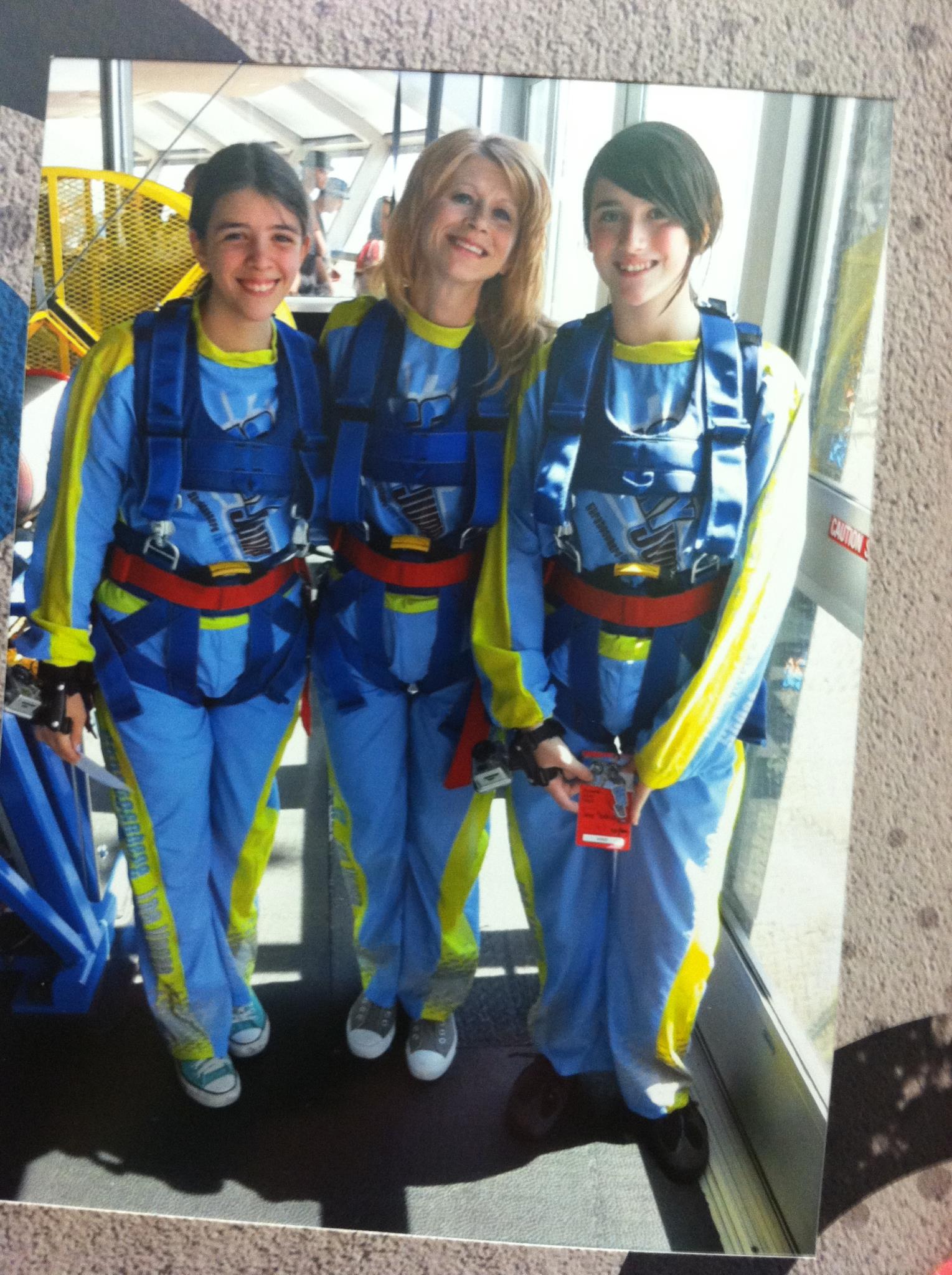
Our daughters are moving toward 14 and 16, mine being the older. It’s a pivotal time in their lives, where we want them to be empowered, to know their amazing potentials as strong, poised, confident young ladies. In this messed-up culture that sends airbrushed, cosmetically-enhanced messages that no woman is ever good enough, we say, nonsense – every woman is more than enough, perfect as-is, capable of whatever she dreams. And, this is why we’re in Vegas, encouraging our daughters to step of the 108th floor of the Stratosphere, plummeting 855 feet to the ground.

…Well, maybe I should clarify the jumping off of the building part. See, the Stratosphere, on the outreach of the Vegas strip, is a replica of Seattle’s Space Needle. The only real difference is that if you jump off the Space Needle, you die; whereas, with the Stratosphere, you’re perched on a ledge, wearing a harness, and as you leap, control cables guide you safely to the ground, slowing you to your feet at the end. Yet, despite the safety factors, stepping off of that ledge on the 108th floor, 855 feet off of the ground, and virtually free falling, takes a huge amount of courage and confidence. And, I explain this to our girls at dinner the night before:

At points in our lives, we each find ourselves perched on a ledge. If we have the courage to jump – maybe it’s a career step, or starting or ending a relationship, or any aspect of life that requires us to stretch our comfort zone – we grow. However, if we don’t have the courage to make those leaps, our lives stagnate, we go nowhere. Both of you girls are doing an amazing job in school, with huge life potential ahead of you. But, you’ll need to take leaps of courage along the way to do it. Let the literal Stratosphere SkyJump be a lesson in life, where you’ll carry it with you, knowing that you have the courage and strength to take big leaps in life whenever needed….

After the jump, I tell the girls how proud of them I am, and they share how the scariest part was preparing for the jump, that once they summoned the courage to step off of the ledge, the liberation of flying through the air was amazing.

Really, for all us, no matter our backgrounds or challenges, there’s a lesson to be learned here, isn’t there? Success in all areas of life is all but guaranteed, as long as we have the courage to take initial leaps out of our comfort zones. A lot of times challenges are easy, but stepping off of the ledge, into a seemingly new territory is the hard part. Yet, when we summon the courage to simply step off of the ledge, our lives always move to the next level. As I told the girls, just jump!