Unspoken Alone

tunnel

By Mark E. Smith

Alone. We’ve all felt it. And that, in itself, is why we’re truly not.

Based on my career in working among a population where trauma is common, I often hear how alone others feel in their challenges and struggles. However, as an ordinary person, I also hear how alone many feel in challenges of all types in everyday life. Yet, I’ve never encountered a situation where someone’s struggles transcended common humanity, where others hadn’t experienced a similar situation, of similar emotions.

In this way, the uniqueness of feeling alone in our struggles isn’t unique at all. In fact, it’s among the most common emotions we all share. It is intriguing, though, that such a commonly shared emotion can be… well… generally unshared.

See, unlike other cultures in the world, we in North America are prone to keeping our struggles to ourselves. The result is, we feel alone. And, so we live in a culture that exacerbates feeling alone in times of struggle, when we’re actually not alone at all in our experiences.

If you’re like most of us, you’ve unquestionably known unfortunate experiences like relationship issues, career issues, financial issues, health issues, and on and on. And, if you’re like most of us, you’ve felt alone during these struggles, as if you’re the only one who’s ever experienced them – especially in the moment. However, most of us have experienced them, too, so why are we all feeling so alone in the process?

The answer is simple: we don’t reach out when we should. As those struggling, we don’t reach out, and when we have a hint that someone else is struggling, we don’t reach out. Why do we behave this way? Well, self-doubt and fear on both sides, that’s why.

When we’re feeling alone in our struggles, we default to these internal scripts, don’t we?

No one understands what I’m going through.

They’ll judge or ridicule me.

I don’t want to be seen as weak.

I’m just ashamed of this mess I’m in.

I don’t want to rock the boat.

Or, for that which prevents us from reaching out to those we see struggling:

It’s none of my business.

I don’t want to embarrass them.

I won’t know what to say.

Based on our culture, these are totally valid feelings. But, there’s one problem with following them – they leave us feeling alone in our struggles, isolated. And, it simply makes any struggle worse and last longer. The antidote, however, is brilliantly simple: share.

Now, sharing can be scary and tough, requiring a lot of courage and vulnerability. But, the rewards of not being alone in our struggles outweigh all of those seeming risks. If you’re struggling alone – and we all do at times in our lives – share it with someone you trust. Interestingly, trust, in itself, can be a far more liberal definition than most might think in times of struggle. Some of the most healing, profound conversations I’ve ever had have been with virtual strangers, those recently met. What’s important is that we reach out, and it’s astounding how the sharing or inquiring of just a hint of ourselves exposes the common humanity of us all, realizing we’re not alone.

I don’t know what you’re struggling with our will be struggling with. But, I know that none of us are exempt from struggles, and none of us need to be alone in our struggles. In your tough times, I encourage you to reach out, where the hand that you grasp will feel comfortingly a lot like your own.
Straight, No Chaser

thelonious-monk

By Mark E. Smith

I’m sure as a younger child I questioned it all. But, by adolescence, I was just me, and there was no room for me or anyone to question it. I mean, it was questioned – who I was because I was different, my disability seemingly made me different – and it would occasionally sting in the moment. However, I ultimately understood I was who I was, I am who I am, let’s get on with this.

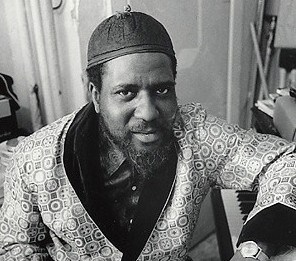
The jazz great, Thelonious Monk, was of that spirit, too, long before I was born. During the 1940s through the 1960s, when you had the greats like Duke Ellington, Miles Davis, John Coltrane, Dizzy Gillespie, Charlie Parker and Billie Holiday evolving Jazz in a linear form, Monk was innovating on the piano in ways no one had ever seen.

Monk was first and foremost a composer, with musical eccentricities that few could follow. Improvising was a staple of jazz in that era, but his obsession with improvised composition on stage made him a lone wolf, where he didn’t care what the band played or what the audience wished. Monk simply followed his passion key by key, note by note, reveling in what he discovered in the moment, oblivious to all around him. Often, the only queue to what he was playing was his right foot keeping time. He just played as him, and whether the world followed didn’t matter. John Coltrane said, “Working with Monk is like falling down a dark elevator shaft,” and Miles Davis for a time refused to play with Monk due to Monk’s defiance toward staying in line with the rest of the band. In the refined world of jazz performance, Monk was also known for stopping playing mid song, getting up to dance alone as the rest of the band played on. Indeed, Monk was Monk, and he wouldn’t meet arbitrary norms.

In the process of being him, Monk ultimately lived an obscure but free life, where beyond his immediate circle, he was generally unknown during his career, never getting the fame of his contemporaries. Yet, in the process, he composed an astounding body of recorded work, only second to Duke Ellington. Monk largely disappeared from 1971 till his death in 1982, struggling with mental health issues along the way. Posthumously, he was granted a Pulitzer Prize for his body of work, and is subsequently now known as among the greatest jazz composers and musicians of all time.

How many among us just want to be themselves, follow their hearts and passions regardless of what anyone else thinks? Yet, many don’t out of fear of rejection or not fitting in. For all of us, Thelonious Monk left us with striking words of wisdom: “I say, play your own way. Don’t play what the public wants. You play what you want and let the public pick up on what you’re doing – even if it does take them fifteen, twenty years.”

Turning Off Autopilot

autop

By Mark E. Smith

I’ve spent a lot of my life around two areas – boats and dysfunction – and what I’ve learned is that in either case, if we’re not careful, “autopilot” will fail us.

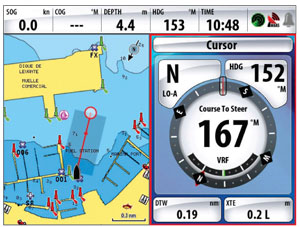
See, living in dysfunction is a lot like being aboard a boat running on autopilot – we’re not questioning or changing, but continuing on a haphazardly set course. And, as waters worsen or dangers approach, if we don’t take control, our boats – read that, our lives – will collide with them in the most harrowing ways.

For me, taking life off of autopilot has been a very personal process. As one raised in a dysfunctional family, I only knew what I knew, and my emotions were on autopilot for a long time. Turning off that autopilot proved harder in some ways than others.

Alcoholism, addiction, poverty, and a lack of education were all fairly easy for me to avoid because my awareness was so blatant. When I had welfare Christmases, parents with ninth-grade educations, and an unbroken family lineage of alcoholism and addiction, it was fairly obvious that our family’s autopilot was a disaster in full swing, cruising in the Oblivion Sea.

For me, turning off autopilot started as young as 10, but really by my teens I saw my life set on a course for collision and I took control of the helm. I saw everyone around me literally dying from living on autopilot, and I knew I had to turn that monster off for myself. Once aware and assuming conscious control of my life, I steered around the many dangers my family collided with. However, I was fortunate in that aspect – that I somehow had the understanding to do so – where I empathize with how difficult it becomes for many to turn off autopilot the longer we’ve unwittingly been on it, often from birth. It’s simply not as easy as my words read to break cycles of dysfunction, to turn off autopilot.

And, emotionally, I absolutely remained on autopilot for quite some years. Again, for me, getting off of autopilot has proved harder in some ways than others. I grew up knowing that those who loved me also hurt me, so love and hurt were intertwined. My head was off of autopilot – sober and successful – but my heart was still running its course. And, so I found myself in relationships of all sorts – from marital to sibling to friendship – that hurt, that as the psychobabble calls it, were toxic. It’s what I knew, what I grew up in, and continued living. That’s the sinister beauty of autopilot – once you’re on it, it continues on a course without any effort by you.

Awareness, though, once again proved my switch to turning off autopilot. Once I was aware that my heart was on autopilot, steering me into collision after collision, all my relationships changed. Some I just cut off; some I set healthy boundaries; and some I started anew with healthy individuals.

I’m still not perfect at any of this, and never will be, but every once in a while, when the autopilot that I grew up in intrinsically kicks in, my awareness takes the helm in a reflex type action, where I’m able to quickly correct and stay on a healthy course.

Through what I’ve lived and learned, I see among the greatest gifts that we can give others is the truth that they can break cycles of dysfunction, turning off autopilot. There’s a big difference between preaching from the mouth and speaking from the heart. I believe in speaking from the heart, and when a young person at risk in my circle was recently running on autopilot – it’s what they grew up in, escaped, then were thrust back into it based on a traumatic chain of events – I took the time to remind them of how far they’d come, to be aware that although understandably they’d temporarily returned to autopilot, awareness was what would keep them emotionally safe – that is, regrasping the helm and steering a healthy course.

Now, it’s not possible for everyone to just turn off autopilot and get their lives moving in healthy directions. We know of the medical effects that alcoholism, addiction, and mental illness have on those immersed in those conditions. These aren’t autopilots that just turn off. But, for the rest of us – and especially youth in our families and communities at risk – the ultimate intervention isn’t once there’s no turning off autopilot, but acknowledging our vulnerabilities to it early on, and elevating our awareness to the point that we turn it off and truly take control of our lives in healthy ways before life is spiraling beyond our control.

The fact is, we have no choice in how the dysfunction of autopilot gets turned on in our lives – typically, we’re born into it or trauma ushers it in. However, when we’re aware that it’s been turned on and we are running on it or at risk of running on it, that’s the time to turn it off. See, turning off autopilot removes continuing living the pain of our pasts, and allows taking the healthy helms of our futures. May you and I chart the healthy course our lives are meant for.

Meals or Feasts?

Gratitude rock

By Mark E. Smith

My life has been somewhat extraordinary in that I’ve known both sides of human experience – that is, what it’s like to live with exceptional adversity versus what it’s like to experience great fortune.

However, while my own life has made me acutely aware of extremes, it’s the individuals I encounter that have raised a profound question for me. In parts of my life, I interact with those facing tremendous adversity, while in others, I interact with those of great fortune. Overall, I’ve witnessed that people are people, and no matter how different two individuals’ life paths are, there’s a uniting humanity – people are people.

Yet, I’ve also witnessed a juxtaposition that’s intrigued me. If I shared that I knew a 40-year-old mother with progressing ALS who was bitter at the world because she would not live to see her children graduate high school, we all could empathize with her. On the other hand, if I shared that I knew a 40-year-old mother of great health and wealth who was dedicated to serving her community, we could empathize with her, as well. In both these scenarios, we could say that both women are doing the best that they can. And, indeed, in some form, I’ve known these women – and likewise men in the same situations – many times over.

But, here’s where the intriguing juxtaposition comes in. I similarly meet those facing tremendous adversity – literally that 40-year-old mother dying of ALS – who approaches every day with grace and joy, appreciative regardless of the devastating blow life has dealt. Meanwhile, I encounter those who are extremely fortunate – with health and wealth and thriving lives – who are bitter, jaded, living with a miserable sense of entitlement, as if the world owes them. How is it, then, that someone facing unimaginable adversity in life can live with such grace, while by contrast, I’ve more than once witnessed someone of great health and wealth throw a tantrum over the smallest, most trivial circumstance? How can this juxtaposition logically occur?

The answer is, gratitude. See, gratitude is the great equalizer – and you have it or you don’t. If you have it, it’s irrelevant what your situation is in life, as you’re grateful regardless of any circumstance. However, if you don’t have gratitude, you’ll conversely be bitter and jaded no matter how fortunate your plight. In this way, what life deals us has no bearing on our outlook – unimaginable adversity or great fortune are of no matter. What dictates our perspectives is whether we have… gratitude.

Author Melody Beattie writes, “Gratitude unlocks the fullness of life. It turns what we have into enough, and more. It turns denial into acceptance, chaos to order, confusion to clarity. It can turn a meal into a feast, a house into a home, a stranger into a friend….”

Therefore, if we are to understand the true origins of fulfillment in our lives and whether we find true contentment, we don’t need to weigh the scales of adversity versus good fortune. Rather, to understand fulfillment and contentment in our lives, we merely need to consider the levels of sincere gratitude we possess.

One Person at a Time

ServingOthers

By Mark E. Smith

If there’s one principle I’ve learned in my 20-year career, it’s that you can have a tremendous impact on a global scale by simply serving one person at a time.

Somehow a mythology has evolved over recent centuries that in order to have a notable impact on the world, we have to do a single, epic act: invent electricity, cure a disease, write an ageless book, or any number of extraordinary acts that win a Nobel Prize.

However, that’s not, in fact, how we change the world. The fact is, if you look at the way the world’s changed over the past 100 years, it’s been by far because a single person had the vision to change lives of individuals one at a time.

We’re not a country of advanced automobiles because Henry Ford magically gave every person in America a car at once and changed the world. Rather he sought to build a car that individuals could buy, one by one, and individual lives changed, ultimately creating a cumulative effect. Fast forward toward the end of the 20th century, where personal computers fueled by Gates and Jobs, among others, and we saw the same process, where PCs were adopted by individuals one by one, where slowly the movement changed our lives. Now, in the present, look at Facebook – 1.59 billion users didn’t just pop up, but joined, one by one. Indeed, even in the most monumental success stories of world change, they’ve all started with individuals and flourished by the individuals’ lives impacted by them, one by one.

The Gates Foundation has been on a mission to change the world for millions of children in third-world countries. Over 1.5 million children die each year from diseases of which there are vaccines, but to which they don’t have access. The Gates Foundation has been eradicating this issue. How? By vaccinating one child at a time.

Now, most of us aren’t Fords or Gates. However, we possess the same ability to profoundly impact the world – by making a difference in the lives of others, one person at a time. It doesn’t matter who you are or what you do. All you have to do is be aware of who around you needs a touch of whatever it is you have to offer. Maybe you have a particular skill set that many can use, but not everyone can afford. Think of the difference it makes in a single life when you donate that skill to someone in need. Think about the contractor who quietly fixes up an elderly widow’s home; the college math student who tutors inner-city kids across town; the auto mechanic who fixes the single father’s truck at no charge so he can get to work and support his kids; the store clerk who asks everyone how they are because she truly cares; the pizza shop owner who makes every customer feel like family; the person who always answers the phone when a friend just needs someone to talk with. The list goes on and on, but the principle is the same: we each have the profound power to change the world one person at a time.

We can have a way of saying to ourselves, I’m nobody, with nothing to change the world. No, we’re each somebody – unique, with so much to offer, so many ways to change the world one person at a time. It doesn’t matter who you are, where you live, or what you do – you have the ability to improve the life of another person, and that single act alone does change the world.

I recently was interviewed, and the interviewer asked me what I saw as the greatest accomplishment of my career?

“I shipped a farmer in Iowa a part for his wheelchair this morning,” I said.

She looked surprised at my seemingly simple answer considering the complexity of my career.

“Is that an unusual situation?” she asked.

“No, it happens every day,” I replied. “But, you make a difference on this planet by embracing one person at a time.”

As Mother Teresa put it, “Never worry about numbers. Help one person at a time and always start with the person nearest you.”

The Success of Being You

kermit

By Mark E. Smith

If you look back at the GOP primaries of 2016, an interesting dynamic occurred at one point. There were two candidates – Marco Rubio and Donald Trump – with very different dispositions. Rubio was historically one of a positive message, while Trump was much more aggressive. And, both personalities had their place, per voters. Some were drawn to Rubio’s personality, while others were drawn to Trump’s.

Going into the Florida primary, the state was arguably up for grabs. It was Rubio’s home state, giving a candidate typically an advantage, but Trump, a known businessman in Florida, had very strong poll numbers.

However, the week of the primary, a lot changed. While Trump stayed with his aggressive messaging, Rubio made an abrupt change with his. To supporters’ dismay, Rubio went from his typical messaging to very aggressive, Trump-like messaging. And, it contributed to costing Rubio the primary.

See, voters wanted the Marco Rubio they’d always known, not a candidate who suddenly engaged in Trump-like aggressive rhetoric. By all accounts, Rubio becoming someone he wasn’t proved a catastrophic mistake.

Of course, there were a lot of other dynamics – some going back years – that cost Rubio Florida, but by most political observers’ accounts, his trying to be someone he wasn’t in the final week was the tipping point for Rubio’s loss.

The whole situation reminds me of our personal lives, how miserably we fail when we try to be someone we’re not – and worse yet, the toll it takes on us.

Outwardly, we can seem ridiculous in trying to be someone we’re not. A buddy of mine is one of the kindest, most sincere guys you’ll ever meet – the kind of gentleman many women would fall for in an instant. But, he has it in his head that he has to be a “cool player” when it comes to meeting the ladies, transforming into a cologne-drenched show-off who’s… well… ridiculous. The female friends in our circle have told him the simple truth: being yourself attracts others, not trying to be a studly caricature.

When we’re outwardly trying to be someone we’re not, we mostly risk embarrassment – or not getting dates in my buddy’s case! However, when we’re trying to be someone we’re not on the inside, it’s painful at best, self-defeating at worst. When I began dating my wife, I put my best foot forward, but I also vowed to myself – and ultimately her – that I wasn’t going to hold any aspect of myself back. If she fell in love with me, great. But, if any aspect of who I am chased her away, it would be my loss, but at least I was honest in the process. Nowadays, when we’re in the kitchen and I’m admittedly letting my twisted sense of humor fly, sometimes to her dismay, I have the ultimate defense, “You knew who you were marrying!”

Imagine, though – or maybe you’re there now – how painful it is not to be able to fully express yourself out of fear of rejection by those you love. Think about what it’s like to be in a family dynamic or relationship where you don’t feel safe expressing who you truly are. We know clinically that when we keep aspects of our identity bottled up, rates of depression, low self-esteem, substance abuse, and even suicide all skyrocket. Not being ourselves can literally be dangerous. Marco Rubio lost an election; but, Tyler Clementi lost his life when he jumped off of the George Washington bridge due to the shame he felt from being outed as gay.

None of this need be – and it’s a two way street. We must have the courage to just be ourselves, and we likewise must create an interpersonal dynamic where we welcome others to be themselves. In living such an open life, just think of how easy, comfortable and fulfilling it all becomes, where you can just be you. A Chinese proverb puts it best: Tension is who you think you should be. Relaxation is who you are….

That Man – Spoken Word Video

Transcript:

That man. That man. No Sam I am, but I am a minority, rolling with authority, living life proudly as who I am – because, man, I am that man.

No, I’m not a misfit, but a paradigm shift, where when the world says I can’t, and I say screw you, Captain Sulu – because I can. Man, I am that man.

Like a two-dollar bill oddity disband, I can thrive and jive – on the dance floor, had a boombox back in ’84 – and the band plays on and on and on like the wheels rolling on my chair, wind blowing in hair. Because, man, I am that man.

There’s no price of admission – disability isn’t a curse or condition – it’s just the way it is, say it like it is, live it as it is – screw those with ignorance, where what some call a hairdo is really just friz. Because, man, I’m that man.

Bold and determined, bulldozing like a tank named Sherman, I am a minority, and I’ll use my authority to make the world stand on end – screw you, I refuse to pretend who I am, because I’m proud to be me, all that you see – shout it, cerebral palsy – because, man, I am that man.

Why So Angry?

anger

By Mark E. Smith

Terry wasn’t just mad. She was the angriest individual I’ve ever dealt with.

“What!” she exclaimed every time she answered the phone. Then after trying to argue with me over this or that, she’d hang up on me, only to then call back even madder. Terry would work herself up something fierce.

“Terry, you have to have faith that some of us truly care,” I’d try to explain to her regarding the industry I work in, the one she was furious at. “We’re all truly trying to help you.”

My words were most often overshadowed by her simultaneous yelling, but I was always sincere with her, no less.

Now, it would be easy to assume that there were emotional or mental health issues going on with Terry. But, it was clear there wasn’t – she was just angry, the angriest person I’d ever dealt with.

To a point, I felt for Terry. I mean, can you imagine going through life so bitter and resentful that it consumes you? There’s no question that she saw life as her against a rotten world. That’s an agonizing state to live in.

However, what’s puzzling to me about such angry people is why they give anger so much control over them? After all, it’s not like bad things haven’t happened to the rest of us. I know I have my scars. Yet we’re not consumed by it. Yes, at some point events are going to make us angry. But, we have the power to let it go. When someone darts in front of you in the Walmart parking lot and takes “your” spot, there’s a choice to be made: get out and threaten the person’s life out of anger, or smile and move on to find another spot. Anger isn’t our only option.

While I’ve always been a happy, optimistic person, I haven’t always been free of harboring anger, which is why maybe I empathized with Terry. In my 20s, I harbored tremendous anger at my father, in particular. It wasn’t that he only walked out on our family when I was little, but that by phone he’d pop up from time to time and make promises he wouldn’t keep or say hurtful things as drunks do. That builds a resentment and anger when you’re carrying that inside you while growing up. By my 20s, I was boiling over with anger toward him. At one point I reached out to him – admittedly looking for a capacity that I wanted him to have, Just say you’re sorry, Dad, and make things right – and his ultimate lack of response made me even angrier.

However, after harboring anger toward him for years, I realized he wasn’t the one hurting me – I was hurting myself. By my 30s I had so much good in my life, why let a guy who gave me no thought, drinking himself to death in a trailer in the mountains thousands of miles away, induce three decades of anger in me? The situation was the situation, no harm was being done to me anymore, so why not let it go?

So, I did. I was me, he was him, and the two no longer needed to effect each other. Before his death, I went 10 years without speaking to my father. I made the choice to let it all go – any anger, any resentment – and it worked. My life was genuinely happy, and I wished him no harm. It was a weight lifted off of my heart.

I learned a lot in that process, that while there are places and times for anger, it’s not healthy to hold on to it, and it’s certainly not healthy to let it interfere with that which is good in our lives. Some think holding on to anger is a sign of their strength. However, I learned that holding on to anger is an ultimate weakness that… well… simply holds us back.

The Stories We Share

OUR_STORIES

By Mark E. Smith

When I entered San Francisco State University’s creative writing program some two decades ago, I did so with one goal in mind – to be a better writer. After all, writing is a technical craft – not unlike painting or music – and if you want to get better at the craft, you expand your skill set. And, I wanted to possess the largest skill set possible so that, as a writer, I could write about virtually any topic, in any form. If writing was carpentry, I wanted the skills to build anything.

Upon my first week in the program, I realized it wasn’t what I expected. The fact was, I quickly learned that the true craft of writing wasn’t about technical skills at all. Yes, as students, we’d long learned the formalities of writing, with more to come. However, what we were there to really learn was the power and universal impact of stories. We learned what it was like to be impoverished and black in the south under Jim Crow laws through Alice Walker. We learned what it was like being a disenfranchised white, middle-aged male through Charles Bukowski. And, we learned what it was like to be a teenage heroin addict through Jim Carol. The stories went on and on, and we learned that every one has a story – ones of universal impact. We learned that writing wasn’t just about a skill set, but more so a deep acknowledgment of the human condition we all share.

As students, we were required to write with courage and vulnerability, to share our stories. Writing workshops, where you critique each others’ pieces, were cathartic, safe places where we could write and share the stories in our lives. The beautiful twenty-something who seemed to have it all wrote about her struggles with self harm, cutting her thighs with razor blades. The silent guy in the army surplus jacket wrote about being raped in his high school locker room by three jocks. And the happy-go-lucky, surfer dude wrote about living on friends’ couches because he was disowned by his parents when he came out as gay. What it taught us was that everyone had a story – including ourselves – and the true craft of writing isn’t just about telling stories, but honoring them.

During that time, my twenties, I was struggling with a lot. I was trying to understand my identity as one with severe cerebral palsy, and struggling with the guilt of separating myself farther and farther from my dysfunctional family. When we go through these periods of our lives – deep emotional struggles – it’s impossible to not feel alone. It’s unfortunately intrinsic to the process. Yet, our individual struggles – read that, stories – are universal to the human condition, and whatever we’re feeling or have experienced, we’re not alone.

What I gained from attending the two-year creative writing program – and writing of my struggles in the process – was recognizing the importance and vulnerability in sharing our stories, as well as embracing those of others. While there’s a time and a place for light conversation, it’s in sharing our stories that truly connects us.

Since that time, not the writer in me, but the person in me, has lived a life of connecting with others – through stories. Of course, I’ve shared mine countless times, as cerebral palsy can’t be hidden and understandably can become a topic. However, what’s shaped my life are the stories that others – with trust, courage and vulnerability – have shared with me. See, I’ve learned that no one’s story is more or less significant than another, just different. And, we intrinsically relate to them all. Pain, joy, sadness, fear, courage, failure, success, heartache, love, guilt, pride, resentment, elation, self-doubt, confidence and on and are all emotions that we universally share. They unite us.

However, sharing our stories does more than unites us. The process has far more power. Sharing our stories can heal, uplift, inspire, empower, and most of all the process shows us we’re not alone.

I don’t know what your story is. Maybe it’s one you’re struggling with alone. Or, maybe it’s a story that can help another person in your situation. Share your story. Let it out to someone, somewhere, in a safe place, where I promise it will change both your lives. None of us need to be writers to be courageous and vulnerable in sharing our stories. We just need to be ourselves.

From Dirt to Gold

First Dyson
First Dyson

By Mark E. Smith

A gracious colleague noted that I’m very skilled in business at seeing the positives and negatives in situations, and then pragmatically steering both toward the positive.

I replied, “That’s not a business skill, that’s a life skill that I’ve learned from disability experience, where if I didn’t know how to work with adversity, I wouldn’t be sitting here.”

In 1993, when Britain’s James Dyson introduced his first vacuum, it had a clear dust-collection canister of great controversy. Vacuums had always had bags, and the vacuum industry all said no one would want to see the dirt they vacuumed up in a clear canister. It was a totally valid point, proven by market research. Dyson had two choices: he could avoid the potential market controversy by enclosing the canister or he could see it as a counter-intuitive selling feature.

In among the most brilliant moves in business history, Dyson saw the controversial clear canister not as a detriment, but as an advantage. He wasn’t deterred by the market research, but embraced it proving his vacuum was unique. He used the clear canister to show consumers how his vacuum’s cyclonic action picked up more dirt than other vacuums – and consumers were mesmerized by it. People loved seeing how much gunk they vacuumed up! Within 18 months, it was the best-selling vacuum in the U.K., and today, virtually all vacuums have a clear canister.

So often when we face obstacles, we’re taught to work around them. However, working around obstacles rarely results in our greatest successes. Rather, working with obstacles is where success comes in. If you can succeed by addressing obstacles head on – like showing dirt in a vacuum canister instead of hiding it – that’s where ultimate success is found.

Many years ago, based on my disability, I couldn’t button buttons, so it was suggested that I have all of my clothing buttons replaced with Velcro. Velcro would work, except for one aspect – it wasn’t truly overcoming the obstacle, as I still couldn’t button buttons. I used thick, stiff wire and put a loop on one end, and discovered that by pushing it through a button hole, looping on to a button and pulling it back through, I could button buttons (other such tools are now sold). As a result, I could button any button. By addressing buttoning head-on, I solved it rather than avoiding it. Velcro was no solution; finding a way to button buttons was!

What I’ve learned is that life gives us obstacles no matter our circumstance, and we have the choice to use them as a deterrent or an opportunity. Maybe it’s based on my disability experience, business skill or smart-alecky tenacity, but when life presents me with obstacles, as it does all of us, I try my hardest to turn that canister of dirt into a pot of gold – obstacles into advantages, that is!