The Effort of Faith

faith

By Mark E. Smith

When I look at the three biggest challenges that have spanned my adulthood – writing, disability and romance – there’s a common denominator that forever keeps me pushing forward during both highs and lows: Faith.

Now, I don’t mean faith in religious terms – although, many people do, and that’s great. Rather, faith for me is belief, it’s an innate understanding that no matter what I face, I will pull through ultimately to my own betterment – that is, the light will be brighter at the end of each tunnel.

Faith for me, however, doesn’t function on its own. Faith directly correlates with effort. When I was in my early 20s as a young writer, my rejection ratio by magazine editors was around 20 to 1. For several years, my mail box was a literal daily dose of rejection, seemingly indisputable proof that I was failing as a writer. Yet, I simply had faith and I used all of that rejection as inspiration. I knew I wanted to write and I had faith that I could make it as a writer, so I put effort behind my faith and went to college to learn formalities and hone my craft. It’s taken over two decades, but my closet shelves are now lined with over 1,000 formal publications that I’ve been published in, plus all of my books and countless essays from the web. I went from spending my days seemingly writing for the sake of rejection to now editors offer me assignments. The factor of success has been having faith that I could be what I believed, and then applying the effort to become that success.

Disability and romance in my life have followed the same faith-based path. At many points individuals, situations and society have told me that I’m lesser, that I couldn’t achieve based on my disability. But, my faith has ultimately had the final vote. Dismiss me or count me out, but my faith assures that in the end, with effort, I will overcome. I may face challenges, but my faith dictates that I will succeed in the end in spite of them.

Of course, the struggle to find enduring love is a universal, epic one. Think about the canon of literature, art, music and movies that address our desire for enduring love. And, I’ve faced that struggle, too. Yet, I’ve had faith that as long as I live my best, with effort and awareness, enduring love will sustain itself in my life.

I put it this way: Life is a roller coaster – the highs are exhilarating and the lows are frightening. Yet, there’s a surefire way to even out the course. It’s called faith. With faith, and effort behind it, it’s impossible to get emotionally mired in even the bleakest situations because no matter what all signs may tell us, there’s only one truth: We will ultimately overcome. Have faith, put effort behind it, and believe that you are intrinsically capable of living the life of your dreams.
Working Class Hero

scottbalkner

By Mark E. Smith

John Lennon coined it, and I’ve always believed in living it – as a father, as a bread winner and, yes, as one with a disability: A working class hero is something to be.

See, to me, a working class hero isn’t about a literal vocation or social class, but about drive and determination. Are you strong enough every morning, regardless of the challenges you face, to put your boots on and go into your day willing to do whatever it takes to get the job done, with little reward beyond knowing you’ve done right?

And, like I said, this purest form of heroism isn’t about vocation or social class. Yes, the roofer who’s on a roof in July, working 12 hours a day with 130-degrees radiating around him, all to support his family, is a literal working class hero. But, so is a full-time single parent. And, so is one sustaining sobriety. And, so is one thriving with a disability. Although each of these examples are very different – and you can insert any life path into the list that requires internal tenacity to succeed – they all demonstrate an extraordinary work ethic, they all demonstrate quiet, dignified heroics in everyday life.

And, there’s a certain rebellion to being a working class hero, where when life presents roadblocks that others don’t have the strength or courage to knock down, you utter a barely audible F-you, and fight your way through. Working class heroes punch adversity in the face and proceed on.

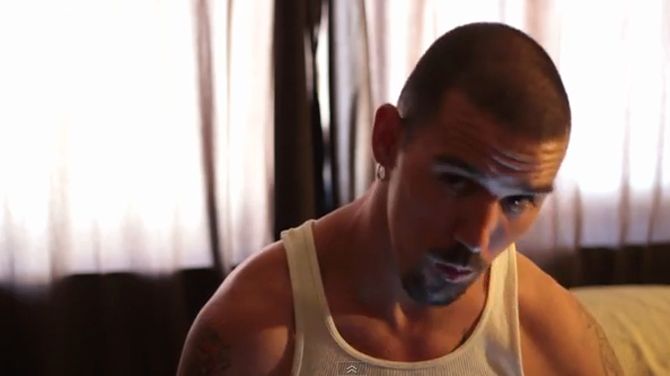
I want to introduce you to a working class hero of mine, Scott Belkner, who puts on his boots every day and just goes to work. There’s no one motivating Scott but Scott. He’s not someone you know, no fame or money. But, he demonstrates an internal work ethic that demands respect, that sets the bar for how so many of us should approach our lives.

Watch Scott’s story, and I bet he becomes a working class hero of yours, too.

All Hat, No Cattle

SHOWME

By Mark E. Smith

As a writer, I have a profound distrust for words. Yes, there’s an honest place for them in the literary sense in that they’re tools of the trade, including this essay.

However, on an interpersonal level, words carry little weight, where actions, in fact, don’t just speak louder than words, but are the only true measure of one’s character. If you want to genuinely know someone, ignore what they say, and look at what someone does.

Now, when I say judge one’s character by actions, not words, I don’t mean the small stuff. We all innocently say to others sentiments that may not hold true, but that doesn’t reflect one’s core character. Plans change, other obligations pop up and sometimes we simply forget a task we’ve agreed to perform. These don’t reflect our core character, but rather being human. As hard as I try to stay organized, the volume of tasks in front of me each day sometimes means that I forget something that someone needs – it happens to all of us.

Rather, I’m talking about core character traits, where one’s overall actions define who one truly is, not one’s words. A great example that I can relate to is being a father – that’s not about words, but actions at the most fundamental level. Fathers will boast how much they love their children, yet not be involved in their lives. How can one claim to love one’s child, but is absent? It’s a contradiction where we have to go by the actions, not the words. We know a father truly loves his child when he’s involved and present in his child’s life. If you want to know the quality of a father, observe what he does, not what he says. This likewise applies to everyone around us – that is, if you want to know the quality of one’s character, simply observe one’s actions.

I read a great book, The Gift of Fear, years ago and it spoke to avoiding becoming a victim of crime. The author spoke to never, ever trusting anything that a criminal says. As the author noted, if a man puts a gun to you in a mall parking lot and says, “Get in your car, and if you do what I say I won’t hurt you,” don’t get in the car, as statistically if you do, you’re going to end up dead. If someone puts a gun to you, he or she is demonstrating extremely dangerous behavior, and you can’t trust anything he or she says.

The same goes for our personal lives. How many of us have had others say that they care about us, but demonstrate the complete opposite? We simply can’t trust the empty characters of those whose actions don’t match their words, or worst of all, hurt us. And, it’s not hard to figure out. If one’s flowery words follow a pit in our stomach, then there’s something wrong. People who truly care about us don’t just say it, they demonstrate it consistently.

And, have you ever noticed that those who criticize us are always – and I mean always! – the least qualified to do so? Successful, healthy people don’t criticize others. Rather, it’s always someone like your uneducated, out-of-shape, broke, alcoholic in-law telling you all that’s wrong with you. Again, consider the source, and if one’s actions don’t match one’s words, there’s zero credibility, so never lend an ear to such criticism. To use a Texas idiom, never put faith in someone who’s all hat and no cattle.

Of course, we’re not exempt. We, too, should live by our actions, not our words. Let us lead with our actions, not merely spout what we think sounds good. As parents, saying we love our children is not enough; rather, let us show our love with presence, dedication and engagement. As partners and spouses, let us not merely utter the words I love you, but let us demonstrate it with attentiveness, respect and passion. And, as leaders in our career fields and communities, let us not simply boast of our abilities, but let’s truly accomplish tasks and serve others. Indeed, let us live our lives not based on rhetoric, but based on our demonstrated efforts.

In these ways, the cliché is true – and life-changing. Not only do actions speak louder than words, but actions pretty much say it all. If you want a true gauge of those in your life – as well as your own integrity – ignore words, assess actions, and let that be the true measure that drives your relationships to the healthiest levels.

More Than Enough

Mark and Emily001

By Mark E. Smith

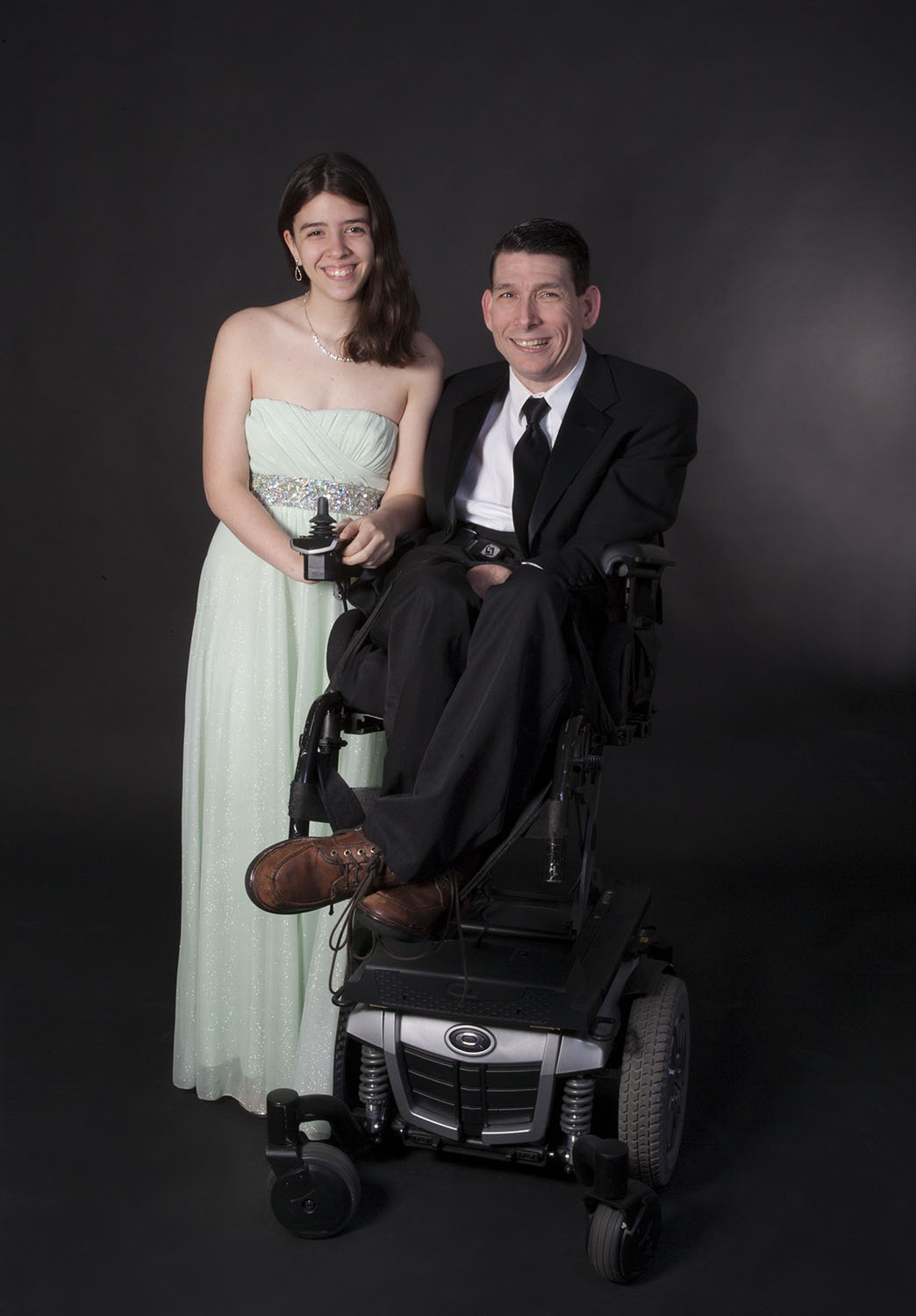
I’ve spent my whole life not being enough. Truly, from my birth, onward, I’ve never been enough. The doctors declared me a vegetable who should be institutionalized. My father was so ashamed of my disability that he refused to push me in my wheelchair in public. Mrs. Robinson, my third-grade public school teacher, fought to keep me of her classroom because I wasn’t physically on par with the other students. My prom date wouldn’t dance with me because I used a wheelchair. Waitresses have refused to serve me, and even in 2014, I still occasionally face discrimination because in the eyes of some strangers, I am not enough.

And, it remains the case, that in so many situations and perceptions, I am not enough. However, I want to share with you a very fitting story about what it’s like to face such a struggle, what it means to be labeled, to go through life as never being enough. See, when I was around 13, I desperately pursued my physical independence, knowing that in a world that didn’t view me as enough, I was in a race for survival, avoiding the potential of ending up in a long-term care facility because I couldn’t care for myself. And, so as part of enhancing my physical strength toward independent living skills, I began going out every day after school and pushed my manual wheelchair along the street in front of my house. I was severely spastic, with terrible coordination, and used a power chair, so pushing a manual wheelchair was a tremendous struggle. I fought to get both hands on the push rims, and gave a single thrust of the wheelchair, throwing my body into spasms – then, as the wheelchair coasted to a stop, I started the process all over again. It took me over an hour to go down the block and back.

However, it wasn’t physically pushing the manual wheelchair that was the biggest challenge. Rather, it was the literal voices along the block. A few neighborhood boys of my age taunted me every day, calling me retard, mocking me with spastic gestures, telling me I was not enough, that I couldn’t even push a wheelchair correctly.

Nevertheless, every day for that school year, I put myself in the line of ridicule and humiliation and pushed that wheelchair up and down the block, literally being told I wasn’t enough with each challenging push of the wheels. It was a set schedule: at 3:30 every day, I pushed my manual wheelchair, and the other kids followed along humiliating me. It was painful and scary and enraging and embarrassing, but I had to endure it for my greater good.

That one year taught me a lot about not being enough. In pushing that manual wheelchair, all the while being mocked, I didn’t merely improve my physical abilities, I developed perseverance, determination and autonomy. I wasn’t pushing to be enough to the other kids or the rest of those who discounted me. Rather, I was pushing my own race to become more than enough.

The fact is, I’ll never be enough. Heck, my own father went to his grave unquestionably ashamed of me, I had a ex-girlfriend give me a written list of why I wasn’t worthy of her love, and I still face public discrimination and humiliation from time to time. I will never meet certain standards or be enough as a person in the eyes of some.

So, then, how are many aspects of my life explained? If I was not enough to my parents, how did I go on to successful careers in the mobility industry, writing and speaking? If I was not enough to my third-grade teacher, how was I able to go on to college and grad school? If I have not been enough of a man in the view of some strangers, how have I succeeded in raising a beautiful daughter as a full-time single father? The list goes on and on, but the point is, despite my never being enough in the eyes of so many, how have I, to the contrary, had so many successes?

The answer is universal. We should never strive to be enough in the eyes of others – it’s a low bar to measure ourselves. Instead, we should ignore the false ceilings that others place upon us and instead push to our own best abilities. And, in that process an amazing transformation occurs: we eclipse never being enough by actually becoming more than enough.